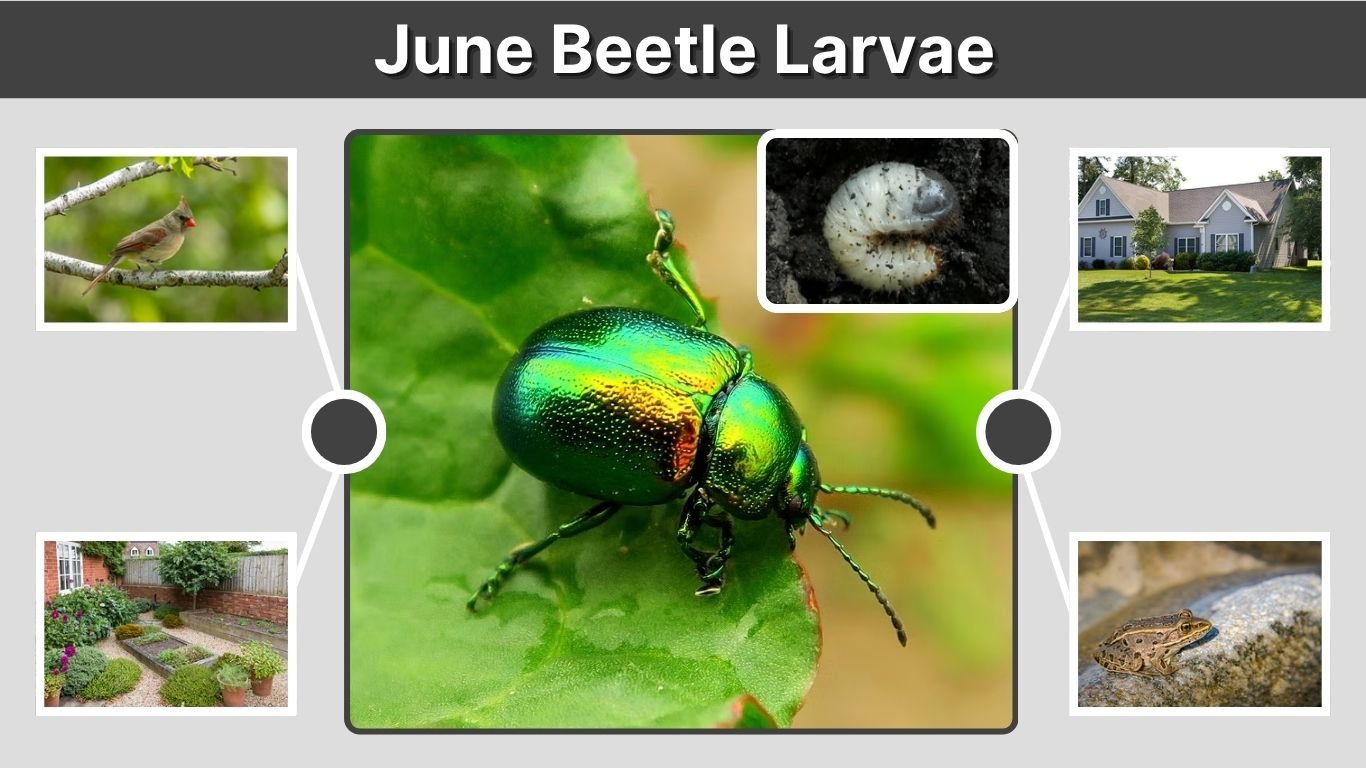
June beetle larvae, commonly known as white grubs, are soil-dwelling insects that feed on grass roots and other underground plant materials. These creamy-white, C-shaped grubs are the immature stage of June beetles, which typically appear during late spring and summer. Although some species feed mainly on decomposing organic matter, others can seriously damage lawns, gardens, and young trees. Identifying June beetle larvae correctly is essential for determining whether treatment is necessary. This guide explores their appearance, habitat, life cycle, feeding habits, and effective control methods.
What Are June Beetle Larvae?
June beetle larvae are immature scarab beetles belonging to the family Scarabaeidae. They develop underground, feeding on plant roots or decomposing organic materials depending on the species. Many common June beetles belong to the genus Phyllophaga, although other scarab beetles also share the June beetle name.
June Beetle Larvae Identification
June beetle larvae have several distinctive physical characteristics that make them relatively easy to recognize.
- Body color: Creamy white or pale yellow.
- Head: Hard, yellowish-brown to reddish-brown head capsule.
- Body shape: Thick, curved body resembling the letter C.
- Legs: Three pairs of short legs near the head.
- Abdomen: Enlarged rear section that may appear grayish.
- Movement: Slow crawling or curling when disturbed.
The arrangement of small spines beneath the abdomen helps specialists distinguish June beetle larvae from other white grubs.
June Beetle Larvae Size
June beetle larvae vary considerably in size depending on their species and age.
Common Phyllophaga larvae may reach approximately 20–45 millimeters when fully grown. Green June beetle larvae can grow even larger, sometimes approaching 50 millimeters.
Younger grubs are much smaller and become progressively larger as they molt.
Different Types of June Beetle Larvae
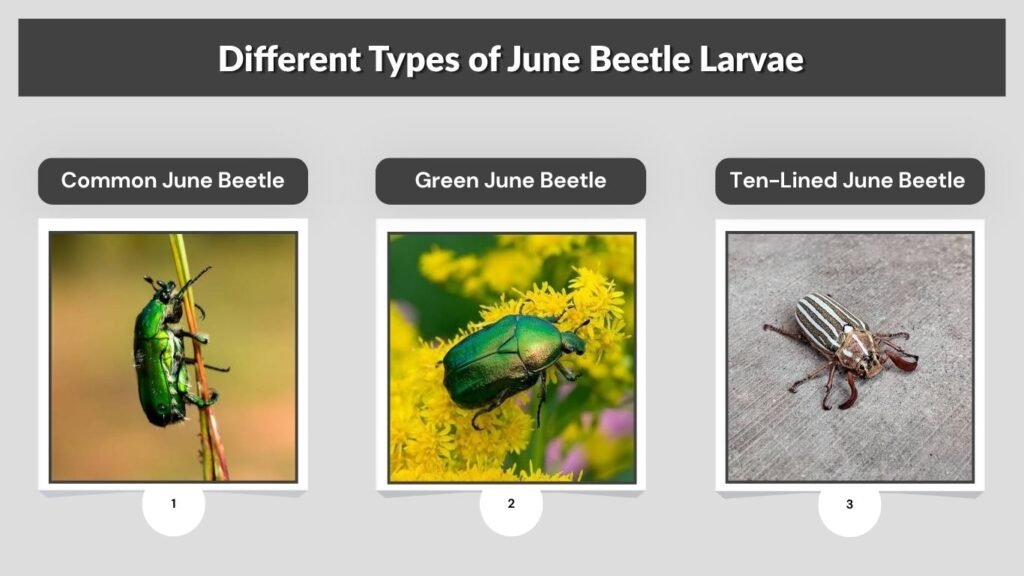
Several beetle species are commonly called June beetles, but their larvae differ in appearance, feeding habits, and potential damage. Understanding these differences is especially important because some grubs attack living plant roots while others primarily consume decaying organic matter.
1. Common June Beetle Larvae
Common June beetle larvae belong to the genus Phyllophaga. They are creamy-white grubs with brown heads and three pairs of legs.
These larvae feed mainly on grass roots and sometimes damage roots of trees, shrubs, and vegetables.
They usually remain underground for two to three years, depending on species and environmental conditions.
2. Green June Beetle Larvae
Green June beetle larvae (Cotinis nitida) are large, thick-bodied grubs that can reach approximately two inches long.
Unlike typical root-feeding grubs, they primarily consume decaying organic matter, including thatch and decomposing plant debris.
One unusual characteristic is their habit of crawling on their backs using stiff body hairs.
3. Ten-Lined June Beetle Larvae
Ten-lined June beetle larvae (Polyphylla decemlineata) are large, cream-colored grubs commonly found in western North America.
They feed on roots of grasses, shrubs, and trees, including some orchard crops.
Heavy infestations can weaken young trees by damaging their developing root systems. Their underground development often lasts multiple years.
June Beetle Larvae vs. Japanese Beetle Larvae
June beetle larvae and Japanese beetle larvae look remarkably similar because both are scarab beetle grubs. They share pale bodies, brown heads, six legs, and a characteristic curved posture. However, several important differences can help identify them.
| Feature | June Beetle Larvae (Phyllophaga) | Japanese Beetle Larvae |
| Body color | Creamy white | Creamy white |
| Shape | C-shaped | C-shaped |
| Mature size | Often 20–45 mm | Around 20–25 mm |
| Life cycle | Often 2–3 years | Usually 1 year |
| Main food | Plant roots | Primarily grass roots |
| Raster pattern | Two parallel rows of spines | V-shaped arrangement of spines |
How to Tell These Grubs Apart
The most reliable identification feature is the raster pattern, which consists of tiny hairs and spines near the underside of the grub’s rear end.
Common June beetle larvae generally have two parallel rows of spines, while Japanese beetle larvae have a V-shaped arrangement.
A magnifying glass or professional identification may be necessary to examine these differences accurately.
Where Do June Beetle Larvae Live?
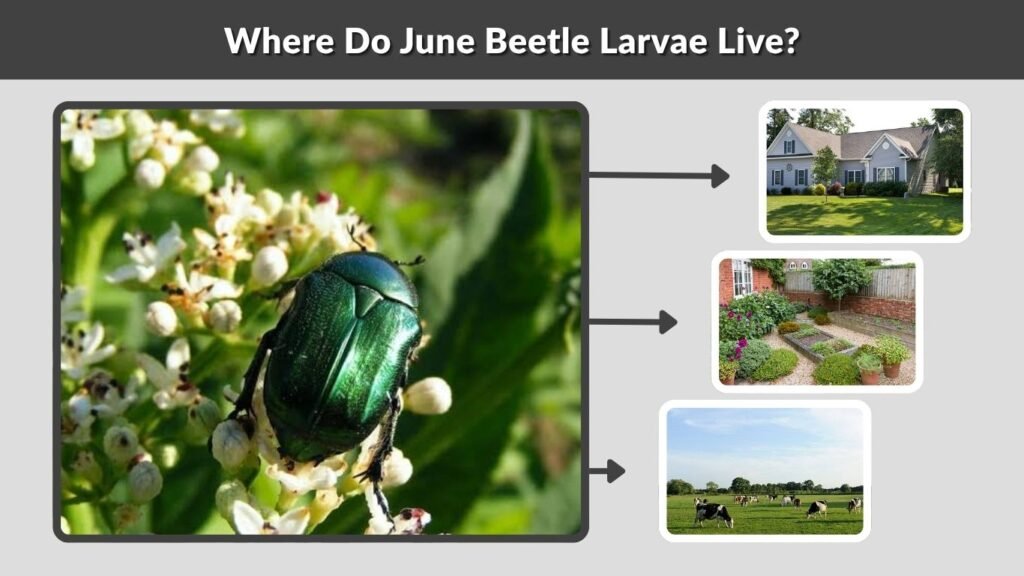
June beetle larvae live primarily underground, where soil protects them from predators and extreme environmental conditions. Their preferred habitats depend on the species, availability of food, soil moisture, and temperature. Most root-feeding species spend much of their development close to plant roots.
June Beetle Larvae Habitat
Common June beetle larvae are found in several environments:
- Lawns: Beneath turfgrass, where roots provide food.
- Gardens: Around vegetable plants and ornamental roots.
- Pastures: In soil supporting grasses and other vegetation.
- Orchards: Around the roots of young fruit trees.
- Agricultural fields: Particularly in areas previously covered with grass.
During colder or unfavorable conditions, larvae may move deeper into the soil.
What Do June Beetle Larvae Eat?
Most common June beetle larvae feed on living plant roots, particularly those of grasses.
They may also consume roots of vegetables, shrubs, and young trees.
Green June beetle larvae behave differently. They feed primarily on decomposing organic matter and are generally less destructive to living roots, although their tunneling can disturb turfgrass.
Signs of June Beetle Larvae Damage
June beetle larvae can cause significant problems when large populations feed on grass roots. Since the grubs remain underground, homeowners may notice plant damage before discovering the insects themselves. Damage severity depends on grub density, species, soil moisture, and plant health.
Common Signs of Grub Infestation
Watch for these warning signs:
- Yellow grass: Turfgrass gradually loses its healthy green color.
- Brown patches: Irregular areas of grass become dry or die.
- Loose turf: Severely damaged grass may lift easily because roots have been eaten.
- Wilting plants: Plants struggle to absorb sufficient moisture.
- Animal activity: Birds, skunks, and other animals dig for grubs.
- Weak roots: Grass and young plants become poorly anchored in soil.
Several other problems can cause similar symptoms, so inspect the soil before applying treatment.
Are Green June Beetle Larvae Bad for Plants?
Green June beetle larvae generally feed on decaying organic materials rather than healthy plant roots.
However, their tunneling activities can loosen soil and disturb turfgrass roots.
Large populations may produce noticeable soil mounds and surface disruption. Finding a few green June beetle larvae does not automatically mean treatment is necessary.
How to Get Rid of June Beetle Larvae
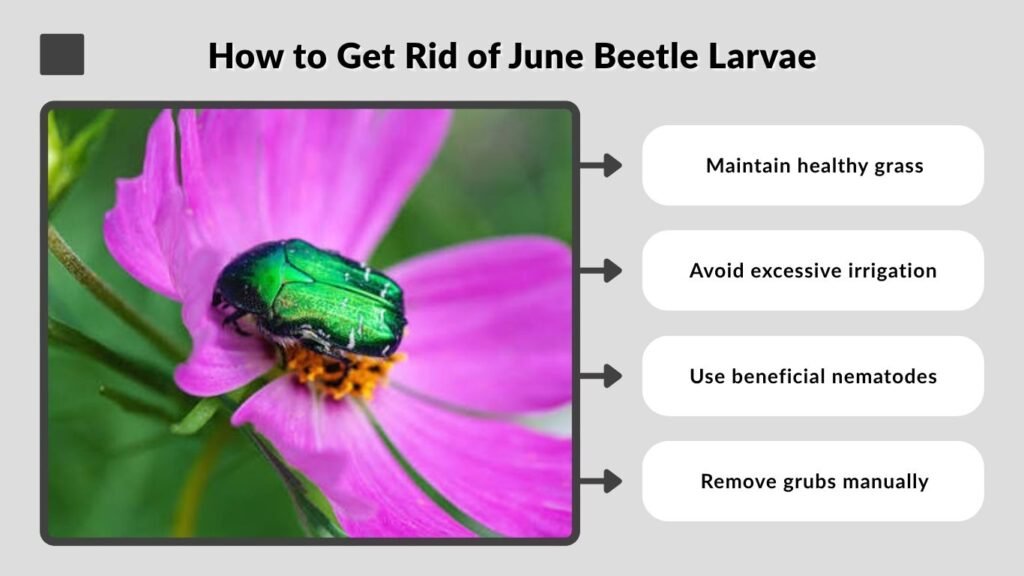
Effective June beetle larvae control begins with identifying the grub species and determining the extent of the infestation. Not every white grub requires treatment, and unnecessary pesticide applications can affect beneficial organisms. Combining monitoring, proper lawn maintenance, and carefully selected treatments provides better long-term results.
Inspect the Soil for June Beetle Grubs
Start by examining grass near damaged areas.
Cut and gently lift a small section of turf, then inspect the upper several inches of soil for white grubs.
Check multiple locations because larvae may be unevenly distributed throughout the lawn.
For common June beetles, even five or fewer large grubs per square foot may cause significant damage under unfavorable lawn conditions.
Natural June Beetle Larvae Control Methods
Several nonchemical approaches can help manage grub populations:
- Maintain healthy grass: Proper mowing and watering strengthen root systems.
- Avoid excessive irrigation: Overwatering may create favorable conditions for grub development.
- Use beneficial nematodes: Certain insect-parasitic nematodes may suppress susceptible grubs when applied correctly.
- Remove grubs manually: Collect visible larvae while cultivating small garden areas.
- Monitor natural predators: Birds, toads, and other wildlife may consume exposed grubs.
The effectiveness of biological control varies by grub species and environmental conditions.
When Should You Use Insecticides?
Insecticides may be appropriate when a confirmed infestation causes substantial lawn damage.
Treatment is generally more effective against young, actively feeding grubs than large, mature larvae.
Timing depends on the beetle species and local climate. Use only products registered for the particular pest and location, following all label directions.
June Beetle Larvae Life Cycle
June beetles undergo complete metamorphosis, developing through four stages: egg, larva, pupa, and adult. Their development varies by species, with some completing the cycle in one year and others requiring several years. Most of their lives are spent underground.
Stages of June Beetle Development
The life cycle includes:
- Egg: Female beetles deposit eggs in the soil, usually during warmer months.
- Larva: Newly hatched grubs begin feeding and grow through several molts.
- Pupa: Mature larvae transform inside underground chambers.
- Adult: Fully developed beetles emerge to reproduce and begin another generation.
Common Phyllophaga beetles often have a two- or three-year development cycle, while green June beetles generally complete development in approximately one year.
What Eats June Beetle Larvae?
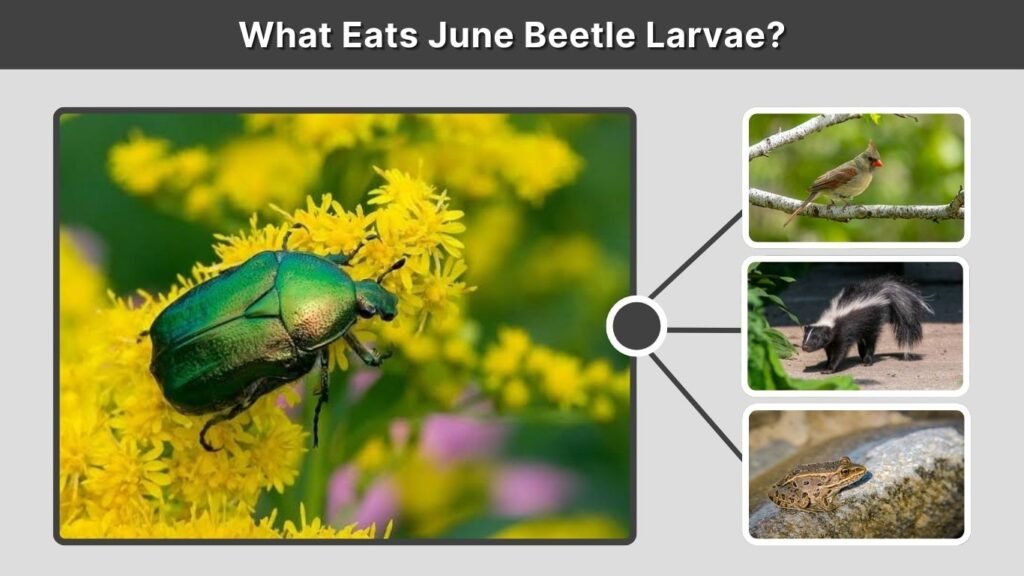
June beetle larvae are an important food source for several soil-dwelling and insect-eating animals. Natural predators help regulate grub populations, although they may not prevent damage during serious infestations.
Natural Predators of June Beetle Grubs
Common predators and natural enemies include:
- Birds: Crows, starlings, and other birds consume exposed grubs.
- Skunks: Dig through lawns searching for larvae.
- Moles: Feed on various soil insects, including grubs.
- Toads: Eat grubs they encounter near the soil surface.
- Parasitic nematodes: Infect certain white grub species.
- Parasitic wasps: Some species attack scarab beetle larvae.
Predator activity may indicate an infestation but can also cause additional lawn disturbance.
FAQs
1. Why Do Green June Beetle Larvae Crawl Upside Down?
Green June beetle larvae crawl on their backs using stiff hairs along their bodies. This unusual movement helps them travel across soil surfaces without relying heavily on their short legs. It is a distinctive identification feature of these grubs.
2. Are June Beetle Larvae Dangerous to Humans?
June beetle larvae are not considered dangerous to humans. They do not sting and are not venomous. Although their mouthparts are adapted for feeding, they generally pose little direct risk when handled carefully. Washing hands after contact with soil-dwelling insects is advisable.
3. Can June Beetle Larvae Kill Grass?
Yes. Root-feeding June beetle larvae can severely weaken or kill turfgrass when populations are high. Damaged grass may become yellow, brown, or loose because roots have been consumed. Healthy lawns can often tolerate small grub populations without significant damage.
4. Are June Beetle Larvae Edible?
Some beetle larvae are traditionally consumed as food in different regions. However, eating unidentified June beetle larvae is not recommended because of possible pesticide exposure, contamination, allergies, and incorrect identification. Proper identification and food safety precautions are essential.
5. How Long Do June Beetle Larvae Stay Underground?
Common June beetle larvae may remain underground for two to three years before becoming adults. Their development depends on species, temperature, and food availability. Green June beetles usually complete their life cycle more quickly, often within approximately one year.