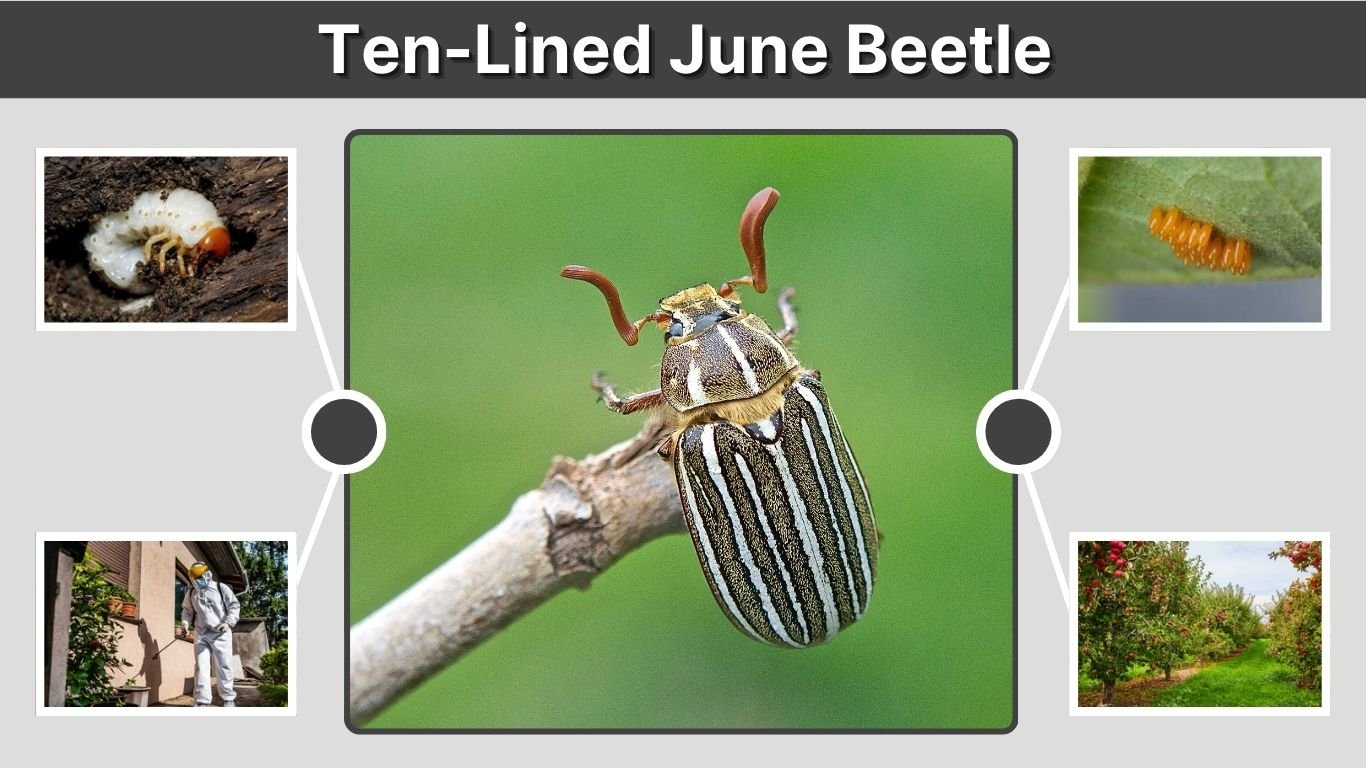
The ten-lined June beetle (Polyphylla decemlineata) is a large, striped beetle commonly found in western North America. Known for its distinctive white lines, fan-shaped antennae, and unusual hissing sound, this insect often attracts attention during summer nights. Although its appearance can seem intimidating, it is generally harmless to humans. However, its larvae can damage plant roots and agricultural crops. Understanding ten-lined June beetle identification, habitat, diet, life cycle, and behavior can help you recognize this fascinating insect and manage potential garden problems effectively.
What Is a Ten-Lined June Beetle?
The ten-lined June beetle is a scarab beetle belonging to the family Scarabaeidae. It is sometimes called the ten-lined June bug or watermelon beetle. Its scientific name, Polyphylla decemlineata, refers to its distinctive striped appearance. These beetles become particularly noticeable during warmer months when adults emerge from underground and begin searching for mates.
Ten-Lined June Beetle Identification
You can identify a ten-lined June beetle by examining several physical characteristics:
- Scientific name: Polyphylla decemlineata
- Size: Usually 22–30 millimeters long.
- Body color: Brown to dark brown with creamy-white stripes.
- Wing covers: Typically feature five pale longitudinal lines on each side.
- Antennae: Fan-shaped, especially prominent in males.
- Body shape: Oval, elongated, and somewhat rounded.
- Legs: Strong, reddish-brown legs with small spines.
These characteristics distinguish this beetle from many other June beetle species. Its bold stripes and unusually large antennae make it relatively easy to recognize.
Male vs. Female Ten-Lined June Beetle
Male and female ten-lined June beetles share similar body colors and striped patterns. However, they display noticeable differences in antenna size, movement, and reproductive behavior. These differences, known as sexual dimorphism, help researchers and insect enthusiasts distinguish between the sexes.
Male Ten-Lined June Beetle
Male ten-lined June beetles have exceptionally large, fan-shaped antennae. These antennae contain sensory structures that detect chemical signals, or pheromones, released by females.
Males are also strong fliers and frequently gather around outdoor lights during summer evenings. Their extended antennae can resemble tiny feathers or fans.
Female Ten-Lined June Beetle
Female ten-lined June beetles have noticeably smaller antennae and generally spend more time near the soil.
After mating, females deposit eggs underground, where developing larvae can access plant roots. Females are less frequently observed around artificial lights because their flying and dispersal behavior differs from that of males.
Where Do Ten-Lined June Beetles Live?
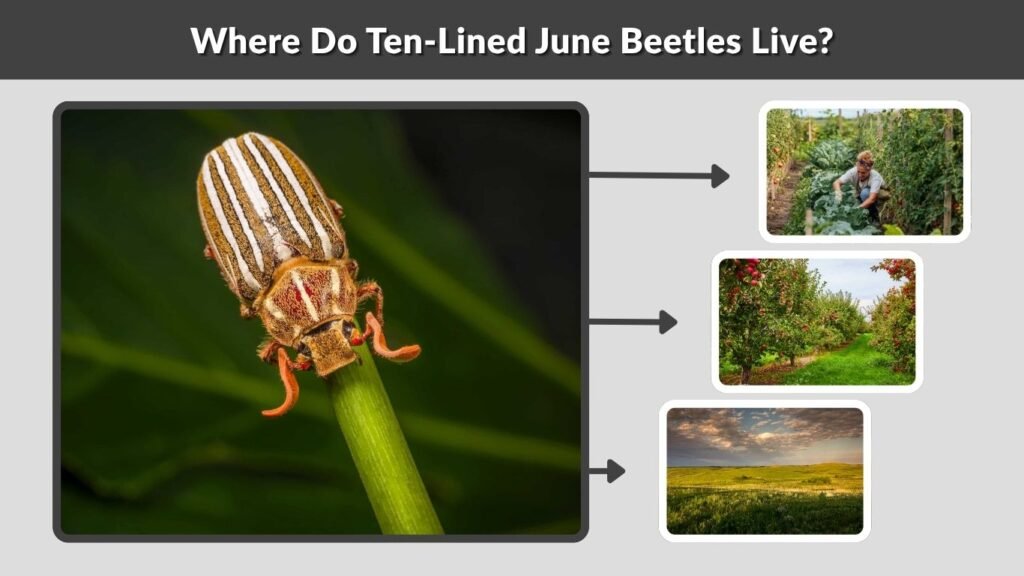
The ten-lined June beetle is native to western North America and inhabits several regions of the United States and Canada. Its distribution includes areas with suitable soil conditions and abundant vegetation. Sandy or relatively loose soils are particularly favorable because the larvae spend much of their development underground.
Ten-Lined June Beetle Native Range
This beetle occurs in several western states, including California, Oregon, Washington, Utah, Colorado, and parts of neighboring regions.
It also occurs in western Canada, particularly British Columbia. Ten-lined June beetles can be found in both natural environments and agricultural landscapes.
Ten-Lined June Beetle Habitat
Common habitats include gardens, orchards, grasslands, agricultural fields, and areas near trees or shrubs.
Adult beetles often shelter among vegetation during daylight hours. Underground larvae prefer soil containing plant roots that provide a consistent food supply.
Ten-Lined June Beetle Sound and Flying Behavior
One of the most interesting ten-lined June beetle facts is its ability to produce an audible hissing or squeaking sound. These insects are also capable of flight, although males are generally more noticeable flying around lights.
Why Does a Ten-Lined June Beetle Hiss?
The ten-lined June beetle may produce a distinctive hiss when disturbed, handled, or threatened.
The sound is associated with movement of its wings and body. It serves as a defensive response and may discourage predators.
Although the noise can be surprisingly loud, it does not indicate that the beetle is poisonous or preparing to attack.
Can Ten-Lined June Beetles Fly?
Yes, ten-lined June beetles can fly. Adult males are especially active during evening and nighttime hours.
Their flight may appear clumsy because of their relatively large bodies. Like many June beetles, they are attracted to artificial lighting and sometimes collide with windows or porch lights.
What Does a Ten-Lined June Beetle Eat?
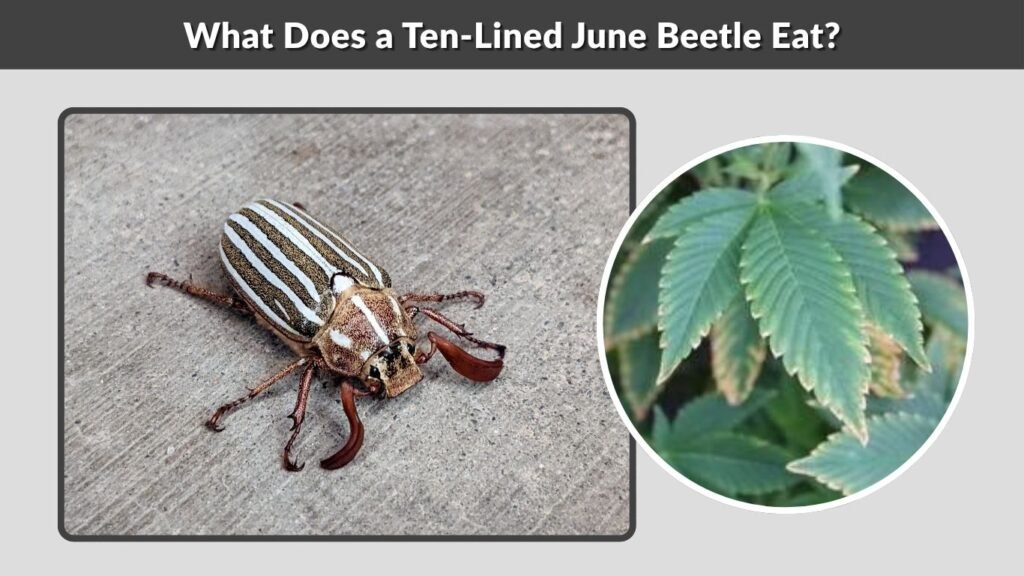
The ten-lined June beetle diet changes considerably throughout its development. Adult beetles consume plant foliage, while larvae remain underground and feed primarily on roots. Understanding these feeding habits is important because larvae generally cause much more significant plant damage than adults.
Adult Ten-Lined June Beetle Diet
Adult ten-lined June beetles feed on leaves from various trees and shrubs.
Their feeding may produce small notches along leaf edges. However, adult feeding rarely results in substantial plant damage.
Most adults are active for a relatively short period, during which reproduction is their primary biological activity.
Ten-Lined June Beetle Larvae Diet
Ten-lined June beetle larvae, commonly called white grubs, feed on roots from grasses, ornamental plants, fruit trees, and agricultural crops.
Large populations can weaken root systems and interfere with water absorption. Young trees and plants growing in sandy soil may be particularly vulnerable to serious damage.
Ten-Lined June Beetle Life Cycle and Lifespan

The ten-lined June beetle undergoes complete metamorphosis, developing through four distinct stages. Unlike insects that complete their life cycle within a few months, this species can spend several years developing underground. The duration depends on climate, geographic location, and environmental conditions.
Four Stages of the Ten-Lined June Beetle Life Cycle
- Egg: Female beetles deposit eggs in the soil after mating. The eggs hatch into small larvae.
- Larva: Cream-colored, C-shaped grubs feed on plant roots and gradually increase in size through three larval stages.
- Pupa: Mature larvae develop into pupae inside underground soil chambers, where their bodies transform.
- Adult: Fully developed beetles emerge during warmer months to find mates and reproduce.
How Long Does a Ten-Lined June Beetle Live?
The complete ten-lined June beetle life cycle typically takes approximately two to four years, depending on location.
Most of this time is spent underground as a developing grub. The adult stage is comparatively brief and primarily devoted to mating and reproduction.
Are Ten-Lined June Beetles Dangerous?
Despite their intimidating appearance and unusual hissing behavior, ten-lined June beetles are generally harmless to humans. They are not venomous or poisonous and do not normally bite people. However, their underground larvae can become agricultural pests when populations are sufficiently large.
Do Ten-Lined June Beetles Bite?
Ten-lined June beetles are not known to bite humans as a normal defensive behavior.
Their mouthparts are adapted for eating plant material rather than attacking people. Although their spiny legs may feel slightly prickly against the skin, they do not deliver venomous stings.
Can Ten-Lined June Beetles Damage Plants?
Yes. While adult feeding is usually insignificant, the larvae may cause serious root damage.
Infested plants can develop yellowing leaves, poor growth, and reduced resistance to drought. Severe infestations may eventually kill young trees or weaken established fruit trees.
How to Get Rid of Ten-Lined June Beetles
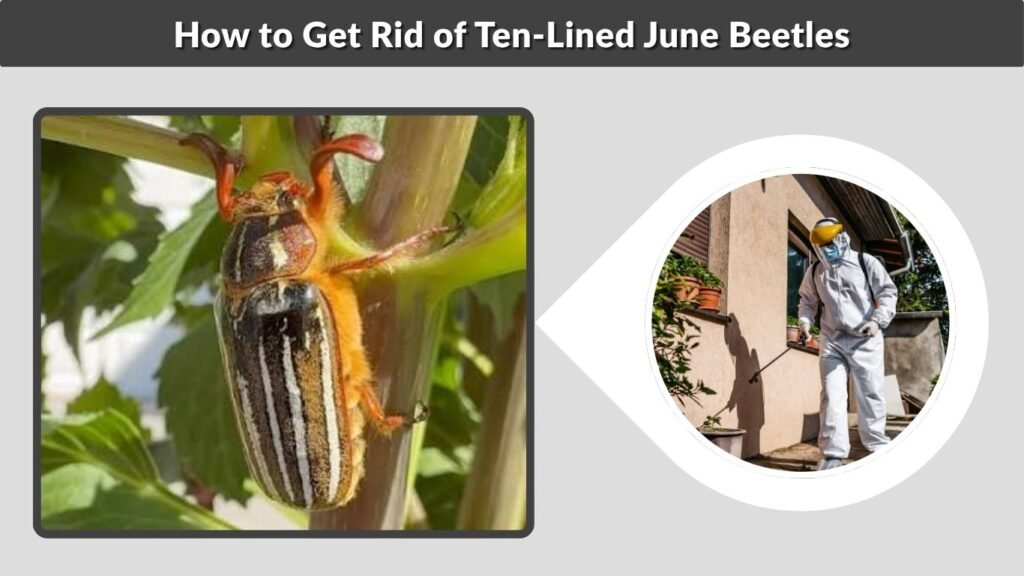
Ten-lined June beetle control is most important when larvae threaten lawns, gardens, or valuable trees. Finding an occasional adult near an outdoor light does not necessarily indicate an infestation. Effective management starts with identifying the insects correctly and checking whether root damage is occurring.
Signs of a Ten-Lined June Beetle Infestation
Common warning signs include:
- Unexplained yellowing or wilting leaves.
- Poor growth despite adequate watering.
- Large, cream-colored grubs near damaged roots.
- Weakened trees or shrubs.
- Increased adult beetle activity around outdoor lights.
Because several beetle species produce similar white grubs, proper identification is important before beginning treatment.
Ten-Lined June Beetle Control Methods
Consider these practical management approaches:
- Reduce unnecessary outdoor lighting: This can decrease the number of adult beetles gathering around your property.
- Inspect affected roots: Examine soil near declining plants to confirm whether grubs are present.
- Remove individual adults: Gently collect and relocate beetles that enter indoor spaces.
- Maintain plant health: Appropriate watering and soil care can help plants tolerate limited root damage.
- Seek professional advice: Severe orchard or landscape infestations may require specialized treatment.
Beneficial nematodes are sometimes used against white grubs, but their effectiveness against established ten-lined June beetle infestations can be limited. Avoid unnecessary pesticide applications without first confirming the pest.
FAQs
1. Are Ten-Lined June Beetles Poisonous?
No, ten-lined June beetles are not considered poisonous or venomous. Their unusual hissing sound and large body may appear threatening, but they do not possess a venomous sting. They are generally safe to observe without handling.
2. Why Do Ten-Lined June Beetles Have Large Antennae?
Male ten-lined June beetles have large, fan-shaped antennae that help detect female pheromones. Their sensitive antennae allow males to locate potential mates, particularly during evening flight activity. Female antennae are considerably smaller.
3. Are Ten-Lined June Beetles Invasive?
Ten-lined June beetles are native to western North America and are not considered invasive within their natural range. However, native insects can still become pests when their populations increase and their larvae damage agricultural crops or ornamental plants.
4. Can You Keep a Ten-Lined June Beetle as a Pet?
A ten-lined June beetle can be observed temporarily in a ventilated container with suitable plant material. However, its specialized underground larval development makes long-term care challenging. Wild beetles are generally better observed and released into suitable habitats.
5. What Is the Spiritual Meaning of a Ten-Lined June Beetle?
Some people associate beetles with transformation, renewal, persistence, or personal growth. These interpretations are cultural or personal beliefs rather than scientific facts. The ten-lined June beetle’s transformation from an underground grub into a flying adult may inspire such symbolism.