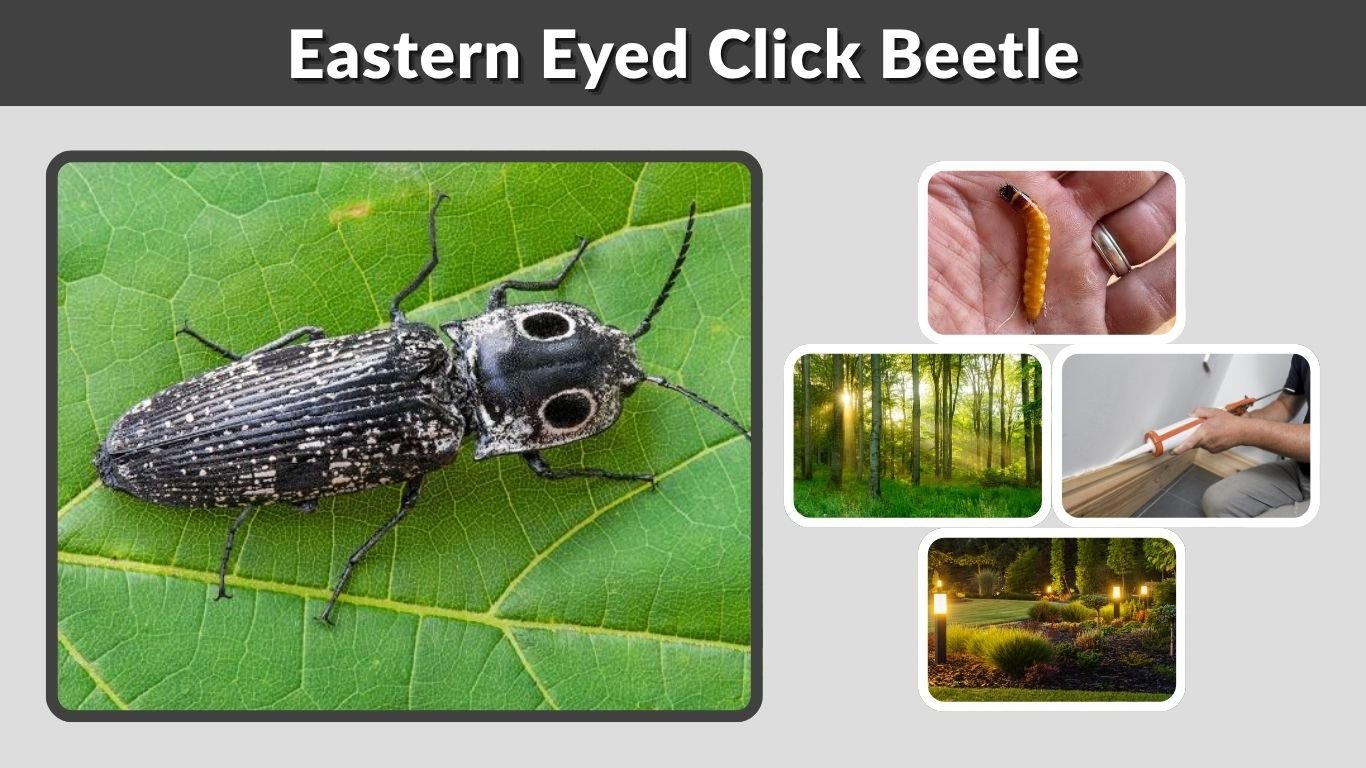
The eastern eyed click beetle (Alaus oculatus) is a fascinating insect recognized by its large, eye-like markings and unusual clicking sound. Found throughout much of eastern North America, this beetle often attracts attention because of its striking appearance and impressive size. Despite looking intimidating, eastern eyed click beetles are harmless to humans and beneficial to forest ecosystems. They help control wood-boring insects and survive in wooded habitats. Understanding their appearance, behavior, diet, habitat, and life cycle can help you identify these remarkable beetles in nature.
What Is an Eastern Eyed Click Beetle?
The eastern eyed click beetle is a large species belonging to the Elateridae family. It is also called the eyed click beetle, eyed later, or big-eyed click beetle.
Its scientific name, Alaus oculatus, refers to its distinctive appearance. Two prominent black eyespots behind its head make the insect look as though it has enormous eyes.
These markings help discourage potential predators. The beetle also has a specialized clicking mechanism that allows it to jump into the air when overturned.
Unlike many other click beetles, its larvae are predators that help control wood-boring insects. This makes the species an important part of woodland ecosystems.
Eastern Eyed Click Beetle Identification and Appearance
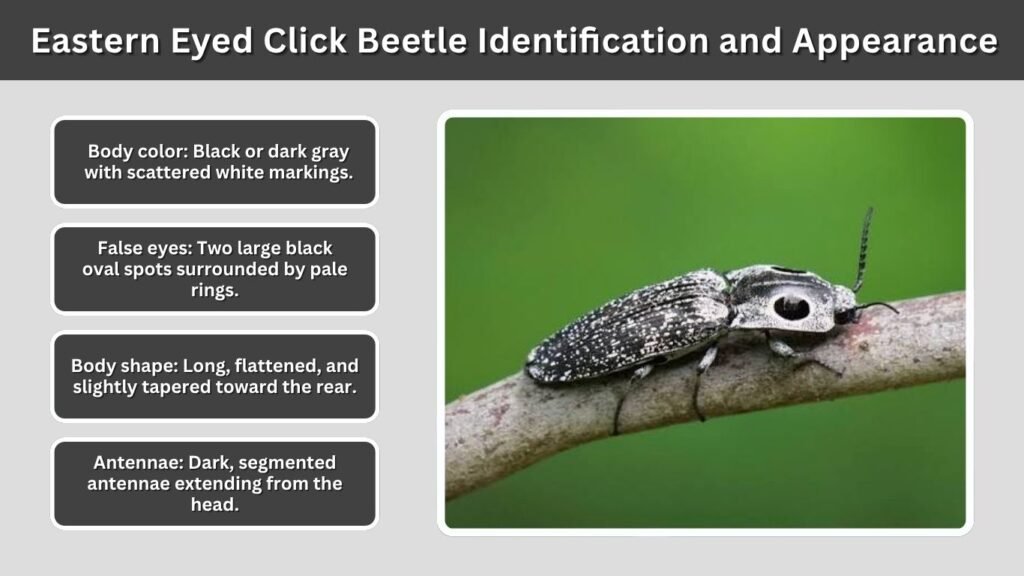
Identifying an eastern eyed click beetle is relatively easy because of its unusual body markings. It is among the largest click beetles found in North America.
Physical Characteristics
- Body color: Black or dark gray with scattered white markings.
- False eyes: Two large black oval spots surrounded by pale rings.
- Body shape: Long, flattened, and slightly tapered toward the rear.
- Antennae: Dark, segmented antennae extending from the head.
- Wings: Hard outer wing covers protecting functional flying wings.
- Legs: Six dark legs used for walking and gripping surfaces.
The false eyes are located on the pronotum, the shield-like section immediately behind the head. Its actual eyes are much smaller and positioned near the antennae.
Eastern Eyed Click Beetle Size
Adult eastern eyed click beetles generally measure 1–1¾ inches (24–45 mm) long, although some references describe specimens approaching 2 inches.
Their large size and contrasting eyespots make them noticeably different from ordinary garden beetles.
Are Eastern Eyed Click Beetles Dangerous?
Eastern eyed click beetles are not considered dangerous to humans, pets, or household plants. Their unusual appearance sometimes causes concern, especially when they enter houses or land near people.
However, they do not possess venom or a stinger, and they do not attack people.
Do Eastern Eyed Click Beetles Bite?
Eastern eyed click beetles are not known to bite humans as a defensive behavior. Although they have chewing mouthparts, they generally attempt to escape rather than bite when disturbed.
Their primary defense is producing a clicking sound and suddenly flipping into the air. This movement can surprise someone holding the insect but does not represent an attack.
If you encounter one, avoid squeezing or unnecessarily handling it. Allowing the beetle to crawl onto a leaf is a safer way to relocate it.
Where Do Eastern Eyed Click Beetles Live?
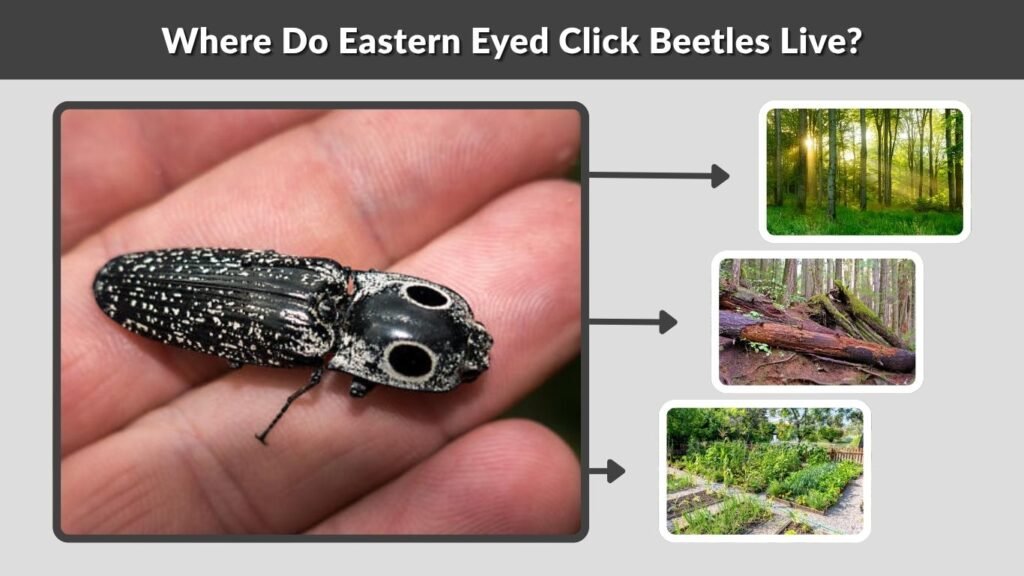
Eastern eyed click beetles are native to North America and occupy various wooded environments. Their distribution includes much of the eastern United States, extending into parts of Canada and westward into Texas.
They are frequently associated with forests containing mature hardwood trees and decomposing wood.
Common Habitats
- Deciduous forests: Woodlands containing oak, cherry, and other hardwood trees.
- Rotting logs: Important environments where larvae develop and hunt.
- Tree stumps: Moist, decaying stumps provide shelter and prey.
- Gardens and parks: Landscaped areas near mature trees may attract adults.
- Residential areas: Beetles occasionally appear around outdoor lights.
Eastern eyed click beetles occur in states including Florida, Texas, Michigan, Georgia, and Pennsylvania.
Adults are especially noticeable during warmer months, often in late spring and summer. Their distribution and seasonal activity vary depending on local climate.
What Do Eastern Eyed Click Beetles Eat?
Eastern eyed click beetles have different feeding habits during their adult and larval stages.
Adult beetles are associated with nectar and may feed very little overall. They are sometimes observed on flowers, trees, and other vegetation.
Their larvae have a considerably different diet. Living inside decomposing wood, they actively hunt other insects, particularly wood-boring beetle larvae.
Longhorn beetle grubs are among their important prey. By consuming these insects, eastern eyed click beetle larvae help regulate populations living inside dead wood.
Unlike the larvae of many agricultural click beetle species, eastern eyed click beetle larvae are primarily predators rather than plant-root feeders.
Eastern Eyed Click Beetle Larvae and Life Cycle
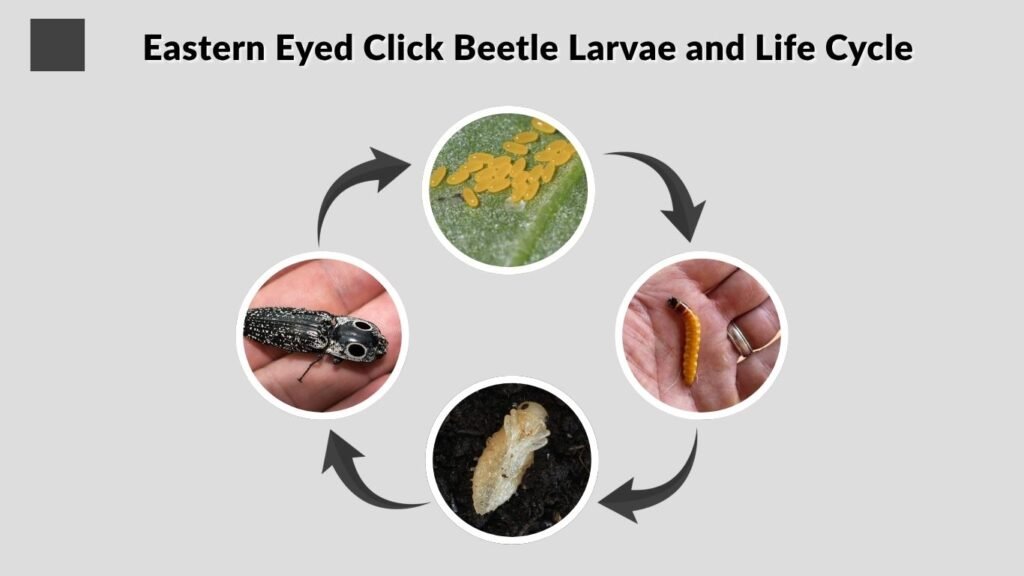
The eastern eyed click beetle undergoes complete metamorphosis, changing significantly between its immature and adult stages.
Its larvae are commonly called wireworms because of their long, cylindrical bodies and tough outer coverings.
Four Stages of the Life Cycle
- Egg: Female beetles reproduce and lay eggs in suitable environments, beginning the next generation.
- Larva: Young larvae develop in decaying wood, feeding on other insects. Mature larvae can approach 2 inches long.
- Pupa: After completing larval development, the insect transforms into a pupa before becoming an adult.
- Adult: The mature beetle emerges with its characteristic eyespots, functional wings, and clicking mechanism.
The larvae are usually yellowish to brown, with a darker head and rear body segments. Their bodies are hardened, allowing them to move through decomposing wood.
Larval development in click beetles may take more than one year, depending on the species and environmental conditions.
The eastern eyed click beetle’s predatory larval stage makes it particularly useful in forest environments.
Why Do Eastern Eyed Click Beetles Make Clicking Sounds?
The eastern eyed click beetle produces a distinctive clicking noise using a specialized structure underneath its thorax.
When overturned, the beetle arches its body and builds tension around a spine-like projection. It then releases that tension rapidly, producing an audible click.
The sudden movement launches the insect upward, often allowing it to land back on its feet.
This behavior serves two purposes: helping the beetle right itself and potentially startling predators.
Eastern eyed click beetles may remain motionless briefly when disturbed, but they do not rely entirely on playing dead. Their clicking mechanism provides an effective escape response.
Can Eastern Eyed Click Beetles Fly?
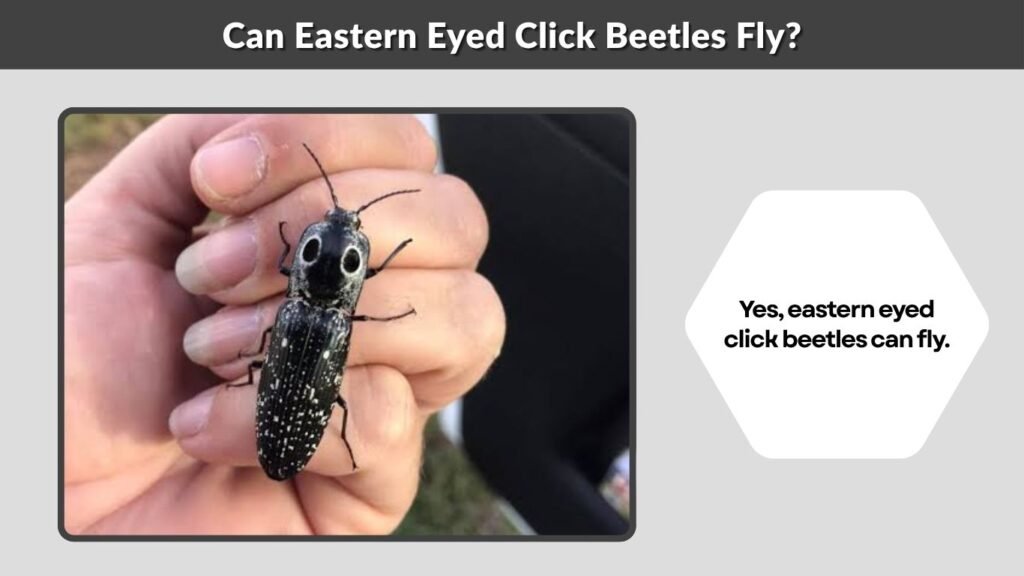
Yes, eastern eyed click beetles can fly. Although their heavy-looking bodies might suggest otherwise, adults have functional wings beneath their hardened wing covers.
They use flight to travel between suitable habitats, locate mates, and explore their surroundings.
Adults may also be attracted to artificial lights at night. Consequently, homeowners sometimes discover them around porch lights, windows, or illuminated walls.
However, their flying behavior is not aggressive. A beetle approaching a light is usually responding to illumination rather than attempting to attack someone.
Are Eastern Eyed Click Beetles Good or Bad?
Eastern eyed click beetles are generally considered beneficial insects, particularly in natural woodland environments.
Their larvae prey on insects living inside decomposing trees and logs. This predatory behavior contributes to the ecological balance of forest habitats.
Adult beetles are not regarded as significant pests of crops, gardens, or household structures.
They are also native rather than invasive in their established North American range.
Although these beetles may appear uncommon because people rarely encounter them, an occasional sighting does not indicate that the species is endangered.
Preserving natural habitats and avoiding unnecessary insecticide applications helps support these beneficial insects.
What to Do If You Find an Eastern Eyed Click Beetle in Your House
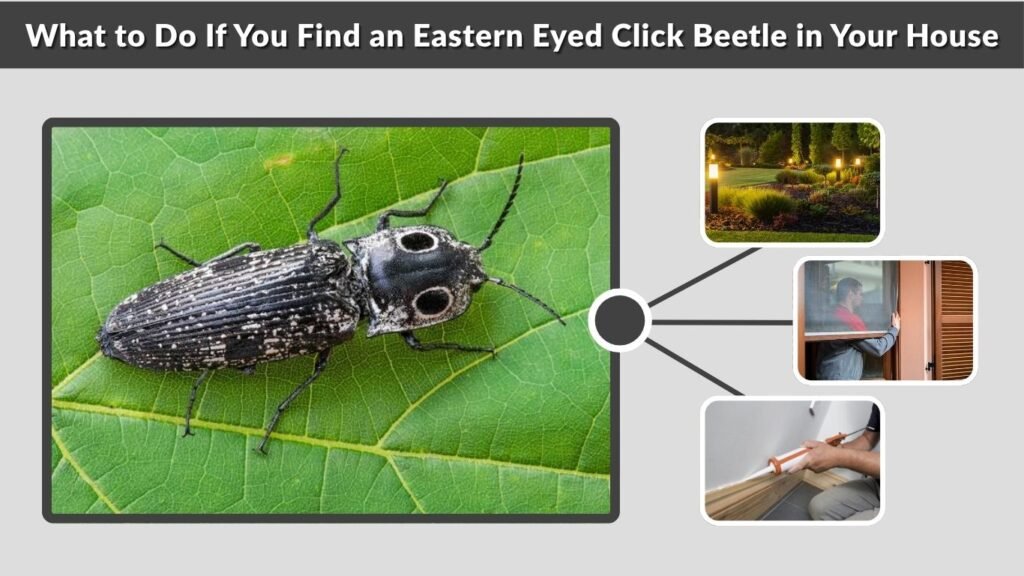
Finding a large, black beetle with prominent eyespots indoors can be surprising. Fortunately, eastern eyed click beetles are usually accidental visitors rather than household pests.
They do not normally reproduce indoors or establish colonies inside houses.
Safe Removal Methods
- Use a container: Cover the beetle with a cup and gently slide paper underneath.
- Release it outdoors: Place it near trees, shrubs, or wooded areas.
- Check window screens: Repair openings where flying insects might enter.
- Reduce outdoor lighting: Limit unnecessary bright lights that attract beetles.
- Seal entry points: Close gaps around doors, windows, and exterior walls.
Chemical treatment is generally unnecessary for an occasional eastern eyed click beetle. Simple removal and prevention methods are usually sufficient.
Eastern Eyed Click Beetle vs. Other Eyed Click Beetles
Several related beetles share the eastern eyed click beetle’s unusual appearance.
The western eyed click beetle (Alaus melanops) occurs farther west and generally has a darker, more uniform appearance.
The Texas click beetle (Alaus lusciosus) can also resemble the eastern species. However, its pale markings are often more clustered rather than evenly scattered.
Accurate identification depends on body patterns, geographical location, and other physical characteristics.
Although these species resemble one another, they are distinct members of the genus Alaus.
FAQs
1. Are Eastern Eyed Click Beetles Poisonous?
No. Eastern eyed click beetles are not poisonous or venomous. They do not inject toxins through bites or stings and are harmless to humans under normal circumstances.
2. Do Eastern Eyes Click Beetle Eyes Glow?
No. Their large black markings are false eyes that do not glow in darkness. Some other click beetles are bioluminescent, but eastern eyed click beetles are not.
3. Are Eastern Eyed Click Beetles Rare?
They are not necessarily rare, but adults can be encountered infrequently. Their presence depends on suitable woodland habitat, seasonal activity, and local environmental conditions.
4. What Is the Spiritual Meaning of an Eastern Eyed Click Beetle?
Some people symbolically associate the beetle with resilience, protection, transformation, or new beginnings because of its eyespots and clicking behavior. These interpretations are personal or cultural beliefs, not scientifically established meanings.
5. What Are the Main Predators of Eastern Eyed Click Beetles?
Insect-eating birds and other predators may attempt to capture click beetles. Their large false eyespots and sudden clicking movements are believed to help discourage potential attacks.