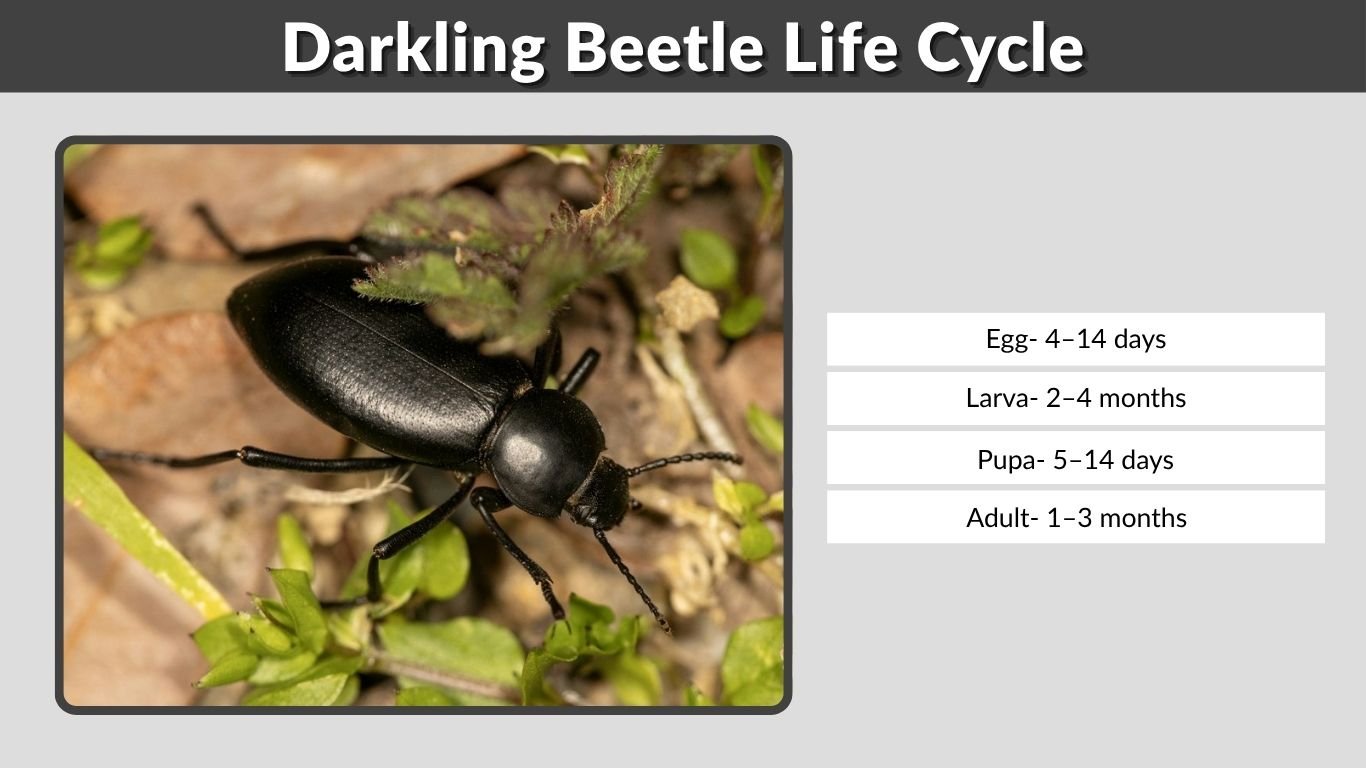
The darkling beetle life cycle is a fascinating process that involves four distinct stages: egg, larva, pupa, and adult. These insects belong to the family Tenebrionidae and undergo complete metamorphosis, transforming from tiny eggs into fully developed beetles. The entire process can take several months, depending on temperature, food availability, and species. The common yellow mealworm beetle (Tenebrio molitor) is one of the best-known examples. Understanding its development stages, growth patterns, and lifespan reveals how these insects survive, reproduce, and adapt to different environments.
What Is the Darkling Beetle Life Cycle?
The life cycle of a darkling beetle consists of four stages, beginning when a female lays eggs and continuing until the next generation reaches adulthood.
This process is known as complete metamorphosis because the insect changes its body form significantly between developmental stages.
Each stage serves a different biological purpose, from feeding and growth to reproduction.
Darkling Beetle Life Cycle Duration
The following table provides approximate developmental times for the yellow mealworm beetle (Tenebrio molitor) under reasonably favorable conditions.
| Life Cycle Stage | Approximate Duration |
| Egg | 4–14 days |
| Larva (Mealworm) | 2–4 months |
| Pupa | 5–14 days |
| Adult | 1–3 months |
These durations are estimates rather than fixed limits. Cooler temperatures, limited food, and other unfavorable conditions can extend development considerably.
4 Stages of the Darkling Beetle Life Cycle
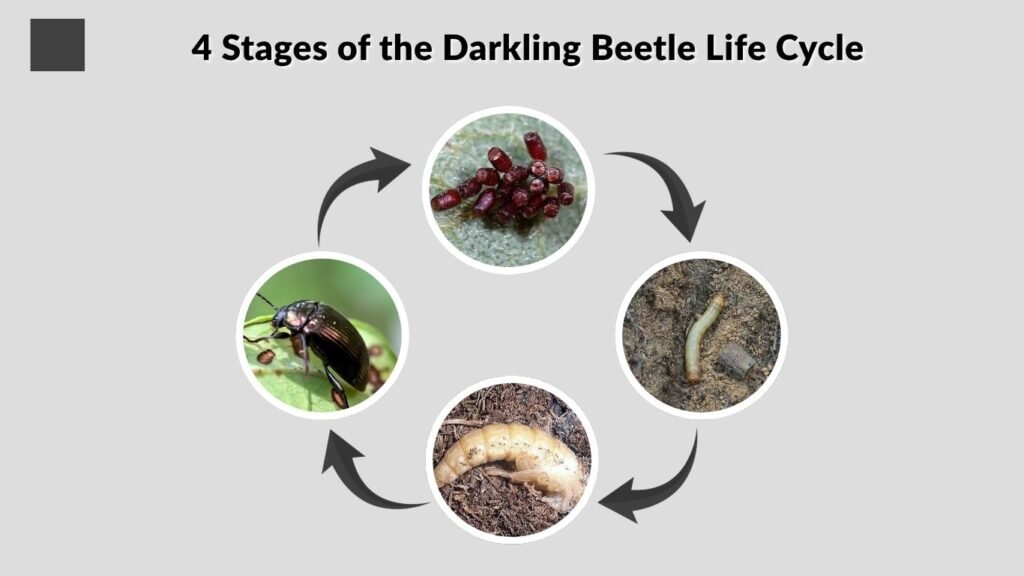
Darkling beetles pass through four developmental stages before completing their life cycle. Their appearance, feeding behavior, and physical abilities change throughout this process. The larval stage is primarily responsible for growth, while the pupal stage produces the transformation into an adult. Understanding each stage makes it easier to identify these beetles at different ages.
1. Egg Stage
The darkling beetle life cycle begins when a mature female lays eggs in a suitable environment. Yellow mealworm beetles commonly deposit their eggs among grain products, bran, or other materials that provide food for developing larvae.
The eggs are tiny, oval, and usually creamy white. Their small size makes them difficult to notice without magnification.
Under favorable conditions, mealworm beetle eggs generally hatch within several days to about two weeks.
Temperature and moisture influence how quickly the embryos develop. After hatching, each young larva begins feeding and enters the next stage.
2. Larval Stage (Mealworm)
The larval stage is generally the longest developmental period in the mealworm darkling beetle life cycle.
Newly hatched larvae are small, pale, and soft-bodied. As they mature, their bodies become elongated, segmented, and yellowish brown.
Larvae feed actively on grains, decaying plant materials, and other suitable organic substances.
Because their outer coverings cannot expand continuously, larvae must shed their exoskeletons through a process called molting.
They undergo numerous molts before reaching full size. Depending on environmental conditions, this stage may last two to four months or considerably longer.
When fully developed, the larvae stop growing and prepare to enter the pupal stage.
3. Pupal Stage
The darkling beetle pupa represents the transitional period between the mealworm larva and the adult beetle.
During this stage, the insect stops feeding and undergoes major internal changes. Structures such as adult legs, antennae, and wings develop as the body reorganizes.
Newly formed pupae are usually pale cream or white. They gradually become darker as adult development progresses.
For yellow mealworm beetles, pupation often lasts approximately 5–14 days under favorable conditions, although lower temperatures may prolong the process.
Once development is complete, the adult beetle emerges from its pupal covering.
4. Adult Darkling Beetle Stage
The final stage begins when the adult darkling beetle emerges. Newly emerged adults are often pale or reddish brown because their outer coverings have not fully hardened.
Over the following period, their exoskeletons become darker and firmer, eventually developing the familiar dark brown or black appearance.
Adult beetles mainly focus on feeding, mating, and reproduction rather than further growth.
After mating, females lay eggs in suitable locations, allowing a new generation to develop.
The adult lifespan of yellow mealworm beetles is often around one to three months, although longevity varies with environmental conditions.
How Long Is the Darkling Beetle Life Cycle?
The complete darkling beetle life cycle varies considerably depending on the species.
For yellow mealworm beetles, development from egg to adult may take approximately three to five months in favorable warm conditions. However, development can extend much longer in cooler environments.
Other darkling beetles develop at different rates.
For example, the lesser mealworm beetle (Alphitobius diaperinus), commonly found in poultry facilities, may complete development from egg to adult in approximately 35–90 days.
Therefore, no single duration accurately describes every species in the Tenebrionidae family.
What Affects the Darkling Beetle Life Cycle?
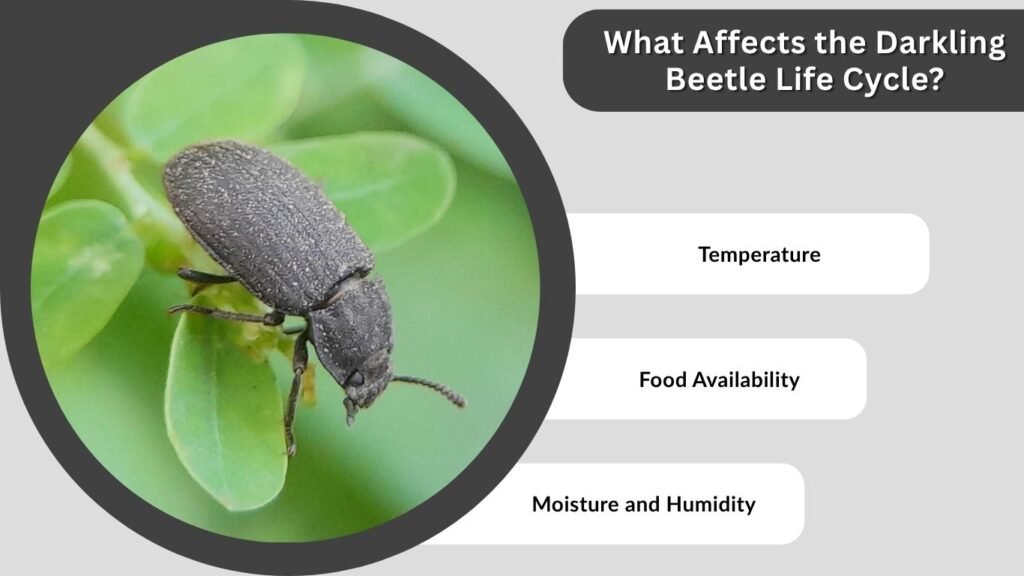
Several environmental factors determine how quickly darkling beetles grow and reproduce. Temperature, food quality, and moisture availability are particularly important because they influence metabolism, survival, and successful metamorphosis.
Temperature
Temperature strongly affects darkling beetle development. Warmer conditions within a species’ suitable range generally accelerate egg hatching, larval growth, and pupation.
Cooler temperatures slow metabolism and can extend the larval stage considerably.
However, excessive heat can cause stress, dehydration, or death rather than faster development.
Food Availability
Food quality influences larval growth and survival. Mealworm larvae commonly feed on wheat bran, oats, and other grain-based materials.
An adequate diet supports healthy development and successful molting.
Insufficient food or poor nutrition may delay growth and reduce the number of larvae reaching adulthood.
Moisture and Humidity
Darkling beetles require appropriate moisture levels for survival, although their requirements differ among species.
Captive mealworm colonies often receive moisture through vegetables such as carrots and potatoes.
Excessively wet substrates can encourage mold growth, while very dry conditions may reduce survival or interfere with development.
How Long Do Darkling Beetles Live?
The darkling beetle lifespan includes the egg, larval, pupal, and adult stages.
Yellow mealworm beetles may spend several months developing before becoming adults. Once mature, adults commonly survive for another one to three months.
Some other darkling beetle species live considerably longer, with certain adults surviving a year or more.
Their longevity depends on species, temperature, diet, moisture, and exposure to predators.
It is important to distinguish the adult lifespan from the complete life cycle, because these describe different periods of development.
How to Observe the Darkling Beetle Life Cycle at Home
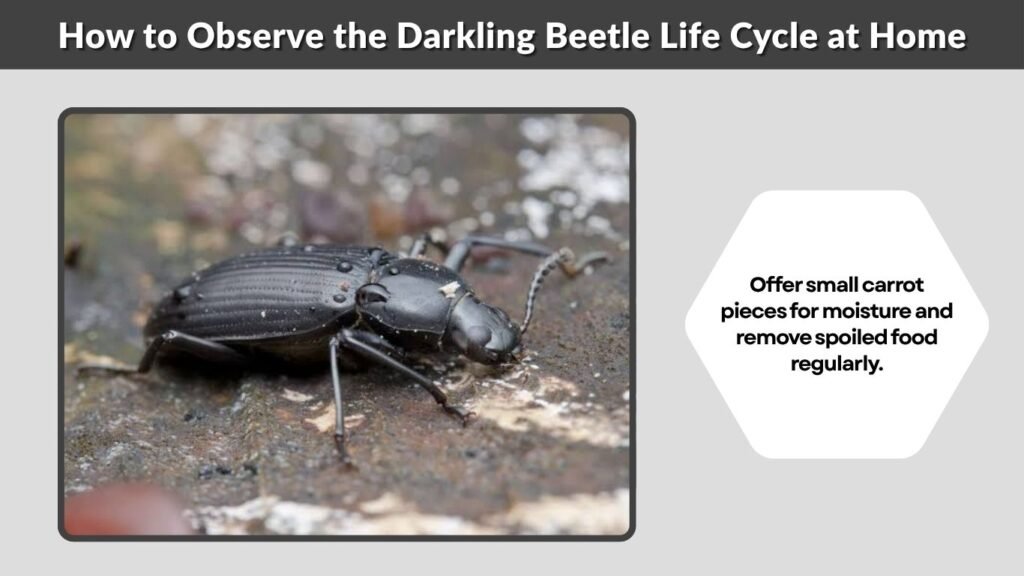
The mealworm darkling beetle life cycle can be observed using a simple, properly ventilated enclosure.
Start with captive-raised mealworms and provide a dry substrate such as wheat bran or plain rolled oats.
Offer small carrot pieces for moisture and remove spoiled food regularly.
As the larvae grow, watch for discarded skins and the appearance of pale pupae.
Separate pupae carefully if necessary because larvae and adults may damage vulnerable individuals.
After the beetles emerge, observe how their bodies gradually darken and harden.
Keeping a record of development dates can help demonstrate how temperature and feeding conditions influence the life cycle.
FAQs
1. How Many Stages Are in the Darkling Beetle Life Cycle?
Darkling beetles have four life cycle stages: egg, larva, pupa, and adult. This developmental process is called complete metamorphosis.
2. How Long Does a Darkling Beetle Stay a Mealworm?
Yellow mealworm beetles typically remain in the larval stage for several months. Under cooler or less favorable conditions, this period can last considerably longer.
3. Do Darkling Beetles Undergo Complete Metamorphosis?
Yes. Darkling beetles undergo complete metamorphosis, meaning they develop through distinct egg, larval, pupal, and adult stages.
4. How Does Temperature Affect the Darkling Beetle Life Cycle?
Temperature influences developmental speed. Suitable warm conditions generally promote faster growth, while cooler temperatures delay hatching, molting, and pupation.
5. How Many Eggs Can a Female Darkling Beetle Lay?
A female yellow mealworm beetle can lay hundreds of eggs during adulthood. The number varies depending on nutrition, temperature, mating success, and other environmental conditions.