
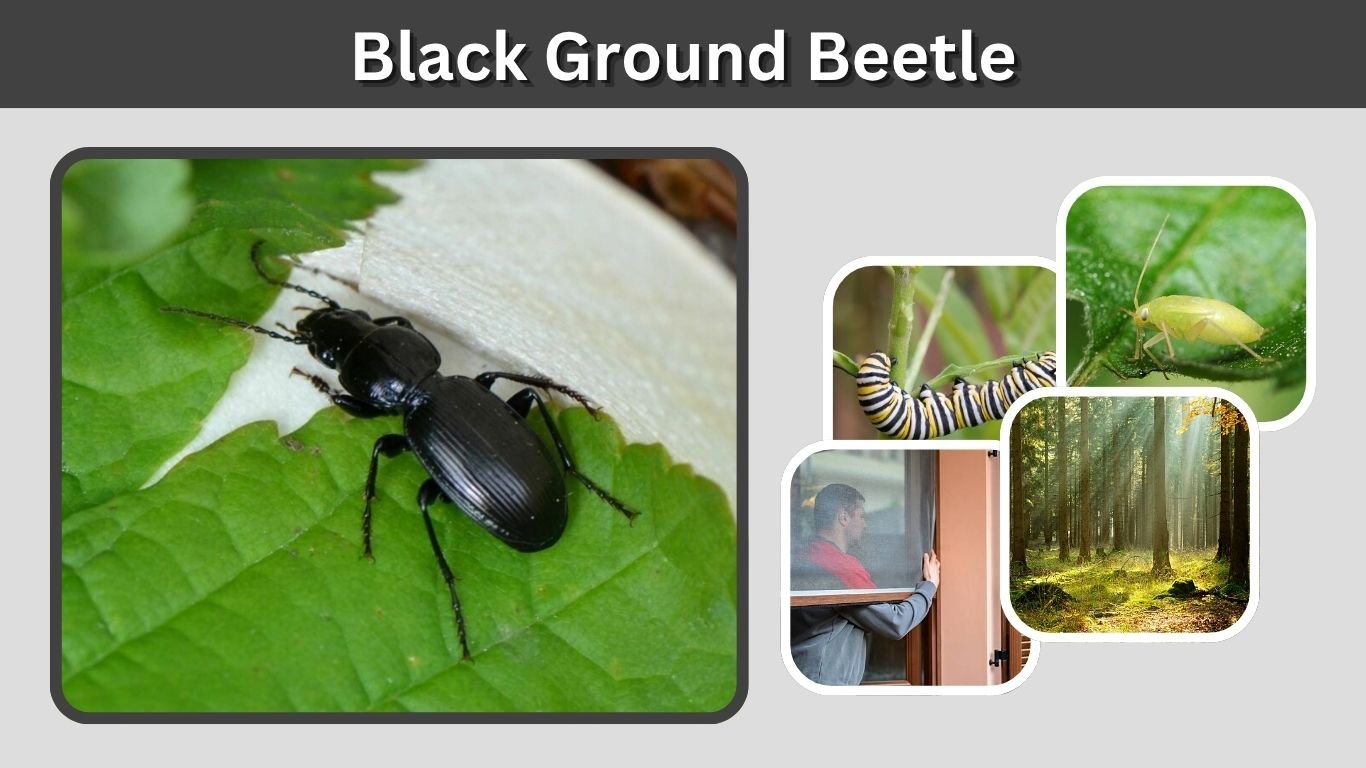
The black ground beetle is a common insect found in gardens, forests, agricultural fields, and sometimes inside homes. Recognized by its dark body, strong legs, and quick movements, this beetle belongs to a large family of mostly ground-dwelling insects. Although its appearance may seem intimidating, most black ground beetles are harmless to humans and beneficial to the environment. They help control various garden pests by feeding on insects and other small invertebrates. Understanding their identification, habitat, diet, life cycle, and behavior makes it easier to distinguish them from household pests.
What Is a Black Ground Beetle?
Black ground beetles belong to the family Carabidae, which includes thousands of species worldwide. These insects are primarily terrestrial, spending much of their time searching for food or shelter near the soil surface. The term black ground beetle describes several dark-colored species rather than one particular insect. Many are active predators that play an important role in natural pest control.
Scientific Name and Classification
The scientific classification of a black ground beetle depends on its species.
- Order: Coleoptera
- Family: Carabidae
- Common genus: Pterostichus
- Example species: Pterostichus melanarius
- Another common species: Pterostichus madidus
Both examples are dark-colored ground beetles, although their physical characteristics and geographical distributions differ.
Common Black Ground Beetle Species
Pterostichus melanarius is a widespread black ground beetle originally native to Europe and now established in North America. It has a glossy black body with noticeable grooves along its wing covers.
Another familiar species is the black clock beetle (Pterostichus madidus), commonly found in British gardens. It has a rounded pronotum and sometimes reddish-brown legs.
Black Ground Beetle Identification
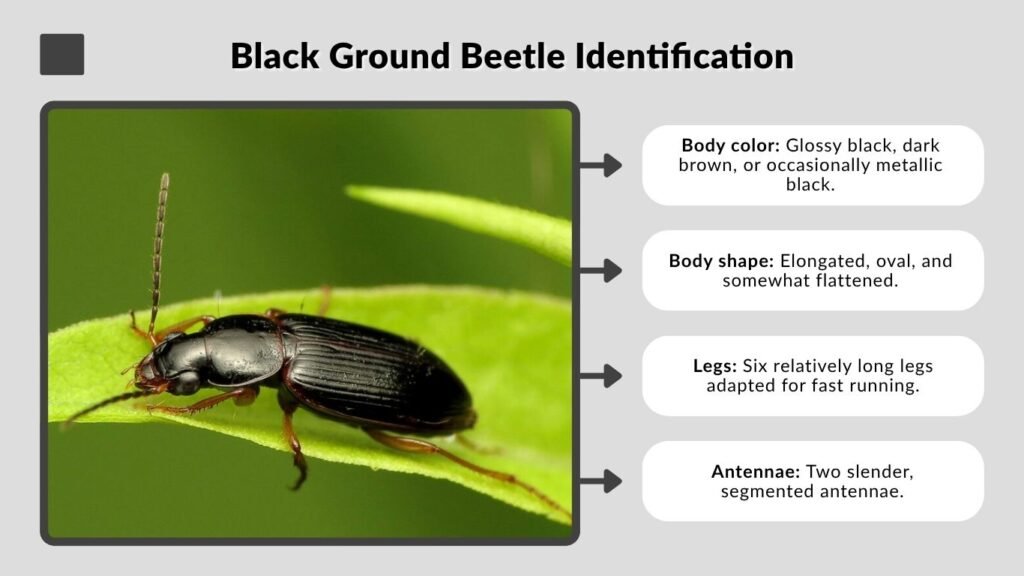
Identifying a black ground beetle involves examining its body shape, coloration, legs, antennae, and movement. Most have an elongated or oval body protected by hardened wing covers. Although several species look similar, their distinctive running behavior and visible structural features help separate them from other black beetles and common household insects.
Physical Appearance and Features
Black ground beetles commonly display the following characteristics:
- Body color: Glossy black, dark brown, or occasionally metallic black.
- Body shape: Elongated, oval, and somewhat flattened.
- Wing covers: Hard protective covers, often marked with parallel grooves.
- Legs: Six relatively long legs adapted for fast running.
- Antennae: Two slender, segmented antennae.
- Head: Prominent jaws used for catching and consuming prey.
- Movement: Quick running across soil, pavement, or indoor floors.
Color alone cannot establish the exact species because many unrelated beetles are also black.
Black Ground Beetle Size
Ground beetles vary considerably in size. The Royal Horticultural Society describes ground beetles ranging approximately from 2 to 25 millimeters in its garden guidance.
The commonly encountered Pterostichus melanarius measures approximately 15–16 millimeters, while black clock beetles can reach about 20 millimeters.
Both small and large black ground beetles may occur in the same garden, depending on local species.
Black Ground Beetle vs. Cockroach
Black ground beetles are sometimes mistaken for cockroaches because both insects move quickly and may appear indoors.
However, ground beetles generally have harder, visibly grooved wing covers and a different body profile. Cockroaches typically possess a broad shield-like pronotum, flattened bodies, and very long antennae.
A close examination of these features helps distinguish them.
Black Ground Beetle Habitat and Distribution
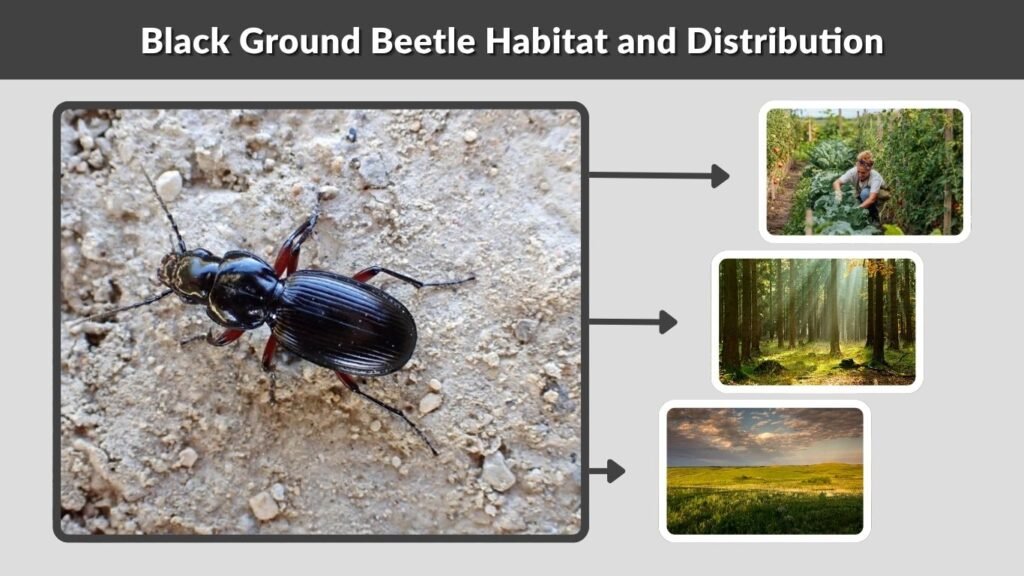
Black ground beetles occupy numerous terrestrial environments, including gardens, woodland floors, grasslands, farmland, and urban landscapes. They generally prefer places offering shelter, suitable temperatures, and abundant prey. Many species avoid extended exposure to direct sunlight and spend daylight hours beneath rocks, decaying wood, leaf litter, or other protective materials.
Where Do Black Ground Beetles Live?
Common hiding locations include gardens, grassy fields, woodland edges, compost areas, and beneath fallen logs.
Black ground beetles are found across North America, Europe, and many other regions. However, individual species have different geographic ranges.
In the United States, they occur in states such as Texas, California, and Colorado, although the species present vary with local conditions.
Are Black Ground Beetles Nocturnal?
Many black ground beetles are primarily nocturnal. They hide during daylight and emerge after sunset to search for food.
Their activity often increases during favorable warm or moist conditions. Some species are attracted to artificial lights, which helps explain why they occasionally appear near illuminated entrances.
However, not all ground beetles are strictly nocturnal.
What Do Black Ground Beetles Eat?
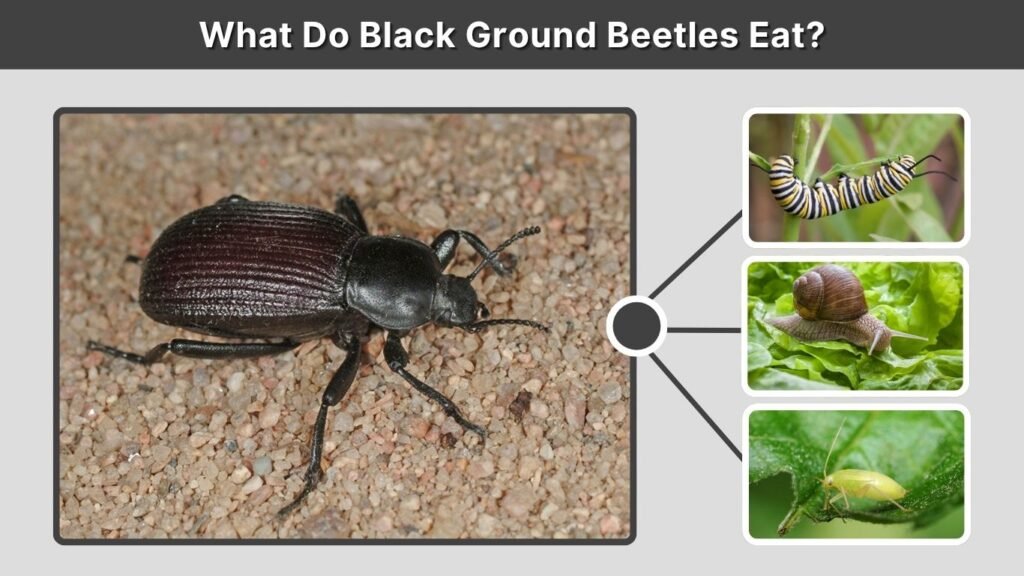
Most black ground beetles feed on small invertebrates, making them important natural predators in garden ecosystems. Their strong mouthparts allow them to capture and consume a variety of prey. Different species may also eat seeds, decaying organic matter, or other plant materials. Their feeding habits depend on species, season, and food availability.
Black Ground Beetle Diet
Their food commonly includes:
- Caterpillars and other insect larvae
- Small slugs and snails
- Aphids and other soft-bodied insects
- Insect eggs
- Small worms and other invertebrates
- Seeds and plant material in some species
By consuming pest insects, many ground beetles help protect vegetables, flowers, and agricultural crops.
Black Ground Beetle Larvae and Life Cycle
Black ground beetles undergo complete metamorphosis through four developmental stages: egg, larva, pupa, and adult.
Females generally lay eggs in soil or protected organic material. After hatching, elongated larvae develop with three pairs of legs near the head.
Many larvae hunt small soil-dwelling invertebrates. Following several developmental stages, they pupate and eventually emerge as adults.
The length and timing of the life cycle vary by species and environmental conditions. Some species overwinter as larvae, while others survive winter as adults.
Why Are Black Ground Beetles in My House?
Discovering a black ground beetle inside your house can be surprising, especially when several appear near doors, windows, or basement floors. Fortunately, these insects are usually accidental visitors rather than permanent household pests. They naturally live outdoors and generally enter buildings while searching for shelter or moving through their surroundings.
Common Reasons They Enter Homes
Black ground beetles may enter through:
- Cracks around foundations
- Open doors and damaged window screens
- Gaps beneath exterior doors
- Openings around pipes and utility lines
- Poorly sealed basement windows
Outdoor lighting can also attract certain species toward buildings.
Basements, garages, and ground-floor rooms are common discovery locations because they provide access from nearby outdoor habitats.
Do Black Ground Beetles Infest Houses?
Most ground beetles cannot establish breeding populations inside ordinary homes. They do not consume stored food, damage furniture, or destroy structural wood.
Finding several indoors usually indicates accessible entry points or favorable conditions outside rather than an established infestation.
Repeated sightings should prompt an inspection of exterior openings and nearby hiding places.
Are Black Ground Beetles Dangerous?
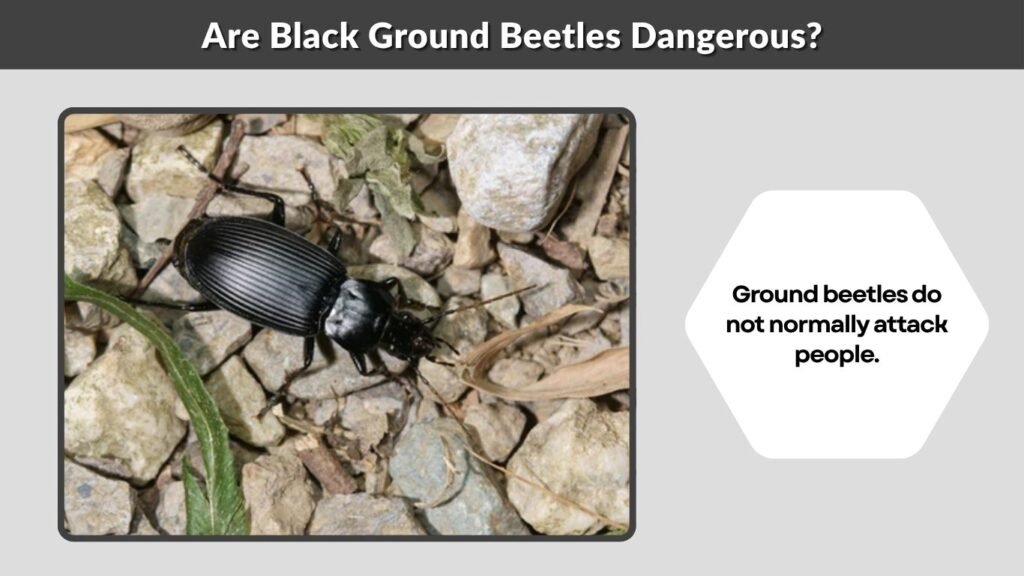
Despite their dark appearance and noticeable jaws, black ground beetles generally present little danger to humans or pets. Most avoid contact and quickly run away when disturbed. Their ecological benefits are considerably greater than the inconvenience they sometimes cause indoors. Nevertheless, handling them carelessly may trigger defensive behavior.
Do Black Ground Beetles Bite?
Ground beetles do not normally attack people. However, larger species may deliver a defensive pinch with their jaws when trapped or handled roughly.
Such pinches are generally minor, although they can cause temporary discomfort.
Some ground beetles also release unpleasant-smelling defensive secretions. Avoid squeezing unidentified beetles or handling them with bare hands.
Are Black Ground Beetles Poisonous?
Common black ground beetles are not considered poisonous to humans, and they do not possess venomous stingers.
Certain members of the ground beetle family have specialized chemical defenses, but these should not be confused with the behavior of every black ground beetle.
They are also not recognized as typical carriers of household diseases.
How to Get Rid of Black Ground Beetles
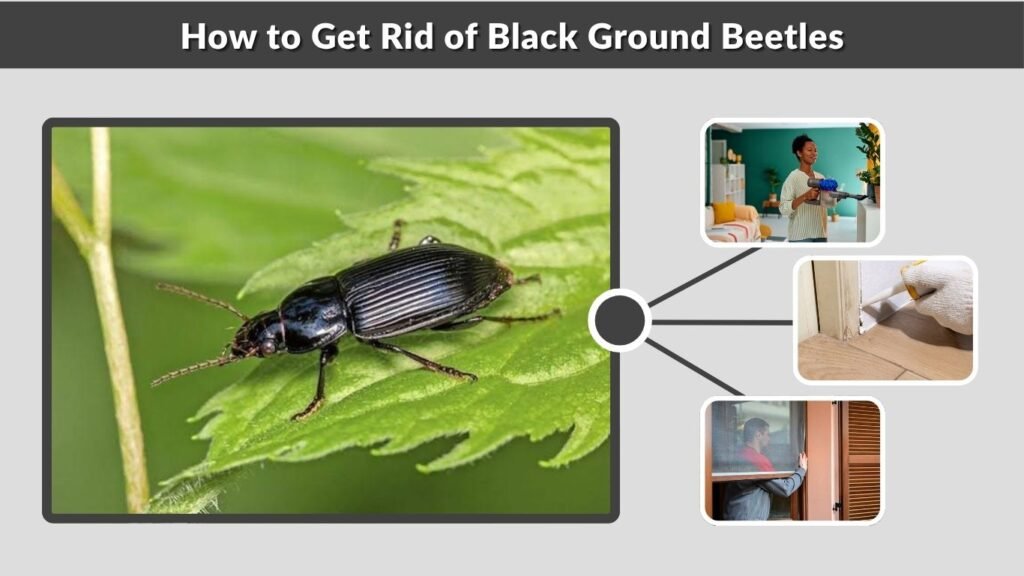
Although black ground beetles are beneficial outdoors, homeowners may prefer to prevent them from entering living spaces. Effective management usually involves exclusion, sanitation, and reducing attractive conditions around the building. Chemical treatments are rarely necessary for occasional visitors, particularly because these beetles do not normally reproduce indoors.
Remove Black Ground Beetles Indoors
Use these practical methods:
- Capture individual beetles: Place a container over the insect and gently release it outdoors.
- Vacuum accessible areas: Remove beetles from corners, basement floors, and other indoor locations.
- Seal entry points: Repair cracks around foundations, windows, and doors.
- Install door sweeps: Close gaps beneath exterior entrances.
- Repair window screens: Replace damaged screens to prevent additional insects from entering.
Regular inspections can help identify locations where beetles repeatedly enter.
Prevent Ground Beetles Around Your House
Outdoor prevention involves several simple adjustments:
- Keep accumulated leaves and loose debris away from exterior walls.
- Move firewood and unnecessary boards away from the foundation.
- Reduce excessive mulch immediately beside the building.
- Trim dense vegetation touching exterior walls.
- Turn off unnecessary exterior lights or choose less insect-attractive lighting.
Avoid attempting to eliminate all ground beetles from the garden. They contribute to natural insect population control and rarely require widespread pesticide applications.
FAQs
1. Are black ground beetles harmful to plants?
Most black ground beetles are beneficial because they consume insects that damage plants. However, some species also eat seeds or plant material. Their overall effects depend on the species and local ecosystem.
2. Can black ground beetles fly?
Some ground beetle species can fly, while others have reduced or nonfunctional flight wings. Many commonly encountered black ground beetles primarily move by running rather than flying.
3. What attracts black ground beetles to houses?
Exterior lights, accessible openings, and nearby sheltered habitats may contribute to indoor sightings. Ground beetles usually enter accidentally rather than seeking food inside the home.
4. How long do black ground beetles live?
Lifespan varies considerably among species. Many complete their life cycle within approximately one year, while others survive longer. Their development depends on temperature, food availability, and seasonal conditions.
5. Should I kill black ground beetles?
Usually, no. These insects are useful garden predators and rarely cause household damage. Capturing and releasing indoor visitors while sealing entry points is generally a better approach.
