
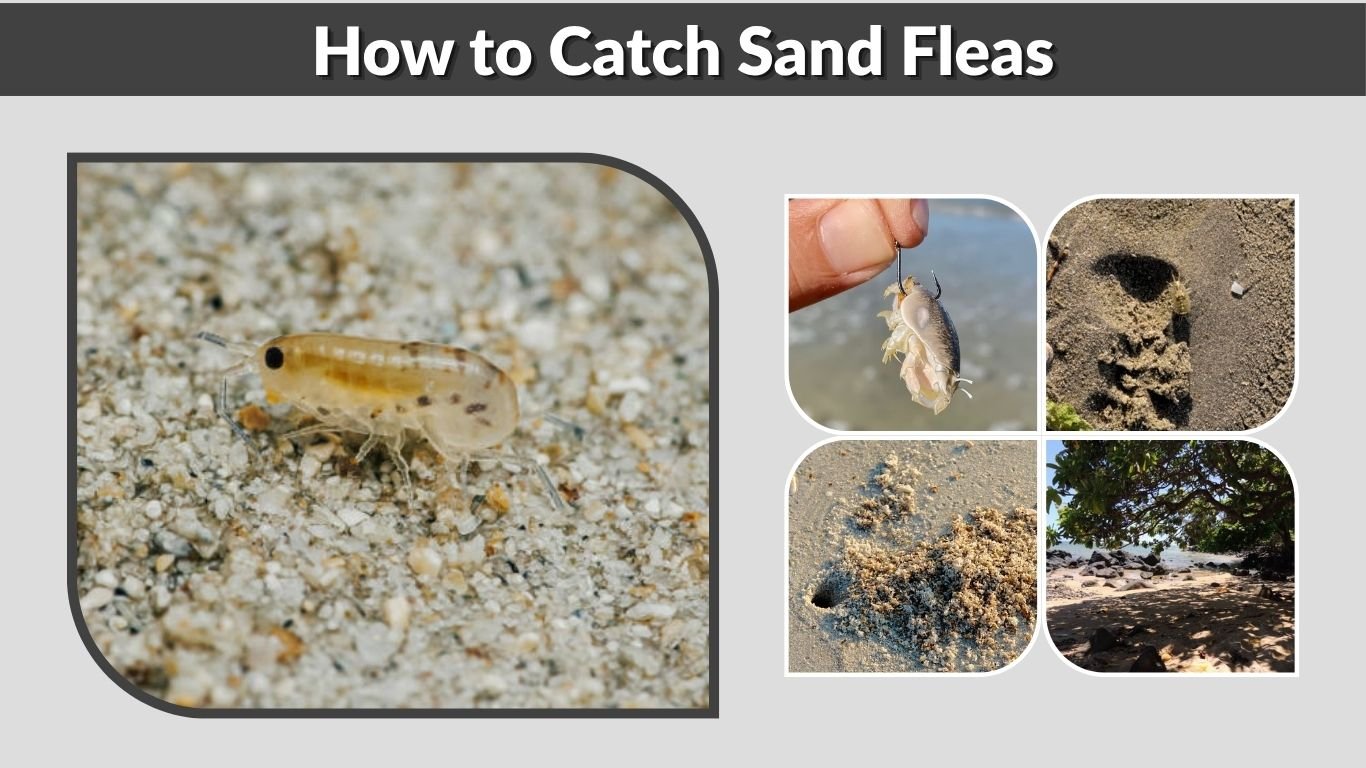
Learning how to catch sand fleas can save money and give surf anglers fresh, effective bait right from the beach. In fishing terminology, these “sand fleas” are actually mole crabs—small crustaceans that burrow into wet sand where waves wash up and retreat. They are especially valuable for targeting pompano, sheepshead, whiting, and drum. You can collect them with a sand flea rake or even by hand once you know where to look, when to search, and how to recognize their hiding spots.
What Are Sand Fleas Used for in Fishing?
The sand fleas collected by surf anglers are mole crabs, not the biting insects sometimes called sand fleas. Mole crabs have small oval bodies and live in the swash zone of sandy beaches. They burrow rapidly into wet sand and use feathery antennae to filter food from moving seawater. In Florida, they may reach about two inches long.
How to Recognize a Sand Flea
Fishing sand fleas typically have:
- A rounded or oval shell
- Gray, tan, or brownish coloration
- A short triangular tail
- No large claws
- Small legs tucked beneath the body
- Feathery antennae
- A habit of burrowing backward into wet sand
They are often difficult to see once buried. Instead, anglers learn to recognize subtle disturbances in the wet sand as waves retreat.
Where Do Sand Fleas Live?
Look in the swash zone, which is the strip of beach repeatedly covered and uncovered by breaking waves.
Mole crabs usually bury themselves where the sand remains wet and moving water supplies plankton and organic particles. UF/IFAS describes them as fast-burrowing crustaceans adapted specifically to this high-energy part of the shoreline.
Finding the correct zone is far more important than digging randomly higher up the beach.
How to Catch Sand Fleas With a Rake
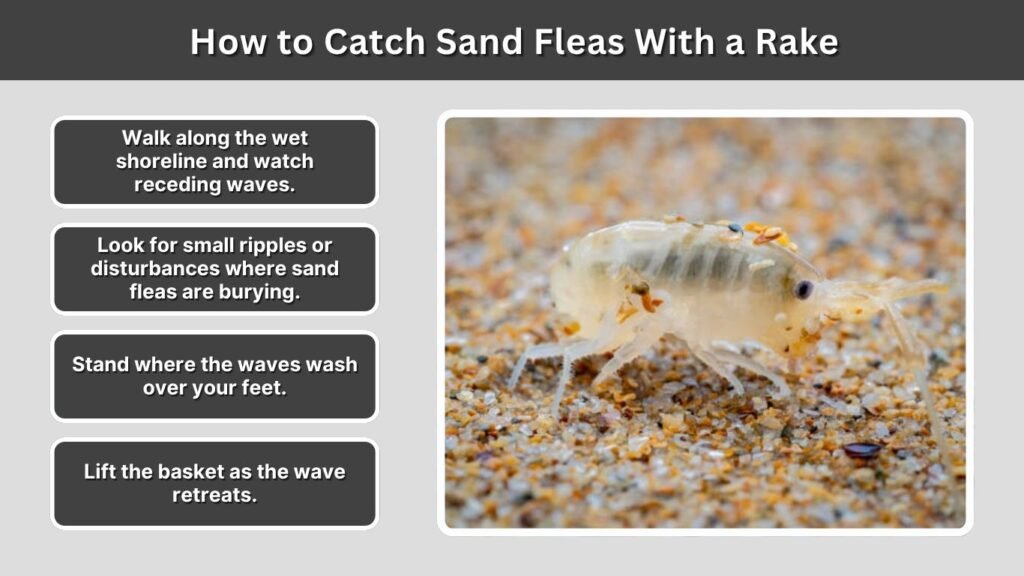
A sand flea catcher, usually called a sand flea rake, is the easiest tool when you need enough bait for several hours of fishing. It resembles a perforated basket attached to a handle. The basket digs into wet sand while allowing loose sand and water to drain away, leaving mole crabs and shells behind.
Step-by-Step Sand Flea Rake Method
Follow this method:
- Walk along the wet shoreline and watch receding waves.
- Look for small ripples or disturbances where sand fleas are burying.
- Stand where the waves wash over your feet.
- Push or pull the rake through several inches of wet sand.
- Lift the basket as the wave retreats.
- Dip or shake the rake in shallow water.
- Let loose sand wash through the mesh.
- Examine the remaining shells and sand fleas.
- Transfer usable sand fleas to your bait container.
- Continue moving along the beach until you find a productive colony.
UF/IFAS specifically describes dragging a sand flea rake through the wet sand between the breakers and the upper limit of the swash, then rinsing away the sand to reveal the crabs.
How Deep Should You Rake?
You generally do not need to dig deeply.
Sand fleas position themselves within the wet surface layers so they can filter food from the moving water. A rake that penetrates the upper few inches of wet sand can reach them without excavating large holes.
If several passes produce nothing, walk along the shoreline instead of repeatedly digging the same location.
How to Catch Sand Fleas Without a Rake
You can still catch sand fleas without specialized equipment. Hand collecting works particularly well when the population is dense and the water is clear enough to see signs of them. It takes more patience than using a rake, but it is useful when you only need a handful of fresh baits.
Catching Sand Fleas by Hand
Try this approach:
- Wait until a wave washes onto the beach.
- Watch carefully as the water begins flowing back.
- Look for small V-shaped marks, bumps, or movement.
- Scoop wet sand quickly with both hands.
- Hold the sand in shallow water.
- Allow loose sand to wash away between your fingers.
- Look for small oval mole crabs.
- Place the sand fleas in your bait container.
Because they burrow quickly, timing matters. Scoop as soon as you identify movement rather than waiting several seconds.
Can You Use a Net?
A small scoop or perforated basket can work, although a purpose-built sand flea rake is much more efficient for collecting larger numbers.
Whatever you use, the idea is the same: collect wet sand from the active swash zone and let the smaller grains wash through while retaining the mole crabs.
Best Time to Catch Sand Fleas
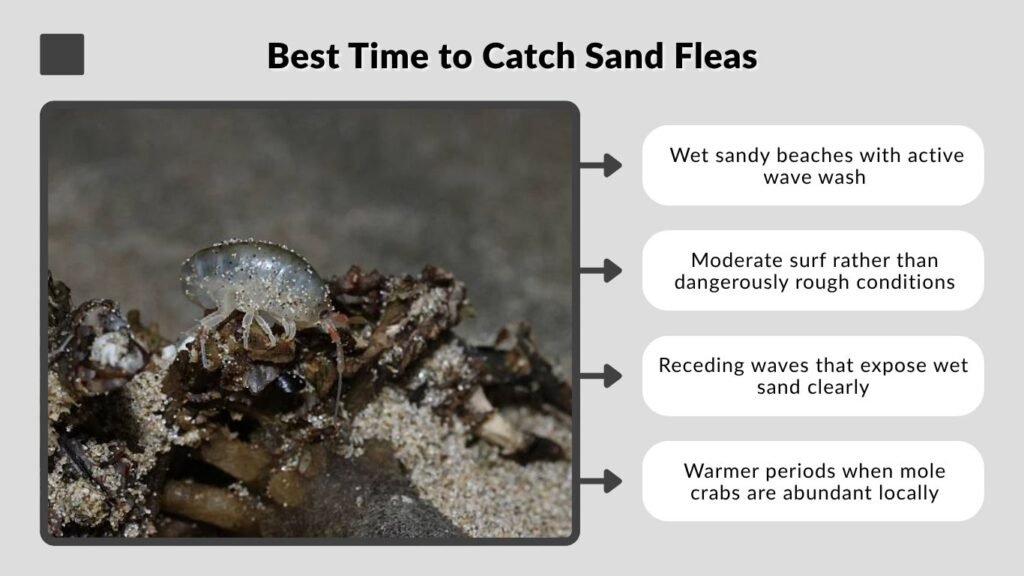
There is no single clock time that guarantees sand fleas because their availability depends on beach, season, wave action, water temperature, and local populations. However, they are easiest to collect when they are concentrated close to the surface in the active wash zone.
Best Conditions for Catching Sand Fleas
Look for:
- Wet sandy beaches with active wave wash
- Moderate surf rather than dangerously rough conditions
- Receding waves that expose wet sand clearly
- Warmer periods when mole crabs are abundant locally
- Areas showing repeated sand disturbances
- Groups of shorebirds feeding along the waterline
- Beaches where pompano and similar surf fish are feeding
Sand fleas often occur in colonies, so finding one or two is a good reason to make additional passes in the same general area.
Best Tide for Catching Sand Fleas
Rather than focusing exclusively on high tide or low tide, follow the active swash zone as the tide changes.
Mole crabs shift their position with the moving shoreline. During rising water, the productive strip moves higher up the beach; during falling water, it moves seaward.
This is why experienced collectors keep walking rather than treating one patch of sand as permanently productive.
Can You Catch Sand Fleas at Night?
Yes, sand fleas can be collected at night where local rules and beach conditions permit.
However, locating colonies becomes harder without good lighting. Night surf also introduces additional safety concerns, including unseen waves, holes, currents, and fishing equipment.
Daylight is usually easier for beginners because you can read the sand and wave movement more clearly.
Can You Catch Sand Fleas in Winter?
Sand fleas may still be present during winter in some warmer coastal regions, but abundance varies strongly with location and temperature. Seasonal availability is therefore different in Florida, Texas, North Carolina, New Jersey, and other coastal areas.
Catching Sand Fleas in Florida
Florida beaches can support mole crabs in the surf zone, and they are widely used there as fishing bait. Florida Fish and Wildlife identifies mole crabs as native sandy-beach animals and currently lists their recreational harvest category as unregulated, though anglers should always check the latest local rules for the specific beach or protected area they visit.
Local conditions still matter. One Florida beach may hold large colonies while another nearby stretch produces very few.
How to Keep Sand Fleas Alive After Catching Them
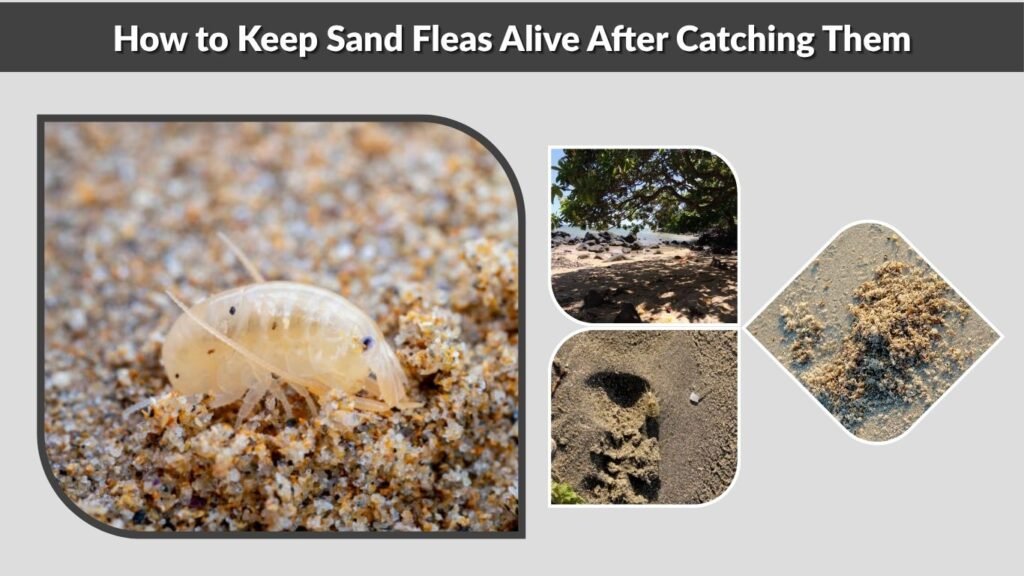
Fresh sand fleas are valuable because they are a natural food item for several surf-feeding fish. Keeping them in good condition between collecting and fishing helps maintain their usefulness as bait.
Storing Sand Fleas for Bait
For a short fishing session:
- Keep them cool and shaded.
- Protect them from direct sunlight.
- Use clean, damp beach sand.
- Avoid letting the container become extremely hot.
- Do not leave them in stagnant hot water.
- Collect only as many as you are likely to use.
- Replace or refresh conditions if they begin drying out.
A cooler or bait container kept out of direct sun can make handling easier during hot beach conditions.
Can You Freeze Sand Fleas?
Unused sand fleas can also be frozen for future fishing, although many anglers prefer freshly collected bait when available.
If freezing them, divide them into small fishing-session portions rather than repeatedly thawing a large quantity.
What Fish Can You Catch With Sand Fleas?
Sand fleas are effective because they already occur naturally in the same surf environments where many popular gamefish feed. Florida Fish and Wildlife specifically lists live sand fleas as bait for pompano and other surf-zone fish.
Fish Commonly Caught With Sand Fleas
They are commonly used for:
- Florida pompano
- Sheepshead
- Black drum
- Whiting
- Red drum
- Permit and other crustacean-feeding species where appropriate
Pompano are particularly associated with sand fleas. FWC identifies crustaceans—especially sand fleas—as an important part of the Florida pompano diet.
FWC also recommends live shrimp, fiddler crabs, or sand fleas when fishing for sheepshead, while sand fleas are among the baits used for bottom-feeding black drum.
How to Fish With a Sand Flea
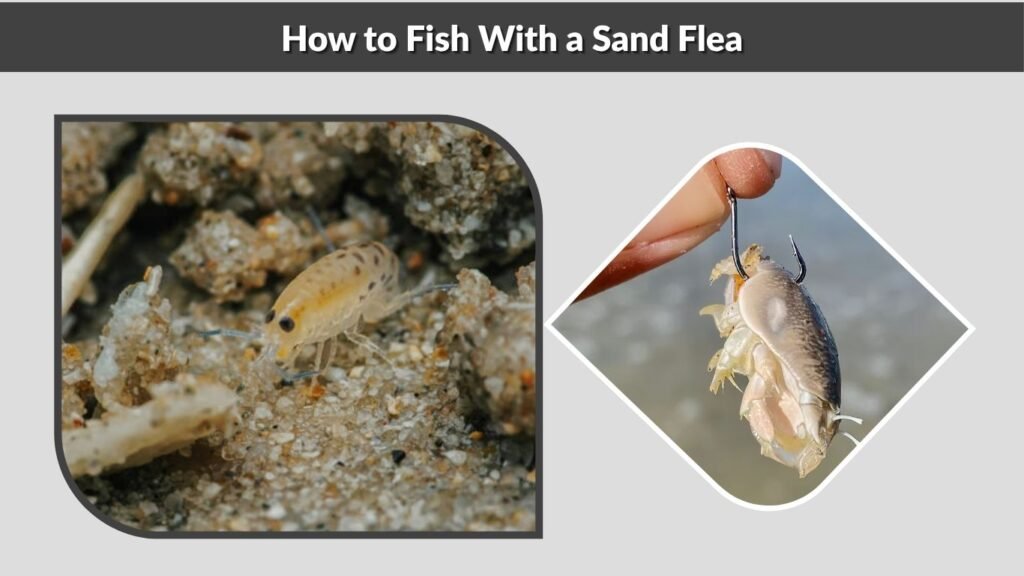
After catching your bait, the next goal is keeping it naturally positioned in the feeding zone. Sand fleas work particularly well when presented near the bottom because that is where surf fish expect to find these small crustaceans.
Hooking a Sand Flea
A circle hook can be inserted carefully through the sand flea so that the bait remains securely attached without being completely destroyed.
FWC recommends circle hooks with natural baits and specifically notes that live sand fleas can be hooked for pompano and other surf species.
Use enough weight to prevent your rig from being swept uncontrollably through the surf. Pyramid-style sinkers are commonly used because their shape helps hold in sandy bottoms.
Common Mistakes When Catching Sand Fleas
Catching mole crabs becomes much easier after you understand their habitat. Most unsuccessful attempts result from searching in dry sand, digging too deeply, or staying in one place after several empty passes.
Improve Your Success
Focus on the moving edge of the surf and watch before you start digging. Sand fleas can sometimes be seen briefly when waves uncover them before they rebury themselves.
Also avoid collecting excessive quantities. Mole crabs are part of the beach food web and are eaten by surf fish and shorebirds. UF/IFAS notes their ecological importance within nearshore beach environments.
FAQs
Sand fleas can be surprisingly easy to catch once you learn to recognize the correct part of the beach. A rake speeds up the process, but understanding wave movement and identifying colonies are the skills that matter most.
1. What Is the Best Way to Catch Sand Fleas?
Use a sand flea rake in the wet swash zone. Pull the rake through the sand as waves wash in or retreat, then rinse the collected sand through the basket until the mole crabs remain.
2. How Do You Catch Sand Fleas Without a Rake?
Watch for movement as waves retreat and quickly scoop the wet sand by hand. Wash the sand gently between your fingers until you can see any mole crabs.
3. Where Is the Best Place to Find Sand Fleas?
Look along sandy beaches in the swash zone, directly where waves wash up and recede. This is their primary habitat.
4. What Is the Best Time to Catch Sand Fleas?
The best conditions occur when sand fleas are actively concentrated in accessible wet sand. Season and tide vary by location, so watch the moving swash line rather than relying on one exact hour.
5. What Fish Can You Catch With Sand Fleas?
Pompano are one of the best-known targets, but sand fleas can also catch sheepshead, black drum, whiting, and other surf-feeding fish. FWC specifically identifies sand fleas as important pompano food and useful natural bait.
