
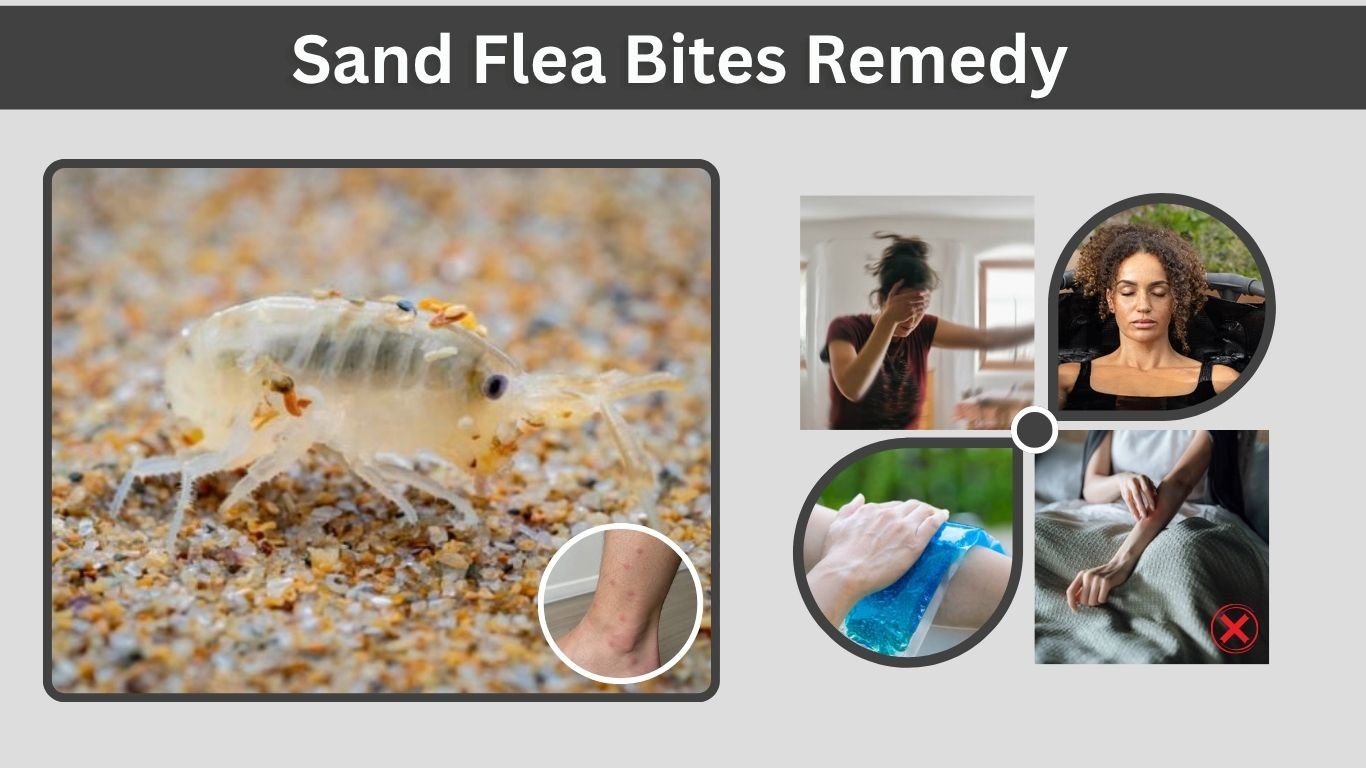
Finding an effective sand flea bites remedy usually means calming itching, swelling, redness, and irritation while allowing the skin to heal. Mild beach-related bites can often be managed at home with cold compresses, calamine lotion, hydrocortisone, or appropriate antihistamines. However, true chigoe sand fleas can become embedded in the skin and cause tungiasis, which requires different treatment. Knowing which home remedies are useful, what to avoid, and when medical care is necessary can prevent unnecessary discomfort and complications.
Best Remedy for Sand Flea Bites
For ordinary itchy bites, simple treatments are usually more useful than complicated homemade mixtures. The main goals are reducing inflammation, controlling itching, and preventing scratching that can damage the skin. Cleveland Clinic lists cold packs, calamine lotion, antihistamines, and corticosteroids among options for managing mild sand flea bite symptoms.
Quick Relief for Mild Bites
Try these basic measures:
- Wash the affected area gently with soap and water.
- Apply a cold compress for 10–20 minutes.
- Use calamine lotion for itching.
- Consider 0.5% or 1% hydrocortisone cream when appropriate.
- Take a suitable oral antihistamine if itching is troublesome.
- Avoid scratching the irritated skin.
- Keep any broken skin clean and protected.
Mayo Clinic recommends these approaches for mild insect-bite reactions and advises seeking medical attention if swelling worsens or infection develops.
How Quickly Should a Remedy Work?
Cold therapy may provide temporary relief within minutes, while calamine, hydrocortisone, and antihistamines can help reduce symptoms over time. The bite itself will still need time to heal.
Cleveland Clinic notes that uncomplicated sand flea-type bites generally clear within a few days. Persistent lesions may have another cause, including tungiasis or secondary infection.
Home Remedies for Sand Flea Bites
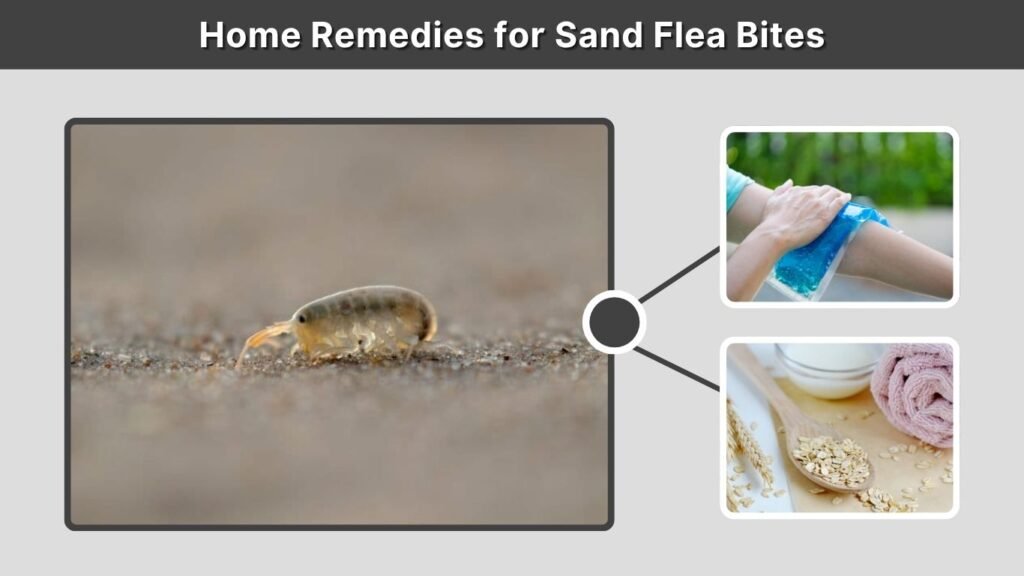
A useful home remedy should soothe the skin without creating additional irritation. Cool temperatures and gentle skin care are generally safer than applying strong acids, concentrated essential oils, alcohol, or other harsh products. Home treatment is appropriate only for uncomplicated itchy bumps—not for a parasite visibly embedded in the skin or lesions showing infection.
Cold Compress
A cold compress is one of the simplest remedies. Wrap ice or a cold pack in cloth and place it against the skin for around 10–20 minutes.
Cooling can temporarily reduce swelling, pain, and itching. Never place ice directly against bare skin for prolonged periods because this can injure the skin.
Cool or Oatmeal Bath
For numerous itchy bites, a cool bath can be more comfortable than treating every spot separately. Colloidal oatmeal is commonly used to soothe itchy or irritated skin.
Avoid very hot showers or baths if they make the itching worse. Pat the skin dry gently afterward instead of rubbing irritated areas.
Calamine and Anti-Itch Remedies
Calamine is one of the better-established nonprescription remedies for uncomplicated insect bites. Hydrocortisone can also reduce inflammation and itching, while oral antihistamines may be appropriate when itching is more widespread. These products treat the body’s skin reaction; they do not kill or remove an embedded chigoe flea.
Calamine Lotion for Sand Flea Bites
Calamine lotion can provide temporary relief from itching and skin irritation. Apply a thin layer according to the product instructions.
Do not put calamine into the eyes, mouth, or other sensitive areas. It should also not be considered a treatment for tungiasis because an embedded parasite requires specific management rather than simple itch relief.
Hydrocortisone and Antihistamines
Mayo Clinic recommends low-strength hydrocortisone or an oral antihistamine as possible treatments for itchy insect bites. Examples of nonprescription antihistamines include cetirizine, loratadine, and fexofenadine.
Follow medication directions carefully, and consult a healthcare professional or pharmacist when treating children, during pregnancy, or if you take other medicines.
Natural Remedies for Sand Flea Bites
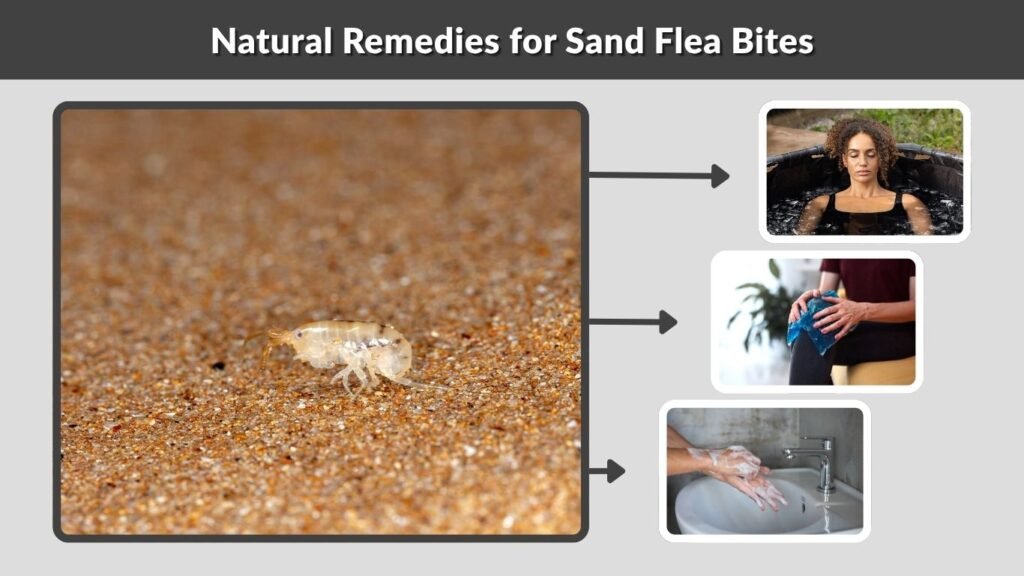
Many online remedies are labeled “natural,” but natural does not automatically mean effective or harmless. Sensitive or scratched skin can react badly to concentrated plant oils and homemade chemical mixtures. If you prefer simple home care, focus on remedies that soothe rather than burn, disinfect aggressively, or attempt to force an embedded parasite from the skin.
Safer Simple Options
Reasonable options for mild irritation include:
- Cool water
- Cold compresses
- Colloidal oatmeal baths
- Gentle soap and water
- Avoiding scratching
- Keeping the affected area clean
- A baking-soda paste for temporary itching if tolerated
Mayo Clinic includes baking-soda paste among options for uncomplicated insect bites, although calamine and hydrocortisone are also established choices.
What About Essential Oils?
Evidence is limited for essential oils as a treatment for sand flea bites. Concentrated oils may themselves cause irritation or allergic contact dermatitis.
Avoid applying undiluted tea tree, peppermint, eucalyptus, citrus, or similar oils directly to inflamed or broken skin. Simple cold therapy and established anti-itch treatments are generally more predictable.
Remedy for Chigoe Sand Fleas in the Skin
A true chigoe sand flea is different from an ordinary insect bite. Female Tunga penetrans fleas penetrate the skin and cause tungiasis. These lesions may become painful, intensely itchy, and inflamed. Home remedies designed merely to stop itching cannot reliably eliminate the embedded parasite, and digging into the skin yourself can significantly increase infection risk.
Treatment for Tungiasis
WHO identifies:
- Topical treatment with specific low-viscosity dimeticone oils
- Sterile mechanical extraction when appropriate
- Proper dressing of the resulting wound
- Assessment for secondary bacterial infection
- Verification of tetanus vaccination status
WHO reports that a formulation containing two low-viscosity dimeticone oils has demonstrated high effectiveness and safety against tungiasis.
Never Dig Out the Flea at Home
Do not use sewing needles, pins, scissors, thorns, or similar household objects to remove an embedded flea.
WHO warns that nonsterile extraction can rupture the parasite, increase inflammation, and introduce bacteria. Mechanical removal should be performed under sterile conditions by appropriately experienced healthcare personnel.
Remedy for Swollen or Allergic Sand Flea Bites
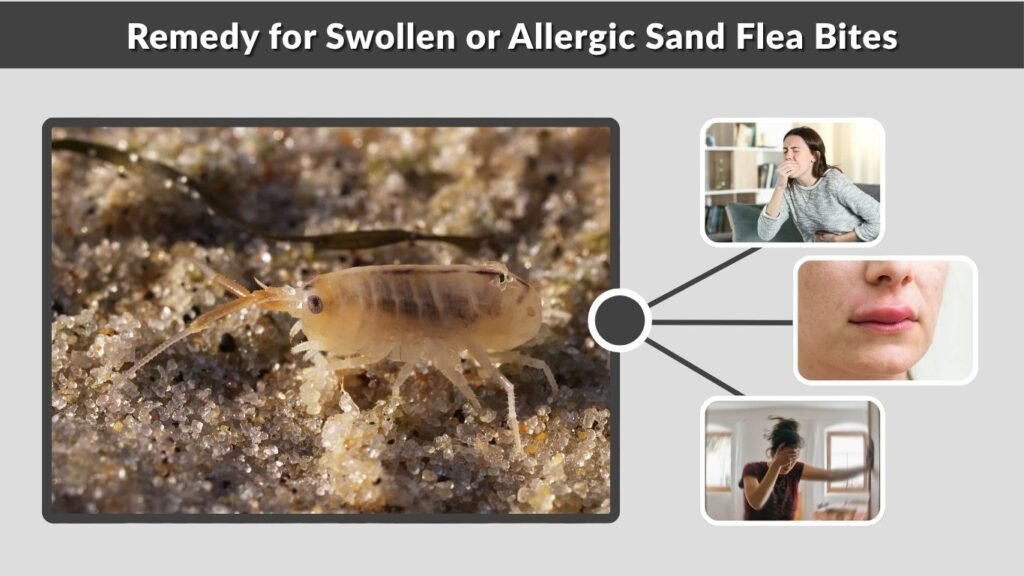
A mild amount of redness and swelling can occur with ordinary insect bites. Some individuals develop larger inflammatory reactions because their immune system responds more strongly. Cold therapy and appropriate anti-itch medicines can help mild reactions, but rapidly developing body-wide symptoms require emergency attention rather than continued home treatment.
Signs of a Severe Reaction
Seek emergency medical care for:
- Trouble breathing
- Swelling of the lips, face, tongue, or throat
- Widespread hives
- Dizziness or fainting
- Weak, rapid pulse
- Severe nausea, vomiting, or diarrhea
These symptoms can indicate a serious allergic reaction. Do not rely on home remedies if breathing or circulation is affected.
When Swelling May Mean Infection
A bite that becomes increasingly hot, painful, swollen, or red may be infected rather than simply allergic.
Drainage, pus, worsening tenderness, or feeling generally unwell are additional warning signs. Cleveland Clinic notes that open wounds and infection risks may require medical treatment, including antibiotics in appropriate cases.
What Not to Put on Sand Flea Bites
When itching is intense, it can be tempting to experiment with almost anything that promises relief. Harsh substances can worsen already inflamed skin, while attempting to physically extract an embedded flea at home creates another level of risk. Gentle symptom relief and proper medical care are safer than aggressively treating the lesion yourself.
Remedies and Methods to Avoid
Avoid:
- Cutting into the skin
- Picking an embedded parasite with a needle
- Excessive scratching
- Undiluted essential oils
- Bleach or household disinfectants
- Very hot water intended to “kill” the bite
- Harsh acids or chemical mixtures
- Squeezing suspicious embedded lesions
WHO specifically warns against nonsterile extraction of tungiasis because it can worsen inflammation and bacterial superinfection.
How to Prevent More Sand Flea Bites
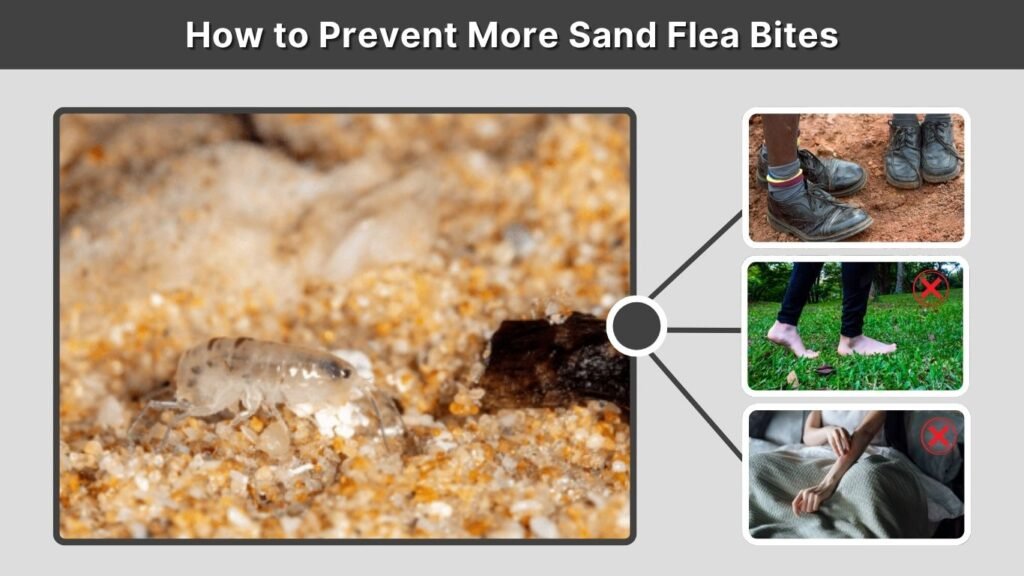
A remedy is less useful if exposure continues. Prevention depends on what people mean by “sand flea,” but true chigoe flea prevention centers strongly on protecting feet and reducing contact with contaminated soil in endemic regions. Managing infected animals and improving living environments may also reduce repeated tungiasis exposure.
Prevention Tips
- Wear closed footwear in tungiasis-risk areas.
- Avoid walking barefoot on contaminated soil.
- Wash feet regularly with soap.
- Inspect feet after high-risk exposure.
- Avoid scratching existing lesions.
- Follow local advice about repellents.
- Treat infected animals where appropriate.
- Seek early care for suspicious embedded lesions.
WHO notes that certain coconut-oil-based repellents have also reduced flea penetration when regularly applied in affected communities.
FAQs
1. What is the best home remedy for sand flea bites?
For mild bites, wash the skin and apply a cold compress for 10–20 minutes. Calamine lotion or an appropriate low-strength hydrocortisone cream can help itching. Avoid scratching because broken skin may become infected. These remedies are for uncomplicated bites, not embedded chigoe fleas.
2. Does calamine lotion help sand flea bites?
Yes. Calamine lotion can temporarily reduce itching from mild sand flea-type bites. Cleveland Clinic specifically lists it among symptom-relief options. It will not remove a chigoe flea embedded in the skin, so a persistent lesion with an unusual central opening requires different treatment.
3. Is baking soda good for sand flea bites?
A baking-soda paste may provide temporary relief from itching associated with ordinary insect bites, and Mayo Clinic lists it as one possible home-care option. Stop using it if irritation develops. It should never be used as a substitute for medical evaluation of suspected tungiasis or infection.
4. Can I remove a sand flea myself?
You should not dig an embedded chigoe flea out using household needles, pins, scissors, or similar objects. WHO warns that nonsterile extraction can rupture the flea and introduce bacteria. When mechanical removal is needed, it should be done with sterile instruments by experienced healthcare personnel.
5. When should I see a doctor for sand flea bites?
Seek medical care if bites develop worsening pain, swelling, spreading redness, pus, or open wounds, or if you suspect a flea is embedded in your skin. Emergency attention is necessary for difficulty breathing, facial or throat swelling, faintness, or widespread hives.
