
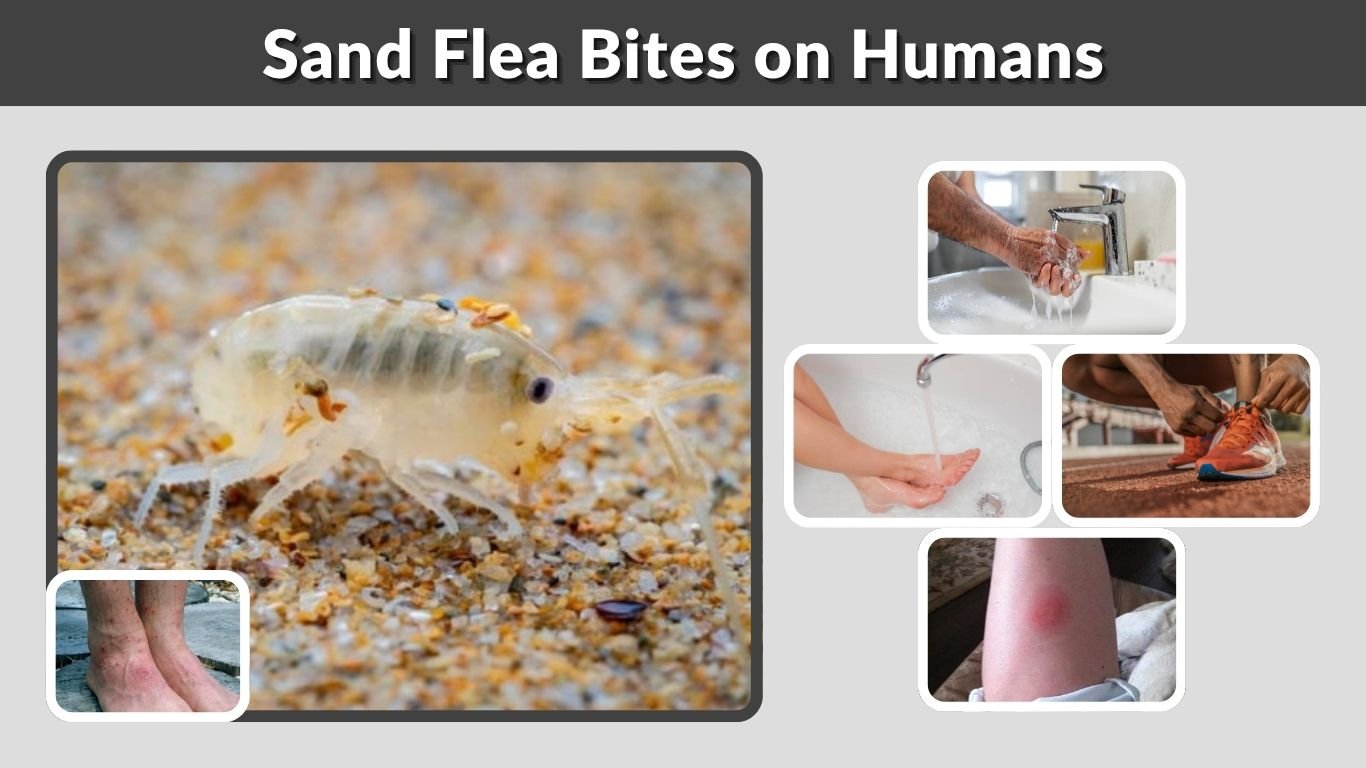
Sand flea bites on humans usually cause small, intensely itchy bumps that may appear around the feet, ankles, and lower legs after exposure to sandy areas. However, “sand flea” can describe different organisms. Ordinary flea-like bites mainly irritate the skin, while the chigoe flea (Tunga penetrans) can actually embed itself and cause tungiasis. Symptoms can include itching, swelling, redness or discoloration, and occasionally infection. Knowing the appearance, duration, and correct treatment can help you manage bites safely and recognize when medical care is necessary.
What Do Sand Flea Bites Look Like on Humans?
The appearance of a sand flea bite depends on what people mean by “sand flea.” Simple flea-type bites usually look like small itchy bumps, while tungiasis produces a more distinctive lesion because a female chigoe flea remains embedded in the skin. Location, travel history, and changes in the lesion over time can therefore be important identification clues.
Common Appearance
Typical flea-like reactions may include:
- Small raised bumps
- Red, pink, brown, or purple discoloration
- Intense itching
- Mild localized swelling
- Several marks close together
- Small scabs after scratching
- Occasional blistering in sensitive people
Skin tone can change how inflammation appears, so redness may be less obvious on darker skin.
What Does Tungiasis Look Like?
Tungiasis is different from an ordinary bite. It occurs when a fertilized female Tunga penetrans burrows into the outer layers of the skin.
The lesion gradually enlarges as the flea develops. It may appear as a round, whitish or swollen spot with a dark central opening. Itching, pain, inflammation, and ulceration can develop as the flea enlarges.
Where Do the Bites Usually Appear?
Ordinary flea-like bites are often noticed on exposed lower legs and ankles.
With tungiasis, the connection to the feet is particularly strong. WHO reports that about 99% of tungiasis lesions occur on the feet, including the toes, soles, heel, and outer edges.
Symptoms of Sand Flea Bites on Humans
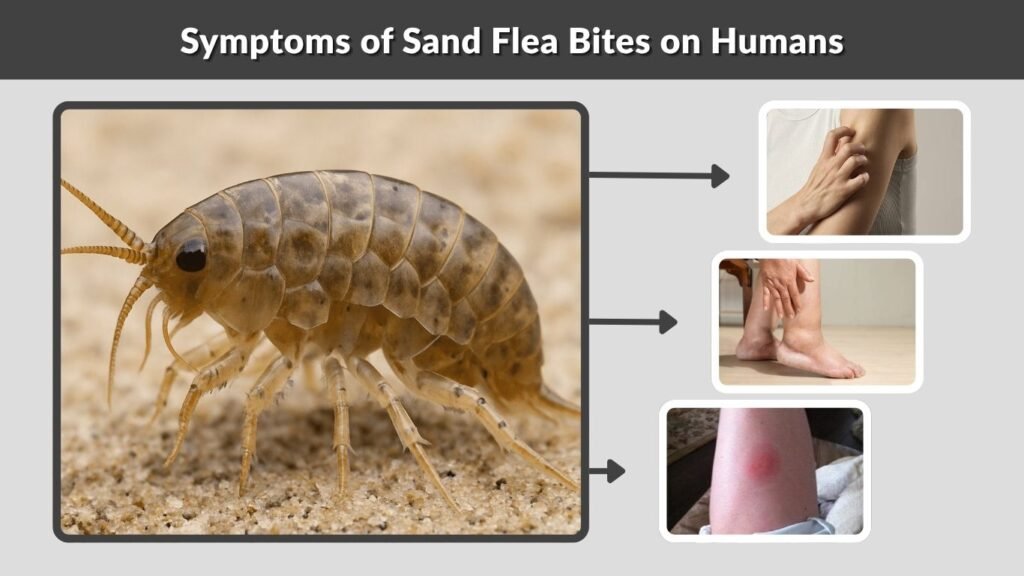
Symptoms vary depending on individual sensitivity and the organism involved. A minor bite may cause nothing more than temporary itching, whereas tungiasis can produce increasing inflammation as the embedded flea grows. Scratching can worsen either type of lesion by breaking the skin and allowing bacteria to enter.
Common Symptoms
Possible symptoms include:
- Persistent itching
- Raised or irritated bumps
- Local swelling
- Redness or darker discoloration
- Burning or tenderness
- Small blisters
- Scabbing from scratching
- Pain in more severe cases
With tungiasis, the initial penetration may be painless. Symptoms become more noticeable as the flea enlarges beneath the skin.
Why Do Sand Flea Bites Show Up Days Later?
Some bite reactions are delayed because the body’s inflammatory response becomes more noticeable over time.
With chigoe fleas, there is another explanation: the female initially enters the skin with little discomfort and then enlarges as it feeds and produces eggs. Itching and irritation therefore become progressively more noticeable.
Can Sand Flea Bites Become Infected?
Yes. Scratching can create openings that allow bacteria to enter.
Tungiasis carries a more significant complication risk. CDC notes that secondary bacterial infections can occur, and severe cases have been associated with complications such as tetanus and gangrene.
How to Treat Sand Flea Bites on Humans

Treatment should match the cause. Ordinary uncomplicated bites generally need relief from itching and protection from scratching. Suspected tungiasis requires more specific medical management because an embedded parasite is present. Avoid aggressively digging into an unusual lesion, particularly after travel to a tropical or subtropical area where chigoe fleas occur.
Treatment for Mild Bites
For an uncomplicated itchy bite:
- Wash the affected skin gently.
- Apply a cool compress for swelling.
- Avoid scratching the bumps.
- Keep broken skin clean and dry.
- Ask a pharmacist about an appropriate anti-itch treatment.
- Monitor for increasing pain, swelling, or discharge.
Calamine lotion or an appropriate anti-itch medicine may help with symptoms, but these treatments do not remove an embedded chigoe flea.
Treating Tungiasis
WHO advises that embedded fleas should not be removed using unsterile needles, pins, thorns, scissors, or similar objects. Rupturing the flea can worsen inflammation and increase the risk of bacterial infection.
Where mechanical extraction is necessary, it should be performed under sterile conditions by trained healthcare personnel. WHO also identifies certain topical dimeticone formulations as effective treatments for tungiasis.
When to Get Medical Help
Seek medical evaluation if you notice:
- A persistent lesion with a dark central opening
- Pus or drainage
- Increasing pain or swelling
- An ulcer that is getting worse
- Difficulty walking
- Numerous lesions on the feet
- Fever or other signs of infection
Suspected tungiasis after travel to an endemic region is also a good reason to seek professional assessment.
How Long Do Sand Flea Bites Last on Humans?
There is no single healing time because ordinary insect bites and tungiasis are fundamentally different. Mild bite reactions may settle within several days, although itching or discoloration can last longer in sensitive individuals. Tungiasis develops over a much longer period because the female chigoe flea remains embedded while producing and releasing eggs.
Ordinary Bite Duration
Minor flea-like reactions typically become less itchy and swollen with time.
Scratching can delay healing because it repeatedly damages the skin. If new bumps continue developing rather than existing ones simply healing, ongoing exposure may be occurring.
How Long Does Tungiasis Last?
WHO reports that an embedded female chigoe flea typically remains in the skin for about 4–6 weeks. During this period, it enlarges dramatically and releases eggs into the environment.
This does not mean a painful or infected lesion should simply be ignored for six weeks. Complications require appropriate treatment.
Do Sand Flea Bites Leave Marks?
Temporary discoloration can remain after inflammation resolves, particularly when bites have been scratched repeatedly.
A simple bite should gradually become flatter and less itchy. Increasing swelling, ulceration, discharge, or pain suggests something more than routine healing.
Sand Flea Bites vs. Other Bug Bites
Many insect bites look similar, so photographs alone cannot always identify the culprit. The location of the bites and what happened before they appeared can provide useful clues. Beach exposure, travel to an area where tungiasis occurs, sleeping in an unfamiliar room, or finding fleas on pets all point toward different possible causes.
Sand Flea Bites vs. Bed Bug Bites
Bed bug bites often develop on skin exposed during sleep, such as the arms, shoulders, neck, and legs. They may appear in groups or loose lines.
Sand-associated flea bites are more likely to involve the feet, ankles, and lower legs after ground exposure. Neither pattern alone proves the cause.
Sand Flea Bites vs. Mosquito Bites
Mosquito bites commonly produce larger, softer itchy welts. Flea-type bites tend to be smaller and may be concentrated in groups around the ankles.
Both vary greatly between individuals, so environmental evidence is more dependable than appearance alone.
Tungiasis Is More Distinctive
A persistent swollen lesion containing a central dark point—especially on the foot after barefoot exposure in an endemic tropical or subtropical area—is more suggestive of tungiasis than an ordinary mosquito or bed bug bite.
How to Prevent Sand Flea Bites on Humans
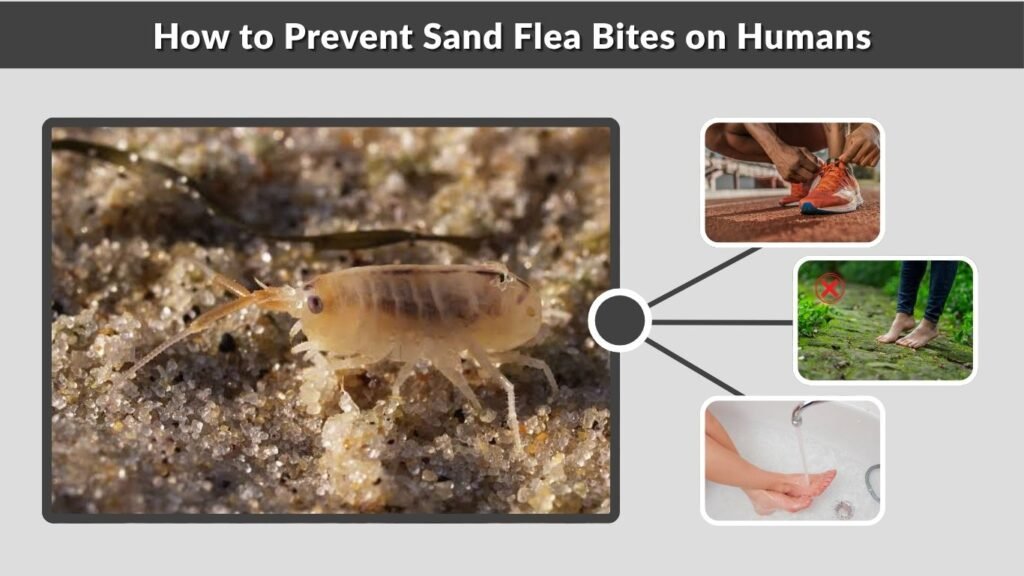
Prevention is particularly important for true chigoe fleas. Tunga penetrans occurs in tropical and subtropical regions, especially parts of the Caribbean, South America, and sub-Saharan Africa. The parasite develops off-host in suitable soil before adults find humans or animals.
Ways to Reduce Exposure
Helpful precautions include:
- Wear shoes in areas where tungiasis occurs.
- Avoid walking barefoot on contaminated sandy soil.
- Keep feet clean and inspect them regularly.
- Avoid sitting directly on suspect ground.
- Follow local recommendations for repellents.
- Treat suspicious lesions early.
- Avoid scratching itchy bites.
WHO reports that regular use of certain coconut-oil-based repellents has significantly reduced tungiasis in studies conducted in endemic communities.
Are All Beach Sand Fleas Dangerous?
No. The term “sand flea” is often used loosely for several different creatures.
Not every itchy bump after visiting a beach represents tungiasis. Biting midges, mosquitoes, ordinary fleas, and other arthropods can cause similar skin reactions.
FAQs
Sand flea bites can be confusing because the term covers both ordinary bite-like reactions and the medically distinct condition tungiasis. Paying attention to bite location, recent travel, appearance, and whether symptoms are improving is more useful than comparing your skin with one photograph.
1. What do sand flea bites look like on humans?
They may look like small, itchy raised bumps with redness or discoloration. Tungiasis instead commonly produces an enlarging lesion with a dark central opening.
2. How long do sand flea bites last on humans?
Simple bite reactions may improve within several days, although itching can last longer. A chigoe flea associated with tungiasis can remain embedded for approximately four to six weeks.
3. How do you treat sand flea bites on humans?
Wash mild bites, avoid scratching, use a cool compress, and consider appropriate anti-itch treatment. Suspected embedded chigoe fleas should be medically evaluated rather than removed with unsterile household tools.
4. Are sand flea bites contagious?
Ordinary bites and tungiasis lesions do not spread directly from one person’s skin to another like a contagious rash. New tungiasis infections occur when people encounter adult fleas in a contaminated environment.
5. Where do sand fleas bite humans most often?
Ordinary flea-like bites frequently affect the ankles and lower legs. With tungiasis, the feet are overwhelmingly the most common location, particularly the toes, soles, sides, and heels.
