
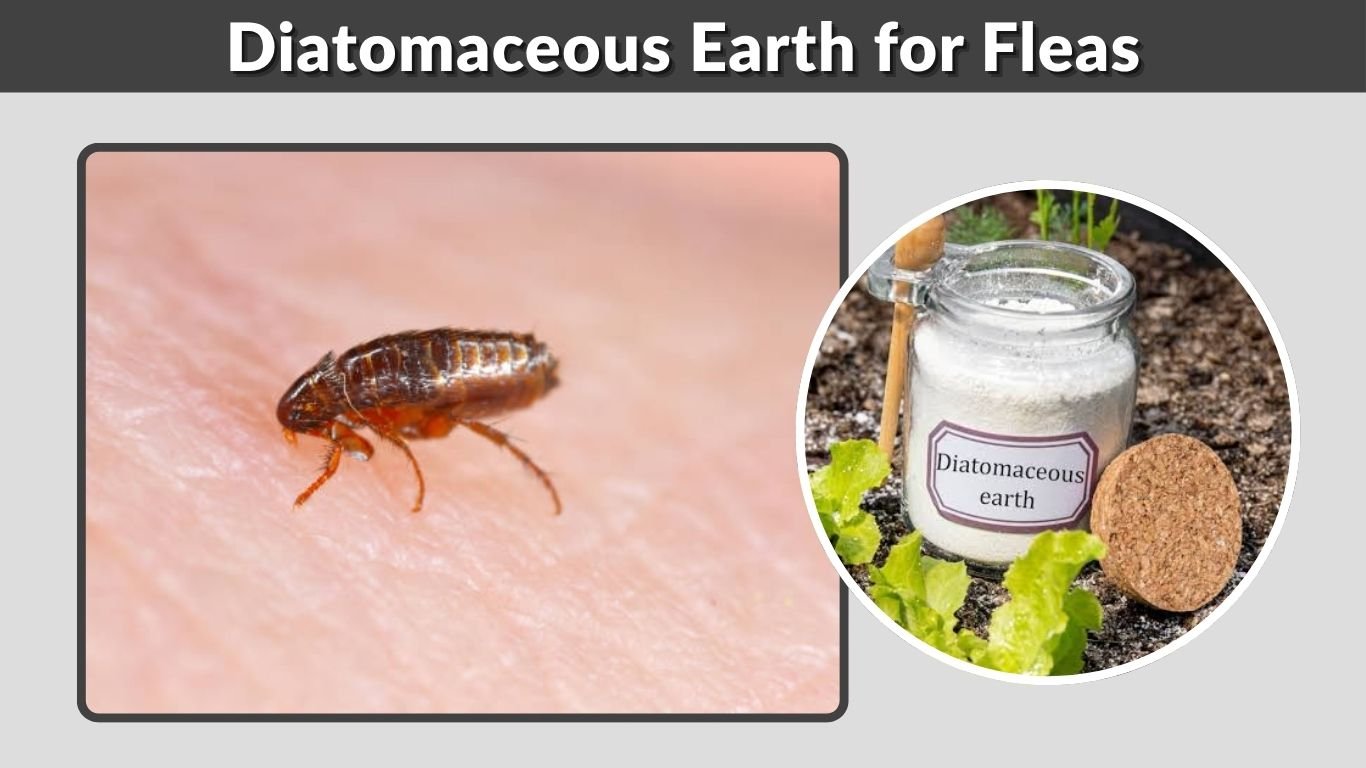
Diatomaceous earth for fleas is a dry mineral-based powder that can help kill adult fleas by damaging their protective outer coating and causing them to lose moisture. It is commonly considered for carpets, cracks, pet areas, and other dry locations, but correct application matters. Diatomaceous earth works only when fleas actually contact the powder, and it is less useful once wet. Understanding which product to choose, how to apply it safely, and its limitations can help you use it effectively within a complete flea-control plan.
What Is Diatomaceous Earth for Fleas?
Diatomaceous earth, often shortened to DE, is made from fossilized remains of microscopic aquatic organisms called diatoms. Pest-control products containing DE act physically rather than poisoning fleas. The fine particles damage or absorb protective oils from an insect’s outer surface, causing dehydration. It remains effective while dry and relatively undisturbed.
How Does Diatomaceous Earth Kill Fleas?
A flea’s outer body covering helps prevent excessive moisture loss. When a flea moves through an appropriate layer of diatomaceous earth, the powder affects this protective layer.
The flea then gradually loses water and dies from dehydration.
This action is different from conventional insecticides that affect an insect’s nervous system. Because DE requires direct contact, fleas hidden in untreated locations may survive.
Does It Kill Flea Eggs and Pupae?
Diatomaceous earth should not be expected to instantly eliminate every stage of an infestation. Flea eggs, larvae, and especially pupae can remain protected in carpets, cracks, furniture, and bedding.
For complete control, DE is usually more useful as one part of a broader program involving vacuuming, washing, pet treatment, and repeated monitoring.
How to Use Diatomaceous Earth for Fleas in the House
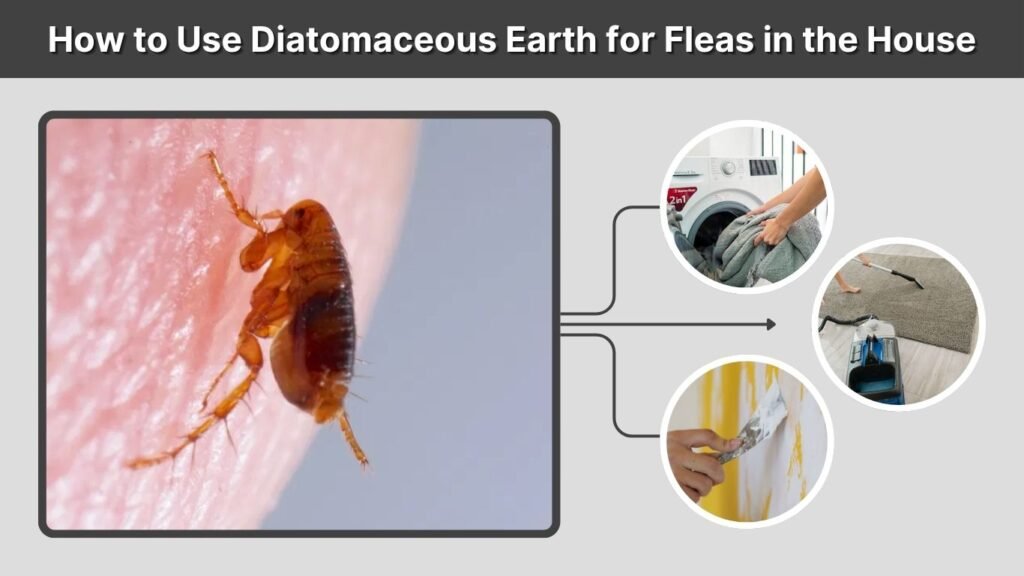
Indoor use requires a light, targeted application rather than covering entire rooms with clouds of powder. Dust inhalation can irritate the nose and respiratory tract, while contact can irritate eyes and dry the skin. Using a pesticide product labeled for flea control provides specific directions for where and how it can legally and safely be applied.
Basic Application Steps
When the product label permits indoor flea treatment:
- Vacuum the area thoroughly first.
- Wash pet bedding and washable fabrics.
- Keep people and pets away during application.
- Apply only a thin layer to approved locations.
- Focus on cracks, edges, and flea activity areas.
- Avoid creating airborne dust.
- Keep powder away from food and food-preparation surfaces.
- Leave it in place for the period stated on the label.
- Remove or vacuum it according to product directions.
Where to Put Diatomaceous Earth
Potential treatment locations may include carpet edges, floor cracks, gaps around baseboards, areas beneath furniture, and spaces close to pet resting areas when the product label specifically permits those uses.
Avoid applying DE near air vents, fans, or heavily traveled locations where the powder can easily become airborne.
NPIC recommends minimizing dust exposure and keeping children and pets away during application.
Diatomaceous Earth for Fleas on Carpet
Carpets can harbor flea eggs and larvae deep among their fibers. Diatomaceous earth may affect fleas that contact it, but simply dumping a thick layer over carpet is unnecessary and increases dust exposure. Cleaning remains essential because vacuuming also removes eggs, larvae, flea dirt, and environmental debris.
How to Use It on Carpet
If your specific pesticide label allows carpet treatment:
- Vacuum the carpet carefully.
- Concentrate on areas where pets rest.
- Apply a very light, even amount.
- Target edges and protected areas rather than creating piles.
- Prevent children and pets from entering during treatment.
- Leave the product only as long as directed.
- Vacuum when the label instructs you to do so.
How Long Should You Leave It?
There is no universal time that applies to every diatomaceous earth product.
Application rates, treatment periods, and cleanup directions vary. Follow the pesticide label rather than relying on an arbitrary recommendation such as several hours or several days.
DE remains active while dry and undisturbed, but more exposure is not automatically better or safer.
Food-Grade Diatomaceous Earth for Fleas
“Food grade” is frequently interpreted to mean that a product is automatically safe for any household pest-control use. That is not correct. Food-grade DE is processed for certain food-related applications, but spreading concentrated dust around a home creates a different exposure situation, especially because the powder can be inhaled.
Food Grade vs Pesticide-Labeled DE
For flea treatment, selecting a product carrying a pesticide label for fleas is preferable to choosing a product simply because it says “food grade.”
A pesticide label explains:
- Which pests it controls
- Where it may be applied
- How much to use
- How to reduce exposure
- Whether pets can enter treated areas
- Whether direct animal application is permitted
Never Use Pool-Grade DE for Flea Control
Pool-filter diatomaceous earth is processed differently and is not intended for household flea treatment.
Do not substitute pool-grade material for a registered pest-control product.
Likewise, never assume that two products containing the words “diatomaceous earth” can be used interchangeably.
Diatomaceous Earth for Fleas on Dogs
Some registered diatomaceous earth pesticide products are labeled for direct use on dogs, but many are not. Therefore, the ingredient alone does not determine whether a product belongs to an animal. Applying loose DE to a dog’s coat can expose the animal and the person applying it to airborne dust.
Is It Safe for Dogs?
Use DE directly on a dog only when the specific product label explicitly permits use on dogs and follow those instructions exactly.
Do not assume food-grade DE is automatically appropriate for a dog’s coat.
NPIC notes that some registered DE products allow direct application to dogs and cats, while pesticide exposure can harm animals when products are used incorrectly.
Should Dogs Eat DE for Flea Control?
Feeding diatomaceous earth to a dog should not be relied upon as a treatment for an external flea infestation.
Flea control is usually more reliably addressed through veterinarian-recommended preventives and environmental treatment. Ask a veterinarian before giving an animal any product internally for flea control.
Diatomaceous Earth for Fleas on Cats
Cats require particular caution with flea treatments. Products suitable for dogs are not automatically appropriate for cats, and dusty materials may be inhaled or swallowed while a cat grooms its coat. Direct application should therefore be limited to products explicitly labeled for cats.
Using DE Around Cats
If you are treating the environment:
keep cats out of the application area, remove food bowls, water bowls, toys, and bedding, and follow the pesticide label for when pets may safely return.
NPIC recommends removing pets and their belongings before pesticide treatment and following product-specific directions for re-entry.
What About Kittens?
Young animals may be especially vulnerable to inappropriate pesticide use.
Do not apply DE to a kitten merely because the product is described as natural or food grade. Use only a product specifically labeled for the animal and age involved, or ask a veterinarian for an appropriate flea-control plan.
Diatomaceous Earth for Fleas in the Yard
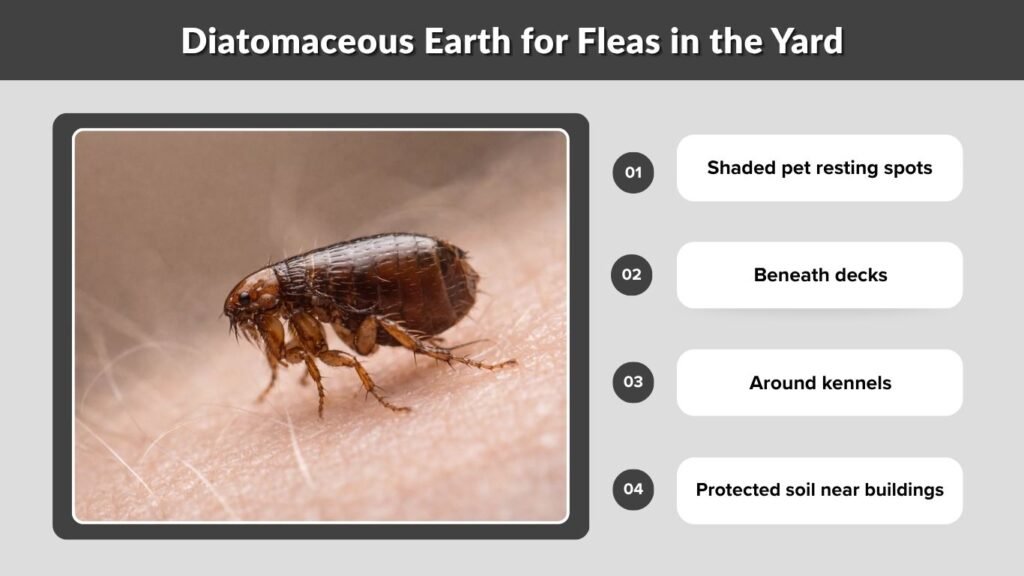
Outdoor flea populations often concentrate in shaded, protected areas where pets or wildlife spend time. Diatomaceous earth can be less dependable outdoors because rain, irrigation, and heavy moisture interfere with its dry physical action.
Where Outdoor Fleas Hide
Potential flea areas include:
- Shaded pet resting spots
- Beneath decks
- Around kennels
- Protected soil near buildings
- Areas used by wildlife
- Dry cracks and sheltered structures
Does Rain Stop DE From Working?
Moisture reduces the usefulness of dry diatomaceous earth.
Because DE works best while dry, repeated rainfall, lawn irrigation, or very damp conditions can make broad yard applications impractical.
Outdoor flea control is often more effective when combined with habitat management, wildlife control, pet prevention, and treatments specifically labeled for outdoor fleas.
How Effective Is Diatomaceous Earth for Fleas?
Diatomaceous earth can kill fleas that contact a sufficient amount of dry product, but it should not be viewed as an instant cure for an established infestation. Fleas have multiple life stages distributed throughout the environment, and pupae can remain protected from many treatments.
Why DE Sometimes Fails
Control may fail because:
the application becomes wet, fleas never contact the powder, protected pupae survive, untreated pets continue carrying adult fleas, or flea activity exists in other rooms.
Repeatedly adding more powder does not correct these underlying problems.
Use an Integrated Flea-Control Plan
A more complete strategy combines DE or another appropriate environmental treatment with regular vacuuming, washing pet bedding, treating pets with appropriate flea control, and monitoring for newly emerging adults.
Persistent infestations may require professional pest control or veterinary assistance.
Safety Precautions When Using Diatomaceous Earth
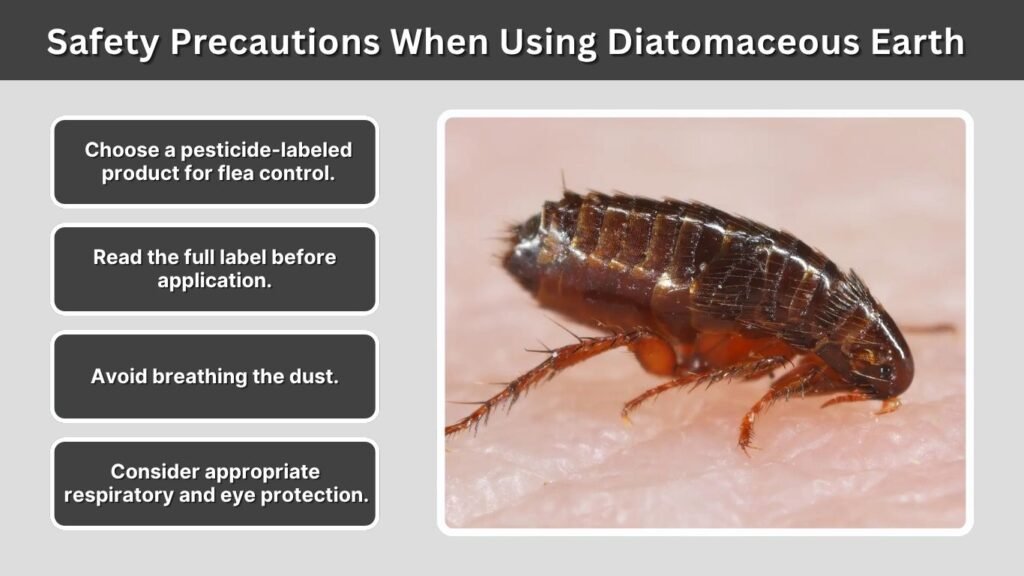
Although DE is often marketed as a relatively low-toxicity product, breathing dust can irritate the respiratory tract, and the material may irritate eyes and dry skin. “Natural” does not mean exposure-free. Applying the smallest appropriate amount according to the pesticide label reduces unnecessary risk.
Important Safety Rules
- Choose a pesticide-labeled product for flea control.
- Read the full label before application.
- Avoid breathing the dust.
- Consider appropriate respiratory and eye protection.
- Keep children and pets away during application.
- Keep DE away from food and drinking water.
- Avoid placing powder near fans or ventilation systems.
- Never substitute pool-grade DE.
- Do not apply directly to pets unless the label permits it.
- Use only the amount specified.
FAQs
1. Does diatomaceous earth really kill fleas?
Yes. Appropriate diatomaceous earth products can kill fleas by damaging or absorbing protective oils from their outer covering, causing dehydration. The product needs to remain dry and fleas must contact it.
2. How do you use diatomaceous earth for fleas?
Use a pesticide product labeled for fleas and apply a thin amount only to locations allowed by its directions. Combine it with vacuuming, laundering, and appropriate pet flea treatment.
3. Can I put diatomaceous earth directly on my dog or cat?
Only if the specific pesticide product label says it can be applied directly to that species. Do not assume ordinary food-grade DE is suitable for applying to pets.
4. How long should diatomaceous earth stay down for fleas?
Follow the instructions on your specific product. There is no single treatment duration appropriate for every DE formulation and application.
5. Is food-grade diatomaceous earth best for fleas?
Not necessarily. “Food grade” describes certain food-related uses and does not replace a pesticide label. For flea control, a registered product labeled for fleas provides clearer application and safety instructions.
