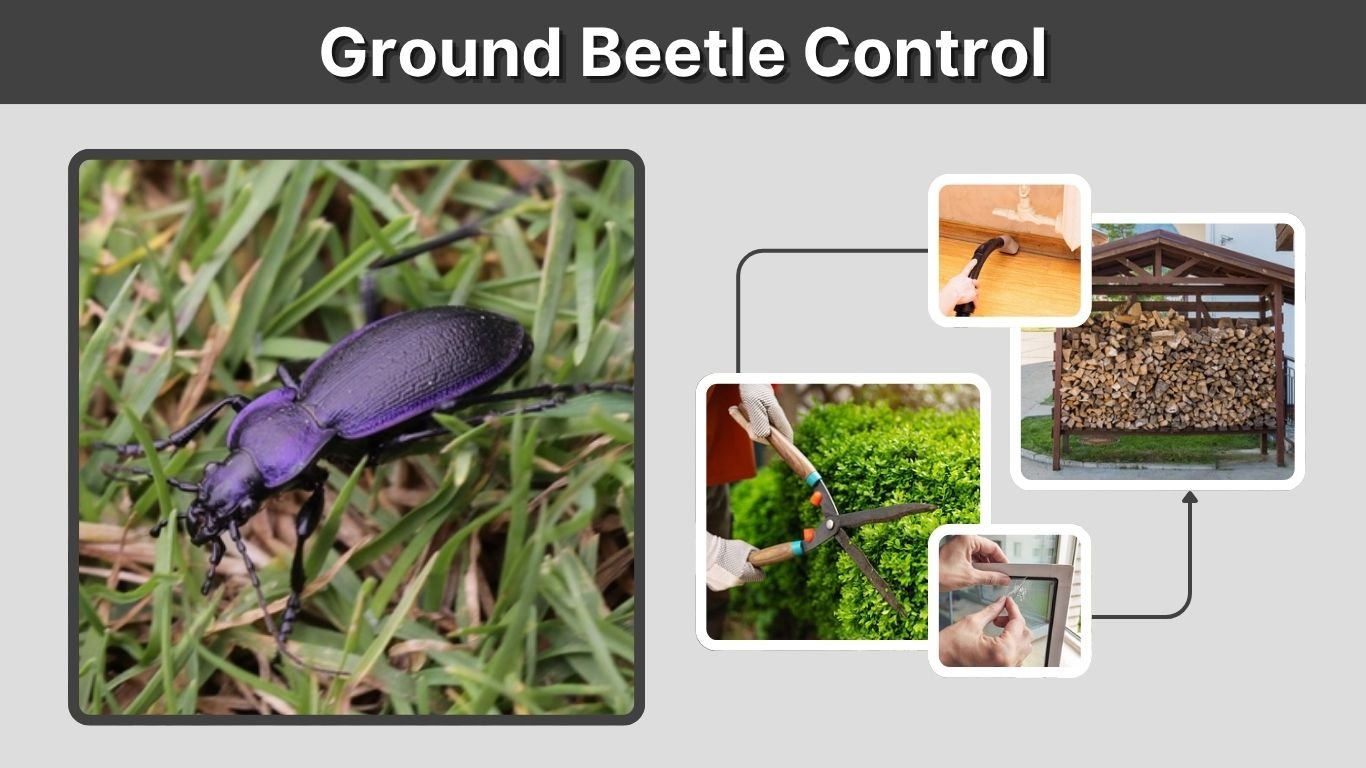
Ground beetles are common outdoor insects that sometimes wander into homes, garages, basements, and other structures while searching for shelter or prey. Although most species are harmless and many are beneficial predators, large indoor numbers can become frustrating. Effective ground beetle control focuses on removing attractants, sealing entry points, improving outdoor conditions, and using targeted treatments only when necessary. This guide explains how to identify an infestation, control black ground beetles indoors and outdoors, prevent future problems, and know when professional pest control may be appropriate.
What Are Ground Beetles and Why Do They Enter Homes?
Ground beetles belong mainly to the family Carabidae and include thousands of species. Most live outdoors beneath stones, logs, mulch, leaves, and soil debris. They are active hunters that feed on other insects and small invertebrates. Ground beetles usually become household pests accidentally rather than establishing permanent indoor colonies.
Common Signs of Ground Beetles
Look for the following signs around your home:
- Shiny black, brown, or metallic beetles
- Fast-moving insects running across floors
- Beetles around doors, windows, and foundations
- Activity in garages, basements, or crawl spaces
- Increased numbers near outdoor lights
- Beetles hiding beneath stored objects
- Seasonal activity during warm or wet weather
Many common black ground beetles are dark, flattened, and equipped with strong legs for running.
Why Ground Beetles Come Indoors
Ground beetles may enter buildings when environmental conditions change. Heavy rain can flood their hiding places, while extreme heat or dry weather may cause them to search for more suitable shelter.
Outdoor lighting can also attract insects toward buildings at night. Once ground beetles reach walls or foundations, they may enter through small cracks around doors, windows, pipes, or utility openings.
How to Control Ground Beetles Inside the House
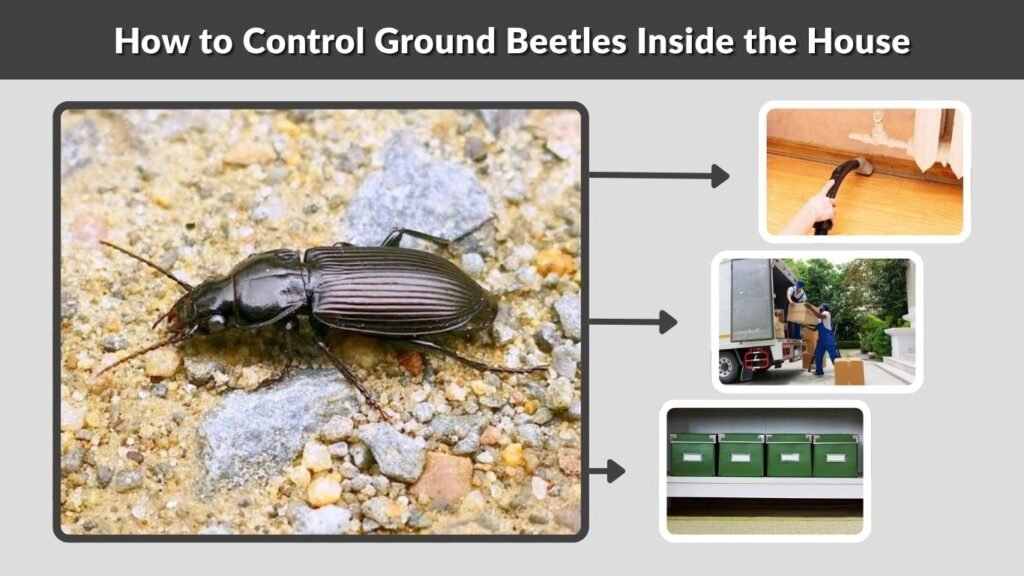
Indoor ground beetle control is usually straightforward because these insects rarely reproduce successfully inside homes. Instead of immediately relying on insecticides, focus first on physically removing beetles and preventing additional insects from entering.
Remove Existing Ground Beetles
Several simple methods can eliminate beetles already inside:
- Vacuum visible beetles from floors and corners.
- Empty the vacuum outside immediately.
- Sweep beetles into a container and release them outdoors.
- Remove cardboard, clutter, and debris from basement floors.
- Keep storage boxes raised from the floor.
- Repair moisture problems in basements and crawl spaces.
Avoid crushing ground beetles against surfaces because some species can release defensive chemicals with an unpleasant odor.
Reduce Indoor Moisture
Damp basements, garages, crawl spaces, and utility rooms can provide attractive shelter. Improving ventilation and repairing leaking pipes can make these locations less suitable.
A dehumidifier can also help in persistently damp spaces. Reducing indoor moisture simultaneously discourages many other insects that ground beetles may hunt, giving them fewer reasons to remain indoors.
Seal Entry Points
Exclusion is one of the most effective long-term approaches. Inspect the exterior of the building carefully, particularly near ground level.
Seal cracks in foundations, replace damaged door sweeps, repair window screens, and caulk openings around plumbing or electrical lines. Weather stripping around garage doors and exterior doors can also prevent beetles from entering during nighttime activity.
Outdoor Ground Beetle Control Around the Home
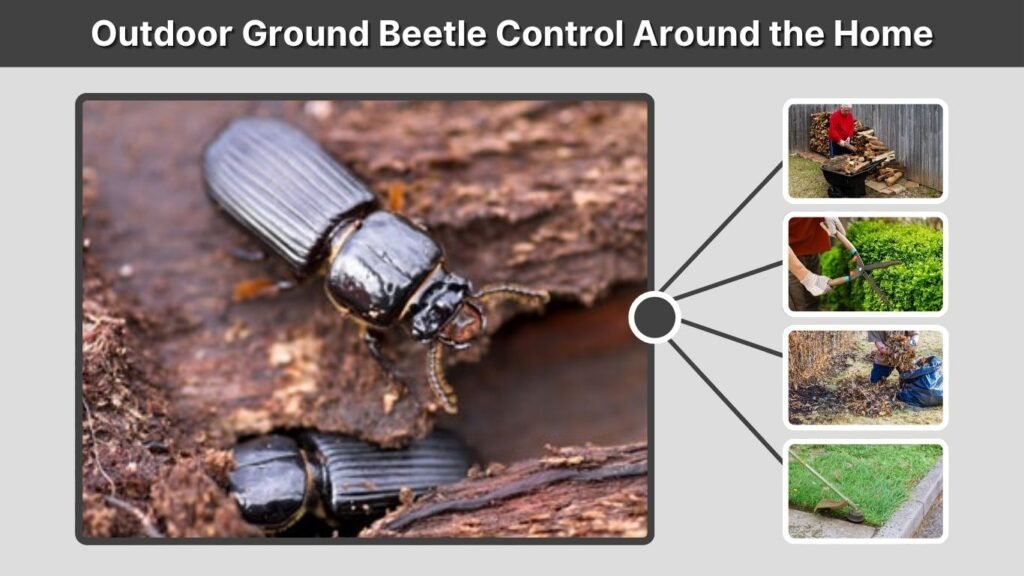
Most ground beetle problems begin outdoors. Managing the environment near the foundation can significantly reduce the number reaching the building. The goal is not to eliminate every beetle from the yard because many species help control caterpillars, slugs, and other pests.
Reduce Hiding Places Near Foundations
Make the immediate perimeter around your home less attractive by:
- Moving firewood away from exterior walls
- Removing excessive leaf litter
- Raking thick layers of organic debris
- Trimming dense vegetation near foundations
- Moving rocks and boards away from walls
- Avoiding excessive mulch depth
- Keeping grass trimmed near the structure
- Cleaning debris beneath decks and porches
Creating a cleaner, drier zone around the foundation reduces the sheltered spaces ground beetles prefer.
Adjust Outdoor Lighting
Ground beetles and many other insects may gather around bright exterior lighting. Reducing insect activity near entrances can indirectly reduce indoor beetle problems.
Turn unnecessary lights off at night, reposition lights farther from doors, or use fixtures that direct light downward. Warmer-colored outdoor bulbs tend to attract fewer flying insects than some bright white or blue-spectrum lights.
Manage Moisture Around the Property
Correct drainage problems that leave soil constantly wet beside the house. Clean gutters, extend downspouts away from foundations, and avoid overwatering landscape beds.
Ground beetles naturally prefer moist outdoor habitats, so excessive moisture near structural entry points may increase their presence.
Black Ground Beetle Control
Black ground beetles are among the species homeowners most frequently notice because their dark bodies and fast movements make them easy to spot indoors. Their appearance can be alarming, but most are not dangerous to people, pets, furniture, or stored foods.
How to Control Black Ground Beetles
The same integrated approach works well:
- Vacuum beetles found indoors.
- Seal foundation cracks and exterior gaps.
- Replace worn door sweeps.
- Remove leaf litter beside the house.
- Reduce moisture around foundations.
- Limit nighttime lighting near entryways.
- Store firewood away from buildings.
- Inspect basement and garage doors for gaps.
Repeated sightings usually indicate an exterior access problem rather than an indoor breeding infestation.
Are Black Ground Beetles Harmful?
Most black ground beetles do not damage homes. They generally do not feed on wood, fabrics, furniture, or building materials. Many actually prey on insects that gardeners consider pests.
Occasional individuals may pinch if handled roughly, and some species produce defensive secretions. For this reason, handling them directly is unnecessary.
When Insecticides May Be Needed
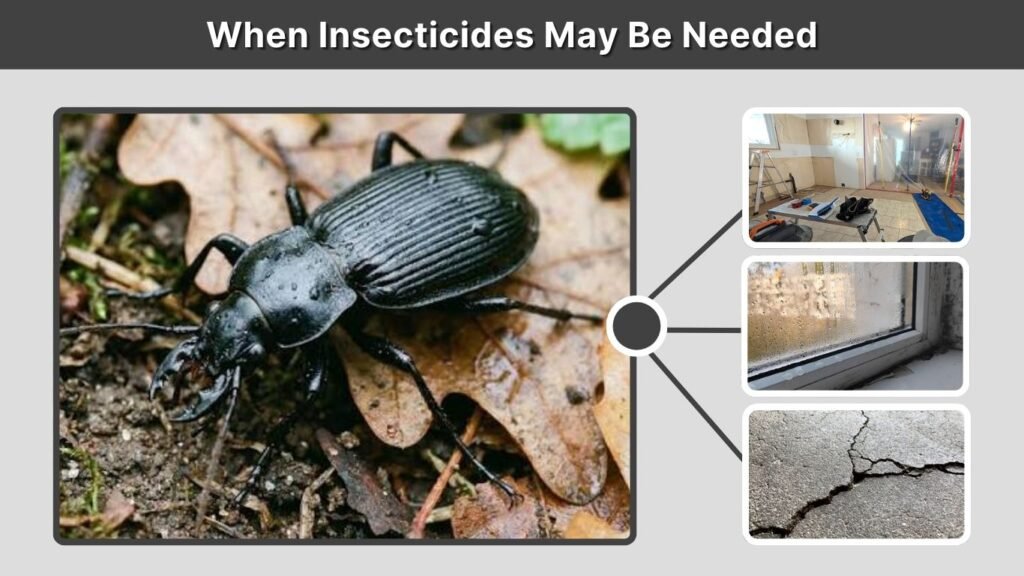
Chemical treatment is rarely the first step for ground beetle control. Exclusion, sanitation, moisture management, and habitat modification often provide better long-term results. However, persistent seasonal invasions may sometimes justify targeted exterior treatment.
Using Outdoor Pest-Control Products
If you choose a pesticide, select a product specifically labeled for beetles or crawling insects around residential structures.
Treatment may typically focus on:
- Foundation perimeters
- Door thresholds
- Window frames
- Utility entry points
- Cracks and crevices
- Areas where beetles repeatedly enter
Always follow the pesticide label exactly. Avoid unnecessary applications across lawns, gardens, or areas where beneficial insects are active.
Why Broad Treatment Is Usually Unnecessary
Ground beetles are important predators in many ecosystems. They consume caterpillars, insect larvae, slugs, and other small pests.
Eliminating large populations throughout a yard can remove beneficial predators without solving the actual structural entry problem. Targeted treatment around specific access points is generally more practical than attempting complete outdoor eradication.
Professional Ground Beetle Pest Control
Most homeowners can manage small infestations independently. Professional help becomes more useful when large numbers continue appearing despite sealing entrances and correcting outdoor conditions.
When to Call a Pest-Control Professional
Consider professional assistance when:
- Dozens of beetles appear repeatedly indoors.
- The source of entry cannot be identified.
- Foundation cracks are extensive.
- Beetles appear throughout multiple rooms.
- Outdoor populations remain unusually high.
- Identification of the insect is uncertain.
- DIY prevention measures have not worked.
A pest-management professional can identify the species, inspect potential entry points, and recommend targeted control rather than unnecessary whole-property treatment.
How to Prevent Ground Beetles From Returning
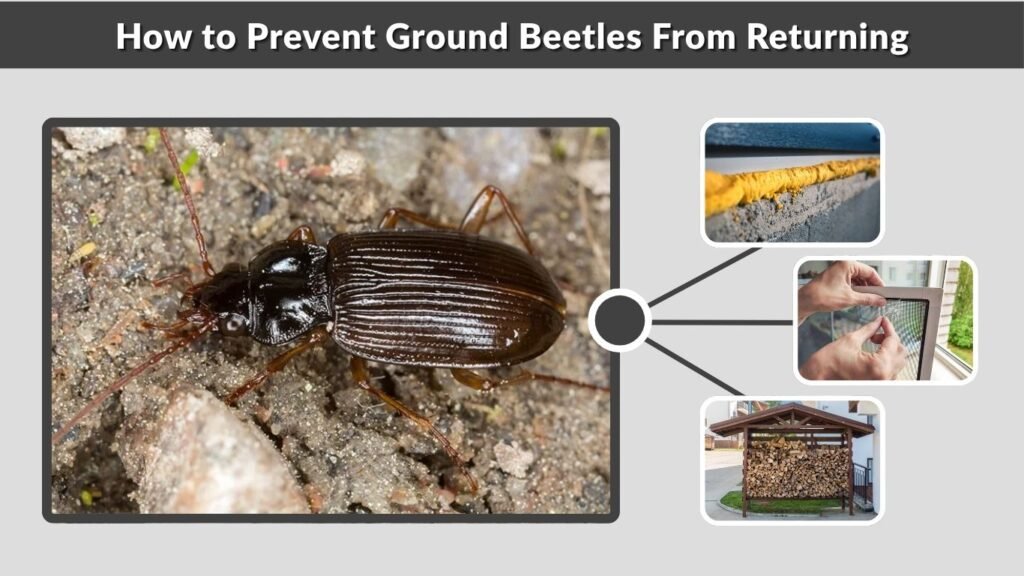
Long-term prevention works best when multiple small changes are combined. Because ground beetles normally live outdoors, keeping them from reaching or entering the structure is more practical than repeatedly removing them after they appear indoors.
Long-Term Prevention Checklist
Use these measures throughout the year:
- Seal foundation cracks promptly.
- Install tight-fitting door sweeps.
- Repair torn window screens.
- Keep mulch several inches from the foundation.
- Remove leaves and garden debris regularly.
- Store firewood away from the house.
- Correct drainage and moisture issues.
- Reduce unnecessary exterior lighting.
- Keep basements dry and uncluttered.
- Inspect doors and windows before peak insect seasons.
Routine maintenance can greatly reduce both ground beetles and many other occasional household invaders.
FAQs
1. What is the best way to control ground beetles?
The most effective approach is usually a combination of vacuuming indoor beetles, sealing entry points, reducing moisture, removing outdoor hiding places, and limiting attractive lighting. Pesticides are generally reserved for persistent problems.
2. Why do I suddenly have ground beetles in my house?
Ground beetles may suddenly enter homes after heavy rain, drought, temperature changes, or increased outdoor activity. They often wander indoors through small foundation cracks, doors, garages, or basement openings while seeking shelter.
3. Do ground beetles infest houses?
Ground beetles usually do not establish true indoor infestations. Most accidentally enter from outdoors and cannot reproduce successfully under typical household conditions. Repeated sightings often mean additional beetles are entering through exterior gaps.
4. Are ground beetles beneficial?
Yes. Many ground beetles are beneficial predators that eat caterpillars, insect larvae, slugs, and other small organisms. For this reason, control should usually focus on keeping them outside rather than eliminating outdoor populations.
5. Will spraying around my house stop ground beetles?
A properly labeled exterior treatment may reduce beetles entering through specific areas, but spraying alone may provide only temporary control. Sealing cracks, correcting moisture, reducing debris, and improving door and window barriers usually provide more lasting results.