
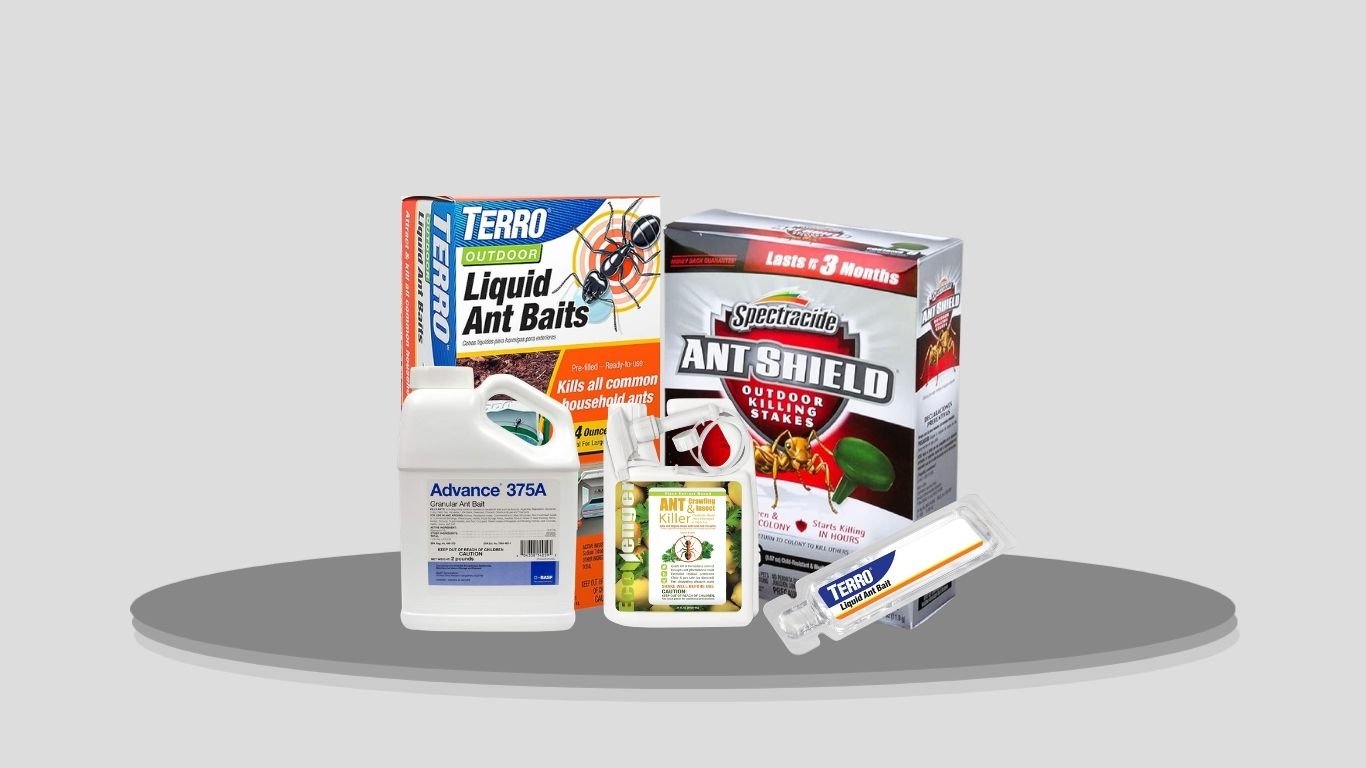
Ant infestations can spread quickly through kitchens, walls, patios, gardens, and other parts of the home, so choosing the right control product matters. Ant killers come in several forms, including liquid baits, gel baits, powders, granular treatments, sprays, and adhesive traps. Each type works differently depending on where the ants are active and how severe the problem is. In this guide, we review 8 of the best ant killers based on effectiveness, application method, coverage, ease of use, versatility, and suitability for indoor or outdoor treatment.
1. TERRO T300 Liquid Ant Baits
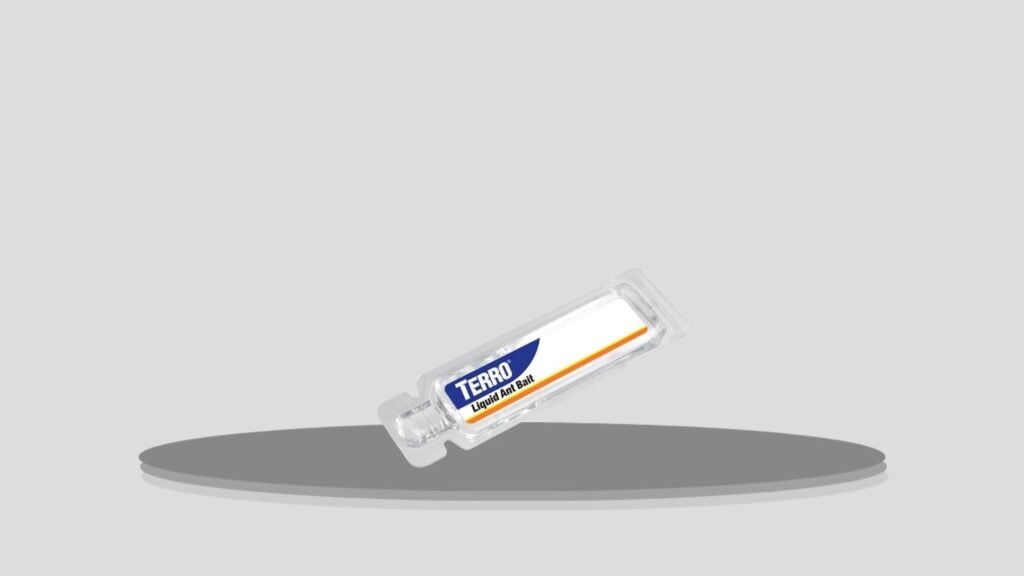
TERRO T300 Liquid Ant Baits are designed for homeowners dealing with common household ants that repeatedly appear around kitchens, bathrooms, windows, and other indoor areas. Instead of simply killing visible ants on contact, these pre-filled bait stations are intended to attract foraging ants so they carry the liquid bait back toward the colony. The enclosed design also makes placement cleaner and more convenient than loose liquid treatments.
Key Features
- Pre-filled liquid ant bait stations
- Designed to attract common household ants
- No mixing or measuring required
- Easy placement along ant trails
- Enclosed bait design helps reduce mess
- Suitable for indoor problem areas
- Colony-focused baiting approach
Why It’s Best for Indoor Ant Trails
TERRO T300 is particularly useful when ants repeatedly follow the same path across counters, floors, windowsills, or baseboards. Instead of constantly spraying individual ants, bait stations allow workers to feed and transport the bait back toward other members of the colony.
The compact stations can be positioned close to active trails without requiring complicated preparation. This makes them especially convenient for kitchens and other areas where precise placement matters.
Performance & Long-Term Control
Liquid bait works differently from fast contact sprays. Ant activity may temporarily increase around a station because workers are attracted to the bait. That can actually help more ants carry it back toward the nest.
For good performance, avoid spraying repellent insecticides directly around the bait, since this may discourage ants from feeding. Stations should remain in place while ants are actively visiting them and be replaced according to label directions.
Pros & Cons and Overall Verdict
Pros
- Simple ready-to-use format
- Targets more than visible ants
- Clean, compact bait stations
- Good for recurring indoor trails
- Requires very little setup
Cons
- Results are not always immediate
- Stations need correct placement
- Some colonies may prefer different food sources
Overall Verdict: TERRO T300 is a strong choice for indoor ant problems where colony-level control is more important than instant knockdown. Its simple liquid bait system is particularly convenient for kitchens, bathrooms, and established ant trails.
2. TERRO Outdoor Ready-to-Use Liquid Ant Killer
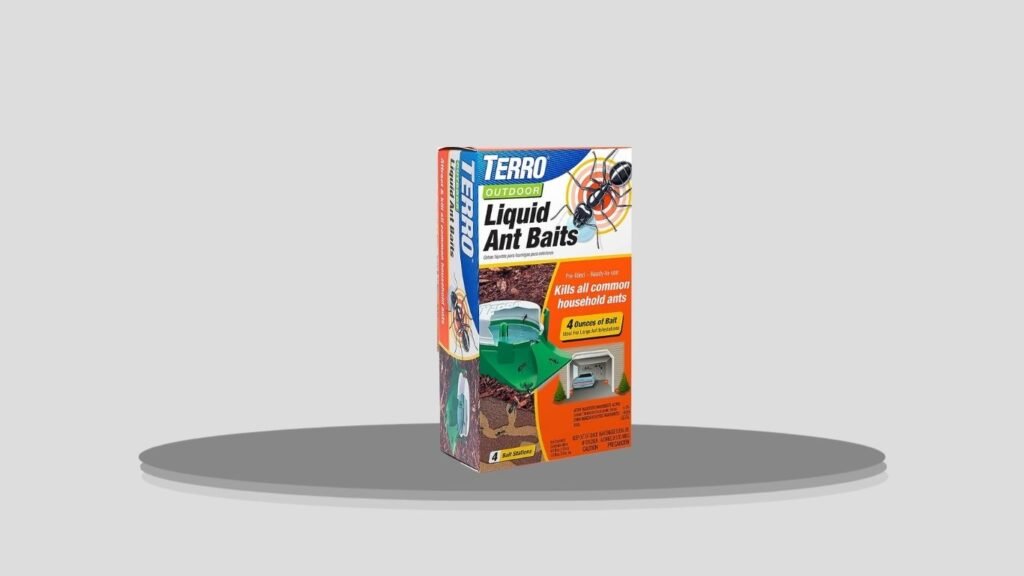
TERRO Outdoor Ready-to-Use Liquid Ant Killer is built for controlling ants before they move from exterior nesting areas into the home. Its outdoor-focused bait design makes it practical around foundations, patios, porches, garages, and other perimeter locations where ant traffic is commonly observed. Because the stations arrive ready to use, they provide a relatively simple way to establish targeted bait points around a property.
Key Features
- Designed specifically for outdoor ant control
- Ready-to-use liquid bait stations
- Suitable around foundations and patios
- Targets foraging ants
- No mixing or spraying required
- Useful for perimeter pest management
- Enclosed bait delivery system
Why It’s Best for Outdoor Entry Prevention
This option works well for homeowners who consistently see ants traveling along exterior walls or entering through doors and windows. Placing bait outside can help intercept activity closer to the source rather than waiting until ants are already inside.
It can also be useful around patios, walkways, garages, and sheltered areas where colonies may forage regularly.
Outdoor Performance & Durability
Outdoor bait placement requires more attention than indoor use because heat, rain, landscaping, and changing ant trails can affect performance. Stations should be placed where ants are active but positioned according to the label to minimize unnecessary exposure to weather.
Ants need time to discover and feed from the bait, so patience is important. If traffic shifts to another location, moving or adding stations near the new trail can improve results.
Pros & Cons and Overall Verdict
Pros
- Designed specifically for exterior use
- Helps intercept ants before they enter indoors
- Ready-to-use application
- Cleaner than loose outdoor bait
- Useful around foundations and patios
Cons
- Outdoor weather can affect placement
- Requires active ant traffic for best results
- May take time to impact a colony
Overall Verdict: This TERRO outdoor bait is particularly useful for homeowners who want to address ant activity around the perimeter of the house. It offers a cleaner, targeted alternative to broad spraying when trails are easy to identify.
3. Syngenta Advion Ant Gel Bait
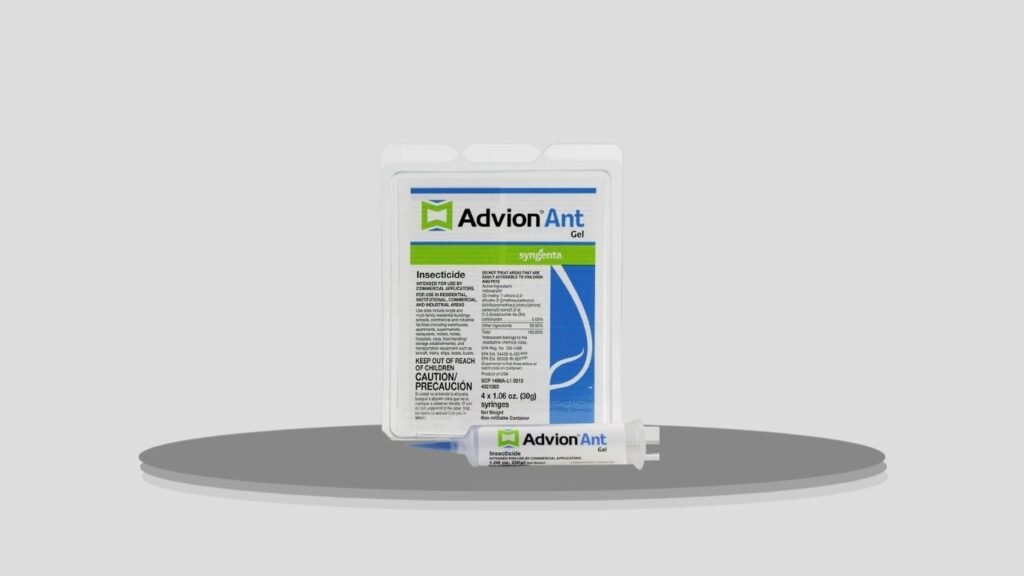
Syngenta Advion Ant Gel Bait is a professional-style gel formulation designed for precise placement in cracks, crevices, and other areas where ants travel. The syringe-style application makes it possible to place small amounts of bait directly along active trails or near hidden entry points. This level of control is especially useful in kitchens, bathrooms, cabinets, and commercial-style environments where bulky bait stations may not fit easily.
Key Features
- Gel bait formulation
- Precision syringe application
- Suitable for cracks and crevices
- Useful along established ant trails
- Designed for targeted bait placement
- Works well in compact spaces
- Professional-style pest-control format
Why It’s Best for Precision Treatment
The main advantage of Advion gel is placement flexibility. Small bait placements can be applied underneath cabinets, behind appliances, near plumbing penetrations, or along narrow ant pathways that are difficult to treat with larger stations.
This makes the product particularly useful for persistent infestations where ants are entering from hidden gaps.
The gel format also allows users to distribute multiple small bait points instead of relying on one central station.
Performance & Baiting Efficiency
For best performance, gel bait should be placed where ants are actively foraging. Applying too much is unnecessary; several small placements can often provide better coverage.
Avoid placing gel directly on recently sprayed surfaces or where strong cleaning products may interfere with attraction. Bait should also be refreshed when consumed, dried out, or contaminated.
Because bait relies on ants feeding and returning to the colony, results may take longer than a contact spray, but the approach is better suited to broader colony management.
Pros & Cons and Overall Verdict
Pros
- Excellent precision placement
- Fits into small cracks and hidden areas
- Useful for stubborn ant trails
- Flexible application
- Colony-focused baiting strategy
Cons
- Requires careful manual application
- Gel can dry out over time
- Should be kept away from children and pets as directed
Overall Verdict: Advion Ant Gel is one of the stronger choices for users who want accurate bait placement in difficult indoor locations. Its precision format makes it especially useful for persistent or hidden ant activity.
4. EcoVenger Ant & Crawling Insect Killer Spray
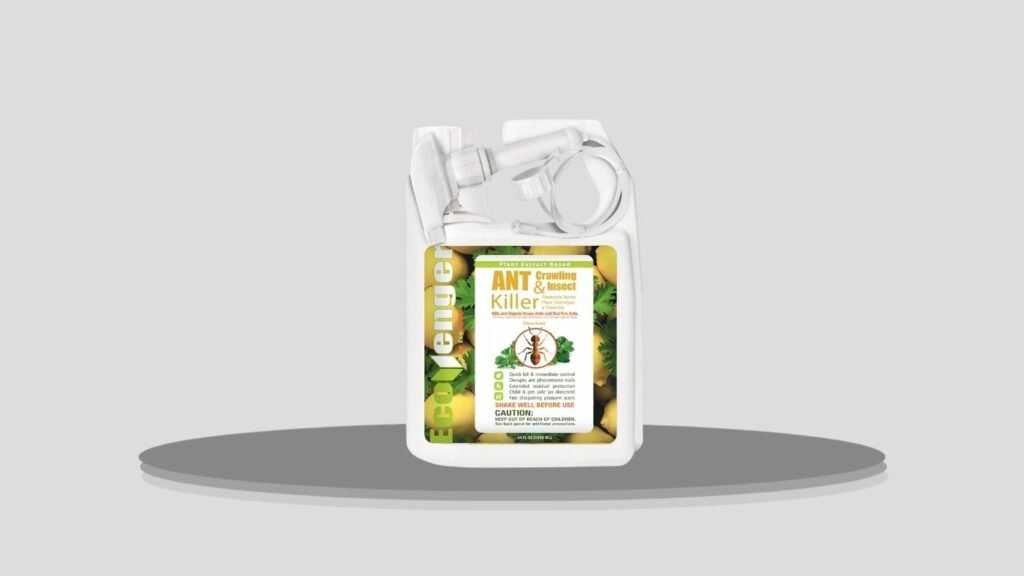
EcoVenger Ant & Crawling Insect Killer Spray provides a spray-based alternative for users who want faster treatment of visible ants and other crawling insects. Unlike bait products that rely on feeding behavior, a spray can be applied directly to active insects and selected problem areas. Its plant-based positioning also makes it appealing to households looking for an alternative to more conventional insecticide sprays.
Key Features
- Ready-to-use ant and crawling insect spray
- Plant-based pest-control approach
- Suitable for direct and targeted treatment
- Useful around indoor problem areas
- Designed for multiple crawling insects
- Convenient trigger-spray application
- Can complement bait-based control
Why It’s Best for Fast Spot Treatment
This product is best suited to situations where ants are actively visible and immediate spot treatment is desired. It can be useful around baseboards, entry points, cracks, and other locations where crawling insects frequently appear.
Because it targets more than ants, it can also be convenient for homes dealing with several small crawling pests at the same time.
Performance & Residual Use
Sprays provide a different benefit from bait. They can reduce visible insect activity quickly, but they may not reach hidden colony members unless the nest itself is directly treated.
For broader ant management, homeowners can combine targeted spraying with sanitation, sealing entry points, and appropriately placed baits in separate areas.
Repeated use may be necessary when new ants continue arriving from outdoors. Application should always follow label directions, particularly around food-preparation surfaces.
Pros & Cons and Overall Verdict
Pros
- Quick targeted application
- Useful against several crawling insects
- Ready to use
- Plant-based positioning
- Good for visible ant activity
Cons
- Direct spraying may not eliminate the full colony
- Repeat applications may be necessary
- Should not interfere with nearby bait placements
Overall Verdict: EcoVenger is a useful option for homeowners who want a convenient spray for visible ants and other crawling pests. It performs best as part of a wider control strategy rather than as the only solution for a deeply established colony.
5. TERRO Ant Killer Powder for Indoor & Outdoor Use
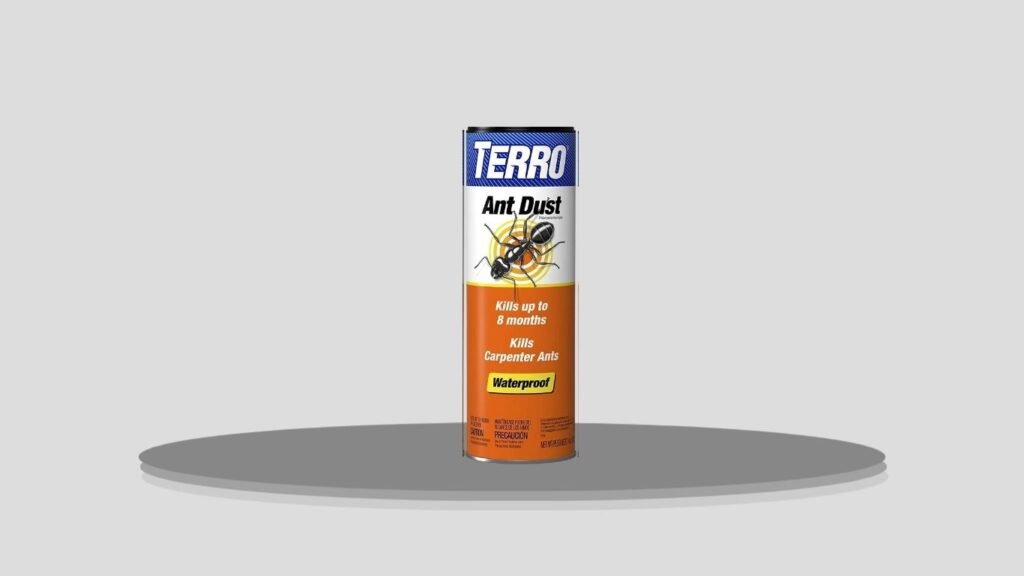
TERRO Ant Killer Powder offers a dry-treatment option for homeowners who need to reach cracks, crevices, exterior edges, and other locations where liquid products may be inconvenient. The powder format can be useful both indoors and outdoors when applied according to label instructions. It is especially practical for narrow gaps, foundation areas, and known ant travel routes where a more localized treatment is preferred.
Key Features
- Dry powder ant-control formula
- Suitable for indoor and outdoor use
- Useful for cracks and crevices
- Can treat selected exterior areas
- No liquid mixing required
- Good for targeted applications
- Practical for hard-to-reach ant pathways
Why It’s Best for Cracks and Perimeter Areas
Powder treatments are particularly useful in areas where sprays or liquid baits are difficult to place. Small cracks, gaps along foundations, wall void access points, and sheltered exterior locations can often be treated more precisely with a dry formulation.
The indoor/outdoor versatility also means one product can be used for several different types of ant activity.
Coverage & Treatment Longevity
Dry products may remain in place longer than liquids in protected areas, although moisture and weather can significantly reduce outdoor performance. For that reason, outdoor powder treatment works best in locations protected from rain or irrigation when the label allows.
Users should apply only the recommended amount. Excessive powder can be wasteful and may create unnecessary residue.
Combining perimeter treatment with sealing cracks and eliminating food sources can improve long-term results.
Pros & Cons and Overall Verdict
Pros
- Useful for tight cracks and crevices
- Indoor and outdoor versatility
- No mixing required
- Good for targeted perimeter treatment
- Convenient dry formulation
Cons
- Moisture can reduce effectiveness outdoors
- Powder can be messy if overapplied
- Requires careful placement around occupied areas
Overall Verdict: TERRO Ant Killer Powder is a practical choice for homeowners who need a dry treatment for cracks, gaps, and perimeter zones where liquid baits or sprays are less convenient. Its versatility makes it especially useful as part of a broader ant-control program.
6. BASF Advance 375A Granular Ant Bait
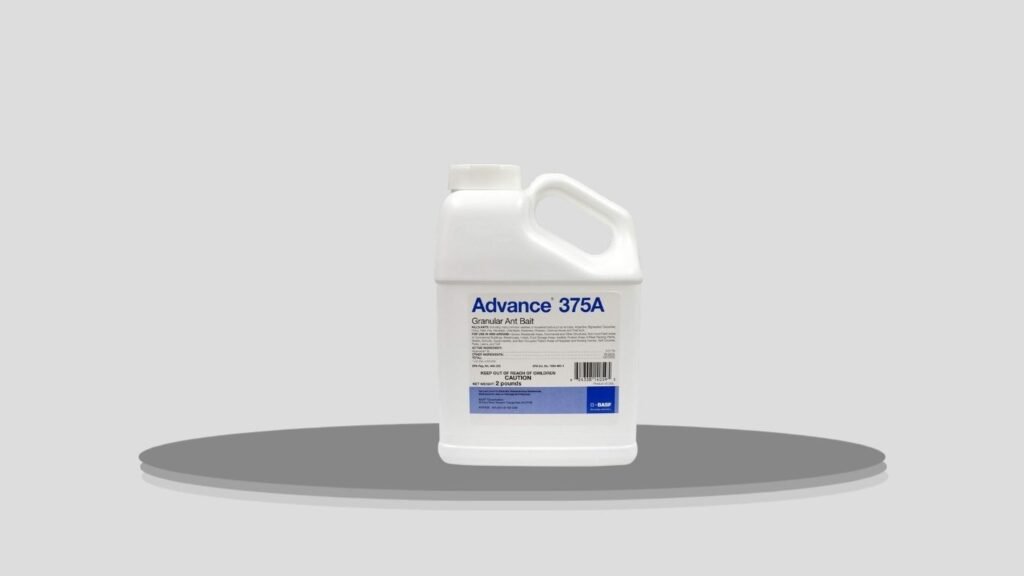
BASF Advance 375A Granular Ant Bait is a professional-style bait designed for outdoor and perimeter ant control. Instead of relying on direct contact, the granules are intended to attract foraging ants so they carry the bait back toward the colony. This makes it especially useful around lawns, foundations, patios, landscaped areas, and other places where ants travel between nesting sites and food sources.
Key Features
- Granular ant bait formula
- Designed for colony-focused control
- Suitable for outdoor and perimeter treatment
- Easy to distribute in targeted areas
- Useful around lawns and foundations
- Professional-style pest-control product
- Works through foraging ant behavior
Why It’s Best for Large Outdoor Areas
Granular bait is particularly useful when ant activity covers a wider area than a single trail. Instead of placing several small liquid stations, users can apply bait to selected outdoor zones where ants are actively foraging.
This makes Advance 375A useful around yards, landscaping, foundation edges, and other exterior locations where colonies may be difficult to locate directly.
The baiting approach can also help reach hidden colony members because worker ants transport food back toward the nest.
Performance & Coverage
Performance depends on active feeding. Granules should be placed according to label instructions in locations where ants are traveling or searching for food.
Weather conditions can influence effectiveness. Heavy rain, irrigation, or excessive moisture may reduce bait quality, so application timing is important.
Because bait is meant to be consumed, users should avoid applying repellent sprays directly over the same treated area. Monitoring ant activity afterward can help determine whether additional placement is necessary.
Pros & Cons and Overall Verdict
Pros
- Good for broad outdoor treatment
- Colony-focused baiting method
- Useful around lawns and landscaping
- Covers larger areas than small bait stations
- Professional-style formulation
Cons
- Weather can affect outdoor performance
- Results are not immediate
- Requires careful placement and label compliance
Overall Verdict: BASF Advance 375A is a strong option for homeowners dealing with widespread outdoor ant activity. Its granular format makes it particularly practical for yards, foundation zones, and larger exterior areas where liquid stations may not provide enough coverage.
7. Catchmaster Crawling Insect Adhesive Traps
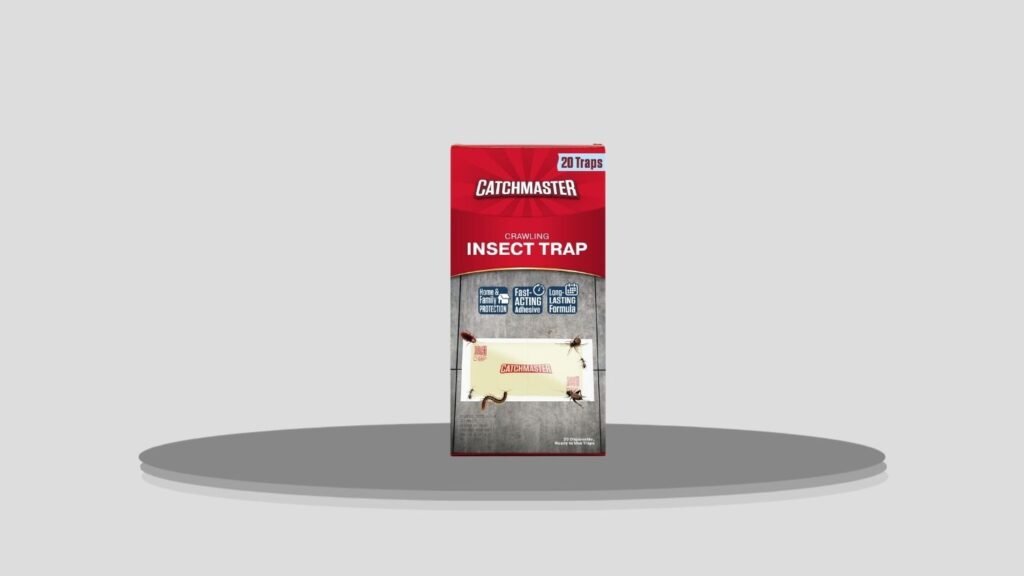
Catchmaster Crawling Insect Adhesive Traps provide a chemical-free monitoring approach for ants and other crawling insects. Rather than using bait or insecticide, these traps rely on a sticky adhesive surface that captures insects as they travel across it. They can be particularly useful indoors around baseboards, appliances, storage areas, garages, and other locations where crawling pests regularly appear.
Key Features
- Strong adhesive trapping surface
- No liquid bait or spray required
- Suitable for ants and other crawling insects
- Easy placement along pest pathways
- Useful for indoor monitoring
- Disposable design
- Helps identify high-activity areas
Why It’s Best for Monitoring Ant Activity
This option is best for homeowners who want to determine where ants are coming from before using stronger control methods. Sticky traps can reveal which parts of a room or structure have the most activity.
They can be placed beside walls, under appliances, or near suspected entry points. Because captured insects remain visible, users can compare different locations and identify areas that need further treatment.
The traps can also complement baits or other control methods without adding additional sprays.
Performance & Adhesive Durability
The adhesive performs best when the trap remains dry, clean, and free from dust. Placement near known ant trails increases the likelihood of capturing insects.
Sticky traps work mainly by physically catching individual ants, so they do not usually eliminate an entire colony. Their greatest value is monitoring and reducing visible crawling insect activity.
They should be replaced when the adhesive becomes covered with insects, dust, or debris.
Pros & Cons and Overall Verdict
Pros
- No spraying required
- Useful for identifying ant pathways
- Works on multiple crawling pests
- Simple setup
- Good supplemental control tool
Cons
- Does not directly target the colony
- Less suitable for large outdoor infestations
- Adhesive eventually needs replacement
Pros:
- No spraying required
- Useful for identifying ant pathways
- Works on multiple crawling pests
- Simple setup
- Good supplemental control tool
Cons:
- Does not directly target the colony
- Less suitable for large outdoor infestations
- Adhesive eventually needs replacement
Overall Verdict: Catchmaster adhesive traps are most useful as a monitoring and supplemental control tool. They can help homeowners identify where ants are traveling and determine where bait, sealing, or other treatments should be concentrated.
8. Spectracide Outdoor Ant Shield & Insect Killer
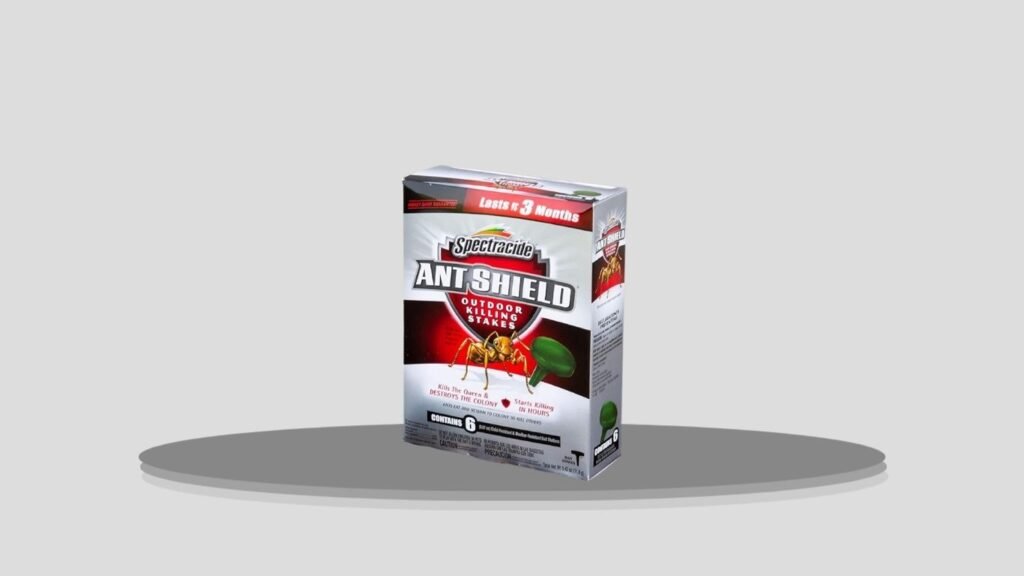
Spectracide Outdoor Ant Shield & Insect Killer is designed for perimeter pest control around homes, patios, foundations, and other exterior areas. It provides a broad-treatment option for homeowners who want to reduce ant activity before insects reach indoor spaces. The outdoor-focused design can also be useful for managing multiple insect pests around entry zones and landscaped areas.
Key Features
- Designed for outdoor ant control
- Useful around foundations and perimeter areas
- Broad outdoor treatment capability
- Helps manage multiple insect pests
- Suitable for patios and exterior surfaces
- Convenient for seasonal prevention
- Works well as part of perimeter pest management
Why It’s Best for Home Perimeter Protection
This product is particularly useful for homeowners who want to establish a treated zone around the exterior of the house. Ants often travel along foundations, siding edges, patios, and walkways before finding openings indoors.
Treating those exterior areas can help reduce the number of insects reaching windows, doors, and other entry points.
It can also be useful during warmer months when several crawling pests become active around the home.
Outdoor Performance & Longevity
Outdoor insecticides generally work best when applied under appropriate weather conditions and according to label directions. Rain, irrigation, and heavy outdoor exposure can influence how long a treatment remains effective.
Coverage is important when treating perimeter areas. Gaps in treatment can leave untreated pathways that ants continue to use.
Homeowners should also combine exterior treatment with trimming vegetation, removing food sources, and sealing structural gaps for better long-term results.
Pros & Cons and Overall Verdict
Pros
- Good for perimeter treatment
- Covers broader outdoor areas
- Useful against multiple pests
- Helps reduce ant entry into the home
- Practical for seasonal prevention
Cons
- Primarily designed for outdoor use
- Weather may affect residual performance
- May require reapplication over time
Overall Verdict: Spectracide Outdoor Ant Shield is a practical option for homeowners who want broad perimeter protection rather than small localized treatments. It is especially useful around foundations, patios, and exterior areas where ants frequently travel before entering the house.
FAQs
1. What type of ant killer works best?
The best ant killer depends on the infestation. Liquid and gel baits are often useful for colony-focused control because worker ants carry bait back toward the nest. Sprays provide faster treatment of visible ants, while powders and granules work well in cracks, perimeter areas, and outdoor locations.
2. Are ant baits better than ant sprays?
Ant baits and sprays serve different purposes. Baits usually work more slowly but can reach colony members through feeding behavior. Sprays may kill visible ants faster but may not reach the hidden nest. For persistent infestations, baiting is often more useful for long-term control.
3. Where should I place ant bait?
Place ant bait near active trails, entry points, baseboards, windows, doors, cabinets, or other locations where ants are regularly seen. Avoid placing bait directly beside strong-smelling cleaners or repellent sprays, because these may discourage ants from feeding.
4. How long does ant killer take to work?
Contact sprays may reduce visible activity quickly, while baits can take several days or longer because ants need time to feed and transport the bait back to the colony. The exact timeline depends on the ant species, colony size, product type, and placement.
5. How can I prevent ants from coming back?
Keep food sealed, clean crumbs and spills, remove standing water, seal cracks around doors and windows, trim vegetation away from the house, and monitor known entry points. Combining sanitation, exclusion, and properly placed ant-control products usually provides better long-term results than relying on a single treatment.
