
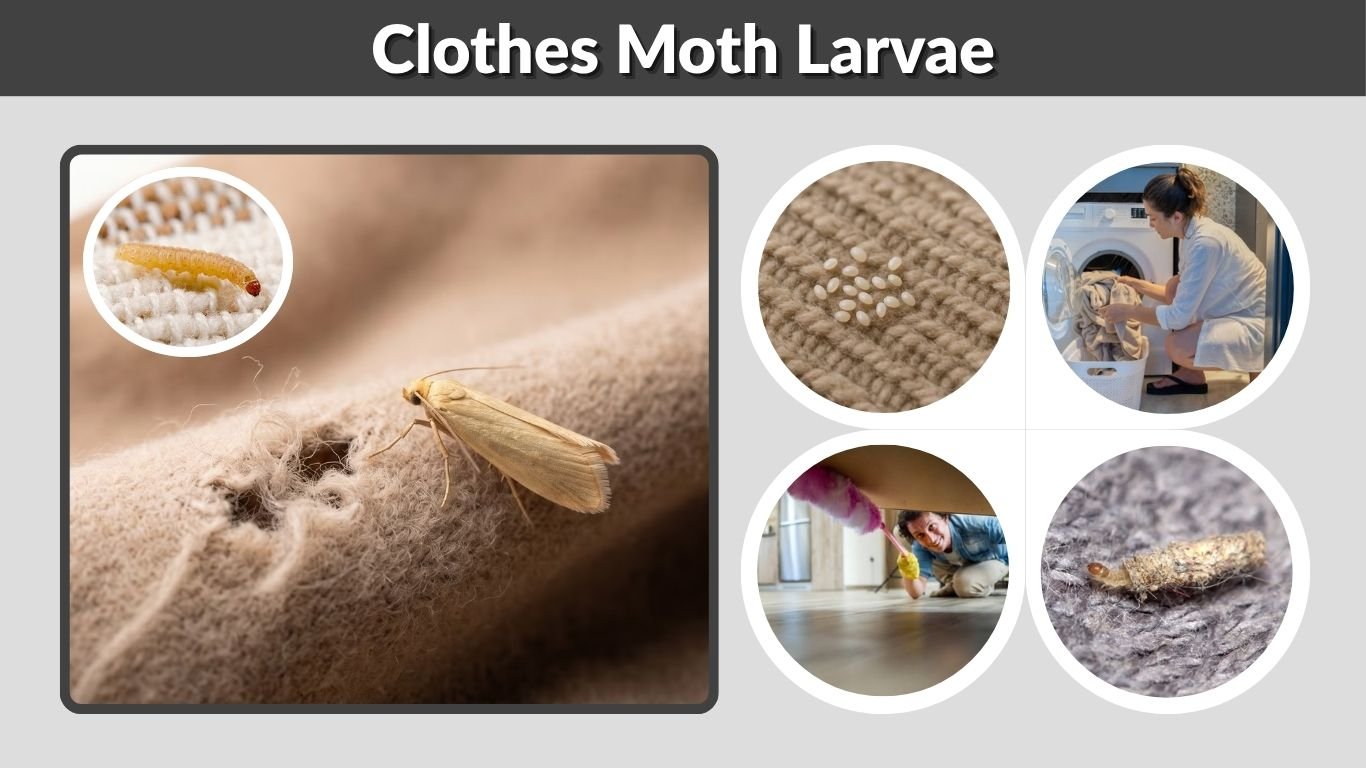
Clothes moth larvae are the stage responsible for most fabric damage caused by clothes moths. Unlike adult moths, the larvae feed on natural fibers such as wool, fur, feathers, silk, and materials containing animal-based proteins. They often hide in dark, undisturbed areas, which makes an infestation easy to miss until holes appear in clothing or carpets. Knowing what clothes moth larvae look like, where they hide, and how to remove them can help prevent expensive damage and stop an infestation from spreading through the home.
What Do Clothes Moth Larvae Look Like?
Clothes moth larvae are small, pale caterpillar-like insects that can be difficult to notice at first. Their appearance depends slightly on the species and stage of development. Most are creamy white with darker heads and remain close to the materials they feed on. Some species create silk tubes or portable cases that make identification easier.
Clothes Moth Larvae Identification
Common features include:
- Creamy white or pale body
- Brown or darker head capsule
- Caterpillar-like shape
- Usually less than 1/2 inch long
- Fine silk webbing nearby
- Small cases or cocoons in some species
- Fabric fibers attached to feeding areas
- Presence in dark, protected places
Seeing tiny larvae together with damaged wool, webbing, or silk cases is a strong indication of clothes moth activity.
How Big Are Clothes Moth Larvae?
Fully developed clothes moth larvae are commonly around 1/4 to 1/2 inch long, although younger larvae are much smaller.
Their size depends on species, temperature, food availability, and age. Newly hatched larvae may be difficult to see without close inspection.
Can You See Clothes Moth Larvae?
Yes. Clothes moth larvae are visible to the naked eye, particularly once they grow larger.
However, they often remain hidden inside folds, carpet edges, wardrobes, furniture, and stored clothing. A flashlight can help when checking dark corners and seams.
Types of Clothes Moth Larvae
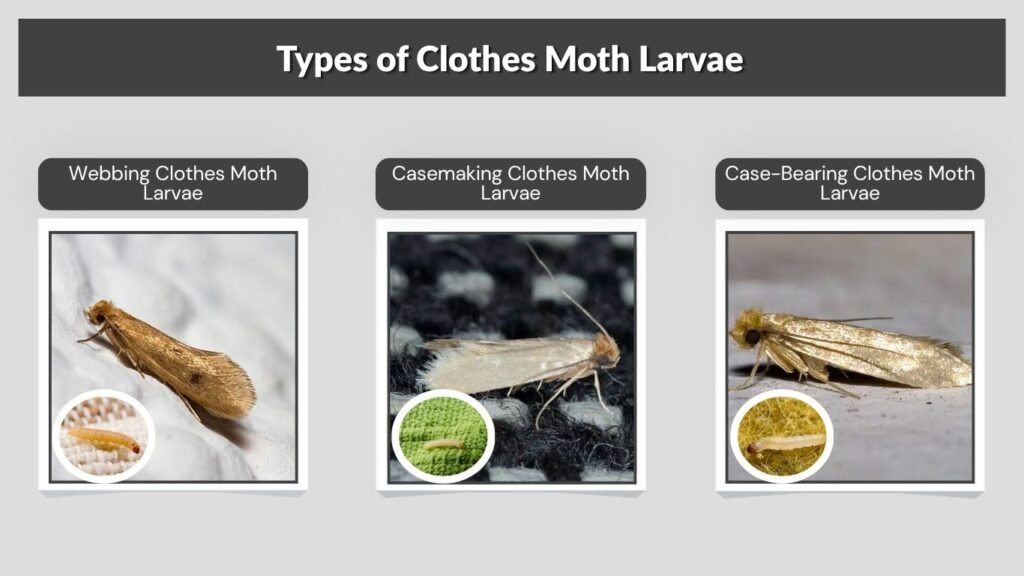
Two of the most common clothes-damaging moths are the webbing clothes moth and case-bearing clothes moth. Both species feed on similar materials, but their larvae behave differently. Understanding these differences can make it easier to identify the source of damage and locate where an infestation is developing.
Webbing Clothes Moth Larvae
Webbing clothes moth larvae, associated with Tineola bisselliella, produce silk webbing as they feed.
Their feeding areas may contain:
- Fine silky tubes
- Webbing mixed with fibers
- Frass or tiny droppings
- Uneven holes in fabric
- Larval skins
They usually prefer dark locations and may remain hidden beneath clothing, carpets, or furniture.
Case-Bearing Clothes Moth Larvae
Case-bearing clothes moth larvae create portable silk cases around themselves. These cases may contain fibers from the material they are feeding on, making them blend into carpets or fabrics.
The larva carries its case while moving and feeding.
Empty cases may remain attached to:
- Walls
- Ceilings
- Clothing
- Carpet fibers
- Furniture
- Wardrobe surfaces
Casemaking Clothes Moth Larvae
“Casemaking clothes moth” is another name commonly used for case-bearing clothes moths.
Their larvae build protective cases and may climb walls or ceilings when searching for a place to pupate.
Finding small rice-shaped cases attached to surfaces can indicate an active or previous infestation.
Clothes Moth Larvae Damage
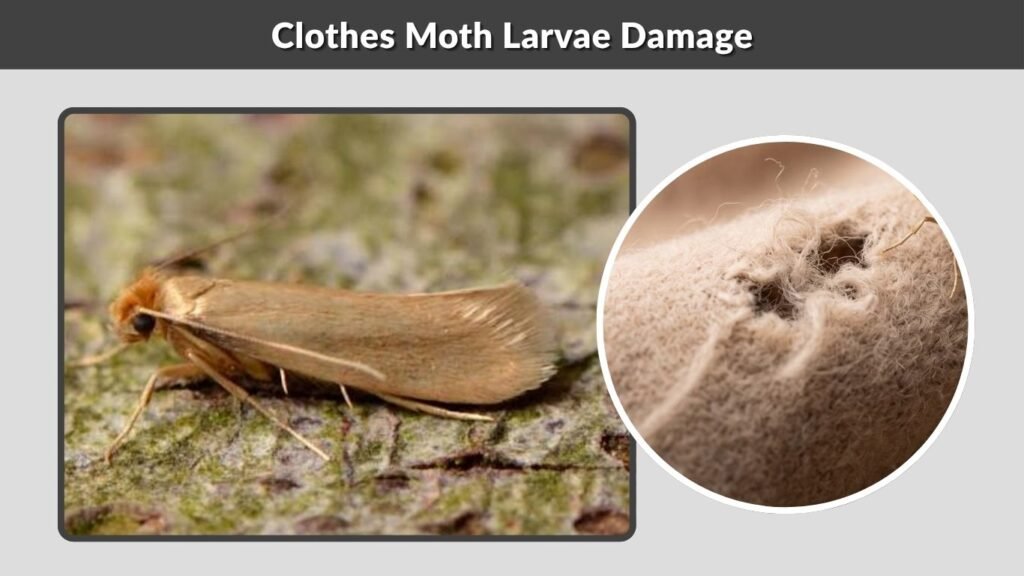
Adult clothes moths do not cause the holes commonly associated with infestations. The larvae do the feeding. They are attracted to keratin, a protein found in many animal-based materials. Damage can become severe when larvae remain undisturbed for long periods, especially inside wardrobes, closets, storage areas, and carpets.
What Do Clothes Moth Larvae Eat?
Clothes moth larvae commonly feed on:
- Wool
- Cashmere
- Fur
- Feathers
- Felt
- Silk blends
- Animal hair
- Wool carpets
- Upholstery
- Natural-fiber clothing
- Stored fabrics contaminated with sweat or food
Synthetic fibers are generally less attractive unless they are blended with natural materials or contaminated with organic matter.
Clothes Moth Larvae Damage to Clothing
Damage often appears as irregular holes rather than clean cuts.
You may notice thinning fabric before a complete hole develops. Clothing that remains stored for months without movement is particularly vulnerable.
Wool sweaters, coats, blankets, scarves, and suits are frequent targets.
Clothes Moth Larvae in Carpet
Clothes moth larvae in carpet usually concentrate in areas that are rarely disturbed.
Typical locations include:
- Beneath furniture
- Along carpet edges
- Under rugs
- Near baseboards
- Inside closets
- Beneath beds
- Dark corners
Wool carpeting is especially vulnerable because it provides a continuous food source.
Clothes Moth Larvae on Walls and Ceilings
Finding clothes moth larvae on a wall or ceiling does not necessarily mean they are feeding there. Mature larvae may leave their food source and crawl upward while looking for a protected location in which to pupate. Case-bearing larvae are particularly noticeable because their portable cases may remain attached to walls.
Why Clothes Moth Larvae Appear on Walls
Larvae may leave clothing or carpet when they are:
- Searching for new food
- Preparing to pupate
- Moving away from disturbed areas
- Looking for cracks or protected locations
If larvae appear on walls, inspect nearby carpets, furniture, wardrobes, and stored fabrics.
Clothes Moth Larvae on the Ceiling
Larvae can sometimes travel surprisingly far from the original feeding site.
Check ceiling corners, wall junctions, curtain areas, closets, and high shelves for cocoons or cases.
Removing visible larvae alone will not solve the problem if eggs and younger larvae remain hidden elsewhere.
Clothes Moth Larvae Life Cycle
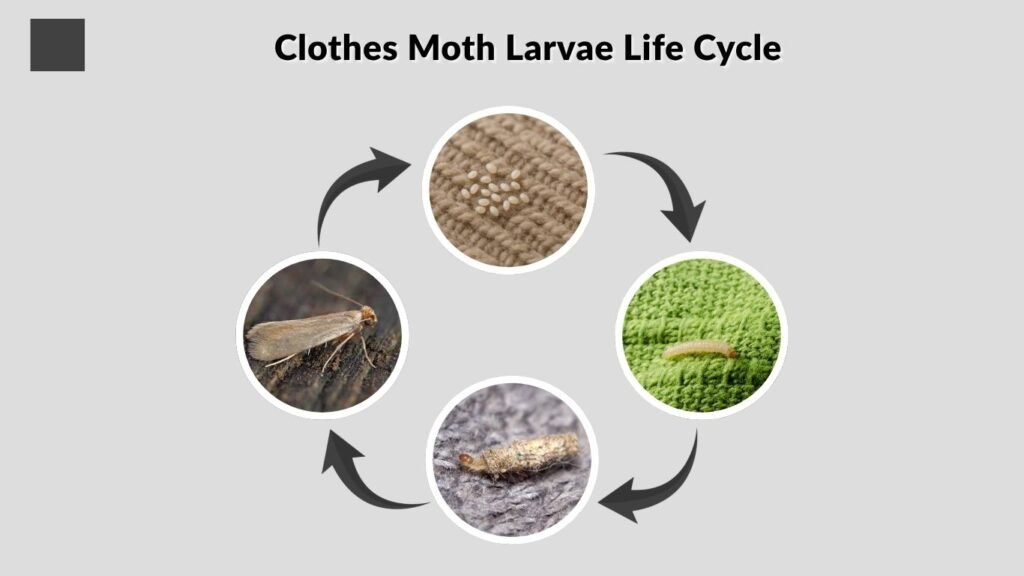
The clothes moth life cycle includes egg, larva, pupa, and adult stages. The larval stage causes nearly all damage and can last significantly longer than the adult stage. Development speed varies with temperature, humidity, food quality, and species, so infestations can continue unnoticed for months.
Clothes Moth Eggs and Larvae
Females lay tiny eggs close to suitable food sources.
After hatching, larvae begin feeding almost immediately. As they grow, they molt repeatedly before forming a cocoon or case for pupation.
The basic cycle is:
- Adult female lays eggs.
- Eggs hatch into larvae.
- Larvae feed on natural fibers.
- Mature larvae pupate.
- Adult moths emerge.
- Adults mate and begin another generation.
How Long Do Clothes Moth Larvae Live?
The larval period may last from several weeks to many months.
Poor conditions can slow development considerably, while warmth and abundant food may speed up growth.
This long larval period is one reason clothes moth infestations can cause extensive damage before adults are noticed.
How to Get Rid of Clothes Moth Larvae
Removing clothes moth larvae requires treating both the visible insects and their hidden breeding areas. Cleaning is especially important because eggs and tiny larvae can remain deep inside fabric folds, carpet edges, drawers, and furniture.
How to Remove Moth Larvae From Clothes
Useful steps include:
- Inspect all vulnerable clothing.
- Wash washable garments thoroughly.
- Dry items according to fabric care instructions.
- Dry-clean delicate wool or specialty clothing when appropriate.
- Vacuum wardrobes and drawers.
- Clean cracks and shelf edges.
- Place cleaned garments in sealed containers.
- Discard badly damaged items when necessary.
Do not return cleaned clothing to an infested closet until the storage area has also been treated.
Does Washing Clothes Kill Moth Larvae?
Washing can help remove or kill larvae and eggs, particularly when the garment can safely tolerate an effective wash and drying cycle.
However, delicate wool and other natural fibers may require professional dry cleaning instead of high-temperature washing.
Always follow the garment’s care instructions.
Will Steaming Clothes Kill Moth Larvae?
Steam can kill exposed larvae and eggs when sufficient heat reaches them.
It can be useful for certain fabrics, upholstery, rugs, and difficult areas, but only when the material is safe to steam.
Thick fabrics require careful treatment because larvae can hide deeper inside.
Does Sunlight Kill Moth Larvae?
Direct sunlight, heat, and disturbance can make conditions less favorable for clothes moth larvae.
Taking items outside, shaking them, brushing them, and exposing them to sunlight can help reveal hidden larvae.
However, sunlight alone should not be relied on to eliminate an established infestation.
Are Clothes Moth Larvae Dangerous to Humans?
Clothes moth larvae are primarily fabric pests rather than biting pests. They do not seek humans as food and are mainly concerned with materials containing animal proteins. Their greatest impact is usually economic because they can damage expensive clothes, rugs, upholstery, and stored fabrics.
Do Clothes Moth Larvae Bite Humans?
No. Clothes moth larvae do not normally bite humans.
They have mouthparts designed for feeding on suitable fibers and organic material rather than attacking people.
Skin irritation around infested materials may have another cause and should not automatically be blamed on clothes moth larvae.
How to Prevent Clothes Moth Larvae
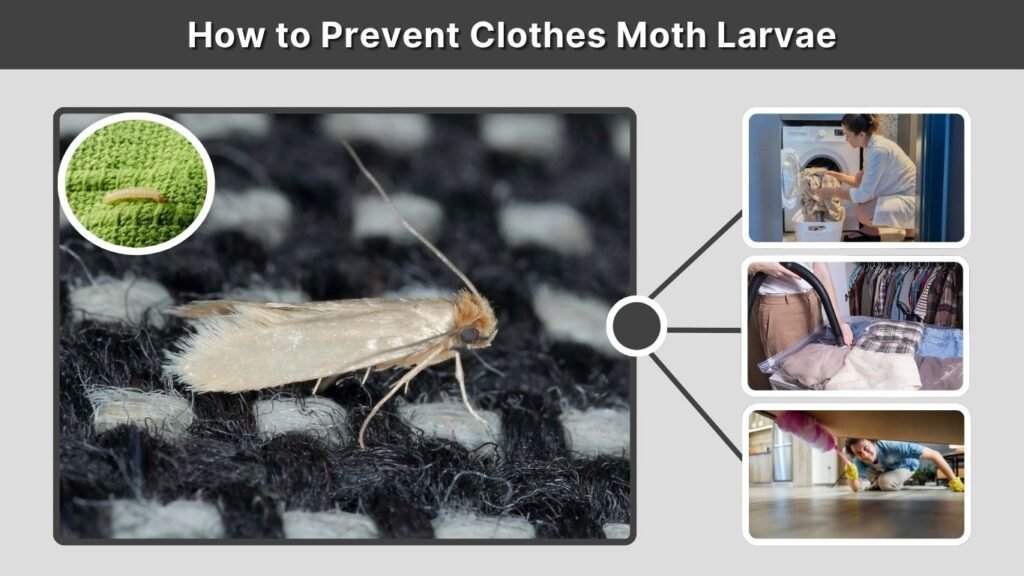
Prevention focuses on cleanliness, inspection, and proper storage. Clothes moths are more likely to thrive where natural-fiber items remain dark, dirty, and undisturbed for long periods.
Prevention Tips
- Wash clothing before long-term storage.
- Vacuum closets regularly.
- Clean under furniture.
- Inspect wool rugs frequently.
- Store seasonal clothing in sealed containers.
- Avoid leaving wool clothing undisturbed for months.
- Check secondhand textiles before bringing them indoors.
- Remove lint, pet hair, and natural debris.
- Rotate and inspect stored garments periodically.
Regular disturbance makes wardrobes and carpets much less attractive places for clothes moth populations to develop.
Clothes Moth Larvae vs. Carpet Beetle Larvae
Clothes moth larvae and carpet beetle larvae can damage many of the same materials, but they look quite different. Clothes moth larvae are generally smooth, pale, and caterpillar-like. Carpet beetle larvae usually appear brown, banded, and noticeably hairy.
Finding silk webbing or portable cases favors clothes moths, while shed hairy skins are more typical of carpet beetles.
FAQs
What do moth larvae look like on clothes?
They usually appear as small, creamy white caterpillars with darker heads. You may also notice silk webbing, tiny cases, shed skins, or damaged fibers around them.
Where do clothes moth larvae come from?
They hatch from eggs laid by adult clothes moths near suitable food sources such as wool clothing, carpets, fur, feathers, and natural-fiber fabrics.
What kills clothes moth larvae?
Proper laundering, suitable heat treatment, professional dry cleaning, thorough vacuuming, and appropriate pest-control measures can kill or remove clothes moth larvae.
Do all moth larvae eat clothes?
No. Most moth species do not damage clothing. Only certain species, including webbing and case-bearing clothes moths, are common fabric pests.
How do I find clothes moth larvae?
Inspect dark, rarely disturbed areas such as wardrobe corners, wool carpets, rug edges, clothing folds, drawers, furniture, baseboards, and areas beneath beds or heavy furniture.
