
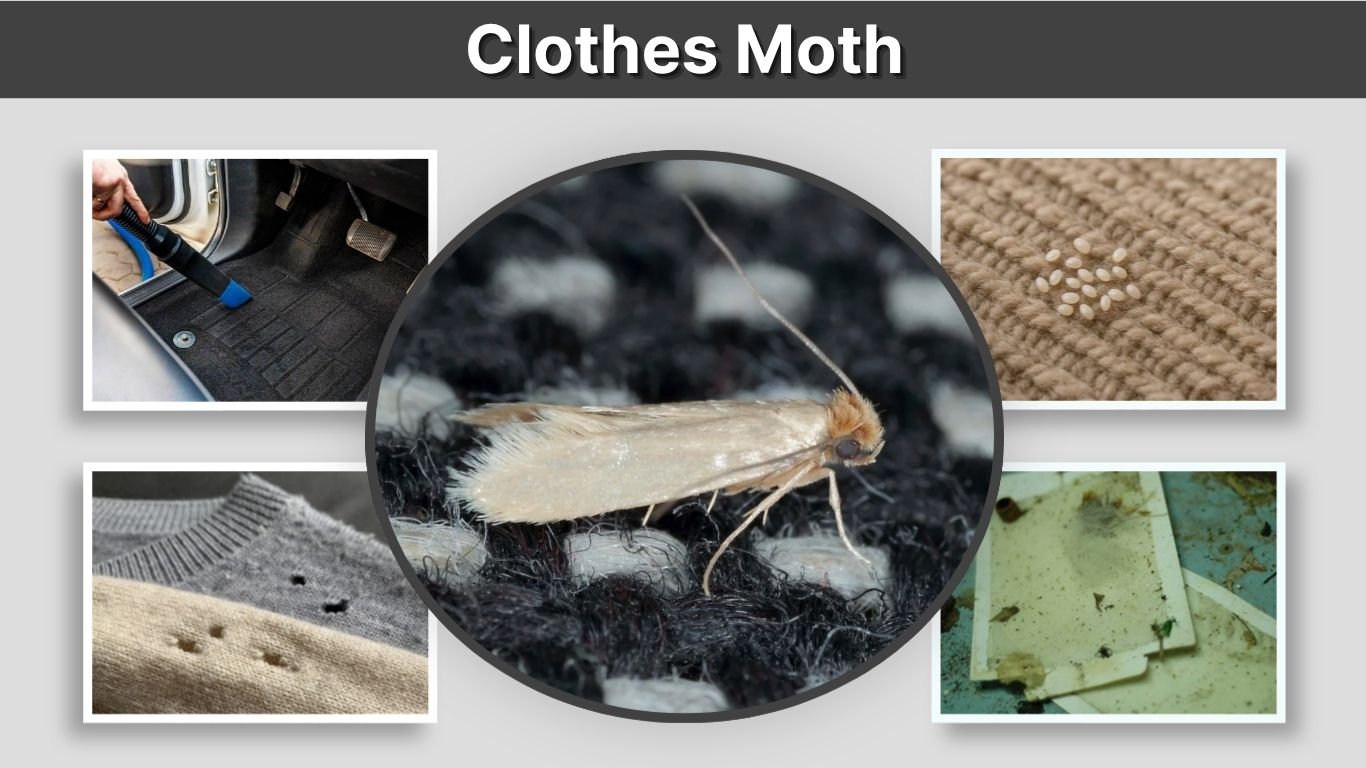
A clothes moth infestation can quietly damage sweaters, carpets, blankets, upholstery, and other materials containing natural fibers. The adult moth itself does not eat clothes; the destructive stage is the larva, which feeds on materials such as wool, fur, feathers, and hair. Clothes moths often remain hidden in dark closets, drawers, carpet edges, and storage areas, so damage may appear before the insects are noticed. Learning how to recognize clothes moth larvae, eggs, webbing, and feeding damage can help you control an infestation before it spreads.
What Is a Clothes Moth?
Clothes moths are small moths whose larvae feed on animal-based fibers. Two of the best-known household species are the webbing clothes moth and the case-bearing, or casemaking, clothes moth.
Adult clothes moths are generally small and prefer dark, undisturbed areas. Unlike pantry moths, which are usually noticed flying around kitchens and stored foods, clothes moths are more closely associated with closets, carpets, upholstery, and stored fabrics.
Clothes Moth Identification
- Small adult moth, usually less than 1/2 inch long
- Narrow wings held close to the body
- Webbing clothes moths are usually pale golden or buff
- Case-bearing clothes moths may look more grayish or brown
- Adults often avoid bright light
- Larvae are pale or cream-colored with darker heads
- Webbing, silk tubes, cases, or damaged fibers may be present
- Frequently found in closets, drawers, carpet edges, and storage areas
Do Moths Eat Clothes?
Adult clothes moths do not chew holes in clothing. Clothes moth larvae cause the damage.
The larvae need protein and nutrients found in natural animal fibers. They commonly feed on wool, cashmere, fur, feathers, felt, silk blends, and other materials containing keratin.
Clothing contaminated with sweat, food spills, body oils, or other organic residue may be especially attractive because these materials provide additional nutrients.
Synthetic fabrics such as polyester are generally less attractive unless they are blended with natural animal fibers or contaminated with substances the larvae can use as food.
What Do Clothes Moth Larvae Look Like?
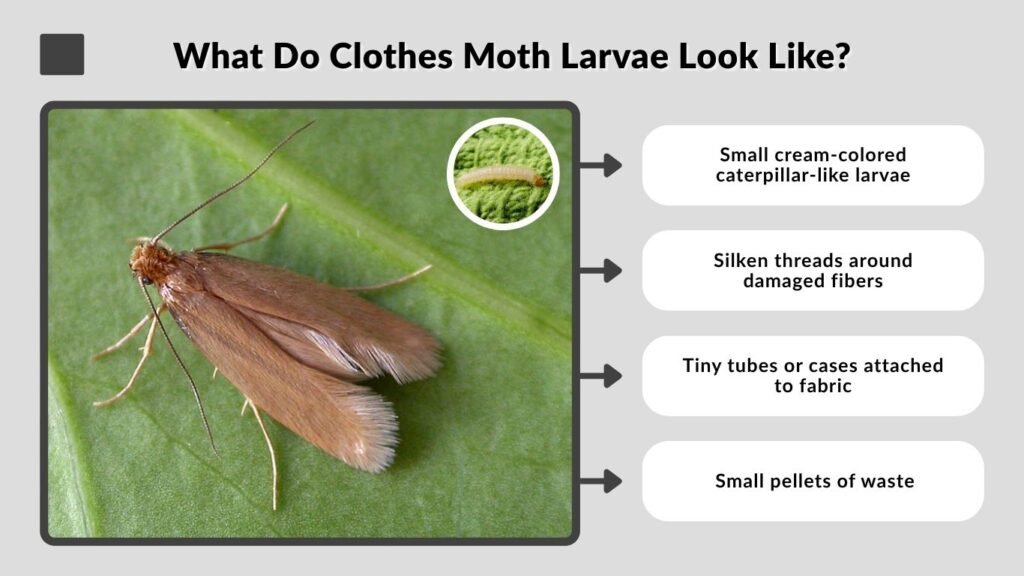
Clothes moth larvae are small, pale caterpillar-like insects. They are usually cream or whitish with a darker head.
Because larvae avoid bright, open areas, you may find them hidden in folds of clothing, beneath carpets, inside upholstered furniture, or along closet edges.
Signs of Clothes Moth Larvae
- Small cream-colored caterpillar-like larvae
- Silken threads around damaged fibers
- Tiny tubes or cases attached to fabric
- Shed skins
- Small pellets of waste
- Uneven holes in wool or other fabrics
- Thinning patches on rugs or carpets
The larvae are much more important to find than the adult moth because they are the stage actively damaging fabrics.
What Do Clothes Moth Eggs Look Like?
Clothes moth eggs are extremely small and can be difficult to see without close inspection. Females lay eggs in protected areas where newly hatched larvae will have immediate access to suitable food.
Eggs may be deposited in folds of clothing, carpet fibers, furniture, closets, and stored textiles.
Because the eggs are so small, seeing them is not always realistic. Finding larvae, silk, cases, or fresh fabric damage is often a more practical indication of an infestation.
What Do Moth Holes in Clothes Look Like?
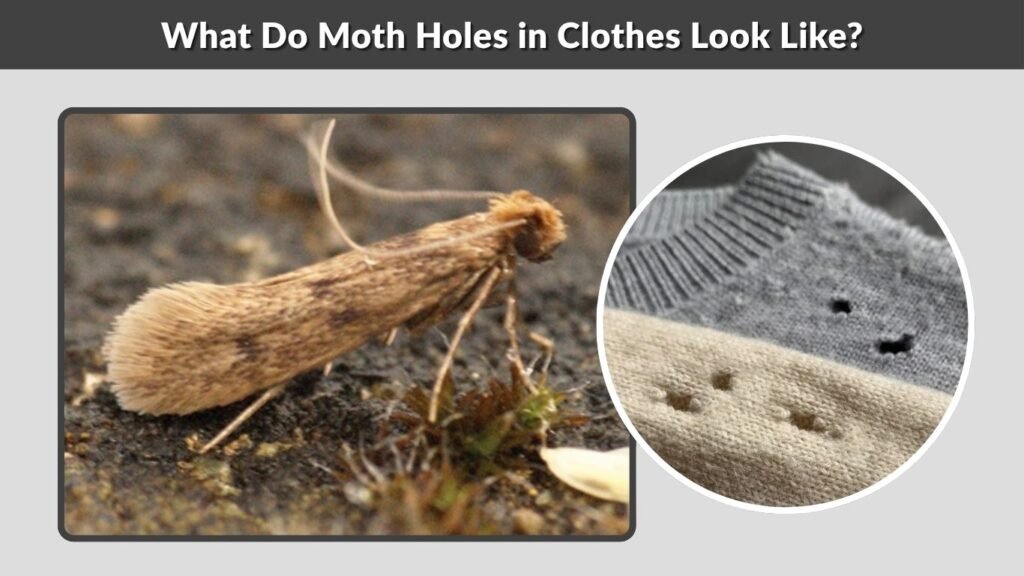
Moth damage commonly appears as irregular holes or thinning areas rather than neat, perfectly round openings.
Damage can be especially noticeable on wool sweaters, scarves, coats, rugs, blankets, and other animal-fiber materials.
Common Signs of Moth Damage
- Irregular holes in clothing
- Several small holes close together
- Thin or worn-looking patches
- Damaged carpet underneath furniture
- Loose fibers around feeding areas
- Silk webbing on fabrics
- Small larval cases attached to material
Clothes moth damage can sometimes be confused with normal wear, carpet beetle damage, or fabric deterioration. Finding larvae or silk around the damaged area provides stronger evidence.
Webbing Clothes Moth
The webbing clothes moth is one of the most common fabric pests found indoors.
Its larvae produce silk while feeding and may create tunnels or mats of webbing through the material. They often stay concealed within the damaged fabric.
Adult webbing clothes moths are relatively small and usually golden or buff-colored.
Signs of a Webbing Clothes Moth Infestation
Look for silk threads, feeding tubes, larvae, shed skins, and irregular fabric damage.
Webbing may be especially noticeable on stored wool clothing, carpets, upholstered furniture, blankets, and taxidermy materials.
Pheromone traps designed specifically for webbing clothes moths can help detect adult males, but traps alone will not eliminate larvae hidden in fabrics.
Case-Bearing Clothes Moth
The case-bearing clothes moth, also known as the casemaking clothes moth, behaves differently.
Its larva constructs a portable silken case using fibers from the material it is feeding on. The larva carries this case as it moves.
The case may look like a tiny gray, brown, or cream-colored tube attached to clothing, walls, furniture, or other surfaces.
Finding these small cases is one of the clearest clues that case-bearing clothes moth larvae are present.
Clothes Moth Life Cycle
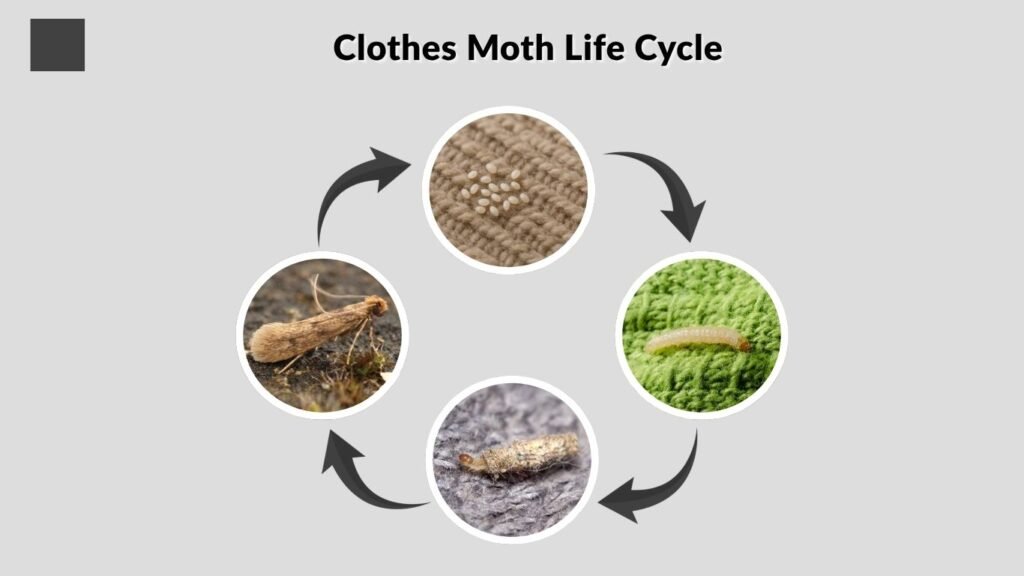
The clothes moth life cycle consists of four stages:
Egg
Adult females lay eggs directly on or near materials suitable for larval feeding.
Larva
The larval stage causes fabric damage. Depending on environmental conditions and food availability, this stage may last much longer than the adult stage.
Pupa
Mature larvae create a protected area or cocoon before transforming into adults.
Adult
Adult moths reproduce but do not damage clothing directly.
Because hidden larvae can continue developing after adults are trapped, clothes moth control must address every stage of the life cycle.
Clothes Moth vs. Pantry Moth
Clothes moths and pantry moths infest very different materials.
Clothes moth larvae feed mainly on animal-based fibers, while pantry moth larvae infest stored foods such as flour, grains, cereal, nuts, seeds, and dried fruit.
Pantry moths are also commonly seen flying around kitchens. Clothes moths tend to remain in darker closets and storage areas.
If moths are appearing around food cabinets, inspect dry foods first. If you find holes in wool clothing or larvae along carpet edges, clothes moths are more likely.
How to Get Rid of Clothes Moths
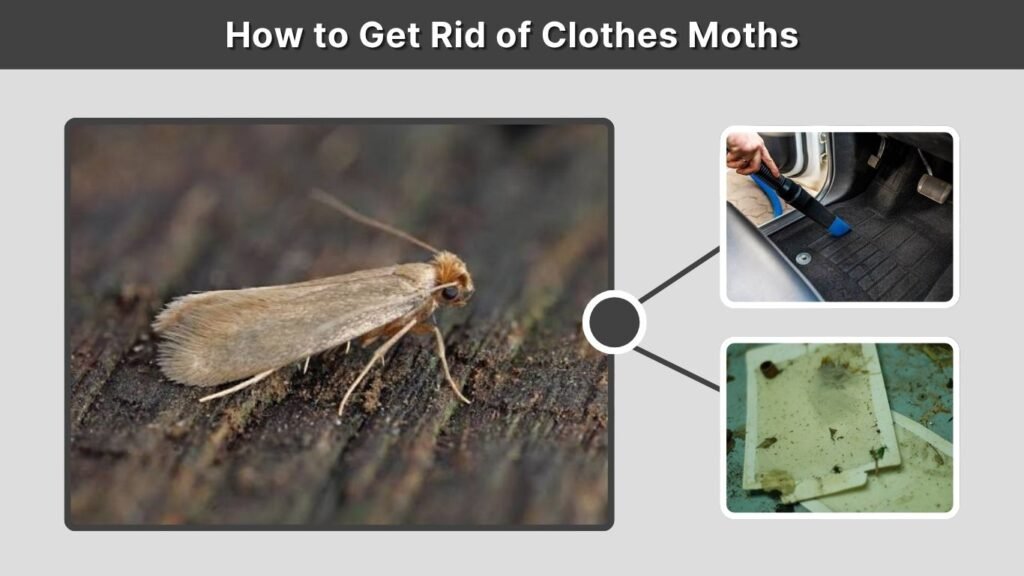
Successful clothes moth control requires removing larvae, eggs, and their food sources rather than simply killing visible adult moths.
Clean Infested Clothing
Wash washable clothing according to the care label. Dry cleaning can also be useful for delicate wool and other vulnerable fabrics.
Heat can kill eggs and larvae when the material can safely tolerate the required temperature.
Vacuum Thoroughly
Vacuum:
- Closet floors
- Carpet edges
- Under furniture
- Baseboards
- Shelves
- Cracks and corners
- Upholstered furniture
Dispose of vacuum contents promptly after cleaning an infested area.
Inspect Stored Fabrics
Check wool sweaters, blankets, rugs, coats, scarves, feather products, and rarely used clothing.
Items with severe damage should be isolated from unaffected materials.
Use Clothes Moth Traps
Pheromone traps can attract male clothes moths and are useful for monitoring an infestation.
However, traps should not be treated as the only control method because larvae and eggs remain hidden in fabrics.
Best Clothes Moth Prevention Methods
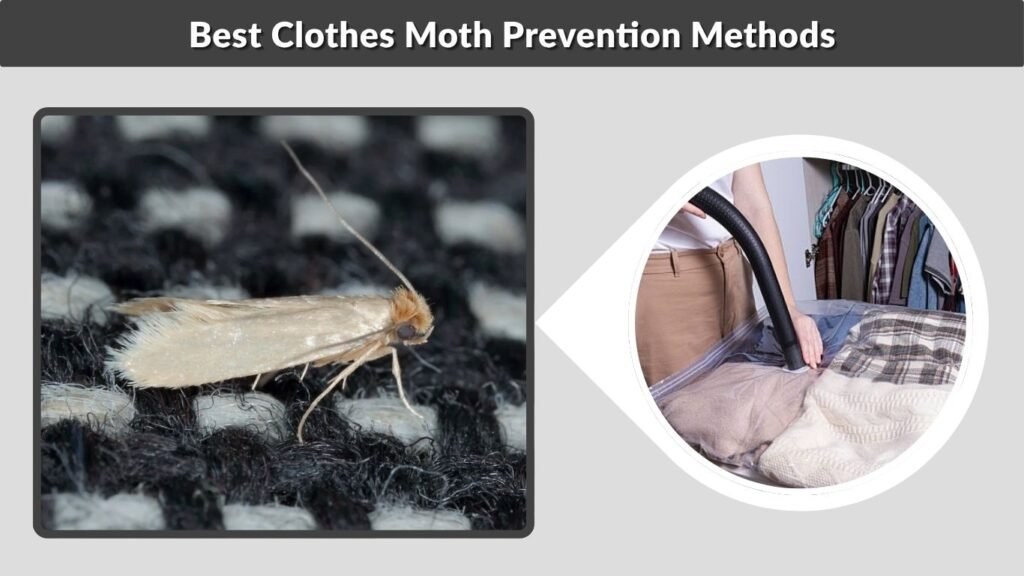
Preventing clothes moths is usually easier than dealing with an established infestation.
Clean clothing before long-term storage because food stains, sweat, and body oils may make fabric more attractive to larvae.
Store valuable wool, cashmere, fur, and similar materials in tightly sealed containers or moth-resistant garment bags.
Vacuum closets regularly, especially along dark edges and underneath furniture.
Inspect rarely used fabrics several times a year instead of leaving them undisturbed for long periods.
Do Moth Repellents Work for Clothes?
Some moth repellents can discourage adult moths from entering storage spaces, but repellents are not a substitute for removing an active infestation.
Cedar and aromatic products may have limited repellent effects, but their effectiveness can decrease as the scent fades.
Mothballs contain pesticides and should only be used exactly according to label directions, typically in properly sealed containers. They should never be scattered openly around living areas.
For long-term protection, clean storage, sealed containers, regular inspection, and early detection are generally more dependable than relying only on scent-based deterrents.
FAQs
1. What kind of moth eats clothes?
The larvae of webbing clothes moths and case-bearing clothes moths are common fabric pests. Adults do not eat clothing.
2. Can you see moth eggs on clothes?
Clothes moth eggs are extremely small and difficult to notice. Larvae, silk, cases, and fabric damage are usually easier signs to identify.
3. Why are clothes moth larvae in my carpet?
Carpets containing wool or other animal fibers can provide food for larvae, particularly in dark, undisturbed areas underneath furniture or along room edges.
4. Do clothes moth pheromone traps work?
Pheromone traps can help detect and capture adult male moths. They are useful for monitoring but usually need to be combined with cleaning, inspection, and treatment of infested fabrics.
5. How can I prevent moth holes in clothes?
Clean garments before storage, keep vulnerable fabrics in sealed containers or garment bags, vacuum closets regularly, inspect stored clothing, and respond quickly if you notice larvae or moth activity.
