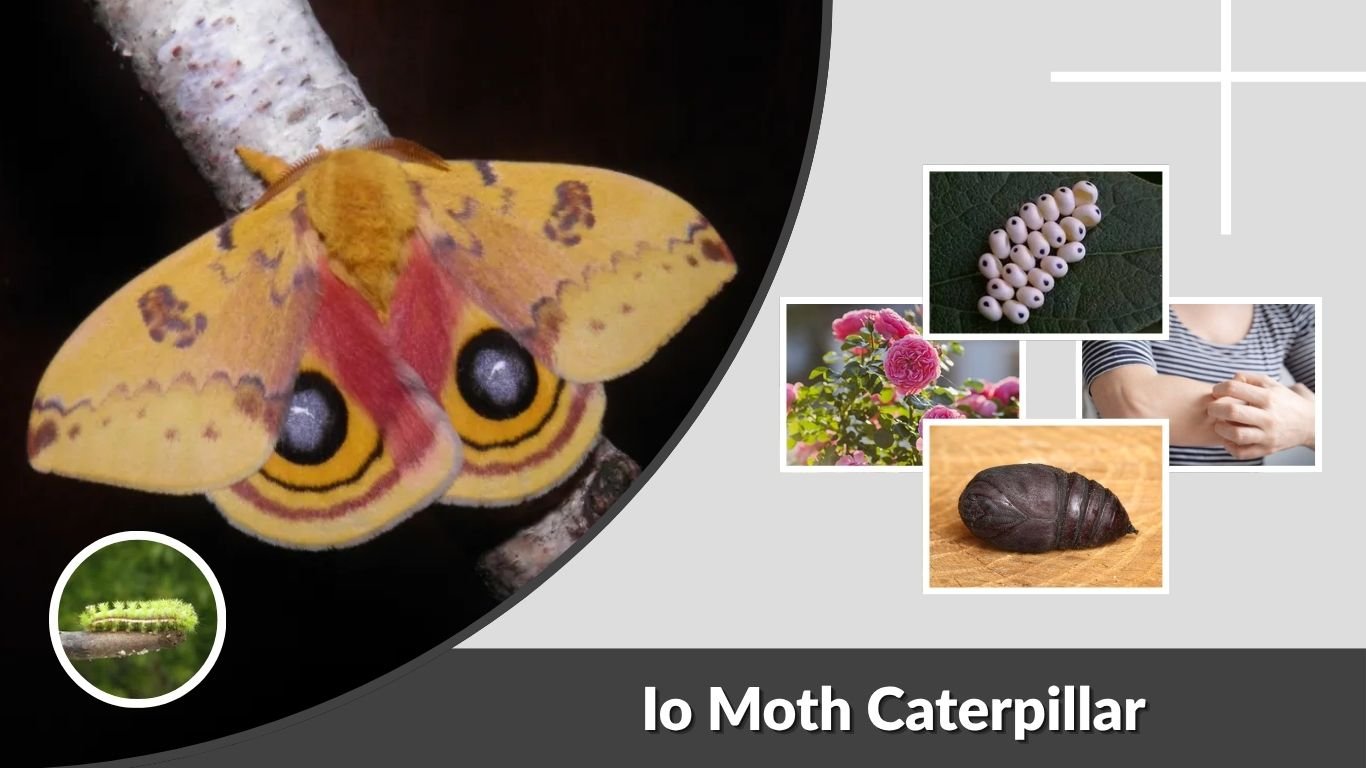
The Io moth caterpillar (Automeris io) is one of the most recognizable stinging caterpillars in North America. Mature larvae are bright green with a red-and-white stripe along each side and clusters of sharp, branching spines covering much of the body. Those spines can release venom when they penetrate skin, producing immediate burning, itching, redness, and swelling. Io caterpillars feed on many trees and shrubs, including willow, maple, elm, hibiscus, and roses, before eventually forming a cocoon and developing into the spectacular eyespotted Io moth.
What Is an Io Moth Caterpillar?
The Io moth caterpillar is the larval stage of the Io moth (Automeris io), a large silk moth belonging to the family Saturniidae. It occurs across much of eastern and central North America and is particularly familiar in warm southern states.
The caterpillar is noteworthy because virtually its entire body is protected by clusters of venomous spines.
Quick Facts
- Scientific name: Automeris io
- Family: Saturniidae
- Adult: Io moth
- Mature color: Bright green
- Maximum length: About 6.5 cm
- Defense: Venomous spines
- Diet: Leaves of numerous trees and shrubs
- Life stages: Egg, caterpillar, pupa, adult
- Range: Much of eastern and central North America
- Main concern: Painful skin reaction after contact
What Does an Io Moth Caterpillar Look Like?
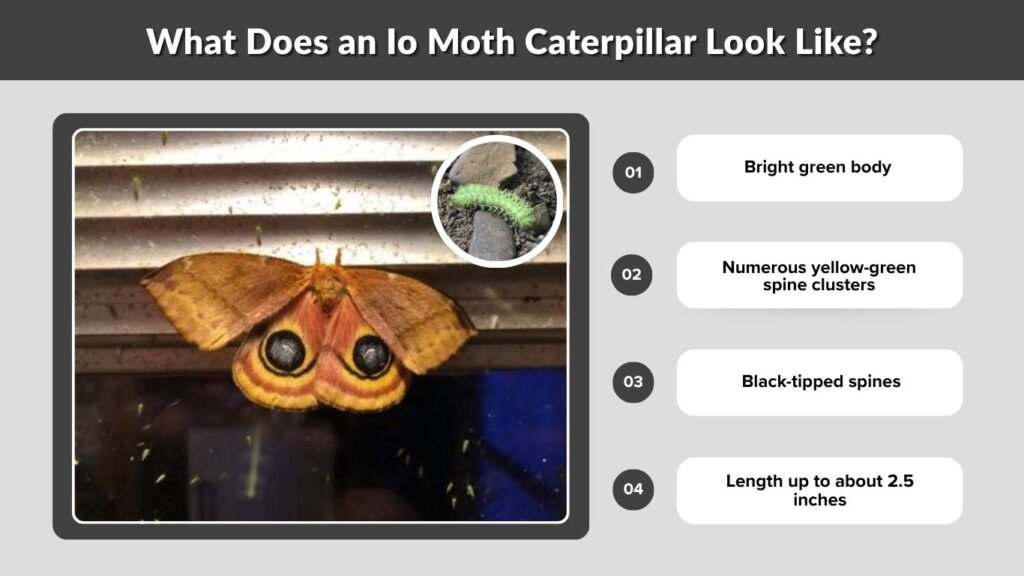
Mature Io caterpillars are relatively easy to recognize. Their bright green coloration makes them attractive, but touching one can produce a painful sting.
Identification Features
Look for:
- Bright green body
- Numerous yellow-green spine clusters
- Black-tipped spines
- Red stripe running along each side
- White or yellow-white line next to the red stripe
- Thick cylindrical body
- Length up to about 2.5 inches
UF/IFAS reports that mature caterpillars can reach about 6.5 cm long.
Are Young Io Caterpillars Green?
Not initially.
Early instars can be dark brown and later become dull orange before eventually developing the familiar green coloration. Young larvae may also remain together in groups, whereas mature caterpillars are more likely to spread out.
The dramatic color changes can make different developmental stages look like completely different caterpillar species.
Can an Io Moth Caterpillar Sting?
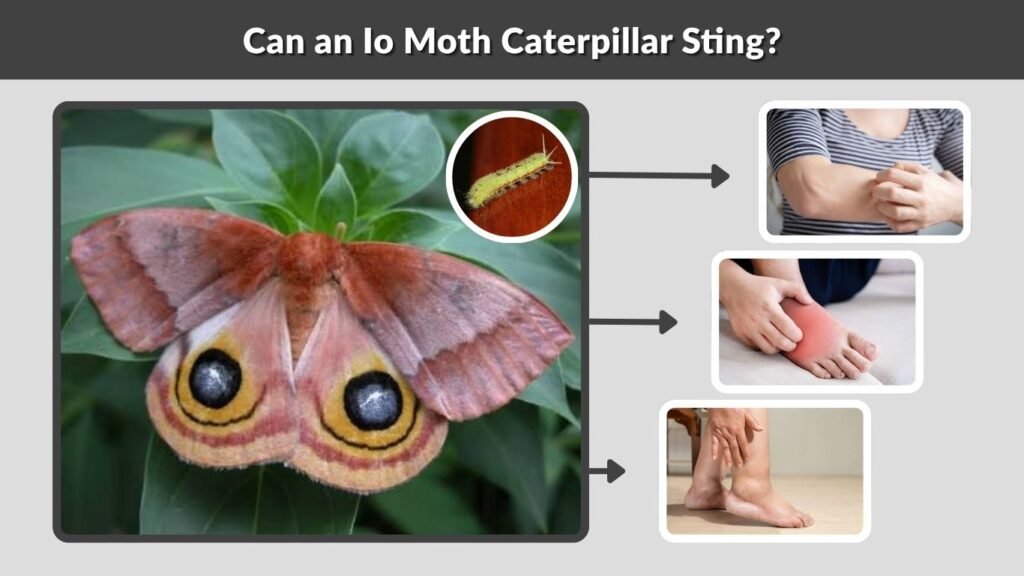
Yes. The Io moth caterpillar is a stinging caterpillar.
Its branched spines are hollow and can break when they contact skin. The tips may become embedded and release venom, producing an immediate inflammatory reaction.
Io Moth Caterpillar Sting Symptoms
Common symptoms include:
- Immediate burning or stinging
- Sharp pain
- Itching
- Redness
- Localized swelling
- Raised welt
- Tender or irritated skin
Pain usually begins improving within a few hours, while redness and swelling often decline within several more hours. Systemic reactions are uncommon, although sensitivity varies between individuals.
Io Moth Caterpillar Sting Treatment
Most uncomplicated stings can be managed with basic first aid, but symptoms should be monitored.
What to Do After a Sting
- Do not rub the area. Rubbing can drive remaining spine fragments deeper into the skin.
- Use adhesive tape. Apply clear tape to the affected area and gently pull it away to help remove embedded spine tips.
- Wash the skin. Clean the area gently with soap and water.
- Apply a cold pack. Ice wrapped in cloth can help reduce pain and inflammation.
- Monitor symptoms. Watch for increasing swelling or signs of an allergic reaction.
UF/IFAS specifically recommends adhesive tape to strip embedded spine tips from the skin followed by ice packs to reduce inflammation.
Seek prompt medical help if there is difficulty breathing, widespread swelling, faintness, severe persistent pain, or another serious reaction.
Is the Io Moth Caterpillar Poisonous or Venomous?
The more accurate term is venomous.
A poisonous animal generally causes harm when eaten or touched because toxins are present in its tissues. The Io caterpillar actively delivers irritating substances when its specialized spines penetrate the skin.
Its venom chemistry has not been completely characterized, but the stinging structures and resulting inflammatory reaction are well documented.
Does It Bite?
No. The painful sensation comes from the spines rather than a bite.
People may describe the encounter as being “bitten,” but the caterpillar’s jaws are designed for chewing leaves, not attacking people.
What Do Io Moth Caterpillars Eat?
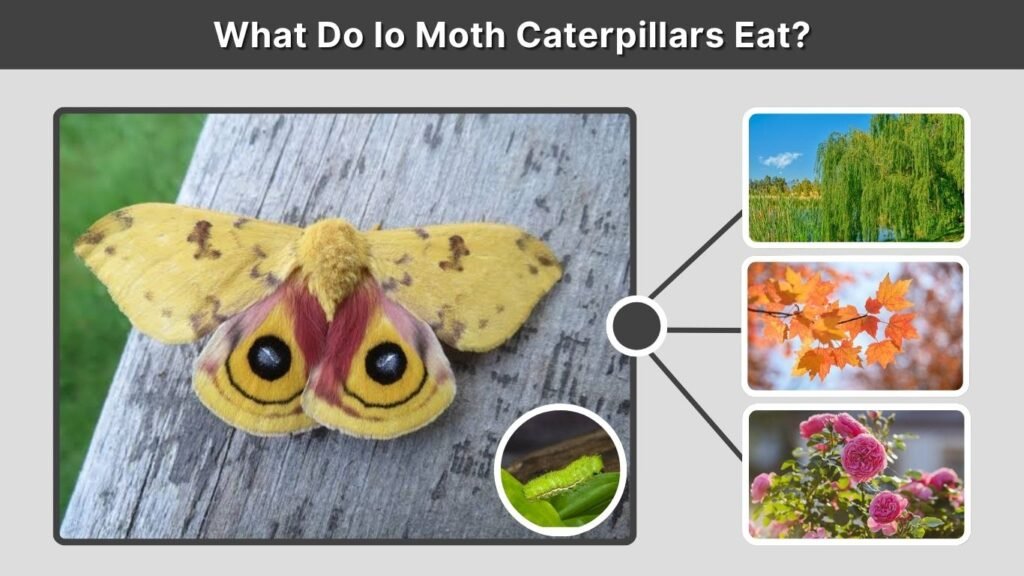
Io moth caterpillars are broad feeders and can develop on many deciduous trees, shrubs, and garden plants.
Common Host Plants
They may feed on:
- Willow
- Elm
- Maple
- Hibiscus
- Wisteria
- Rose
- Azalea
- Other woody plants
UF/IFAS specifically lists hibiscus, elm, maple, wisteria, willow, roses, and azaleas among known hosts.
Because they use numerous plants, homeowners may encounter them in ornamental landscapes as well as natural wooded areas.
Io Moth Caterpillar Life Cycle
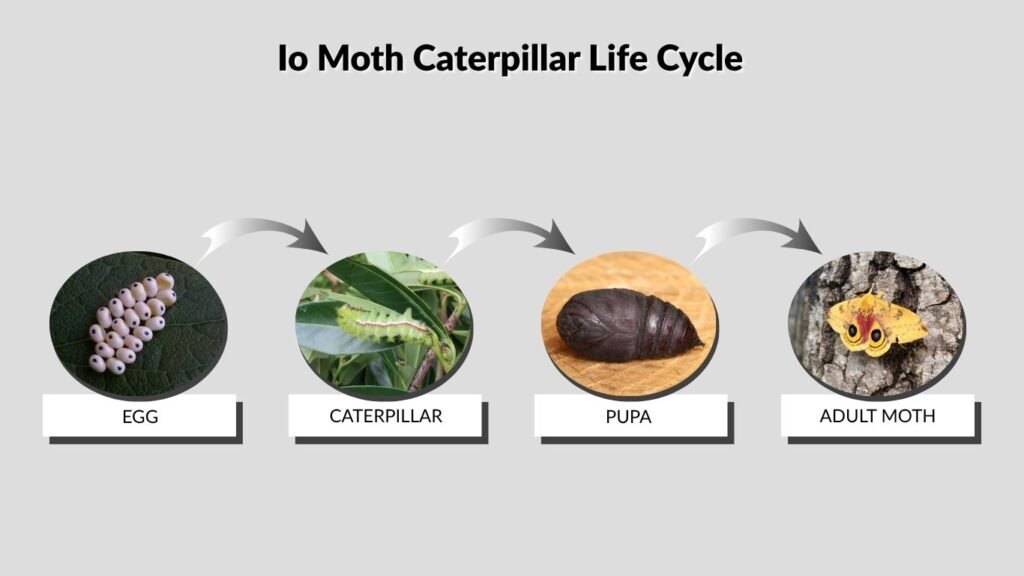
The Io moth undergoes complete metamorphosis through four stages:
Egg → Caterpillar → Pupa → Adult moth
Each stage looks dramatically different.
Eggs and Young Caterpillars
Female Io moths deposit clusters of eggs on suitable host plants.
After hatching, young caterpillars often remain together and feed communally. They pass through multiple instars, shedding their skins as they increase in size.
Their coloration changes considerably as they mature.
Mature Caterpillar
The final larval stages are the familiar bright green caterpillars covered with venomous spines.
At this point they feed heavily before eventually leaving the host plant to find a suitable place for pupation.
Io Moth Cocoon and Pupa
Unlike butterflies, which generally form an exposed chrysalis, Io moths form a cocoon.
The mature caterpillar incorporates leaves and silk around itself before pupating. Inside the cocoon, its larval tissues reorganize into the adult moth.
Adult Io Moth
The adult no longer resembles the caterpillar.
Io moths have large eyespots on their hindwings. When disturbed, they can expose these markings suddenly, potentially startling predators.
Adults reproduce and begin the next generation.
Io Moth Caterpillars in Florida and Texas
Io moth caterpillars occur in the southeastern United States and are among the stinging caterpillars homeowners may encounter in Florida landscapes. UF/IFAS specifically includes the Io among Florida’s notable venomous caterpillars.
They also occur in Texas and throughout much of the eastern and central United States.
Warm climates and abundant host plants can provide favorable conditions for their development.
Are Io Moth Caterpillars Dangerous to Dogs?
Dogs should not be encouraged to sniff, lick, or chew Io caterpillars.
The same spines capable of irritating human skin could potentially affect sensitive tissues such as a dog’s nose, mouth, or tongue.
If a pet mouths a stinging caterpillar and develops drooling, facial swelling, pawing at the mouth, vomiting, or breathing difficulty, contact a veterinarian promptly.
Io Moth Caterpillar vs. Luna Moth Caterpillar
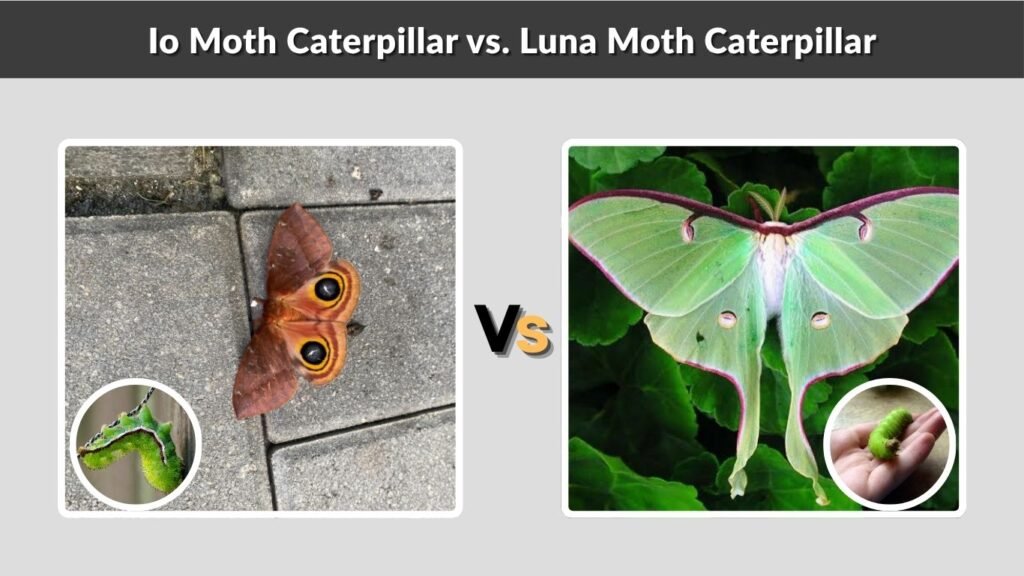
Both eventually become large silk moths, and both caterpillars can be green, but they are easy to distinguish.
Io Moth Caterpillar
- Bright green
- Dense clusters of sharp spines
- Red-and-white side stripe
- Can deliver a painful sting
Luna Moth Caterpillar
- Green body
- Relatively smooth appearance
- Small bumps rather than dense stinging spine clusters
- Does not have the same prominent red-and-white stripe
- Not considered a medically important stinging caterpillar
Avoid touching an unidentified green caterpillar until you are certain which species it is.
How to Get Rid of Io Moth Caterpillars
Io caterpillars generally do not occur in numbers large enough to cause serious agricultural damage. Control is usually considered when they create a stinging hazard around frequently used landscape plants.
Safe Control Methods
- Do not remove caterpillars with bare hands.
- Wear gloves, long sleeves, and protective clothing.
- Keep children and pets away from infested plants.
- Prune heavily occupied small branches when practical.
- Use an appropriate caterpillar-control product only when necessary.
UF/IFAS notes that Bacillus thuringiensis (Bt) or insecticides labeled for caterpillar control can be effective when treatment is actually required.
For isolated caterpillars in natural areas, simply leaving them alone is often sufficient.
FAQs
Is an Io moth caterpillar poisonous?
It is more accurately described as venomous. Its hollow spines can penetrate skin and release venom, causing burning, itching, redness, and swelling.
What should you do if an Io caterpillar stings you?
Avoid rubbing the skin, use adhesive tape to remove embedded spine tips, wash the area, and apply a cold pack. Seek medical attention for severe or systemic symptoms.
What do Io moth caterpillars eat?
They feed on many plants, including maple, elm, willow, hibiscus, wisteria, rose, and azalea.
Can you touch an Io moth caterpillar?
You should avoid touching one. Its branched venomous spines can break against the skin and cause a painful reaction.
How big does an Io moth caterpillar get?
A mature caterpillar can reach approximately 6.5 cm, or about 2.5 inches, in length.