
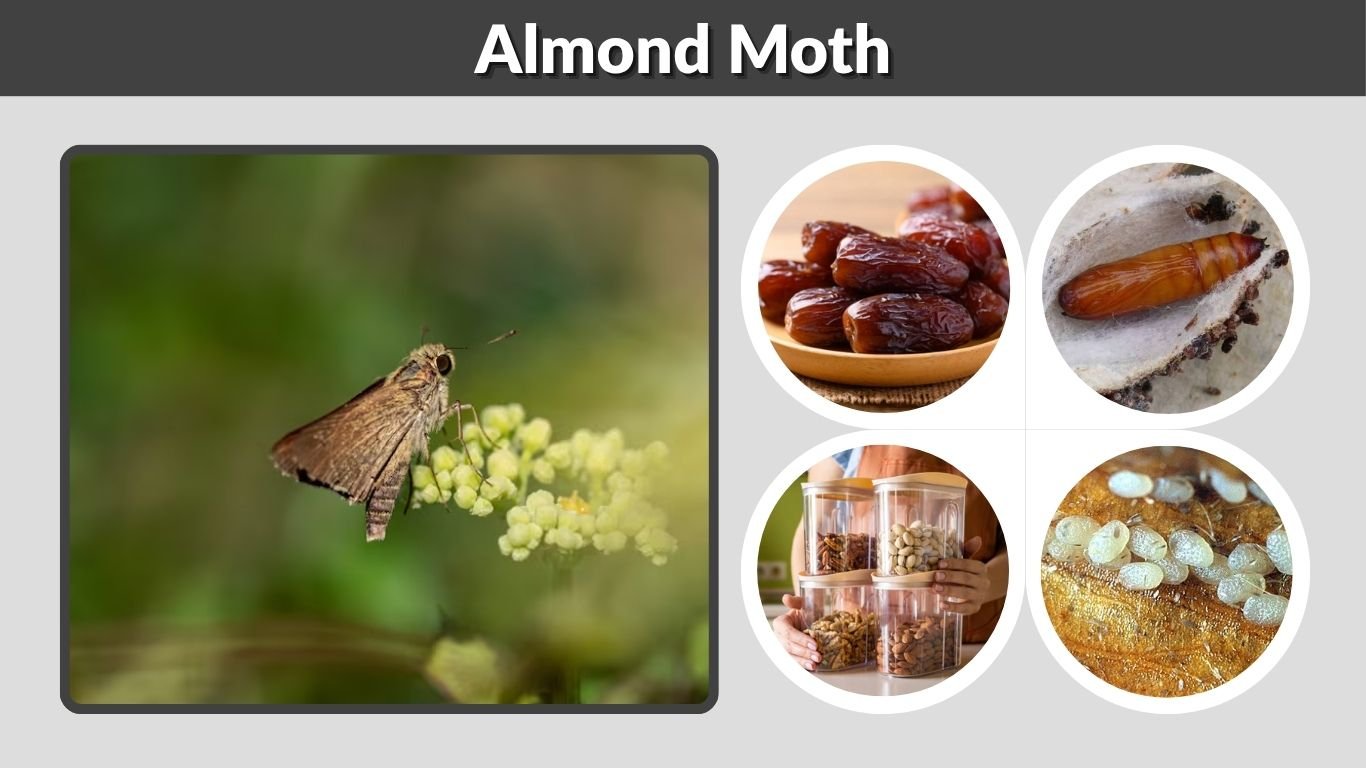
The almond moth is a widespread stored-food pest that infests nuts, dried fruit, grain, cereal, chocolate, spices, and animal feed. Its caterpillars cause the damage by feeding inside products and covering them with silk, waste, and shed skins. Adults do not eat stored food, but seeing them usually means an infested package is nearby. Effective almond moth control depends on finding and discarding the source, thoroughly cleaning storage areas, removing hidden cocoons, and protecting dry foods in airtight containers.
What Is an Almond Moth?
The almond moth is a small pantry moth associated with warm food-storage facilities and homes. It is also called the tropical warehouse moth because it develops particularly well in warm, humid environments. Although its name suggests a preference for almonds, its larvae feed on many stored plant products.
Scientific Classification
The almond moth is classified as:
- Scientific name: Cadra cautella
- Alternative scientific name: Ephestia cautella
- Family: Pyralidae
- Order: Lepidoptera
- Other name: Tropical warehouse moth
- Pest type: Stored-product moth
The almond moth has been transported worldwide through international trade. It is an important pest of warehouses, mills, food-processing plants, grocery storage areas, and household pantries.
Almond Moth Identification
Adult almond moths have the following characteristics:
- Body approximately 1/4 to 3/8 inch long
- Wingspan of roughly 1/2 to 3/4 inch
- Grayish-brown or brown forewings
- Pale, dark-edged wavy lines across the wings
- Lighter gray hindwings with fringed edges
- Narrow body with wings folded over the back
- Active flight, especially around dusk
- Attraction to indoor lights
Their markings can be faint, particularly on older specimens whose wing scales have worn away. Accurate identification may require examining the wing pattern or reproductive structures.
Almond Moth Eggs and Larvae
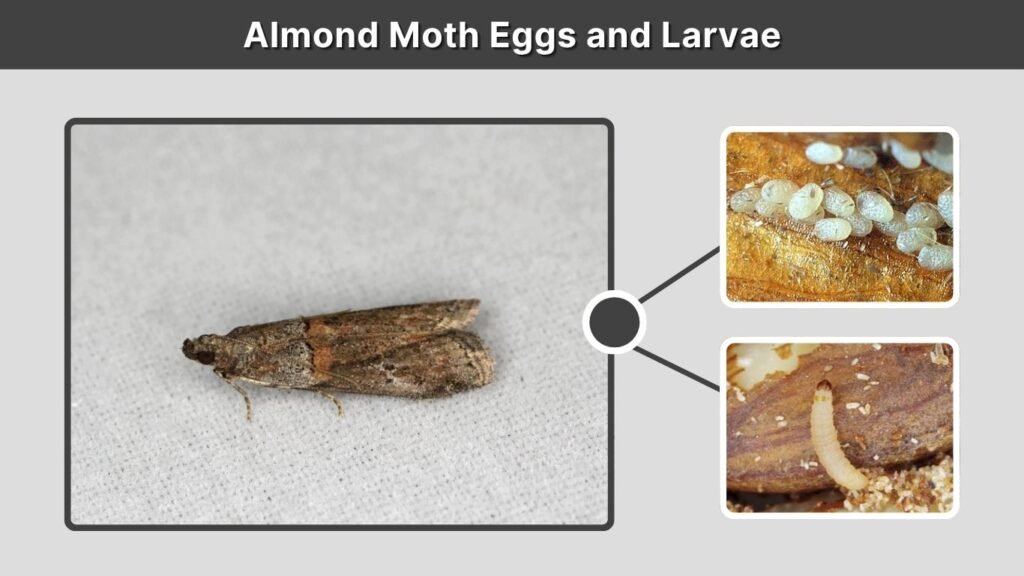
The immature stages usually remain concealed inside food packages. Eggs are almost impossible to notice without magnification, while larvae become more visible as they grow and produce webbing.
Almond Moth Eggs
Female almond moths lay more than 200 eggs under favorable conditions. The eggs are deposited individually or in small groups on food, packaging, or surfaces near a suitable food source.
The eggs are:
- Extremely small
- Whitish or cream-colored
- Oval or slightly elongated
- Difficult to detect in flour or grain
- Likely to hatch within several days in warm conditions
A package can appear clean while still containing eggs. This is why nearby foods should be isolated and monitored after an infestation is discovered.
What Do Almond Moth Larvae Look Like?
Almond moth larvae are small caterpillars with:
- Cream, pale pink, or grayish bodies
- Brown head capsules
- Three pairs of small thoracic legs
- Several pairs of fleshy abdominal prolegs
- A mature length of approximately 1/2 inch
- Silk surrounding their feeding areas
Their color can change depending on what they eat. Caterpillars feeding in darker foods may appear brownish or pink, while those in flour or pale grain products are usually creamy white.
Webbing and Cocoons
Larvae produce silk as they move through food. The silk collects food particles, fecal material, and shed skins, creating sticky clumps.
Mature caterpillars may leave the infested product and crawl considerable distances before pupating. Cocoons can appear beneath shelves, inside package folds, along wall-ceiling junctions, behind appliances, or within cracks. Removing these hidden pupae is necessary to prevent more adults from emerging.
Almond Moth Life Cycle
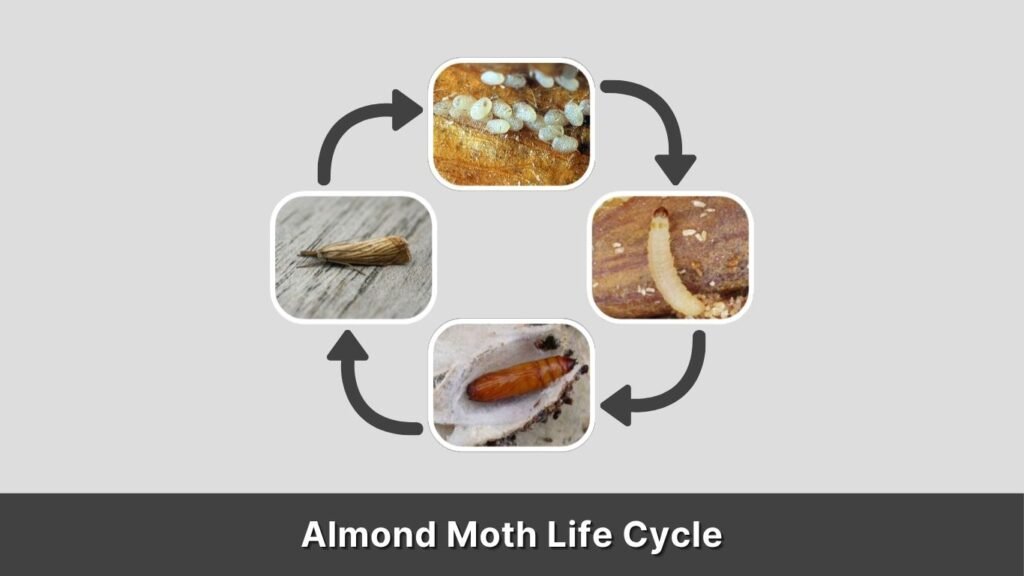
Almond moths undergo complete metamorphosis with egg, larval, pupal, and adult stages. Warm temperatures accelerate development, while cooler conditions extend it. Several generations can develop annually inside consistently heated buildings.
Egg Stage
Eggs hatch within a few days when temperature and humidity are favorable. The tiny caterpillars immediately search for food and may enter packages through small seams or damaged areas.
Larval Stage
Larvae pass through several growth stages while consuming nuts, grains, dried fruits, or processed foods. This is the only stage responsible for significant product damage.
Warm conditions may allow larvae to complete development within several weeks. Poor food or lower temperatures make development considerably slower.
Pupal Stage
A mature larva spins a silken cocoon before transforming into a pupa. The cocoon may be located within the food or some distance away in a protected crevice.
This wandering behavior can make the original source difficult to find. A caterpillar on the ceiling does not necessarily mean the food directly beneath it is infested.
Adult Stage
Adults typically survive for about 10 to 14 days. They do not damage food but focus on mating and egg laying. Females can begin another infestation by depositing eggs in multiple nearby products.
Under favorable conditions, development from egg to adult may be completed in approximately four to eight weeks. Cooler temperatures or poor food can lengthen the cycle.
What Do Almond Moths Eat?
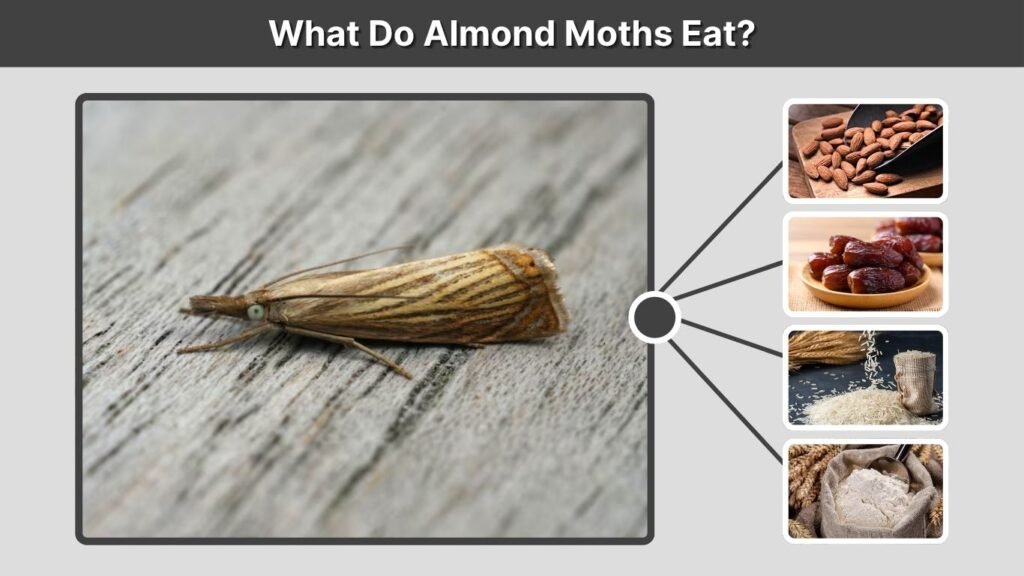
Adult almond moths do not feed on stored products. Their caterpillars consume many foods of plant origin and are especially successful in products with some damage, processing, or moisture.
Commonly Infested Foods
Inspect these products carefully:
- Almonds and other nuts
- Dates and dried fruits
- Rice and other grains
- Flour and cornmeal
- Breakfast cereals
- Bran and animal feed
- Cocoa and chocolate
- Candy and confectionery
- Spices and herbs
- Seeds and birdseed
- Dry pet food
- Powdered ingredients
The FDA recognizes the almond moth as a serious stored-product pest of commodities such as cocoa beans.
Almond Moth Signs and Damage
The larvae contaminate more food than they consume. Silk, waste, skins, and dead insects make affected products unsuitable for sale or consumption. In commercial facilities, webbing can obstruct equipment and contribute to significant economic losses.
Signs of an Infestation
Look for:
- Webbing across nuts or dried fruit
- Grain or flour stuck together
- Caterpillars inside packaging
- Fecal particles resembling ground pepper
- Shed larval skins
- Silken cocoons in cupboard corners
- Holes in plastic bags
- Gray-brown moths near stored food
- An unpleasant smell in heavily infested products
Larvae may infest packaged products before purchase. One contaminated bag can introduce moths into an otherwise clean pantry.
Almond Moth vs. Indian Meal Moth
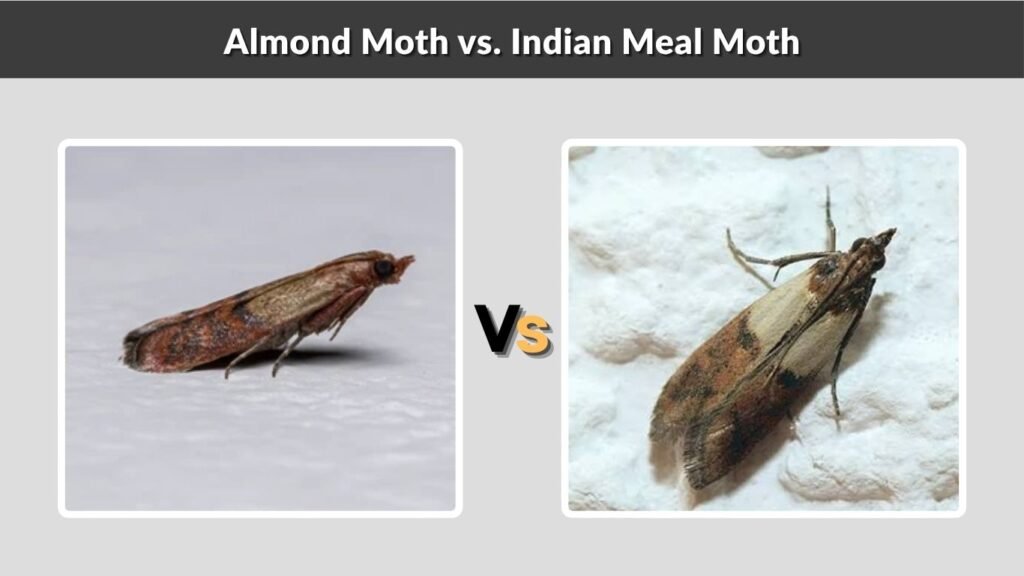
These species infest similar foods and may occur in the same storage facility. The Indian meal moth is more common in many household pantries, while the almond moth is especially associated with warm warehouses, dried fruit, nuts, and cocoa.
| Feature | Almond Moth | Indian Meal Moth |
| Scientific name | Cadra cautella | Plodia interpunctella |
| Adult wings | Mostly gray-brown with wavy markings | Pale near the body and copper-colored toward the tips |
| Climate preference | Particularly common in warm regions | Widespread in many indoor environments |
| Common foods | Nuts, dates, cocoa, grain, and dried fruit | Grain, cereal, nuts, seeds, and pet food |
| Larval signs | Silk, clumps, skins, and fecal material | Extensive webbing and clumped food |
| Household frequency | Less common in some temperate homes | Often the most common pantry moth |
The almond moth may also resemble the Mediterranean flour moth, which is typically paler gray and has more noticeable zigzag lines.
Are Almond Moths Dangerous?
Almond moths do not bite or sting. Their larvae are not human parasites and cannot live inside the body. The principal concern is food contamination rather than direct injury.
What If You Ate an Almond Moth Larva?
Accidentally eating one larva is unlikely to cause serious harm. However, infested food may contain insect waste, silk, shed skins, dead larvae, and mold.
Discard the product and watch for unusual symptoms. People with insect, dust, or food allergies may be more sensitive to contaminated materials. Seek medical advice if significant swelling, breathing difficulty, persistent vomiting, or another severe reaction develops.
How to Get Rid of Almond Moths
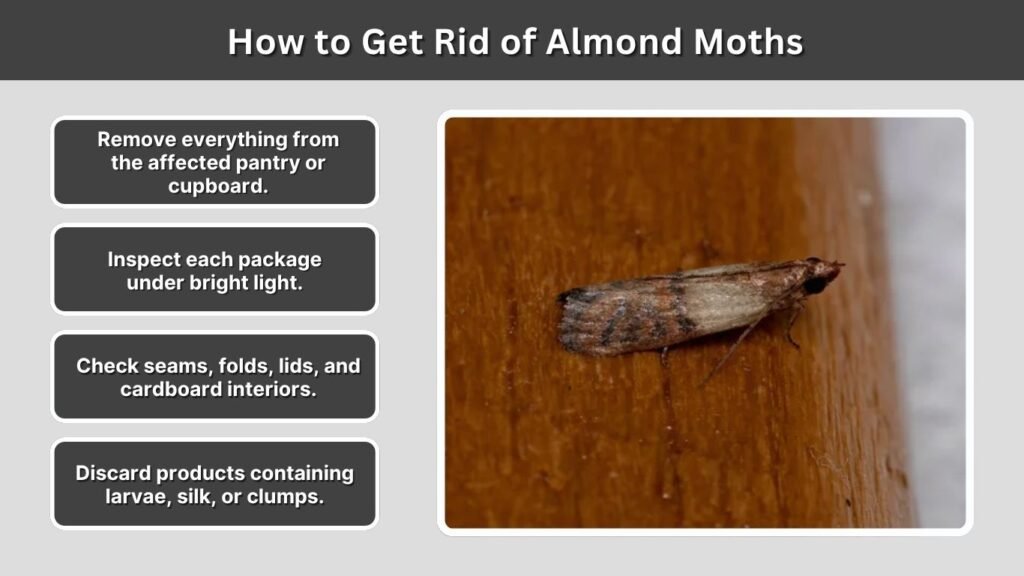
Adult moths are only the visible part of an infestation. Spraying them will not remove eggs and larvae hidden inside food. Successful control requires locating every infested product and cleaning the entire storage area.
Step-by-Step Removal
- Remove everything from the affected pantry or cupboard.
- Inspect each package under bright light.
- Check seams, folds, lids, and cardboard interiors.
- Discard products containing larvae, silk, or clumps.
- Seal infested items before carrying them outside.
- Vacuum shelves, corners, cracks, and screw holes.
- Search walls and ceilings for wandering larvae.
- Remove all visible cocoons and pupal cases.
- Wash surfaces with warm water and dish soap.
- Allow shelves to dry before replacing food.
- Transfer safe products into airtight containers.
- Monitor the pantry for several weeks.
Inspect birdseed, pet food, dried decorations, spices, tea, and nuts stored outside the main pantry. The overlooked source is often an old or rarely used package.
Can Food Be Treated?
Food containing visible webbing, larvae, mold, or an unusual odor should be discarded. If an important product shows no visible contamination but may have been exposed, freezing it for at least one week can kill hidden eggs and larvae.
Freezing does not remove insect fragments or waste. Disposal is generally preferable for inexpensive or clearly infested food.
Almond Moth Traps
Pheromone traps attract male almond moths and are useful for detection and monitoring. Place them near, but not directly inside, stored food.
Traps cannot catch females, remove larvae, or eliminate the infestation independently. A trap that continues collecting moths indicates that a contaminated product or hidden pupa probably remains.
Using Insecticides
Insecticide sprays are rarely necessary in household pantries. Never spray food, dishes, utensils, package interiors, or food-preparation surfaces. Mothballs must not be used openly in cupboards containing food.
Commercial warehouses may require professionally managed sanitation, pheromone monitoring, heat treatment, approved insecticides, or biological controls.
How to Prevent Almond Moths
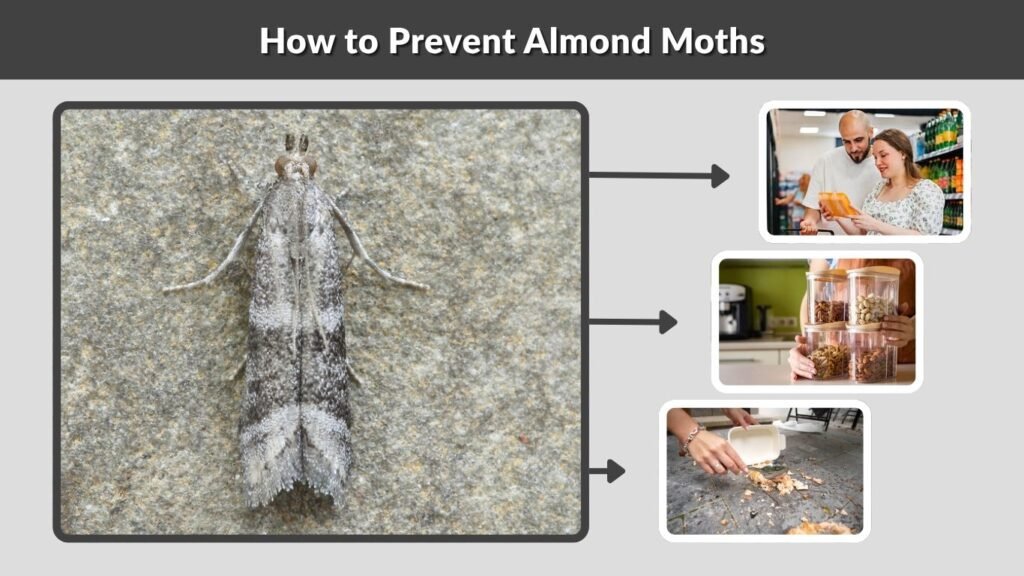
Routine inspection and secure storage can stop a single contaminated package from becoming a widespread infestation.
Prevention Tips
- Inspect food before purchasing it.
- Avoid packages with holes or damaged seals.
- Store nuts and dried fruit in airtight containers.
- Freeze bulk products before long-term storage.
- Clean food spills immediately.
- Buy only what you can use within a reasonable period.
- Rotate older products to the front.
- Wash containers before refilling them.
- Keep pet food and birdseed separately sealed.
- Vacuum pantry cracks and corners regularly.
The National Pesticide Information Center recommends sturdy glass or thick plastic containers because pantry moth larvae may penetrate thin plastic and cardboard.
FAQs
Why is it called an almond moth?
Almonds are among the stored foods its larvae infest. However, the species also attacks dried fruit, grain, chocolate, seeds, and animal feed.
How big are almond moths?
Adults generally have a body around 1/4 to 3/8 inch long and a wingspan of approximately 1/2 to 3/4 inch.
Can almond moths infest sealed packages?
They can enter packages through tiny openings, weak seams, or damaged areas. Larvae may also chew through thin plastic and cardboard.
Why do almond moths keep returning?
A hidden infested package, food debris, or overlooked cocoon is usually responsible. Continue inspecting and monitoring until no adults appear for several weeks.
When is professional control necessary?
Call a pest-control professional when repeated cleaning does not stop the infestation or when moths affect a bakery, warehouse, feed store, or food-processing facility.
