
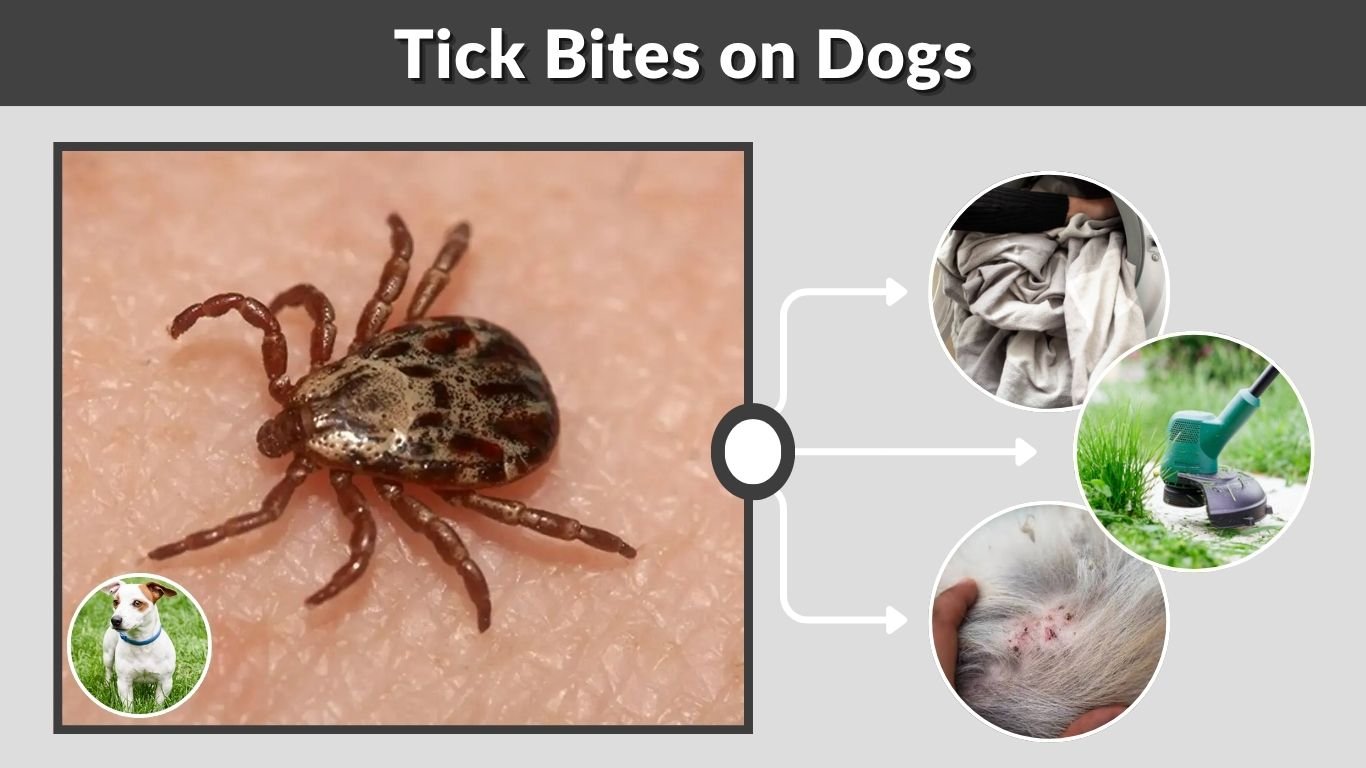
Tick bites on dogs are common after time spent in grassy, wooded, or brushy areas. In many cases, the bite causes only a small bump or mild irritation after the tick is removed. However, ticks can also transmit diseases and occasionally cause infected or swollen bite sites. Knowing what tick bites look like on dogs, how they heal, and which symptoms require veterinary attention can help you respond quickly. Always check your dog carefully after outdoor activity, especially around the ears, paws, belly, neck, and between the toes.
What Do Tick Bites Look Like on Dogs?
A tick bite may be difficult to notice while the tick is still small. After removal, the site often looks like a tiny red spot, bump, or scab.
The appearance can vary depending on how long the tick was attached, where it bit, and how strongly the dog’s skin reacts.
Common Signs of a Tick Bite
- Small red bump
- Mild swelling
- Tiny scab
- Localized redness
- Slight tenderness
- Itching or licking
- Small amount of dried blood
- Irritated skin around the attachment point
Some dogs develop almost no visible reaction after a tick is removed.
Do Tick Bites Leave a Bump on Dogs?
Yes. A small firm bump can remain after removal.
The bump is usually caused by local inflammation from the tick’s mouthparts and saliva. It may remain noticeable for several days before gradually shrinking.
A persistent bump does not automatically mean that part of the tick remains in the skin.
Do Tick Bites Scab Over?
Tick bites can develop small scabs, particularly if the dog scratches or licks the area.
A small dry scab is usually part of normal healing. However, a moist, expanding, painful, or pus-filled lesion may indicate infection.
Tick Bite Symptoms on Dogs
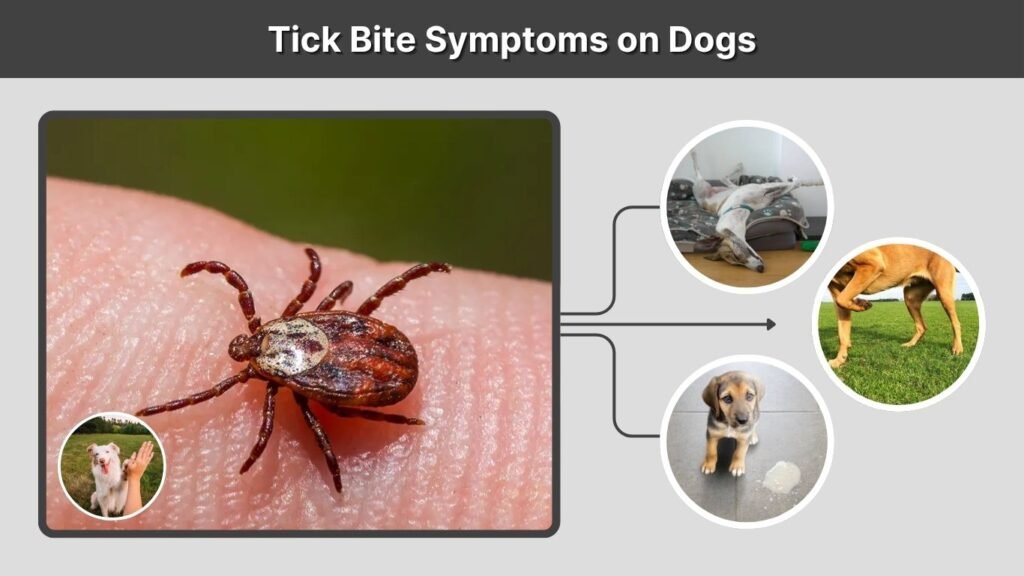
The local skin reaction is only one thing to watch. Ticks can transmit infections, and symptoms of tick-borne disease may appear days or even weeks after the original bite.
Mild Local Symptoms
A simple tick bite may cause redness, itching, mild swelling, or sensitivity.
Dogs may repeatedly lick or scratch the bite site, especially if it is located somewhere easy to reach.
Try to prevent excessive licking because repeated irritation can delay healing and increase the risk of skin infection.
Symptoms That May Need Veterinary Attention
Watch for changes such as:
- Fever
- Loss of appetite
- Unusual tiredness
- Weakness
- Limping
- Joint pain or stiffness
- Swollen lymph nodes
- Pale gums
- Vomiting
- Difficulty walking
- Unexplained bruising
- Behavioral changes
These signs do not prove that a tick transmitted a disease, but they warrant veterinary evaluation.
Infected Tick Bites on Dogs
A bite can become infected if bacteria enter damaged skin, particularly when the dog continually scratches or licks the area.
Early treatment is important because an untreated skin infection can become more painful and spread.
Signs of an Infected Tick Bite
An infected bite may develop:
- Increasing redness
- Significant swelling
- Warm skin
- Pus or cloudy discharge
- Bad odor
- Pain when touched
- Bleeding
- Thick crusts
- Enlarging sores
- Hair loss around the bite
A normal small bump should generally improve rather than become progressively larger and more painful.
What Does an Infected Tick Bite Look Like?
Early infection may resemble a red, swollen bump that appears more irritated each day.
As the infection progresses, the area can become moist or crusted and may produce yellow, white, or greenish discharge.
Some dogs develop a circular patch of hair loss from licking the affected area.
Veterinary attention is recommended when infection is suspected.
Tick Bites on a Dog’s Belly
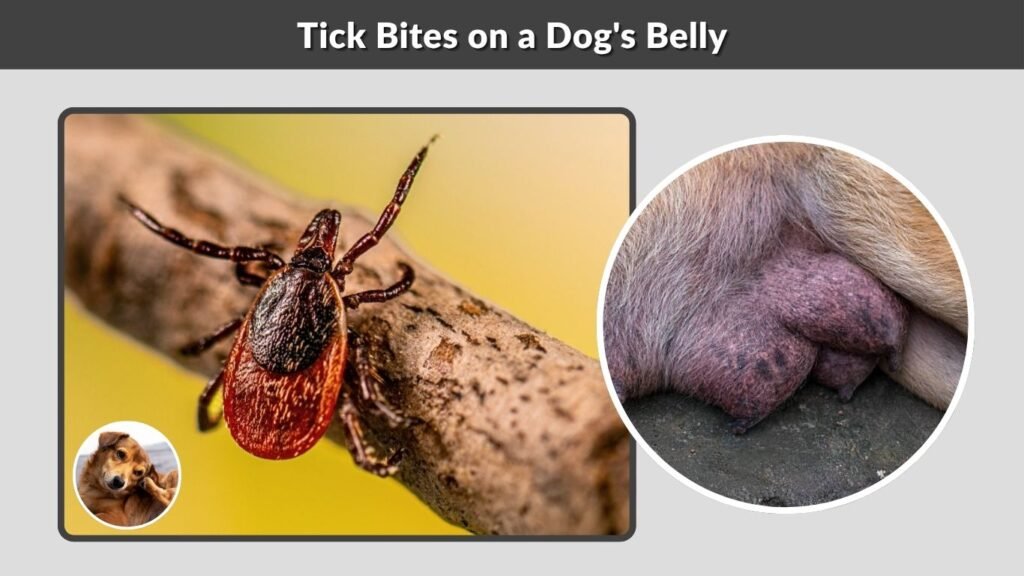
The belly is a common location for ticks because the skin is relatively thin and may have less protective fur.
Dogs can pick up ticks when lying or walking through vegetation.
What to Look for on the Belly
Inspect the belly for:
- Attached ticks
- Small dark spots
- Red bumps
- Scabs
- Swelling
- Areas your dog frequently licks
Because the belly is easy for dogs to lick, mild bites can become more irritated than bites in harder-to-reach locations.
Tick Bites on a Dog’s Paws
Ticks can hide between the toes and around paw pads after a dog walks through grass or brush.
These locations should be checked carefully after outdoor activities.
Signs of a Tick Bite on the Paw
A dog with a tick bite on its paw may lick the foot repeatedly, limp, or resist having the paw touched.
Separate the toes and inspect the skin for an attached tick, redness, swelling, or a small scab.
Significant limping or swelling should be evaluated because injuries, splinters, infections, and other problems can produce similar symptoms.
Tick Bites Around the Head, Neck, and Ears
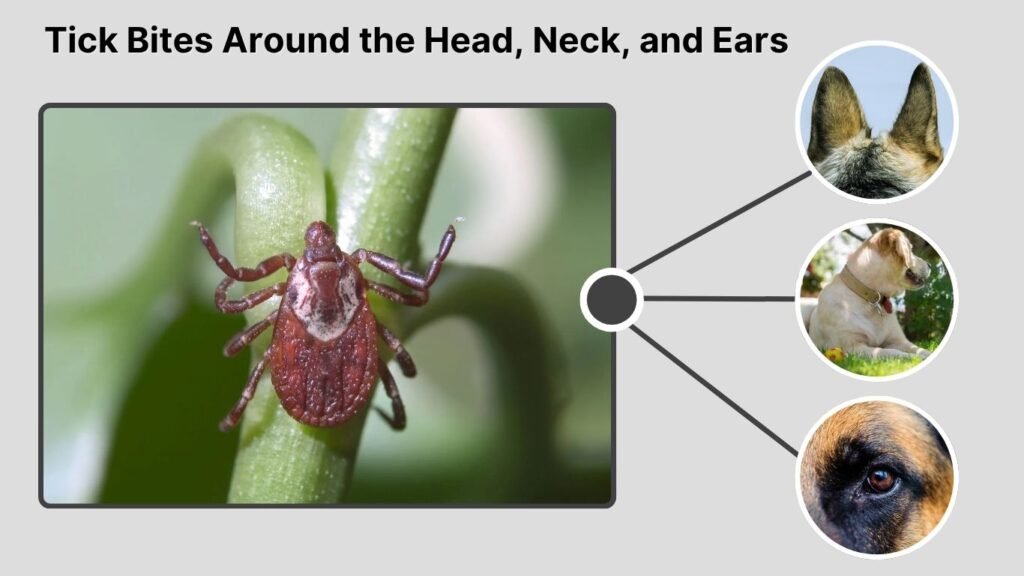
The head and neck are among the most common areas where ticks attach.
Ticks may hide beneath collars, around the base of the ears, or inside folds of skin.
Checking the Head and Ears
Run your fingers slowly over your dog’s head and neck. An attached or recently fed tick may feel like a small lump.
Pay particular attention to:
- Behind the ears
- Ear flaps
- Under the collar
- Around the eyes
- Cheeks
- Jawline
- Neck folds
Ticks located deep inside the ear canal or very close to the eye should generally be handled by a veterinarian.
How to Treat Tick Bites on Dogs
Most uncomplicated tick bites require only basic care after the entire tick has been removed.
The most important steps are keeping the site clean and monitoring the dog.
Basic Treatment After Tick Removal
Once the tick is removed:
- Check the bite site carefully.
- Gently clean the area.
- Keep your dog from excessive licking or scratching.
- Monitor the bite for increasing redness or swelling.
- Watch your dog’s general health over the following days and weeks.
Avoid repeatedly picking at a scab because this can reopen the wound.
Can You Treat Tick Bites at Home?
Minor bite sites can often be monitored at home after successful tick removal.
Do not apply random essential oils, concentrated vinegar, alcohol, bleach, or other harsh substances to your dog’s skin.
If you are unsure which antiseptic or topical product is safe, ask your veterinarian before applying it.
How Long Do Tick Bites Take to Heal on Dogs?
A minor tick bite may start looking better within a few days, although a small bump or scab can remain longer.
Healing time varies depending on irritation, attachment duration, and whether your dog scratches the area.
Normal Healing vs. a Problem
During normal healing, you should see:
- Less redness
- Reduced swelling
- A drying scab
- Less licking
- Gradual shrinking of the bump
A bite that becomes larger, hotter, wetter, more painful, or increasingly swollen should be checked by a veterinarian.
Flea Bites vs. Tick Bites on Dogs
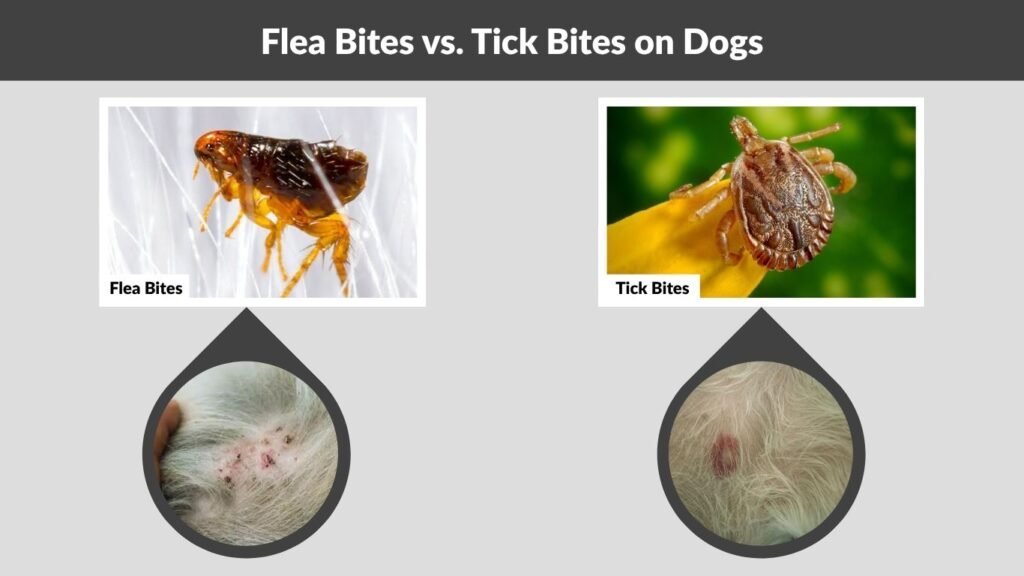
Flea and tick bites can both cause redness and itching, but they often have different patterns.
How They Differ
Flea bites commonly appear as multiple small itchy red bumps, particularly around the lower back, belly, groin, and base of the tail.
Tick bites are more often isolated because each attached tick feeds from a single location.
Finding an attached tick or a single prominent bump may provide an important clue, but skin lesions alone are not always enough to identify the cause.
Deer Tick and Lone Star Tick Bites on Dogs
Different tick species can transmit different pathogens.
Deer ticks and lone star ticks are among the species dog owners may encounter in certain regions.
Why Tick Species Matter
The appearance of the bite itself usually cannot tell you which tick species caused it.
If possible, keep the removed tick in a sealed container or take a clear photograph before disposal. Identification may help your veterinarian assess potential disease risks based on where you live and your dog’s symptoms.
How to Prevent Tick Bites on Dogs
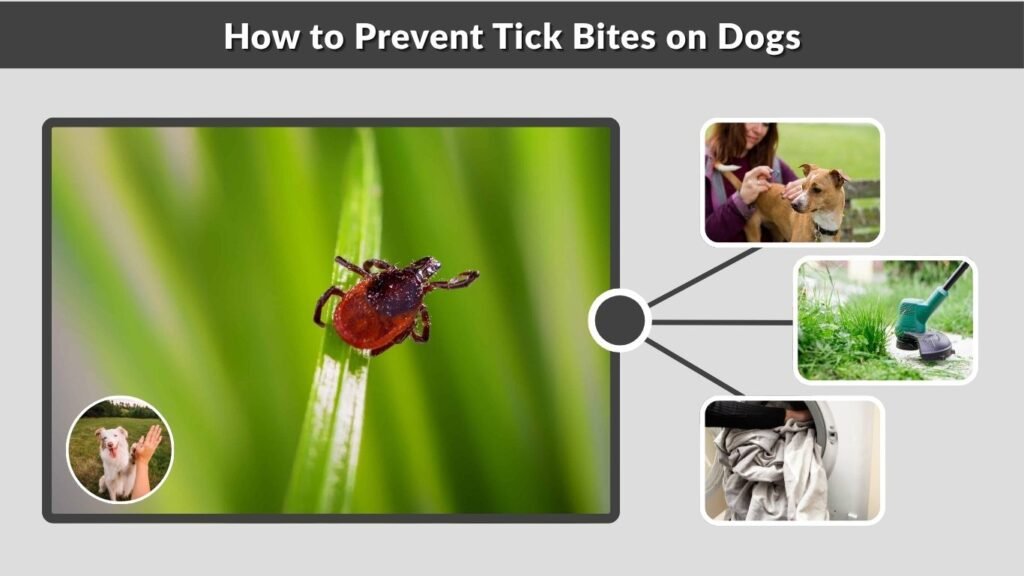
Preventing attachment is much easier than dealing with repeated bites or possible tick-borne infections.
Your veterinarian can help select a preventive appropriate for your dog’s age, size, lifestyle, and health.
Tick Prevention Tips
- Use veterinarian-recommended tick prevention.
- Check your dog after outdoor walks.
- Inspect between the toes and around the ears.
- Keep grass trimmed.
- Remove brush and leaf litter.
- Avoid heavily tick-infested vegetation when possible.
- Check long-haired dogs carefully.
- Wash and inspect outdoor bedding.
- Continue prevention during periods when ticks remain active.
Never use a tick treatment intended for another animal species without professional guidance.
When Should You Take Your Dog to the Vet?
Most small tick bites heal without complications, but certain situations deserve professional attention.
Contact your veterinarian if the bite develops severe swelling, pus, increasing pain, heavy bleeding, or significant skin damage.
You should also seek veterinary advice if your dog develops fever, weakness, unusual tiredness, loss of appetite, limping, pale gums, neurological changes, or other unexplained illness after tick exposure.
FAQs
1. Are tick bites harmful to dogs?
The bite itself is often minor, but ticks can transmit diseases. Dogs should therefore be monitored after tick exposure even when the bite site looks normal.
2. Do tick bites on dogs itch?
Yes, some tick bites cause itching or irritation. Dogs may lick, scratch, or chew the affected area after the tick is removed.
3. Can tick bites on dogs swell?
Mild swelling can occur around a recent tick bite. Increasing or severe swelling, especially with warmth, pain, or discharge, can indicate a stronger reaction or infection.
4. Can tick bites become infected?
Yes. Damaged skin can become infected, particularly when dogs repeatedly scratch or lick it. Redness that spreads, pus, pain, odor, or worsening swelling should be evaluated.
5. How long does a tick bite bump last on a dog?
A small bump may remain for several days or sometimes longer while local inflammation settles. It should gradually become smaller rather than progressively larger or more painful.
