
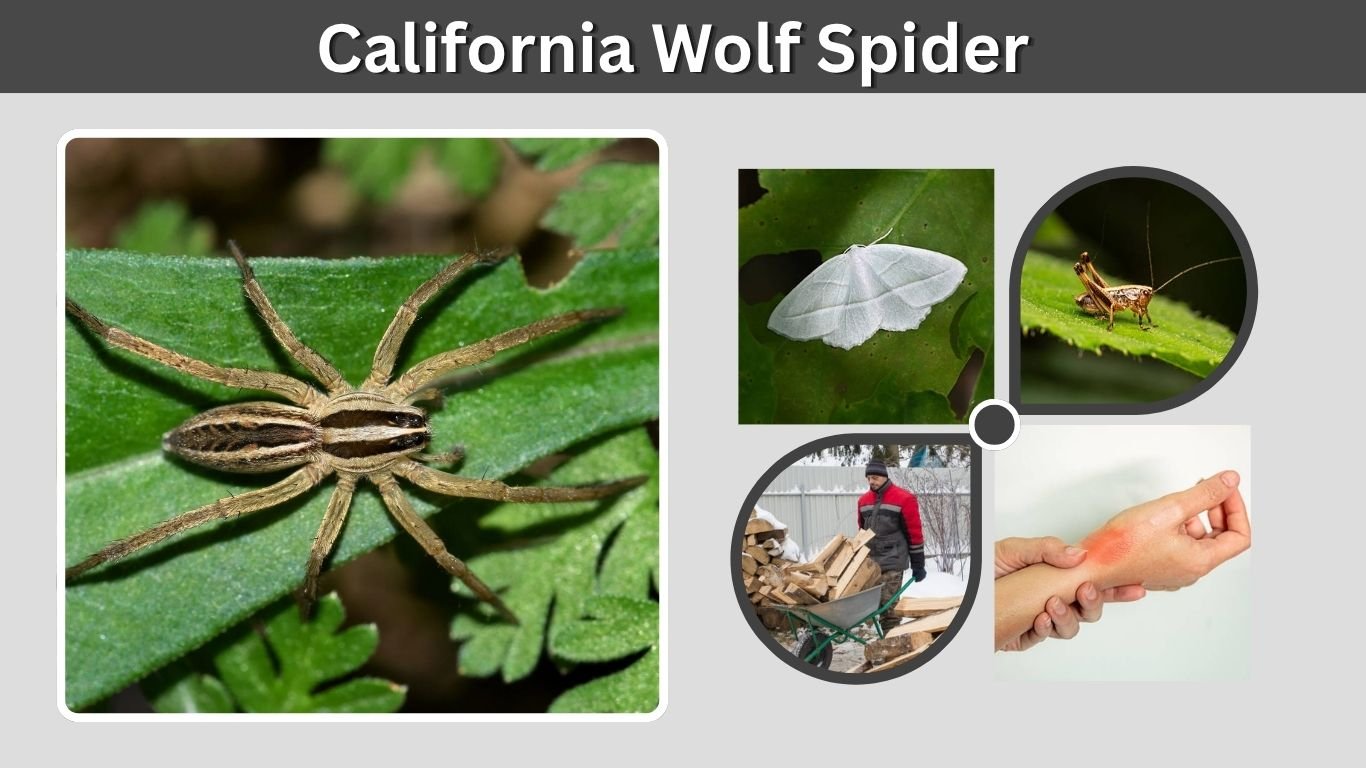
The California wolf spider is a fast-moving ground hunter found in many parts of the state, from dry Southern California landscapes to cooler areas of Northern California. These spiders can look intimidating because of their hairy bodies, long legs, and quick movements, but they are generally not dangerous to people. California has numerous wolf spider species that vary in size and color. This guide covers identification, habitat, bite symptoms, behavior, size, babies, and common spiders that are mistaken for wolf spiders.
What Is a California Wolf Spider?
Wolf spiders belong to the family Lycosidae, a large group of hunting spiders found throughout much of the world. Rather than constructing webs to catch prey, they usually run across the ground and actively hunt insects.
A wolf spider in California may live in gardens, deserts, grasslands, woodland areas, agricultural fields, or around homes. Their appearance varies considerably depending on species and habitat.
California Wolf Spider Identification
Common identification features include:
- Brown, gray, tan, or nearly black coloration
- Hair covering much of the body and legs
- Long, powerful legs adapted for running
- Dark stripes or mottled markings
- Eight eyes arranged in three rows
- Two noticeably large middle eyes
- Thick-looking body compared with many house spiders
- Females sometimes carrying an egg sac or spiderlings
The eye arrangement is one of the most reliable characteristics. Wolf spiders have two particularly large forward-facing eyes that help them detect prey.
California Wolf Spider Eyes
Wolf spiders have excellent vision compared with many other spiders. Their large eyes can reflect light at night.
If you shine a flashlight across a lawn after dark, tiny reflective points may sometimes reveal wolf spiders sitting or moving among vegetation.
Wolf Spiders in Southern and Northern California
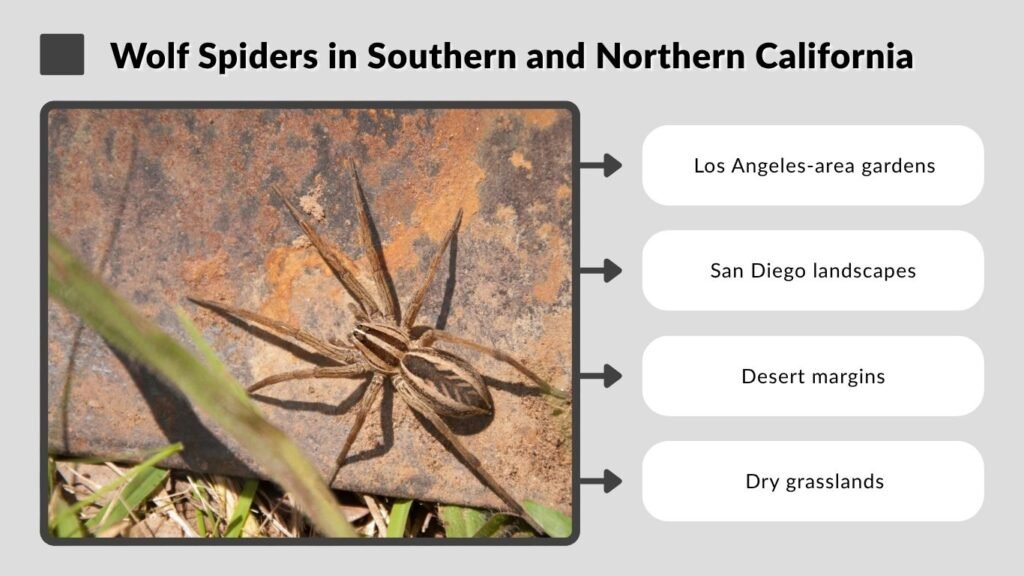
California contains coastal regions, mountains, valleys, forests, deserts, and urban environments. As a result, different wolf spider species can thrive in different parts of the state.
Both Southern California wolf spiders and Northern California wolf spiders are commonly encountered outdoors.
Southern California Wolf Spider
Southern California’s relatively warm and dry conditions provide suitable habitat for many ground-dwelling spiders.
Wolf spiders may be found around:
- Los Angeles-area gardens
- San Diego landscapes
- Desert margins
- Dry grasslands
- Irrigated yards
- Agricultural land
- Garages and patios
- Beneath rocks and landscaping materials
A tiny wolf spider in Southern California may simply be a juvenile or one of several naturally small species.
Northern California Wolf Spider
Northern California wolf spiders inhabit environments ranging from grasslands and agricultural areas to forests and suburban gardens.
They often shelter beneath logs, stones, leaf litter, vegetation, or ground debris during the day before becoming more active at night.
California Desert Wolf Spiders
Wolf spiders are also well adapted to California’s dry regions. Desert species may remain hidden during the hottest part of the day and hunt when temperatures become more favorable.
Burrows, rocks, vegetation, and cracks in the soil provide protection from heat and predators.
California Wolf Spider Size
California wolf spider size varies significantly among species. Some are relatively tiny, while others become large enough to be mistaken for tarantulas.
Their long legs can also make them look much larger than their actual body length.
Small and Large Wolf Spiders
Small species may have bodies only several millimeters long. Larger California wolf spiders can have bodies approaching an inch or more, with the legs extending considerably farther.
Size may depend on:
- Species
- Age
- Sex
- Food availability
- Habitat
- Stage of development
Females are often larger and more robust than males.
Giant Wolf Spider in California
The phrase giant wolf spider California is sometimes used when someone encounters an unusually large individual. California does have large wolf spiders, but a very large hairy spider could also be a tarantula or another ground-dwelling species.
Body shape, eye arrangement, and markings provide better identification than size alone.
California Wolf Spider Bite
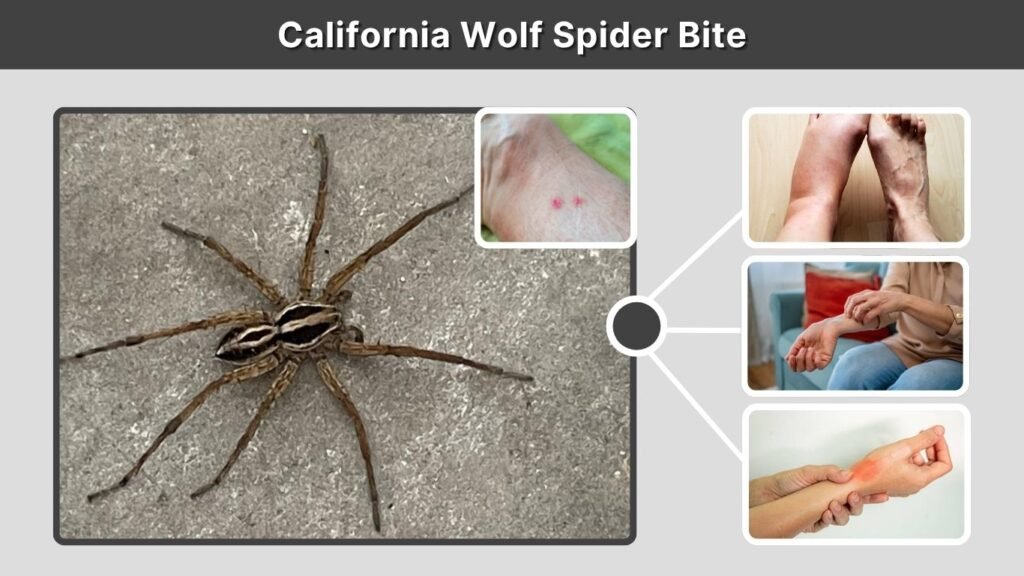
A California wolf spider bite is possible but uncommon. Wolf spiders generally prefer escaping over defending themselves against humans.
Most bites happen when the spider becomes trapped against the skin, accidentally stepped on, handled, or pressed inside clothing.
Wolf Spider Bite Symptoms
Possible symptoms include:
- Local pain
- Redness
- Mild swelling
- Itching
- Tenderness
- Temporary irritation
Symptoms are usually limited to the area around the bite.
Wash a suspected bite with soap and water and keep the area clean. A wrapped cold pack may help with temporary swelling or discomfort. Seek medical attention if symptoms become severe, spread significantly, or include breathing difficulty, severe swelling, fever, or other concerning reactions.
Are California Wolf Spiders Poisonous or Dangerous?
Wolf spiders are venomous rather than poisonous. Venom is injected through their fangs to immobilize small prey.
However, wolf spider venom is generally not considered medically significant to humans.
Are California Wolf Spiders Dangerous?
California wolf spiders are not considered aggressive spiders. Their first response to a person is usually to remain hidden or run away.
Their intimidating appearance and speed often make them seem more dangerous than they actually are.
California Wolf Spider vs. Black Widow
Black widows and wolf spiders differ considerably.
Black widows typically have smooth, shiny bodies and build irregular webs. Adult female western black widows are usually dark and may have a reddish hourglass marking beneath the abdomen.
Wolf spiders are typically hairy, actively run across the ground, and do not depend on prey-catching webs.
Black widow venom is also medically more significant than wolf spider venom.
California Wolf Spider vs. Brown Recluse
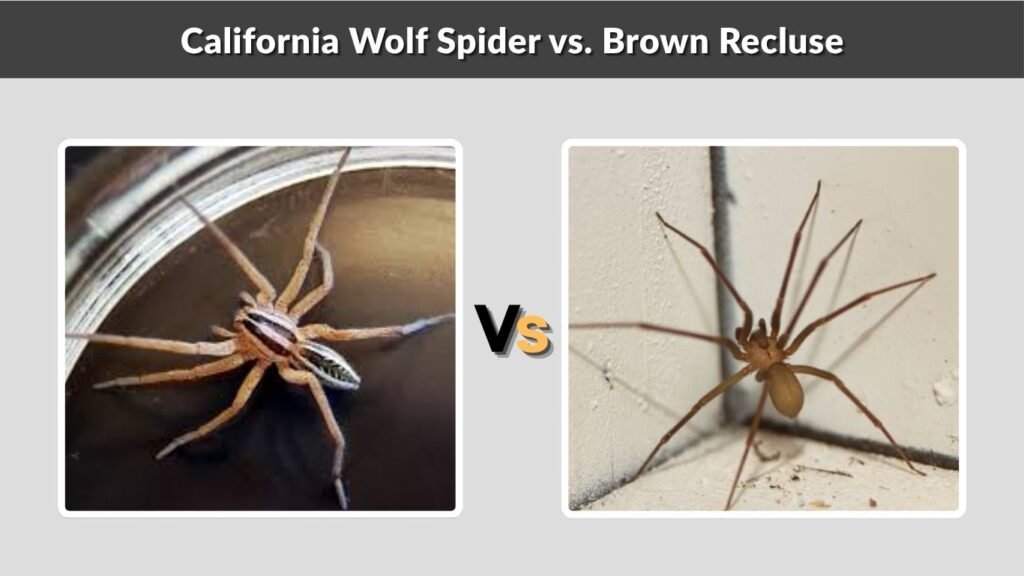
People frequently confuse brown spiders, especially when trying to identify an unknown spider indoors.
Wolf spiders and brown recluse spiders have very different appearances.
Key Differences
Wolf spiders generally have:
- Hairy bodies
- Prominent patterns or stripes
- Large forward-facing eyes
- Strong, thick-looking legs
- Active ground-hunting behavior
Brown recluse spiders have a different eye arrangement and are generally more uniformly colored.
True brown recluse spiders are not considered established throughout most of California. Other recluse species occur in parts of the western United States, so identification should be based on physical characteristics rather than color alone.
False Wolf Spider in California
One important wolf spider look-alike is the false wolf spider. Some false wolf spiders can resemble large brown wolf spiders because of their long legs and brown patterned bodies.
The Mediterranean false wolf spider, Zoropsis spinimana, has been reported in California and is sometimes found around buildings.
False Wolf Spider vs. Wolf Spider
Although they appear similar, false wolf spiders belong to a different spider family.
Wolf spiders can often be distinguished by their characteristic eye arrangement. Photos taken from directly above may not show this feature clearly, making close identification more difficult.
California Wolf Spider Behavior and Diet
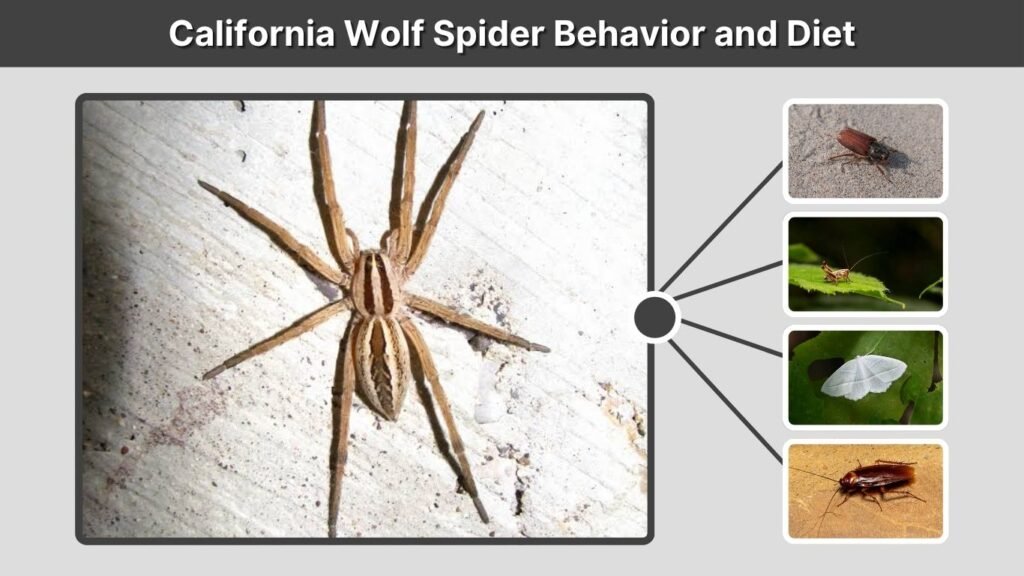
Wolf spiders are wandering hunters. They use their vision, speed, and sensitivity to vibration to locate prey rather than waiting in a capture web.
Many species become particularly active after sunset.
What Do California Wolf Spiders Eat?
Their diet may include:
- Flies
- Crickets
- Beetles
- Moths
- Cockroaches
- Grasshoppers
- Small insects
- Other spiders
By consuming insects, wolf spiders can be beneficial predators in gardens and other outdoor environments.
Do California Wolf Spiders Make Webs?
Wolf spiders do produce silk, but most do not build traditional webs for trapping flying insects.
They may use silk for egg sacs, burrow lining, safety lines, and other purposes.
California Wolf Spider Babies and Eggs
Wolf spiders are well known for unusual parental behavior. Females provide more care for their young than many other spiders.
Babies on the Mother’s Back
A female wolf spider carries her round egg sac attached near her spinnerets.
After the eggs hatch, the tiny spiderlings climb onto their mother’s abdomen. She carries them around for several days until they are ready to disperse.
A California wolf spider with babies on her back may therefore appear covered with dozens of tiny moving dots. This is normal wolf spider behavior rather than a parasite or disease.
Wolf Spiders Around California Homes
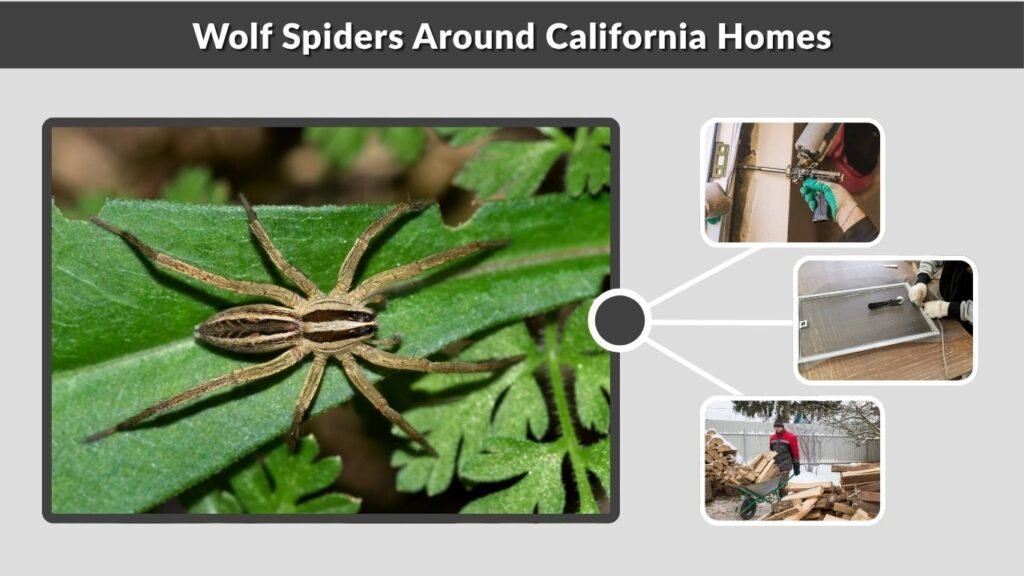
Wolf spiders occasionally wander indoors, particularly when searching for prey or shelter.
They may be encountered in garages, bathrooms, basements, storage areas, doorways, or along walls.
How to Reduce Wolf Spiders Indoors
To reduce encounters:
- Seal cracks around foundations.
- Repair damaged window and door screens.
- Install door sweeps.
- Remove clutter from garages.
- Keep vegetation away from exterior walls.
- Move firewood away from the house.
- Reduce insect populations indoors.
- Seal gaps around plumbing and utility lines.
Finding one wolf spider usually does not mean the house has a major spider infestation.
FAQs
1. Do wolf spiders live in California?
Yes. Numerous wolf spider species occur throughout California, including in coastal areas, valleys, mountains, grasslands, deserts, gardens, and urban landscapes.
2. Are California wolf spiders poisonous?
Wolf spiders are venomous rather than poisonous. Their venom helps capture prey but is generally not considered dangerous to humans.
3. How big are California wolf spiders?
Size depends on the species. Some are quite small, while larger wolf spiders can have bodies around an inch long or more and appear much larger when their legs are included.
4. Are black wolf spiders found in California?
Some wolf spiders may appear very dark brown or nearly black. Color alone is not enough for identification because lighting, age, species, and natural variation can change their appearance.
5. Are California wolf spider bites dangerous?
Most confirmed wolf spider bites produce localized pain, redness, or swelling rather than serious effects. Severe or worsening symptoms should still be evaluated by a medical professional.
