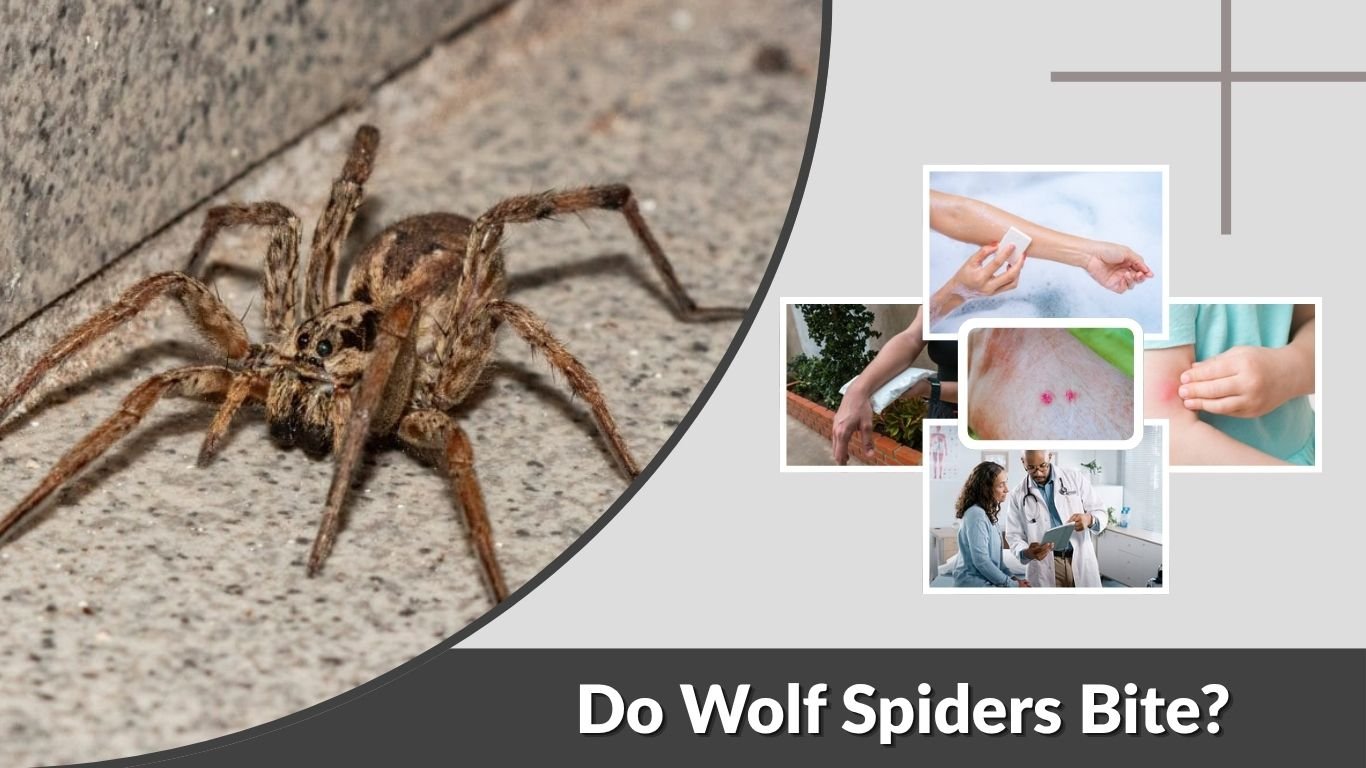
Yes, wolf spiders can bite humans, but bites are uncommon because these fast-moving hunting spiders usually try to escape rather than defend themselves. A wolf spider bite may cause localized pain, redness, swelling, or itching, and serious reactions are unusual. Because many skin conditions and other insect bites can resemble spider bites, identifying the spider is important whenever possible. This guide explains what wolf spider bites look and feel like, how much they hurt, how long symptoms may last, and what to do after a bite.
Do Wolf Spiders Bite Humans?
Wolf spiders belong to a large group of active hunting spiders. They have fangs and venom used to immobilize their prey, but people are not prey. Wolf spiders generally avoid confrontation and are considered non-aggressive. Bites are most likely when a spider is trapped, squeezed, accidentally handled, or pressed against the skin.
Why Would a Wolf Spider Bite?
A wolf spider typically bites defensively rather than attacking someone intentionally. For example, a spider hiding inside clothing, shoes, bedding, gardening equipment, or another confined location may bite when pressed against the body.
Wolf spiders are fast runners, so a frightened spider may sometimes appear to charge toward a person. In most cases, however, it is simply trying to reach a nearby shelter.
Do Wolf Spiders Bite a Lot?
No. Wolf spider bites are relatively uncommon. Like many spiders, they generally prefer running away rather than biting humans. Wolf spiders also do not feed on human blood and therefore have no reason to deliberately seek people as a food source.
What Do Wolf Spider Bites Look Like?
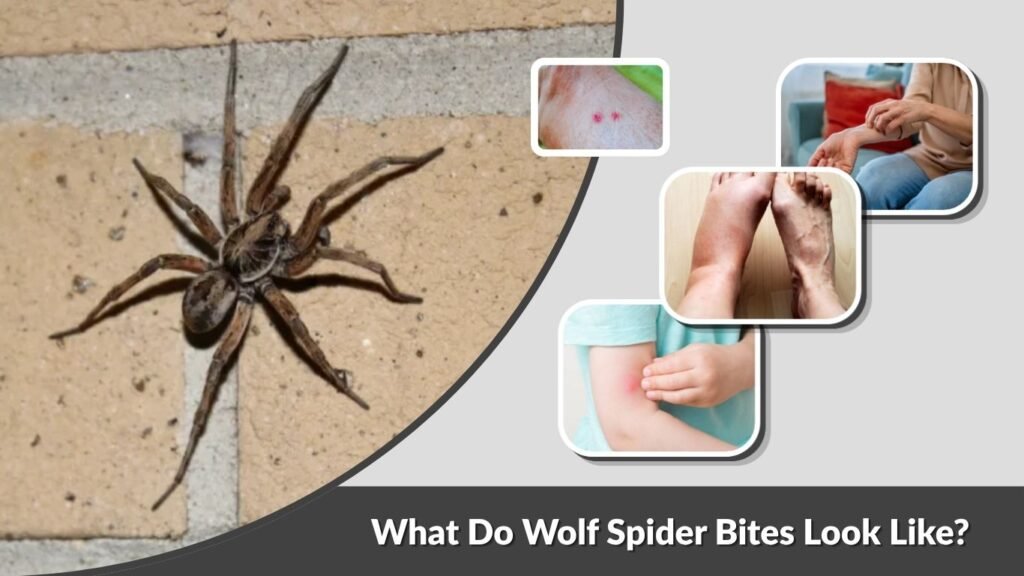
A confirmed wolf spider bite may resemble many other minor insect or arthropod bites. Appearance alone usually cannot prove that a wolf spider caused a skin lesion. Redness, swelling, pain, and other skin problems are frequently blamed on spiders even when the spider was never seen.
Common Appearance
A wolf spider bite may involve:
- A small red or irritated area
- Mild swelling around the bite
- Localized tenderness
- Itching or burning
- A small puncture area that may be difficult to see
- Temporary inflammation around the affected skin
The exact appearance varies from person to person. A bite should not automatically be identified as a wolf spider bite simply because it is red or swollen.
Can a Wolf Spider Bite Blister?
Blistering is not considered a typical defining feature of wolf spider bites. Minor wolf spider bites are more commonly associated with localized pain or itching.
If a large blister develops, the wound continues expanding, or the surrounding skin becomes increasingly painful, warm, or swollen, medical evaluation is appropriate because infection or another condition could be responsible.
Do Wolf Spider Bites Hurt?
A wolf spider’s fangs can penetrate human skin, so a person may feel the bite when it occurs. The discomfort can vary according to the spider’s size, the bite location, and individual sensitivity. Reported symptoms from wolf spiders are usually minor and mainly involve local pain or itching.
What Does a Wolf Spider Bite Feel Like?
Some people may notice a quick sharp or pinching sensation followed by soreness around the bite.
The area may later feel tender, itchy, mildly swollen, or irritated. Less commonly, wolf spider bites have been associated with symptoms such as greater swelling, nausea, dizziness, or a rapid pulse.
How Bad Do Wolf Spider Bites Hurt?
Most bites do not cause severe or prolonged pain. The discomfort is usually concentrated around the bite site rather than spreading throughout the body.
Pain that becomes severe instead of improving should not simply be assumed to be a normal wolf spider reaction, especially when the spider was never positively identified.
What to Do If a Wolf Spider Bites You
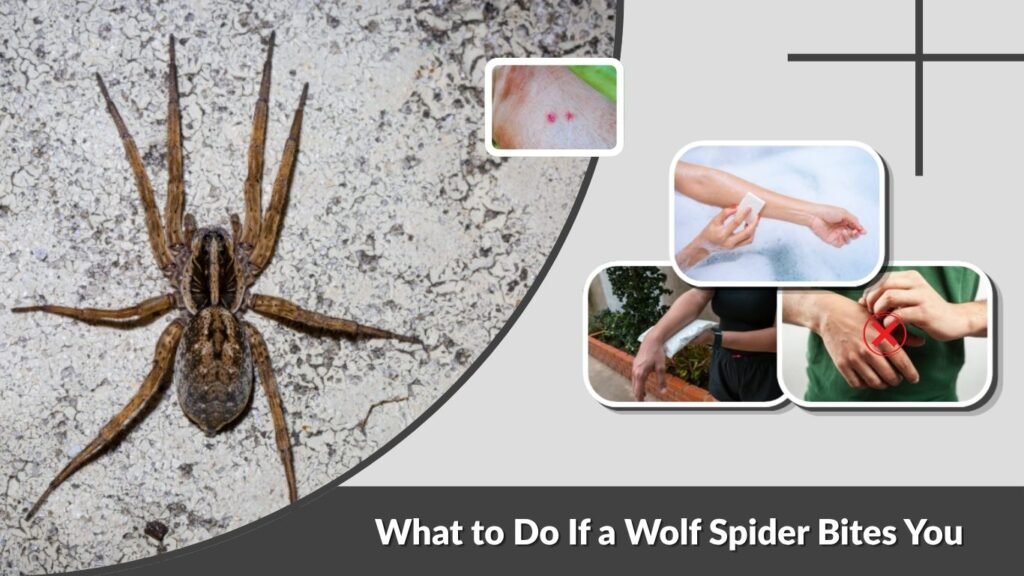
For an uncomplicated spider bite, basic first aid is generally enough. Cleaning the area helps protect damaged skin, while cooling it may reduce discomfort and swelling. Government health guidance recommends washing most non-dangerous spider bites with soap and water and using a cold pack when the bite is painful.
How to Treat a Wolf Spider Bite
After a suspected bite:
- Wash the affected skin gently with soap and water.
- Apply a cold pack wrapped in cloth for short periods.
- Keep the area clean while it heals.
- Avoid repeatedly scratching or picking at the bite.
- Observe the bite for increasing redness, swelling, or pain.
- Seek medical advice if significant or persistent symptoms develop.
Do not cut the skin or attempt to squeeze venom from the wound.
How Do You Get Relief From a Wolf Spider Bite?
A wrapped cold pack can help relieve temporary pain and swelling. Keeping the area clean and avoiding irritation may also make healing more comfortable.
If itching or pain is troublesome, a pharmacist or healthcare professional can advise whether an appropriate over-the-counter medicine is suitable for you.
How Long Do Wolf Spider Bites Last?
There is no single healing time for every wolf spider bite because the severity of a reaction varies. Minor localized irritation may gradually improve without special treatment, while persistent or worsening symptoms deserve medical evaluation. Wolf spider bites are usually associated with relatively minor local effects rather than severe systemic poisoning.
Do Wolf Spider Bites Itch?
Yes, itching can occur. Local itchiness is among the reported effects of wolf spider bites.
Avoid scratching aggressively because broken skin can increase irritation and potentially contribute to infection.
Do Wolf Spider Bites Cause Necrosis?
Tissue necrosis is not considered a typical effect of wolf spider bites. In fact, suspected spider bites are frequently misdiagnosed, and skin infections or other medical problems can produce painful or necrotic-looking lesions that are mistakenly attributed to spiders.
A darkening, ulcerating, rapidly enlarging, or severely painful wound should therefore be examined by a healthcare professional rather than assumed to be a wolf spider bite.
When Should You Get Medical Help?
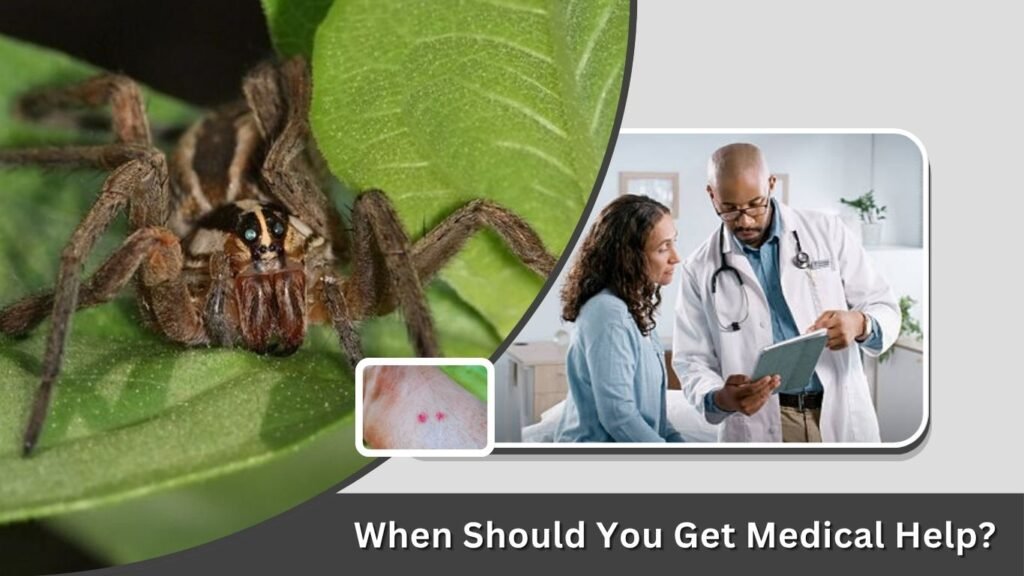
Most suspected wolf spider bites cause relatively minor symptoms, but unusual reactions should not be ignored. Spider identification is also frequently uncertain, meaning another spider, insect, infection, or skin condition could be responsible. Persistent symptoms after any unidentified spider bite are a reason to seek medical advice.
Warning Signs to Watch For
Seek prompt medical care if you experience:
- Severe or rapidly increasing pain
- Significant or spreading swelling
- Increasing redness or warmth around the wound
- Persistent vomiting or dizziness
- Difficulty breathing
- Swelling of the face, lips, tongue, or throat
- Fever or signs of infection
- An enlarging ulcer or darkened skin
- Symptoms that continue to worsen instead of improving
Emergency symptoms such as difficulty breathing, fainting, or severe swelling require urgent medical attention.
FAQs
1. Do wolf spiders bite humans?
Yes. Wolf spiders are capable of biting humans, but they generally bite only when trapped, handled, or threatened. They normally prefer escaping rather than confronting people.
2. What do wolf spider bites look like on a human?
They may cause a small area of redness, swelling, tenderness, or itching. However, appearance alone cannot reliably confirm that a wolf spider caused a particular skin lesion.
3. Do wolf spider bites hurt?
They can. A person may experience an initial sharp or painful sensation followed by localized soreness, itching, or swelling. Symptoms are usually minor.
4. What can a wolf spider bite do to you?
Most confirmed bites cause localized effects rather than serious illness. Less commonly reported symptoms include increased swelling, dizziness, nausea, and a rapid pulse.
5. What should I do if a wolf spider bites me?
Wash the area with soap and water, apply a wrapped cold pack for discomfort, keep the skin clean, and monitor your symptoms. Seek medical care if pain, swelling, or other symptoms become severe or continue worsening.