

A small wolf spider can be easy to overlook because many species are much smaller than the large, hairy wolf spiders people usually imagine. These active hunters may appear brown, gray, or nearly black and are often found in gardens, grass, basements, garages, and occasionally inside homes. Small wolf spiders generally do not build prey-catching webs and instead chase insects on foot. This guide covers their size, appearance, common colors, indoor behavior, bites, babies, and identification.
How Small Can a Wolf Spider Get?
Wolf spiders belong to a large family containing many species, so their size varies considerably. While some adults grow quite large, others remain relatively small even when fully mature. Juvenile wolf spiders can be tiny, sometimes only a few millimeters long. Their long legs can make them appear larger than their actual body length.
Small Wolf Spider Size
Small wolf spiders may fall within these general ranges:
- Body length of only a few millimeters in juveniles
- Around 0.2 to 0.5 inches in many smaller adults
- Leg span wider than the body measurement suggests
- Females typically larger-bodied than males
- Newly hatched spiderlings extremely tiny
- Size varying considerably between species
When measuring a wolf spider, body length usually excludes the legs. A spider that appears almost an inch across may still have a much smaller body.
How Small Is a Baby Wolf Spider?
Newly hatched wolf spiders are very small and can appear as tiny moving dots. After emerging from the egg sac, they climb onto their mother’s abdomen and remain there temporarily.
As the spiderlings grow, they molt repeatedly. Each molt produces a larger body until they eventually reach adult size. Finding many tiny spiders clustered on the back of a larger spider is one of the strongest signs that the adult is a female wolf spider.
What Does a Small Wolf Spider Look Like?
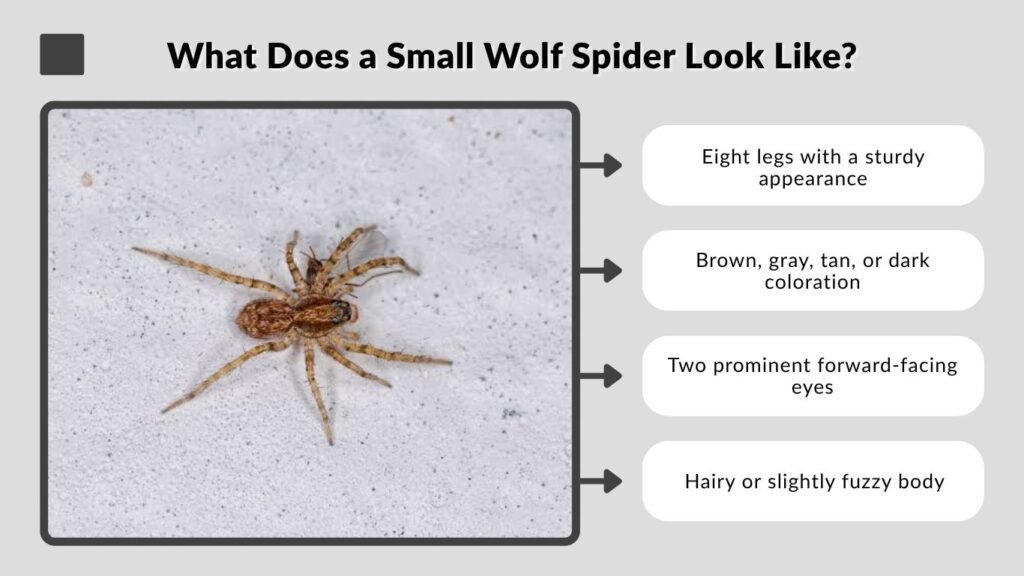
Small wolf spiders have the same general body structure as larger members of the family. They have eight legs, a two-part body, prominent eyes, and often a hairy appearance. Their coloration helps them blend into soil, leaves, grass, and other ground-level habitats where they search for prey.
Small Wolf Spider Identification
Look for these characteristics:
- Eight legs with a sturdy appearance
- Brown, gray, tan, or dark coloration
- Two prominent forward-facing eyes
- Smaller eyes arranged around the larger pair
- Hairy or slightly fuzzy body
- Stripes or mottled markings on some species
- Fast running behavior
- No large prey-catching web
Their eye arrangement is especially useful for identification. Wolf spiders have two noticeably large eyes in the middle row, giving them excellent vision for hunting.
Small Brown Wolf Spider
Brown is one of the most common colors among wolf spiders. A small brown wolf spider may have dark stripes running along its cephalothorax or abdomen.
These markings help it disappear against:
- Dry leaves
- Soil
- Bark
- Mulch
- Rocks
- Dead grass
Small brown wolf spiders can sometimes be mistaken for young grass spiders or brown recluse spiders, but their body shape, eyes, and behavior are different.
Small Black Wolf Spider
Some wolf spiders look almost black, especially in dim indoor lighting. Their actual coloration may be dark brown, charcoal gray, or a mixture of dark tones.
A small black wolf spider usually still shows the characteristic wolf spider shape and prominent eyes. Color alone should not be used for identification because several unrelated spider species may also appear dark or black.
Small Wolf Spider in the House
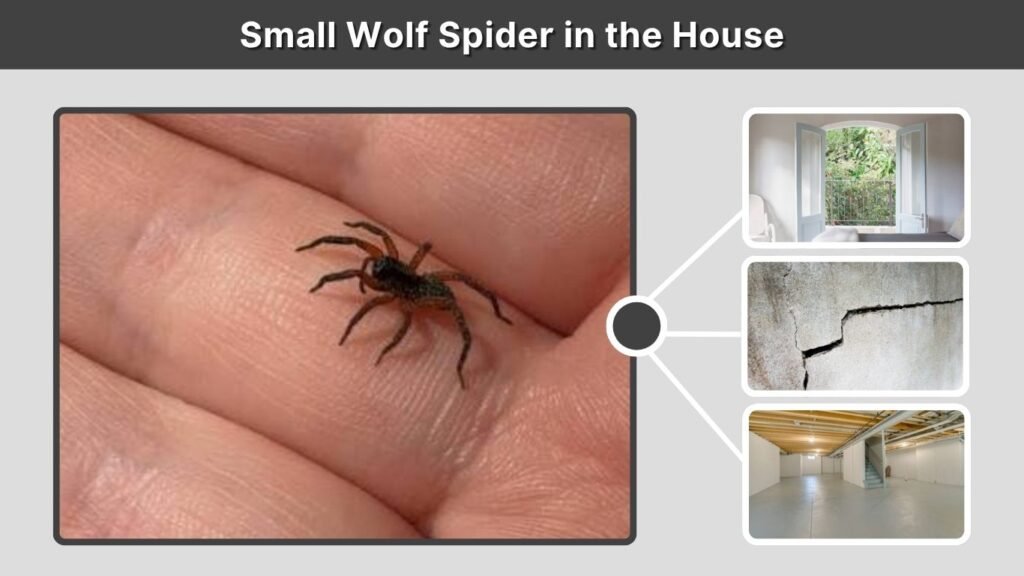
Small wolf spiders sometimes wander inside houses while searching for insects or shelter. They generally prefer outdoor environments and do not normally form large colonies indoors. Seeing one or two small wolf spiders does not automatically indicate an infestation, especially if they were found near doors, windows, garages, or basements.
Why Small Wolf Spiders Come Indoors
Common reasons include:
- Small gaps beneath doors
- Cracks around windows or foundations
- Insects available as prey
- Changes in outdoor temperature
- Boxes or plants brought indoors
- Cluttered garages and basements
- Open windows without screens
Wolf spiders are active hunters, so they may move considerable distances while searching for food.
Where Do Small Wolf Spiders Hide?
Indoors, they usually remain close to the floor. They may hide beneath furniture, boxes, storage containers, shoes, or other objects that provide darkness and protection.
Unlike many house spiders, wolf spiders do not typically establish large webs in ceiling corners. If you repeatedly see small spiders in obvious webs, another spider species may be responsible.
Small Wolf Spider Bite
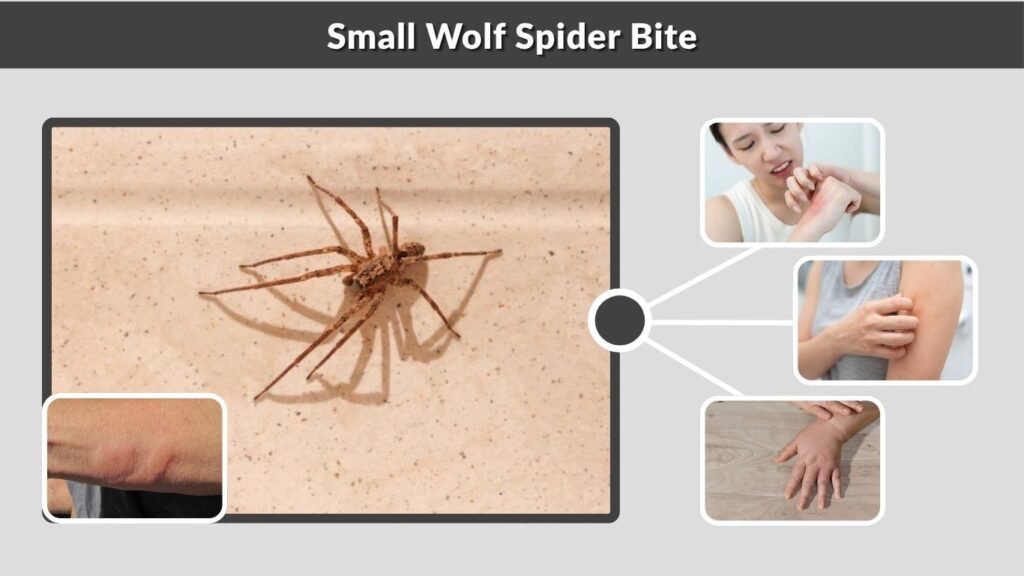
A small wolf spider can bite if it becomes trapped against the skin or is handled, but biting is not its normal response to people. Wolf spiders generally prefer escaping. Their venom is adapted for small prey and usually causes only localized effects in humans.
What Does a Small Wolf Spider Bite Feel Like?
Possible symptoms include:
- Brief pain or stinging
- Mild redness
- Local swelling
- Itching
- Tenderness around the area
- Minor irritation
- Small puncture marks in some cases
The appearance of a bite alone cannot confirm which spider caused it. Many insect bites, skin irritations, and minor infections can look similar.
Are Small Wolf Spiders Poisonous?
Small wolf spiders are venomous rather than poisonous. They inject venom through their fangs when capturing prey.
For most people, a bite is not considered medically serious. However, any bite associated with severe swelling, breathing difficulty, intense pain, vomiting, faintness, or rapidly worsening symptoms should receive medical attention.
Spider size also does not reliably indicate how severe a bite will be.
Small Wolf Spider vs Brown Recluse
Small brown wolf spiders are sometimes confused with brown recluse spiders, particularly when seen quickly indoors. However, the two spiders differ in appearance, behavior, eye arrangement, and typical habitat. Because identification from color alone is unreliable, several characteristics should be considered together.
Key Differences
A small wolf spider typically has:
- A hairy or textured body
- Multiple visible markings
- Two large prominent eyes
- Fast running behavior
- A more robust appearance
- Active hunting habits
A brown recluse typically has a smoother appearance and six eyes arranged in three pairs rather than the eight eyes found in wolf spiders.
Wolf spiders may also be encountered more openly while hunting, whereas brown recluse spiders usually favor quiet, sheltered hiding places.
Small Wolf Spider Species and Habitats
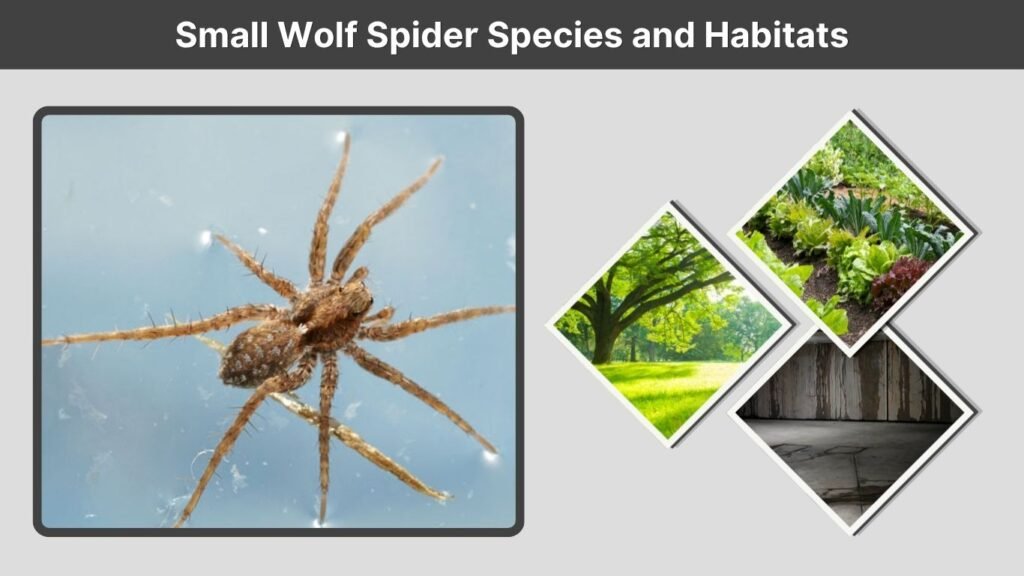
There are thousands of wolf spider species worldwide, and many remain relatively small throughout adulthood. Different species have adapted to grasslands, forests, deserts, wetlands, gardens, coastal areas, and urban environments. Their ability to hunt without a capture web allows them to occupy many ground-level habitats.
Where Small Wolf Spiders Live
They may be found in:
- Lawns and grassy fields
- Gardens
- Leaf litter
- Under logs and stones
- Forest floors
- Sandy areas
- Agricultural fields
- Basements and garages
Some species spend much of their time roaming, while others live close to burrows or sheltered retreats.
Small Wolf Spiders in California
California supports numerous wolf spider species because the state contains deserts, grasslands, forests, coastal areas, and urban habitats.
Small wolf spiders may appear in yards, gardens, garages, or homes, particularly when outdoor conditions encourage them to seek shelter. Regional location alone is not enough to determine the exact species because several similar-looking wolf spiders may occur in the same area.
Small Wolf Spider With an Egg Sac
Female wolf spiders have unusual reproductive behavior. After laying eggs, the female wraps them in silk and attaches the round egg sac directly to her spinnerets. She continues walking and hunting while carrying it until the spiderlings are ready to hatch.
What Is the Small White Ball on a Wolf Spider?
A small round white, cream, or pale gray ball attached to the rear of a wolf spider is often an egg sac.
After hatching, the young spiderlings climb onto the mother’s back. She may carry a large number of babies at once until they are developed enough to disperse.
This behavior separates wolf spiders from many other common spiders that leave their egg sacs attached to webs or hidden surfaces.
FAQs
1. How small can a wolf spider get?
Juvenile wolf spiders can be only a few millimeters long, while smaller adult species may have body lengths around 0.2 to 0.5 inches. Their legs make them appear wider, so overall size depends on whether body length or leg span is being measured.
2. Are small wolf spiders dangerous?
Small wolf spiders are generally not dangerous to humans. They can bite when trapped or handled, but most bites cause only temporary pain, redness, itching, or localized swelling. Avoid handling unidentified spiders directly, particularly when species identification is uncertain.
3. Why do I have small wolf spiders in my house?
Small wolf spiders may enter through door gaps, cracks, windows, or garages while searching for insects or shelter. Finding one occasionally is common and does not necessarily indicate an infestation. Reducing indoor insects and sealing entry points can help prevent future encounters.
4. What does a small black wolf spider look like?
A small black wolf spider may actually be dark brown or charcoal gray. It usually has a sturdy, hairy body, strong legs, and two prominent forward-facing eyes. Some individuals also show faint stripes or mottled markings that become easier to see under bright light.
5. Can a small wolf spider bite?
Yes. Even a small wolf spider has fangs and venom used to capture prey. However, it normally tries to escape rather than bite people. Bites usually occur when the spider is trapped, squeezed, or handled and commonly cause mild localized symptoms.
