
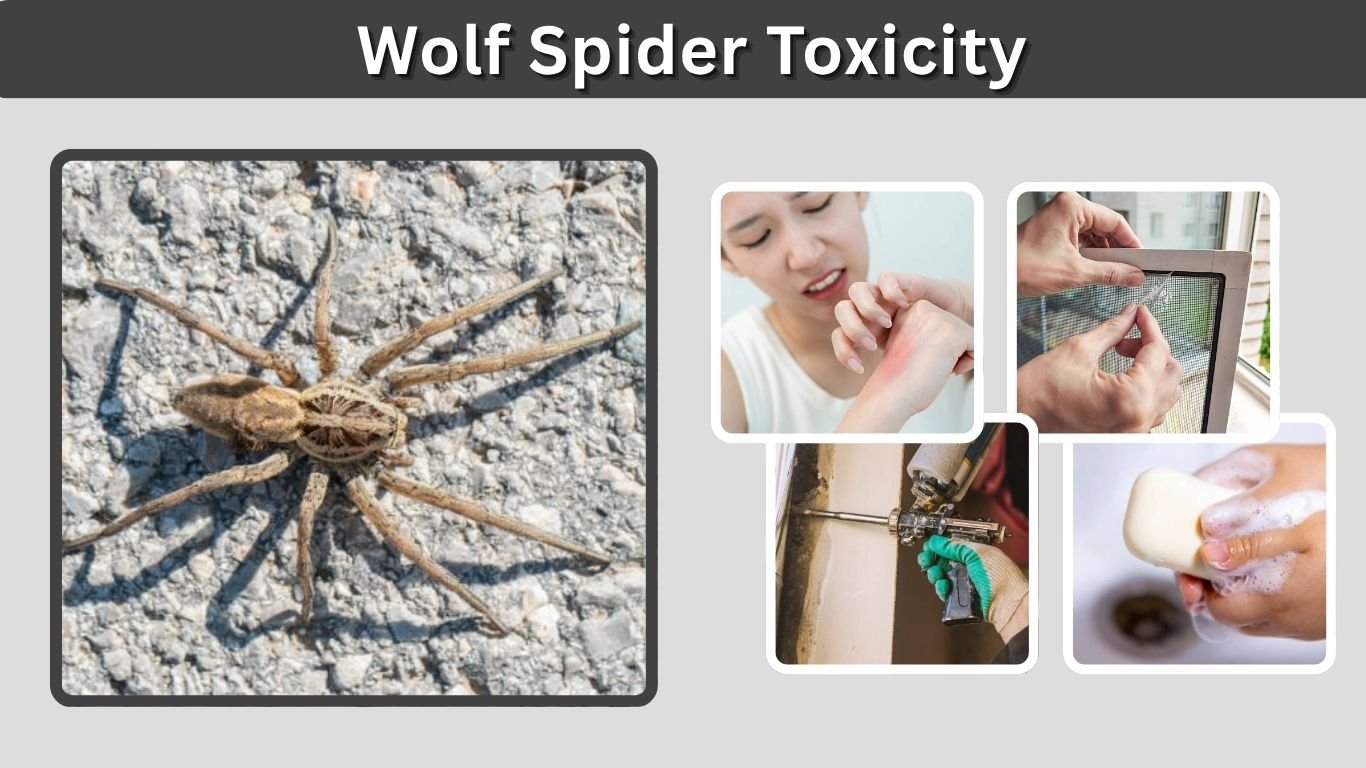
Wolf spiders may look intimidating because of their large bodies, fast movements, and noticeable fangs, but their venom is generally considered low in toxicity to humans. They use venom mainly to immobilize insects and other small prey rather than defend themselves against people. A wolf spider bite can still cause pain, redness, swelling, or itching. Serious reactions are uncommon, although children, sensitive individuals, and pets should be watched carefully after a suspected bite.
How Toxic Are Wolf Spiders?
Wolf spiders belong to the family Lycosidae and include thousands of species found around the world. Nearly all use venom when hunting, but having venom does not automatically make a spider dangerous to humans. Wolf spider venom is primarily adapted for small prey, and bites generally produce localized rather than severe whole-body effects.
Are Wolf Spiders Venomous or Toxic?
Technically, wolf spiders are venomous, not poisonous. Venom is delivered through fangs during a bite, while a poisonous animal causes harm when it is eaten or touched.
Wolf spiders have venom glands connected to their fangs. When hunting, they quickly seize insects and inject venom to help subdue them. Humans are much larger than their normal prey, so the amount and composition of venom delivered during a typical defensive bite usually does not cause serious toxicity.
How Strong Is Wolf Spider Venom?
Wolf spider venom is not considered medically important for most healthy people. The bite may hurt because the spider’s fangs penetrate the skin, while the venom can create temporary inflammation around the area.
The severity can vary depending on the species, bite location, amount of venom injected, and individual sensitivity. Wolf spiders normally try to escape rather than bite and are most likely to bite when trapped, squeezed, or handled.
Wolf Spider Bite Toxicity in Humans
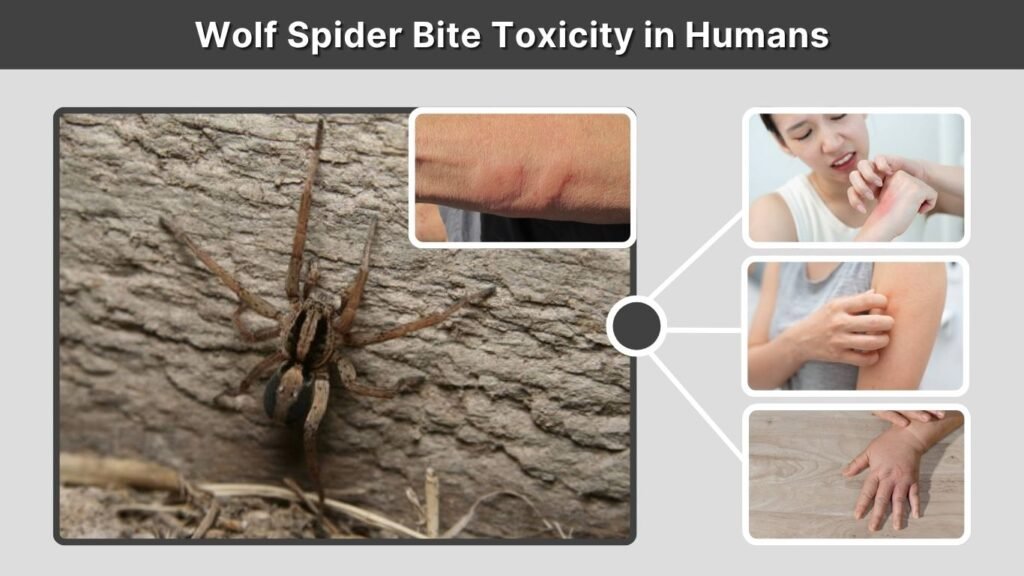
Most confirmed wolf spider bites cause mild symptoms around the bite site rather than dangerous systemic poisoning. Penn State Extension notes that typical reactions include initial pain and redness, sometimes accompanied by localized swelling, with symptoms generally resolving within about 24 hours.
Common Wolf Spider Bite Symptoms
Possible symptoms include:
- Immediate or mild burning pain
- Redness surrounding the bite
- Localized swelling
- Itching or irritation
- Tenderness around the puncture
- Small fang marks in some cases
- Temporary warmth around the affected skin
Symptoms can resemble bites or stings from many other arthropods, so finding a mark alone does not prove that a wolf spider caused it.
Can Wolf Spider Venom Kill a Human?
A typical wolf spider bite is not considered lethal to humans. Wolf spiders are very different medically from spiders such as some widow or recluse species whose venom can produce more significant effects.
However, unusual symptoms following any suspected spider bite should not be ignored. Severe swelling, difficulty breathing, faintness, repeated vomiting, rapidly increasing pain, or other widespread symptoms require prompt medical evaluation because they may indicate an allergic reaction, infection, or a bite from a different species.
Can You Be Allergic to a Wolf Spider Bite?
Individual reactions vary. A person may develop more swelling or irritation than someone else after a similar bite. Allergic-type reactions to bites and stings can sometimes become serious.
Because identifying spiders after a bite is difficult, symptoms are more important than assumptions about which spider was responsible. Seek urgent care for breathing problems, swelling of the face or throat, collapse, confusion, or rapidly worsening symptoms.
Wolf Spider Toxicity to Cats and Dogs
Wolf spiders occasionally enter garages, basements, sheds, gardens, and homes where pets may encounter them. Specific evidence describing severe wolf spider venom toxicity in dogs and cats is limited. Veterinary guidance notes that only a small proportion of spider species present a major danger to pets, but any suspected bite should still be monitored.
Are Wolf Spiders Toxic to Cats?
A cat may paw at, chase, or bite a wolf spider because the spider moves quickly. A defensive bite could cause localized pain, redness, swelling, or irritation.
A mild skin reaction may be difficult to notice beneath fur. Pay attention if your cat suddenly begins licking one area repeatedly, limping, hiding, or reacting painfully when touched.
Are Wolf Spiders Toxic to Dogs?
Dogs may encounter wolf spiders while investigating grass, leaves, garages, sheds, or objects stored outside. A bite is more likely when the spider becomes trapped against the dog’s skin or inside the mouth.
Veterinary sources note that spider bites in pets can produce redness and irritation, while fever or vomiting can occur in more serious situations.
Warning Signs in Pets
Watch for:
- Redness or swelling
- Persistent licking of one spot
- Local pain or sensitivity
- Limping after a suspected bite
- Facial or muzzle swelling
- Vomiting
- Fever or unusual lethargy
- Difficulty breathing
If you actually witness your pet being bitten by an unidentified spider, veterinary evaluation is the safest option. Texas A&M also recommends veterinary care when a swollen or irritated area worsens or fails to improve within 24 hours.
What to Do After a Wolf Spider Bite
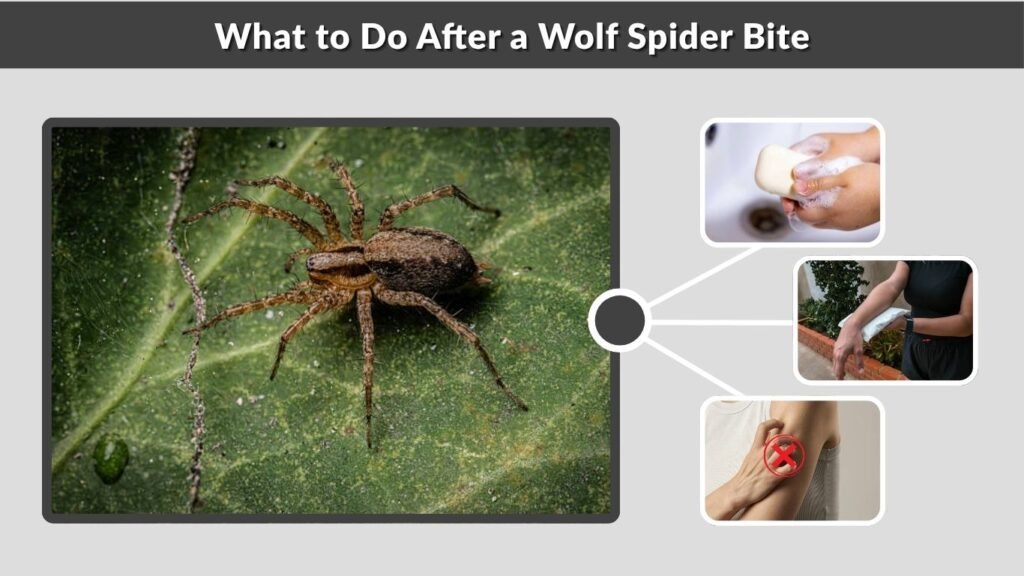
Most uncomplicated bites can be managed with basic wound care while symptoms are monitored. However, spider identification is often unreliable, so treatment decisions should be based primarily on symptoms. Avoid cutting the bite, attempting to extract venom, or applying potentially irritating home remedies.
Basic Bite Care
- Wash the bite gently with soap and water.
- Apply a wrapped cold pack for short periods to reduce discomfort.
- Keep the affected area clean.
- Avoid scratching or squeezing the bite.
- Monitor redness and swelling for changes.
- Seek medical care if significant symptoms develop.
If possible, photograph the spider from a safe distance rather than trying to capture it with your hands. A clear photograph may help with identification.
How to Reduce Wolf Spider Encounters
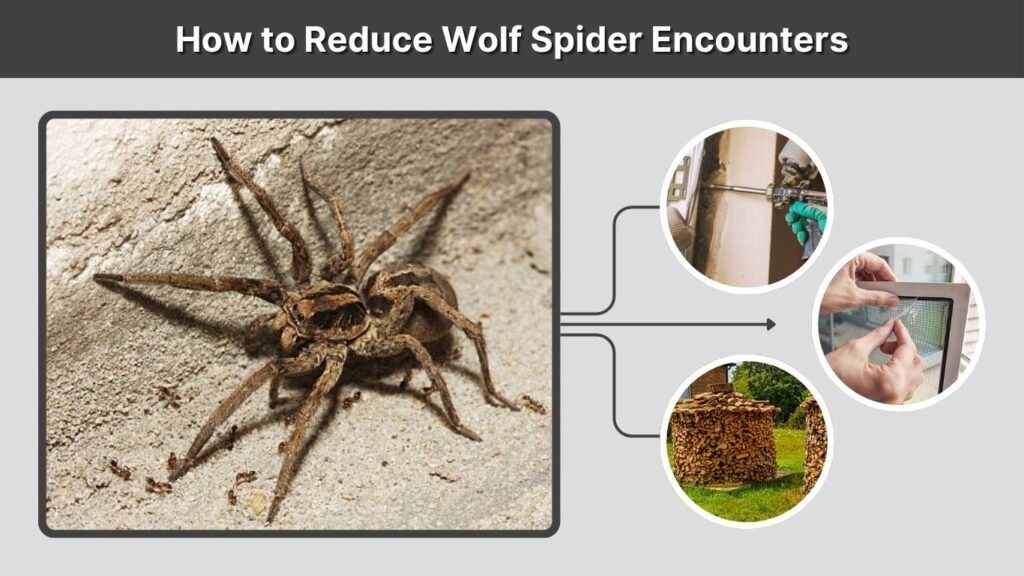
Wolf spiders are beneficial predators that eat insects, but preventing them from entering frequently used areas can reduce unwanted encounters. They do not normally establish large indoor colonies, although individual spiders may wander inside while hunting or seeking shelter.
Wolf Spider Prevention Tips
- Seal cracks around doors, windows, and foundations.
- Install or repair damaged window screens.
- Remove clutter from basements, garages, and storage spaces.
- Keep firewood and debris away from exterior walls.
- Shake out shoes or clothing stored in garages and sheds.
- Reduce insect prey around entrances and outdoor lights.
- Supervise curious pets in cluttered storage areas.
Physical exclusion is usually preferable to handling or crushing spiders directly.
FAQs
1. How toxic is a wolf spider?
Wolf spider venom has relatively low medical significance for humans. A bite can cause pain, redness, tenderness, itching, and localized swelling, but serious systemic toxicity is uncommon. The venom is mainly designed to immobilize the small insects and other arthropods that wolf spiders hunt.
2. Is wolf spider venom toxic to humans?
Wolf spider venom can affect human tissue enough to cause temporary local symptoms, but it is generally not considered dangerously toxic to healthy adults. Penn State Extension reports that typical symptoms are pain, redness, and possible localized swelling that usually improve relatively quickly.
3. How long does wolf spider venom stay in your system?
There is no single exact duration because reactions vary by species and person. For uncomplicated bites, noticeable symptoms are generally localized and relatively short-lived. Penn State reports that typical wolf spider bite symptoms generally subside within about 24 hours.
4. Are wolf spiders toxic to dogs?
Wolf spiders are not generally regarded among the spiders of greatest veterinary concern. However, a suspected bite may still cause pain and local inflammation. If a dog develops worsening swelling, vomiting, fever, breathing difficulty, unusual weakness, or significant pain, contact a veterinarian promptly.
5. Are wolf spiders toxic to cats?
A wolf spider bite may cause localized irritation or pain in a cat, but severe wolf-spider-specific toxicity is not commonly documented. Because cats can be difficult to assess after a bite, unexplained swelling, persistent licking, vomiting, lethargy, breathing problems, or worsening symptoms should be evaluated by a veterinarian.
