
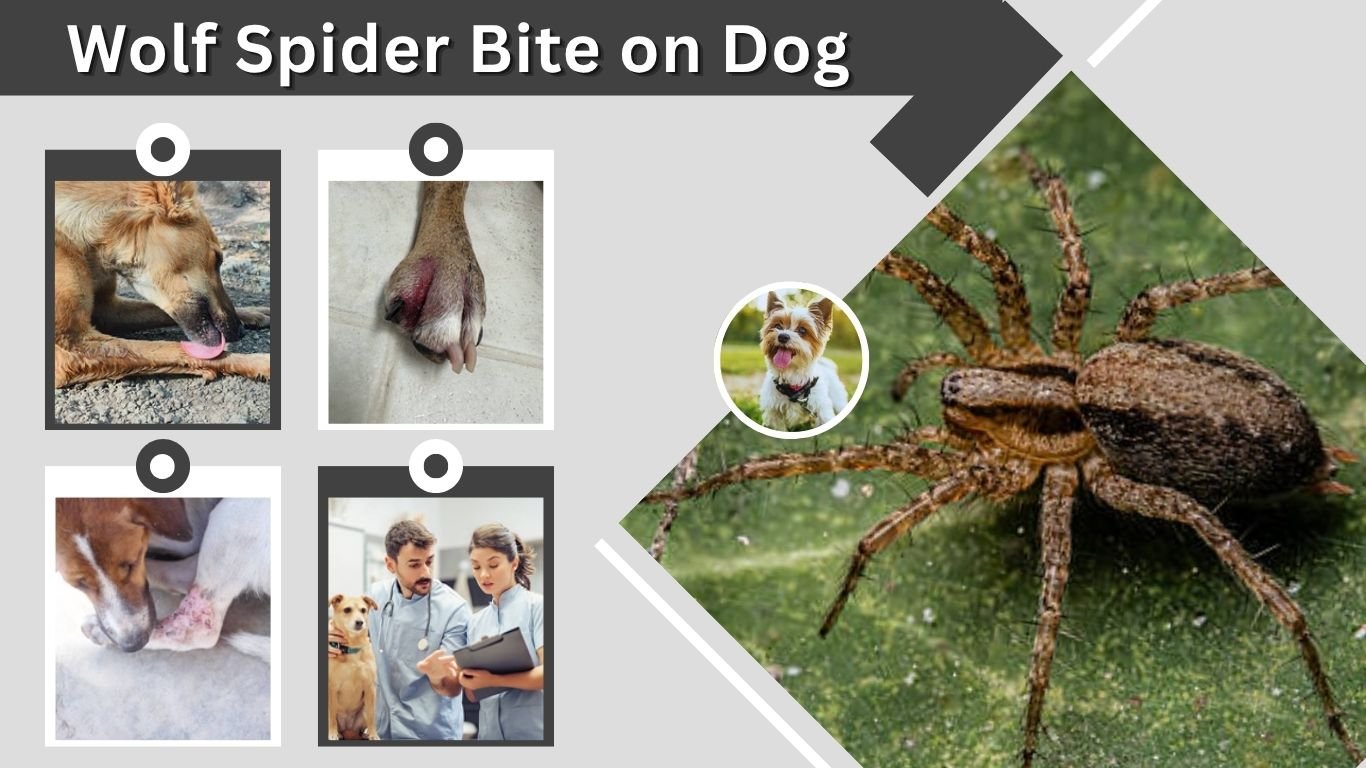
A wolf spider may bite a dog if it becomes trapped, stepped on, or disturbed while the dog is sniffing or pawing at it. Fortunately, wolf spiders are not among the spiders considered most medically dangerous to dogs. In the United States, veterinary concern focuses primarily on widow spiders and brown recluse-type spiders. Still, any suspected spider bite deserves attention because the spider is often not identified with certainty, and swelling, pain, infection, or an allergic reaction can sometimes require veterinary care.
Can a Wolf Spider Bite a Dog?
Yes. Wolf spiders possess venom and fangs for capturing prey and can defensively bite a dog if threatened. A curious dog may encounter one while exploring grass, gardens, garages, wood piles, or other ground-level hiding places.
A bite is more likely when a dog tries to sniff, paw at, or bite the spider than when simply walking nearby.
Why Dogs Get Bitten
Dogs investigate their surroundings with their noses and mouths, which puts their face and paws close to spiders and other arthropods. Merck notes that bites and stings in pets commonly occur around the face or head because these are often the first areas used to investigate small creatures.
Possible bite locations include:
- Nose or muzzle
- Lips
- Inside or around the mouth
- Front paws
- Legs
- Face
- Belly
A bite beneath thick fur may initially be difficult to see.
Wolf Spider Bite Symptoms in Dogs
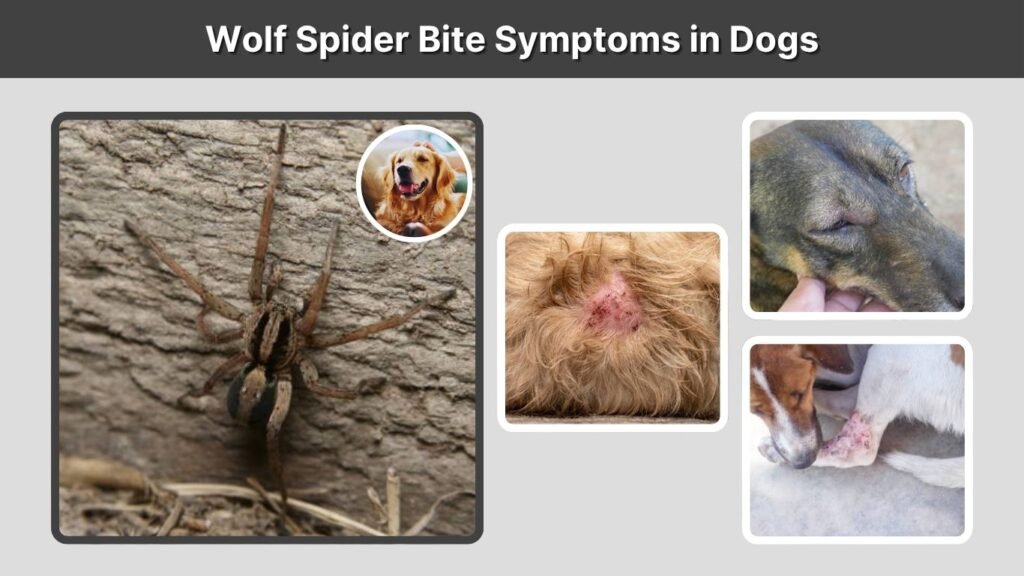
A confirmed wolf spider bite would generally be expected to cause primarily local irritation rather than the severe poisoning associated with medically important widow or recluse spiders.
However, it is difficult to diagnose a spider bite solely from a skin mark. Veterinary sources emphasize that spider bites are relatively uncommon and that the spider responsible is often unavailable for identification by the time symptoms appear.
Common Signs to Watch For
Possible signs around the bite area include:
- Redness
- Mild swelling
- Tenderness or pain
- Licking or chewing the affected area
- Limping if a paw was bitten
- Local skin irritation
- Restlessness caused by discomfort
Swelling may be especially noticeable when the bite occurs around the muzzle, lips, or paws.
Signs That Need Urgent Veterinary Care
Seek prompt veterinary attention if your dog develops:
- Severe or rapidly increasing swelling
- Difficulty breathing
- Significant weakness
- Tremors or muscle stiffness
- Repeated vomiting
- Severe pain
- Collapse
- Rapidly worsening skin damage
- Significant lethargy
- Darkening or dying tissue around the wound
These symptoms are not typical evidence of a simple wolf spider bite and may indicate another type of spider, an allergic response, infection, or a different medical problem. Medically important spider envenomation in dogs can produce systemic effects, particularly with widow spiders.
What Does a Wolf Spider Bite Look Like on a Dog?
There is no single appearance that reliably identifies a wolf spider bite.
A suspected bite might look like a small red, swollen, or irritated area. Two punctures may be imagined as characteristic of spider bites, but they may be impossible to see, particularly beneath fur.
Why Pictures Can Be Misleading
Photos of supposed wolf spider bites on dogs cannot reliably confirm what caused a lesion.
Skin infections, allergies, insect stings, ticks, wounds, abscesses, and bites from other animals can produce similar redness and swelling. Veterinary sources note that spider bites can be difficult to recognize because the spider is seldom still present when clinical signs become noticeable.
If you safely obtained a clear photo of the spider involved, showing it to your veterinarian may be more useful than comparing the dog’s wound with online pictures.
Are Wolf Spider Bites Dangerous to Dogs?
A correctly identified wolf spider generally represents a much lower veterinary concern than a widow or brown recluse spider.
Merck Veterinary Manual identifies widow spiders (Latrodectus) and brown spiders (Loxosceles) as the principal groups of medically important spiders in the United States.
Can a Wolf Spider Bite Kill a Dog?
A typical wolf spider bite would not normally be expected to kill a healthy dog.
The bigger concern is uncertainty about identification. Large brown spiders can be mistaken for one another, and serious symptoms should never be dismissed simply because someone believes the spider was a wolf spider.
Small, elderly, or medically fragile dogs may also warrant closer veterinary observation whenever they develop significant symptoms.
What to Do If a Wolf Spider Bites Your Dog
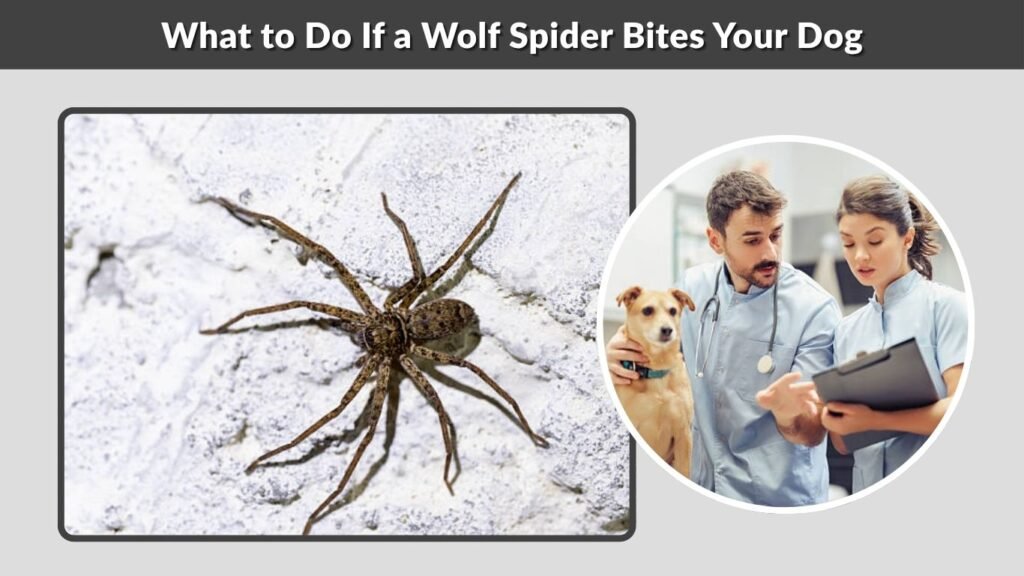
If you actually witness a spider bite or discover a suspicious localized reaction, keep your dog calm and examine the affected area carefully.
Immediate Steps
You can:
- Move your dog away from the spider.
- Avoid handling an unidentified spider with your bare hands.
- Photograph the spider if this can be done safely.
- Check your dog for swelling, pain, or breathing problems.
- Prevent excessive licking or scratching.
- Contact your veterinarian if symptoms are more than minor or the spider cannot be confidently identified.
For minor bites and stings, Merck recommends using a cold pack on the affected area to help reduce swelling and itching. Wrap cold material rather than placing ice directly against the skin.
Do not give your dog human medication unless a veterinarian specifically tells you which medication and dose are safe.
How Is a Wolf Spider Bite on a Dog Treated?
Treatment depends on the symptoms rather than simply on the presence of a bite mark.
Mild Reactions
A veterinarian may recommend monitoring a dog with minor localized swelling and discomfort.
Supportive care may be sufficient when the dog remains active, eats normally, breathes comfortably, and the swelling does not continue to increase.
More Serious Reactions
Veterinary treatment becomes more important if symptoms worsen or there is uncertainty about the spider.
Severe spider envenomation can require pain management, supportive care, treatment of muscle or neurological signs, and management of skin wounds depending on the spider involved. Treatment for recluse spider bites, for example, centers on supportive care and wound management.
Wolf Spider Bite on a Dog’s Paw
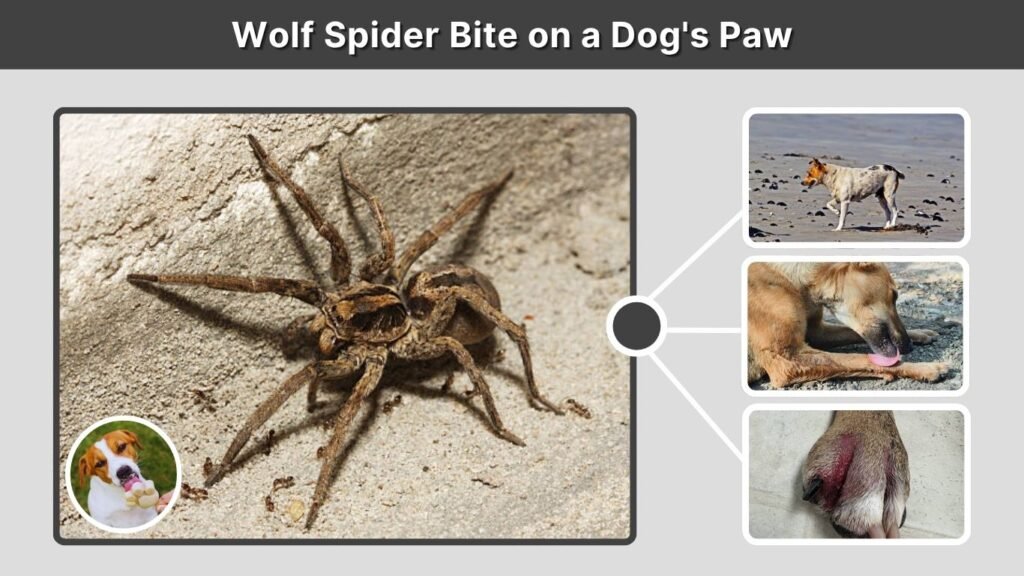
A dog’s paw is a plausible bite location because dogs may step on spiders or paw at them.
Signs of a Paw Bite
You may notice:
- Limping
- Licking one paw repeatedly
- Swelling between the toes
- Tenderness
- Reluctance to put weight on the foot
Examine the paw for other possibilities as well, including thorns, cuts, bee stings, or foreign objects.
If swelling continues to increase or your dog cannot comfortably walk on the paw, contact your veterinarian.
Wolf Spider Bite in a Dog’s Mouth
Dogs sometimes try to catch spiders with their mouths, so bites can potentially occur around the lips, tongue, or muzzle.
Swelling around the mouth deserves closer attention because substantial swelling could interfere with breathing or swallowing.
If your dog develops facial swelling, breathing difficulty, excessive drooling, weakness, or rapidly increasing swelling after investigating a spider, seek veterinary care promptly rather than waiting to see whether the symptoms disappear.
Wolf Spider Bite vs Brown Recluse Bite in Dogs
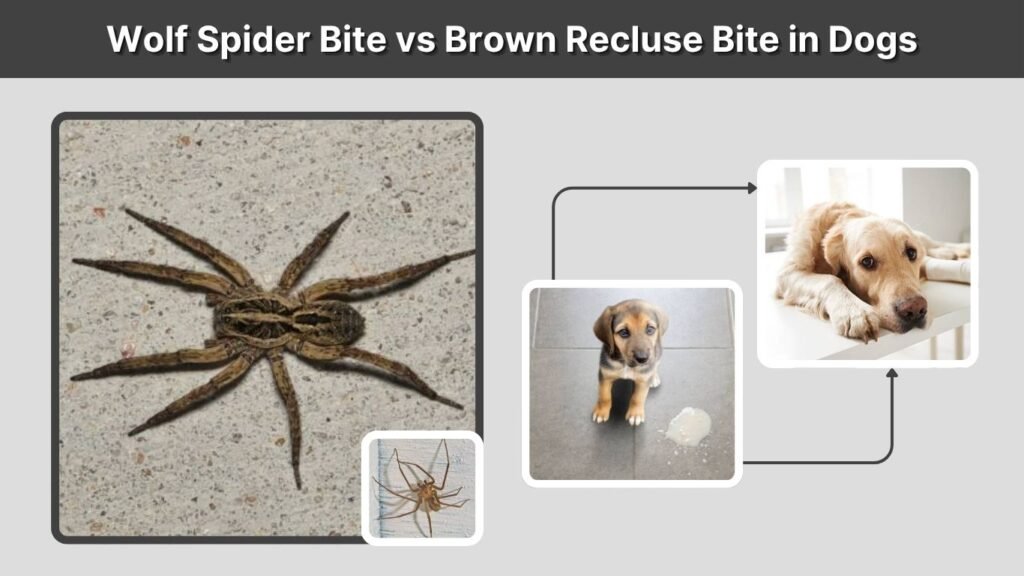
Correct identification matters because these spiders do not present the same risk.
Wolf Spider
A wolf spider bite would generally be expected to cause localized irritation and discomfort.
Brown Recluse
Recluse spiders are medically significant. In companion animals, their bites can occasionally produce fever, vomiting, weakness, anemia, muscle pain, and significant skin lesions, although systemic complications are described as uncommon. Serious symptoms can also take time to develop.
Therefore, worsening skin injury should not automatically be assumed to be a harmless wolf spider bite.
FAQs
What happens if a wolf spider bites my dog?
A dog may develop localized pain, redness, tenderness, or swelling. Serious poisoning is not normally associated with a correctly identified wolf spider. Monitor your dog carefully because identifying the spider responsible for a suspected bite can be difficult.
Will a wolf spider bite my dog?
It can, particularly if your dog paws at, steps on, or tries to catch the spider. Wolf spiders do not normally seek dogs out, so most encounters do not result in a bite.
How do I treat a wolf spider bite on my dog?
Keep the area clean, stop excessive licking, and use a wrapped cold pack for minor swelling. Contact your veterinarian if symptoms worsen, the spider is unidentified, or your dog develops significant pain, weakness, vomiting, breathing problems, or extensive swelling.
Can a wolf spider bite kill a small dog?
A typical wolf spider bite would not normally be expected to be fatal. However, small dogs can be more vulnerable to some toxins, and a suspected spider may have been misidentified. Significant symptoms in a small dog deserve prompt veterinary evaluation.
When should I take my dog to the vet after a spider bite?
Seek veterinary care promptly for breathing difficulty, severe swelling, vomiting, tremors, weakness, collapse, severe pain, or worsening skin damage. Also contact your vet when the spider cannot be identified and your dog’s condition is changing rapidly.
