
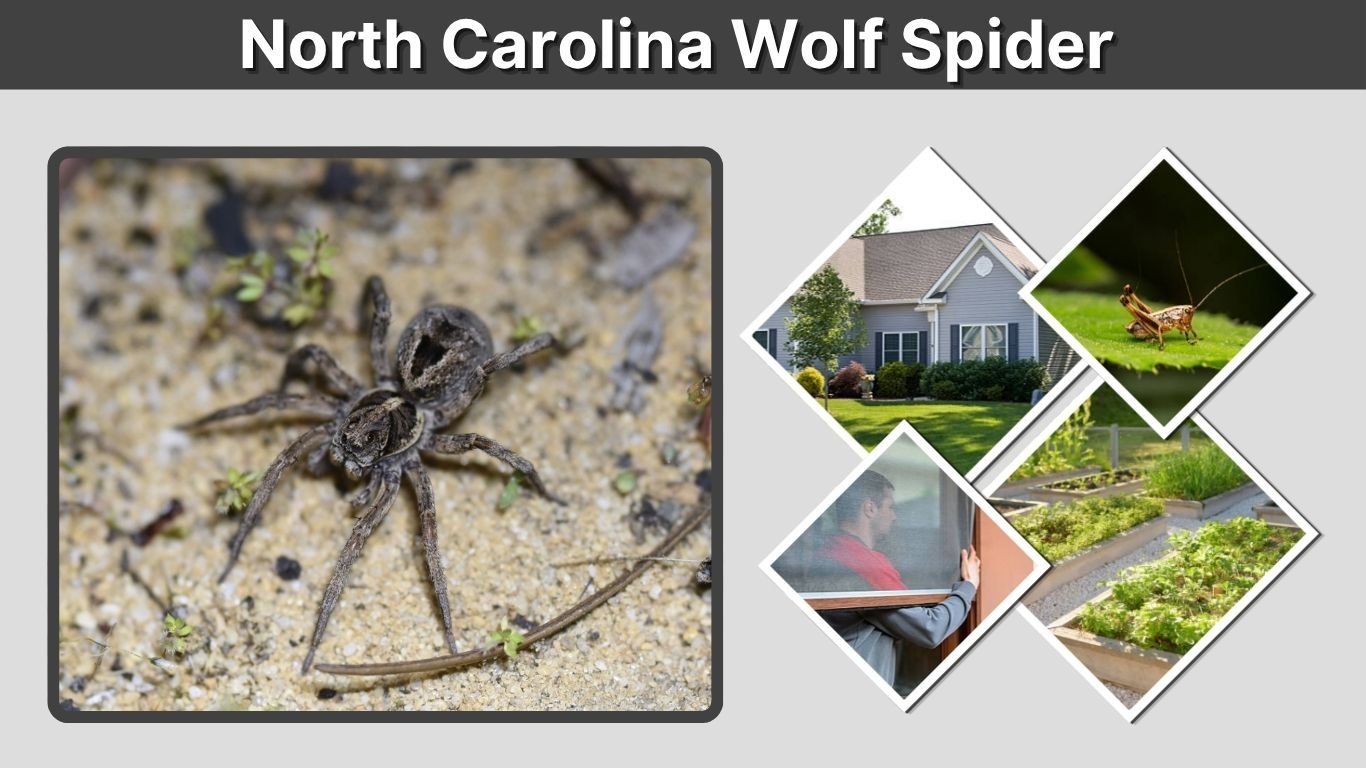
Wolf spiders are common across North Carolina, where they live in gardens, forests, fields, yards, and sometimes wander indoors. Their large size, hairy bodies, and fast movements can make them look intimidating, but most species are not considered dangerous to people. Several wolf spider species occur throughout the state, including the large Carolina wolf spider and the commonly seen rabid wolf spider. This guide explains North Carolina wolf spider identification, size, habitat, behavior, bites, venom, reproduction, and what to do if you find one around your home.
What Is a North Carolina Wolf Spider?
The term “North Carolina wolf spider” does not describe a single species. Instead, it generally refers to members of the wolf spider family, Lycosidae, that occur throughout North Carolina.
Wolf spiders are ground-hunting spiders. Unlike orb weavers and many household spiders, they usually do not create large webs for catching insects.
Common Wolf Spiders in North Carolina
Several species and groups may be encountered in the state, including:
- Carolina wolf spider (Hogna carolinensis)
- Rabid wolf spider (Rabidosa rabida)
- Thin-legged wolf spiders
- Field wolf spiders
- Burrowing wolf spiders
- Smaller woodland wolf spider species
The Carolina wolf spider is especially noticeable because it is among the largest wolf spiders found in North America.
North Carolina Wolf Spider Identification
Most wolf spiders share several recognizable characteristics:
- Brown, gray, tan, or dark coloration
- Hairy and robust body
- Long, powerful legs
- Eight eyes arranged in three rows
- Two especially large middle eyes
- Mottled or striped markings
- Fast ground-running behavior
Their natural coloration provides camouflage among soil, leaves, bark, and grass.
Black Wolf Spiders in North Carolina
Some wolf spiders may appear nearly black, particularly when seen indoors or under dim lighting.
A dark wolf spider is not necessarily a separate “black wolf spider” species. Many individuals naturally have dark brown, gray, or black markings that become more noticeable depending on lighting and age.
North Carolina Wolf Spider Size
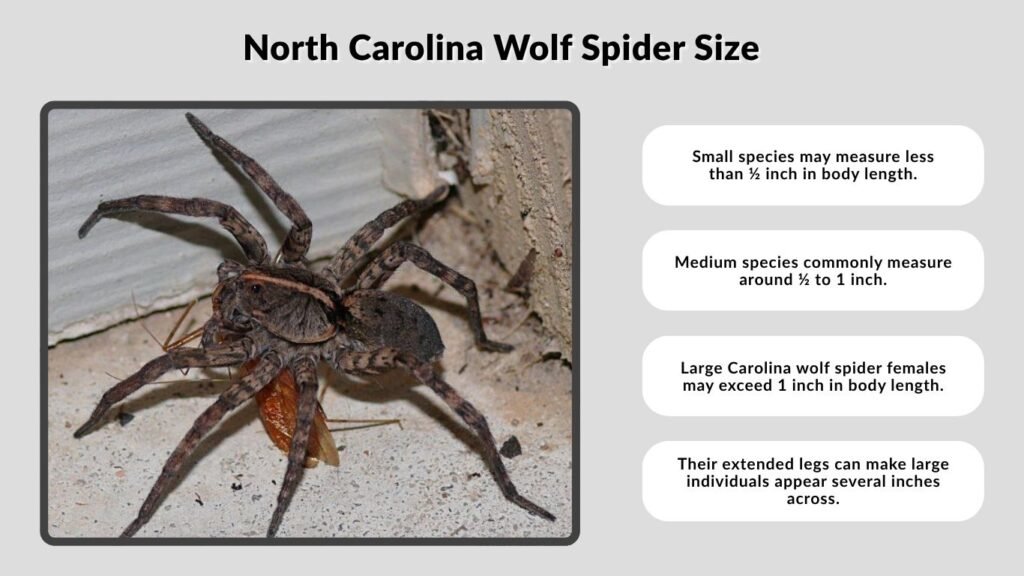
Wolf spiders in North Carolina vary greatly in size because numerous species occur in the state. Small species may have relatively short bodies, while large Carolina wolf spiders can appear impressive when their legs are extended.
Females are generally larger and heavier-bodied than males.
How Big Are Wolf Spiders in North Carolina?
Size can vary, but general measurements include:
- Small species may measure less than ½ inch in body length.
- Medium species commonly measure around ½ to 1 inch.
- Large Carolina wolf spider females may exceed 1 inch in body length.
- Their extended legs can make large individuals appear several inches across.
Body length is a better measurement than total leg span because leg positioning can dramatically change apparent size.
Giant North Carolina Wolf Spider
When people report seeing a “giant North Carolina wolf spider,” they are often describing a mature female Carolina wolf spider.
Large females have thick legs, heavy bodies, and noticeable hair. A female carrying an egg sac or baby spiders can appear even larger than normal.
Despite their intimidating appearance, large wolf spiders generally try to escape when approached.
Male vs Female Wolf Spider Size
Female wolf spiders tend to have:
- Larger abdomens
- Heavier bodies
- Greater overall body length
Adult males generally have slimmer bodies and enlarged pedipalps near their mouthparts, which are involved in reproduction.
Wolf Spider Habitat in North Carolina
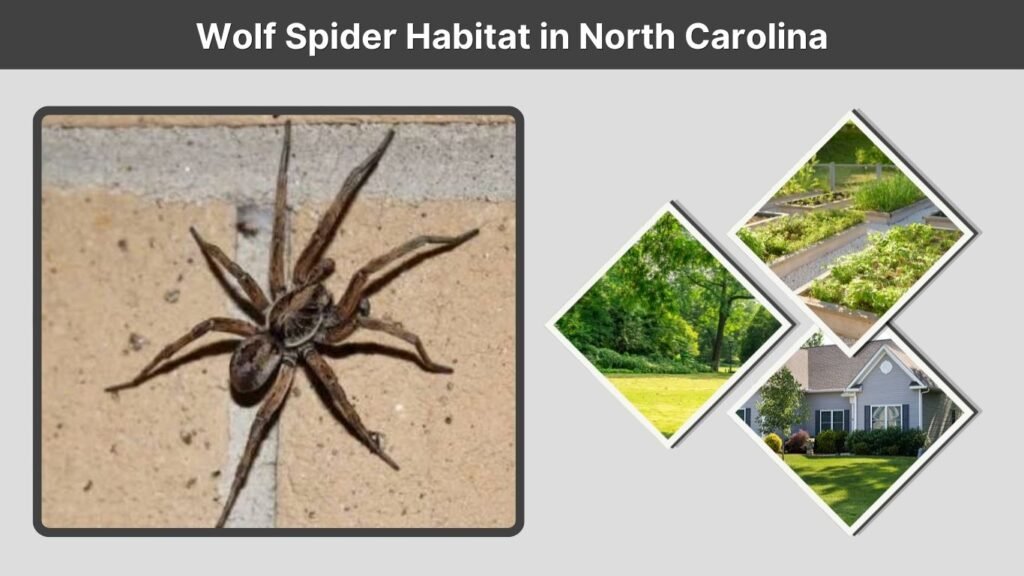
North Carolina provides excellent wolf spider habitat because the state includes forests, coastal areas, grasslands, farmland, wetlands, suburban yards, and mountainous environments.
Wolf spiders primarily live near the ground, where they hunt insects and hide beneath natural cover.
Where Wolf Spiders Live
Common habitats include:
- Gardens
- Lawns
- Forest floors
- Open fields
- Agricultural areas
- Beneath logs
- Under rocks
- Leaf litter
- Soil burrows
- Around foundations
Some species construct burrows, while others hide beneath vegetation or debris during inactive periods.
Wolf Spiders Inside North Carolina Homes
Wolf spiders occasionally enter homes, garages, basements, sheds, and crawl spaces.
They usually enter accidentally while hunting insects or searching for shelter. Wolf spiders do not normally establish large indoor colonies.
Finding a single spider inside the house usually does not mean that an infestation is present.
North Carolina Wolf Spider Behavior
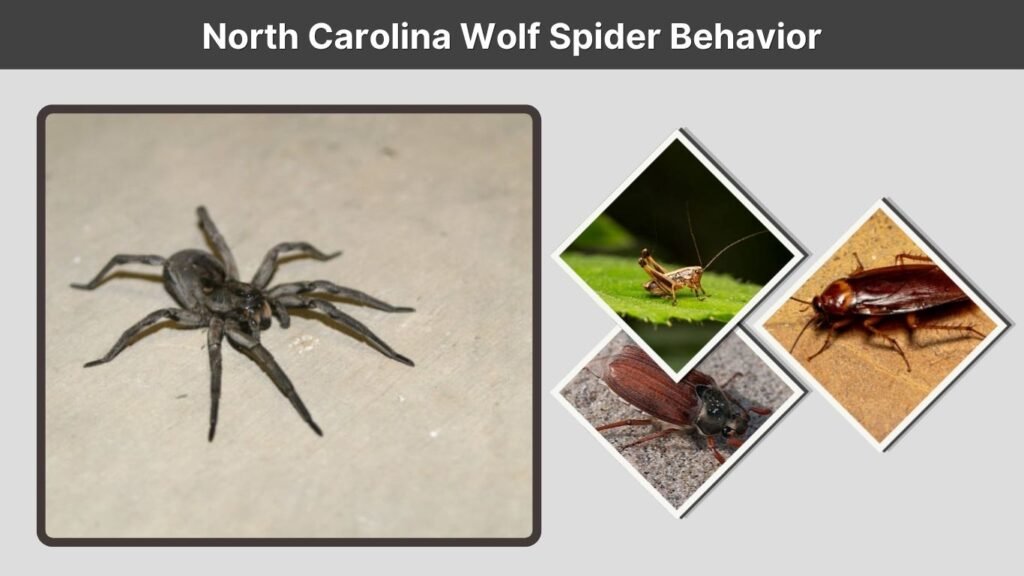
Wolf spiders are active hunters. Instead of waiting for prey to become trapped in a web, they rely on excellent eyesight, speed, and quick reactions.
Many species become especially active during the evening and nighttime hours.
How Wolf Spiders Hunt
A wolf spider may quietly wait for prey or actively move across the ground searching for insects.
Once prey is detected, the spider quickly rushes forward, grabs it, and uses its fangs to inject venom.
Wolf spiders may eat:
- Crickets
- Beetles
- Cockroaches
- Grasshoppers
- Flies
- Moths
- Smaller spiders
- Other ground-dwelling insects
Their insect-eating behavior makes them beneficial predators in gardens and natural habitats.
Do North Carolina Wolf Spiders Make Webs?
Wolf spiders produce silk, but they generally do not construct large prey-catching webs.
Instead, silk may be used for lining retreats, reinforcing burrows, producing egg sacs, and protecting young.
Their ability to hunt without a web is one of the major characteristics separating wolf spiders from many other common spider groups.
North Carolina Wolf Spider Bite
Wolf spiders can bite, but bites are relatively uncommon.
Most wolf spiders prefer running away rather than defending themselves. A bite is more likely if the spider is trapped against the skin, squeezed, handled, or accidentally disturbed.
What Does a Wolf Spider Bite Look Like?
A suspected wolf spider bite may produce:
- Redness
- Mild swelling
- Localized pain
- Itching
- Tenderness
- A small raised bump
Symptoms often remain limited to the immediate area.
However, many skin irritations and insect bites can look similar, so appearance alone cannot reliably confirm that a wolf spider caused the bite.
Is a North Carolina Wolf Spider Poisonous?
Wolf spiders are technically venomous rather than poisonous.
They inject venom into prey through their fangs. The venom helps immobilize insects and other small animals.
Wolf spider venom is not generally considered medically significant to healthy humans.
Are Wolf Spiders Dangerous?
North Carolina wolf spiders are generally not considered dangerous to people.
Most bites cause only temporary localized symptoms. Severe reactions are unusual, although individual sensitivity can vary.
Medical care should be considered if a suspected spider bite produces severe pain, rapidly increasing swelling, breathing difficulty, dizziness, spreading redness, or signs of infection.
Female Wolf Spider With an Egg Sac
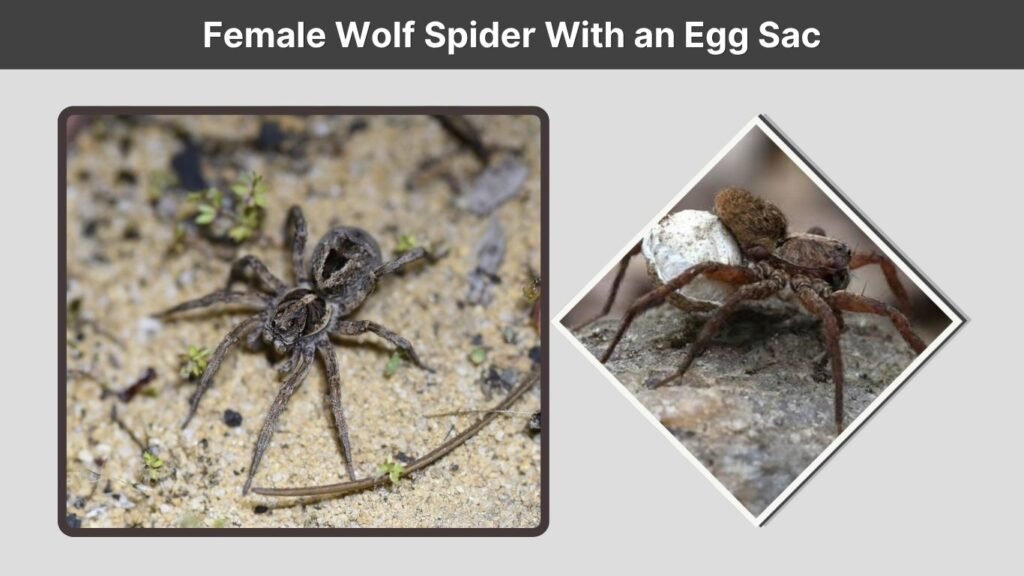
Female wolf spiders are famous for their unusual parental behavior.
Unlike many spiders that leave their eggs after creating a sac, female wolf spiders carry their egg sacs attached to the spinnerets at the rear of the abdomen.
What Happens After the Eggs Hatch?
After hatching, tiny spiderlings climb onto their mother’s abdomen.
A female may carry dozens of young spiders at once. They remain attached for a period before eventually dispersing and beginning independent lives.
Seeing a large female covered with tiny spiders can be startling, but this is normal wolf spider behavior.
Wolf Spider Egg Sac Appearance
A wolf spider egg sac usually looks like a rounded silk ball attached to the rear of the female.
The female continues walking and hunting while carrying it, carefully keeping the egg sac elevated enough to prevent unnecessary damage.
Rabid Wolf Spider in North Carolina
The rabid wolf spider is another species that may be encountered in North Carolina.
Despite its alarming name, it does not have rabies. The name refers to its rapid or energetic movement rather than disease.
Identifying a Rabid Wolf Spider
The rabid wolf spider typically has a brown or gray body with distinctive longitudinal stripes.
Its appearance can sometimes be confused with other wolf spider species, making careful identification important.
Like other wolf spiders, it primarily feeds on insects and normally avoids human contact.
How to Keep Wolf Spiders Out of Your Home
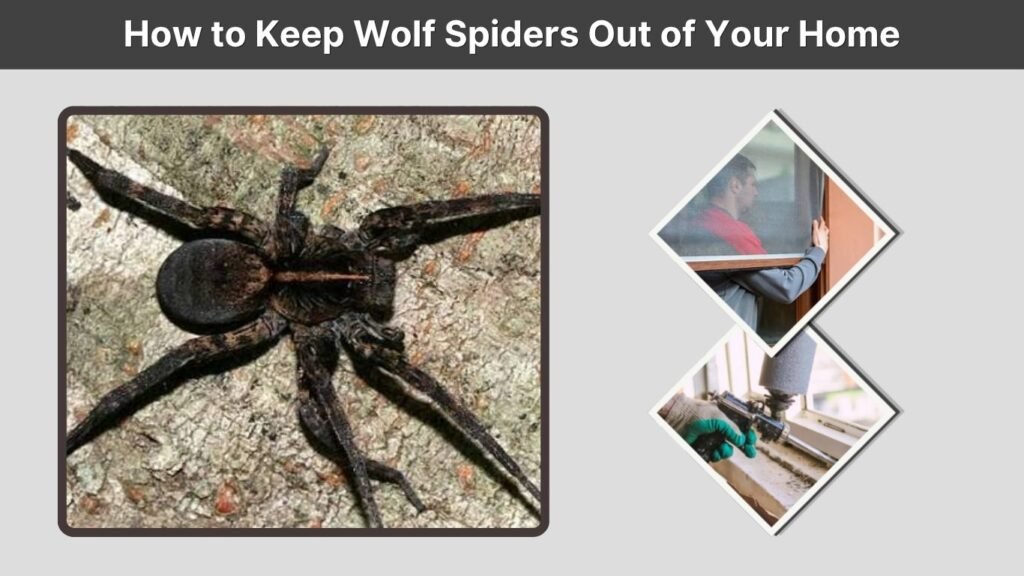
Wolf spiders outdoors are beneficial predators, so eliminating them from gardens is usually unnecessary. Indoor encounters can often be reduced by limiting entry points and reducing insect prey.
Useful prevention methods include:
- Seal gaps around doors and windows.
- Repair damaged screens.
- Install weather stripping beneath doors.
- Seal foundation cracks.
- Reduce clutter in basements and garages.
- Keep firewood away from exterior walls.
- Remove leaf piles near foundations.
- Reduce insects around outdoor lights.
Wolf spiders found indoors can often be safely captured in a container and released outside.
FAQs
1. Are wolf spiders common in North Carolina?
Yes. Numerous wolf spider species live throughout North Carolina. They can occur in forests, yards, gardens, fields, farmland, and residential areas. Their abundance reflects the variety of habitats and insect prey available across the state.
2. What is the biggest wolf spider in North Carolina?
The Carolina wolf spider is one of the largest species found in North Carolina. Mature females can exceed an inch in body length, and their long legs can make them appear several inches across when fully extended.
3. Do North Carolina wolf spiders bite?
They can bite if threatened or trapped, but bites are uncommon. Wolf spiders generally try to escape from people. When bites occur, they usually cause temporary pain, redness, swelling, or itching around the affected area.
4. Are black wolf spiders in North Carolina dangerous?
Dark-colored or nearly black wolf spiders are generally no more dangerous than other wolf spiders. Color varies considerably among species and individuals. Wolf spiders possess venom for hunting prey, but their venom is not normally considered dangerous to humans.
5. Why are wolf spiders coming into my North Carolina home?
Wolf spiders may accidentally enter homes while hunting insects or searching for shelter. They can slip through openings around doors, windows, foundations, and garages. Sealing entry points and reducing indoor insect populations usually helps decrease encounters.
