
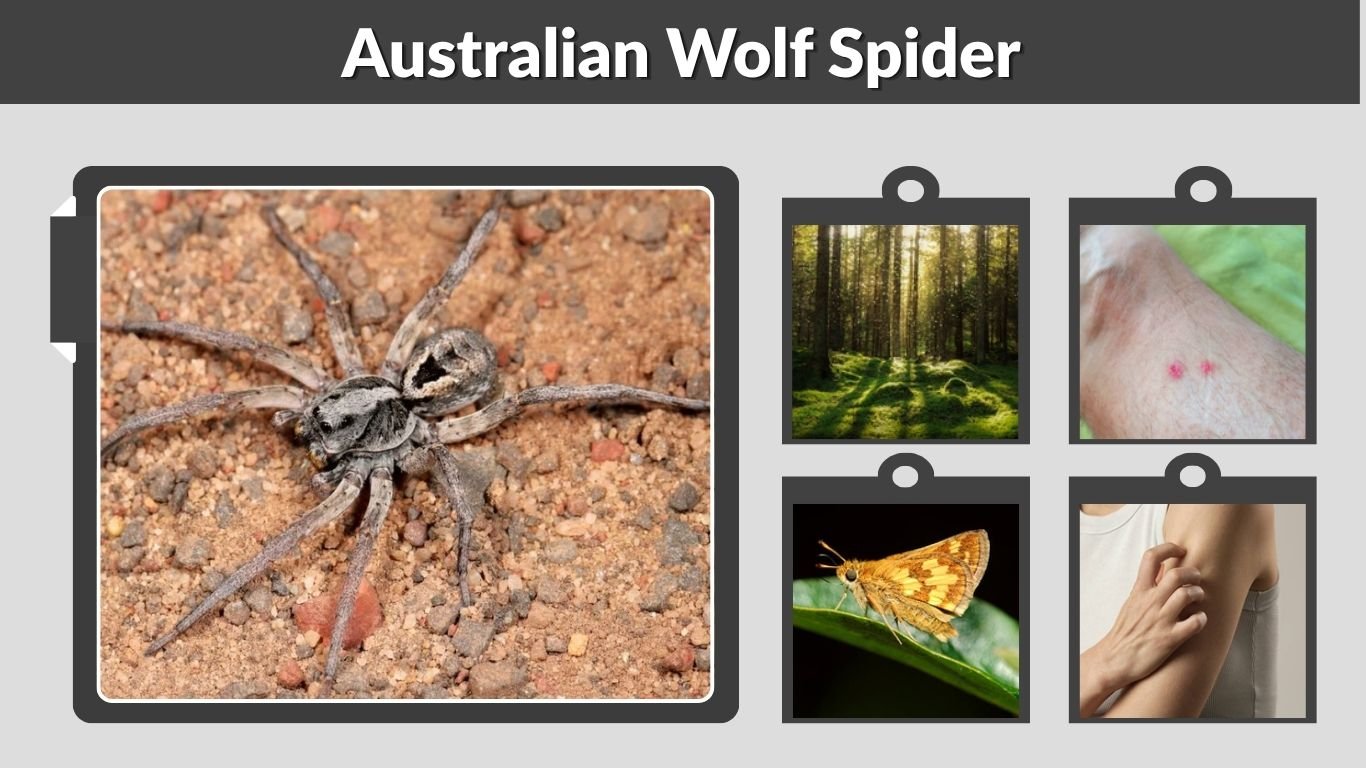
The Australian wolf spider is a fast-moving ground hunter found across much of Australia. Rather than building sticky webs to catch prey, wolf spiders actively chase insects and other small animals. They vary widely in size, color, and habitat, with some species living in gardens, grasslands, forests, deserts, and even suburban yards. Although their large bodies and quick movements can look intimidating, most Australian wolf spiders prefer to avoid people. This guide covers identification, size, bite symptoms, habitat, diet, burrows, and how to distinguish them from huntsman spiders.
What Is an Australian Wolf Spider?
Australian wolf spiders belong to the family Lycosidae, a large group of hunting spiders found throughout the world. Australia is home to many species, ranging from small ground-dwellers to large, robust spiders that can be mistaken for huntsman spiders or even small tarantulas.
Unlike web-building spiders, wolf spiders depend on speed, eyesight, and ambush tactics to capture prey.
Common Characteristics
Australian wolf spiders typically have:
- Hairy, robust bodies
- Long, powerful legs
- Brown, gray, black, or mottled coloring
- Eight eyes arranged in three rows
- Two noticeably large central eyes
- Fast running speed
- Strong ground-hunting behavior
- Little or no use of prey-catching webs
Their coloring often helps them blend into soil, rocks, leaf litter, bark, and dry vegetation.
Australian Wolf Spider Size
Australian wolf spiders vary considerably in size. Some species are relatively small, while others are large enough to attract immediate attention when found in a garden or home.
Body size and leg span depend on species, age, and sex.
How Big Do Australian Wolf Spiders Get?
Typical measurements may include:
- Body length: About 10 to 35 mm for many species
- Large individuals: Some may exceed this range
- Leg span: Can reach several centimeters in larger species
- Females: Usually larger and more heavily built
- Males: Often slimmer with proportionally longer legs
Large Australian wolf spiders can appear much bigger when their legs are fully spread.
Giant Australian Wolf Spider
The term giant Australian wolf spider is often used informally for particularly large wolf spiders rather than for one single species.
Large members of genera such as Tasmanicosa and other Australian lycosids can have impressive body size and leg spans. Even so, many “giant” spiders reported around homes are actually huntsman spiders.
What Does an Australian Wolf Spider Look Like?
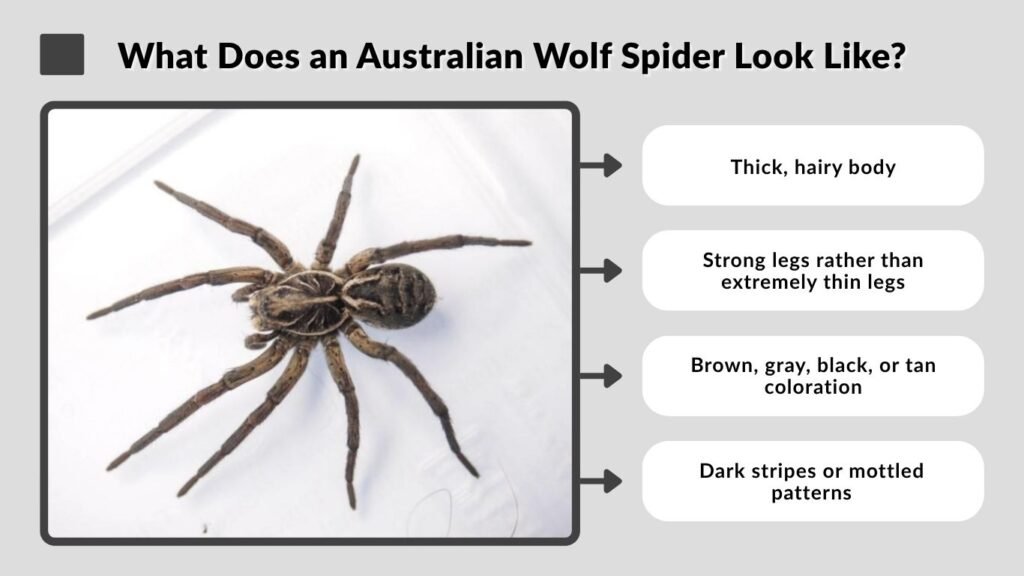
Australian wolf spiders generally have earthy colors that make them difficult to spot against soil and vegetation.
Their appearance can vary from pale gray and sandy brown to dark brown or almost black.
Identification Features
Look for these characteristics:
- Thick, hairy body
- Strong legs rather than extremely thin legs
- Brown, gray, black, or tan coloration
- Dark stripes or mottled patterns
- Large forward-facing eyes
- Compact body shape
- Fast ground movement
- Lack of a permanent catching web
At night, their eyes may reflect light from a torch, making wolf spiders easier to locate on lawns and open ground.
Black, Gray, and Brown Wolf Spiders in Australia
Some individuals appear almost completely black, while others may be gray or brown with pale stripes.
Color alone should not be used for identification because many Australian spiders share similar shades. Eye arrangement, body shape, habitat, and behavior are much more reliable clues.
Where Do Wolf Spiders Live in Australia?
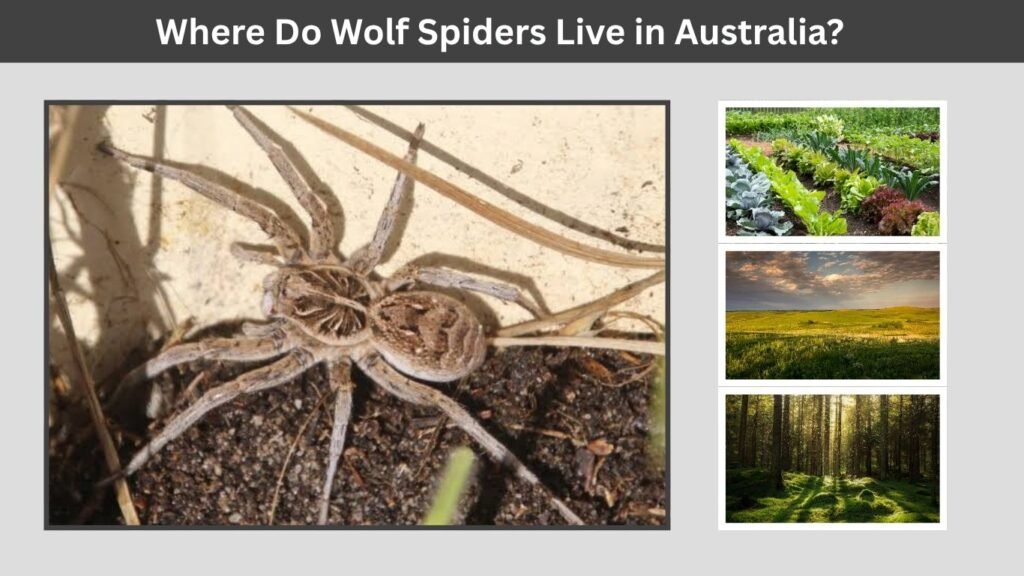
Wolf spiders are widely distributed across Australia and occupy an enormous range of environments.
They are adaptable predators and can survive wherever suitable ground cover and insect prey are available.
Common Habitats
Australian wolf spiders may live in:
- Gardens
- Lawns
- Bushland
- Grasslands
- Forest floors
- Dry inland areas
- Coastal regions
- Wetlands
- Farmland
- Beneath rocks and logs
- Around sheds and garages
They can be found in states and territories including Victoria, South Australia, Western Australia, Queensland, New South Wales, and other regions.
Wolf Spider Burrows
Many Australian wolf spiders dig burrows in soil.
These burrows provide protection from heat, predators, and changing weather conditions. Some species line the burrow entrance with silk, while others create simple underground retreats.
A wolf spider may sit near the entrance and rush out when prey comes close.
Australian Wolf Spider in the House
Finding a wolf spider inside an Australian home can be startling because they move quickly and may appear suddenly across floors.
They usually enter accidentally while searching for prey, mates, moisture, or shelter.
Why They Enter Homes
Possible reasons include:
- Following insects indoors
- Seeking shelter during weather changes
- Looking for cooler or warmer conditions
- Entering through gaps under doors
- Wandering during mating season
- Escaping flooding or heavy rain
Wolf spiders generally do not establish large indoor colonies.
If one is found inside, it can usually be captured with a container and released outdoors without direct handling.
Wolf Spider Season in Australia
Wolf spider activity often increases during warmer months because insects are more abundant and spiders are more active.
Seasonal patterns can vary across Australia because climate differs considerably between tropical, temperate, coastal, and inland regions.
When Are Wolf Spiders Most Active?
They may become more noticeable during:
- Spring
- Summer
- Warm autumn periods
- Humid nights
- After rainfall
- Mating periods
Heavy rain can flood burrows and force spiders onto roads, patios, walls, and inside buildings.
Australian Wolf Spider Bite
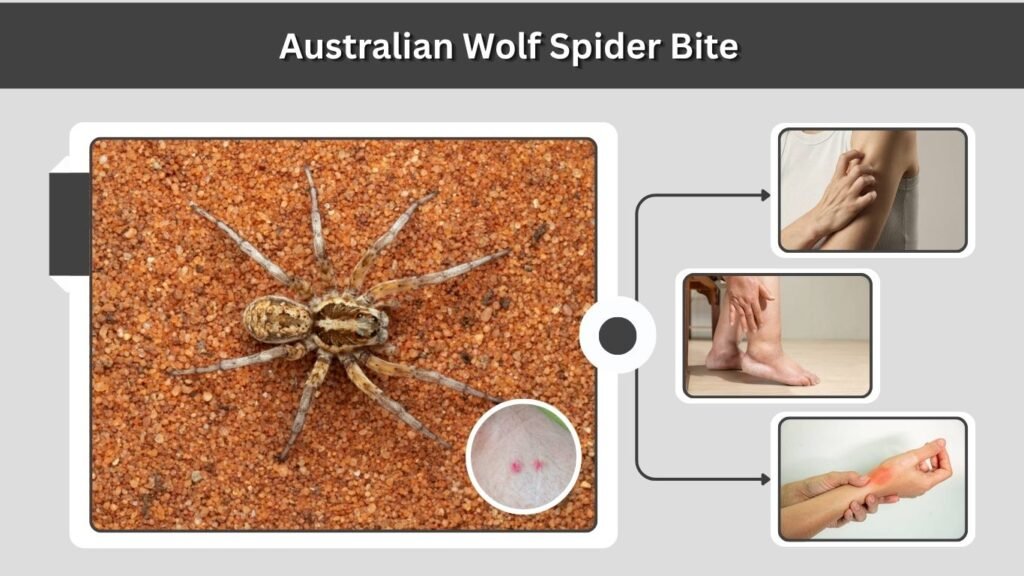
Australian wolf spiders can bite, but they generally do so only when trapped, handled, or pressed against the skin.
Their first response to danger is usually to run away.
Australian Wolf Spider Bite Symptoms
Possible symptoms can include:
- Immediate pain
- Redness
- Mild swelling
- Itching
- Local tenderness
- Burning or stinging
- Temporary discomfort
Symptoms are usually limited to the bite area.
Are Australian Wolf Spiders Dangerous?
Australian wolf spiders are venomous, but they are not generally considered among Australia’s most medically dangerous spiders.
Their venom is mainly used to subdue insects and other prey.
Most bites cause local discomfort rather than severe systemic illness. However, any spider bite should be monitored carefully, especially when identification is uncertain.
Seek medical attention if severe pain, breathing difficulty, widespread swelling, vomiting, dizziness, or other concerning symptoms occur.
Are Australian Wolf Spiders Poisonous?
The correct term is venomous, not poisonous.
Wolf spiders inject venom through their fangs when capturing prey or defending themselves.
A poisonous animal causes harm when eaten or touched, while a venomous animal delivers toxins through a bite or sting.
Australian wolf spider venom is primarily designed for small prey rather than humans.
Australian Wolf Spider vs. Huntsman
Wolf spiders and huntsman spiders are commonly confused because both can be large, brown, hairy, and fast.
However, their body shapes and movement are noticeably different.
Wolf Spider vs. Huntsman Australia
| Feature | Australian Wolf Spider | Huntsman Spider |
| Body | Robust and compact | Flatter and wider |
| Legs | Strong, forward-oriented | Long, sideways-oriented |
| Eyes | Two large central eyes | Less visibly prominent |
| Habitat | Ground and burrows | Walls, bark, trees, homes |
| Hunting | Runs over ground | Runs and climbs |
| Web | No prey-catching web | No prey-catching web |
| Appearance | Stockier | More crab-like |
Huntsman spiders typically hold their legs outward to the sides, giving them a flattened appearance.
Wolf spiders look more compact and are more strongly associated with ground-level hunting.
What Do Australian Wolf Spiders Eat?
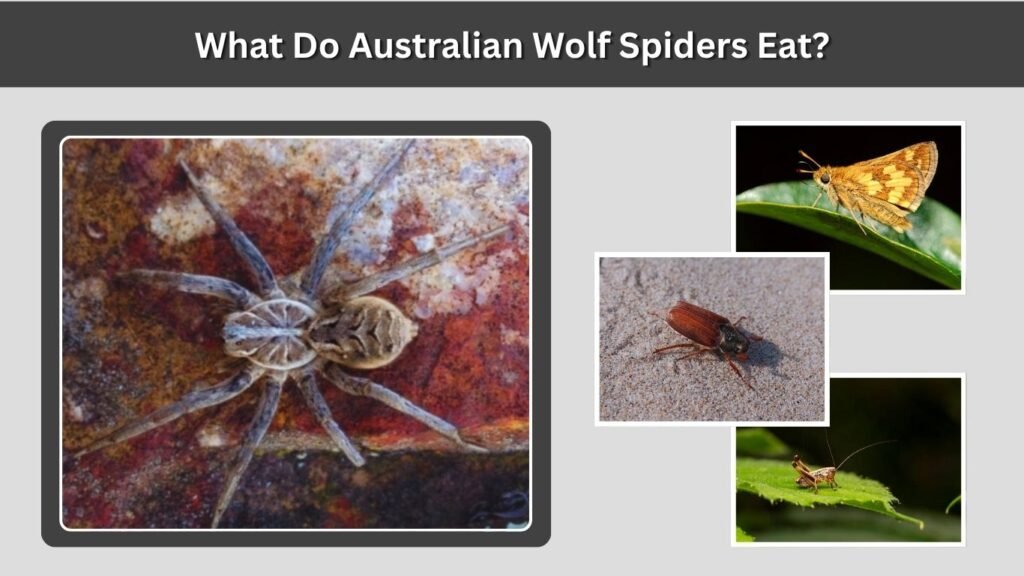
Australian wolf spiders are carnivorous predators that feed mainly on insects and other arthropods.
Their diet depends on body size, habitat, and available prey.
Common Foods
They may eat:
- Crickets
- Cockroaches
- Beetles
- Moths
- Flies
- Grasshoppers
- Caterpillars
- Ants
- Other spiders
- Small ground-dwelling arthropods
Large wolf spiders can capture bigger insects, while spiderlings feed on very small prey.
By hunting insects, wolf spiders can contribute to natural pest control in gardens and around homes.
Australian Wolf Spider Babies
Female wolf spiders are famous for their unusual parental care.
After producing an egg sac, the female attaches it to her spinnerets and carries it with her while continuing to move and hunt.
Baby-Carrying Behavior
After the eggs hatch:
- Spiderlings climb onto the mother’s abdomen.
- Many young people may ride together.
- The female continues moving while carrying them.
- Spiderlings eventually disperse.
- Young spiders begin hunting tiny prey independently.
This behavior is one of the easiest ways to recognize a female wolf spider.
Australian Wolf Spider vs. Funnel-Web Spider
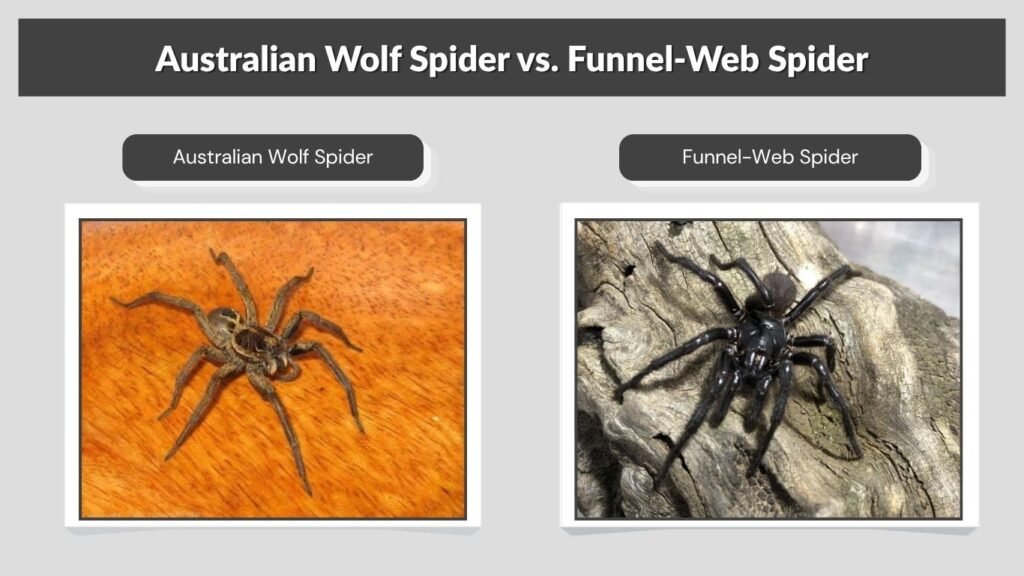
Wolf spiders can sometimes be confused with darker Australian funnel-web spiders, but the two groups differ considerably.
Funnel-web spiders are generally more heavily built, often have a shiny appearance, and live around silk-lined burrows or retreats.
Wolf spiders tend to look hairier and more patterned and have two particularly noticeable large eyes.
Because some medically significant Australian spiders can be difficult for non-experts to identify, avoid handling an unknown spider directly.
Are Australian Wolf Spiders Good to Have Around?
Wolf spiders can be beneficial predators in gardens and outdoor areas.
They consume many insects that people consider pests and do not damage plants, timber, furniture, or stored food.
A wolf spider living outdoors normally does not need to be removed.
If one wanders inside, safely relocating it outdoors is usually sufficient.
FAQs
1. How big is an Australian wolf spider?
Size depends on the species. Many have bodies around 10 to 35 mm long, although some large individuals can be bigger. Their extended legs can make them appear significantly larger than their actual body length.
2. Are Australian wolf spiders dangerous?
They are venomous but generally not considered highly dangerous to humans. Bites usually cause localized pain, redness, or swelling. Severe or unusual symptoms should receive medical attention.
3. Do Australian wolf spiders live in houses?
They may enter houses, garages, and sheds, but they usually prefer outdoor habitats. Indoor individuals are often wandering in search of prey, shelter, or mates rather than establishing permanent populations.
4. What is the difference between a huntsman and a wolf spider?
Huntsman spiders have flatter bodies and long legs extending sideways. Wolf spiders are stockier, generally stay closer to the ground, and have two large prominent central eyes that are useful for identification.
5. What do Australian wolf spiders eat?
They mainly eat insects and other small arthropods, including crickets, beetles, cockroaches, flies, moths, grasshoppers, ants, caterpillars, and other spiders.
