
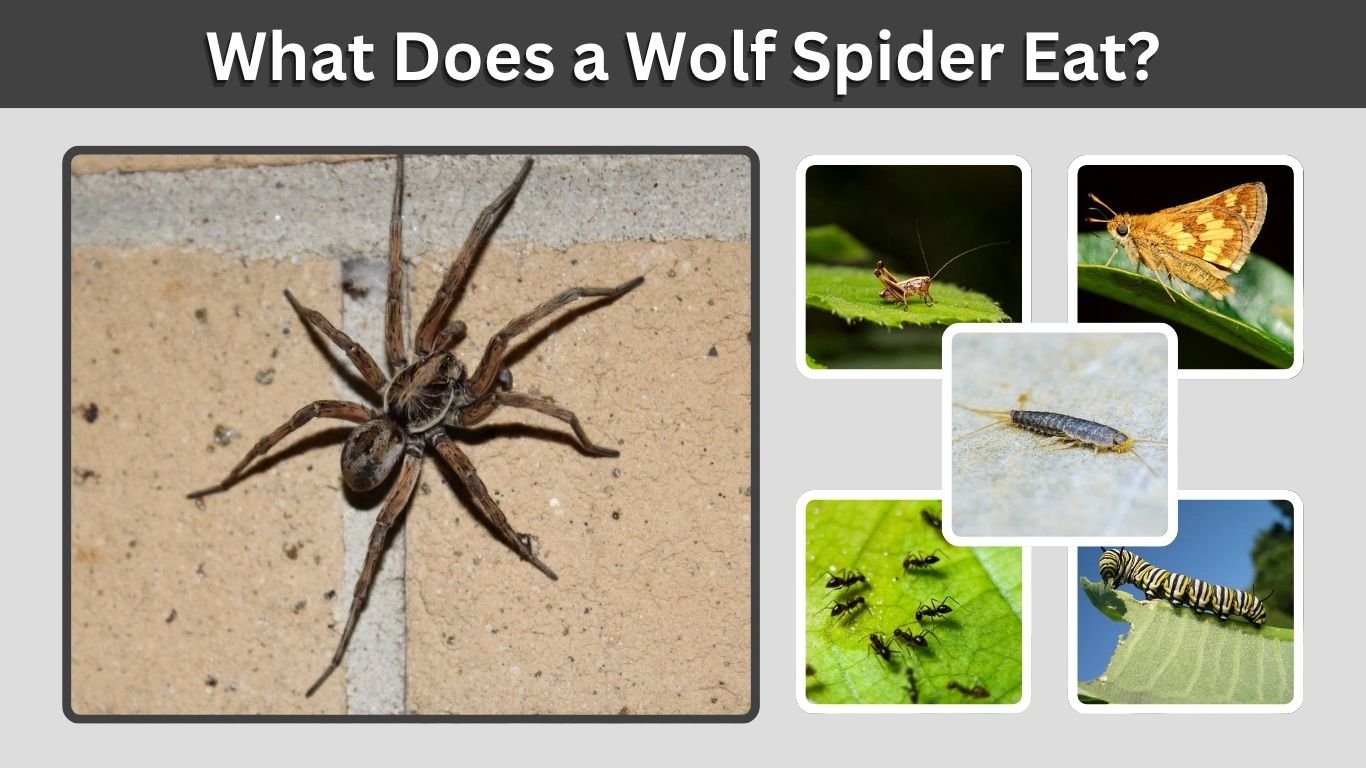
What does a wolf spider eat? Wolf spiders are active predators that mainly feed on insects, spiders, and other small invertebrates. Unlike web-building spiders, they usually chase, ambush, or pounce on prey using their excellent eyesight and fast legs. Their exact diet depends on the spider’s size, species, habitat, and available prey. Large wolf spiders can tackle surprisingly substantial insects, while juveniles concentrate on tiny prey. Below are 10 common foods wolf spiders eat and how these skilled hunters capture their meals.
What Do Wolf Spiders Eat?
Wolf spiders are primarily carnivorous. They are opportunistic hunters, meaning they generally eat whatever appropriately sized prey is available rather than depending on one particular insect.
They commonly hunt at night, moving across soil, grass, leaf litter, gardens, basements, and other areas where insects are abundant.
10 Common Foods Wolf Spiders Eat
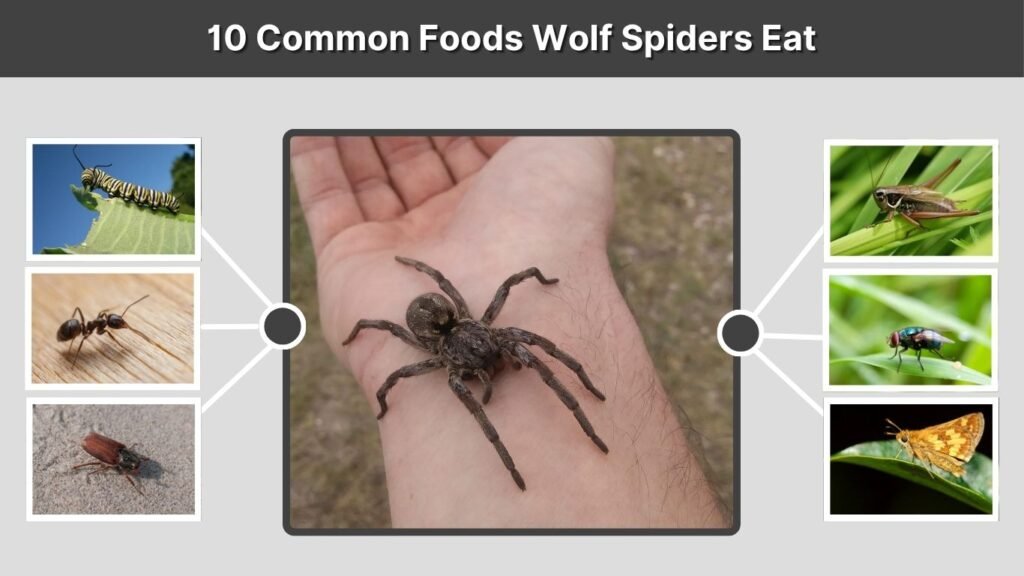
Wolf spiders have a varied carnivorous diet made up mainly of insects and other small arthropods. Because they are opportunistic hunters, their meals depend on what is available in their habitat and what they can successfully overpower. Large adults may capture relatively substantial insects, while young wolf spiders focus on much smaller prey. Below are 10 of the most common foods found in a typical wolf spider diet.
Common prey includes:
- Crickets
- Cockroaches
- Beetles
- Grasshoppers
- Flies
- Moths
- Caterpillars
- Ants
- Other spiders
- Small arthropods
Large wolf spiders can overpower bigger prey than juveniles and smaller species. Here are 10 of their most common foods.
1. Crickets
Crickets are one of the most suitable prey items for large wolf spiders. They live close to the ground and are especially active during periods when many wolf spiders are hunting.
How Wolf Spiders Catch Crickets
Wolf spiders can detect vibrations produced by a cricket moving nearby. Instead of waiting inside a sticky web, the spider approaches the cricket and suddenly lunges.
After grabbing its prey, the wolf spider bites it and injects venom that helps immobilize the cricket. Digestive fluids then break down the internal tissues so the spider can consume them.
Young wolf spiders generally attack very small crickets, while large adults can tackle larger individuals.
2. Cockroaches
Wolf spiders may prey on cockroaches when the roach is small enough to overpower.
This makes wolf spiders useful predators around gardens, garages, sheds, basements, and other places where roaches may occur.
Do Wolf Spiders Eat Roaches?
Yes. Wolf spiders can eat cockroach nymphs and smaller adult roaches. However, a large cockroach may be too powerful for a small wolf spider.
Because wolf spiders hunt primarily from the ground, they frequently encounter the same types of sheltered environments used by cockroaches.
3. Beetles
Beetles make up another important part of the wolf spider diet. Ground-dwelling beetles are especially likely to encounter hunting wolf spiders.
What Types of Beetles Do They Eat?
Wolf spiders may attack:
- Small ground beetles
- Young beetles
- Soft-bodied beetles
- Small garden beetles
- Beetle larvae
Hard-bodied beetles can be more difficult to overpower because of their tough outer shells. Wolf spiders therefore tend to target beetles that are manageable for their particular body size.
4. Grasshoppers
Large wolf spiders can prey on small grasshoppers and grasshopper nymphs.
Grasshoppers may seem fast, but wolf spiders are also remarkably quick over short distances.
Large Wolf Spiders and Grasshoppers
A large spider can ambush a juvenile grasshopper from vegetation, soil, or other ground cover. It quickly grabs the insect with its legs before delivering a bite.
Full-grown grasshoppers may be too large for many wolf spiders, so younger individuals are generally easier prey.
5. Flies
Flies are another food source for wolf spiders, especially when they land or walk near the ground.
Wolf spiders do not usually capture flying insects in webs, so they depend on opportunities to attack flies that come within striking distance.
Do Wolf Spiders Eat House Flies?
Yes, wolf spiders can eat house flies and various other small flies.
A fly resting on a low surface may be quickly attacked. The spider uses its eyesight and rapid movements to close the distance before the fly escapes.
Young wolf spiders may also feed on tiny flies and other small winged insects.
6. Moths
Moths frequently become prey when they rest close to the ground or on vegetation.
Many wolf spiders are active at night, which overlaps with the activity period of numerous moth species.
How Wolf Spiders Hunt Moths
Wolf spiders may encounter moths:
- Resting on plants
- Moving through grass
- Near outdoor lights
- On walls close to the ground
- Around leaf litter
Smaller moths can provide a substantial meal because of their relatively soft bodies.
7. Caterpillars
Caterpillars are slow-moving compared with many other insects, making some species relatively easy targets.
Wolf spiders living in gardens, fields, and woodland environments may encounter caterpillars crawling across soil or low vegetation.
Do Wolf Spiders Eat Caterpillars?
Yes. They may eat small, soft-bodied caterpillars when they can safely overpower them.
However, not every caterpillar is attractive prey. Hairy, spiny, chemically protected, or very large caterpillars may be avoided.
By consuming certain plant-feeding insects, wolf spiders can contribute to natural pest control in gardens.
8. Ants
Wolf spiders can eat ants, although ants are not necessarily the preferred food of every species.
Small solitary ants may be captured when they cross a spider’s hunting territory.
Are Ants Safe Prey?
Ants can defend themselves with strong jaws, stings, or chemical defenses, depending on the species.
A wolf spider must therefore choose its target carefully. Hunting an isolated small ant is much safer than approaching a large group.
Juvenile wolf spiders may feed on extremely small insects, including tiny ants.
9. Other Spiders
Wolf spiders are opportunistic enough to prey on other spiders.
Spider-on-spider predation is relatively common throughout the spider world, particularly when there is a considerable size difference between predator and prey.
Do Wolf Spiders Eat Other Wolf Spiders?
They can. Cannibalism may occur when one wolf spider encounters a smaller individual.
Wolf spiders may also potentially attack:
- Small house spiders
- Young wandering spiders
- Small web-building spiders
- Juvenile wolf spiders
However, attacking another predator carries more risk than catching a defenseless insect.
10. Small Arthropods
The wolf spider diet extends beyond familiar insects. Depending on species and habitat, these predators can capture many small arthropods that live close to the ground.
Other Small Prey
Potential foods include:
- Small earwigs
- Tiny centipedes
- Springtails
- Small insect larvae
- Other ground-dwelling arthropods
Young wolf spiders require particularly small prey because they cannot overpower the insects that adult spiders catch.
How Do Wolf Spiders Hunt Their Food?
Wolf spiders are different from classic web-building spiders. They usually do not construct sticky webs for trapping prey.
Instead, their hunting strategy resembles that of an active ground predator.
Hunting Techniques
Wolf spiders use several methods:
- Ambushing: Remaining motionless until prey approaches
- Chasing: Running after prey over short distances
- Pouncing: Rapidly jumping or lunging onto nearby insects
- Vibration detection: Detecting movements through the ground
- Vision: Using their large eyes to locate and track prey
Once prey is captured, the spider uses its fangs to deliver venom. The venom helps subdue the animal while digestive enzymes begin breaking down its tissues.
The spider then consumes the liquefied material.
What Do Wolf Spiders Eat in the House?
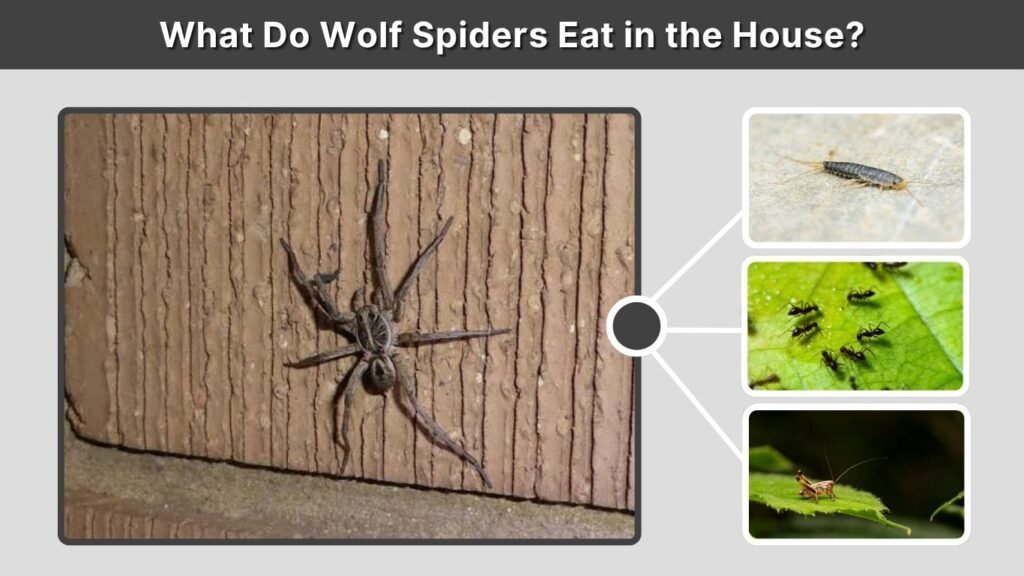
A wolf spider entering a home can survive by hunting insects and other spiders.
Homes containing plentiful small pests may unintentionally provide wolf spiders with food.
Indoor Foods
Indoors, wolf spiders may eat:
- Cockroach nymphs
- House flies
- Crickets
- Small moths
- Ants
- Silverfish
- Small spiders
- Other crawling insects
If you repeatedly see wolf spiders indoors, an abundant insect population may be one possible reason they remain nearby.
Wolf spiders themselves do not typically establish large social colonies inside homes.
What Do Baby Wolf Spiders Eat?
Baby wolf spiders, called spiderlings, require prey much smaller than what adult spiders can tackle.
Soon after emerging, spiderlings famously ride on their mother’s abdomen for a period before eventually dispersing.
Baby Wolf Spider Food
Young spiders may consume:
- Fruit-fly-sized insects
- Springtails
- Tiny insect larvae
- Small flies
- Small ants
- Other very small arthropods
As they molt and grow, they gradually become capable of capturing larger insects.
How Often Do Wolf Spiders Eat?
Wolf spiders do not necessarily need to capture food every day. Feeding frequency depends on temperature, spider size, age, reproductive condition, prey availability, and the size of the previous meal.
A successful large meal may sustain a wolf spider for some time.
Wild spiders naturally experience periods when food is abundant and other periods when prey is difficult to find.
Do Wolf Spiders Eat Mosquitoes?
Wolf spiders can potentially eat mosquitoes, particularly mosquitoes that land close to the ground or on nearby surfaces.
However, they are not specialized mosquito hunters. Web-building spiders often have more opportunities to capture flying mosquitoes because their webs intercept airborne insects.
Wolf spiders primarily concentrate on prey they can chase or ambush.
Do Wolf Spiders Eat Black Widows?
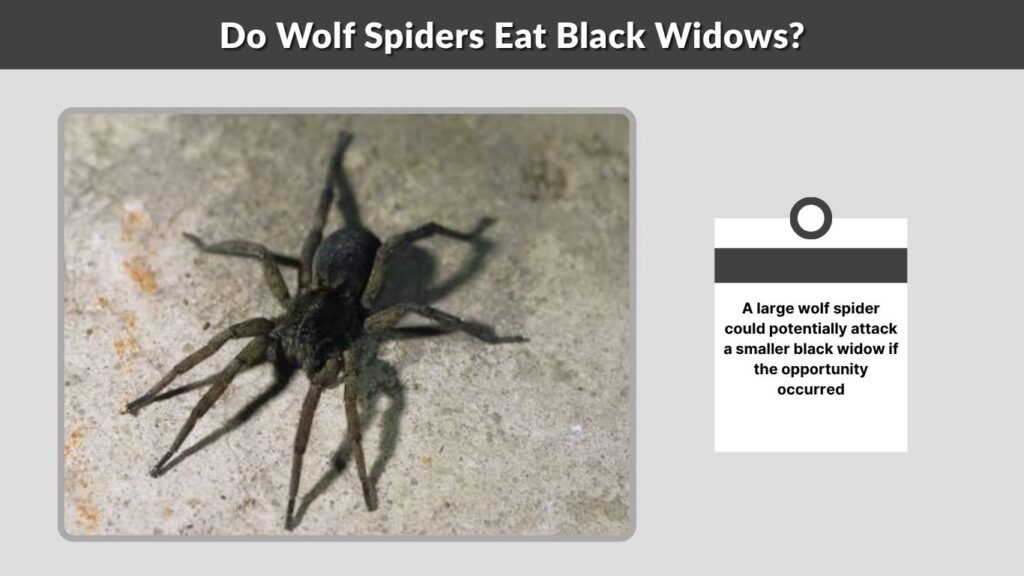
A large wolf spider could potentially attack a smaller black widow if the opportunity occurred, but black widows are not a normal or dependable part of the wolf spider diet.
Both are predators capable of defending themselves, making such an encounter risky.
Wolf spiders primarily eat common insects rather than actively seeking dangerous spider species.
Are Wolf Spiders Good for Pest Control?
Wolf spiders can be beneficial predators in gardens, lawns, fields, and other outdoor environments.
Because their diet includes many insects, they naturally help keep some arthropod populations under control.
They do not damage plants, eat wood, or feed on household materials. Their interest is overwhelmingly focused on living prey.
For this reason, a wolf spider found outdoors can generally be left alone to continue hunting.
FAQs
1. What is a wolf spider’s favorite food?
Wolf spiders do not have one universal favorite food. They primarily eat insects and other arthropods that are small enough to overpower, including crickets, beetles, flies, cockroaches, grasshoppers, moths, and other spiders.
2. Do wolf spiders eat cockroaches?
Yes. Large wolf spiders can capture small cockroaches and cockroach nymphs. The spider chases or ambushes the roach, grabs it with its legs, and uses venom to immobilize it before feeding.
3. Do wolf spiders eat other spiders?
Yes. Wolf spiders can eat smaller spiders and may occasionally cannibalize other wolf spiders. However, other spiders can fight back, so insects such as crickets, flies, beetles, and roaches are generally less risky prey.
4. What do wolf spiders eat indoors?
Indoor wolf spiders may hunt house flies, crickets, ants, cockroach nymphs, moths, silverfish, and small spiders. Regularly finding wolf spiders indoors may indicate that insects or other suitable prey are available nearby.
5. Can wolf spiders eat mice?
Normal wolf spiders primarily eat insects and other small arthropods and should not be considered predators of mice. Their typical prey is substantially smaller and easier to subdue, such as crickets, beetles, roaches, flies, and other spiders.
