
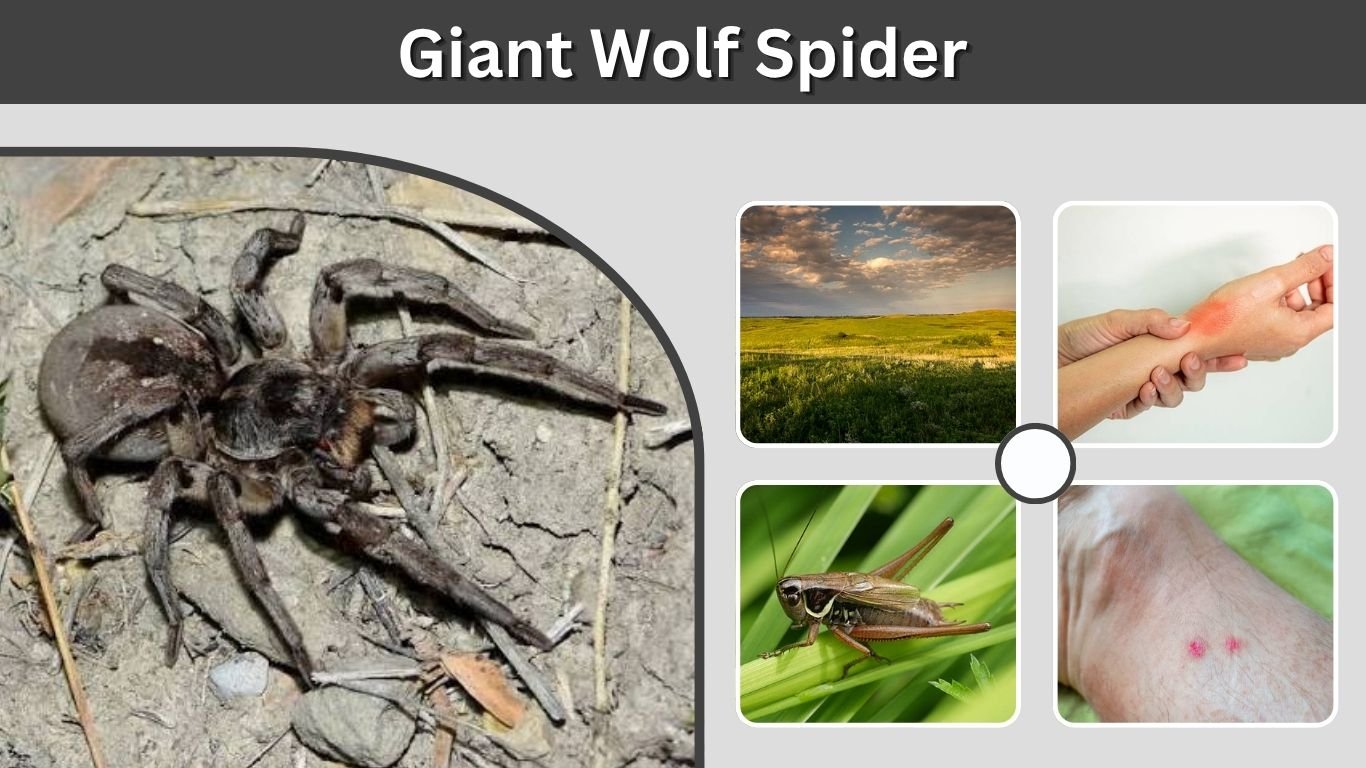
The giant wolf spider is an impressive ground-hunting spider known for its large body, long legs, excellent eyesight, and remarkable speed. Rather than building webs to trap insects, wolf spiders actively chase their prey across the ground. Several large species may be described as giant wolf spiders, including the Carolina wolf spider and large members of the genus Hogna. Despite their intimidating size and appearance, these spiders generally avoid humans. Here is how to identify giant wolf spiders, understand their size, recognize their habitat, and distinguish them from similar large spiders.
What Is a Giant Wolf Spider?
“Giant wolf spider” is a general description applied to unusually large members of the wolf spider family, Lycosidae, rather than one universal species. Wolf spiders occur in many habitats worldwide, and their size varies considerably between species.
Large species are especially noticeable because their sturdy bodies and long legs can make them appear much bigger when running across open ground.
Common Characteristics
A giant wolf spider typically has:
- A robust, hairy body
- Eight long, powerful legs
- Brown, gray, black, or mottled coloration
- Prominent forward-facing eyes
- Fast running ability
- Strong jaws for capturing insects
- No permanent prey-catching web
- Camouflage patterns across the abdomen and legs
One of the easiest ways to recognize a wolf spider is its eye arrangement. Wolf spiders possess eight eyes, including two especially large eyes positioned prominently on the front of the head.
Why Are They Called Wolf Spiders?
Wolf spiders earned their common name because of their active hunting behavior. Instead of waiting for insects to become trapped in a web, they pursue prey on foot.
They use excellent eyesight, vibration detection, and quick bursts of speed to capture insects and other small animals.
How Big Is a Giant Wolf Spider?
Size is one of the main reasons wolf spiders attract attention. While many species are relatively small, the largest wolf spiders can have substantial bodies and impressive leg spans.
Measurements vary by species, age, sex, and location.
Giant Wolf Spider Size
Large wolf spiders may have:
- Body length: Approximately 1 to 1.5 inches or more in some species
- Leg span: Commonly around 2 to 4 inches in the largest individuals
- Female size: Generally larger and more heavily built
- Male size: Often slimmer with proportionally longer legs
- Weight: Highly variable depending on species and maturity
A spider’s leg span can make it appear significantly larger than its actual body.
Giant Carolina Wolf Spider
The Carolina wolf spider (Hogna carolinensis) is one of the largest wolf spiders found in North America. Large adult females have thick bodies and powerful legs, creating an imposing appearance.
Their coloration typically combines brown, gray, tan, and darker markings that help them blend into soil, rocks, and leaf litter.
Despite their size, Carolina wolf spiders generally prefer escaping rather than confronting humans.
What Does a Giant Wolf Spider Look Like?
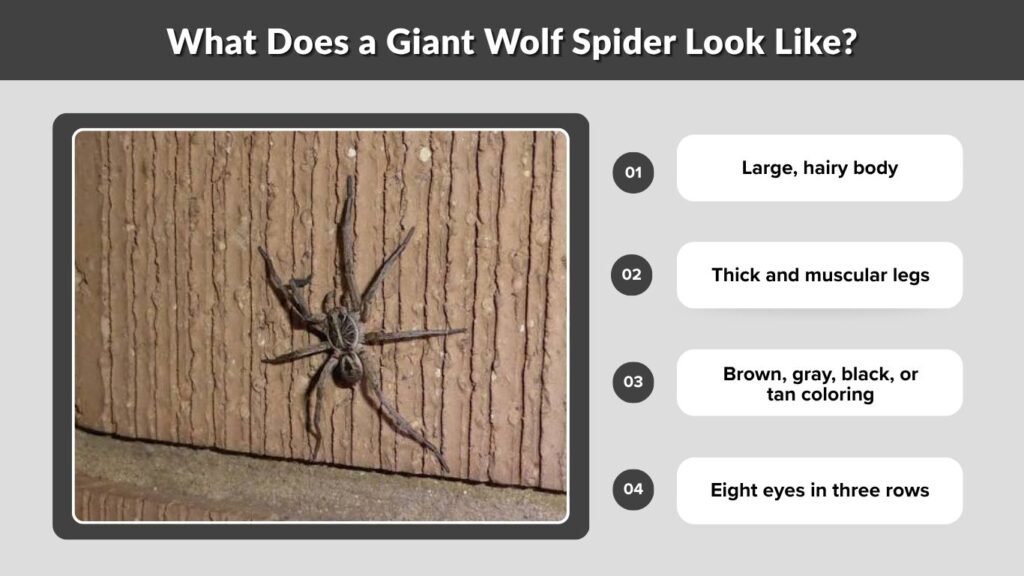
Large wolf spiders can vary considerably in appearance. Most have natural earth-tone colors that provide camouflage while hunting on the ground.
Some individuals may look nearly black, whereas others appear gray, brown, tan, or patterned.
Giant Wolf Spider Identification
Important identification features include:
- Large, hairy body
- Thick and muscular legs
- Brown, gray, black, or tan coloring
- Dark or pale stripes on the cephalothorax
- Patterned abdomen
- Eight eyes in three rows
- Two especially large middle eyes
- Fast ground-running behavior
- Lack of a prey-catching web
Shining a flashlight toward a wolf spider at night may sometimes reveal noticeable eye shine because of reflective structures in its eyes.
Giant Black, Gray, and White Wolf Spiders
Color alone is unreliable for identifying wolf spiders.
A giant black wolf spider may actually be extremely dark brown or charcoal. Gray individuals may have alternating dark and pale markings, while spiders described as giant white wolf spiders usually have pale gray, cream, or sandy coloration rather than being completely white.
Natural coloration often reflects the habitat where the spider hunts.
Where Do Giant Wolf Spiders Live?
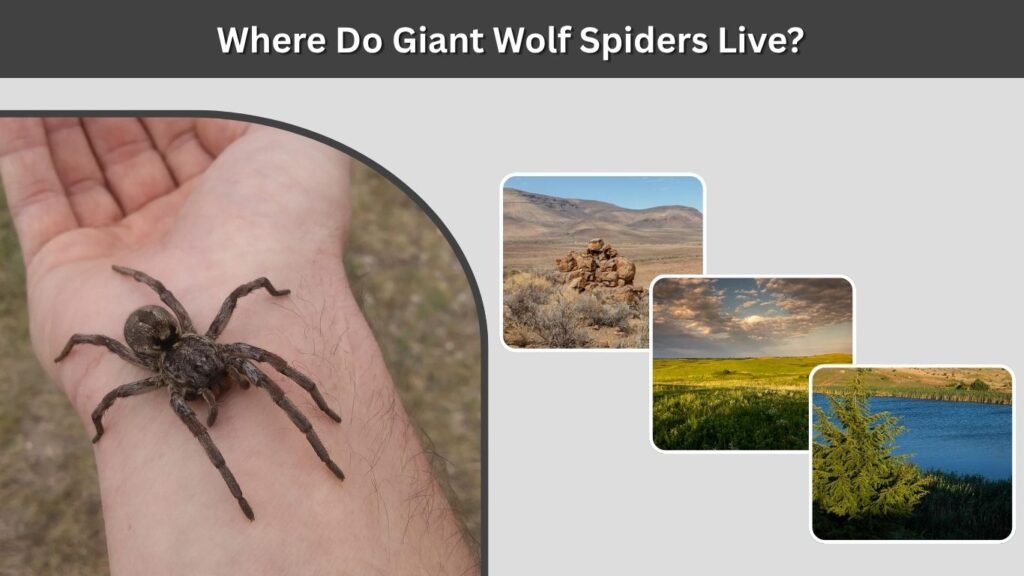
Wolf spiders occupy an enormous variety of environments. Different species may thrive in forests, wetlands, grasslands, deserts, agricultural areas, suburban yards, and gardens.
Large species are frequently found at ground level, where they can hide during the daytime and hunt after sunset.
Common Habitats
Giant wolf spiders may be found:
- Beneath rocks
- Under logs
- In leaf litter
- Around garden beds
- In grasslands
- Across woodland floors
- Near wetlands
- Around building foundations
- Inside underground burrows
- Beneath outdoor furniture
- Around garages and sheds
Some large wolf spiders dig burrows and remain near them for extended periods. Others wander more widely when searching for food or mates.
Wetland Giant Wolf Spider
Some large wolf spiders are strongly associated with moist habitats. These spiders may occur around marshes, wet grasslands, pond margins, and other damp environments where insect prey is plentiful.
A wetland giant wolf spider is still primarily a terrestrial hunter rather than a web-building spider.
Giant Wolf Spiders in the United States
Large wolf spiders can be encountered across numerous states, including:
- Texas
- Florida
- Colorado
- Missouri
- Michigan
- Tennessee
- Utah
- North Carolina
Species differ by region, so a large wolf spider seen in Texas may not be the same species encountered in Michigan or North Carolina.
Giant Wolf Spider Bite

The large fangs of a giant wolf spider may look alarming, but bites are relatively uncommon. Wolf spiders typically attempt to escape when people approach.
A bite is most likely when a spider is trapped against skin, accidentally handled, stepped on, or otherwise unable to retreat.
Giant Wolf Spider Bite Symptoms
Possible symptoms can include:
- Immediate mild to moderate pain
- Redness
- Local swelling
- Tenderness
- Itching
- Temporary burning
- Minor irritation around the bite
Symptoms are generally localized and improve with basic care.
Washing the area with soap and water and using a wrapped cold pack may help reduce discomfort and swelling.
Severe symptoms, difficulty breathing, rapidly increasing swelling, widespread rash, or other signs of a serious reaction require prompt medical attention.
Is a Giant Wolf Spider Poisonous?
Wolf spiders are venomous rather than poisonous. Venom is delivered through their fangs to immobilize insects and other prey.
Their venom is not generally considered medically significant to healthy humans. However, any spider bite can cause individual reactions, and bacterial infection is possible if damaged skin is not kept clean.
Giant House Spider vs. Wolf Spider
Giant house spiders are frequently mistaken for wolf spiders because both can be large, brown, fast-moving, and occasionally found indoors.
However, they belong to different spider families and have different behaviors.
Giant House Spider vs. Giant Wolf Spider
| Feature | Giant Wolf Spider | Giant House Spider |
| Body | Thick and hairy | Usually slimmer |
| Legs | Strong and robust | Long and relatively slender |
| Eyes | Two prominent large eyes | Eyes less visibly prominent |
| Hunting | Actively hunts | Often associated with web |
| Web use | Does not trap prey in a web | Uses funnel-like web |
| Habitat | Ground and burrows | Buildings and sheltered areas |
| Movement | Very fast | Also extremely fast |
Finding a large brown spider near a funnel-like web makes a giant house spider more likely.
Wolf spiders are more commonly seen wandering freely across floors or outdoor surfaces.
Giant Wolf Spider vs. Huntsman Spider

Huntsman spiders are another group of very large spiders commonly confused with wolf spiders.
Some huntsman species have considerably larger leg spans than even the biggest wolf spiders.
How to Tell Them Apart
Huntsman spiders typically have:
- Very wide leg spans
- Flatter bodies
- Legs extending sideways in a crab-like position
- Excellent climbing ability
- Long, relatively flattened legs
Wolf spiders generally have:
- More compact bodies
- Thicker legs
- Less sideways-oriented legs
- Prominent large eyes
- Strong ground-hunting behavior
Huntsman spiders frequently climb walls and tree trunks, whereas wolf spiders are predominantly ground hunters.
Giant Wolf Spider vs. Tarantula
A particularly large wolf spider can occasionally be mistaken for a small tarantula.
Tarantulas generally have much thicker bodies, denser hair, and heavier legs. Wolf spiders have comparatively streamlined bodies designed for rapid running.
Tarantulas also belong to an entirely different spider group.
Main Differences
- Tarantulas generally have heavier, stockier bodies.
- Wolf spiders are faster and more athletic runners.
- Tarantulas usually appear substantially hairier.
- Wolf spiders have two conspicuous large eyes.
- Tarantula legs generally look thicker.
- Wolf spiders frequently display striped or mottled patterns.
Large wolf spiders can look substantial, but even the biggest species generally have a lighter overall build than large tarantulas.
What Do Giant Wolf Spiders Eat?
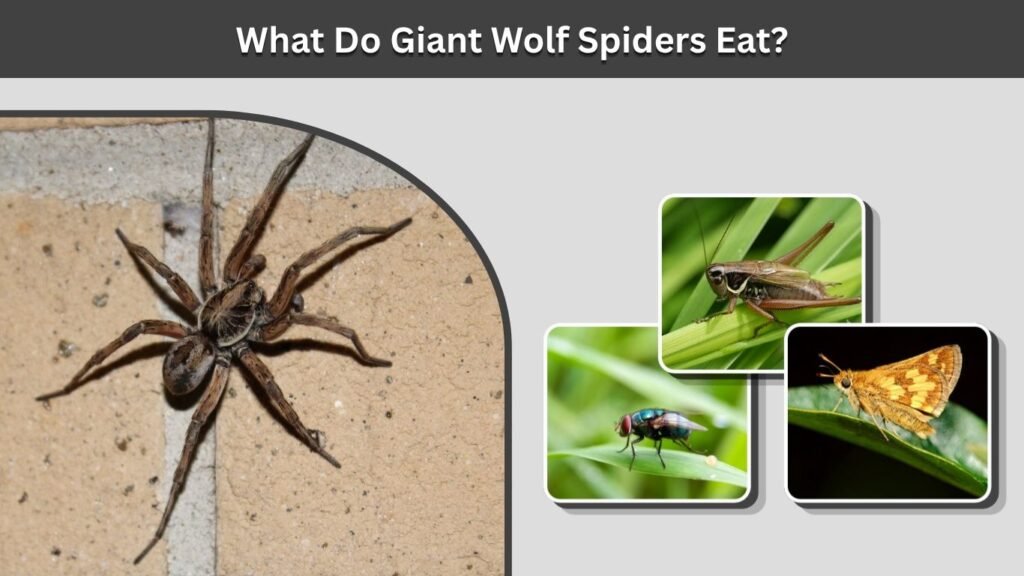
Giant wolf spiders are opportunistic predators. Their larger size allows them to capture a wide variety of ground-dwelling animals.
Common Prey
Their diet may include:
- Crickets
- Beetles
- Cockroaches
- Grasshoppers
- Moths
- Flies
- Caterpillars
- Other spiders
- Small arthropods
Very large individuals may occasionally overpower prey beyond ordinary insects, but insects and other arthropods make up the majority of their diet.
Wolf spiders can therefore contribute to natural pest control in gardens and outdoor environments.
Giant Wolf Spider in the House
Finding a giant wolf spider indoors can be startling, particularly when it suddenly runs across a floor.
However, wolf spiders generally do not enter homes to attack people or establish social colonies.
They may wander inside while pursuing insects, looking for mates, or seeking temporary shelter.
What Should You Do?
If you find one indoors:
- Avoid handling it directly.
- Keep children and pets away temporarily.
- Place a container over the spider.
- Slide stiff paper or cardboard underneath.
- Carry the container outdoors.
- Release the spider away from entrances.
Reducing indoor insect populations and sealing gaps around doors, foundations, windows, and utility openings can also reduce future encounters.
Are Giant Wolf Spiders Dangerous?
Their large size can make giant wolf spiders intimidating, but they generally pose little threat to people.
Wolf spiders rely primarily on camouflage, speed, and retreat when faced with much larger animals. Biting is usually a defensive last resort.
They also provide ecological benefits by hunting insects and other arthropods.
Seeing a large wolf spider outdoors is therefore usually a reason for curiosity rather than alarm.
FAQs
1. What is the largest giant wolf spider?
Several Hogna species have become very large. In North America, the Carolina wolf spider is particularly notable and is commonly regarded as one of the largest wolf spiders on the continent.
2. How big can a giant wolf spider get?
Large wolf spiders may reach around an inch or more in body length, while their extended legs can produce a span of several inches. Size differs significantly among species and between males and females.
3. Can a giant wolf spider bite humans?
Yes, but bites are uncommon. Wolf spiders generally flee when disturbed and usually bite only when trapped, squeezed, or handled. Most bites cause temporary localized pain, redness, or swelling.
4. Is a giant house spider a wolf spider?
No. Giant house spiders and wolf spiders belong to different families. Giant house spiders commonly use funnel-shaped webs, while wolf spiders primarily hunt prey by running across the ground.
5. Are giant wolf spiders aggressive?
No. Their quick movements sometimes make them appear aggressive, but wolf spiders normally attempt to escape humans. Their speed is primarily an adaptation for hunting prey and avoiding predators rather than attacking people.
