
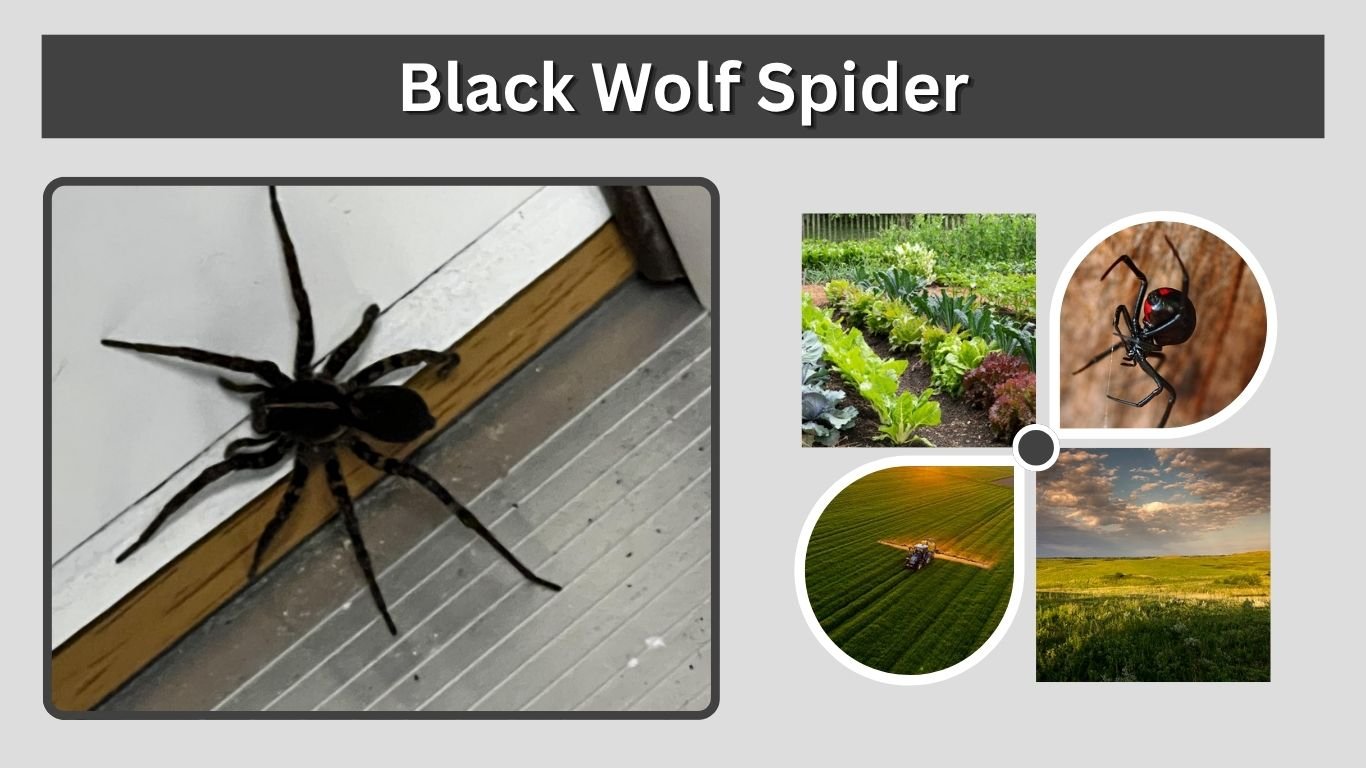
A black wolf spider can look intimidating because of its dark color, sturdy body, long legs, and fast movements. However, “black wolf spider” is not usually the name of one specific species. Several wolf spider species can appear dark brown, charcoal, gray-black, or nearly jet black. They may enter houses while hunting insects, especially during seasonal weather changes. This guide explains how to identify a black wolf spider, its size, habitat, bite symptoms, behavior, and differences from black widows and black house spiders.
What Is a Black Wolf Spider?
Black wolf spiders belong to the wolf spider family, Lycosidae, which contains many ground-hunting spiders. Instead of constructing sticky webs to capture prey, wolf spiders actively chase insects. Their coloration varies considerably between species and individuals, which is why some may appear almost completely black while others have gray, brown, white, or orange markings.
Can a Wolf Spider Be Black?
Yes. A wolf spider can appear black or very dark gray. Lighting, age, sex, species, and natural markings can all affect its apparent color.
Some dark wolf spiders may have:
- A nearly black abdomen
- Dark brown or charcoal legs
- Black front legs
- Pale gray markings
- White stripes along the body
- Small white spots
- Brown or orange accents
- A lighter stripe running down the cephalothorax
A truly uniform jet-black appearance is less typical because many wolf spiders have subtle patterns that become easier to see under bright light.
Why Some Wolf Spiders Look Jet Black
Dark pigmentation can make wolf spiders look completely black when seen indoors, at night, or from a distance. Their dense body hairs may also absorb light, making naturally brown or gray areas appear much darker.
Juvenile spiders and adult males can sometimes differ considerably in color from adult females. Because of this variation, color alone should never be used to identify a wolf spider.
Black Wolf Spider Identification
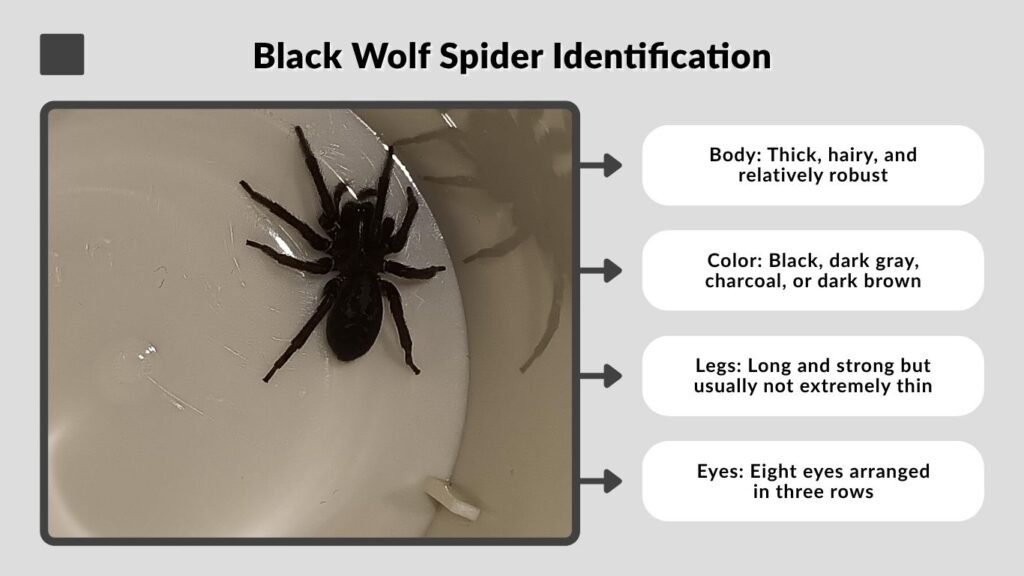
Identification is easier when several physical features are considered together. Wolf spiders generally have strong legs, hairy bodies, excellent eyesight, and a compact hunting-spider appearance. Their most useful identifying characteristic is their distinctive arrangement of eight eyes.
Key Identification Features
Look for the following characteristics:
- Body: Thick, hairy, and relatively robust
- Color: Black, dark gray, charcoal, or dark brown
- Legs: Long and strong but usually not extremely thin
- Eyes: Eight eyes arranged in three rows
- Large middle eyes: Two noticeably large forward-facing eyes
- Markings: May include white, gray, brown, or pale stripes
- Movement: Very fast when disturbed
- Web: Does not normally use a web to capture prey
Female wolf spiders may also be identified by their unusual parenting behavior. Females carry their round egg sac attached to the spinnerets. After the spiderlings hatch, dozens of tiny young may ride on their mother’s abdomen.
Black Wolf Spider With White Stripes
A black spider with white stripes may be a wolf spider, but several other spider groups have similar coloration. Some wolf spiders have pale longitudinal stripes across the cephalothorax or abdomen.
Jumping spiders are commonly confused with black-and-white wolf spiders. Jumping spiders generally have shorter bodies, relatively compact legs, and very large forward-facing eyes.
Black Wolf Spider With Black Front Legs
Some wolf spiders naturally have noticeably darker front legs. Others may appear to have only two black front legs because their remaining legs contain lighter hairs or bands.
Leg coloration by itself cannot confirm species. Eye arrangement, body shape, movement, and markings provide much stronger identification clues.
How Big Do Black Wolf Spiders Get?
Wolf spider size varies dramatically because the family contains thousands of species. Some are small enough to go unnoticed, while large species can look surprisingly impressive when their legs are fully extended.
Black Wolf Spider Size
Typical wolf spiders may have approximately:
- Body length: About ¼ to more than 1 inch
- Leg span: Often around 1 to 3 inches depending on species
- Females: Usually larger and heavier-bodied
- Males: Often smaller with proportionally longer legs
- Juveniles: Can be extremely small and easily confused with other spiders
Large species, including some Carolina wolf spiders, may have impressive leg spans and thick bodies.
Huge Black Wolf Spiders
People sometimes describe very large individuals as “giant black wolf spiders.” In many cases, these are simply large adult wolf spiders whose dark coloration makes them appear even more imposing.
Perspective also matters. A spider running across an open floor can look substantially larger because of its extended legs and rapid movements.
Where Do Black Wolf Spiders Live?
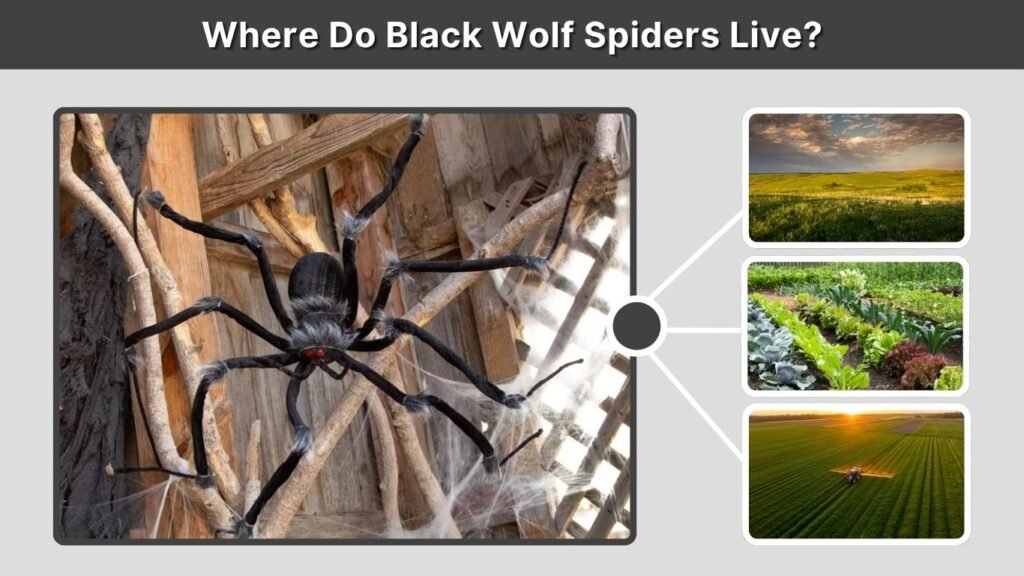
Wolf spiders occur across much of the world and occupy many different habitats. Dark-colored individuals are reported throughout numerous parts of the United States, including Ohio, Texas, Michigan, Indiana, Illinois, Pennsylvania, California, Missouri, Wisconsin, Tennessee, New Jersey, Iowa, and other states.
Outdoor Habitat
Wolf spiders commonly live around:
- Grasslands
- Gardens
- Forest floors
- Leaf litter
- Fields
- Under rocks
- Beneath logs
- Around landscaping
- Beneath outdoor objects
- Near building foundations
Some species construct burrows, while others hide beneath natural debris during daylight hours and hunt after dark.
Why Black Wolf Spiders Enter Houses
A black wolf spider found inside a house usually entered accidentally or followed prey indoors. Homes can provide temporary shelter along with insects such as flies, crickets, cockroaches, and other small arthropods.
Wolf spiders may become more noticeable indoors during changes in temperature or moisture. Unlike many house spiders, they generally wander rather than remaining in one permanent web.
Black Wolf Spider Bite
Wolf spiders possess venom because they need it to immobilize prey. However, they are not considered medically significant spiders for most healthy people. Bites are uncommon because wolf spiders usually run away when confronted.
What Does a Black Wolf Spider Bite Look Like?
Possible local symptoms include:
- Mild redness
- Temporary swelling
- Tenderness
- Itching
- Minor burning or stinging
- Two tiny puncture marks in some cases
Symptoms typically remain localized. Washing the area with soap and water and applying a wrapped cold pack may help with minor swelling or discomfort.
Are Black Wolf Spiders Poisonous?
People commonly ask whether black wolf spiders are poisonous, but venomous is the more accurate term because spiders inject venom when biting.
Wolf spider venom is primarily adapted to small prey. Their bites generally do not produce the severe systemic effects associated with medically important spiders such as some widow species.
Seek medical attention if severe pain, widespread swelling, breathing difficulty, dizziness, fever, spreading redness, or other concerning symptoms develop.
Black Wolf Spider vs. Black Widow
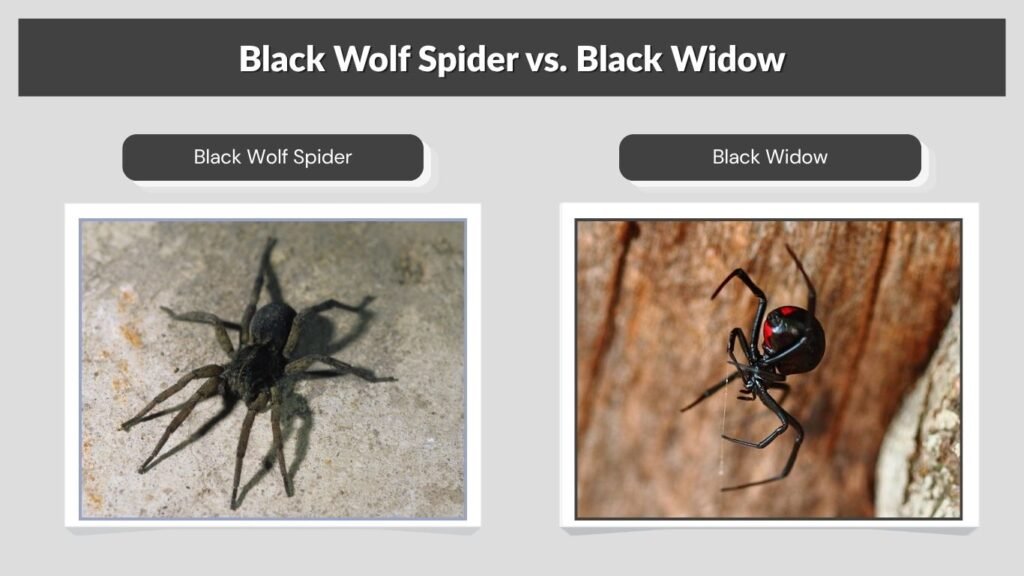
Dark coloration occasionally causes wolf spiders to be mistaken for black widows. Their body shapes and lifestyles, however, are quite different.
Major Differences
| Feature | Black Wolf Spider | Black Widow |
| Body | Hairy and robust | Smooth, shiny abdomen |
| Color | Black, gray, or brown | Usually glossy black |
| Marking | Stripes or mottling possible | Red hourglass commonly present |
| Legs | Thick, hairy hunting legs | Slender legs |
| Hunting | Chases prey | Captures prey in web |
| Web | No prey-catching web | Irregular tangled web |
| Human risk | Usually mild bite | Medically significant venom |
Wolf spiders frequently run across floors or outdoor surfaces. Black widows usually remain near their webs in protected, undisturbed locations.
Can Wolf Spiders Kill Black Widows?
Wolf spiders are opportunistic predators and may attack other spiders when circumstances allow. A sufficiently large wolf spider could potentially prey on a black widow, but this is not a dependable or routine predator-prey relationship.
Individual encounters depend on size, species, surroundings, and which spider gains the advantage.
Black House Spider vs. Wolf Spider
Black house spiders are another group commonly confused with dark wolf spiders. Both can occur around homes, but their hunting strategies provide an important clue.
How to Tell Them Apart
Black house spiders typically remain associated with messy or funnel-like webs around windows, cracks, walls, sheds, and sheltered areas. Wolf spiders usually roam across floors or ground surfaces instead.
Wolf spiders also tend to have thicker, hairier legs and prominent eyes. If a dark spider repeatedly stays inside a permanent web, it is less likely to be a wolf spider.
Are Black Wolf Spiders Dangerous?
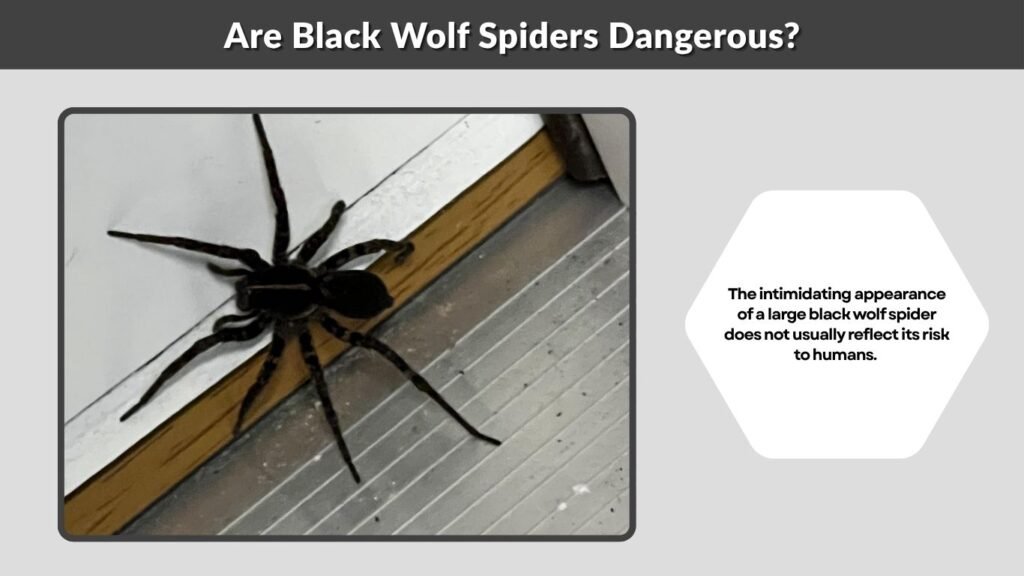
The intimidating appearance of a large black wolf spider does not usually reflect its risk to humans. These spiders are predators of insects and generally avoid direct confrontation.
Behavior Around People
Wolf spiders generally:
- Run away when approached
- Hide beneath furniture or objects
- Hunt mainly at ground level
- Bite primarily when trapped or handled
- Do not aggressively pursue humans
Their speed can make them seem aggressive, particularly if they unexpectedly run toward someone. In reality, the spider is usually searching for shelter or an escape route.
Benefits Around Homes and Gardens
Wolf spiders help control populations of insects and other small arthropods. They may consume crickets, flies, roaches, beetles, small moths, and various pests.
Outdoors, leaving them alone is usually the easiest approach. Indoors, an unwanted spider can often be captured with a container and released outside without direct handling.
FAQs
1. Are all black wolf spiders completely black?
No. Many wolf spiders described as black are actually dark gray, charcoal, or very dark brown. They may also have white, gray, orange, or brown markings that are difficult to notice without good lighting.
2. Is a black wolf spider bite dangerous?
For most people, a wolf spider bite causes only temporary localized discomfort such as redness, mild pain, itching, or swelling. Serious reactions are uncommon, although unusual or severe symptoms should receive medical attention.
3. What is a black spider with a white stripe on its back?
It could be a wolf spider, jumping spider, or another dark-colored species. Some wolf spiders have pale stripes along their body. Eye arrangement, body structure, leg proportions, and behavior are more useful identification features than coloration alone.
4. Why do I have a black wolf spider in my house?
Wolf spiders may enter homes accidentally while searching for insects, shelter, moisture, or suitable temperatures. They generally do not establish large indoor colonies and usually wander individually rather than living permanently in webs.
5. Should I kill a black wolf spider?
Usually, there is no need. Wolf spiders help control insects and generally pose little danger to humans. If one is indoors, it can often be captured with a container and carefully relocated outside instead of being handled directly.
