
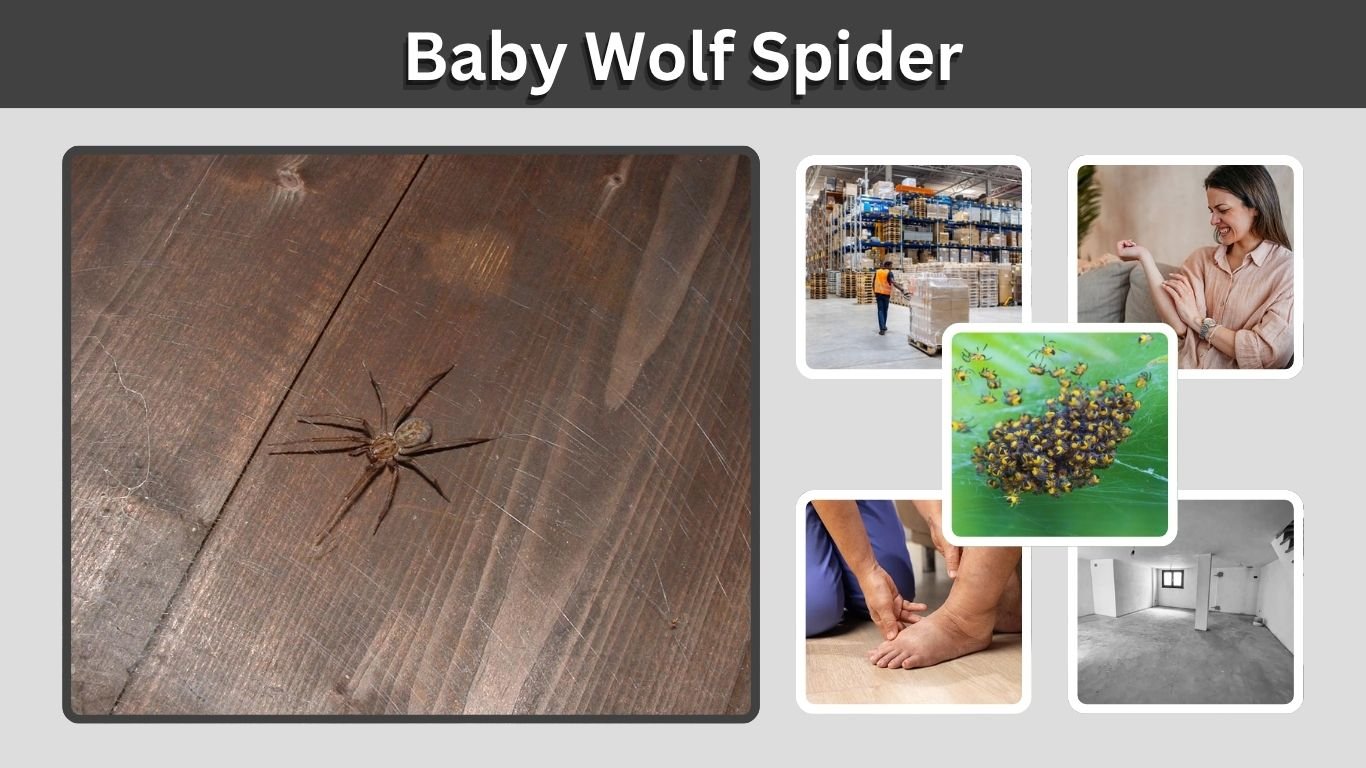
A baby wolf spider, more accurately called a spiderling, looks like a miniature version of an adult wolf spider. These tiny spiders usually have eight legs, a brown, gray, or tan body, and markings that become more noticeable as they grow. One of the most fascinating things about wolf spiders is their unusual maternal behavior: after hatching, dozens of babies may climb onto their mother’s abdomen and travel on her back for days or weeks.
If you find a wolf spider with babies on its back, the sight can be startling, especially when the spiderlings suddenly begin moving. However, wolf spiders generally aren’t considered dangerous to people and are important predators of insects and other small arthropods.
What Does a Baby Wolf Spider Look Like?
Baby wolf spiders resemble extremely small adult wolf spiders rather than looking like larvae or worms. Spiderlings hatch with the basic spider body shape and gradually become larger through repeated molts.
Their appearance varies because the wolf spider family, Lycosidae, contains many different species.
Baby Wolf Spider Identification
Look for these characteristics:
- Eight relatively long legs
- Small brown, gray, tan, or dark-colored body
- Two main body sections
- Fine hairs covering the body and legs
- Dark or pale stripes on some species
- Fast running behavior
- No wings or antennae
- Similar overall body shape to an adult wolf spider
Wolf spiders are normally hairy and have brown-to-gray coloration with various markings or stripes. Young wolf spiders generally resemble tiny versions of adults.
Very young spiderlings can be difficult to identify without magnification because several other ground-dwelling spiders can look similar.
How Big Is a Baby Wolf Spider?
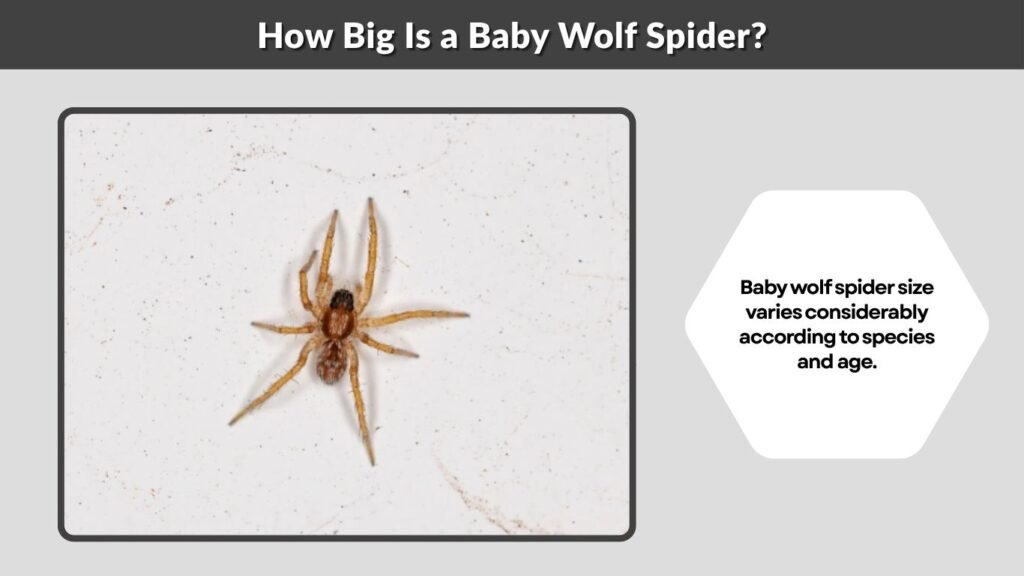
Baby wolf spider size varies considerably according to species and age.
Newly hatched spiderlings are extremely small compared with their mother. They may look like tiny dots covering her abdomen when dozens are gathered together.
As they feed and molt, their bodies and legs gradually increase in size.
Adult wolf spiders themselves vary dramatically in size. Depending on the species, adult wolf spiders may range roughly from 1/2 inch to around 2 inches in overall length according to extension identification guides.
A baby should therefore not be identified based on size alone.
Do Baby Wolf Spiders Grow Quickly?
Spiderlings grow by molting because their outer skeleton cannot expand continuously.
During each molt, the young spider sheds its old exoskeleton and emerges larger. It goes through several molts before becoming a mature wolf spider.
Growth rate depends on factors such as:
- Species
- Temperature
- Food availability
- Season
- Environmental conditions
Some species may take many months to reach adulthood.
Why Do Wolf Spiders Carry Babies on Their Back?
Seeing a wolf spider with babies on its back is one of the easiest ways to recognize the remarkable parenting behavior of this spider family.
Before the babies hatch, the female carries her egg sac attached to spinnerets at the rear of her abdomen. When the spiderlings emerge, they climb onto her abdomen and hold onto her body.
This behavior is characteristic of wolf spiders.
Wolf Spider Babies on Back
Dozens of tiny spiderlings can sometimes cover almost the entire upper surface of their mother’s abdomen.
They can become so tightly grouped that the mother’s back appears rough, bumpy, or unusually textured.
The young remain with her temporarily before dispersing and beginning independent lives.
Depending on the species, wolf spiderlings may remain on their mother for around one to two weeks, although the exact period varies.
What Happens if a Baby Falls Off?
Spiderlings are surprisingly capable of holding onto their mother.
If one accidentally falls off, it may climb back onto her body by running up one of her legs.
Eventually, however, leaving their mother is a normal part of their development.
How Many Babies Does a Wolf Spider Have?
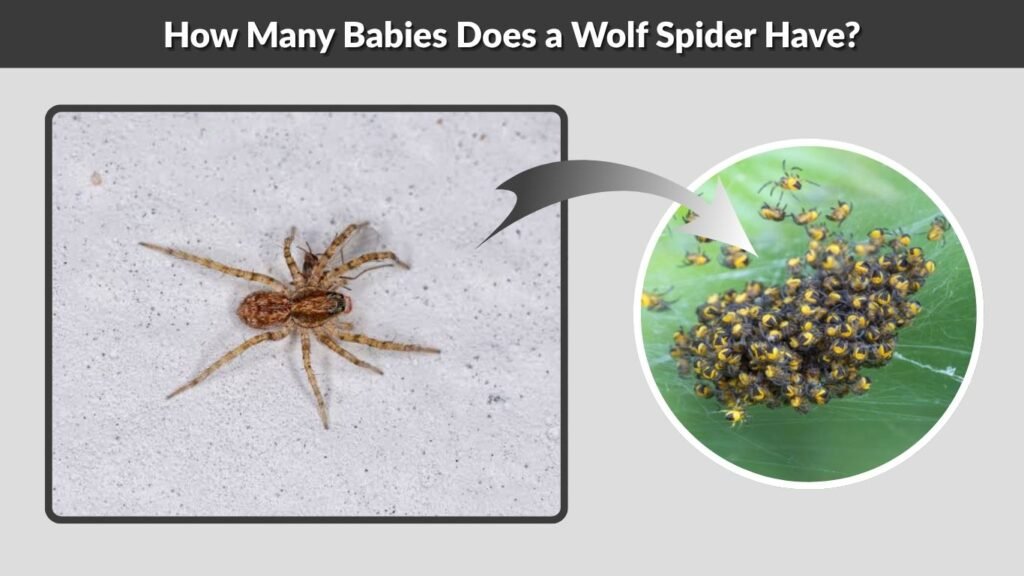
There is no single number that applies to every wolf spider.
The number of eggs varies between species and can also be influenced by the female’s size, age, and environmental conditions.
Some large wolf spiders can produce egg sacs containing well over 100 eggs. For example, information from the Natural History Museum of Utah notes that Carolina wolf spider egg sacs can contain approximately 100 to 150 eggs.
Other species may produce fewer.
That means a female appearing to carry an enormous number of babies is not necessarily unusual.
Wolf Spider Life Cycle
Understanding the wolf spider life cycle makes it easier to understand why babies suddenly appear on a female’s back.
The basic cycle progresses from egg to spiderling and eventually adult.
1. Female Produces an Egg Sac
After reproduction, the female surrounds her eggs with silk, creating a rounded egg sac.
Unlike many spiders that leave their eggs inside a stationary web or protected location, female wolf spiders carry the sac with them.
It remains attached to the spinnerets at the rear of the abdomen.
2. Spiderlings Hatch
When development is complete, the young emerge from the egg sac.
The female may assist with opening the sac, allowing the spiderlings to emerge.
3. Babies Climb Onto the Mother
The spiderlings climb onto their mother’s abdomen and cluster together.
She continues walking and hunting while transporting her offspring.
4. Young Spiders Disperse
After the temporary riding period ends, the young leave their mother and become independent.
They begin catching tiny prey and continue growing through repeated molts.
Can Wolf Spider Babies Survive Without Mom?
Once wolf spiderlings have reached the normal dispersal stage, they are capable of surviving independently.
The mother does not continue raising them throughout their juvenile development.
Her primary maternal contribution is protecting the egg sac and transporting the recently hatched spiderlings during their vulnerable early period. Missouri conservation information notes that the mother does not directly feed the young while they ride with her.
What Do Baby Wolf Spiders Eat?
After dispersing, baby wolf spiders become active hunters.
Depending on their size, their prey can include tiny:
- Flies
- Gnats
- Springtails
- Small insects
- Insect larvae
- Other small arthropods
Wolf spiders do not normally construct capture webs to trap prey. They primarily hunt by moving across the ground and attacking suitable prey.
Do Wolf Spider Babies Eat Their Mother?
No, baby wolf spiders normally do not eat their mother.
This misconception may come from videos showing hundreds of spiderlings suddenly scattering after someone disturbs or kills a female carrying babies.
Because the babies are resting directly on her abdomen, disturbing the mother can cause them to rapidly run in different directions.
That dramatic movement can look as though the babies were emerging from inside her body, but they were actually riding on the outside.
The spiderlings eventually leave voluntarily and begin hunting independently.
Why Do Wolf Spider Babies Scatter?
A wolf spider carrying babies can produce a startling scene when disturbed.
If the mother is frightened, crushed, sprayed, or handled, the spiderlings may detach and scatter rapidly across the surrounding surface.
This happens because the babies are capable of movement and are resting loosely enough on the mother’s abdomen to disperse when necessary.
Should You Crush a Wolf Spider Carrying Babies?
Crushing one indoors can turn a single visible spider into dozens of rapidly moving spiderlings.
If practical, capturing the mother and moving her outside without harming her is usually a cleaner option.
A container and stiff piece of paper or cardboard can be used to cover and relocate the spider without direct handling.
Avoid picking up a wolf spider with bare hands.
Baby Wolf Spider in the House
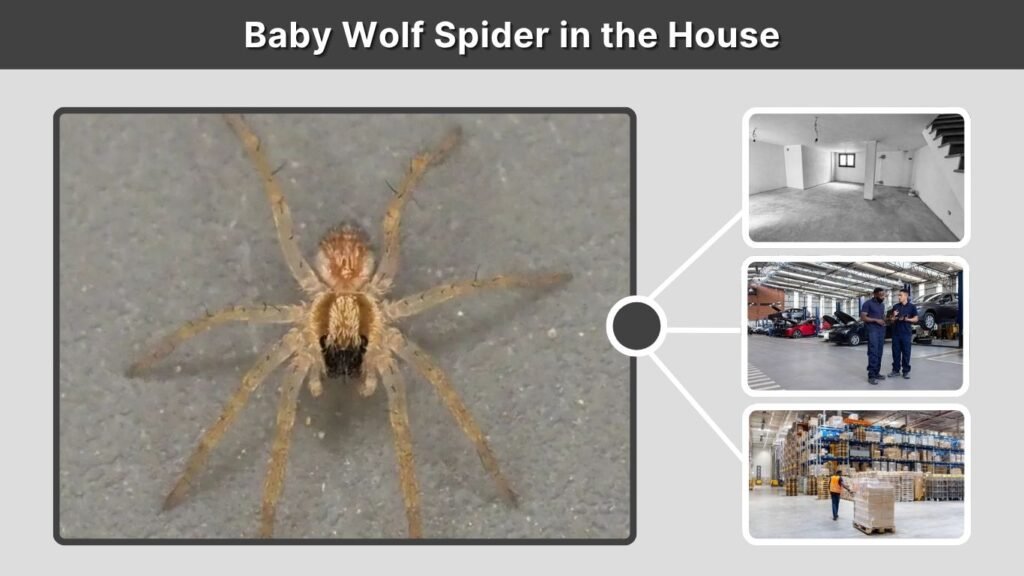
Finding one baby wolf spider indoors does not necessarily mean your home has a major infestation.
Wolf spiders are wandering hunters. They may enter houses accidentally while searching for prey, shelter, warmth, or suitable hiding places.
Common indoor locations include:
- Basements
- Garages
- Ground-floor rooms
- Storage areas
- Bathrooms
- Crawl spaces
- Near doors
- Around windows
Texas A&M notes that wolf spiders can enter homes through gaps under doors and similar openings.
Why Are There Many Baby Wolf Spiders in My House?
If dozens suddenly appear together, a female may have entered the house while carrying spiderlings.
Once the babies disperse, they can temporarily appear in several nearby locations.
Seeing multiple spiderlings over a very short period therefore doesn’t necessarily indicate that generations of wolf spiders have been reproducing throughout the building.
Baby Wolf Spider vs. Brown Recluse
Young wolf spiders can sometimes be confused with brown recluse spiders because both may have brown coloration.
However, their appearance and behavior differ.
| Feature | Baby Wolf Spider | Brown Recluse |
|---|---|---|
| Body | Often stockier or hairy | Usually smoother-looking |
| Color | Brown, gray, tan, patterned | Usually relatively uniform brown |
| Markings | Stripes or mottling possible | Adult may show violin-shaped marking |
| Legs | Often visibly hairy | More uniformly slender |
| Eyes | Eight eyes in distinctive arrangement | Six eyes arranged in pairs |
| Behavior | Active ground hunter | More secretive and reclusive |
Eye arrangement is especially important for scientific identification, although the eyes of a tiny spiderling can be difficult to inspect without magnification.
Don’t identify a potentially significant spider solely from color.
Can a Baby Wolf Spider Bite?
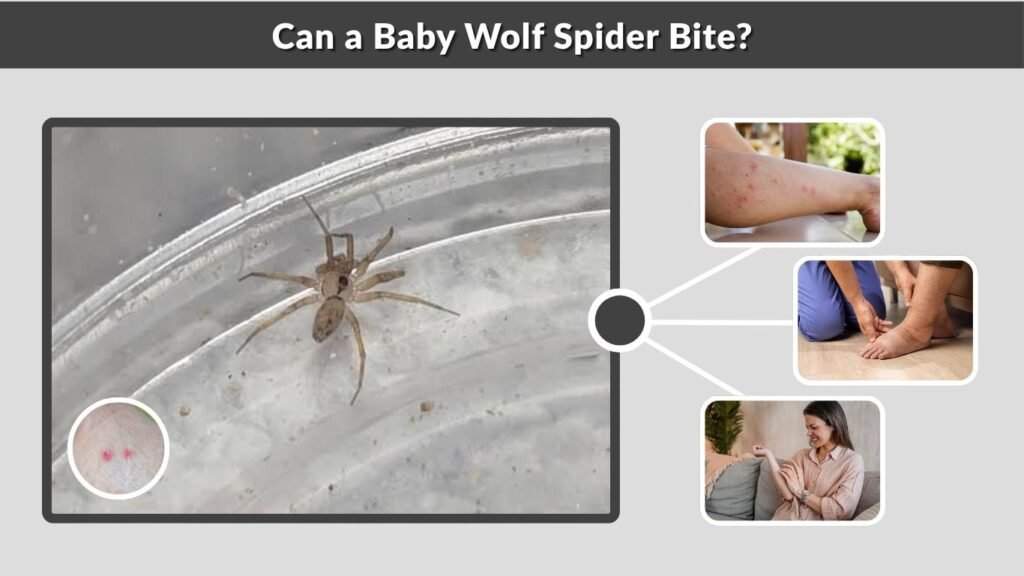
Yes. A baby wolf spider technically has fangs and venom used to capture tiny prey.
However, very small spiderlings are not considered a major threat to people, and their tiny size makes defensive bites less likely to be significant.
Adult wolf spiders can also bite if trapped or handled, but they generally prefer escaping.
What Does a Baby Wolf Spider Bite Look Like?
If a small wolf spider manages to bite, any reaction would generally be expected to remain localized.
Possible symptoms can include:
- Small red spot
- Mild irritation
- Itching
- Tenderness
- Minor swelling
Because many insects and skin conditions can cause identical marks, a red bump alone cannot confirm a baby wolf spider bite.
Seek medical attention for severe pain, rapidly increasing swelling, breathing difficulty, spreading redness, significant blistering, or other concerning symptoms.
Are Baby Wolf Spiders Poisonous?
The word venomous is more accurate than poisonous when discussing spiders because spiders deliver venom through their fangs.
Wolf spiders have venom for subduing prey, but they are generally not regarded as dangerous spiders to humans. Texas A&M describes wolf spiders as posing no danger to people or pets under ordinary circumstances.
As with almost any bite, individual reactions can vary.
Are Baby Wolf Spiders Dangerous?
For most people, baby wolf spiders are far more startling than dangerous.
Their small size and fast movements can make them difficult to catch, particularly when many spiderlings scatter simultaneously.
They are also predators and eventually help control populations of insects and other small arthropods.
Avoid handling them directly, but there is usually no reason to panic after finding one.
FAQs
What does a baby wolf spider look like?
A baby wolf spider looks like a miniature adult, with eight legs, two main body sections, and usually brown, tan, gray, or dark coloration. Young spiderlings are extremely small, and their markings may become easier to see as they grow.
Why do wolf spiders carry babies on their backs?
Female wolf spiders provide maternal care by transporting newly hatched spiderlings on their abdomen. The babies remain with their mother temporarily before dispersing and becoming independent hunters. This unusual behavior is one of the most recognizable characteristics of wolf spiders.
How many babies can a wolf spider carry?
The number varies substantially among species. Some wolf spiders can produce more than 100 young from an egg sac. Carolina wolf spiders, for example, have been reported with approximately 100–150 eggs per sac, while other species may have different numbers.
Can wolf spider babies survive without their mother?
Yes, especially once they reach their normal dispersal stage. Spiderlings ride on the mother during an early vulnerable period, but they eventually leave and begin hunting independently. Their mother does not continue feeding and raising them after dispersal.
Do baby wolf spiders bite humans?
Baby wolf spiders technically can bite, but bites from tiny spiderlings are unlikely to be a significant threat. Wolf spiders generally avoid people and usually bite only defensively. Any unexplained or severe skin reaction should be medically evaluated rather than assumed to be a spider bite.
