
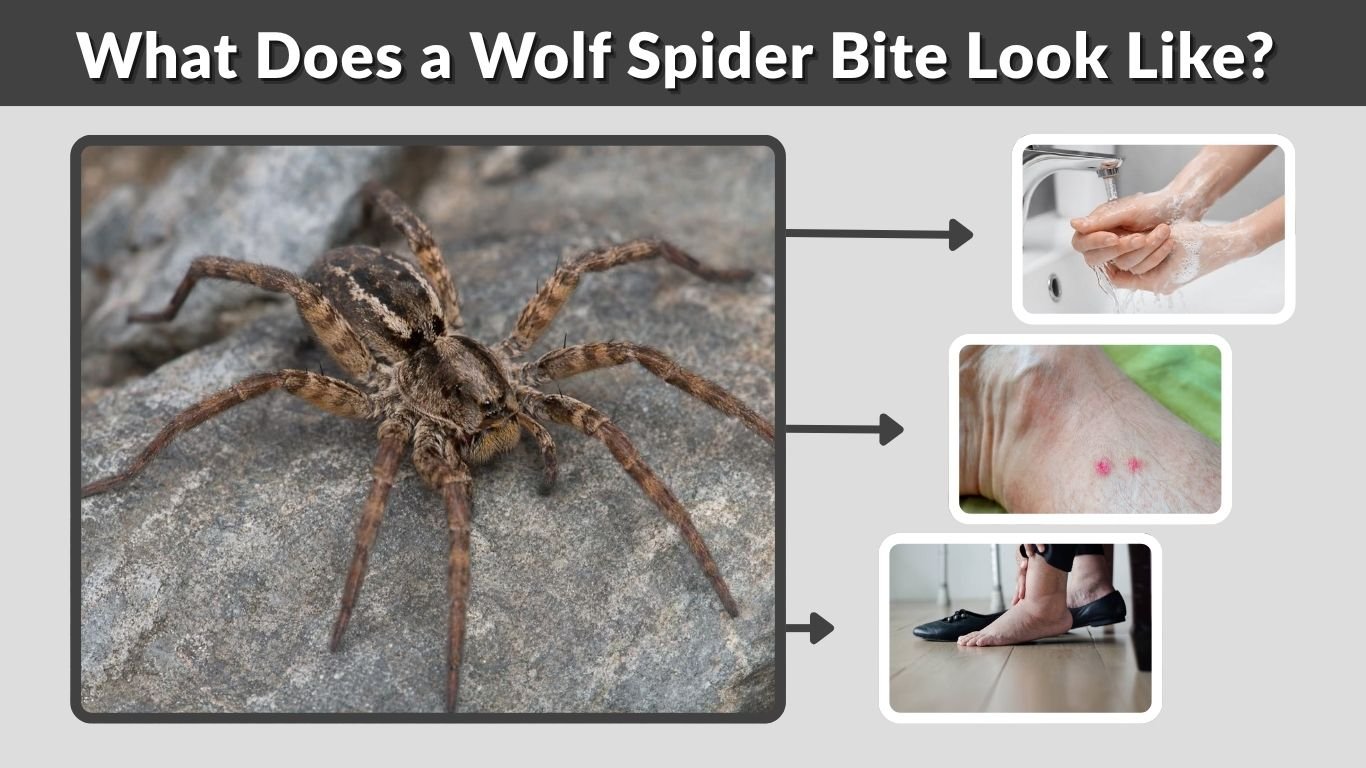
Wolf spiders are fast-moving hunting spiders commonly found in gardens, yards, garages, basements, sheds, and sometimes inside homes. Although their intimidating size and hairy appearance can make them seem dangerous, wolf spiders generally avoid people and usually bite only when trapped, handled, or threatened.
So, what does a wolf spider bite look like? In most cases, it appears as a small red, slightly swollen bump that may be painful, itchy, or tender. Sometimes two tiny puncture marks are visible in the center. The reaction can resemble many ordinary insect bites, which means appearance alone usually cannot confirm that a wolf spider caused it. Most spider bites cause localized redness, pain, and swelling rather than severe illness.
What Does a Wolf Spider Bite Look Like?
A wolf spider bite typically causes a localized skin reaction around the place where the spider’s fangs entered the skin. The exact appearance can vary depending on the person’s skin sensitivity, bite location, and individual immune response.
Common visual characteristics include:
- Small red or pink bump
- Mild swelling around the bite
- Two tiny puncture points in some cases
- Redness surrounding the center
- Slightly raised skin
- Mild irritation or itching
- Tenderness when touched
- Occasionally a small welt
The affected area may resemble a mosquito bite, ant bite, bee sting, or small irritated pimple. Spider bites generally produce reactions similar to other insect bites, including localized redness, swelling, and discomfort.
Can You See Wolf Spider Fang Marks?
Sometimes two extremely small fang marks may appear close together at the center of a wolf spider bite. However, they can be difficult or impossible to see.
The absence of two puncture marks does not necessarily rule out a spider bite.
Likewise, seeing two small dots does not automatically mean a wolf spider was responsible. Many skin irritations, insect bites, scratches, and inflamed hair follicles can produce similar marks.
Early Stage Wolf Spider Bite Appearance
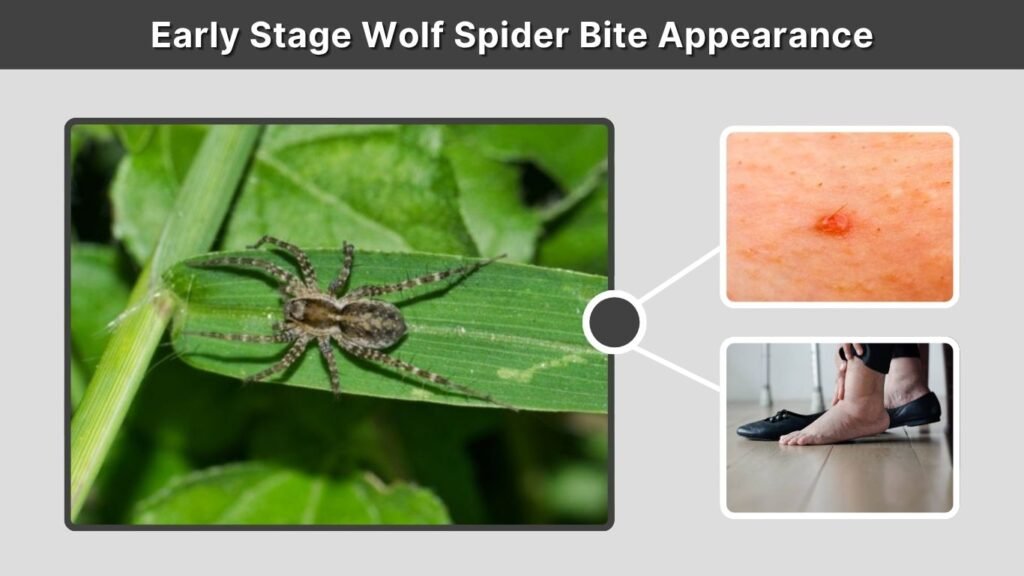
During the beginning stages of a wolf spider bite, changes usually remain concentrated around the bite location.
Shortly after the bite, the skin may appear normal or show only a tiny red spot. Over the next several minutes or hours, mild redness and swelling can become more noticeable.
First Few Minutes
A person may notice:
- Sharp or pinching sensation
- Small red spot
- Mild burning
- Tenderness
- Little or no visible swelling
Some people notice the bite immediately, while others may discover the irritated area later.
First Several Hours
Within a few hours, the bite may become somewhat more noticeable.
The surrounding skin can become red, slightly raised, warm, itchy, or tender. Mild swelling may develop around the puncture area.
These symptoms generally remain localized rather than spreading throughout the body.
What Does a Wolf Spider Bite Look Like on Day 1?
On the first day, a typical wolf spider bite often looks like a small red welt or swollen bump.
The center may be slightly darker than the surrounding skin, and tiny fang marks occasionally remain visible.
Common day 1 wolf spider bite symptoms can include:
- Redness
- Mild swelling
- Pain or tenderness
- Burning sensation
- Itching
- Slight warmth around the bite
The affected area should generally remain relatively small rather than rapidly expanding.
Wolf Spider Bite Healing Stages
There is no exact healing timeline that applies to every person. Skin sensitivity, scratching, bite location, and secondary irritation can all affect how long symptoms remain.
However, uncomplicated bites generally follow a gradual improvement pattern.
Stage 1: Initial Reaction
During the first several hours, redness, tenderness, and mild swelling can develop.
The bite may resemble a small insect bite or irritated pimple.
Stage 2: Local Inflammation
During the next day or two, the bite may remain red and somewhat swollen.
Itching sometimes becomes more noticeable while pain begins decreasing.
The area should not normally develop rapidly worsening tissue destruction.
Stage 3: Symptoms Begin Improving
As the skin recovers, swelling and redness gradually decrease.
The center of the bite may remain slightly pink or irritated for a while, particularly if the area has been scratched.
Stage 4: Skin Returns to Normal
The remaining discoloration gradually disappears as the skin heals.
Avoid scratching or repeatedly touching the bite because damaged skin can increase the risk of a secondary bacterial infection.
Wolf Spider Bite vs. Brown Recluse Bite
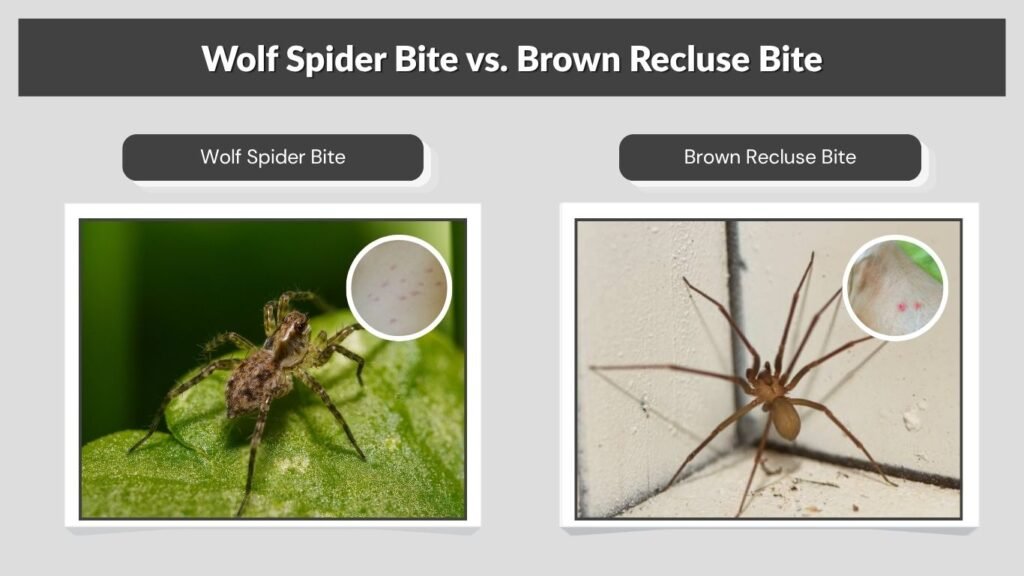
People sometimes mistake an unidentified skin lesion for a wolf spider bite or brown recluse bite.
However, the two can potentially behave very differently.
| Feature | Wolf Spider Bite | Brown Recluse Bite |
|---|---|---|
| Initial appearance | Small red bump | May initially look mildly red |
| Swelling | Usually mild | Can become more significant |
| Pain | Mild to moderate | Can become increasingly painful |
| Tissue damage | Not normally expected | Tissue damage can occur |
| Darkening skin | Unusual | Possible |
| Ulcer formation | Unusual | Possible |
| Typical severity | Usually localized | Can occasionally become serious |
Brown recluse bites can sometimes become increasingly painful, develop darker discoloration, blistering, or ulceration over several days.
Therefore, a rapidly worsening wound should not automatically be assumed to be a normal wolf spider bite.
Wolf Spider Bite vs. Mosquito Bite
Wolf spider bites and mosquito bites can initially appear surprisingly similar.
A mosquito bite is generally dominated by itching, while a spider bite may be more noticeable because of tenderness or pain.
Wolf Spider Bite
A wolf spider bite may have:
- Pain or pinching when bitten
- Local tenderness
- Redness
- Mild swelling
- Possible puncture marks
Mosquito Bite
A mosquito bite more commonly causes:
- Strong itching
- Soft raised welt
- Mild redness
- Little pain
- No obvious fang punctures
Still, appearance alone is usually not enough to identify the exact cause.
Wolf Spider Bite vs. Tick Bite
Tick bites can also create small red spots and may initially resemble other arthropod bites.
One major difference is that a tick may remain attached to the skin for some time, whereas a wolf spider bites defensively and normally moves away.
Some tick-borne illnesses can cause fever, chills, body aches, or distinctive expanding rashes after a bite, so unexplained symptoms following possible tick exposure deserve medical attention.
Does a Wolf Spider Bite Cause a Bullseye?
A classic expanding bullseye-like rash should not be considered a typical sign of a wolf spider bite.
Several conditions can create circular or target-like skin patterns. For example, erythema migrans associated with Lyme disease can appear as an expanding red rash, sometimes with clearer skin toward the center.
If a circular rash continues expanding after an unidentified bite, getting it medically evaluated is safer than assuming a spider caused it.
Can a Wolf Spider Bite Cause a Blister?
Minor blistering may occasionally occur with irritated bites or sensitive skin, but a large, rapidly developing blister is not something to ignore.
Blood-filled blisters and tissue damage can occur with certain arthropod reactions and some medically significant spider bites.
Seek medical advice if the bite develops:
- Large blisters
- Severe pain
- Black or purple tissue
- Open sores
- Rapidly spreading redness
- Increasing swelling
These changes may indicate another type of bite, significant inflammation, infection, or a different medical condition.
What Does an Infected Wolf Spider Bite Look Like?
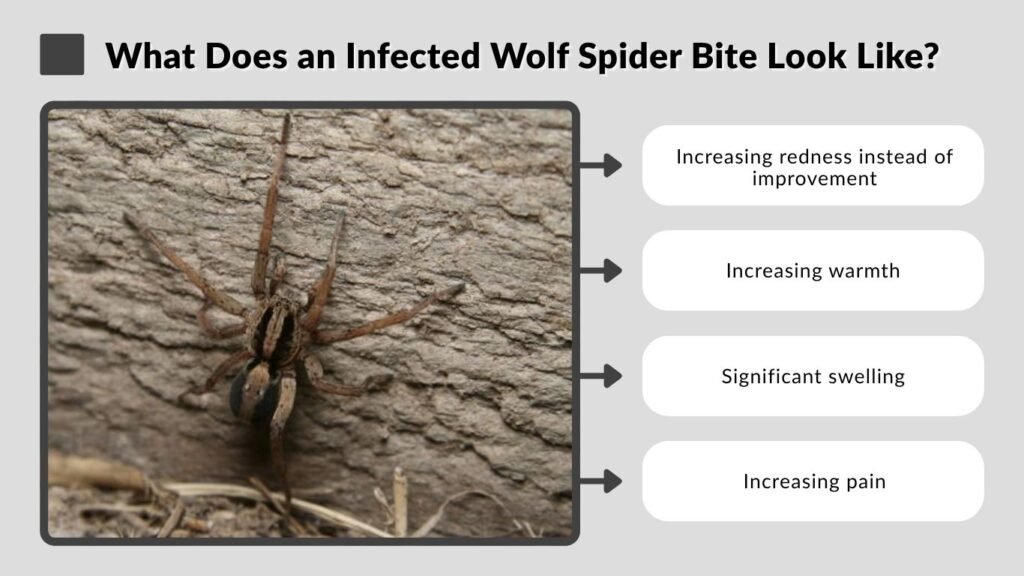
Even a minor bite can potentially become infected if bacteria enter damaged skin, particularly when the area is repeatedly scratched.
Possible signs of infection include:
- Increasing redness instead of improvement
- Increasing warmth
- Significant swelling
- Increasing pain
- Pus or cloudy drainage
- Red streaks extending from the area
- Fever
- An enlarging wound
A bite that becomes progressively worse rather than gradually improving should be evaluated by a healthcare professional.
Are Wolf Spider Bites Dangerous?
For most healthy people, wolf spider bites are generally associated with localized discomfort rather than serious systemic illness.
Spiders also usually bite humans only when threatened or pressed against the skin. Most spider bites are harmless, although allergic reactions can occasionally occur.
Individual reactions can still vary considerably.
Young children, older adults, people with significant allergies, or anyone developing unusual symptoms may need medical evaluation sooner.
Allergic Reaction to a Wolf Spider Bite
A person who is sensitive to bites or venom may experience more pronounced swelling, itching, or redness.
A severe allergic reaction is much more concerning.
Emergency symptoms following an insect or spider bite can include difficulty breathing, difficulty swallowing, swelling around the face or mouth, fainting, and widespread skin reactions.
Seek emergency medical attention immediately if these symptoms occur.
How to Care for a Suspected Wolf Spider Bite
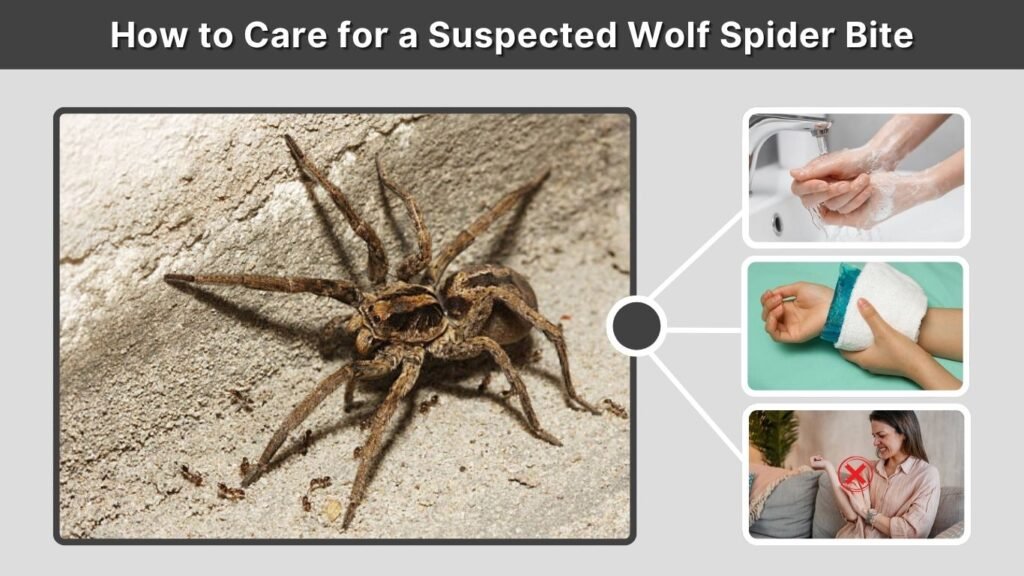
For a mild bite, basic skin care can help reduce discomfort while the area heals.
You can:
- Wash the bite gently with soap and water.
- Apply a cold pack wrapped in cloth for short periods.
- Keep the area clean.
- Avoid scratching the bite.
- Monitor the size of the redness and swelling.
- Watch for worsening symptoms.
Taking a photograph when you first notice the bite can also make it easier to determine whether redness or swelling is expanding.
When Should You See a Doctor?
Medical evaluation is advisable when the appearance or symptoms do not match a mild local reaction.
Seek medical attention if you develop:
- Severe or rapidly increasing pain
- Rapidly spreading redness
- Significant swelling
- Fever or chills
- Persistent vomiting
- Large blister
- Open ulcer
- Black, blue, or purple skin
- Pus or drainage
- Red streaking around the bite
- Symptoms that continue worsening
Difficulty breathing, facial or throat swelling, fainting, or other signs of a severe allergic reaction require emergency care.
Can You Identify a Wolf Spider Bite by Appearance Alone?
Usually not.
This is one of the most important things to understand when identifying a suspected spider bite.
A small red swollen bump could potentially come from:
- Mosquitoes
- Fleas
- Bed bugs
- Ants
- Flies
- Ticks
- Other spiders
- Inflamed hair follicles
- Skin infections
- Allergic reactions
Unless the spider was actually seen biting the person and correctly identified, it can be difficult to confidently attribute a skin lesion to a wolf spider.
FAQs
What does a wolf spider bite look like at first?
At first, a wolf spider bite may look like a tiny red spot or slightly raised bump. Mild swelling, tenderness, itching, or burning can develop around it. Two small puncture marks may occasionally be visible, although they are often too small to notice.
How big is a wolf spider bite?
The visible reaction is usually relatively small and concentrated near the bite. The size can vary depending on a person’s sensitivity and inflammation. Rapidly expanding redness or extensive swelling is less typical and deserves closer medical attention.
How long does a wolf spider bite last?
Minor redness, swelling, tenderness, and itching should gradually improve as the skin heals. Healing time varies from person to person. A bite that becomes progressively more painful, swollen, discolored, or ulcerated should be evaluated rather than simply waiting for it to disappear.
Do wolf spider bites leave two holes?
They can leave two tiny puncture points because spiders have two fangs. However, the marks may be extremely difficult to see. Two dots also cannot confirm a wolf spider bite because other injuries and skin conditions may produce a similar appearance.
What is the easiest way to identify a wolf spider bite?
The strongest evidence is actually seeing and correctly identifying the spider immediately before or after the bite. The skin reaction itself usually consists of redness, mild swelling, tenderness, and sometimes tiny puncture marks, but those features overlap considerably with other bites and skin conditions.
