
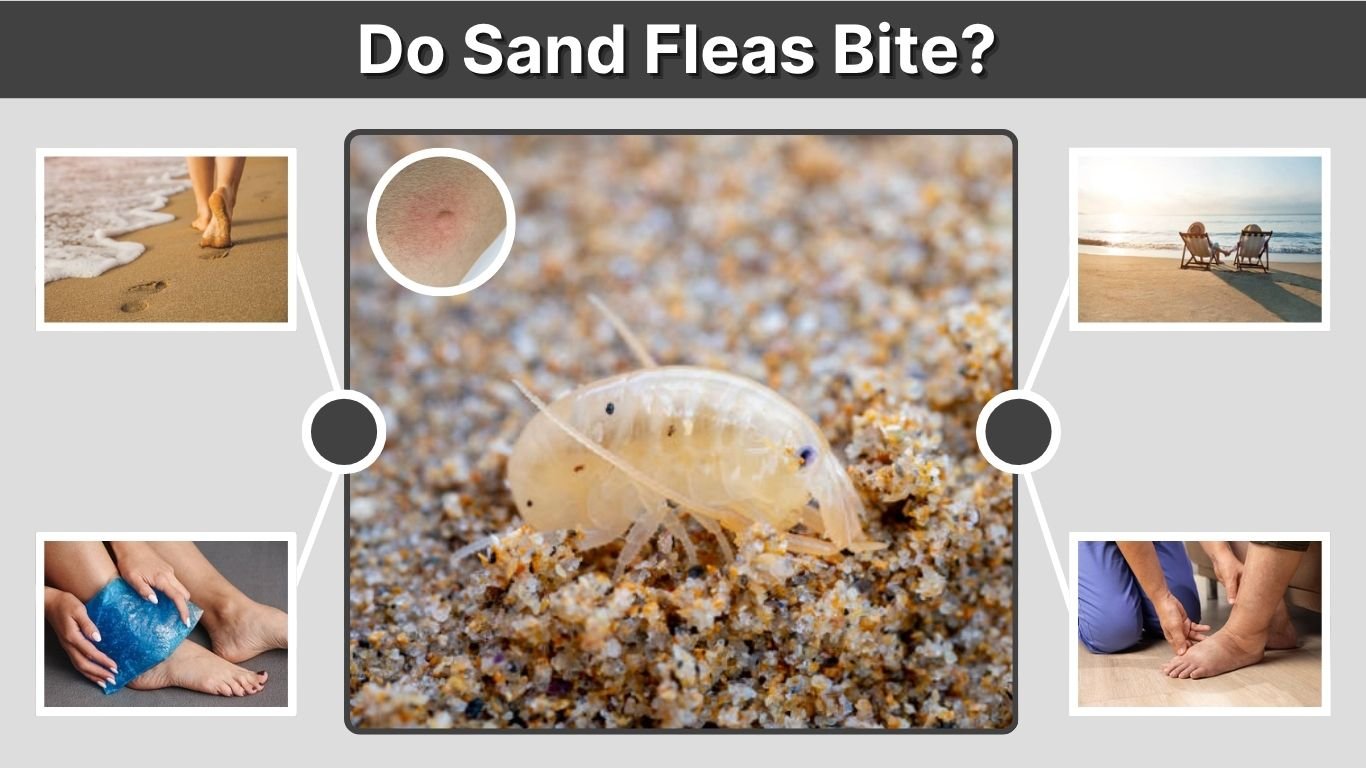
Yes, some creatures called sand fleas bite humans and animals. However, “sand flea” is an informal name used for several unrelated organisms. True chigoe fleas can bite and burrow into human skin, while biting midges and other beach insects may cause itchy bumps. In contrast, the tiny jumping crustaceans commonly called beach fleas or sand hoppers are harmless and do not bite people. Correctly identifying the cause is important because ordinary bites require simple care, while an embedded chigoe flea needs medical treatment.
What Are Sand Fleas?
The term “sand flea” can describe several small animals found around beaches, sandy soil, farms, or tropical communities. They do not all behave in the same way.
| Organism called a sand flea | Does it bite? | Main concern |
| Chigoe flea, Tunga penetrans | Yes | Females can embed in skin and cause tungiasis |
| Ordinary animal fleas | Yes | Itchy bites and possible flea-borne infections |
| Biting midges or beach gnats | Yes | Red, itchy bumps |
| Amphipod beach hoppers | No | Harmless crustaceans that feed on organic debris |
Beach hoppers are small crustaceans rather than true fleas. They jump through seaweed and beach debris but do not feed on human blood. True fleas are insects that survive by feeding on animal or human blood.
Do Sand Fleas Bite Humans?
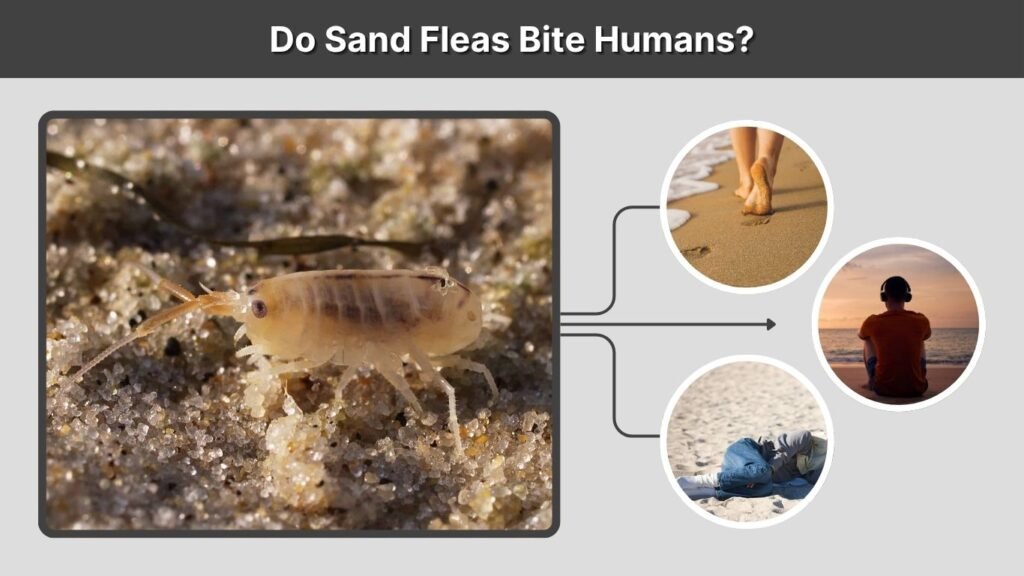
True sand fleas and several biting insects found near beaches can bite humans. Ordinary bites usually cause small, itchy bumps. Chigoe fleas are more serious because fertilized females can penetrate the skin, especially around the toes, soles, and areas near the toenails.
Exposure may occur when a person:
- Walks barefoot on infested soil or sand
- Sits directly on a beach or sandy ground
- Visits an area containing biting midges
- Sleeps in housing with sandy or earthen floors
- Handles an animal carrying fleas
Not every itchy bump acquired at a beach is caused by a true sand flea. Mosquitoes, biting midges, regular fleas, mites, and other insects can produce similar skin reactions.
What Do Sand Flea Bites Look Like?
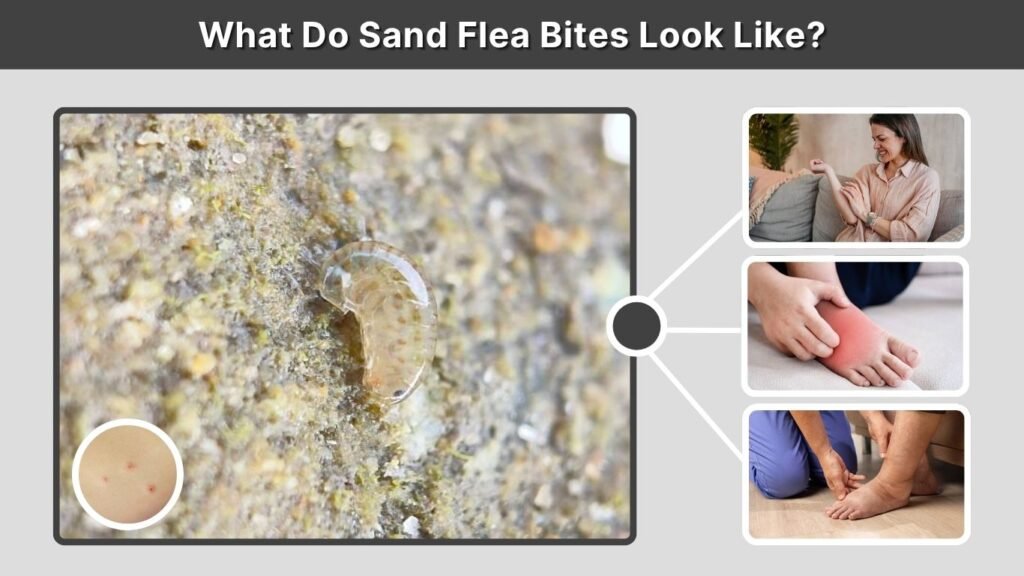
Ordinary bites may appear as small red or skin-colored bumps. They can occur in clusters, short lines, or scattered patches and may resemble mosquito, regular flea, or bedbug bites.
Common symptoms include:
- Intense itching
- Small raised bumps
- Redness or discoloration
- Mild swelling
- Burning or tenderness
- Occasional blisters
The feet, ankles, and lower legs are commonly affected because these areas are closest to the ground. However, bites can appear elsewhere when someone lies or sits on infested sand. Flea bites frequently form clusters or short lines and often occur around the feet, calves, and ankles.
What Does Tungiasis Look Like?
Tungiasis looks different from an ordinary surface bite. It develops when a female chigoe flea embeds itself in the skin.
A typical lesion may appear as:
- A round white, gray, or yellowish bump
- A dark dot or opening in the center
- Swollen or inflamed surrounding skin
- Increasing pain or itching
- A lesion located near a toe, nail, heel, or sole
The central dark point is associated with the embedded flea. Multiple fleas can create numerous lesions and make walking difficult. Tungiasis can also lead to ulcers, abscesses, nail damage, and secondary bacterial infection.
Why Do Sand Flea Bites Show Up Days Later?
Some bites become itchy or visible shortly after exposure, while others develop gradually as the immune system reacts to substances introduced during feeding. A person may therefore notice the bumps later that day or after leaving the beach.
Delayed marks can also result from:
- Increasing inflammation around an earlier bite
- Continued exposure to fleas at home or in clothing
- Scratching that makes previously minor bumps noticeable
- A different insect with a delayed skin reaction
- Gradual development of a tungiasis lesion
New bumps appearing over several days do not necessarily mean the original bites are spreading.
Do Sand Flea Bites Spread?
Ordinary sand flea bites do not spread across the body like a contagious rash. However, additional bumps may appear because the reaction was delayed or because the person continues to encounter biting insects.
Tungiasis is also not spread through casual contact with another person. Nevertheless, several female fleas can penetrate the skin separately, producing multiple lesions in an exposed person.
How Long Do Sand Flea Bites Last?
Mild itchy bites may begin improving within several days, although marks can last longer in sensitive people. Healing time depends on the organism, number of bites, immune reaction, scratching, and whether infection develops.
| Reaction | Expected course |
| Mild itchy bumps | Often improve within several days |
| Strong local reaction | May remain for one to two weeks |
| Scratched or blistered bites | Take longer to heal |
| Infected bites | May worsen without treatment |
| Tungiasis | Persists while the flea remains embedded |
An embedded chigoe flea should not be treated like an ordinary itchy bump. It needs assessment and appropriate removal or treatment by a healthcare professional.
How to Treat Sand Flea Bites
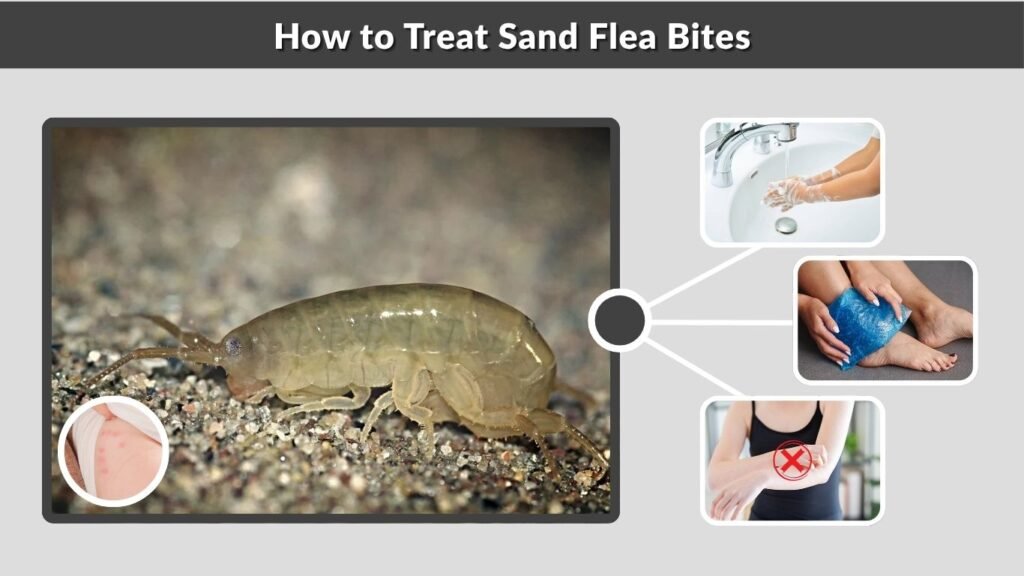
Most mild surface bites can be treated at home. The goals are to reduce itching and swelling while preventing skin infection.
Wash the Skin
Gently clean the area with soap and water. Pat it dry rather than rubbing it.
Apply a Cold Compress
Apply a cold cloth or an ice pack wrapped in fabric for at least 10 minutes. Cold treatment can reduce swelling, pain, and itching. Never place ice directly against the skin.
Control the Itching
A pharmacist may recommend an oral antihistamine or mild steroid cream such as hydrocortisone. Follow the product instructions and obtain professional advice before treating young children, pregnant people, broken skin, or areas near the eyes.
Avoid Scratching
Scratching can break the skin and introduce bacteria. Keep fingernails short and avoid deliberately opening blisters.
Do not apply bleach, gasoline, undiluted essential oils, vinegar, or baking soda. These substances may irritate the skin and are not reliable treatments.
How to Treat an Embedded Sand Flea
Do not use a needle, knife, razor, or pin to dig out a suspected chigoe flea. Unsterile removal can leave part of the flea behind, damage the skin, and introduce infection.
A healthcare professional can confirm the diagnosis and provide appropriate treatment. Management may include sterile extraction, wound care, treatment of bacterial infection, and review of tetanus vaccination status. WHO guidance recognizes sterile removal and topical treatment approaches for tungiasis.
Do Sand Fleas Bite Dogs?
True fleas and some beach insects can bite dogs. Affected dogs may scratch, lick, chew their feet, develop red bumps, or lose fur around irritated areas.
However, the jumping crustaceans known as beach hoppers do not bite dogs or people. A veterinarian should examine a dog with persistent itching, open wounds, swelling, weakness, or suspected embedded parasites. Never apply human medications or unapproved pesticides to a pet.
How to Prevent Sand Flea Bites
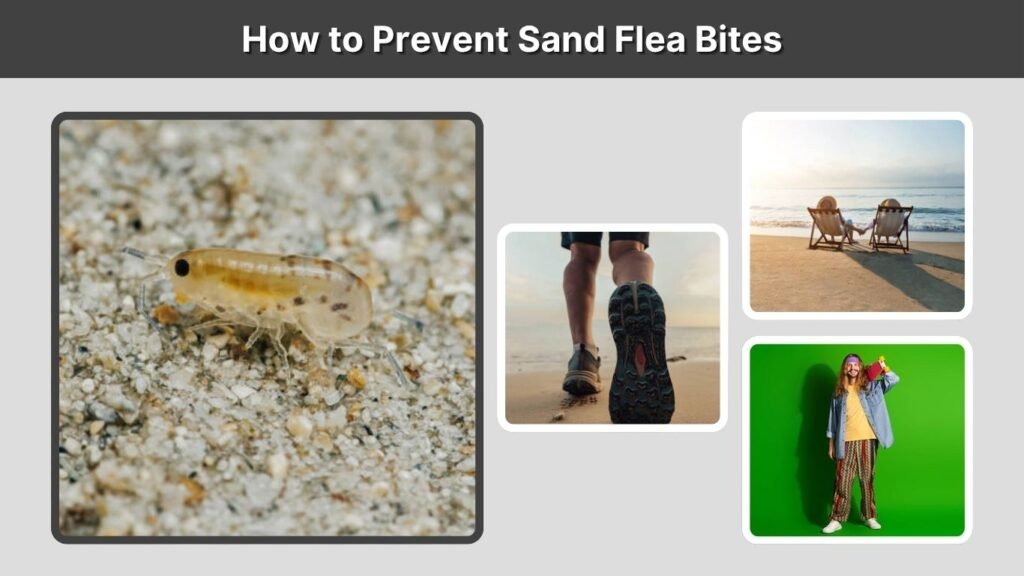
Risk can be reduced by:
- Wearing shoes on tropical beaches and sandy soil
- Avoiding direct contact with animal resting areas
- Using a beach chair or clean mat instead of sitting on bare sand
- Wearing long trousers when biting insects are active
- Keeping pets on suitable flea prevention
- Washing exposed skin after leaving the beach
- Using an approved insect repellent according to its label
The CDC recommends registered repellents containing ingredients such as DEET, picaridin, IR3535, oil of lemon eucalyptus, PMD, or 2-undecanone for preventing flea bites. Age restrictions and label directions must be followed.
When to Seek Medical Care
Contact a healthcare professional when a bite develops increasing redness, warmth, pain, swelling, pus, red streaks, or fever. These can indicate infection.
Seek prompt care for a white or yellowish lesion with a central black dot after travel to a tropical region, particularly when it appears on the feet or around the toenails.
Difficulty breathing, swelling of the lips or tongue, throat tightness, fainting, or severe dizziness may indicate a dangerous allergic reaction and requires emergency assistance.
FAQs
Do sand fleas bite itches?
Yes. Bites from true fleas and beach-biting insects commonly produce itching, redness, and mild swelling. The itching may begin quickly or develop later as the immune response increases. Embedded chigoe fleas can cause especially intense and persistent discomfort.
Do sand flea bites go away on their own?
Mild surface bites often improve with time and basic skin care. Tungiasis does not behave like an ordinary bite because the flea remains inside the skin. A suspected embedded flea should be examined by a healthcare professional rather than left untreated.
Do sand flea bites leave scars?
Most mild bites heal without permanent scars. Scarring or dark marks are more likely when the skin is repeatedly scratched, infected, blistered, or affected by tungiasis. Avoid picking scabs and seek care for wounds that are not healing.
Do sand fleas bite through clothes?
Biting insects may reach exposed skin or enter loose clothing. Covering the feet and legs can reduce exposure, although thin or open clothing does not provide complete protection. Chigoe fleas primarily penetrate skin that directly contacts infested ground.
Do sand fleas bite in the water?
Many organisms called sand fleas are encountered on damp sand, shoreline debris, or soil rather than while swimming. Bites noticed after entering the water may have occurred earlier on the beach or may have been caused by another aquatic or shoreline organism.
