
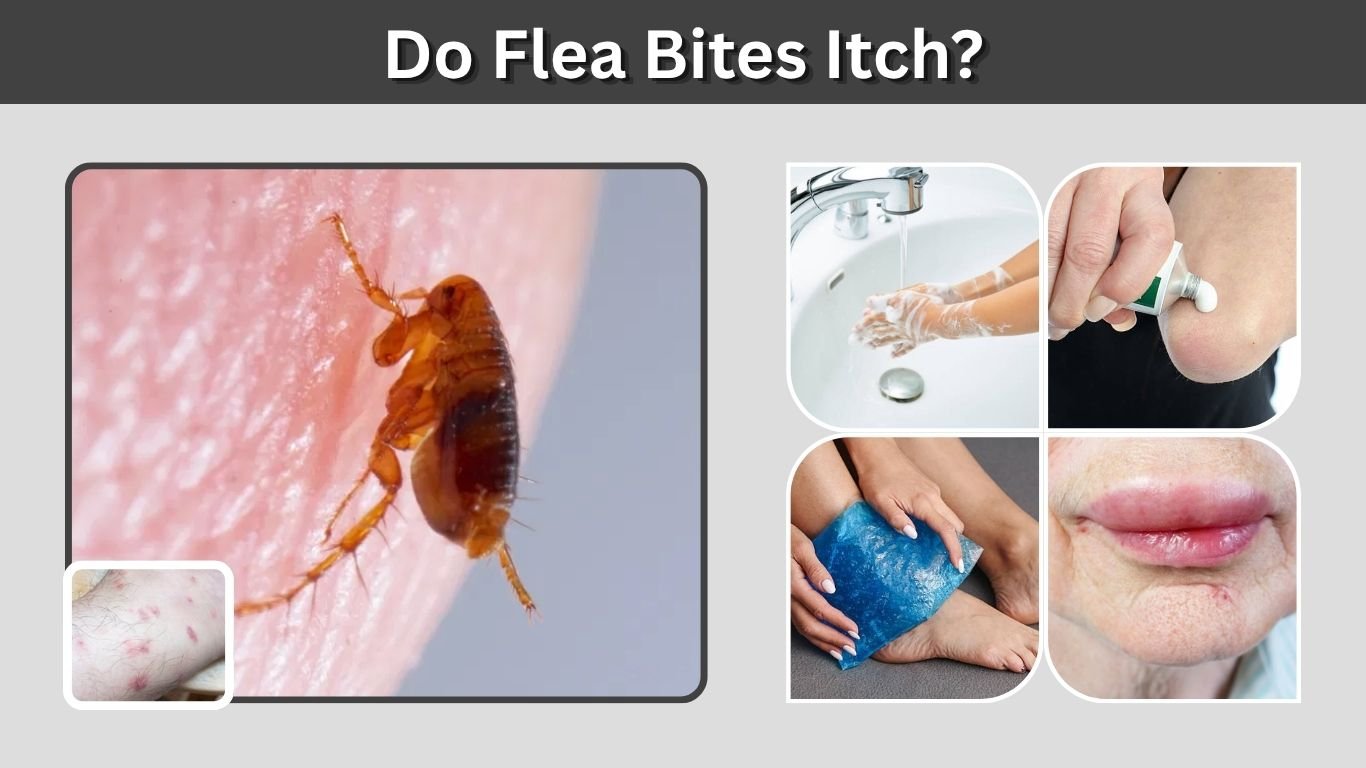
Yes, flea bites usually itch—sometimes intensely. The reaction happens because a flea releases saliva into the skin while feeding. Your immune system recognizes substances in that saliva as foreign and releases histamine, causing itching, redness, and swelling. Most uncomplicated flea bites settle within a few days, but itching may last longer when you are sensitive to flea saliva, scratch the skin, or continue receiving new bites.
Why Do Flea Bites Itch?
Fleas use piercing mouthparts to reach blood vessels beneath the skin. During feeding, they introduce saliva containing substances that help them take a blood meal. The immune system may react to these substances by releasing histamine around the bite. This produces the familiar itchy, raised bump.
The intensity varies from person to person. Someone with greater sensitivity may develop severe itching, larger swollen bumps, or multiple inflamed spots, while another person exposed to the same fleas may have only mild marks.
Why Do Flea Bites Itch So Badly?
Flea bites may feel unusually itchy because fleas often bite several times in a small area. Multiple reactions close together can create a concentrated patch of inflammation.
Itching may also become worse because of:
- An allergy or sensitivity to flea saliva
- Numerous bites on the same area
- Heat, sweating, or tight clothing
- Dry or already irritated skin
- Repeated scratching
- New bites occurring near older ones
Scratching temporarily stimulates the nerves around the bite, but it also increases irritation and may break the skin.
When Do Flea Bites Start Itching?
Flea bites may begin itching shortly after the flea feeds. However, the timing depends on the individual immune response. Some people notice burning or itching immediately, while others develop visible, itchy bumps later.
A flea bite commonly appears as a small, raised, discolored bump. Several bites may form an irregular cluster or short line, particularly around the feet, ankles, and lower legs.
Do Flea Bites Always Itch?
No. Although itching is the most common symptom, not everyone reacts in the same way. Some bites cause mild redness without noticeable itching. Others produce severe itching, swelling, tenderness, or small blisters.
A lack of itching does not rule out flea exposure, especially when live fleas or flea dirt have been found on pets or inside the home.
How Long Do Flea Bites Itch?
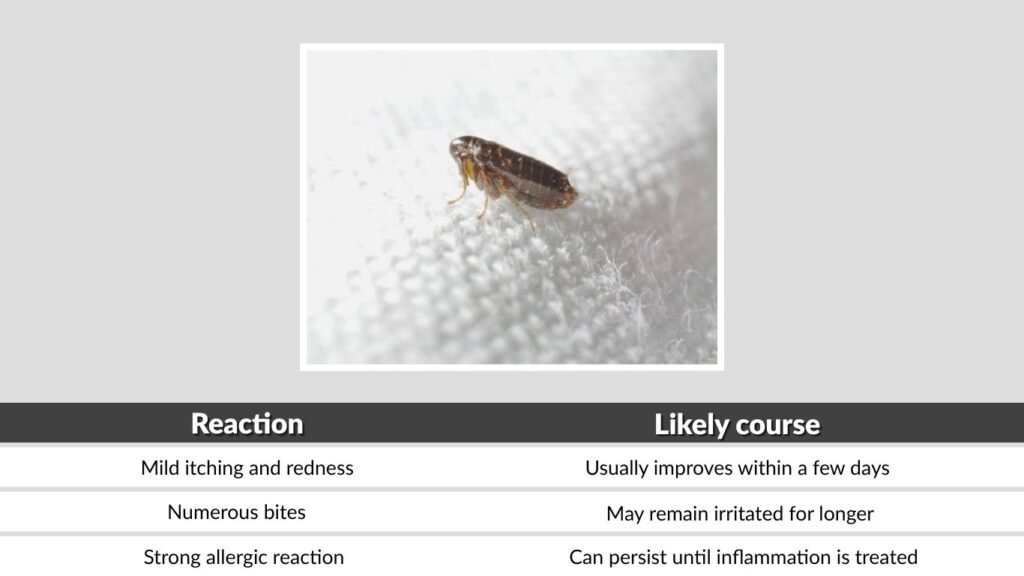
Most uncomplicated flea bites and their itching improve within a few days. More significant insect-bite reactions can require a week or two to heal fully, especially when the skin is repeatedly scratched or highly inflamed.
| Reaction | Likely course |
| Mild itching and redness | Usually improves within a few days |
| Numerous bites | May remain irritated for longer |
| Strong allergic reaction | Can persist until inflammation is treated |
| Scratched or broken skin | Takes longer to heal |
| Infected bite | May worsen without treatment |
| Repeated new exposure | Fresh itchy bumps continue appearing |
Why Do Flea Bites Itch for Days or Weeks?
Persistent itching may result from prolonged inflammation, repeated scratching, an allergic reaction, or ongoing exposure. Flea eggs, larvae, and pupae can remain in carpets, bedding, furniture, and floor gaps even after adult fleas on a pet have been treated.
When fresh bumps continue appearing, the problem may be new bites rather than old bites refusing to heal. Controlling fleas on every pet and throughout the home is necessary to stop the cycle.
Why Do Flea Bites Itch More at Night?
The bites do not necessarily become biologically more severe at night. Itching may feel stronger because there are fewer distractions, the skin becomes warmer under blankets, and bedding rubs against inflamed areas.
Fleas may also remain active in pet bedding, carpets, or furniture near where a person sleeps. Therefore, genuinely new nighttime bites are possible when an infestation remains untreated.
How Do You Stop Flea Bites From Itching?
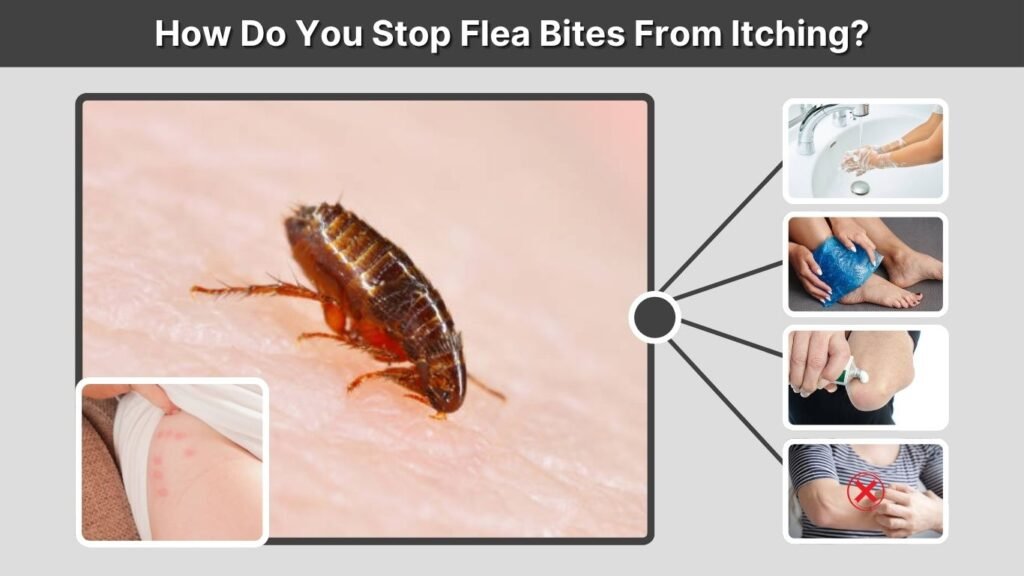
Most mild reactions can be managed with simple skin care and over-the-counter treatment. The objective is to reduce inflammation, protect the skin, and avoid secondary infection.
Wash the Affected Skin
Gently wash the bites with soap and water, then pat the area dry. Cleaning is particularly important when scratching has broken the skin.
Avoid applying bleach, disinfectant, undiluted alcohol, toothpaste, or other harsh household substances. These can increase irritation instead of relieving it.
Apply a Cold Compress
Place a cold pack wrapped in a clean cloth over the itchy area. It can be applied for about 10 minutes, removed for 10 minutes, and repeated when needed. Cold treatment can reduce itching, pain, and swelling.
Never put ice directly against the skin.
Use an Anti-Itch Cream
Over-the-counter 1% hydrocortisone cream may reduce itching and inflammation. Apply it only according to the label instructions. Do not use it on infected, badly broken, or severely blistered skin unless advised by a healthcare professional.
Ask a pharmacist or doctor before using medicated creams on babies, young children, during pregnancy, or close to the eyes and other sensitive areas.
Consider an Oral Antihistamine
An oral antihistamine may help when several bites are intensely itchy. Some antihistamines cause drowsiness or interact with other medicines, so follow the label and ask a pharmacist which option is appropriate.
Avoid Scratching
Scratching can create open sores and allow bacteria to enter. Keep fingernails short and consider loosely covering the bites at night when unconscious scratching is a problem.
When the skin has already opened, wash it gently and protect it with a clean dressing.
Do Flea Bites Continue Itching After Fleas Are Gone?
Yes. Killing the fleas does not immediately stop the immune reaction already occurring in the skin. Existing bumps may continue itching for several days while the inflammation settles.
However, continued new bumps may mean that immature fleas are still emerging. Vacuum floors, carpets, furniture, and wall edges, wash pet bedding, and use veterinarian-recommended treatment on every pet in the household.
Do Flea Bites Itch Like Mosquito or Bedbug Bites?
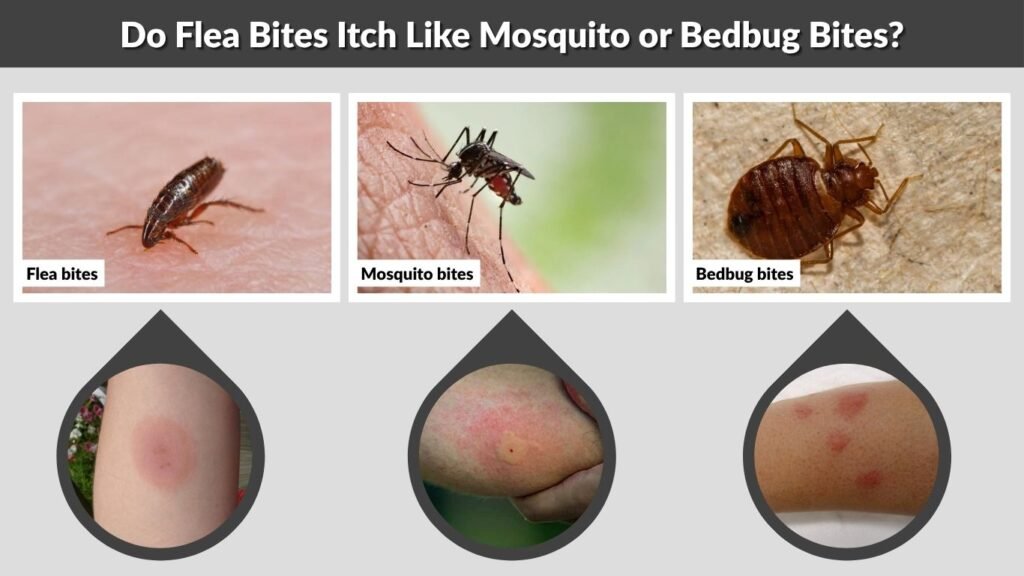
All three can cause red, itchy bumps, making identification by appearance alone unreliable.
| Feature | Flea bites | Mosquito bites | Bedbug bites |
| Common location | Ankles, feet, lower legs | Any exposed skin | Skin exposed while sleeping |
| Typical appearance | Small bumps in clusters | Puffy individual welts | Clusters, lines, or scattered bumps |
| Common source | Pets, carpets, bedding | Outdoor or indoor mosquitoes | Beds, furniture, wall gaps |
| Itching | Often intense | Mild to intense | Variable |
Finding fleas, flea dirt, or an infested pet provides stronger evidence than the bite pattern alone.
Do Sand Flea Bites Itch?
Yes. Creatures commonly called sand fleas can cause itchy red bumps that usually improve within several days. However, “sand flea” may also refer to the chigoe flea, which can embed itself in the skin and cause tungiasis.
A round white lesion with a dark central spot—particularly around the toes or soles after travel to an affected tropical region—requires medical assessment. Do not attempt to dig an embedded flea out with a needle or other household tool.
Do Flea Bites Itch on Dogs and Cats?
Yes. Pets may scratch, bite, lick, or groom themselves excessively after flea bites. Animals with flea-allergy dermatitis can react severely to only a small number of bites.
Use a flea treatment specifically approved for the animal’s species, age, and weight. Never use a dog-only flea product on a cat. Contact a veterinarian when a pet develops extensive hair loss, bleeding, scabs, infected skin, weakness, or pale gums.
When Should You Seek Medical Care?
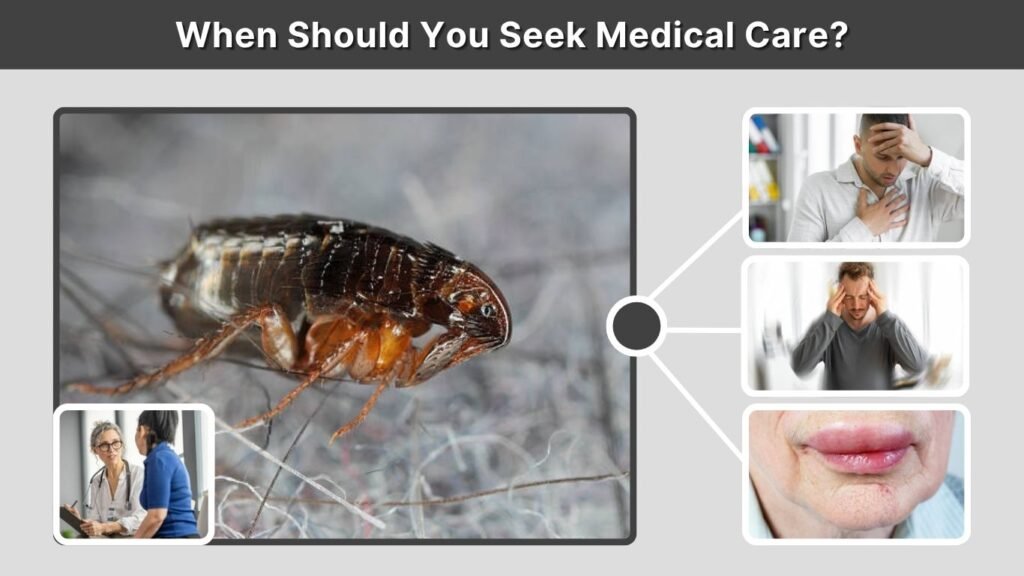
Contact a healthcare professional when a suspected flea bite develops increasing pain, warmth, redness, swelling, pus, drainage, red streaks, or fever. These may indicate infection.
Seek urgent emergency help for:
- Difficulty breathing or swallowing
- Swelling of the mouth, lips, tongue, or throat
- Severe dizziness or fainting
- Confusion
- Widespread hives
Fleas can occasionally transmit disease-causing germs. Fever, headache, chills, unusual rash, or swollen lymph nodes following significant flea exposure should be medically evaluated.
FAQs
How quickly do flea bites start itching?
They may itch shortly after the flea feeds, although some people develop symptoms later. The timing depends on individual sensitivity. A small bump, surrounding redness, or a group of marks may become more noticeable as the immune reaction develops.
How many days do fleas bite?
Most uncomplicated bites improve within a few days. Strong allergic reactions, repeated exposure, scratching, and infection can extend the symptoms. Bites that worsen or fail to improve should be assessed by a healthcare professional.
Why do old flea bites start itching again?
Healing skin can itch intermittently, especially when it becomes hot, dry, or irritated by clothing. Fresh bites near the same location may also make old spots seem active again. Check pets, carpets, bedding, and furniture for continuing flea activity.
Can flea bites itch for a month?
Ordinary flea bites should not remain severely itchy for a month. Prolonged symptoms may result from repeated bites, allergy, infection, another skin condition, or incorrect identification. Arrange a medical assessment when symptoms persist that long.
What is the fastest way to relieve flea-bite itching?
Wash the skin, apply a wrapped cold pack, and avoid scratching. An appropriate hydrocortisone cream or oral antihistamine may provide additional relief. Follow label directions and consult a pharmacist when treating children or taking other medicines.
