
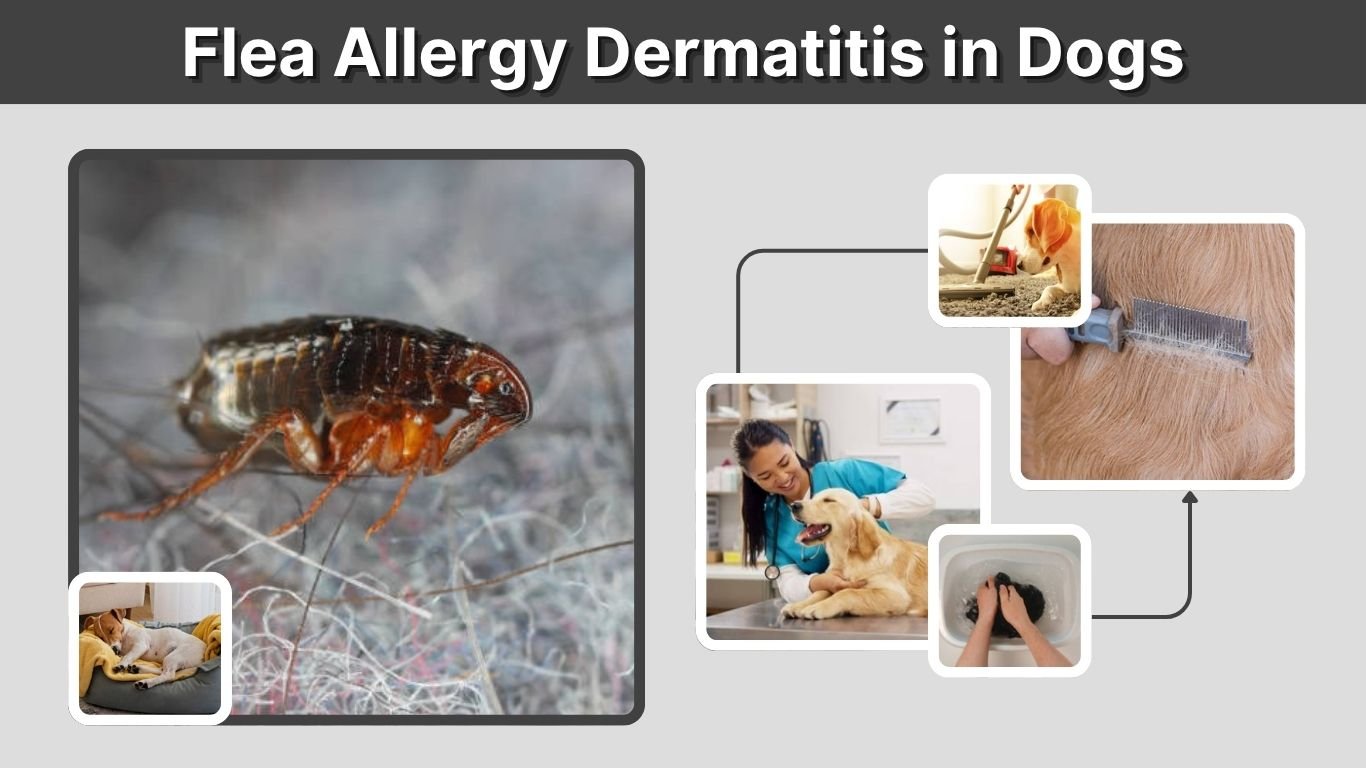
Flea allergy dermatitis in dogs is an allergic reaction to proteins in flea saliva. A sensitive dog may experience severe itching, redness, scabs, and hair loss after only one or two flea bites. Because the reaction can continue after the flea has disappeared, owners may not find live fleas during an inspection. The lower back, base of the tail, rump, abdomen, and rear legs are commonly affected. Successful treatment requires eliminating fleas from every pet and the home while also managing inflammation, damaged skin, and possible infection.
What Is Flea Allergy Dermatitis in Dogs?
Flea allergy dermatitis, often shortened to FAD, occurs when a dog’s immune system overreacts to flea saliva injected during feeding.
A dog without this allergy may experience mild irritation from several bites. An allergic dog can develop intense itching from a very small number of fleas. This is why the absence of an obvious infestation does not rule out flea allergy dermatitis.
The condition can affect dogs of different ages and breeds. Repeated exposure may make reactions more noticeable over time.
Symptoms of Flea Allergy in Dogs
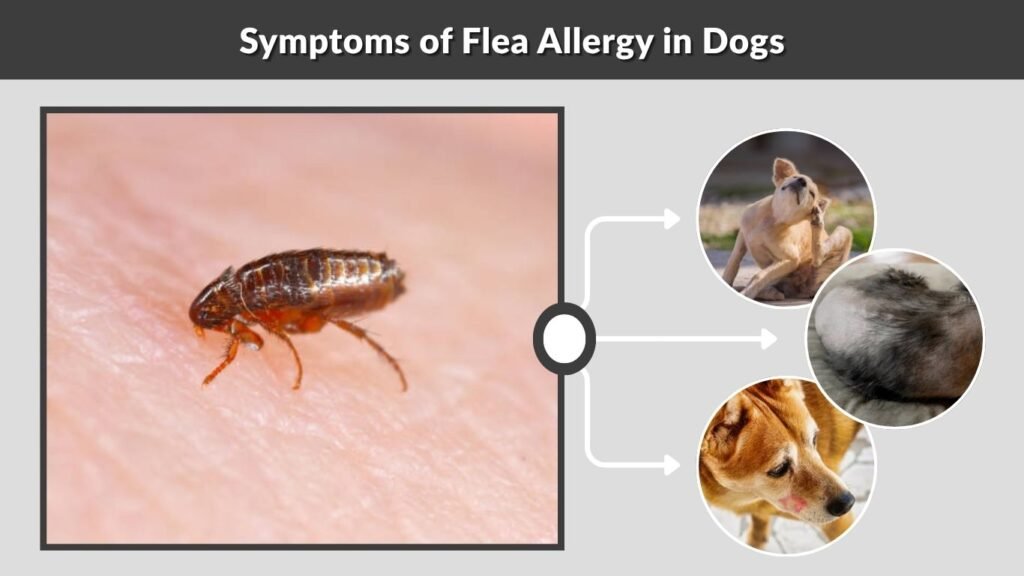
The most recognizable symptom is persistent itching. Dogs may scratch, lick, rub, or bite their skin throughout the day and night.
Common Symptoms
- Intense scratching and chewing
- Hair loss around the tail and lower back
- Red or inflamed skin
- Small bumps or crusty scabs
- Flea dirt in the coat
- Restlessness
- Repeated licking of the rear legs
- Thickened or darkened skin
- Moist, painful sores
- Unpleasant skin odor
Symptoms often become worse as the dog damages its own skin through repeated scratching and chewing.
What Does Flea Allergy Dermatitis Look Like?
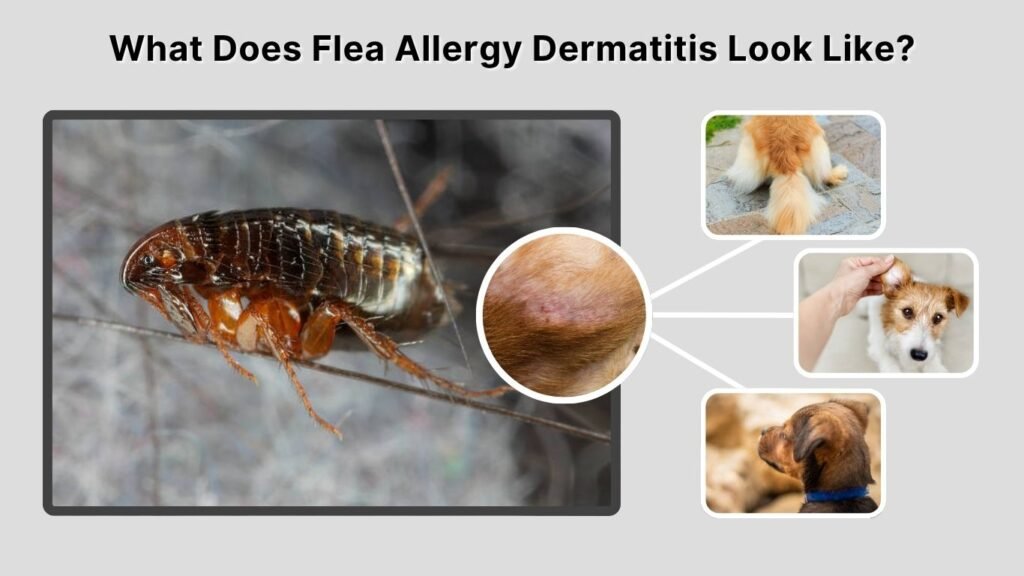
Flea allergy dermatitis may begin as tiny red bumps that are difficult to see beneath the fur. As the dog continues scratching, the skin can become raw, crusted, swollen, or infected.
Commonly Affected Areas
Flea-related skin problems frequently develop around:
- The base of the tail
- Lower back
- Rump
- Rear thighs
- Abdomen
- Groin
- Flanks
- Neck
Hair loss across the lower back and tail base is particularly suggestive of flea allergy. However, skin infections, mites, and other allergies can create similar symptoms.
Flea Allergy Dermatitis vs. Ordinary Flea Bites
Dogs do not respond to flea bites in the same way. A dog without an allergy may scratch mildly when several fleas are present. An allergic dog may have severe symptoms even when only one flea is found.
| Feature | Ordinary flea irritation | Flea allergy dermatitis |
| Number of fleas | Often several | One or a few may trigger it |
| Itching | Mild to moderate | Frequently intense |
| Hair loss | Limited or absent | Common |
| Scabs | May occur | Often widespread |
| Skin infection | Less common | More likely |
| Reaction duration | Usually improves after control | May continue while skin heals |
How to Check a Dog for Fleas
Use a fine-toothed flea comb to inspect the coat. Concentrate on the lower back, tail base, abdomen, neck, and groin.
Adult fleas are small, dark, and fast-moving. They may disappear quickly through the fur.
Testing for Flea Dirt
Flea dirt is flea waste containing digested blood. It resembles black pepper or dark grains in the coat.
To test it:
- Collect the dark particles with a flea comb.
- Place them on a damp white tissue.
- Wait for the moisture to spread.
- Look for a reddish-brown stain.
Finding flea dirt strongly suggests that fleas have recently fed on the dog. Not finding fleas or flea dirt does not completely exclude flea allergy.
Fleas vs. Other Allergies in Dogs
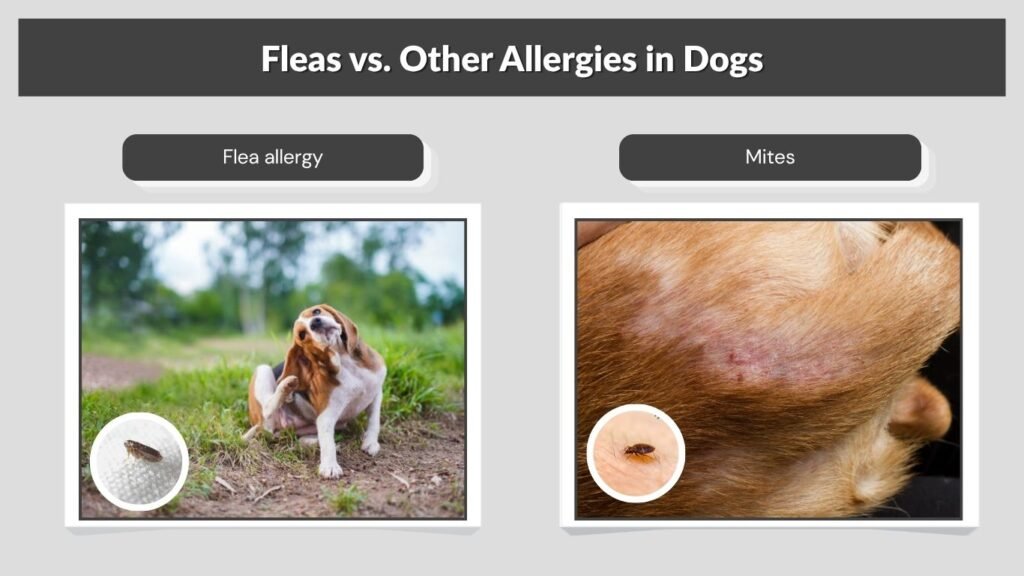
Environmental and food allergies may also cause itching, redness, ear problems, and hair loss.
| Condition | Common clues |
| Flea allergy | Tail base, lower back, and rear-leg irritation |
| Environmental allergy | Paw licking, facial rubbing, seasonal itching |
| Food allergy | Ongoing itching, ear problems, digestive symptoms in some dogs |
| Mites | Crusting, scaling, and patchy hair loss |
| Skin infection | Odor, discharge, pain, or spreading inflammation |
| Contact irritation | Redness on the belly, feet, or exposed skin |
A dog can have flea allergy dermatitis and another allergy simultaneously. Veterinary testing may be needed when symptoms continue despite flea control.
How Veterinarians Diagnose Flea Allergy Dermatitis
Diagnosis is based on the dog’s symptoms, the distribution of skin lesions, evidence of fleas, and its response to consistent flea control.
A veterinarian may:
- Examine the coat with a flea comb
- Look for flea dirt
- Check the skin for infection
- Perform skin scrapings
- Examine samples for bacteria or yeast
- Rule out mites and other parasites
- Review the dog’s flea-prevention history
- Recommend an allergy-control trial
Because highly allergic dogs may groom fleas away, diagnosis does not always depend on finding a live flea.
How to Treat Flea Allergy Dermatitis in Dogs
Treatment has three goals: eliminate fleas, relieve the allergic reaction, and heal any damaged or infected skin.
Eliminate Fleas From the Dog
A veterinarian can recommend a flea product based on the dog’s age, weight, health, lifestyle, and previous reactions.
Products may include:
- Oral flea medicines
- Topical treatments
- Flea collars
- Dog-safe shampoos
- Veterinary sprays
Use the correct product and dose for the individual animal. Do not combine flea treatments unless a veterinarian approves the combination.
Never apply a dog-only product to a cat. Some ingredients considered safe for dogs can be extremely dangerous to cats.
Treat Every Pet
All dogs and cats in the home may need species-appropriate flea protection. An untreated pet can continue carrying fleas and maintaining the infestation.
Use a separate product that is specifically labeled and dosed for each animal.
Control the Home Infestation
Adult fleas spend much of their time on pets, but eggs, larvae, and pupae develop in the environment.
To reduce them:
- Vacuum carpets and rugs frequently.
- Clean upholstered furniture.
- Vacuum beneath beds and furniture.
- Wash pet bedding regularly.
- Clean crates and pet resting areas.
- Empty vacuum contents outdoors.
- Continue cleaning after adult fleas disappear.
Flea pupae are protected inside cocoons and may emerge later. An established infestation can therefore take weeks or longer to eliminate.
Treating the Itching and Inflammation
Eliminating fleas stops new bites, but the dog may remain itchy while the allergic reaction and skin damage improve.
A veterinarian may prescribe medication to control inflammation and itching. The best option depends on symptom severity and the dog’s medical history.
Do not give human antihistamines, including Benadryl, without veterinary instructions. The correct choice and dose depend on the dog, and combination products may contain additional ingredients that are unsafe for pets.
Treating Secondary Skin Infections
Excessive scratching can damage the skin and allow bacteria or yeast to multiply. Flea control alone may not resolve an established infection.
Possible signs include:
- Pus or discharge
- Strong odor
- Moist sores
- Painful skin
- Thick crusts
- Rapidly spreading redness
- Worsening hair loss
A veterinarian may prescribe an antibiotic, antifungal treatment, medicated shampoo, or another therapy after examining the skin.
Home Treatment for Flea Allergy Dermatitis
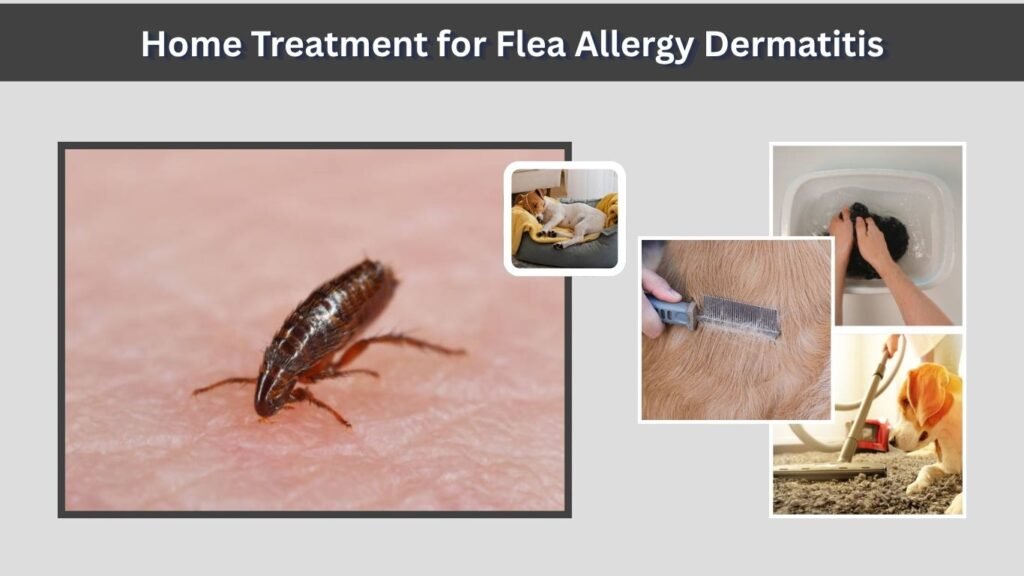
Home care can support veterinary treatment, but it cannot cure the allergy itself. The dog will remain sensitive to flea saliva and can react again after future bites.
Helpful home-care steps include:
- Using a flea comb daily
- Washing bedding
- Vacuuming pet areas
- Preventing scratching
- Keeping irritated skin clean and dry
- Following the flea-treatment schedule
- Checking every household pet
Avoid applying vinegar, alcohol, hydrogen peroxide, essential oils, concentrated herbal mixtures, or human skin creams to damaged areas. These substances may cause irritation or toxicity.
A gentle bath with a shampoo specifically labeled for dogs may remove flea dirt and soothe the coat. However, bathing too soon before or after certain topical flea products may reduce their effectiveness, so follow the product label or veterinary instructions.
How Long Does Flea Allergy Dermatitis Last?
Itching may begin improving after effective flea control and appropriate treatment, but damaged skin and hair loss require additional time to heal.
Recovery depends on:
- Severity of the reaction
- Whether fleas have been completely controlled
- Presence of infection
- Continued scratching
- The dog’s overall health
- Consistency of environmental cleaning
New symptoms usually mean the dog is still encountering fleas or another skin condition is present. Flea-allergic dogs generally require reliable prevention throughout the year.
Can Flea Allergy Dermatitis Be Cured?
The allergy itself usually cannot be permanently cured. Management focuses on preventing flea bites and controlling reactions when exposure occurs.
Even a single flea may restart the cycle in a highly sensitive dog. Continuous prevention is generally more effective than treating only after scratching begins.
When to Contact a Veterinarian
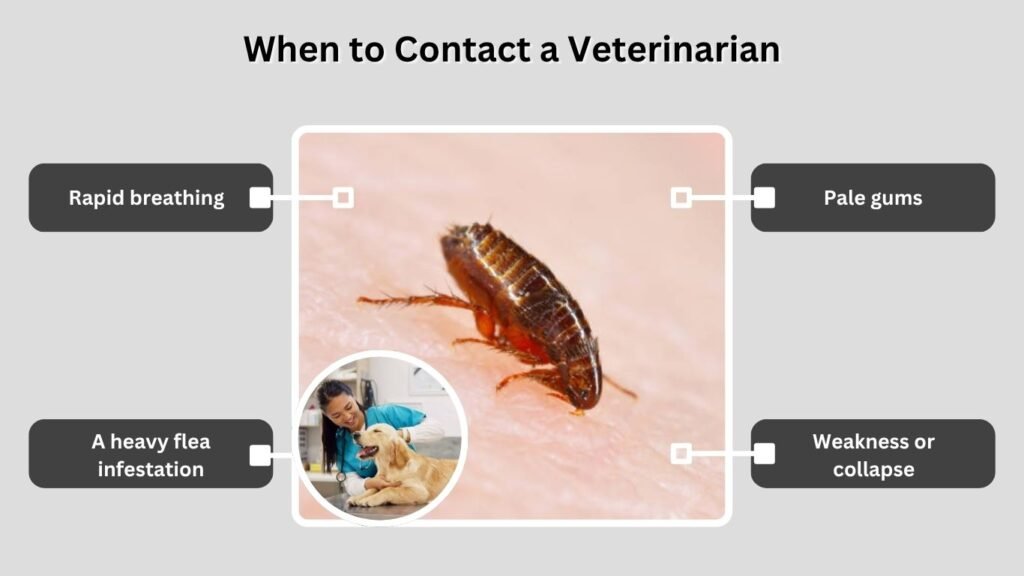
Arrange a veterinary examination when the dog has severe itching, open sores, hair loss, skin odor, discharge, or symptoms that continue despite flea treatment.
Prompt veterinary attention is especially important when the dog has:
- Pale gums
- Weakness or collapse
- Rapid breathing
- A heavy flea infestation
- Extensive infected skin
- Loss of appetite
- Fever or lethargy
- Tremors or poor coordination after medication
Puppies, older dogs, and small or medically fragile animals may develop anemia from severe flea infestations.
FAQs
Can one flea cause flea allergy dermatitis?
Yes. A highly sensitive dog may develop intense itching and skin inflammation after one or only a few flea bites. You may not find the flea because the dog can remove it while grooming.
What is the best treatment for flea allergy dermatitis?
Effective treatment combines continuous flea control for every pet, environmental cleaning, relief of inflammation, and treatment of secondary infections. A veterinarian should select the most suitable medicines.
Can I treat my dog’s flea allergy at home?
Flea combing, bathing with a dog-safe shampoo, washing bedding, and vacuuming can help. Severe itching, open wounds, infection, or ongoing hair loss requires veterinary care.
Will dog hair grow back after flea allergy dermatitis?
Hair often grows back after fleas are controlled and the skin heals. Regrowth may take several weeks or longer, depending on the severity of inflammation and whether an infection developed.
Does flea allergy dermatitis occur in winter?
Yes. Fleas can remain active throughout the year inside heated homes. Dogs with flea allergies may develop symptoms during winter when immature fleas survive in carpets, bedding, and furniture.
