
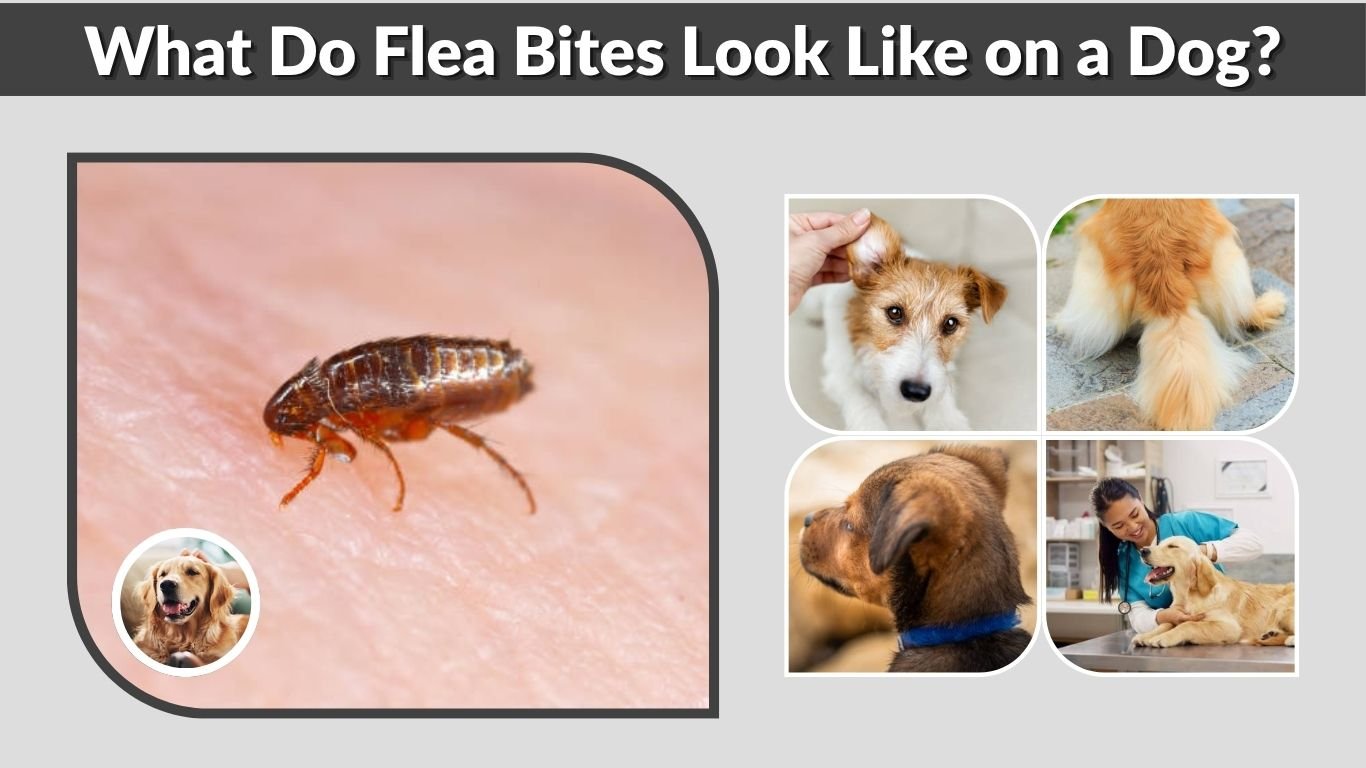
Flea bites on a dog often appear as tiny red bumps, irritated spots, or crusty scabs hidden beneath the fur. However, owners may notice the dog’s reaction—scratching, chewing, hair loss, and inflamed skin—before seeing individual bites. Dogs allergic to flea saliva can develop severe irritation after only a small number of bites. The lower back, base of the tail, rump, abdomen, and inner thighs are common problem areas. Because infections, mites, ticks, and other allergies can look similar, persistent or severe symptoms should be examined by a veterinarian.
What Flea Bites Look Like on Dogs
A flea bite may look like a small, raised red spot. Several bites can appear close together, although they are often difficult to see beneath a thick coat.
Common visible signs include:
- Tiny red or pink bumps
- Small crusts or scabs
- Red, inflamed skin
- Areas of thinning fur
- Scratches caused by the dog’s nails
- Moist or bleeding patches from chewing
- Darkened, thickened skin in chronic cases
- Black specks of flea dirt around the affected area
The skin damage is not always caused directly by the bite. Much of it develops when the dog repeatedly scratches, licks, or chews the itchy area.
Where Do Flea Bites Appear on a Dog?
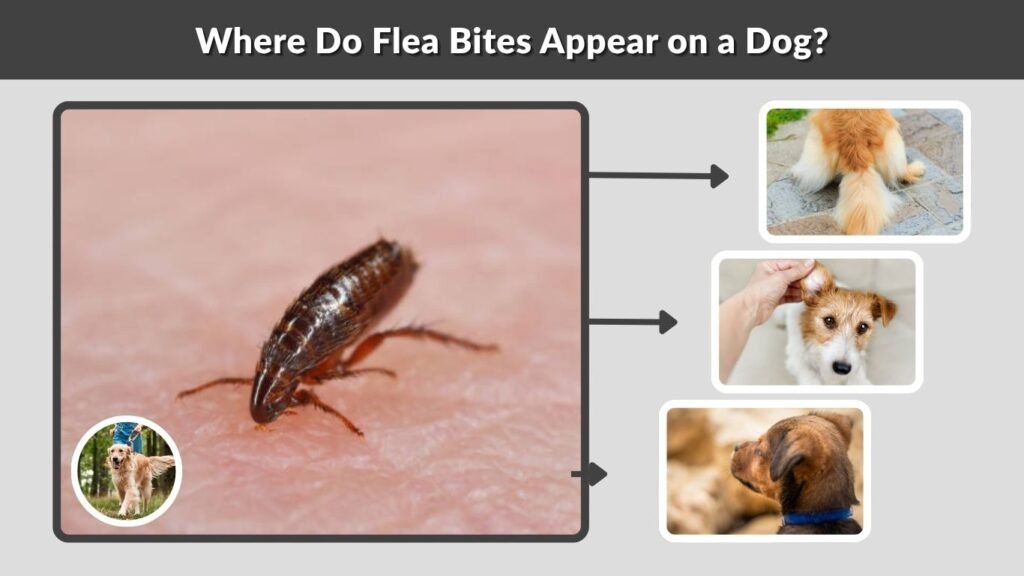
Fleas can bite almost anywhere, but they prefer warm, protected areas where they can move through the coat without being disturbed.
Base of the Tail and Lower Back
The area directly above the tail is one of the most characteristic locations for flea-related irritation. Dogs may chew the tail base, lose hair over the rump, or develop clusters of red, crusty lesions across the lower back.
Flea allergy dermatitis commonly affects the middle-to-lower back, tailhead, rump, and rear thighs.
Abdomen and Groin
The belly and groin have thinner hair, making bites and redness easier to notice. Look for small bumps, inflamed spots, or scabs on the lower abdomen and between the rear legs.
These areas can also develop rashes from contact allergies, grass, heat, or skin infections, so redness alone does not confirm fleas.
Inner and Back Thighs
Dogs may bite or lick their rear legs when fleas are present. Hair loss and inflamed skin can develop along the inner thighs or backs of the legs, particularly in dogs sensitive to flea saliva.
Neck and Ears
Fleas may hide around the neck, underneath collars, and behind the ears. However, intense ear scratching can also indicate ear mites, infection, or another allergy.
What Is Flea Allergy Dermatitis?
Flea allergy dermatitis is an allergic reaction to proteins in flea saliva. A sensitive dog can develop intense itching and skin lesions even when very few fleas are found.
Typical signs include:
- Severe itching
- Repeated chewing near the tail
- Hair loss
- Red bumps and crusts
- Inflamed or bleeding skin
- Thickened or darkened skin
- Secondary bacterial or yeast infections
The most common distribution involves the lower back, tail base, rump, and rear thighs. In severe or long-standing cases, irritation may spread to other parts of the body.
Flea Bites vs. Flea Dirt
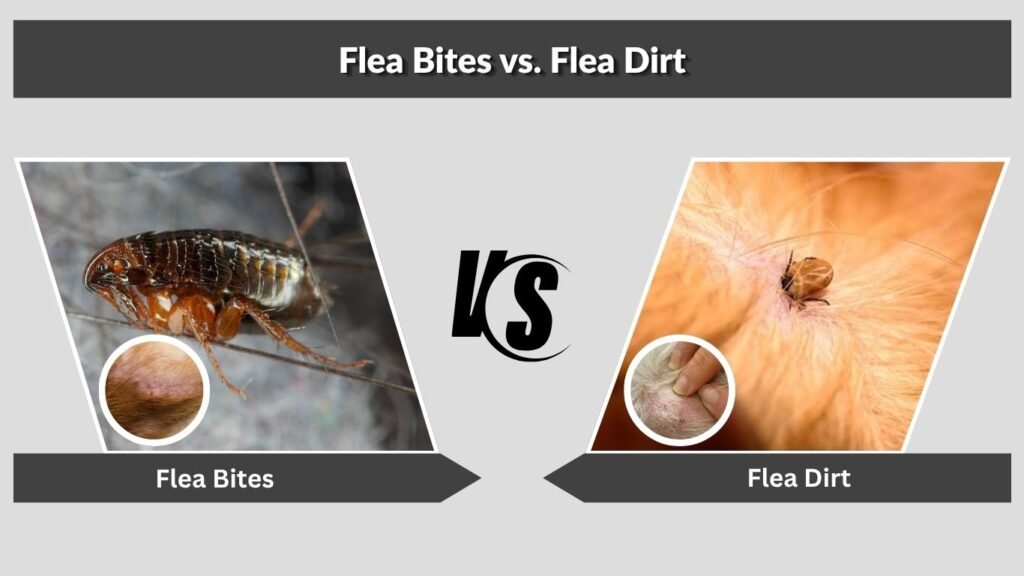
Flea dirt is flea feces containing digested blood. It looks like black pepper, dark dandruff, or tiny black grains caught in the coat.
To test suspected flea dirt:
- Collect several dark particles with a flea comb.
- Place them on a damp white paper towel.
- Wait for the particles to absorb moisture.
- Look for a reddish-brown stain around them.
Ordinary dirt generally remains dark, while flea dirt may dissolve into a rusty or reddish mark. Finding flea dirt strongly suggests that adult fleas have recently fed on the dog. Flea dirt is also used alongside symptoms and examination findings when diagnosing flea allergy dermatitis.
Can You See Fleas on a Dog?
Adult fleas are tiny, dark, wingless insects that move quickly through fur. They may look like small brown or black specks that suddenly disappear when the hair is separated.
Use a fine-toothed flea comb around:
- The base of the tail
- Lower back
- Abdomen
- Groin
- Neck
- Behind the ears
Not finding a live flea does not rule out an infestation. Dogs may remove fleas while grooming, and allergic dogs can react strongly to only a few bites.
Flea Bites vs. Other Skin Problems
Several conditions can resemble flea bites, making diagnosis based on appearance alone difficult.
| Condition | Common appearance or clue |
| Flea bites | Tiny red bumps, scabs, flea dirt, tail-base itching |
| Tick bite | One localized bump, sometimes with an attached tick |
| Mites | Intense itching, crusting, scaling, or patchy hair loss |
| Hot spot | Moist, painful, rapidly expanding red patch |
| Contact allergy | Redness on the belly, feet, or exposed skin |
| Food or environmental allergy | Recurrent itching, paw licking, ear problems |
| Skin infection | Odor, pus, crusts, swelling, or spreading redness |
A veterinarian may need to examine skin samples, rule out parasites, and assess the distribution of the lesions before identifying the cause.
What Do Infected Flea Bites Look Like?
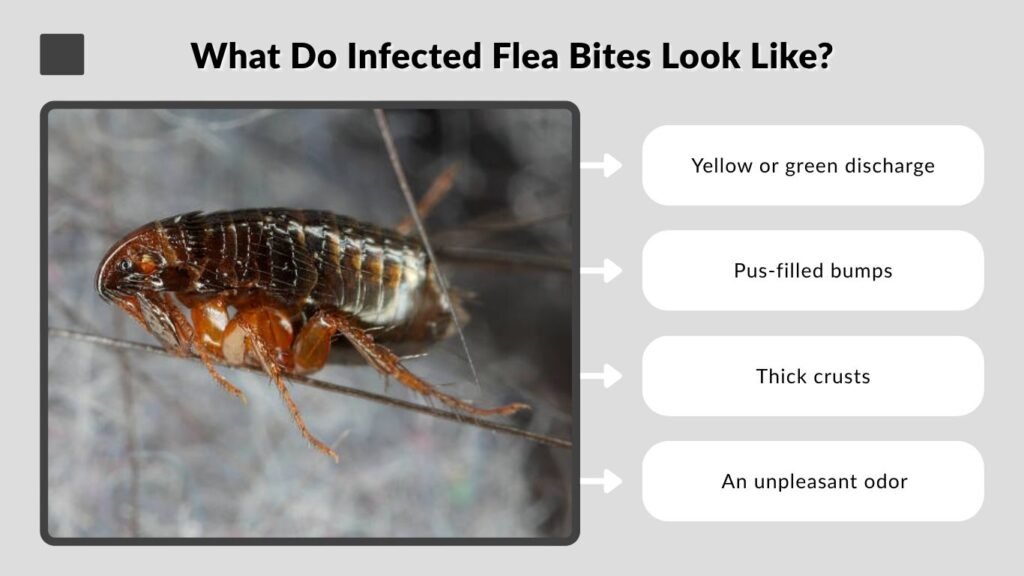
Scratching and chewing can break the skin and allow a secondary infection to develop. An infected area may become increasingly red, swollen, moist, painful, or foul-smelling.
Warning signs include:
- Yellow or green discharge
- Pus-filled bumps
- Thick crusts
- An unpleasant odor
- Warm or swollen skin
- Rapidly expanding hair loss
- Pain when the area is touched
- Lethargy or reduced appetite
Flea allergy dermatitis sometimes requires supportive veterinary care for itching and secondary skin disease in addition to flea control.
How to Treat Flea Bites on a Dog
Treatment must address the fleas as well as the damaged skin. Treating only the visible rash allows new bites to continue.
Use Appropriate Flea Control
Ask a veterinarian to recommend a product suitable for your dog’s age, weight, breed, health history, and lifestyle. Options may include oral medicines, topical treatments, collars, shampoos, or sprays.
Follow the label exactly, and never use a product intended for another species. Dogs with illnesses, previous product reactions, or seizure histories may require additional consideration when choosing treatment.
Clean the Environment
Flea eggs and immature stages commonly develop away from the dog. Wash pet bedding, vacuum carpets and upholstered furniture, and clean the places where the dog rests.
All household pets may need species-appropriate flea control because one untreated animal can allow the infestation to continue. Long-term management of flea allergy dermatitis requires treating the affected dog, other pets, and the home environment.
Protect the Damaged Skin
Prevent excessive licking or chewing while the skin heals. Avoid applying essential oils, vinegar, alcohol, human creams, or unapproved insecticides to irritated skin.
A veterinarian may prescribe treatment for inflammation, severe itching, or secondary infection. Do not give human pain relievers or allergy medicines unless a veterinarian provides specific instructions.
When Should You Call a Veterinarian?

Arrange a veterinary examination when the dog has severe itching, open wounds, spreading redness, significant hair loss, skin odor, or symptoms that do not improve after flea control.
Urgent care is particularly important when a dog develops:
- Pale gums
- Weakness or collapse
- Rapid breathing
- A very heavy flea infestation
- Extensive bleeding or infected skin
- Tremors, poor coordination, or seizures after treatment
- Vomiting, excessive drooling, or unusual behavior after treatment
Heavy flea infestations can cause anemia, especially in puppies, small dogs, older dogs, and animals with existing health conditions. Adverse reactions to flea products should also be reported promptly to a veterinarian.
FAQs
Are flea bites easy to see on dogs?
Flea bites can be difficult to see beneath the coat. Owners often notice scratching, chewing, flea dirt, scabs, redness, or hair loss before they identify an individual bite.
What color are flea bites on a dog?
They are usually red or pink, although crusted bites may appear brown or dark. Chronic scratching can cause the surrounding skin to become thickened, dark, or discolored.
Do flea bites appear in clusters?
Several small bumps or scabs may occur close together, particularly around the lower back and tail base. However, clustered bumps can also result from allergies, mites, or skin infections.
Can one flea cause a severe reaction?
Yes. A dog with flea allergy dermatitis may react strongly to flea saliva, so even a small number of bites can cause significant itching, hair loss, and skin inflammation.
How long do flea bites take to heal?
Mild irritation may improve after effective flea control, but damaged or infected skin can take longer. Healing will be delayed if new fleas continue biting or the dog continues scratching the area.
