

Dog fleas can jump onto humans and take a blood meal, but they usually do not live permanently on people. Humans lack the dense body fur fleas prefer for hiding, feeding, mating, and laying eggs. However, a flea-infested dog can introduce adults and eggs into carpets, furniture, bedding, and floor cracks, allowing people in the home to receive repeated bites. Dog and cat fleas may both feed on humans, although the cat flea is responsible for many infestations found on household dogs.
Can Dog Fleas Live on Humans?
Dog fleas can temporarily remain on human skin or clothing, but people are not their preferred hosts. They normally seek dogs, cats, and other warm-blooded animals with enough fur to provide protection.
A flea may jump from an infested dog, bite a person, and then move elsewhere. Repeated bites usually indicate that fleas are developing in the home environment rather than establishing a permanent colony on the person. Flea eggs laid on pets commonly fall into carpets, bedding, furniture, and other places where animals rest.
Can Humans Get Fleas From Dogs?
Yes, people can be bitten by fleas associated with dogs. Fleas may transfer temporarily when someone handles an infested pet, sits on contaminated furniture, or walks through an area where newly emerged adults are searching for a host.
The dog does not directly “infect” the person in the way a contagious illness spreads. Instead, the dog carries adult fleas into the environment, where their eggs and immature stages can create a household infestation.
Can Dog Fleas Live in Human Hair?
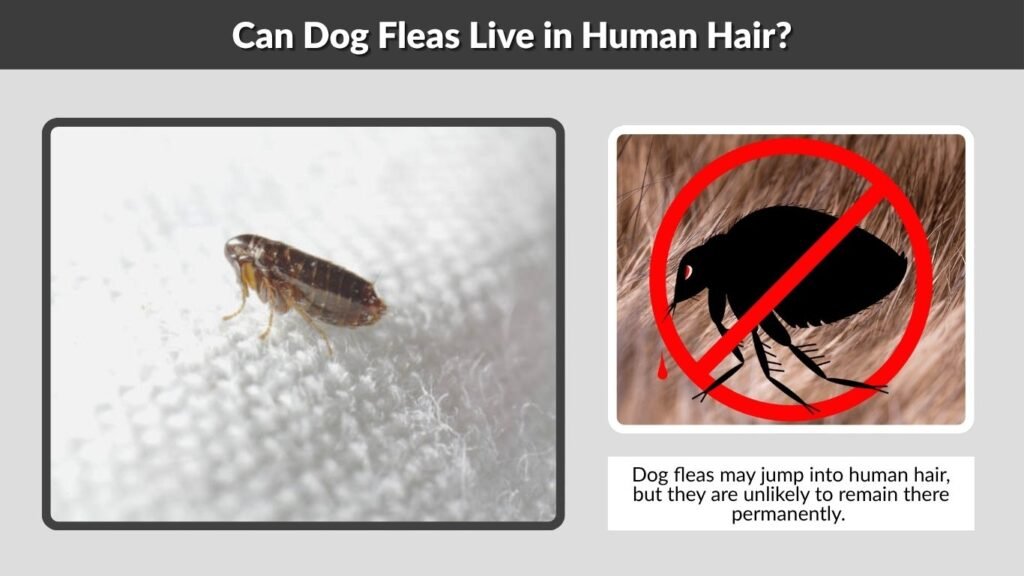
Dog fleas may jump into human hair, but they are unlikely to remain there permanently. Human hair is generally too sparse and regularly disturbed to provide the protected habitat available in a dog’s coat.
A flea found in someone’s hair may have jumped there while the person was holding a pet, lying on contaminated bedding, or sitting on infested furniture. Washing the hair can remove individual fleas, but the dog and home must also be treated to prevent more from appearing.
Head lice are better adapted to living and reproducing in human hair. Persistent scalp itching without visible jumping insects may therefore have another cause and should not automatically be blamed on dog fleas.
What Do Flea Bites on Humans Look Like?
Flea bites often produce small, itchy, red bumps. Several bites may appear close together or in a loose cluster, especially around the ankles and lower legs.
Fleas can bite other exposed areas when a person handles an infested animal or sleeps in a contaminated room. Scratching may damage the skin and increase the possibility of a secondary infection.
Some fleas can carry disease-causing organisms, although the risk varies by flea species, animal host, and geographic location. Flea-borne typhus, for example, can spread through contact with infected fleas.
Can Dog Fleas Make Humans Sick?
Most flea bites cause temporary itching and irritation. However, fleas can sometimes expose people to bacteria or parasites.
People and pets may develop a dog-and-cat tapeworm infection after accidentally swallowing a flea carrying Dipylidium caninum larvae. This is uncommon in people and is reported most often in children. A person does not acquire this tapeworm simply because a flea bites them; the infected flea must be swallowed.
Consult a healthcare professional if flea exposure is followed by fever, rash, worsening skin inflammation, signs of infection, or an unusual allergic reaction.
How Can You Tell if Your Dog Has Fleas?
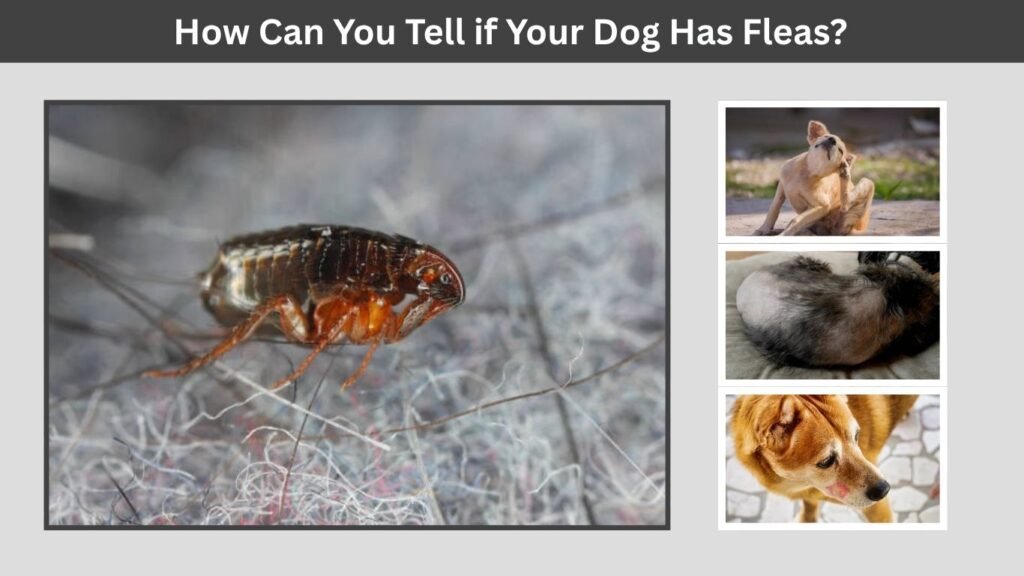
Adult fleas are small, dark, wingless insects that move rapidly through a dog’s coat. They may be difficult to find, particularly when only a few are present.
Common Signs of Fleas
- Frequent scratching, chewing, or licking
- Restlessness and irritated skin
- Hair loss around the tail, hips, or thighs
- Small scabs or red bumps
- Dark particles known as flea dirt
- Live fleas moving through the coat
- Pale gums or weakness in a severe infestation
Use a fine-toothed flea comb around the neck, abdomen, groin, and base of the tail. Place collected dark particles on a damp white tissue. Flea dirt may dissolve into reddish-brown marks because it contains digested blood.
Dogs allergic to flea saliva can develop intense itching, hair loss, thickened skin, and secondary skin infections even when relatively few fleas are present.
Can Fleas Kill a Dog?
A minor infestation is unlikely to kill a healthy adult dog, but a heavy infestation can become dangerous. Because fleas consume blood, large numbers may cause iron-deficiency anemia, particularly in puppies, small dogs, older animals, and dogs with existing medical problems.
Severe blood loss can cause weakness, pale gums, rapid breathing, reduced appetite, and collapse. In rare cases, untreated flea-related anemia can be fatal. Flea bites can also trigger allergic dermatitis and lead to severe scratching, hair loss, or skin infection.
A weak dog, young puppy, or animal with pale gums and a heavy flea burden needs prompt veterinary attention.
Can Dogs Get Fleas in Winter?
Yes. Outdoor flea activity may decline during cold weather, but fleas can survive throughout the year inside warm homes. Carpets, pet bedding, furniture, and heated rooms can provide suitable conditions for eggs, larvae, pupae, and adults.
Flea pupae are protected inside cocoons and may remain there until movement, warmth, or other signs of a nearby host stimulate adult emergence. Year-round prevention may therefore be necessary, even in areas with cold winters.
How Do Dogs Get Fleas?
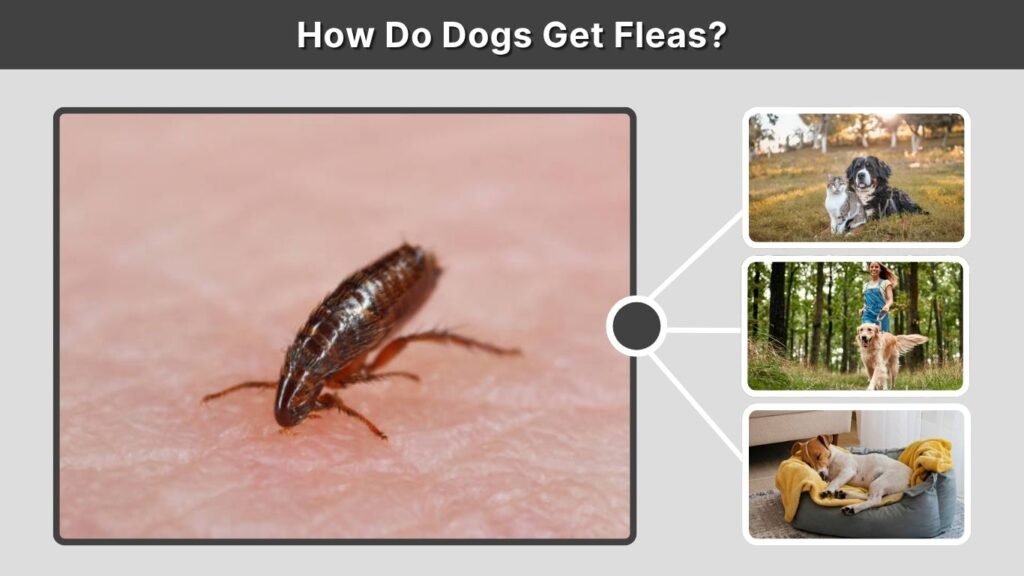
Dogs can encounter fleas through direct or indirect contact with:
- Infested dogs or cats
- Stray animals
- Wildlife
- Pet bedding
- Carpets and furniture
- Kennels and grooming areas
- Shaded outdoor resting places
- Yards visited by flea-carrying animals
Most of the flea population may be developing away from the dog. Treating only the visible adults on the animal leaves eggs, larvae, and pupae in the surrounding environment.
How to Get Fleas Off a Dog
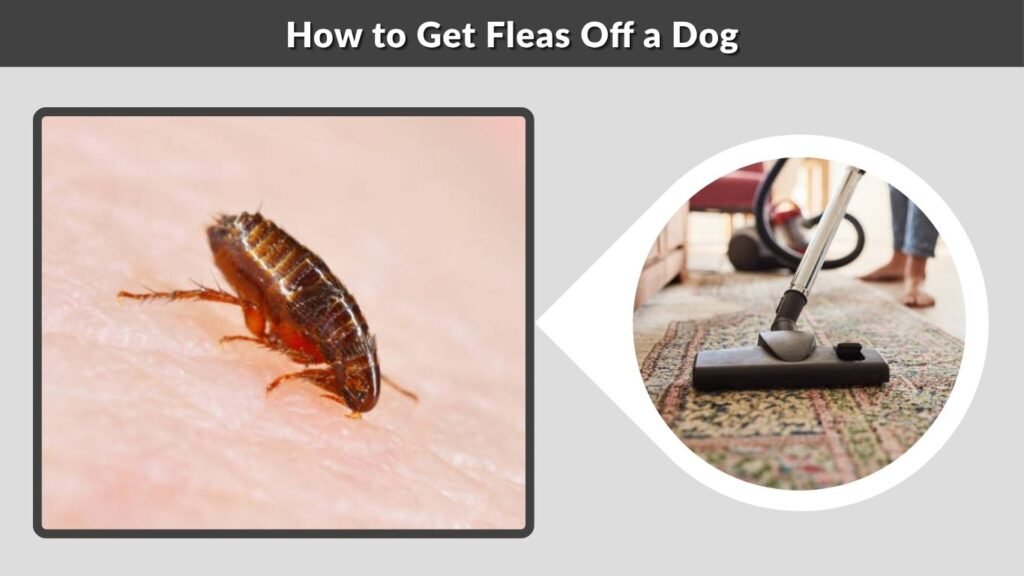
Effective flea control requires treating the dog and the home at the same time. Every pet in the household should be considered because untreated animals can keep the flea life cycle active.
Treat the Dog Safely
Ask a veterinarian to recommend a product suitable for the dog’s age, weight, medical history, and lifestyle. Available options include oral medicines, topical treatments, collars, shampoos, and sprays.
Read and follow the label exactly. Do not apply a dog product to a cat, and do not substitute cat medication for dog treatment unless a veterinarian specifically confirms that the exact product and dose are appropriate. Some dog flea products can be dangerous or life-threatening to cats.
Monitor the dog after treatment. Contact a veterinarian if vomiting, diarrhea, excessive drooling, poor coordination, tremors, seizures, weakness, or another unusual reaction develops. Some isoxazoline flea and tick medicines have been associated with neurologic adverse reactions in certain animals, although the FDA considers approved products safe and effective for most dogs and cats when appropriately selected and used.
Clean the Home
Wash pet bedding and other washable materials. Vacuum carpets, upholstered furniture, floor edges, and the areas beneath furniture. Empty the vacuum contents outside afterward.
Home cleaning must continue because flea pupae can be protected from insecticides inside their cocoons. Moderate or severe infestations may require repeated treatment and several months for complete control.
Can Dawn, Vinegar, or Baking Soda Kill Fleas?
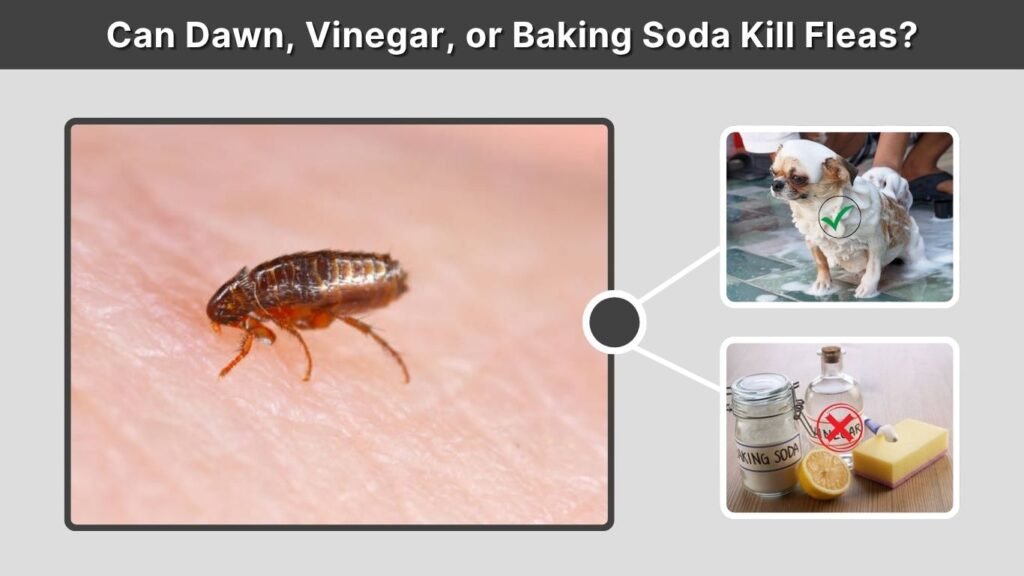
A soap-and-water bath may kill or remove some adult fleas, especially when followed by a flea comb. However, bathing does not provide lasting protection and cannot eliminate the eggs, larvae, and pupae distributed throughout the home.
Vinegar and baking soda should not replace a veterinarian-recommended flea treatment. Applying concentrated or unsuitable household mixtures may irritate a dog’s skin, and delaying effective treatment allows the infestation to continue.
How to Keep Fleas Off Your Dog
Use a veterinarian-recommended preventive product consistently and check the dog’s coat regularly. Wash bedding, vacuum resting areas, and limit contact with stray or flea-infested animals.
Treat every dog and cat in the household according to veterinary guidance. Stopping prevention as soon as cold weather arrives or visible fleas disappear may allow surviving immature stages to restart the infestation.
FAQs
Can dog fleas reproduce on humans?
Dog and cat fleas may bite humans, but people are generally not their preferred long-term hosts. Flea populations usually reproduce more successfully on pets and in the surrounding indoor environment.
Can fleas jump from a dog to a person?
Yes. An adult flea can jump from an infested dog, contaminated bedding, carpet, or furniture onto a person and take a blood meal.
Can dog fleas stay in human clothes?
A flea may temporarily hide in clothing, but clothes are not its normal breeding habitat. Washing clothing and addressing the infested pet and home are more important than treating garments alone.
Can cats get fleas from dogs?
Yes. Fleas can move between compatible animal hosts. The cat flea commonly infests both cats and dogs, so all pets in an affected household may require species-appropriate treatment.
How long does it take to remove a flea infestation?
A small problem may improve quickly, but established infestations can take weeks or months to eliminate. Treatment must target the pets and environmental stages while cleaning and follow-up continue.
