
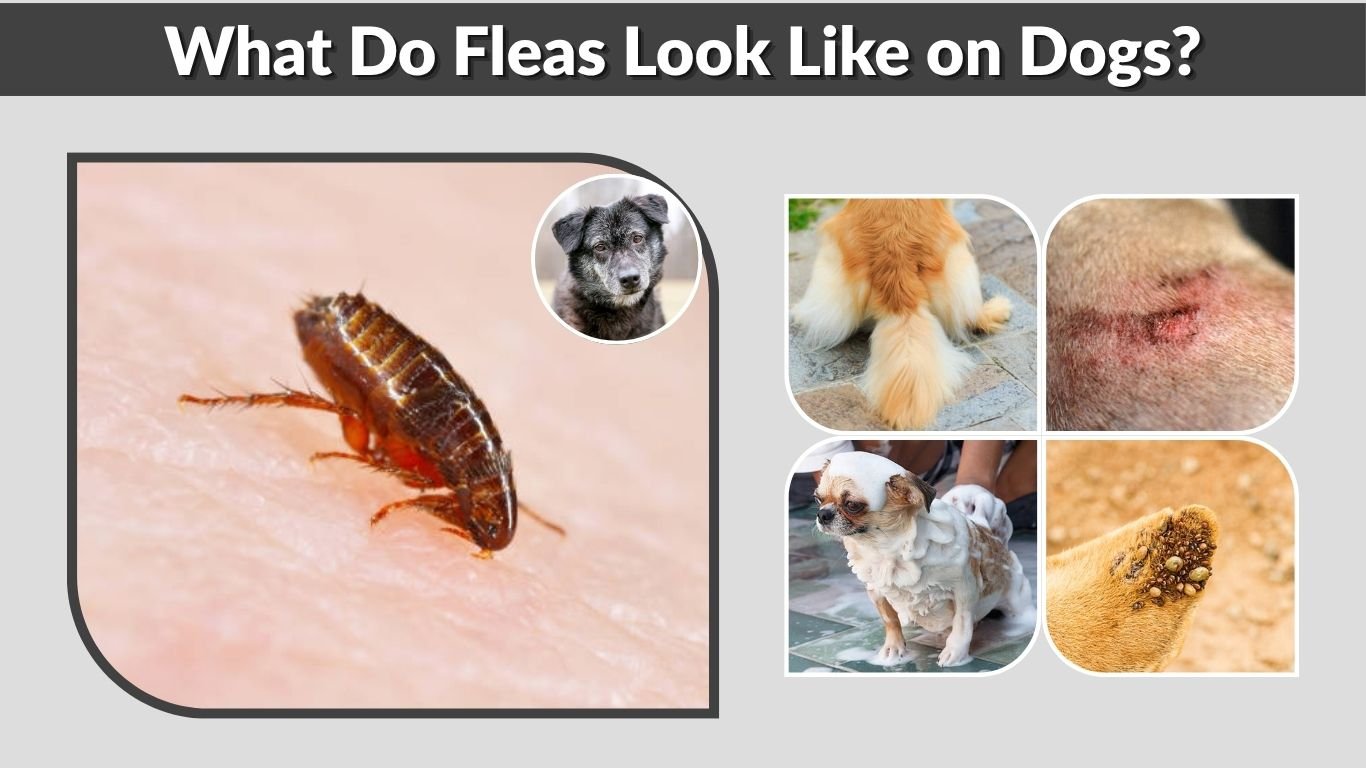
Fleas on dogs look like tiny, dark reddish-brown insects moving quickly through the coat near the skin. Adult fleas are usually easier to detect by their movement or droppings than by clearly seeing their body shape. Other signs may include black flea dirt, white eggs, red bumps, scabs, hair loss, and frequent scratching. Because several skin conditions resemble flea irritation, examining the coat with a flea comb is the most reliable first step.
What Do Fleas Look Like on a Dog?
Adult fleas are extremely small, wingless parasites with narrow, flattened bodies. The cat flea, which commonly infests both dogs and cats, is approximately 1.5–2 millimeters long. Its flattened shape allows it to move between hairs and remain close to the skin.
Adult Flea Identification
Look for the following characteristics:
- Dark brown or reddish-brown body
- Approximately the size of a small sesame seed
- Narrow, flattened appearance
- Six legs, with large rear legs
- No visible wings
- Rapid crawling through the coat
- Sudden jumping when disturbed
Fleas do not fly. Their strong rear legs allow them to jump quickly, which can make them difficult to catch.
What Do Dead Fleas Look Like?
Dead fleas usually look like tiny, dark-brown or black insects with visible legs curled toward the body. They may remain in the coat temporarily after an effective treatment.
Black particles without recognizable legs or a body are more likely to be flea dirt than dead fleas. Bathing or combing can remove dead insects and debris.
Where to Look for Fleas on Dogs
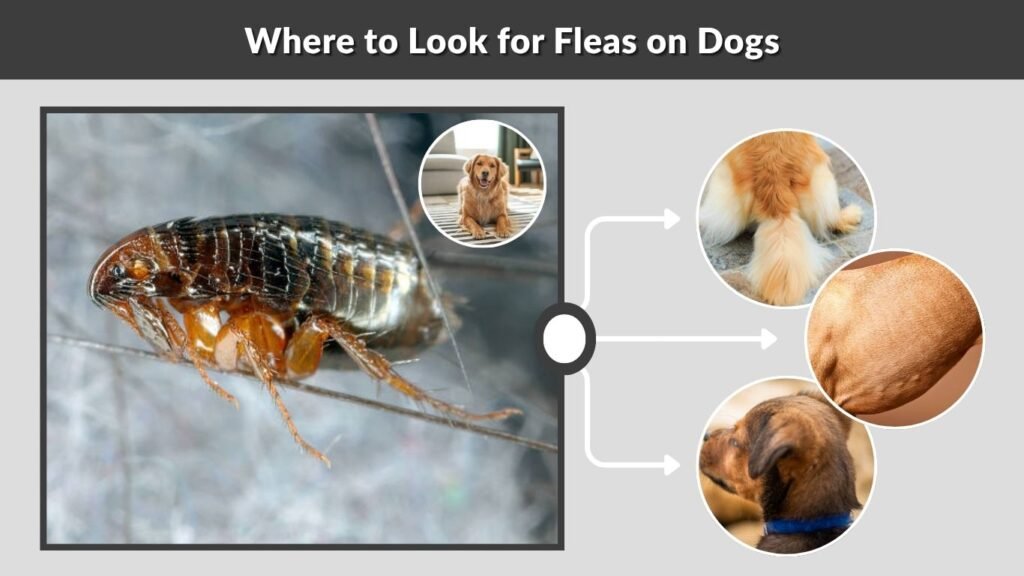
Fleas may be anywhere on the dog, but they are often easier to find in warm, protected areas where the hair is thinner.
Check These Areas First
Examine the dog’s:
- Base of the tail
- Lower back
- Belly and stomach
- Groin
- Inner thighs
- Armpits
- Neck
- Behind the ears
Part the coat slowly under bright light and look directly at the skin. Flea-related itching and skin lesions are commonly concentrated around the lower back, tail base, and rear thighs.
How to Use a Flea Comb
Run a fine-toothed flea comb through the coat, beginning around the neck and tail base. Check the comb after each pass.
Drop any collected insects into soapy water so they cannot escape. Examine the debris on a white paper towel to determine whether it contains fleas or flea dirt.
A dog can still have flea allergy dermatitis even when no living fleas are found. Sensitive dogs may groom so intensely that they remove much of the visible evidence.
What Does Flea Dirt Look Like on Dogs?
Flea dirt consists of blood-containing waste produced by adult fleas. It looks like scattered black, reddish-black, or dark-brown particles in the dog’s coat.
Flea Dirt Identification
Flea dirt may resemble:
- Black pepper
- Tiny dark crumbs
- Curved or comma-shaped pellets
- Reddish-black grains near the skin
Flea dirt is especially common around the lower back and tail base. It may be easier to see than the fleas themselves.
The Wet Paper Towel Test
Place the suspected particles on a damp white paper towel. Gently crush or wet them.
Flea dirt dissolves and creates a reddish-brown stain because it contains digested blood. Ordinary soil generally remains brown or black without producing a red halo.
What Do Flea Eggs Look Like on a Dog?
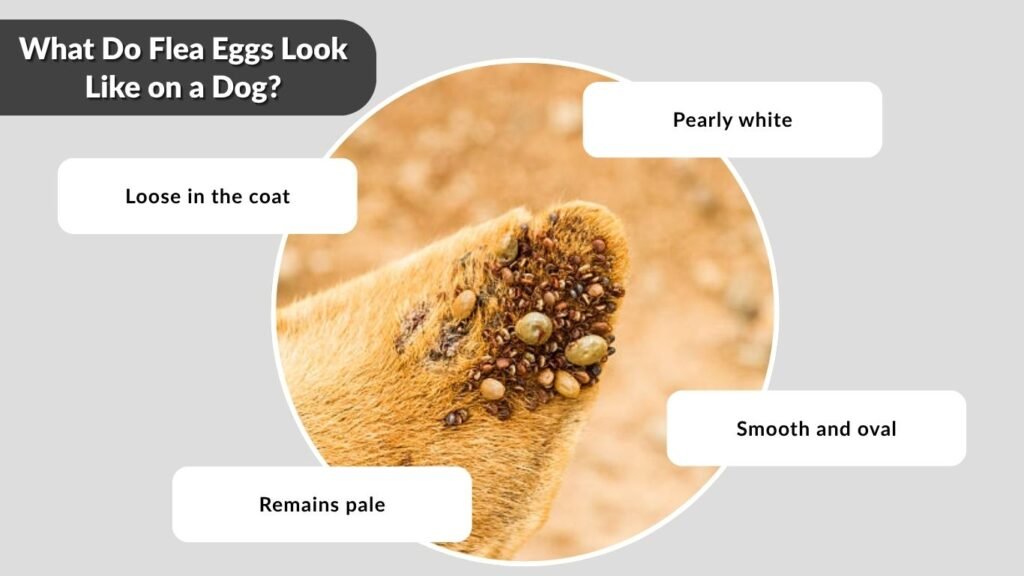
Flea eggs are pearly white, oval, smooth, and approximately 0.5 millimeters long. They may resemble tiny grains of salt.
| Feature | Flea Eggs | Flea Dirt | Dandruff |
| Color | Pearly white | Black or reddish-black | White or gray |
| Shape | Smooth and oval | Irregular or pellet-like | Flat and flaky |
| Attachment | Loose in the coat | Loose near the skin | May cling to skin or hair |
| Wet test | Remains pale | Creates reddish stain | Becomes soft but not red |
Do Flea Eggs Stay on the Dog?
Female fleas deposit eggs in the dog’s coat, but the eggs are not sticky. They usually fall into carpets, bedding, furniture, kennels, and floor cracks as the dog moves or sleeps. Adult fleas begin laying eggs after feeding, allowing an infestation to spread throughout the home.
Because most eggs are found in the environment, finding no eggs on the dog does not rule out fleas.
Flea Eggs vs Dandruff
Dandruff consists of irregular skin flakes that vary in size and shape. Flea eggs are consistently small, oval, and grain-like.
White particles firmly attached to individual hairs may be lice eggs rather than flea eggs. A veterinarian can identify unusual material that does not brush or comb away.
What Do Flea Bites Look Like on Dogs?
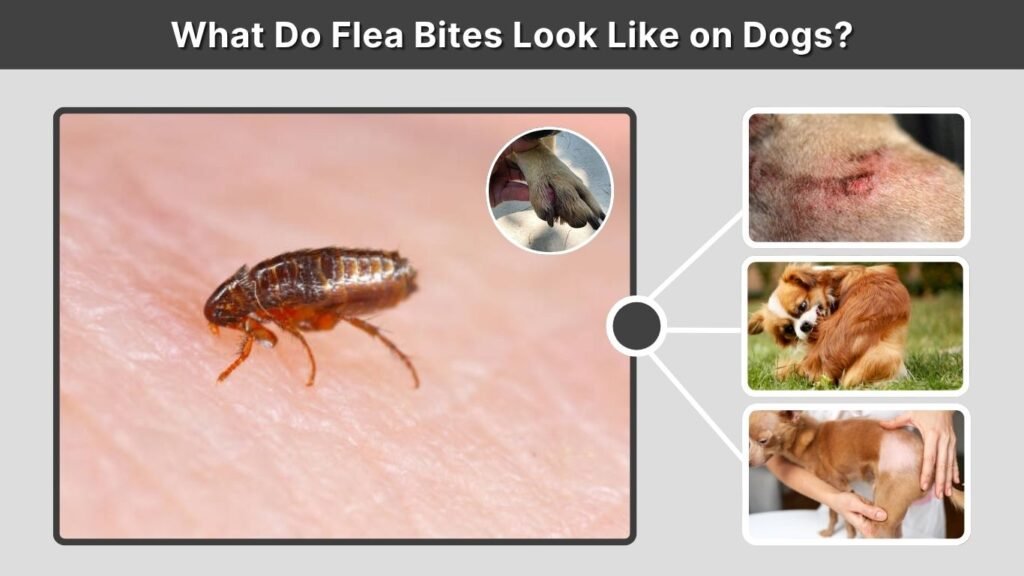
Individual flea bites can appear as small, red, raised bumps. However, they are often hidden beneath the coat, and the dog’s scratching may create more noticeable damage than the original bites.
Common Flea-Bite Signs
A dog with flea bites may develop:
- Small red bumps
- Localized redness
- Persistent itching
- Chewing around the tail
- Scabs and crusts
- Thinning hair
- Moist or inflamed skin
- Secondary skin infections
The exact appearance varies according to the dog’s coat, skin color, sensitivity, and the severity of the infestation.
What Do Flea Bites Look Like on a Dog’s Belly?
The belly has relatively thin hair, so bites may be easier to see there. They may appear as scattered red spots, small bumps, or areas of irritated skin.
Red spots on the belly can also result from contact allergies, mites, bacterial infections, insect bites, or environmental irritation. Bites alone cannot always confirm fleas.
What Does Flea Allergy Look Like on Dogs?
Flea allergy dermatitis is an allergic reaction to substances in flea saliva. A sensitive dog may develop intense itching after only a few flea bites.
Signs of Flea Allergy Dermatitis
Common signs include:
- Severe itching and chewing
- Hair loss over the lower back
- Redness around the tail base
- Crusted bumps
- Thickened or darkened skin
- Raw or bleeding areas
- Recurrent skin infections
The typical distribution includes the middle-to-lower back, tail base, and rear or inner thighs. In long-lasting cases, the skin can become hairless, thickened, and darker.
Fleas vs Ticks on Dogs
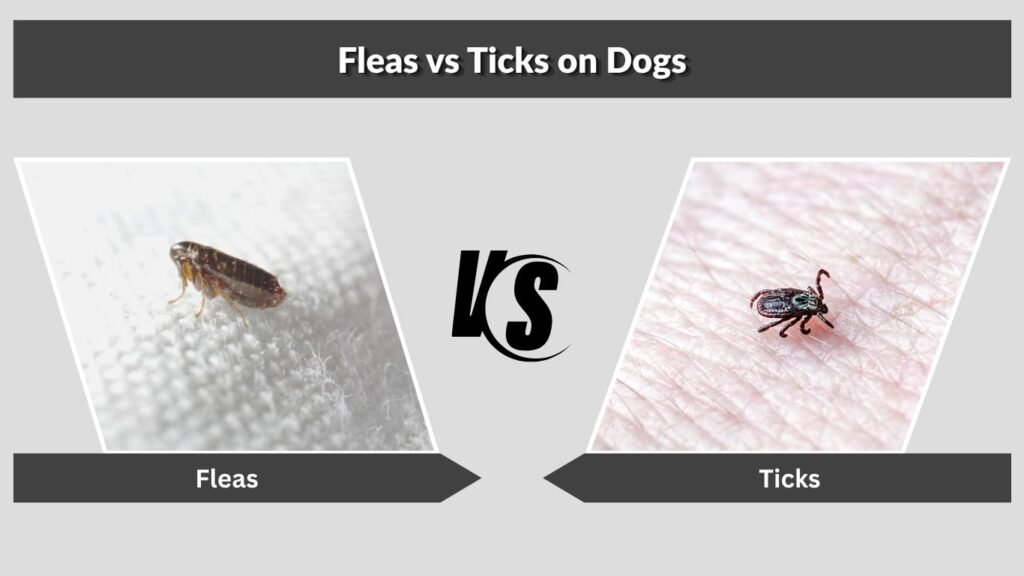
Fleas and ticks are both external parasites, but they look and behave differently.
| Feature | Flea | Tick |
| Size | Tiny, often sesame-seed sized | Usually larger when attached |
| Movement | Crawls and jumps quickly | Crawls slowly |
| Body | Narrow and flattened | Rounded or oval |
| Legs | Six | Eight as an adult |
| Attachment | Moves through the coat | Attaches firmly to the skin |
| Feeding | Bites repeatedly | Remains attached while feeding |
An attached tick may resemble a small bump or seed. Do not squeeze or pull it off carelessly; use a tick-removal tool or follow veterinary guidance.
What Do Flea Larvae Look Like on Dogs?
Flea larvae are pale, slender, worm-like, and covered with small hairs. However, they are rarely found living on a dog.
Flea larvae normally develop in carpets, bedding, furniture, floor cracks, and other protected areas. The flea life cycle consists of egg, larva, pupa, and adult stages, but only the adult stage normally lives and feeds on the dog.
There are no true “baby fleas” crawling on the dog. Small fleas seen in the coat are adults, while larvae remain in the surrounding environment.
What to Do After Finding Fleas
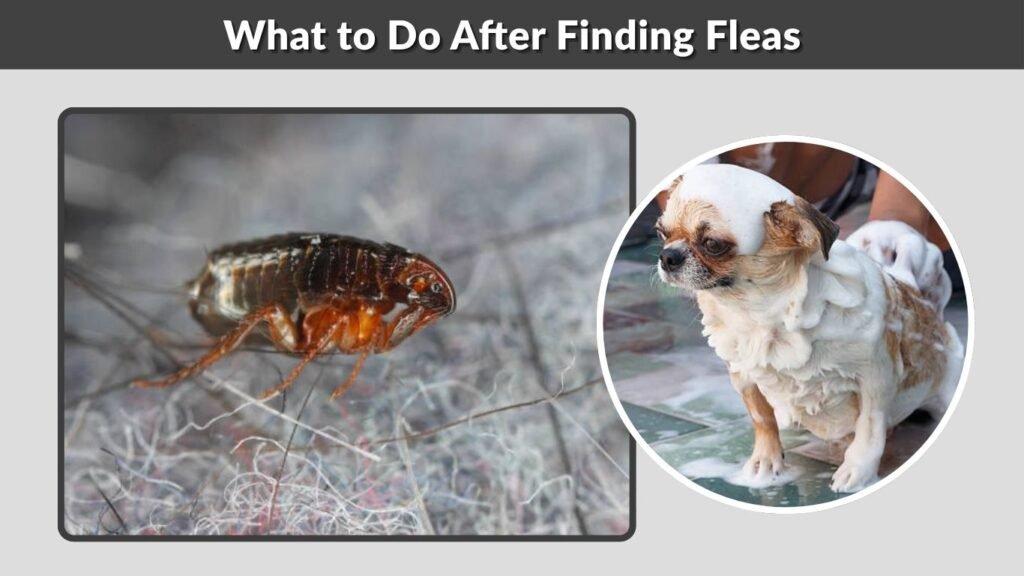
Finding one adult flea or confirmed flea dirt means the dog and its environment should be addressed promptly.
Treat the Dog Safely
Ask a veterinarian to recommend a flea treatment suitable for the dog’s species, age, weight, health, and medical history. Available products include oral medicines, topical treatments, collars, sprays, shampoos, and powders.
Follow the label exactly and never apply an environmental flea product directly to the dog. Do not use a dog-only product on a cat.
Certain isoxazoline flea and tick medicines have been associated with neurologic reactions, including tremors, poor coordination, and seizures in some animals. Discuss any seizure history with a veterinarian before choosing a product.
Clean the Environment
Wash pet bedding and vacuum carpets, furniture, baseboards, floor cracks, and the dog’s resting areas. Treat every pet in the household with an appropriate product.
Household control may take time because immature fleas can remain protected away from the dog. Year-round prevention helps stop new infestations from becoming established.
When to See a Veterinarian
Contact a veterinarian when the dog has severe itching, widespread scabs, open sores, hair loss, skin odor, pale gums, weakness, or continuing symptoms despite flea treatment.
Heavy flea infestations may contribute to anemia, particularly in puppies and vulnerable dogs. Flea bites can also cause allergy dermatitis and secondary skin problems.
FAQs
Can fleas be seen on a dog?
Yes, adult fleas are visible, but they are tiny and move quickly. They look like reddish-brown sesame seeds crawling close to the skin. Flea dirt may be easier to find than living fleas.
What do fleas look like on a black dog?
Fleas may blend into a black coat, making movement difficult to notice. Use a flea comb and inspect the collected debris on a white paper towel. White flea eggs and reddish-black flea dirt may be more noticeable than adults.
What do fleas look like on a white dog?
Dark adult fleas and black flea dirt are usually easier to see on white fur. Pearly white eggs may blend into the coat, but their smooth, oval shape distinguishes them from irregular dandruff flakes.
Are black specks on a dog always fleas?
No. Black specks may be soil, dried blood, skin debris, or flea dirt. Place them on a damp white paper towel. A reddish-brown stain strongly suggests flea dirt.
Do fleas create nests on dogs?
Fleas do not build nests on a dog. Adults live in the coat and lay eggs that fall into the environment. Clusters, lumps, or attached materials should be examined for another skin or parasite problem.
