
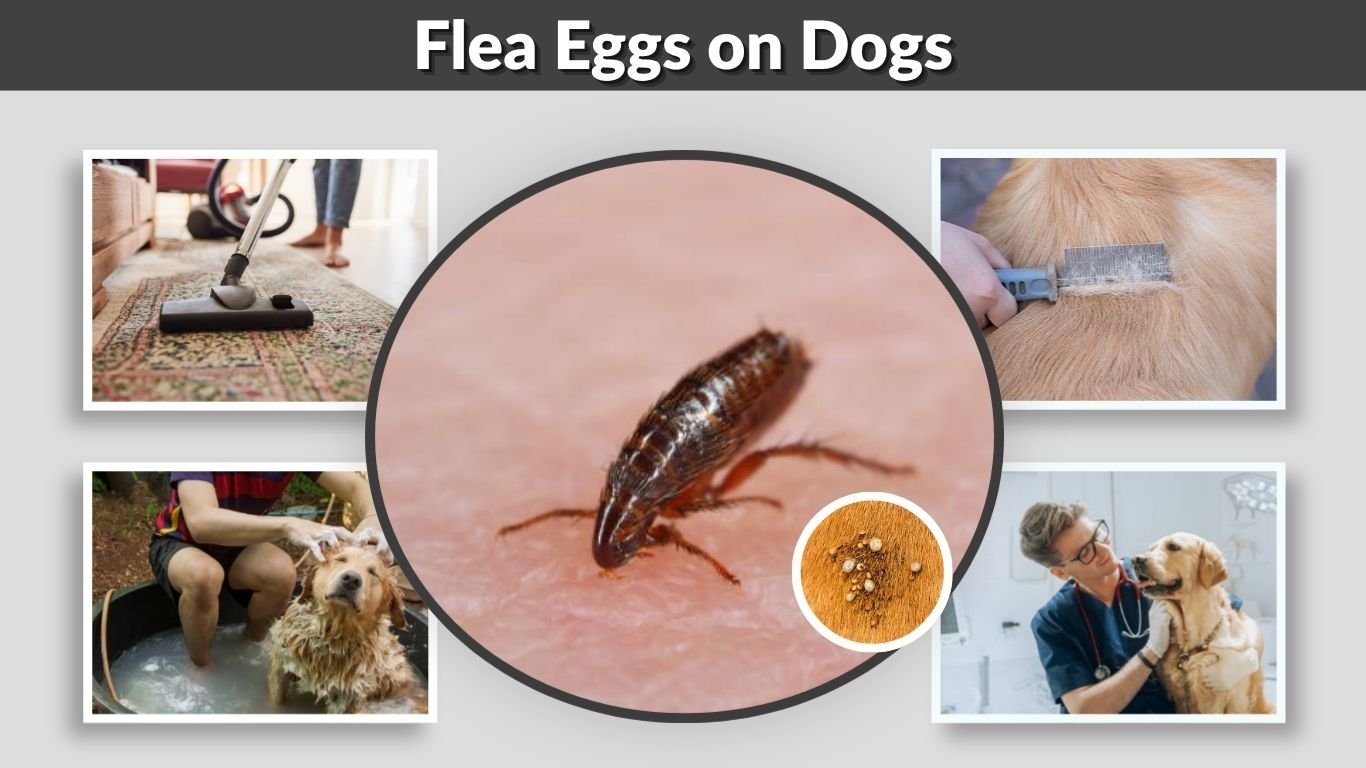
Flea eggs on dogs are tiny, pale, and difficult to notice without close inspection. Unlike lice eggs, they do not remain firmly attached to individual hairs. Female fleas deposit eggs in the dog’s coat, but the smooth eggs quickly fall into bedding, carpets, furniture, and floor cracks. Therefore, removing eggs from the dog is only one part of controlling an infestation. You must treat the pet safely and address the surrounding environment to prevent new fleas from developing.
What Do Flea Eggs Look Like on a Dog?
Flea eggs are pearly white, oval, and approximately 0.5 millimeters long. They have rounded ends and may resemble tiny grains of salt. Their small size makes them particularly difficult to see on light-colored dogs.
Flea Egg Identification
Look for these characteristics:
- Pearly white or translucent color
- Oval shape with rounded ends
- Approximately 0.5 millimeters long
- Smooth outer surface
- Loose position within the coat
- No sticky attachment to individual hairs
Flea eggs are not black. Black or reddish-brown particles in a dog’s coat are more likely to be flea dirt, which consists of blood-containing waste produced by adult fleas.
Can You See Flea Eggs on Dogs?
Flea eggs are visible to the naked eye, but finding them can be difficult. They are extremely small, blend into pale coats, and fall from the dog easily.
Part the hair slowly and examine the skin under bright light. A fine-toothed flea comb can help collect eggs, adult fleas, and flea dirt. Check the comb after each pass over a white paper towel.
Flea Eggs vs Dandruff on Dogs
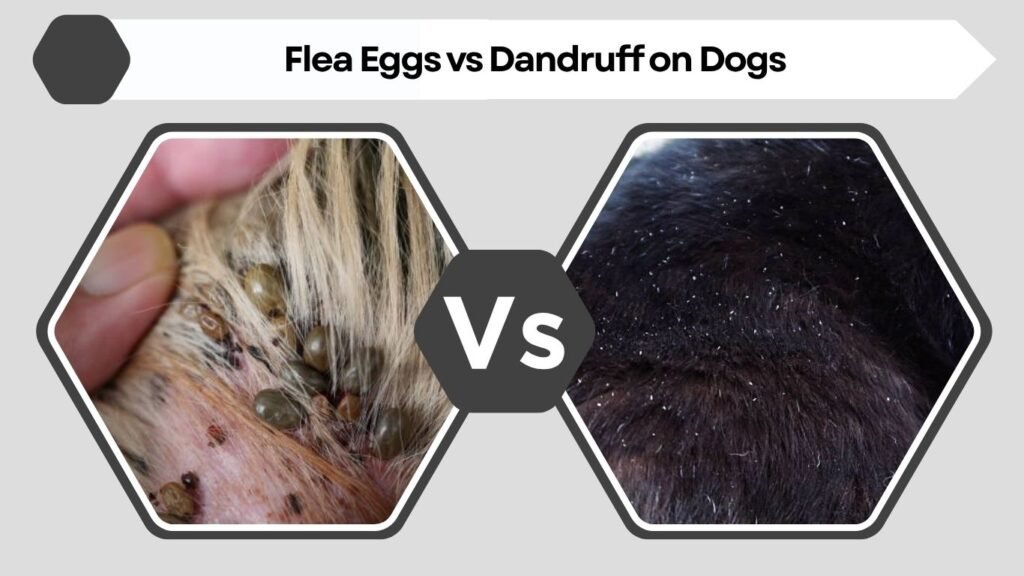
Flea eggs and dandruff may both look like white particles, but their shape and behavior are different.
| Feature | Flea Eggs | Dandruff |
| Shape | Smooth and oval | Flat and irregular |
| Color | Pearly white | White or gray |
| Size | Approximately 0.5 mm | Varies considerably |
| Attachment | Loose in the coat | May cling to skin and hair |
| Texture | Grain-like | Flaky |
| Main cause | Adult flea infestation | Dryness or skin disease |
Do Flea Eggs Look Like Dandruff?
Flea eggs may initially resemble dandruff because both can appear white. However, dandruff consists of irregular flakes of dead skin, while flea eggs are uniformly oval and smooth.
Dandruff may accompany redness, dryness, odor, or other skin problems. Fleas can also cause scratching, hair loss, crusts, and secondary skin infections, so a dog may have both fleas and flaky skin at the same time.
Flea Eggs vs Flea Dirt
Flea dirt is dark reddish-black rather than white. Place suspected flea dirt on a damp white paper towel and gently crush it. A reddish-brown stain suggests digested blood and supports the presence of fleas.
Regular dirt usually remains brown or black without creating a red halo.
Do Fleas Lay Eggs on Dogs?
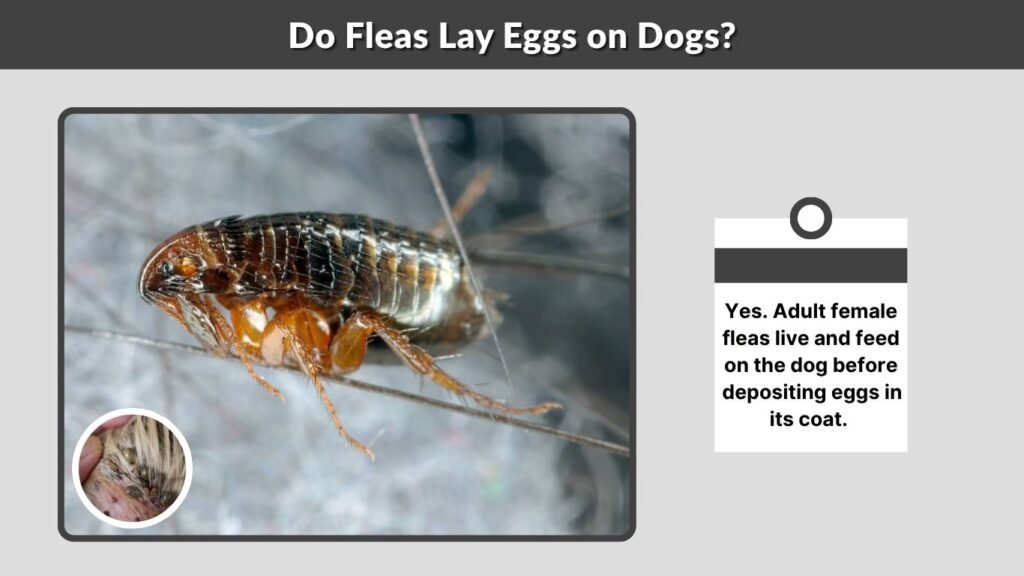
Yes. Adult female fleas live and feed on the dog before depositing eggs in its coat. Egg production can begin within approximately 24–48 hours after the female’s first blood meal. A female may produce 40–50 eggs per day during peak production.
Do Flea Eggs Stay on Dogs?
Most eggs do not remain on the dog for long. Their smooth surfaces allow them to fall from the coat as the dog walks, sleeps, scratches, or jumps.
The eggs commonly collect wherever the dog spends time, including:
- Pet beds
- Carpets and rugs
- Sofas and chairs
- Floor cracks
- Car seats
- Kennels and carriers
- Areas beneath furniture
Flea eggs usually hatch in the environment rather than remaining on the animal. Under suitable conditions, hatching may occur in approximately one to six days.
Where Should You Check the Dog?
Inspect the entire coat, paying particular attention to the lower back, base of the tail, abdomen, groin, and inner thighs. Adult fleas and flea-related irritation are commonly found around these areas.
Flea eggs found around the ears, stomach, or other body areas are not attached in clusters. Visible clusters or firmly attached white particles may indicate another condition that requires veterinary identification.
How to Get Rid of Flea Eggs on Dogs
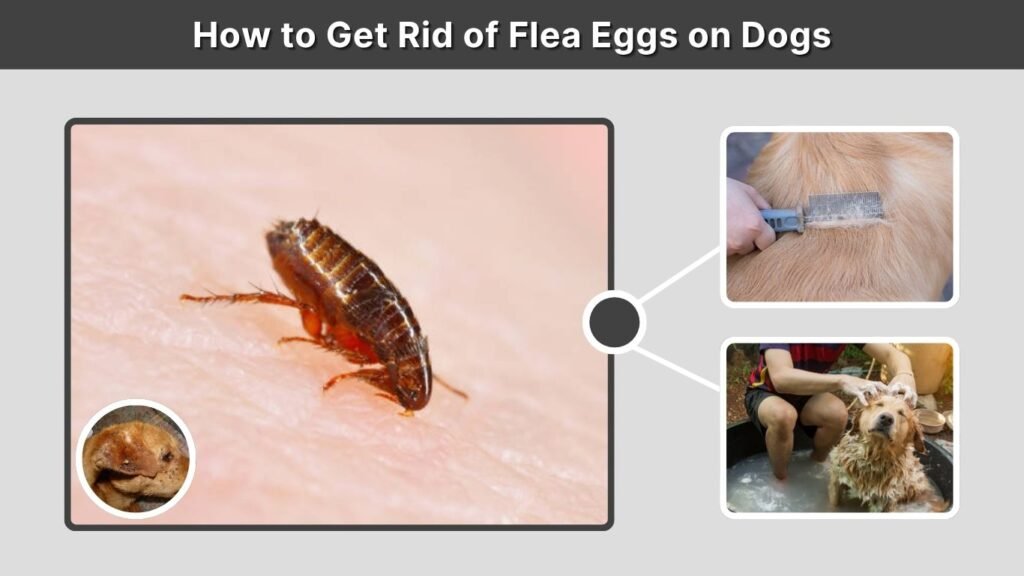
Removing visible eggs helps, but it cannot eliminate an infestation by itself. An effective plan must kill adult fleas before they produce additional eggs and interrupt development within the home.
Use a Flea Comb
Comb the dog slowly with a fine-toothed flea comb. Concentrate on the tail base, belly, neck, and inner legs.
After every few passes, dip the comb into a container of soapy water to prevent collected adult fleas from escaping. A flea comb can physically remove some eggs and flea dirt, but it does not provide lasting protection.
Bathe the Dog Safely
Bathing with a shampoo specifically formulated and labeled for dogs can remove loose eggs, flea dirt, and some adult fleas. Follow the shampoo’s age, weight, and application instructions.
Do not apply household cleaners, concentrated essential oils, carpet powders, or environmental pesticides to the dog. Use only products labeled for the animal’s species, life stage, and weight.
Use a Veterinary Flea Treatment
A veterinarian can recommend an oral, topical, or other approved treatment based on the dog’s age, weight, medical history, and exposure risk. Effective adulticides kill adult fleas before they continue producing eggs, while certain insect growth regulators provide activity against eggs or developing stages.
Do not combine flea products unless a veterinarian advises it. Carefully follow the label and tell the veterinarian about the dog’s medications, pregnancy status, illnesses, or history of seizures.
What Kills Flea Eggs on Dogs?
No home remedy reliably kills every flea egg on a dog instantly. Most eggs have already fallen into the environment by the time an infestation becomes noticeable.
Some properly labeled flea-control products contain insect growth regulators such as methoprene or pyriproxyfen, which interrupt egg and larval development. Certain veterinary combinations also prevent adult fleas from producing viable offspring. Product selection should be based on the label and veterinary guidance.
Does Dish Soap Kill Flea Eggs?
A bath may wash loose eggs from the coat, but dish soap is not a complete flea treatment and offers no lasting protection. Frequent use may also dry or irritate a dog’s skin.
A dog-formulated shampoo and an approved preventive are more appropriate. Dish soap should not be treated as a replacement for veterinary flea control.
Do Vinegar or Baking Soda Kill Flea Eggs?
Vinegar and baking soda are not dependable treatments for flea eggs on dogs. They do not break the household life cycle and may irritate sensitive or damaged skin.
Avoid applying homemade mixtures unless a veterinarian confirms that every ingredient and concentration is safe for the individual dog.
How to Remove Flea Eggs From the Home
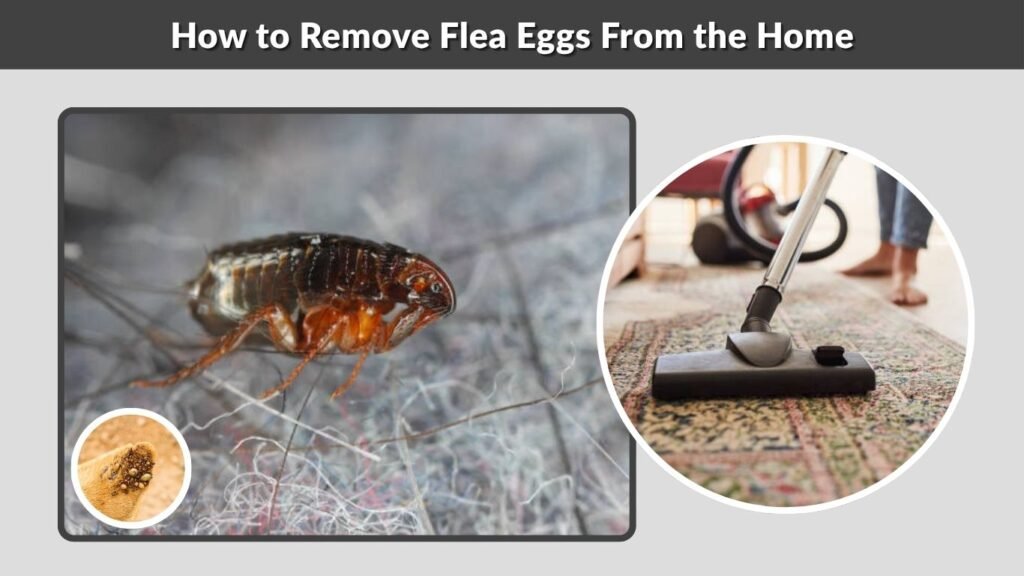
The egg, larval, and pupal stages mainly occur away from the dog. Treating the environment is therefore essential, especially during a heavy infestation.
Wash the Dog’s Bedding
Wash pet bedding, blankets, washable toys, removable furniture covers, and fabric carriers. Use the hottest washing and drying settings considered safe for the materials.
Continue washing frequently while fleas remain active.
Vacuum Thoroughly
Vacuum carpets, rugs, sofas, floor edges, and spaces underneath furniture. Focus on places where the dog rests because eggs and flea dirt accumulate in those areas.
Empty the vacuum outdoors after cleaning. Vacuuming helps remove eggs and larvae but may not reach pupae protected inside cocoons.
Treat Every Pet
Every dog and cat in the household may need species-appropriate flea prevention, even when only one animal appears infested.
Never use a dog-only product on a cat. Some ingredients and concentrations that are labeled for dogs may be dangerous to cats. Follow each product’s species, age, and weight restrictions.
How Long Do Flea Eggs Take to Hatch?
Flea eggs commonly hatch within approximately one to six days under suitable environmental conditions. The larvae then feed and develop before forming protective cocoons.
Because pupae can remain protected for weeks, new fleas may continue appearing after the dog has been treated. Complete control of an established household infestation often takes two to three months, even when an effective preventive is used correctly.
When to Contact a Veterinarian
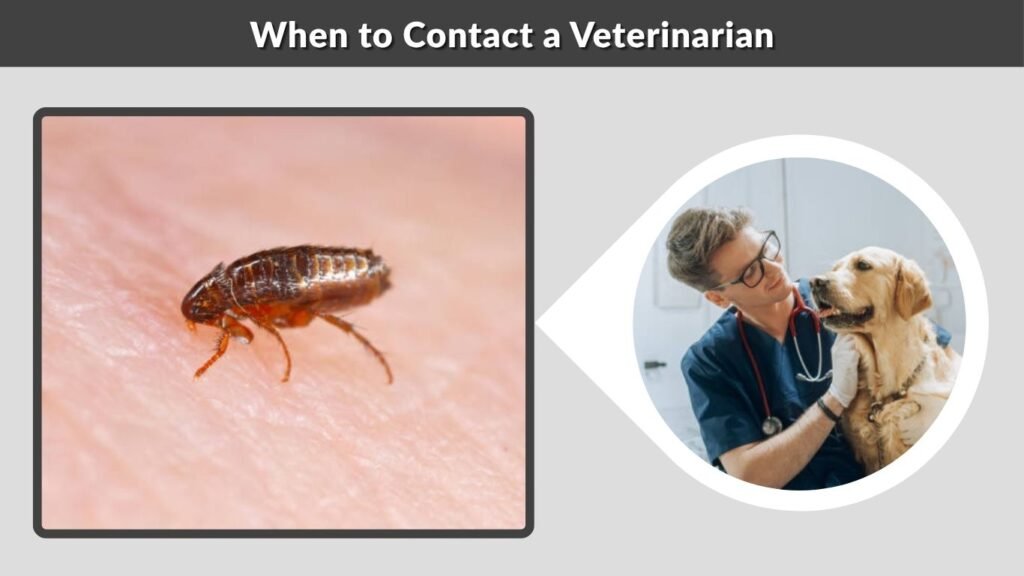
Arrange veterinary care when the dog has severe itching, open sores, hair loss, skin infection, weakness, or pale gums. Heavy flea infestations can contribute to anemia, particularly in puppies and other vulnerable animals.
After using a flea product, contact a veterinarian immediately if the dog develops redness, vomiting, diarrhea, excessive salivation, trembling, poor coordination, depression, or seizures. Follow the product label; for certain topical reactions, prompt washing with mild soap and plenty of water may be recommended.
FAQs
Are flea eggs black on dogs?
No. Flea eggs are pearly white or translucent. Black or reddish-black particles are more likely to be flea dirt. Use the damp-paper-towel test: flea dirt usually dissolves and produces a reddish-brown stain because it contains digested blood.
Do flea eggs stick to dog hair?
Flea eggs do not normally stick firmly to dog hair. Their smooth surfaces allow them to fall into bedding, carpets, furniture, and floor cracks, where they hatch and continue developing away from the animal.
Can flea eggs live on a dog’s skin?
Female fleas deposit eggs in the coat, but most eggs quickly fall away. Adult fleas are the stage that normally remains on the dog. Persistent white material attached to the skin or hair may be dandruff or another condition.
How do you kill fleas and eggs on a dog?
Use a veterinarian-recommended flea product appropriate for the dog’s age, weight, and health. Comb or bathe the dog to remove debris, then wash bedding and vacuum resting areas to address eggs and immature stages in the environment.
Why do I still see fleas after treatment?
New adult fleas may continue emerging from pupal cocoons in carpets, bedding, or furniture. This does not always mean the treatment failed. Maintain consistent prevention and environmental cleaning, and ask a veterinarian to review persistent infestations.
