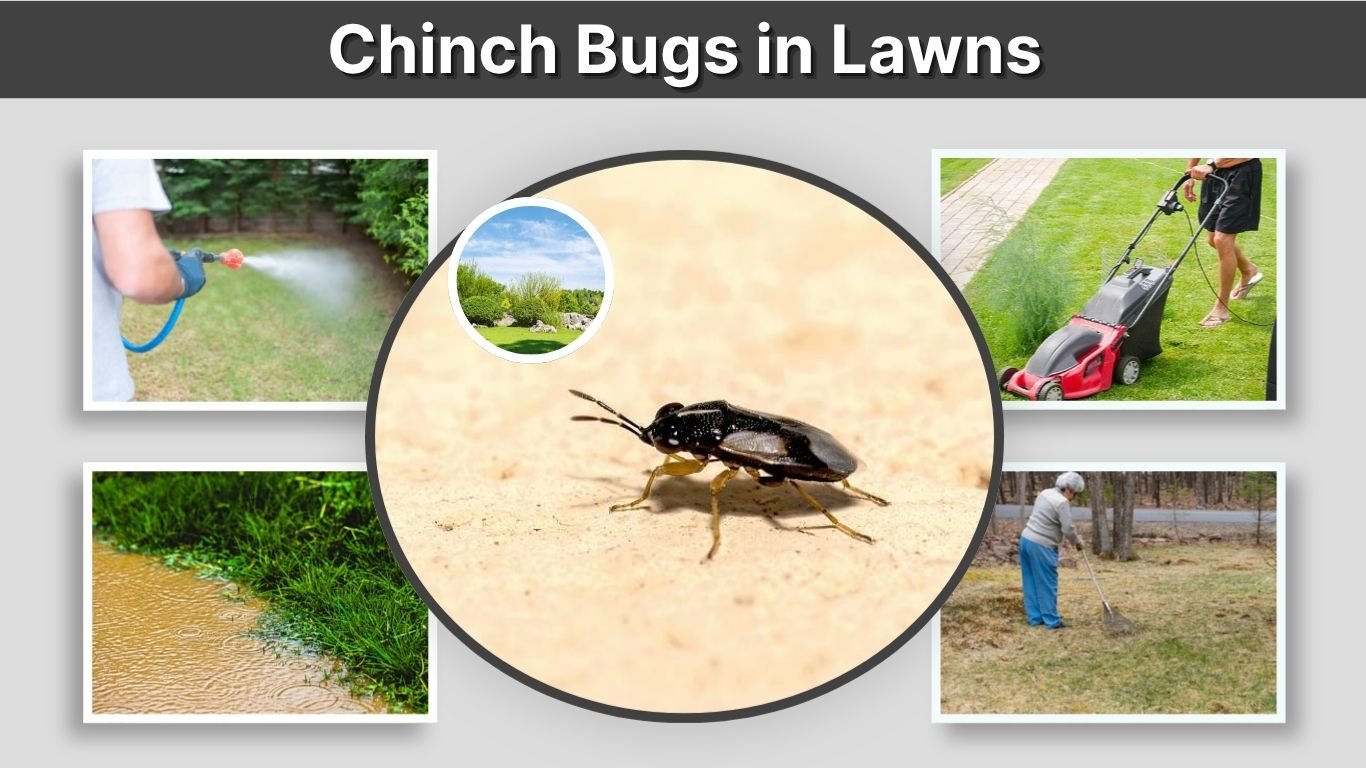
Chinch bugs are tiny lawn pests that feed on grass stems and cause expanding yellow or brown patches. Their damage often resembles drought stress, making an infestation easy to overlook until part of the lawn begins dying. These insects are especially active in hot, sunny areas and may attack St. Augustine grass, Bermudagrass, zoysiagrass, fescue, and Kentucky bluegrass. Successful control begins with confirming that chinch bugs are present rather than treating brown grass blindly. This guide explains how to identify chinch bugs, recognize lawn damage, test affected areas, choose a treatment, repair dead turf, and prevent future outbreaks.
What Are Chinch Bugs in a Lawn?
Chinch bugs are small, sap-feeding insects that live near the soil surface, around grass crowns, and inside the thatch layer. Both adults and immature nymphs use piercing mouthparts to remove fluids from grass plants.
Their feeding weakens the grass and disrupts its ability to move water. Affected blades may yellow, wilt, turn reddish-brown, and eventually die.
How to Identify Chinch Bugs
- Adults are usually about 1/6 to 1/5 inch long
- Adult bodies are mostly black
- White wings have dark triangular markings
- Young nymphs are red, orange, or yellowish
- Nymphs have a pale band across the abdomen
- Older nymphs gradually become darker
- They have six legs and short antennae
- They move quickly through thatch
- They gather near the edge of damaged grass
Adults may be difficult to see without separating the grass. A magnifying glass can help distinguish them from harmless soil insects.
What Does Chinch Bug Lawn Damage Look Like?
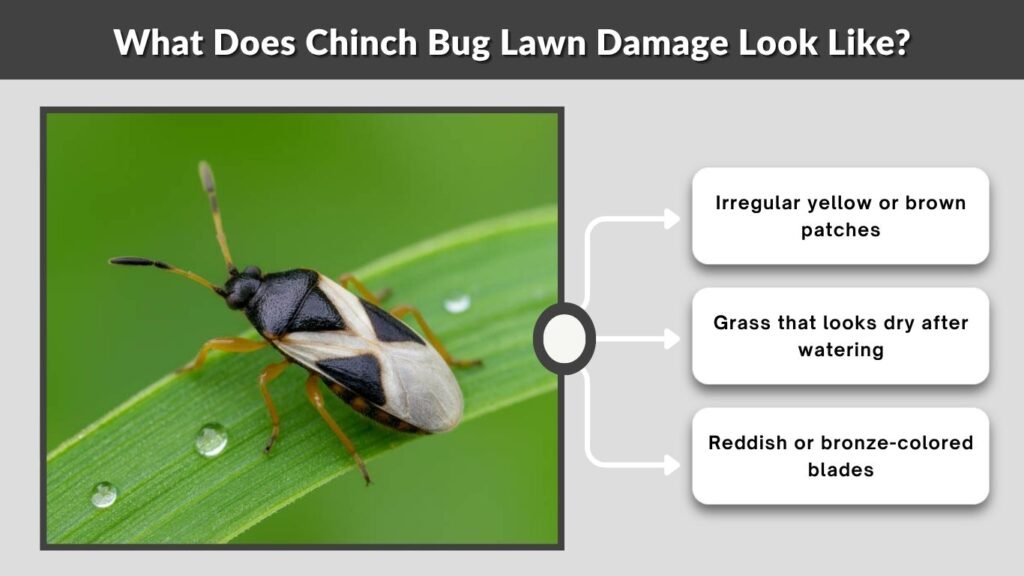
Chinch bug damage usually begins as a small patch of pale, wilted grass. The patch gradually expands as the insects move from weakened turf into nearby healthy plants.
The center may become completely brown while the outer border remains yellow, reddish, or bronze.
Common Symptoms
A lawn affected by chinch bugs may show:
- Irregular yellow or brown patches
- Grass that looks dry after watering
- Reddish or bronze-colored blades
- Damage spreading outward
- Dead centers surrounded by stressed grass
- Thinning turf near pavement
- Small insects moving among the stems
- Weeds appearing in weakened areas
The patches are usually uneven rather than perfectly circular. Damage often becomes most obvious during hot, dry weather.
Where Damage Usually Begins
Chinch bugs prefer warm, sunny areas where grass is already stressed. Check sections near:
- Driveways
- Sidewalks
- Curbs
- Patios
- Heat-reflecting walls
- Sunny slopes
- Dry lawn edges
- Areas with weak sprinkler coverage
- Thick thatch buildup
Concrete absorbs heat and dries the surrounding grass, creating ideal conditions for chinch bug activity.
What Causes Chinch Bugs in Lawns?
Chinch bugs may exist in small numbers without causing visible damage. Problems develop when lawn conditions allow their population to increase or make the grass less able to tolerate feeding.
Hot and Dry Conditions
Chinch bug activity is often highest during warm weather. Drought-stressed grass has less moisture and energy available for recovery, so feeding damage becomes more severe.
Excessive Thatch
Thatch is the layer of dead and living plant material between the grass blades and soil. A thin layer is normal, but excessive thatch provides shelter for chinch bugs and may prevent water from reaching the root zone.
Improper Watering
Frequent shallow watering encourages weak roots. Uneven sprinkler coverage also creates dry areas where chinch bugs may become concentrated.
Excessive Nitrogen
Heavy nitrogen fertilization produces rapid, tender growth that can be attractive to sap-feeding pests. It may also increase thatch and make the lawn more dependent on frequent watering.
How to Check a Lawn for Chinch Bugs
Brown grass alone does not confirm an infestation. Drought, fungal disease, grubs, pet urine, and irrigation problems can produce similar symptoms.
Inspect the boundary between damaged and healthy grass. Active chinch bugs often move away from completely dead turf and gather where living plants remain.
Visual Inspection
Kneel beside the affected patch and separate the grass with your fingers. Look closely at the lower stems, runners, thatch, and soil surface.
Search for red or orange nymphs and black adults with pale wings. Check several areas because the insects may be unevenly distributed.
Flotation Test
A flotation test can bring hidden chinch bugs to the surface.
- Remove both ends from a metal can.
- Push the can several inches into the soil.
- Place it along the edge of a damaged patch.
- Fill the can with water.
- Maintain the water level for five to ten minutes.
- Watch for small insects floating upward.
Repeat the test in multiple locations before deciding whether treatment is needed.
Chinch Bug Damage vs. Other Lawn Problems
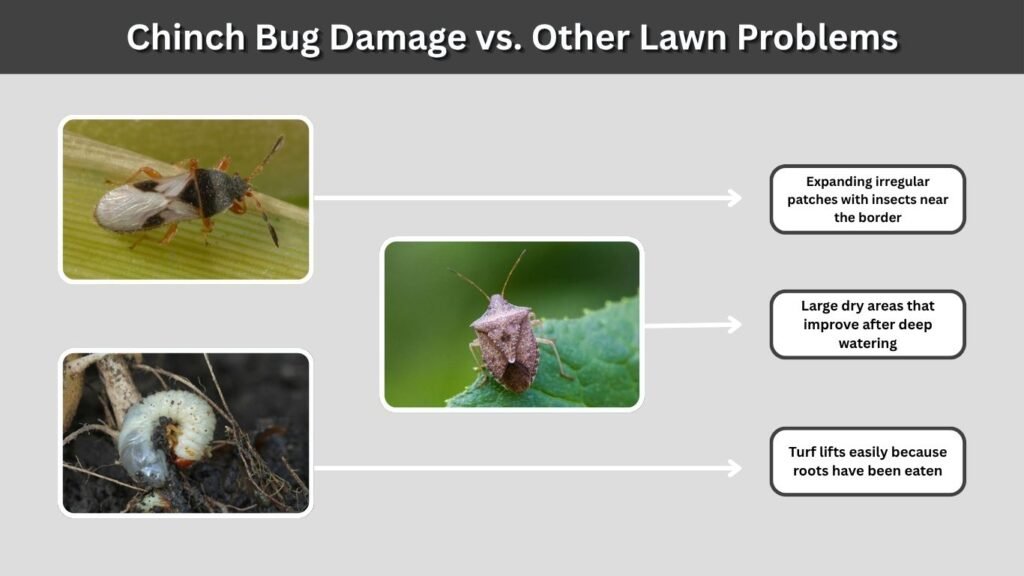
Correct diagnosis prevents unnecessary pesticide use and helps the grass recover faster.
| Problem | Main identifying signs |
| Chinch bugs | Expanding irregular patches with insects near the border |
| Drought | Large dry areas that improve after deep watering |
| White grubs | Turf lifts easily because roots have been eaten |
| Lawn fungus | Spots, rings, lesions, or mold-like growth |
| Pet urine | Small concentrated patches with possible dark-green edges |
| Poor irrigation | Damage follows sprinkler coverage patterns |
Chinch Bugs vs. Drought
Both problems cause wilting and browning. Drought-stressed grass may improve after deep watering when its crowns remain alive.
Chinch bug damage may continue spreading even when the soil is moist. Finding insects along the damaged border provides stronger evidence than the patch’s appearance alone.
Chinch Bugs vs. Grubs
White grubs live underground and feed on roots. Grub-damaged turf often feels loose and can be lifted like carpet.
Chinch bugs feed near the soil surface. Their damaged grass usually remains attached because the roots may still be present.
Chinch Bugs in Different Lawn Grasses
Several chinch bug species attack turf, and their preferred grass varies by region.
St. Augustine Grass
Southern chinch bugs are among the most serious pests of St. Augustine lawns. They feed around leaf sheaths, crowns, and aboveground runners called stolons.
Damage often begins in full sun near sidewalks or driveways. The grass may turn yellow, red-brown, straw-colored, and finally gray.
If the stolons remain green and flexible, the lawn may recover. Brown, brittle runners usually indicate that plugs or sod will be needed.
Bermudagrass
Bermudagrass may develop irregular yellow or brown patches during an infestation. Healthy Bermudagrass can spread quickly after treatment, but drought and compacted soil can slow recovery.
Zoysiagrass
Dense zoysiagrass may develop a heavy thatch layer that shelters chinch bugs. Damage usually appears as thinning, yellowing, or brown patches in sunny areas.
Cool-Season Lawns
Hairy chinch bugs may attack fine fescue, Kentucky bluegrass, and perennial ryegrass. Damage often becomes noticeable during hot summer weather when cool-season turf is already under stress.
How to Get Rid of Chinch Bugs in a Lawn
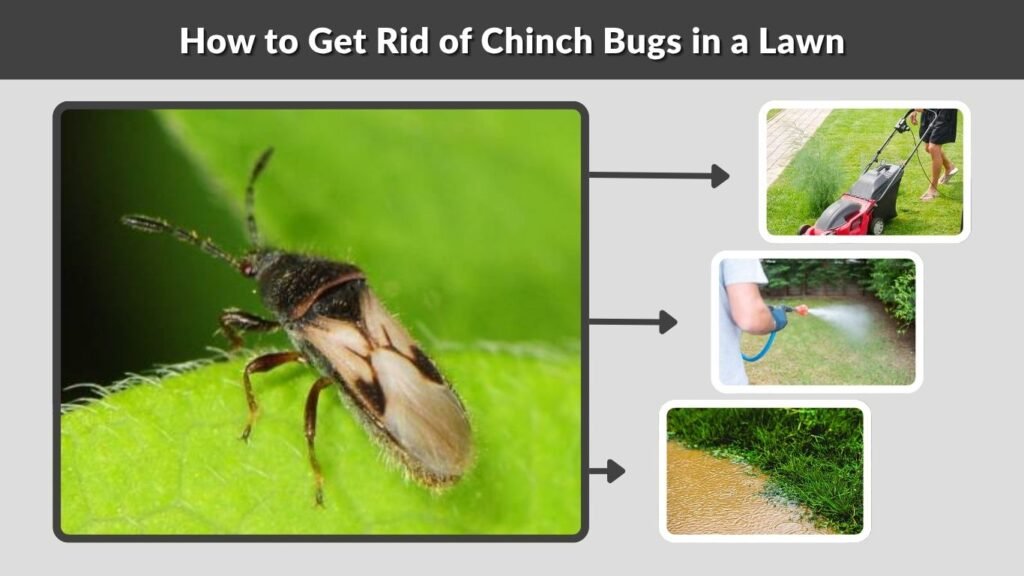
Begin by confirming the infestation. Killing insects without correcting lawn stress may provide only temporary control.
Improve Irrigation
Water deeply enough to moisten the root zone, then allow the surface to begin drying before watering again.
Check sprinkler coverage near pavement and lawn edges. Avoid watering lightly every day because shallow irrigation encourages weak roots.
Mow at the Correct Height
Keep the grass at the recommended height for its species. Cutting too short exposes the soil to more heat and weakens the plants.
Use a sharp mower blade and avoid removing more than one-third of the blade length in a single mowing.
Manage Thatch
Measure the thatch layer before removing it. Dethatching may be helpful when the layer is excessive, but aggressive removal can damage stressed grass.
Aeration may improve water movement and root growth in compacted soil. Perform major lawn work when the grass is actively growing.
Apply a Lawn Insecticide
When chinch bugs are confirmed at damaging levels, select an insecticide labeled for chinch bugs and the lawn’s grass species.
Treat the active border and several feet of surrounding green turf. Spraying only the dead center is ineffective because many insects have already moved outward.
Follow all label directions for application rate, watering, protective clothing, pets, and retreatment. Avoid repeated applications of the same product when it is not working.
Natural Chinch Bug Control
Natural lawn care can reduce small populations and help prevent recurring outbreaks.
Support Natural Predators
Big-eyed bugs, spiders, earwigs, predatory insects, and some ants feed on chinch bugs. Avoid unnecessary broad-spectrum insecticides that kill both pests and beneficial predators.
Reduce Lawn Stress
Proper irrigation, mowing, aeration, and fertilization make grass more tolerant of limited feeding. Healthy turf may recover before a small population causes serious damage.
Can Soap Kill Chinch Bugs?
A mild soap solution may kill chinch bugs through direct contact, but concentrated mixtures can burn grass. Hot weather increases the risk of injury.
Soap is often more useful for detecting insects than controlling an entire infestation. Test any mixture on a small area before wider use.
How to Repair a Lawn After Chinch Bug Damage
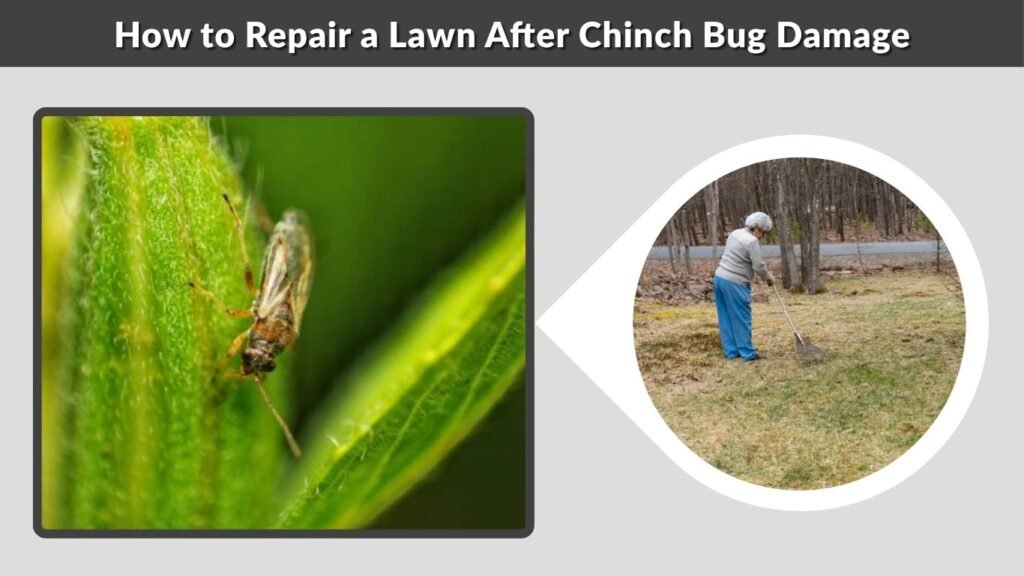
Do not repair the turf until the active infestation has been controlled. Otherwise, newly planted grass may also be damaged.
Lawn Repair Steps
- Confirm that chinch bug activity has stopped.
- Rake away loose, dead grass.
- Check soil moisture and sprinkler coverage.
- Loosen compacted soil where necessary.
- Add a thin layer of suitable topsoil.
- Install seed, plugs, or sod based on the grass type.
- Keep the repaired area evenly moist.
- Limit foot traffic until the grass establishes.
St. Augustine grass is generally repaired using plugs or sod. Bermudagrass and many cool-season lawns may be reseeded when temperatures are suitable.
How to Prevent Chinch Bugs in Your Lawn
Prevention focuses on keeping the grass healthy and checking vulnerable areas before damage becomes severe.
Water deeply rather than frequently, maintain the correct mowing height, and avoid excessive nitrogen fertilizer. Control thatch and improve compacted soil when necessary.
Inspect sunny lawn edges every one or two weeks during hot weather. Early detection allows a small patch to be treated before chinch bugs spread across a larger area.
FAQs
How do I know whether my lawn has chinch bugs?
Look for irregular yellow or brown patches that continue expanding after watering. Inspect the boundary between damaged and healthy grass for red nymphs or black adults. A flotation test can help confirm insects hidden in the thatch.
What is the best treatment for lawn chinch bugs?
The best treatment combines proper irrigation, mowing, thatch management, and a labeled insecticide when populations are damaging. The product must be approved for the grass species and applied according to its label.
Will chinch bugs go away without treatment?
Small populations may be controlled by predators and changing weather. Severe infestations are unlikely to disappear before causing additional lawn damage. Monitoring the patch and insect population helps determine whether treatment is necessary.
Can a lawn recover from chinch bug damage?
Yellow or lightly browned grass may recover if its crowns, roots, and runners remain alive. Completely dead turf will need to be reseeded or replaced with plugs or sod after the infestation is controlled.
Can chinch bugs spread through a lawn mower?
Chinch bugs may occasionally be transported short distances on grass clippings or lawn equipment, but they mainly spread by walking or flying into nearby turf. Cleaning equipment between heavily infested and healthy lawns can reduce accidental movement.