
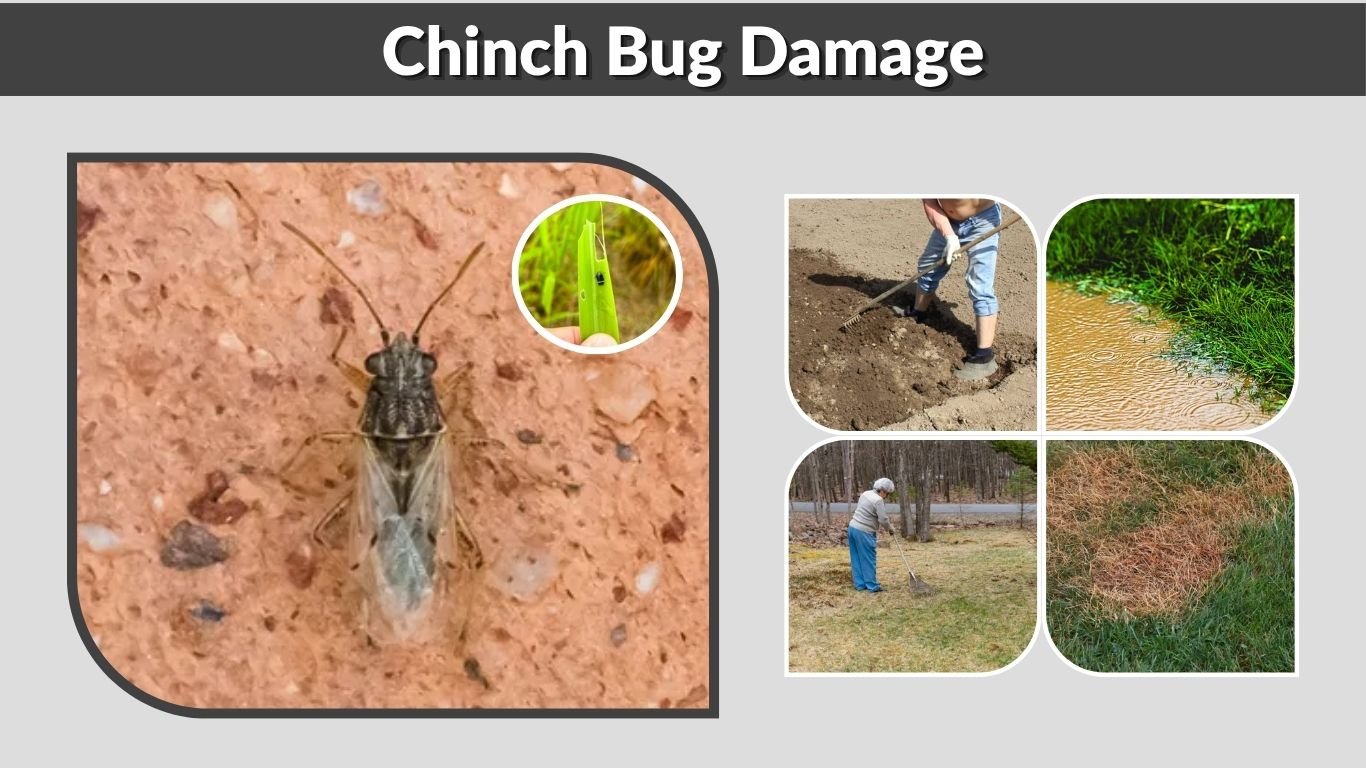
Chinch bug damage often begins as small patches of yellow, reddish-brown, or wilted grass that resemble drought stress. These patches gradually expand as the insects feed on healthy turf along the damaged area’s edges. Chinch bugs are especially destructive during hot, dry weather and commonly attack sunny lawns, including St. Augustine grass in Florida and other southern regions. Early identification is essential because watering alone will not stop an active infestation. This guide explains what chinch bug damage looks like, how to distinguish it from drought, grubs, and lawn diseases, and how to treat and repair an affected lawn.
What Is Chinch Bug Damage?
Chinch bugs are small, sap-feeding insects that live near the soil surface and within the lawn’s thatch layer. Both adults and immature nymphs pierce grass tissue, remove plant fluids, and introduce saliva that interferes with the plant’s ability to transport water.
Affected grass first loses its healthy green color before wilting, turning brown, and eventually dying. Damage is usually most severe during warm, dry periods because heat-stressed grass is less able to tolerate feeding.
How Chinch Bugs Damage Grass
Chinch bugs usually feed near the crown, lower stems, and leaf sheaths of grass plants. Large populations can weaken an entire section of turf.
Their feeding may cause:
- Yellowing grass blades
- Reddish or bronze discoloration
- Wilted or curled grass
- Dry, brittle blades
- Irregular brown patches
- Thinning turf
- Completely dead sections of lawn
- Weeds growing in damaged areas
The grass may appear dry even when the soil beneath it contains enough moisture.
What Does Chinch Bug Damage Look Like?
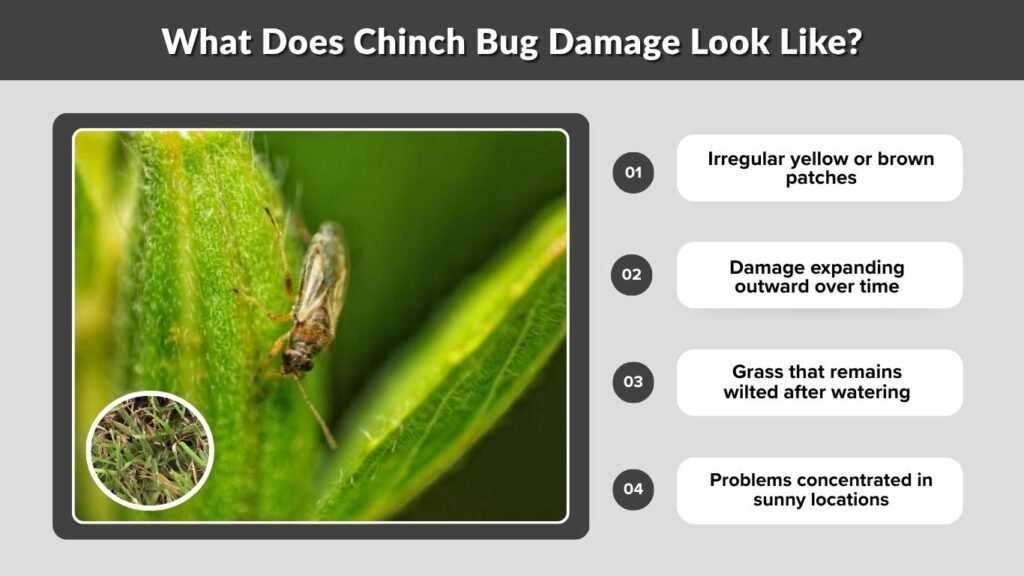
Chinch bug damage commonly appears as an irregular patch of yellow or brown grass surrounded by stressed, reddish, or light-green turf. The patch may begin only a few inches wide but expand rapidly when the insects remain active.
Unlike naturally dormant grass, chinch bug-damaged turf often has uneven edges. The center may be completely dead while living chinch bugs continue feeding where the brown area meets healthy green grass.
Common Signs of Chinch Bug Damage
Look for the following signs:
- Irregular yellow or brown patches
- Damage expanding outward over time
- Grass that remains wilted after watering
- Problems concentrated in sunny locations
- Damage beside driveways, sidewalks, and curbs
- Tiny insects moving through the thatch
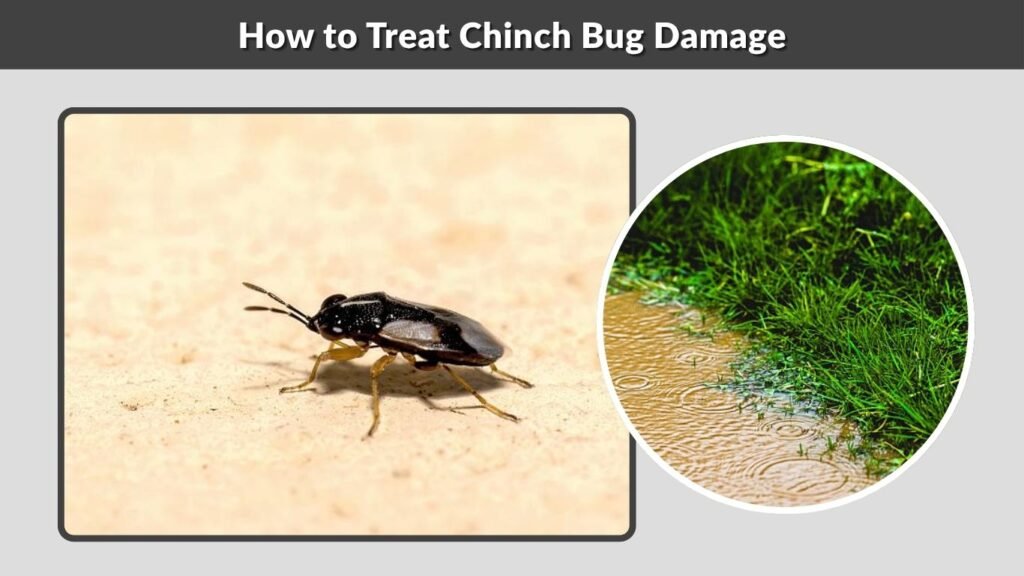
- Red or orange nymphs with pale markings
- Black adult bugs with white wings
Inspect the outer edge of a damaged patch rather than its dead center. Active chinch bugs usually move into the living grass surrounding an established brown area.
Where Does Damage Usually Appear?
Chinch bugs prefer warm, sunny turf. Infestations commonly begin in parts of the lawn where grass experiences extra heat or moisture stress.
Typical locations include:
- Along concrete driveways
- Beside sidewalks and patios
- Near curbs and roads
- On south- or west-facing slopes
- In areas with excessive thatch
- Around dry lawn edges
- In poorly irrigated sections
- Near heat-reflecting walls
Concrete and pavement absorb and release heat, creating dry conditions that favor chinch bugs and place additional stress on the surrounding grass.
Chinch Bug Damage in St. Augustine Grass
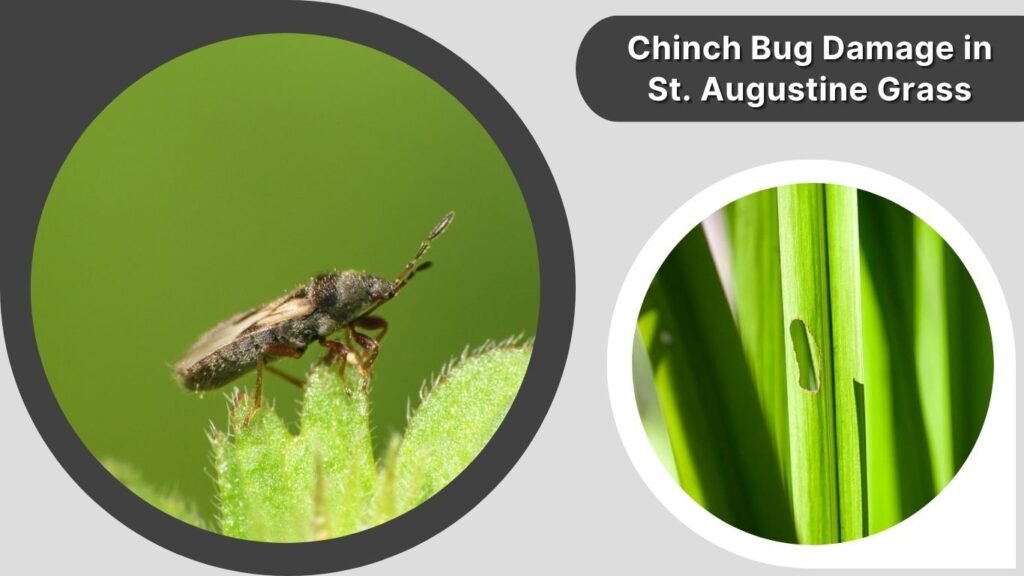
The southern chinch bug is one of the most damaging insect pests of St. Augustine grass, particularly in Florida and other warm coastal regions. Infestations may occur almost anywhere in a lawn but frequently begin in sunny areas under moisture stress.
St. Augustine grass may change from green to yellow, reddish-brown, straw-colored, and finally gray-brown as the damage progresses. The patches expand when chinch bugs move from dead grass into nearby living stolons and blades. UF/IFAS advises checking yellow and brown St. Augustine patches carefully because insects, disease, and insufficient water can produce similar symptoms.
Can Chinch Bugs Damage Other Grasses?
Different chinch bug species can affect different turfgrasses. Depending on the region, damage may occur in:
- St. Augustine grass
- Bermudagrass
- Zoysiagrass
- Centipedegrass
- Kentucky bluegrass
- Fine fescue
- Perennial ryegrass
St. Augustine is particularly vulnerable to southern chinch bugs, while hairy chinch bugs are more commonly associated with cool-season lawns in northern regions.
Chinch Bug Damage vs. Drought
Chinch bug injury is frequently mistaken for insufficient watering because both problems cause yellowing, wilting, and brown patches. However, their patterns and response to irrigation can provide useful clues.
| Feature | Chinch bug damage | Drought damage |
| Pattern | Irregular, expanding patches | Often affects larger areas evenly |
| Common location | Hot, sunny lawn edges | Any area receiving insufficient water |
| Response to watering | Continues spreading | Usually improves when adequately watered |
| Insects present | Bugs found in thatch | No chinch bugs present |
| Patch border | Active bugs along green edge | No concentrated insect activity |
| Soil moisture | May be moist below grass | Usually dry within the root zone |
Water the affected section properly and observe it over the next few days. Grass suffering only from mild drought should begin showing improvement. Chinch bug damage may continue expanding despite irrigation.
Water response alone cannot confirm the cause. Inspecting the turf for insects is necessary before applying a treatment.
Chinch Bug Damage vs. Grub Damage
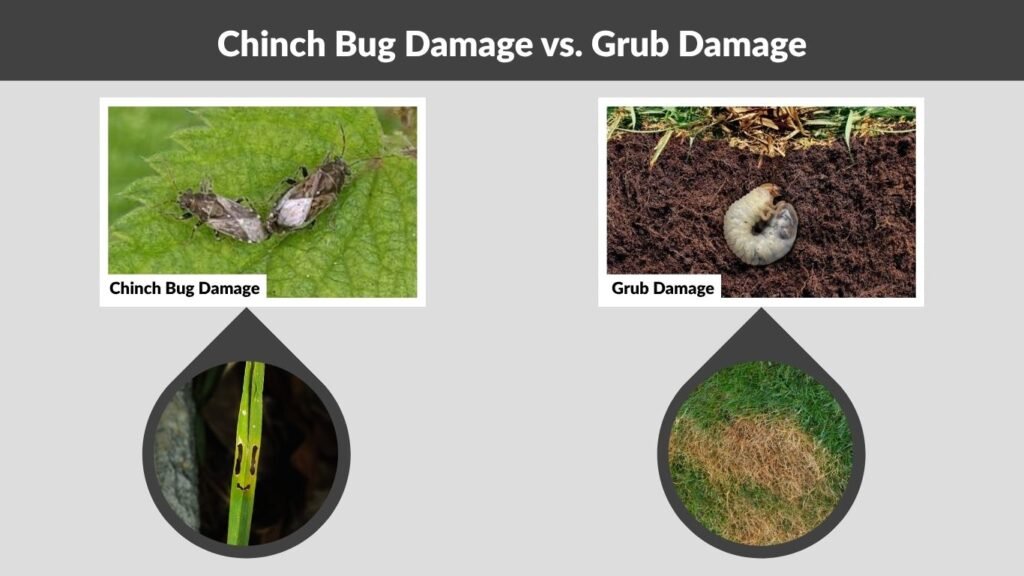
White grubs feed underground on grass roots, whereas chinch bugs feed above the soil line near the plant crown and thatch.
Grub-damaged turf often feels loose and can be lifted like a piece of carpet because the roots have been eaten. Digging beneath the damaged area may reveal white, C-shaped larvae.
Chinch bug-damaged grass normally remains attached to the soil. The insects are much smaller and can be found moving near the surface. White grubs may reach nearly an inch long, making them considerably larger and easier to recognize than chinch bugs.
Chinch Bug Damage vs. Lawn Fungus
Fungal lawn diseases can also produce yellow, brown, or circular patches. Disease symptoms may include spots or lesions on individual grass blades, discolored rings, mold-like growth, or damage associated with prolonged moisture and humidity.
Chinch bug damage is more common during hot, sunny, and relatively dry conditions. It usually expands from the edges as the insects move into healthy grass.
Do not apply an insecticide or fungicide based only on the patch’s appearance. Inspect individual blades, check soil moisture, and search for insects before choosing a treatment.
How to Check a Lawn for Chinch Bugs
Chinch bugs are tiny, so examining the lawn carefully is necessary. Adults are commonly dark-colored with pale wings, while young nymphs may be red or orange before becoming darker as they mature.
Visual Inspection
Part the grass with your fingers near the boundary between damaged and healthy turf. Look closely at the lower stems, thatch, and soil surface.
Chinch bugs may move quickly when disturbed. A magnifying glass can make identification easier.
Flotation Test
Remove both ends from a metal can and press one end several inches into the ground at the edge of the damaged area. Fill the can with water and maintain the water level for several minutes.
Chinch bugs present in the grass may float to the surface. Test several locations because the insects may not be evenly distributed throughout the lawn.
How to Treat Chinch Bug Damage
Treating the brown grass alone will not repair it. The first goal is to stop active insects from moving into healthy turf.
Reduce Lawn Stress
Water deeply but not excessively. Correct irrigation coverage, avoid mowing the lawn too short, and keep mower blades sharp.
A healthier lawn tolerates limited insect feeding better than grass already weakened by drought, poor soil, compaction, or improper mowing.
Control Excessive Thatch
Chinch bugs often shelter within thatch. A thin thatch layer can benefit turf, but heavy accumulation reduces water movement and provides insects with protected habitat.
Dethatch only when the layer has become excessive and the grass is actively growing. Aggressive dethatching during severe heat or drought can cause additional damage.
Use an Appropriate Treatment
For a confirmed, damaging infestation, select a lawn insecticide labeled for chinch bugs and approved for the particular grass species. Treat the active border and surrounding healthy turf, not only the dead center.
Follow all label directions concerning application rate, watering, protective equipment, temperature, pets, and retreatment. Repeated use of the same insecticide type can contribute to poor control, so persistent problems may require guidance from a local Extension office or licensed lawn professional.
How to Repair a Lawn After Chinch Bug Damage
Whether the grass recovers depends on how badly its crowns, roots, and spreading stems were injured. Yellow or wilted grass that remains alive may recover, while completely brown, brittle turf usually requires replacement.
Lawn Recovery Steps
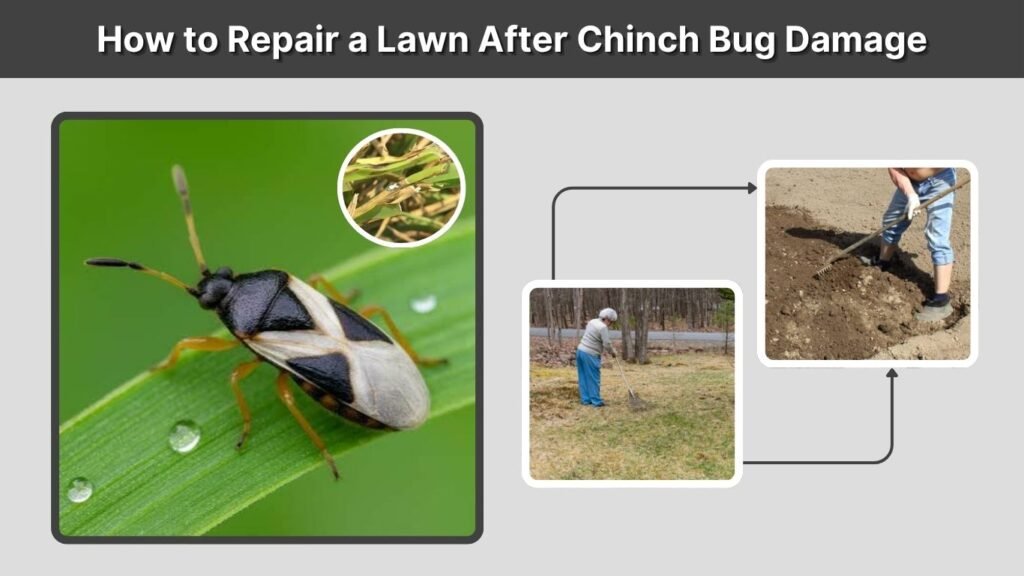
- Confirm that the infestation has been controlled.
- Rake out loose, completely dead material.
- Check irrigation coverage and soil moisture.
- Loosen compacted soil where necessary.
- Replace dead grass with suitable seed, plugs, or sod.
- Keep repaired sections evenly moist while they establish.
- Avoid heavy fertilizer applications during extreme heat.
- Monitor the lawn edges for returning insects.
St. Augustine grass is commonly repaired with sod or plugs rather than seed. Bermudagrass and some cool-season lawns may be reseeded when seasonal conditions are appropriate.
FAQs
Will grass grow back after chinch bug damage?
Grass can recover when the crowns and spreading stems remain alive. Lightly yellowed areas often improve after the insects are controlled and proper watering resumes. Completely brown, brittle, dead patches generally need to be reseeded, plugged, or replaced with sod.
How quickly does chinch bug damage spread?
Damage may expand noticeably within days during hot, dry weather when populations are high. The insects move from severely damaged grass into healthy turf around the patch. Early detection and treatment can prevent a small affected area from becoming a large dead section.
Does watering get rid of chinch bugs?
Watering reduces drought stress and may help grass tolerate limited feeding, but it does not reliably eliminate an established population. If brown patches continue expanding after proper irrigation, inspect the lawn and treat confirmed insects appropriately.
Can chinch bug damage be repaired?
Yes, but repair should begin after controlling the insects. Recoverable grass needs proper irrigation and mowing, while dead turf requires removal and replacement. Correcting thatch, irrigation, and heat-stress problems can also reduce the likelihood of another infestation.
What time of year is chinch bug damage worst?
Damage is generally most noticeable during hot, dry periods, often in summer. Regional timing varies with the chinch bug species and climate. Warm southern locations may experience activity over a much longer period than northern lawns.
