
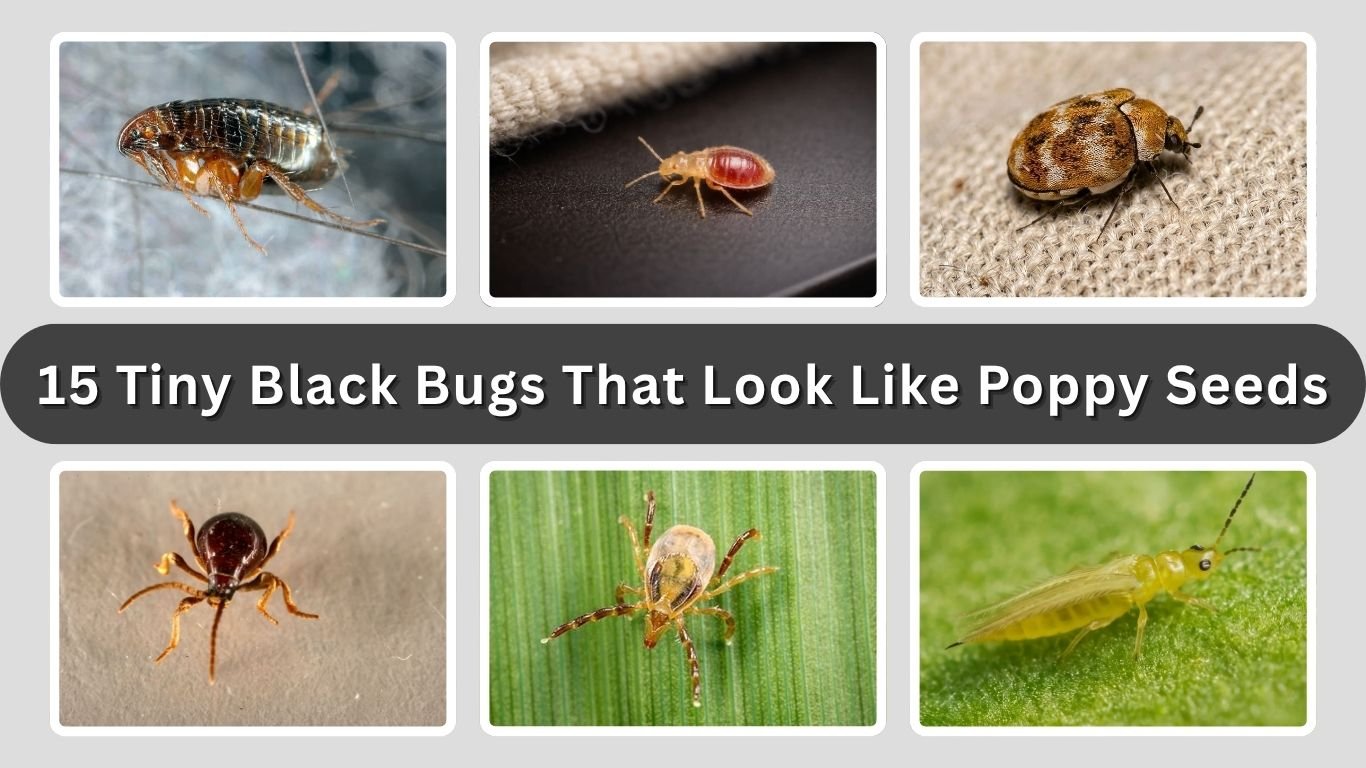
Tiny black bugs that resemble poppy seeds can appear on carpets, walls, windowsills, pantry shelves, houseplants, bedding, or pets. Some may jump, crawl, fly, or remain attached to the skin, making identification difficult. Common possibilities include fleas, carpet beetles, springtails, weevils, bird mites, and tick nymphs. This guide covers 15 tiny black bugs that look like poppy seeds, including their identifying features, common hiding places, behavior, and potential risks.
1. Flea
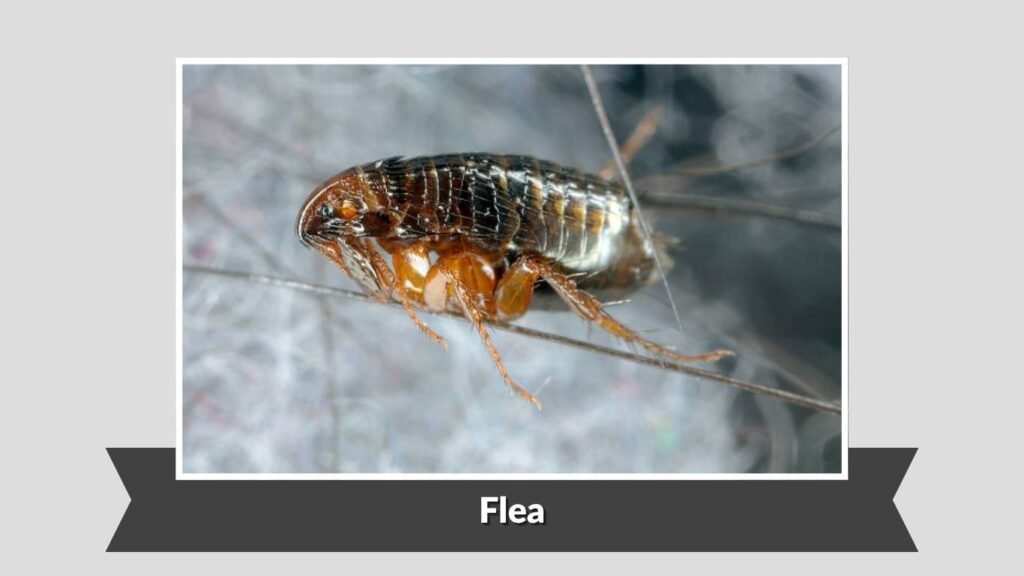
Fleas are tiny, wingless insects that feed on the blood of mammals and birds. Their dark color, flattened bodies, and extremely small size can make them resemble moving poppy seeds on carpets, pet bedding, furniture, or floors. They are especially common in homes with cats, dogs, or visiting wildlife.
Identification
- Size ranges from approximately 1.5 to 3.3 mm
- Dark brown, reddish-brown, or almost black body
- Narrow body flattened from side to side
- Six legs with enlarged hind legs
- No wings
- Capable of making sudden, powerful jumps
- Often appears as a moving black speck
- May leave dark flea dirt in an animal’s fur
Where Fleas Are Found
Adult fleas usually live and feed on animals, but their eggs fall into the surrounding environment. Flea eggs, larvae, and pupae may develop in carpets, rugs, furniture, floor cracks, pet bedding, kennels, and shaded outdoor areas. Fleas are often concentrated where pets regularly sleep, rest, or groom themselves.
Behavior and Bites
Fleas cannot fly, but their strong hind legs allow them to jump quickly onto animals or people. They feed by piercing the skin and consuming blood. Flea bites commonly appear as small, itchy red bumps, especially around the ankles and lower legs. Several bites may occur together or form a short line.
Why Fleas Look Like Poppy Seeds
A flea’s tiny size and dark, oval appearance can make it look like a black poppy seed from a distance. However, a flea will suddenly jump or crawl when disturbed. Poppy-seed-like specks that do not move may instead be flea dirt, debris, insect droppings, or small seeds. Placing the speck on a damp white paper towel can help—flea dirt may dissolve into a reddish-brown stain because it contains digested blood.
2. Bed Bug Nymph
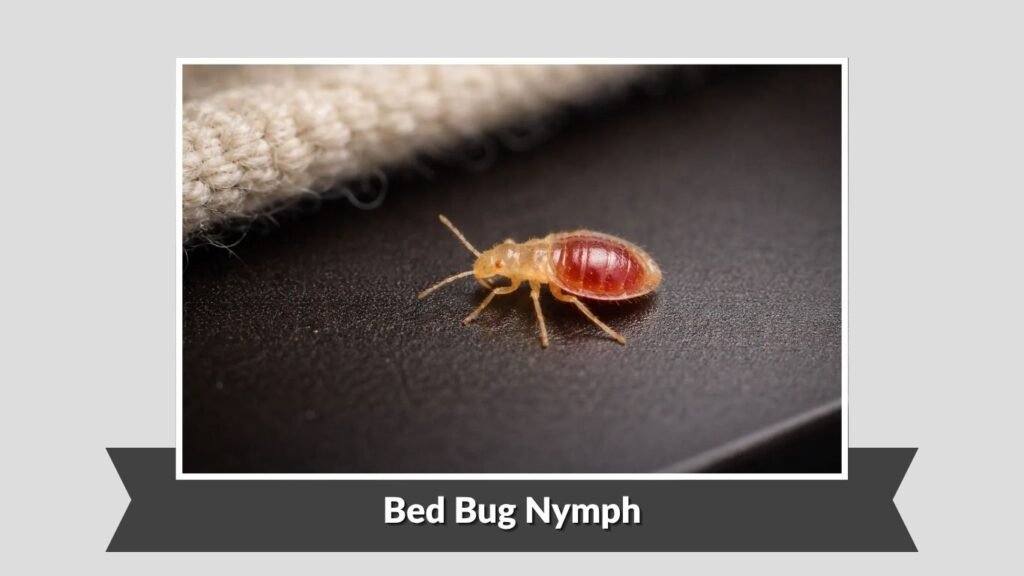
Bed bug nymphs are immature bed bugs that may appear as tiny dark specks after feeding. Newly hatched nymphs are pale and difficult to see, but their bodies become reddish-brown as they consume blood and mature. They commonly hide near beds, furniture seams, wall cracks, and other protected indoor spaces.
Identification
- Approximately 1.5–4.5 mm long, depending on age
- Flat, oval body
- Pale yellow or nearly transparent when unfed
- Red or dark brown after a blood meal
- Six legs and two short antennae
- Wingless at every life stage
- Moves by crawling and cannot jump
- May resemble a poppy seed after feeding
Where Bed Bug Nymphs Are Found
Bed bug nymphs usually remain close to places where people sleep or rest for long periods. They hide in mattress seams, box springs, bed frames, headboards, upholstered furniture, baseboards, wall cracks, and behind loose wallpaper. Their flattened bodies allow them to enter extremely narrow spaces during daylight.
Behavior and Bites
Nymphs feed on blood just like adult bed bugs. They usually emerge at night and pierce exposed skin while a person is sleeping. Their bites may cause itchy, red bumps that appear individually, in clusters, or in short lines. However, bite marks alone cannot confirm a bed bug infestation because other insects and skin conditions can cause similar reactions.
Why Bed Bug Nymphs Look Like Poppy Seeds
A recently fed bed bug nymph may look like a tiny reddish-brown or black seed because its abdomen becomes darker and more rounded after feeding. Unlike a poppy seed, it will crawl when disturbed. Other warning signs include dark fecal spots, pale shed skins, small white eggs, and live bugs hiding along mattress seams or furniture joints.
3. Carpet Beetle
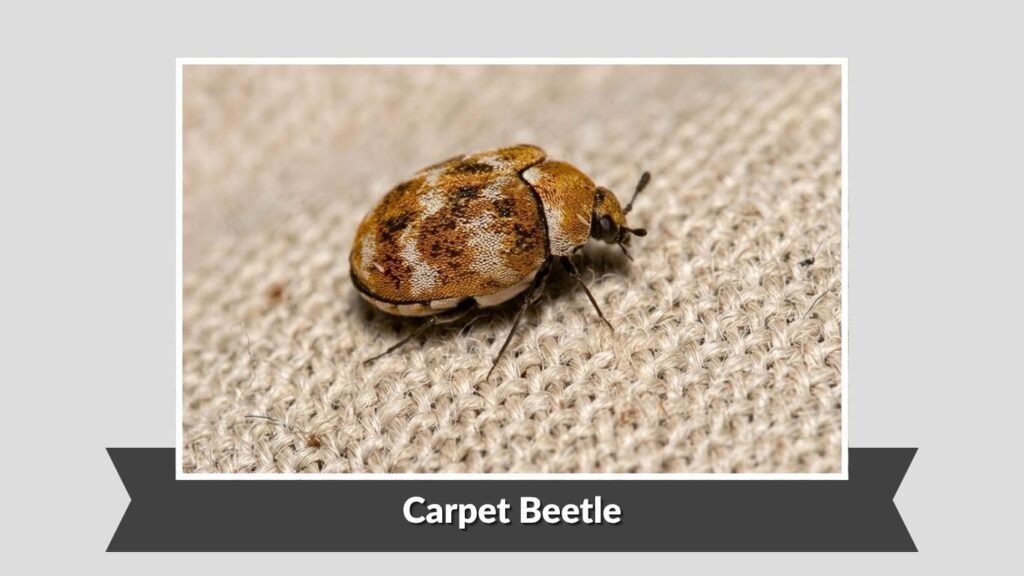
Carpet beetles are tiny, oval insects commonly found near windows, carpets, stored fabrics, and natural-fiber materials. Adult carpet beetles may resemble small black or mottled poppy seeds, while their hairy larvae are responsible for most household damage. Finding one adult does not always indicate a serious infestation, but repeated sightings require inspection.
Identification
- Approximately 2–4 mm long
- Oval or rounded body
- Black, brown, white, yellow, or mottled coloring
- Hard wing covers
- Six short legs
- Adults may resemble tiny patterned seeds
- Larvae are brown, segmented, and covered with hairs
- Adults can fly, but larvae only crawl
Where Carpet Beetles Are Found
Adults are often noticed on windowsills because they are attracted to light. Larvae hide in dark, undisturbed areas such as carpet edges, closets, air vents, furniture, stored clothing, and spaces beneath beds. They may also develop in abandoned bird nests, dead insects, or accumulated animal hair.
Damage and Feeding Habits
Adult carpet beetles generally feed outdoors on pollen and nectar. Their larvae consume animal-based materials such as wool, fur, feathers, silk, leather, and hair. Damage may appear as irregular holes in clothing, thinning carpet patches, shed larval skins, or damaged taxidermy and stored fabrics.
Why Carpet Beetles Look Like Poppy Seeds
Their tiny, rounded bodies and dark coloring make adult carpet beetles resemble poppy seeds, especially when they remain still. Unlike seeds, they crawl slowly and may fly when disturbed. Mottled species display tiny patches of white, brown, yellow, or black scales when viewed closely.
4. Drugstore Beetle
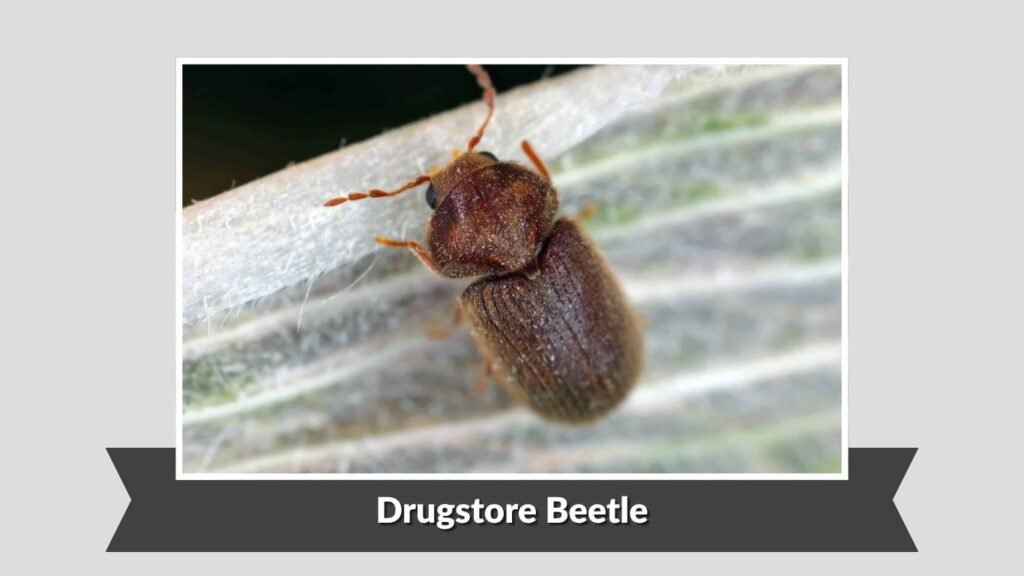
Drugstore beetles are small reddish-brown pantry pests that infest dried foods, spices, seeds, medicines, and other stored materials. Their compact shape and uniform coloring can make them look like brown or black poppy seeds inside cabinets, food packages, or containers.
Identification
- Approximately 2–3.5 mm long
- Reddish-brown or dark brown body
- Cylindrical or oval shape
- Head hidden beneath a hood-like thorax
- Fine lengthwise grooves on the wing covers
- Antennae ending in a three-segmented club
- Six short legs
- Capable of flying
Where Drugstore Beetles Are Found
These beetles are commonly discovered in pantries, food-storage rooms, cabinets, warehouses, and grocery products. Adults may appear around windows and lights after leaving infested packages. Finding several beetles usually means that a forgotten or poorly sealed product is supporting their development.
Food and Materials They Infest
Drugstore beetles can infest flour, bread, cereal, spices, dried herbs, pet food, birdseed, pasta, powdered mixes, and seeds. They may also damage nonfood materials, including prescription drugs, books, leather, dried plants, and museum specimens. Infested packages should be discarded or treated appropriately.
Why Drugstore Beetles Look Like Poppy Seeds
Their small size, smooth oval outline, and reddish-brown coloring allow them to resemble seeds or coarse crumbs. Movement is the clearest clue. Adults crawl steadily and may fly, while tiny holes in packaging or powder around food containers can indicate an active infestation.
5. Cigarette Beetle
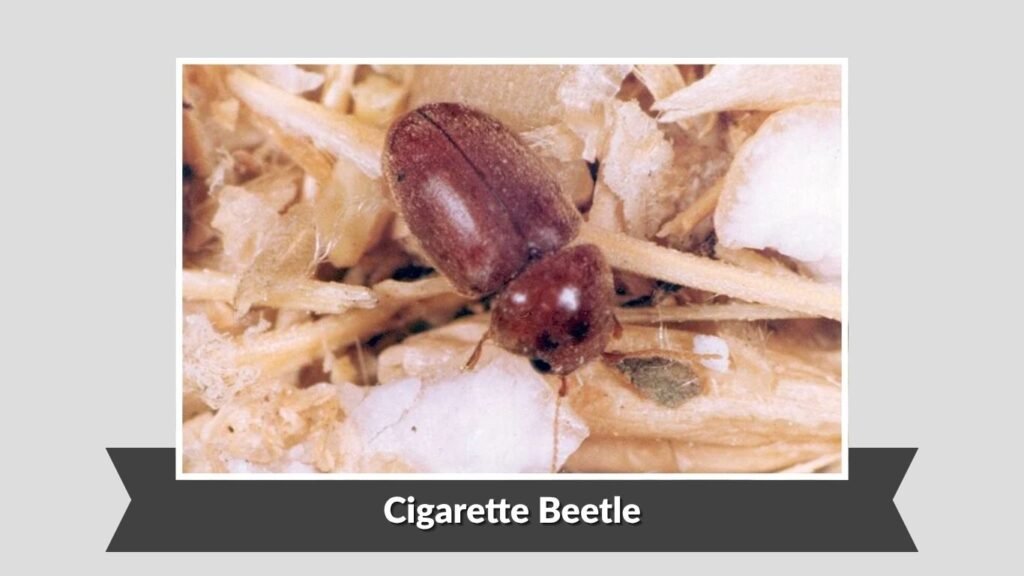
The cigarette beetle is a small pantry beetle named for its ability to infest stored tobacco. It also attacks spices, herbs, dried flowers, cereals, pet food, and many other plant-based products. Its reddish-brown, rounded body may look like a moving poppy seed on shelves or counters.
Identification
- Approximately 2–3 mm long
- Light brown or reddish-brown color
- Rounded, oval body
- Head bent downward beneath the thorax
- Smooth wing covers without obvious grooves
- Serrated, saw-like antennae
- Fine hairs covering the body
- Strong flying ability
Where Cigarette Beetles Are Found
Cigarette beetles are usually found in kitchens, pantries, warehouses, tobacco-storage areas, spice containers, and dried-flower arrangements. Adults may fly away from infested materials and gather around lights or windows, making it difficult to locate the original food source.
Feeding and Household Damage
The larvae feed on stored tobacco, paprika, dried peppers, herbs, spices, cereals, seeds, dried fruit, pet food, and powdered products. They may chew through thin cardboard, paper, and plastic packaging. Cigarette beetle larvae are generally hairier than drugstore beetle larvae.
Why Cigarette Beetles Look Like Poppy Seeds
A cigarette beetle’s tiny rounded body can resemble a reddish or dark poppy seed, particularly when it pulls in its legs. It differs from a drugstore beetle by having smooth wing covers and evenly serrated antennae rather than grooved wing covers and clubbed antennae.
6. Spider Beetle
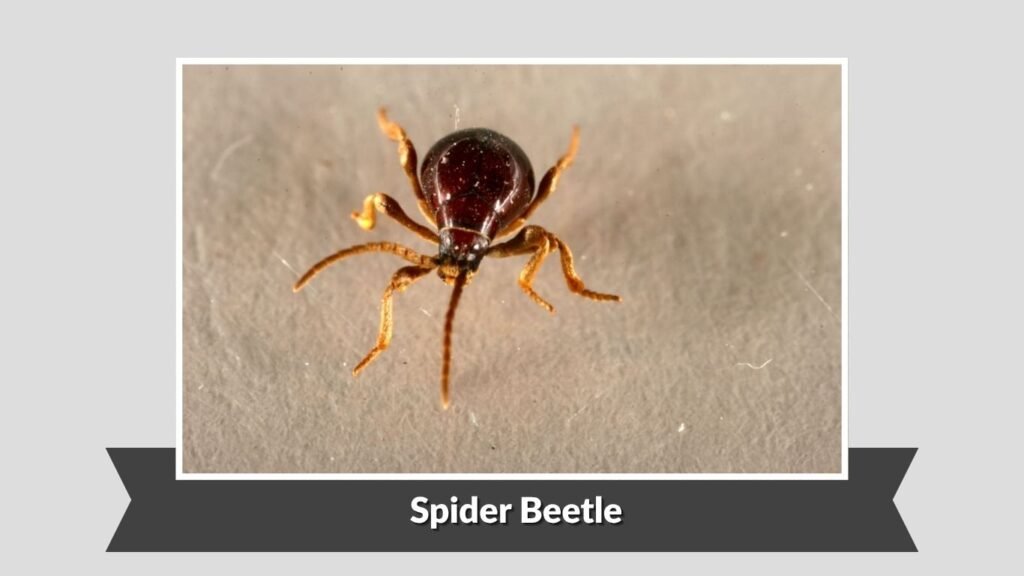
Spider beetles are tiny stored-product pests with rounded bodies, long legs, and narrow waists. Their appearance resembles a small spider or tick, although they are true beetles with six legs. Dark species can easily be mistaken for shiny black poppy seeds in cupboards, basements, or food-storage areas.
Identification
- Usually 2–5 mm long
- Reddish-brown, dark brown, or nearly black body
- Rounded or globe-shaped abdomen
- Long, thin legs
- Long antennae
- Narrow connection between the thorax and abdomen
- Six legs rather than eight
- Slow-moving and sometimes spider-like
Where Spider Beetles Are Found
Spider beetles prefer dark, quiet, and sometimes damp locations. They may hide inside pantries, wall voids, basements, attics, warehouses, bird nests, rodent nests, and beneath floorboards. They are often active at night and may remain unnoticed until adults wander into visible areas.
Food and Materials They Infest
These beetles feed on many dried animal- and plant-based materials, including flour, grains, cereals, spices, seeds, dried fruit, pet food, dead insects, feathers, and rodent droppings. The source must be located and removed because spraying visible adults will not eliminate beetles developing inside infested material.
Why Spider Beetles Look Like Poppy Seeds
The smooth, rounded abdomen of a spider beetle closely resembles a shiny seed. Its long legs may be difficult to see without magnification, especially when folded beneath the body. A closer look reveals antennae and six legs, separating it from both seeds and eight-legged ticks.
7. Black Carpet Beetle
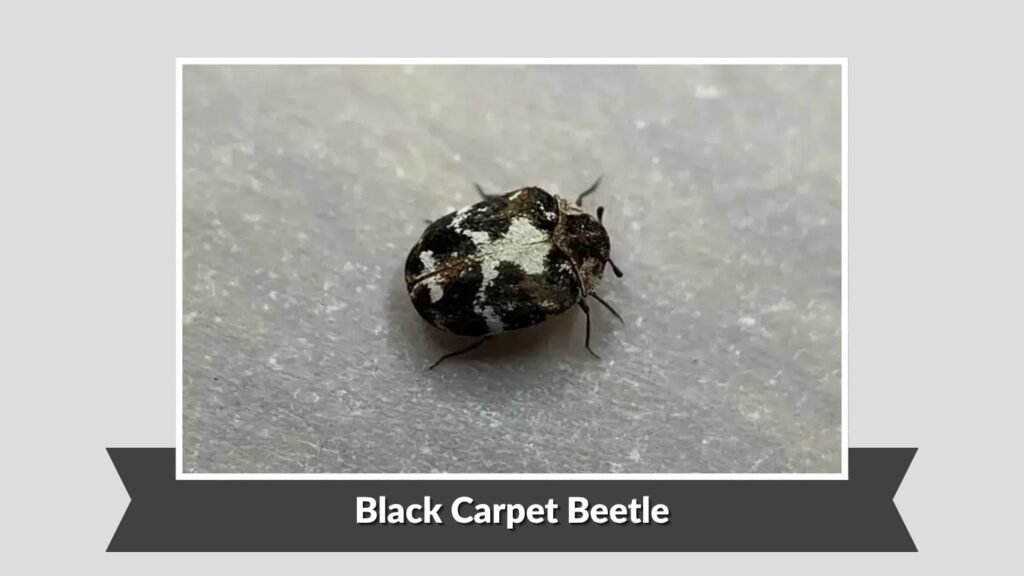
The black carpet beetle is a dark, oval household beetle whose adults strongly resemble elongated black poppy seeds. Scientifically known as Attagenus unicolor, it is a common fabric and stored-product pest. The adults are mostly harmless, but their larvae can damage clothing, carpets, food, and other natural materials.
Identification
- Approximately 3–5 mm long
- Shiny black or very dark brown body
- Oval and slightly elongated shape
- Brownish legs and antennae
- Hard, smooth wing covers
- Adult body lacks the mottled pattern of other carpet beetles
- Larvae are brown, tapered, and hairy
- A long tuft of hairs may appear at the larva’s rear
Where Black Carpet Beetles Are Found
Adults frequently appear near windows, doors, and lights. Larvae prefer hidden locations such as closets, carpet edges, furniture, heating ducts, stored boxes, kitchen cabinets, and spaces containing accumulated lint, hair, or dead insects.
Damage and Feeding Habits
Black carpet beetle larvae consume wool, fur, feathers, silk, leather, dried animal material, grains, cereals, seeds, flour, and pet food. Their feeding may create irregular holes in clothing and carpets. Shed larval skins around damaged materials are another common warning sign.
Why Black Carpet Beetles Look Like Poppy Seeds
The adult’s smooth, shiny, dark body looks very similar to a black poppy seed when viewed from above. However, it has a more elongated shape and will crawl or fly when disturbed. Finding several adults near windows may indicate larvae developing somewhere inside the home.
8. Weevil
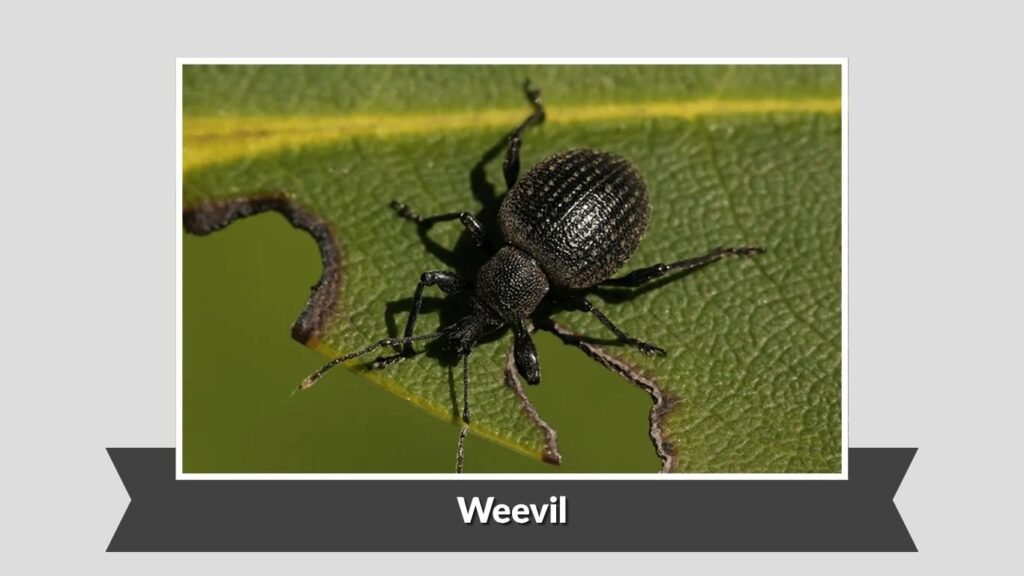
Weevils are small beetles recognized by their narrow bodies and projecting snouts. The tiny black insects discovered inside rice, corn, wheat, birdseed, or other whole grains are often rice, maize, or granary weevils. Their dark bodies and slow movement can make them resemble poppy seeds scattered inside food packages or pantry cabinets.
Identification
- Usually less than 5 mm long
- Dark brown, reddish-brown, or nearly black
- Long snout projecting from the head
- Hard, elongated body
- Six short legs
- Bent or elbowed antennae
- Some species have four orange or reddish spots
- Adults may crawl or fly, depending on the species
Where Weevils Are Found
Household grain weevils are usually discovered in kitchens, pantries, cupboards, and rooms where dry foods are stored. They may develop inside rice, corn, wheat, barley, birdseed, and other whole grains. The larvae remain concealed inside individual kernels, making an infestation difficult to notice until adults emerge.
Behavior and Food Damage
Adult females create small openings in grains and deposit their eggs inside. After hatching, the larvae feed within the kernels and eventually emerge through round exit holes. Infested food may contain live beetles, hollow grains, powder, or damaged seeds. Removing the affected food and vacuuming shelves are more effective than spraying pantry surfaces.
Why Weevils Look Like Poppy Seeds
A dark adult grain weevil is similar to a poppy seed in both size and color. Its legs and snout may be difficult to see without magnification, especially when it remains still inside grain. Movement and tiny holes in food kernels are the clearest signs that the specks are insects rather than seeds.
9. Booklouse
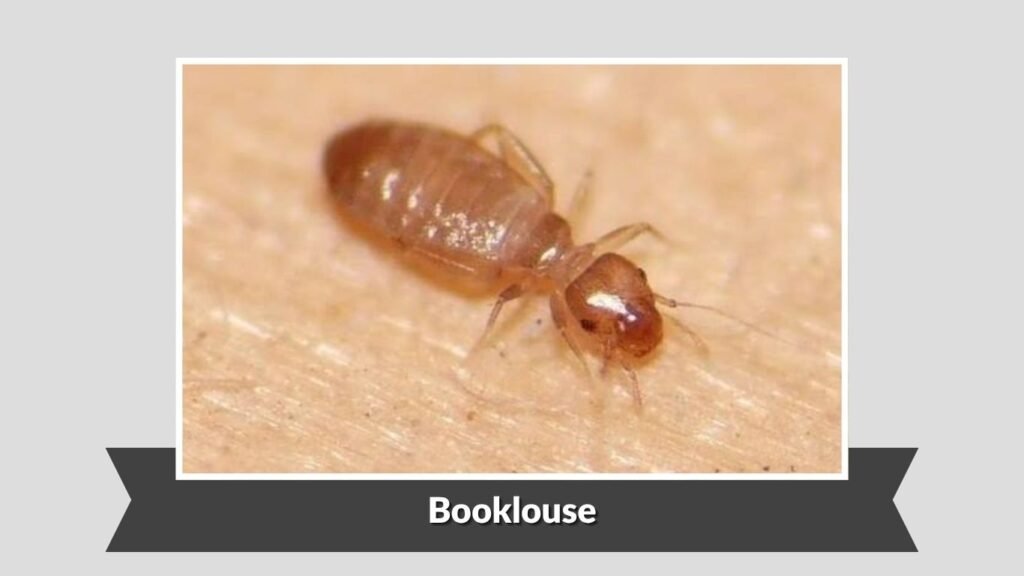
Booklice are tiny, soft-bodied insects commonly associated with damp paper, cardboard, stored food, and mold. Despite their name, they are not true lice and do not live on people or animals. Most are pale, but darker brown or gray individuals can resemble tiny poppy seeds or moving specks on shelves and walls.
Identification
- Usually less than 5 mm long
- White, gray, tan, or brown body
- Soft and somewhat flattened appearance
- Long, slender antennae
- Relatively large head
- Six small legs
- Indoor species are usually wingless
- Crawls slowly and cannot jump like a flea
Where Booklice Are Found
Booklice prefer warm, damp, undisturbed locations where microscopic mold is growing. They may occur around old books, wallpaper, cardboard boxes, window frames, bathrooms, basements, food packages, and recently constructed buildings containing damp materials. Their presence often indicates excessive humidity rather than poor housekeeping.
Behavior and Household Effects
Booklice feed on molds, fungi, grains, insect fragments, starches, and glue used in bookbindings. They do not bite people or pets and rarely cause serious structural damage. Large populations may contaminate stored products or damage delicate paper, but reducing moisture is usually enough to control them.
Why Booklice Look Like Poppy Seeds
Dark-colored booklice can appear as tiny gray or brown seeds when viewed without magnification. Their small legs blend into the body, leaving only a moving oval speck visible. Unlike a poppy seed, a booklouse will crawl slowly across paper, shelves, or damp walls when disturbed.
10. Springtail
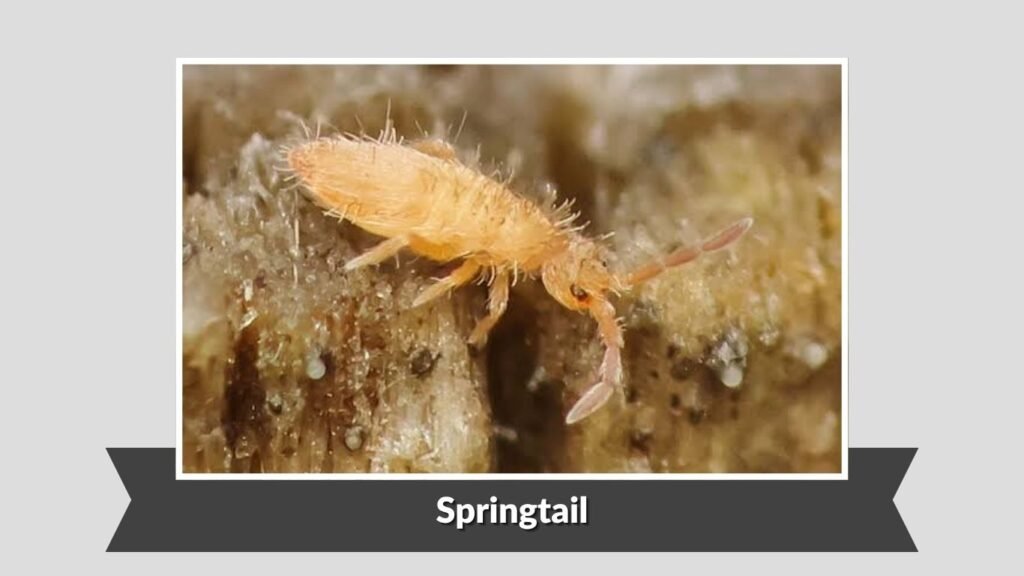
Springtails are minute moisture-loving arthropods frequently seen around houseplants, sinks, bathrooms, basements, and damp foundations. Dark species may look like black poppy seeds scattered across soil or wet surfaces. Their most noticeable feature is their ability to jump suddenly when touched or disturbed.
Identification
- Usually between 1.5 and 3 mm long
- Black, gray, brown, white, or bluish
- Elongated or rounded body, depending on species
- Six legs and moderate-length antennae
- No wings
- Soft body that is easily crushed
- Jumps several inches when disturbed
- Often appears in groups in damp locations
Where Springtails Are Found
Springtails live in moist areas containing fungi, algae, and decomposing organic material. Indoors, they commonly occur in overwatered potting soil, bathrooms, basements, kitchens, plumbing areas, and around leaking windows. Outdoors, they inhabit soil, mulch, leaf litter, rotting wood, and wet foundation areas.
Behavior and Household Effects
Springtails feed primarily on fungi, decaying roots, algae, and other decomposing material. They do not bite, sting, damage furniture, or infest stored food. Large numbers usually indicate a moisture problem. Drying wet areas, repairing plumbing leaks, improving drainage, and watering houseplants less frequently provide the best control.
Why Springtails Look Like Poppy Seeds
Dark, rounded springtails closely resemble tiny poppy seeds when they rest on soil, sinks, or windowsills. Their identity becomes obvious when they suddenly spring into the air. Fleas also jump, but fleas have hard, side-flattened bodies and are normally associated with pets rather than damp soil.
11. Fungus Gnat
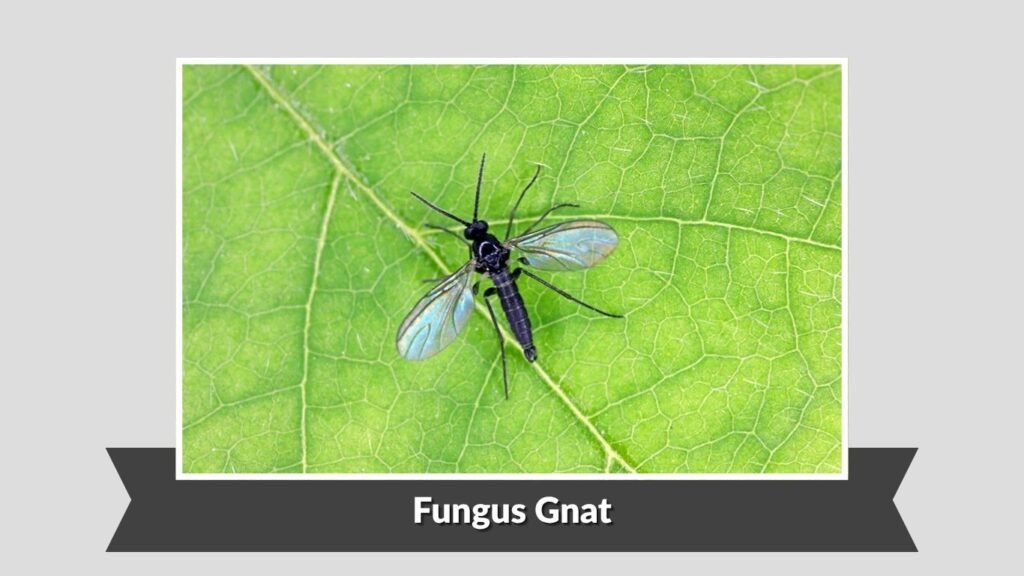
Fungus gnats are tiny, dark flies commonly found around moist houseplant soil. When resting on a pot, wall, or windowsill, their dark bodies may resemble tiny black seeds. A closer look reveals long legs, clear wings, and a slender mosquito-like shape.
Identification
- Approximately 1.5–3 mm long
- Dark gray or black body
- Slender, mosquito-like appearance
- Long legs and moderate-length antennae
- Clear wings folded behind the body
- Weak, slow, or erratic flight
- Larvae are pale and worm-like
- Larvae have noticeable dark heads
Where Fungus Gnats Are Found
Fungus gnats are strongly associated with houseplants growing in damp, organic-rich potting soil. Adults may crawl across the soil, hover around pots, or gather at nearby windows. Consistently moist soil, poor drainage, decomposing leaves, and excessive peat create favorable breeding conditions.
Behavior and Plant Effects
Adult fungus gnats are mostly nuisance insects and do not bite people. Their larvae consume fungi, decaying roots, and organic matter in the soil. They rarely damage healthy mature plants, although very large populations may affect seedlings or delicate roots. Letting the soil surface dry between waterings helps interrupt their development.
Why Fungus Gnats Look Like Poppy Seeds
A fungus gnat resting with its legs and wings close to its body may appear as a black poppy seed. However, it will usually crawl or make a weak flight when disturbed. If the black specks repeatedly emerge from potting soil after watering, fungus gnats are more likely than fruit flies or fleas.
12. Thrips
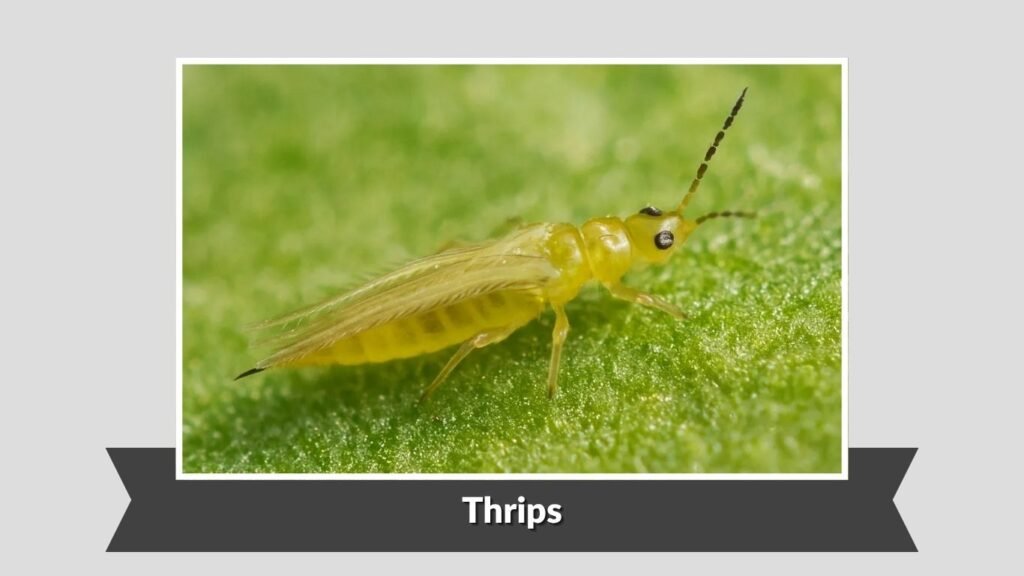
Thrips are extremely small, slender insects that feed on leaves, flowers, fruits, and developing plant tissue. Dark adults may look like tiny black seeds, threads, or splinters on windowsills and plant leaves. They are commonly brought indoors on flowers, vegetables, and newly purchased houseplants.
Identification
- Approximately 1–2 mm long
- Tan, brown, yellow, or black body
- Very narrow, elongated shape
- Six short legs
- Small antennae
- Adults have narrow, fringed wings
- Runs quickly when disturbed
- May make short flights between plants
Where Thrips Are Found
Thrips hide inside flowers, leaf folds, buds, and along the undersides of leaves. Indoors, they are most often associated with houseplants and cut flowers. Adults may also gather on windows because they are attracted to light. Yellow or blue sticky cards can help detect flying individuals.
Behavior and Plant Damage
Thrips scrape plant surfaces and consume the released fluids. Their feeding can create pale dots, irregular silver streaks, distorted flowers, damaged buds, and discolored leaves. Tiny dark or shiny waste spots may appear near heavily damaged areas. Washing leaves and removing badly infested growth can reduce small populations.
Why Thrips Look Like Poppy Seeds
Dark thrips can resemble miniature black seeds when their wings and legs are difficult to see. However, they are usually narrower than true poppy seeds and may look more like tiny moving dashes. Rapid crawling and silvery plant damage help separate them from seeds, fleas, and small beetles.
13. Bird Mite
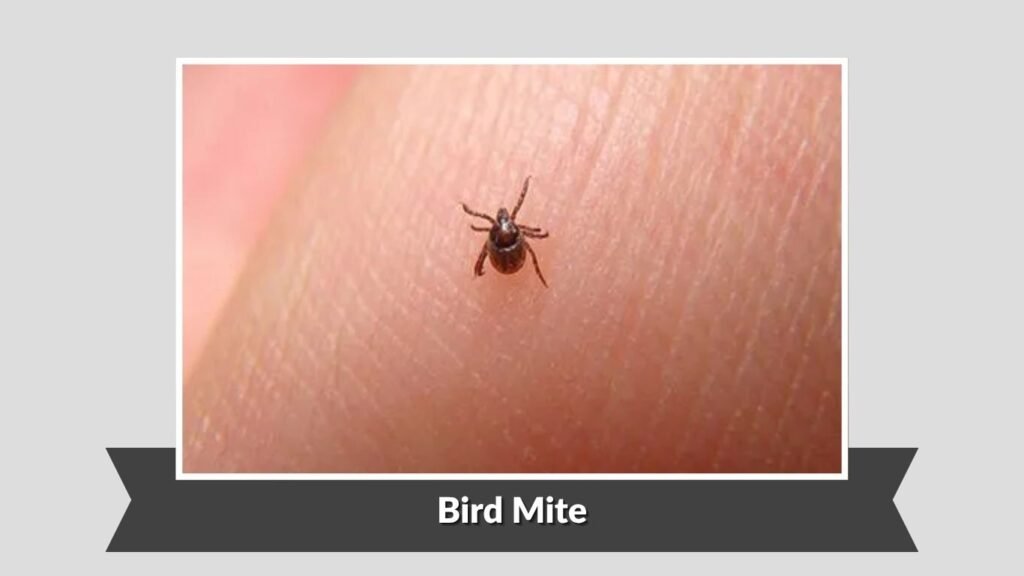
Bird mites are extremely small parasites that normally feed on birds but may enter homes after nests are abandoned or young birds leave. Their tiny dark bodies can resemble moving poppy seeds on walls, windowsills, furniture, or bedding. Unlike bed bugs or fleas, bird mites cannot reproduce successfully without a suitable bird host.
Identification
- Usually less than 1 mm long
- Pale or nearly transparent before feeding
- Dark red, brown, or black after a blood meal
- Oval body with eight legs
- Moves quickly across walls and furniture
- Too small for detailed identification without magnification
- Does not have wings
- Often found near bird nests, roofs, or windows
Where Bird Mites Are Found
Bird mites commonly enter buildings from nests belonging to pigeons, sparrows, starlings, chickens, and other birds. They may crawl through roof gaps, vents, windows, ceilings, and wall openings after their original hosts leave. Indoor sightings often occur near attics, balconies, air-conditioning units, chimneys, and rooms beside abandoned nests.
Behavior and Bites
Bird mites may temporarily bite people when birds are unavailable. Their bites can cause itching, small red bumps, crawling sensations, and skin irritation. However, they cannot live permanently on humans. Removing the abandoned nest, sealing entry points, washing bedding, and vacuuming affected areas usually helps end the problem.
Why Bird Mites Look Like Poppy Seeds
A recently fed bird mite may appear as a tiny dark red or black speck resembling a poppy seed. Its legs are difficult to see without magnification, so it may look like a moving dot. Their rapid crawling and association with bird nests help separate them from seeds, fleas, and bed bug nymphs.
14. Clover Mite
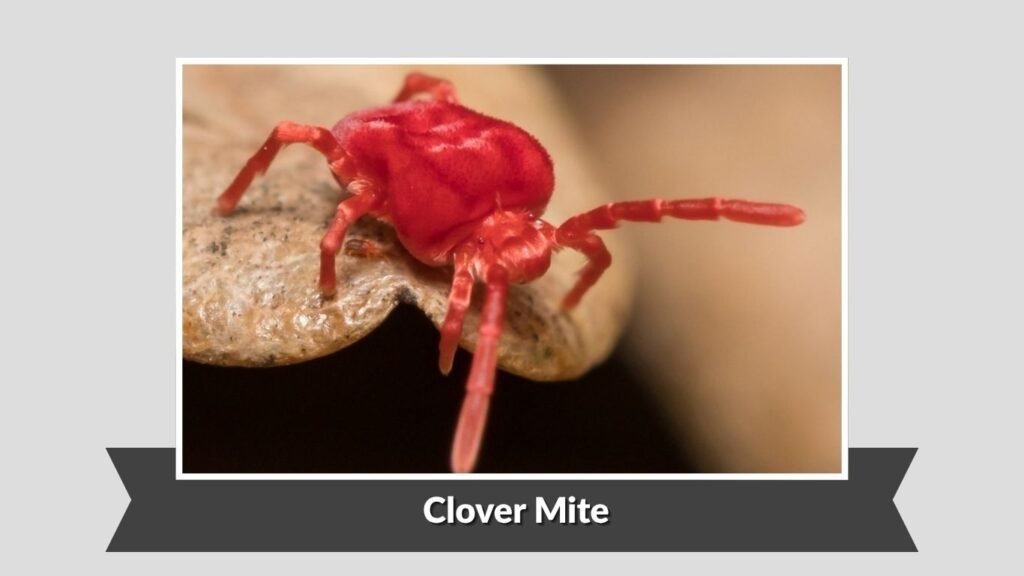
Clover mites are tiny plant-feeding mites that sometimes enter homes in large numbers. They are often noticed crawling around windows, walls, curtains, and sunny exterior surfaces. Their reddish-brown or dark bodies may resemble miniature poppy seeds, although their unusually long front legs provide an important identification clue.
Identification
- Approximately 0.75 mm long
- Reddish-brown, dark green, or nearly black
- Oval body
- Eight legs
- Front pair of legs is much longer than the others
- Does not have wings
- Moves slowly across walls and windows
- Leaves a red stain when crushed
Where Clover Mites Are Found
Clover mites feed outdoors on grass, clover, weeds, flowers, and other plants. They often gather on warm, sunlit walls and enter through gaps around windows, doors, siding, and foundations. Indoor populations are usually largest in rooms facing heavily fertilized lawns or dense vegetation.
Behavior and Household Effects
Clover mites do not bite people or pets and do not damage furniture, clothing, or stored food. They are mainly nuisance pests. Crushing them should be avoided because their body pigments can leave reddish stains on walls, curtains, carpets, and fabrics. Vacuuming is usually the safest removal method.
Why Clover Mites Look Like Poppy Seeds
Their small, oval, dark bodies can resemble tiny poppy seeds from a distance. However, clover mites crawl steadily and have two very long front legs that may look like antennae. Their reddish smear when crushed also distinguishes them from beetles and ordinary debris.
15. Tick Nymph
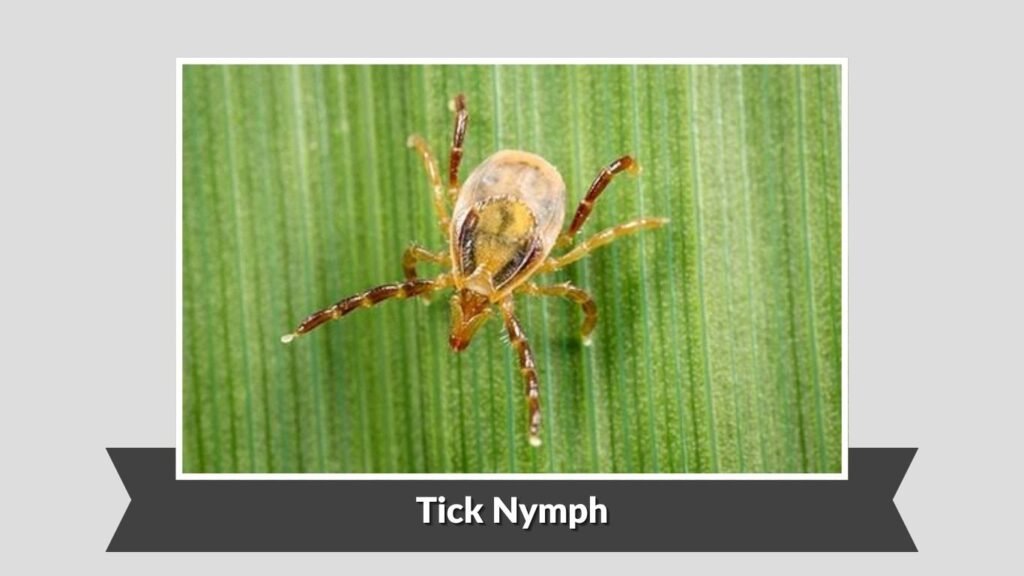
Tick nymphs are immature ticks that may look like tiny black or brown poppy seeds attached to skin, clothing, pets, or outdoor equipment. They are especially difficult to notice because they are smaller than adult ticks. Despite their size, some species can transmit disease while feeding.
Identification
- Usually approximately 1–2 mm long
- Dark brown, reddish-brown, or black
- Flat and oval before feeding
- Rounded and swollen after feeding
- Eight legs
- No wings or antennae
- Crawls rather than jumps or flies
- May remain firmly attached to skin
Where Tick Nymphs Are Found
Tick nymphs live in grass, leaf litter, brush, woodland edges, and other places used by wildlife. They may attach to people or pets after contact with vegetation. Indoors, they are usually brought in on clothing, animals, backpacks, or outdoor gear rather than developing into a large household infestation.
Behavior and Bites
A tick nymph climbs onto a host and attaches its mouthparts to the skin to consume blood. Feeding may continue for several days. The bite is often painless, so the tick may remain unnoticed. Remove an attached tick promptly with fine-tipped tweezers, pulling upward with steady pressure without twisting or crushing its body.
Why Tick Nymphs Look Like Poppy Seeds
An unfed tick nymph has a tiny, dark, flattened body that closely resembles a poppy seed. Unlike a seed, it has eight small legs and may grip the skin firmly. A feeding tick gradually enlarges and becomes more rounded, grayish, or reddish as its body fills with blood.
FAQs
What tiny black bugs look like poppy seeds?
Fleas, carpet beetles, spider beetles, weevils, springtails, bird mites, clover mites, and tick nymphs may resemble black poppy seeds. Their movement, body shape, location, and ability to jump or fly can help identify the correct pest.
How can I tell whether a black speck is a bug?
Watch the speck for movement and examine it with a magnifying glass. Insects may crawl, jump, or fly and usually have six legs. Mites and ticks have eight legs. A real poppy seed will remain motionless and have no visible body parts.
What tiny black bugs jump like fleas?
Fleas and springtails can both jump. Fleas are associated with pets, bedding, and carpets and may bite people. Springtails usually gather around damp soil, bathrooms, sinks, or basements and do not bite humans or pets.
Are tiny black bugs in the house dangerous?
Most tiny black household bugs are nuisance pests rather than serious threats. However, fleas, bird mites, bed bug nymphs, and ticks may bite. Tick nymphs can also transmit disease, so attached ticks should be removed promptly and monitored carefully.
How do I get rid of tiny black bugs that resemble seeds?
Identify the bug and remove its source. Vacuum carpets and cracks, wash bedding, discard infested pantry products, reduce excess moisture, inspect pets, and seal exterior gaps. Different pests require different treatments, so identification should come before using pesticides.
