
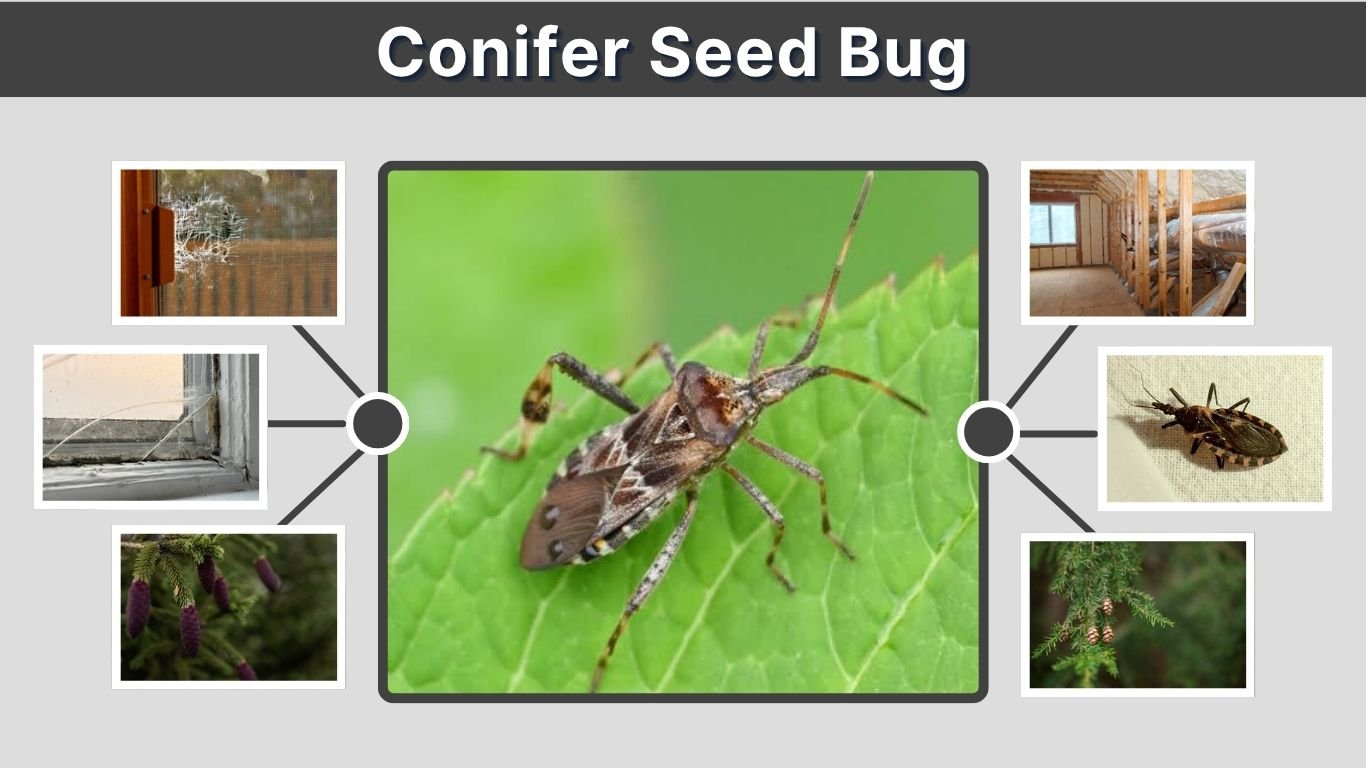
The conifer seed bug is a brown, long-legged insect that feeds on seeds developing inside pine, spruce, fir, and other conifer cones. The name most commonly refers to the western conifer seed bug, Leptoglossus occidentalis. During fall, adults frequently enter houses while searching for protected winter shelter. Although they can fly loudly and release an unpleasant odor, conifer seed bugs are not generally dangerous to people, pets, or buildings.
What Is a Conifer Seed Bug?
Conifer seed bugs are true bugs in the leaf-footed bug family, Coreidae. Their most distinctive feature is the flattened, leaf-like expansion on each hind leg.
The western conifer seed bug is native to western North America but has spread throughout the continent and into Europe, South America, South Africa, Australia, and parts of Asia. Outside its native range, it may be considered invasive because its feeding can reduce conifer seed production.
| Feature | Description |
| Common name | Western conifer seed bug |
| Scientific name | Leptoglossus occidentalis |
| Family | Coreidae |
| Adult size | About 19 mm or 3/4 inch |
| Color | Reddish-brown to dark brown |
| Diet | Conifer seeds, cones, and tender tissues |
| Indoor status | Seasonal nuisance |
| Risk to people | Very low |
How to Identify a Conifer Seed Bug
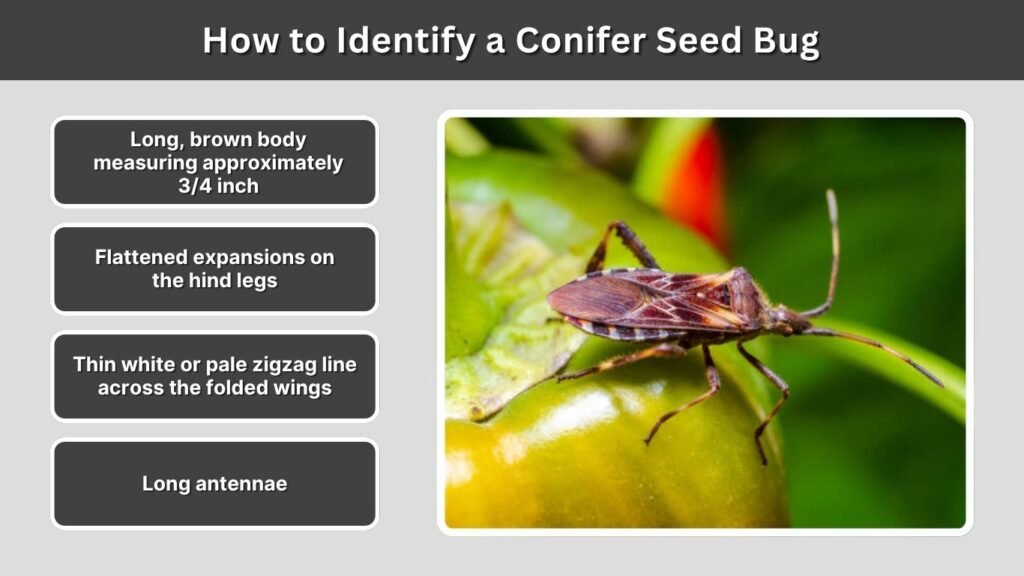
Adult western conifer seed bugs have elongated bodies that look narrower than those of stink bugs. Their color varies from medium reddish-brown to very dark brown.
Identification Features
- Long, brown body measuring approximately 3/4 inch
- Flattened expansions on the hind legs
- Thin white or pale zigzag line across the folded wings
- Long antennae
- Alternating yellow-orange and black markings along the abdomen
- Loud buzzing sound during flight
- Piercing-sucking mouthpart folded beneath the body
The pale zigzag line can be faint, broken, or absent on some individuals. When the wings open, the brighter orange-and-black abdominal pattern becomes easier to see.
What Does the Underside Look Like?
The underside is generally brown, reddish-brown, or grayish and may appear lighter than the wings. A long, narrow feeding tube rests beneath the body.
This mouthpart is adapted to penetrate cone scales and plant tissue. The insect uses it to extract nutrients from developing seeds rather than to feed on blood.
Black Conifer Seed Bugs
A conifer seed bug that appears black is not necessarily a separate species. Western conifer seed bugs vary in color, and some adults are naturally dark brown or nearly black.
However, dark insects in eastern North America may be another leaf-footed bug. The leaf-footed pine seed bug, Leptoglossus corculus, is typically darker than the western conifer seed bug and has a mostly black abdomen rather than the western species’ yellow-and-black abdominal pattern.
Other similar species include eastern leaf-footed bugs and Leptoglossus oppositus. Close examination of the hind legs, abdominal pattern, wing markings, and head shape may be required for accurate identification.
Conifer Seed Bug Nymphs and Eggs
Young conifer seed bugs look different from adults. Newly hatched nymphs are small and bright orange. They gradually become reddish-brown as they grow.
Nymph Identification
Conifer seed bug nymphs have:
- Orange or reddish bodies
- Black or dark legs
- No fully developed wings
- Long antennae
- Rounded abdomens
- Developing wing pads in later stages
Females lay brown eggs in straight chains along conifer needles. Each egg measures around 2 mm long. The eggs may hatch in approximately 10 days under favorable conditions.
What Do Conifer Seed Bugs Eat?
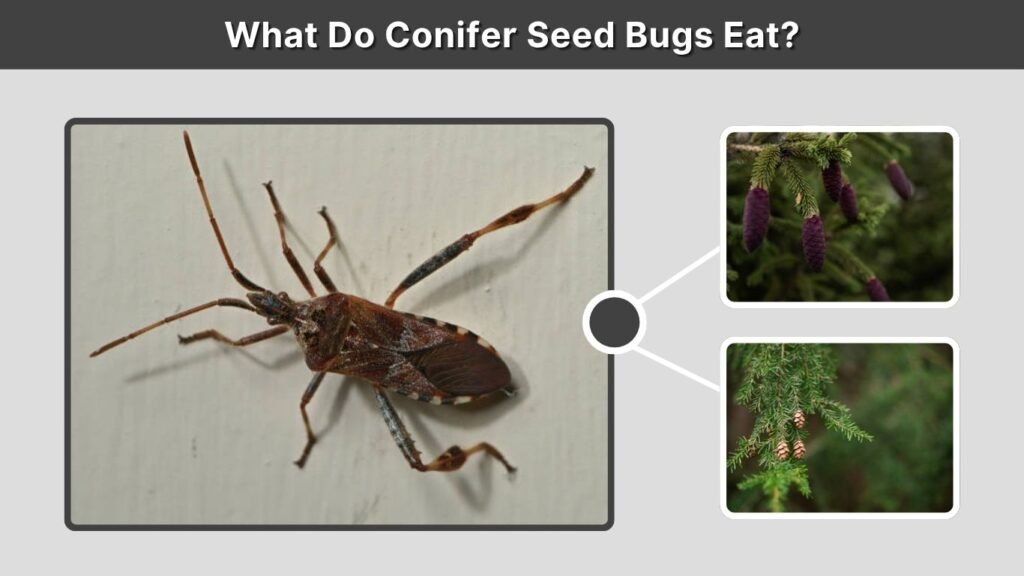
Conifer seed bugs use their piercing mouthparts to feed on seeds developing inside cones. Common host trees include pine, spruce, hemlock, fir, and Douglas-fir.
Newly hatched nymphs feed on needles and tender cone tissue. Older nymphs and adults insert their mouthparts between cone scales and extract nutrients from developing seeds.
Are They Harmful to Trees?
Feeding usually does not affect the overall health of a mature ornamental tree. A conifer may continue growing normally even when seed bugs are present.
The insects can become economically important in seed orchards, tree nurseries, and pine-nut production because damaged seeds may fail to develop or germinate. Heavy feeding can destroy a substantial portion of a conifer seed crop.
Conifer Seed Bug Life Cycle
The western conifer seed bug commonly completes one generation per year in cooler regions, although development may vary with climate.
Adults emerge from winter shelters during spring and begin feeding and mating. Females deposit chains of eggs on conifer needles. After hatching, the nymphs pass through five developmental stages before becoming winged adults.
By late summer, several nymph stages and newly developed adults may be present on the same cones. Adults continue feeding until temperatures fall, when they begin searching for protected overwintering locations.
Why Are Conifer Seed Bugs in the House?
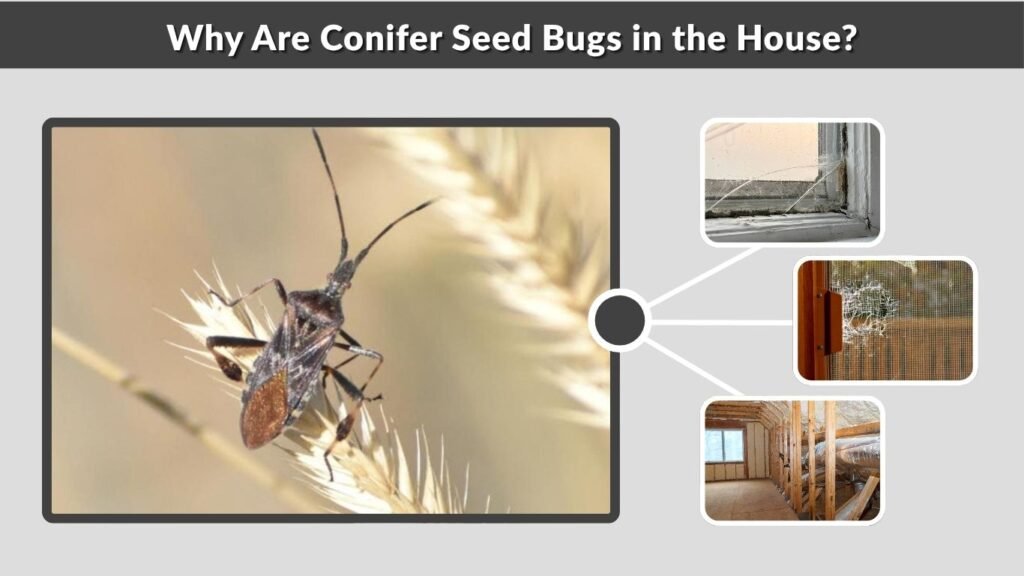
Conifer seed bugs enter buildings to survive winter. They are attracted to warm, sunny exterior walls during late summer and fall and may crawl through very small openings.
Common entry points include:
- Gaps around windows and doors
- Damaged window screens
- Cracks beneath siding
- Soffit and fascia openings
- Attic and wall vents
- Spaces around utility pipes
- Chimneys
- Garage-door edges
They do not eat furniture, clothing, wood, stored food, or insulation. They also do not normally reproduce inside houses. Bugs appearing during winter were usually already hiding in wall voids, attics, or other protected spaces.
Do Conifer Seed Bugs Bite?
Conifer seed bugs do not normally bite people. They are plant feeders and do not seek blood from humans or animals.
At least one unusual human puncture by a western conifer seed bug has been documented. It was likely an accidental feeding probe rather than defensive or aggressive behavior. The reported reaction involved localized redness and itching rather than serious poisoning.
What to Do After a Suspected Bite
Wash the area with soap and water and apply a cool compress for 10–15 minutes. Avoid scratching irritated skin.
Seek medical care if pain or swelling becomes severe, redness continues spreading, the area develops signs of infection, or symptoms such as difficulty breathing or facial swelling occur. A severe reaction would be unusual and may indicate an allergy or incorrect insect identification.
Are Conifer Seed Bugs Dangerous?
Conifer seed bugs are not poisonous and are not considered medically dangerous. They do not transmit Chagas disease and generally do not harm pets.
Their main problems are nuisance behavior, noisy flight, and defensive odor. Large numbers may gather on sunny walls or emerge inside on warm winter days, but they do not damage the building.
Why Do Conifer Seed Bugs Smell?
Conifer seed bugs release defensive chemicals when threatened, handled, or crushed. People describe the smell as pine-like, musky, grassy, or similar to crushed vegetation.
The odor helps discourage predators. Avoid crushing the insect indoors because its smell may remain on furniture, curtains, carpets, or walls.
Conifer Seed Bug vs. Stink Bug vs. Kissing Bug
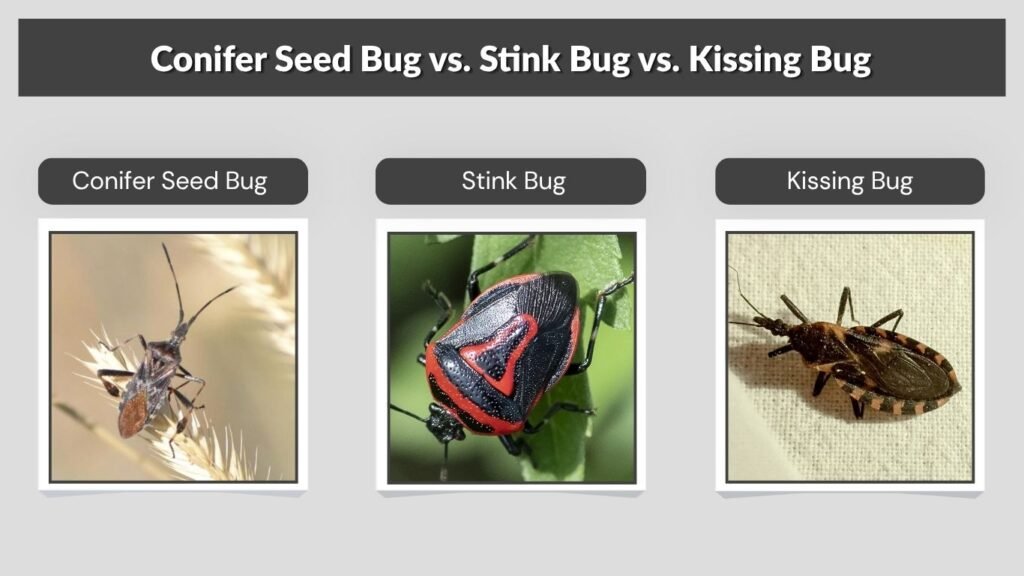
These insects may all be brown, but their shape and hind legs provide useful identification clues.
| Feature | Conifer Seed Bug | Stink Bug | Kissing Bug |
| Body shape | Long and narrow | Broad and shield-shaped | Long with exposed abdomen edges |
| Hind legs | Leaf-like expansions | No leaf-like expansions | Thin without expansions |
| Main food | Conifer seeds | Plants and crops | Blood from vertebrates |
| White wing line | Often present | Usually absent | Absent |
| Household role | Winter nuisance | Winter nuisance | Potential health concern in some regions |
| Typical human bite | Extremely unusual | Unusual | Possible |
The western conifer seed bug’s expanded hind legs are usually the quickest way to separate it from a kissing bug. Kissing bugs lack these leaf-shaped expansions and have a different head and abdominal pattern.
How to Get Rid of Conifer Seed Bugs
Physical removal and exclusion are usually more effective than indoor pesticide applications.
Remove Bugs Already Indoors
Place a container over the insect, slide a piece of paper underneath, and release it outdoors. A vacuum can also remove multiple bugs, although the insects may leave an odor inside the vacuum.
Do not crush them on walls or fabrics. Indoor spraying is generally unnecessary because they do not reproduce indoors.
Prevent Future Entry
Seal cracks around windows, doors, foundations, siding, chimneys, and utility openings. Repair screens, install door sweeps, and cover attic or wall vents with appropriate screening.
Complete repairs before late summer or early fall, when adults begin searching for winter shelter. Mechanical exclusion is considered the most effective long-term control method.
FAQs
Can conifer seed bugs fly?
Yes. Adult conifer seed bugs have functional wings and can fly considerable distances. Their flight often produces a loud buzzing sound that may be mistaken for a bee or wasp.
Are conifer seed bugs invasive?
The western conifer seed bug is native to western North America. It has expanded across North America and has been introduced into Europe and several other regions, where it may be considered invasive.
Do conifer seed bugs reproduce inside houses?
No. They enter buildings primarily for winter shelter. They require conifer hosts for normal feeding, egg laying, and nymph development, so indoor sightings do not usually indicate a breeding infestation.
Is a conifer seed bug the same as a stink bug?
No. Conifer seed bugs belong to the leaf-footed bug family, while stink bugs belong to a different family. Conifer seed bugs have narrower bodies and flattened expansions on their hind legs.
Should I kill conifer seed bugs?
Killing them is generally unnecessary. Remove individual bugs with a container or vacuum and seal exterior openings. Exclusion prevents recurring problems more effectively than repeatedly killing insects indoors.
