
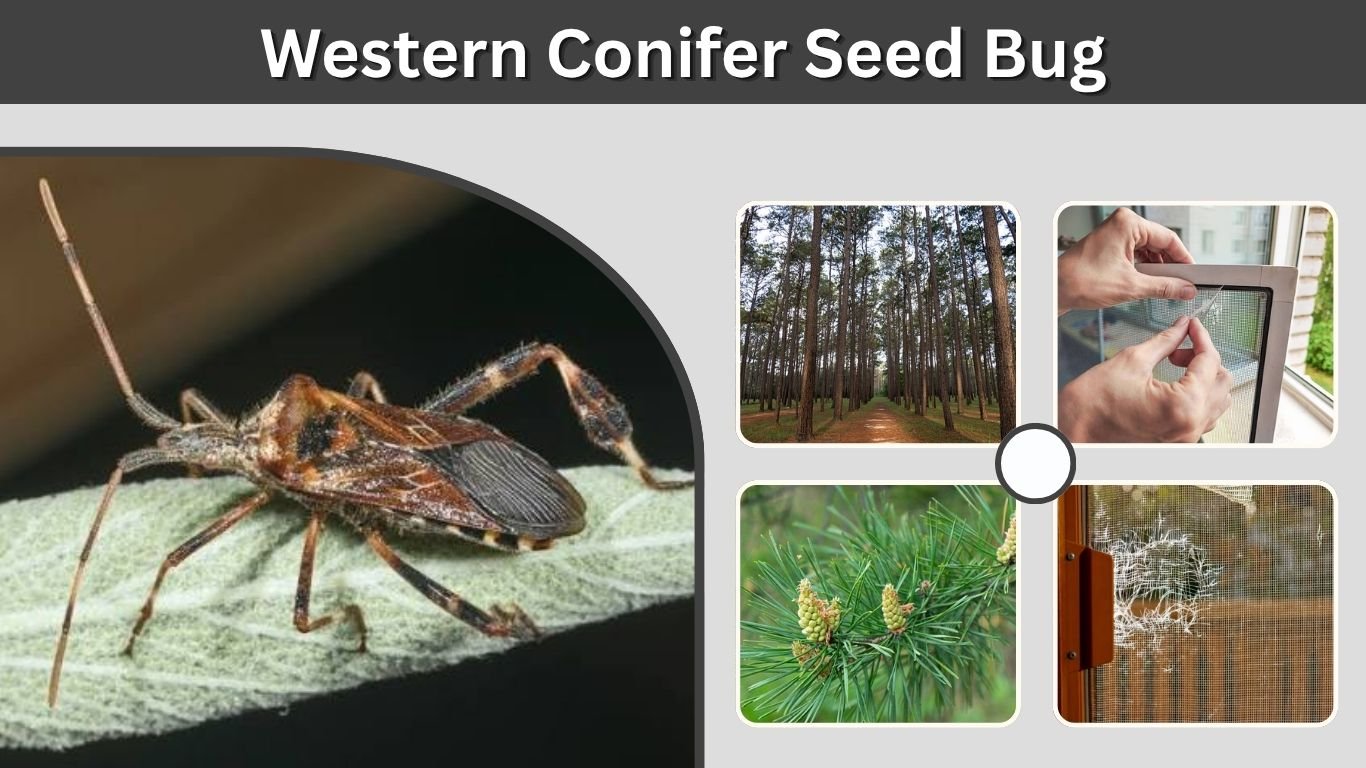
The western conifer seed bug is a large brown insect commonly found on pine trees and inside homes during fall and winter. Its long body, leaf-shaped hind legs, and white zigzag marking often cause people to mistake it for a stink bug, cockroach, or kissing bug. Although its appearance can be alarming, it normally poses little danger to people, pets, buildings, or healthy landscape trees. This guide covers its identification, behavior, diet, life cycle, bite risk, smell, and control.
What Is a Western Conifer Seed Bug?
The western conifer seed bug, scientifically named Leptoglossus occidentalis, is a true bug belonging to the leaf-footed bug family, Coreidae. Members of this family are named for the flattened, leaf-like expansions found on their hind legs.
These insects spend the warmer months feeding on conifer trees. When temperatures drop, adults search for protected places in which to overwinter. Cracks around windows, doors, roofs, siding, and vents may lead them inside houses. They cannot establish a reproducing infestation indoors.
| Feature | Description |
| Scientific name | Leptoglossus occidentalis |
| Family | Coreidae |
| Adult size | Approximately 5/8–3/4 inch |
| Color | Brown to reddish-brown |
| Main food | Conifer seeds, cones, and needles |
| Activity | Flies during warm weather |
| Indoor status | Seasonal nuisance |
| Human danger | Very low |
Western Conifer Seed Bug Identification
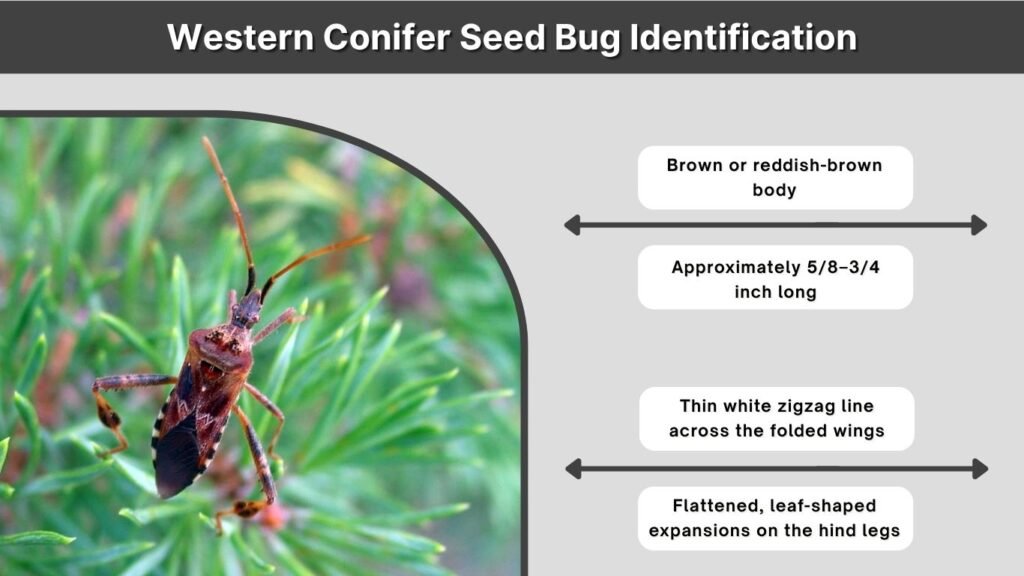
Adult western conifer seed bugs have elongated, somewhat flattened bodies. Their unusual back legs and wing markings provide the easiest identification clues.
Key Identification Features
- Brown or reddish-brown body
- Approximately 5/8–3/4 inch long
- Thin white zigzag line across the folded wings
- Flattened, leaf-shaped expansions on the hind legs
- Long legs and slender antennae
- Yellow-orange abdomen with dark markings visible during flight
- Loud buzzing sound when flying
- Pine-like odor when disturbed
When the wings open, orange or yellow areas with five dark markings become visible along the abdomen. Younger nymphs are orange before gradually becoming redder or browner as they mature.
What Does the Underside Look Like?
The underside is usually reddish-brown, grayish-brown, or darker than the upper surface. The insect has a long piercing-sucking mouthpart folded beneath its body.
This mouthpart is designed to penetrate plant tissue and reach the contents of developing seeds. It is not normally used to feed on humans or animals.
Western Conifer Seed Bug Size
Adult western conifer seed bugs generally measure around 16–20 millimeters, or approximately 5/8–3/4 inch, in body length. Their long legs and antennae can make them appear considerably larger.
Males and females look similar without close examination. Females may develop a broader abdomen when carrying mature eggs, but body shape alone is not a reliable way for homeowners to determine sex.
Where Do Western Conifer Seed Bugs Live?
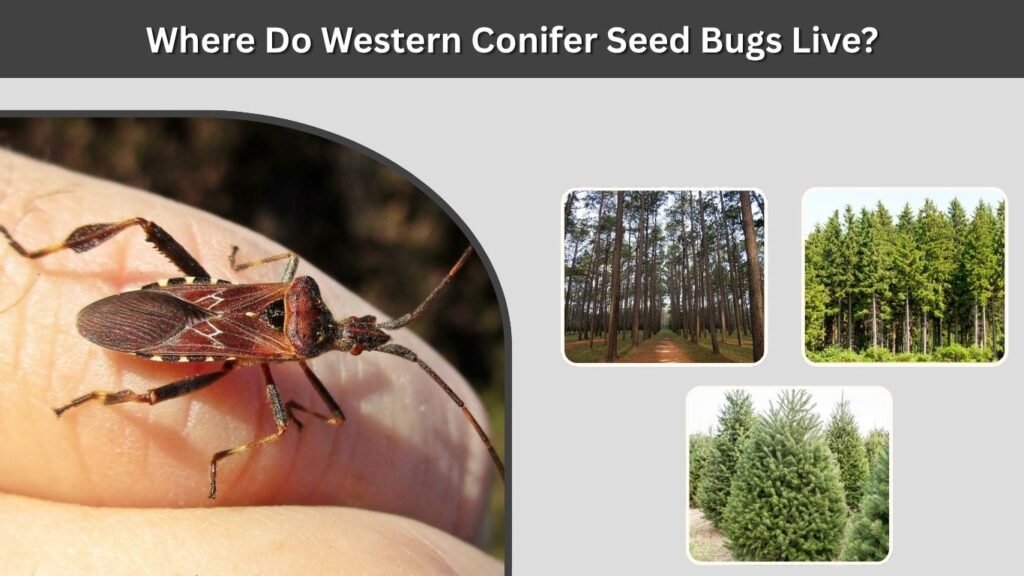
The species was originally native to western North America. It later spread across the continent and has become established in numerous other regions, including Europe, South America, South Africa, and Australia. In some areas outside its original range, it is considered invasive because it can reduce commercial conifer seed production.
Preferred Habitat
Western conifer seed bugs are associated with trees that produce cones, including:
- Pine
- Douglas-fir
- Spruce
- Hemlock
- Fir
- Other conifer species
Nymphs and adults live among needles and cones during spring and summer. Their coloring helps them blend into bark, dried needles, and brown cones.
What Do Western Conifer Seed Bugs Eat?
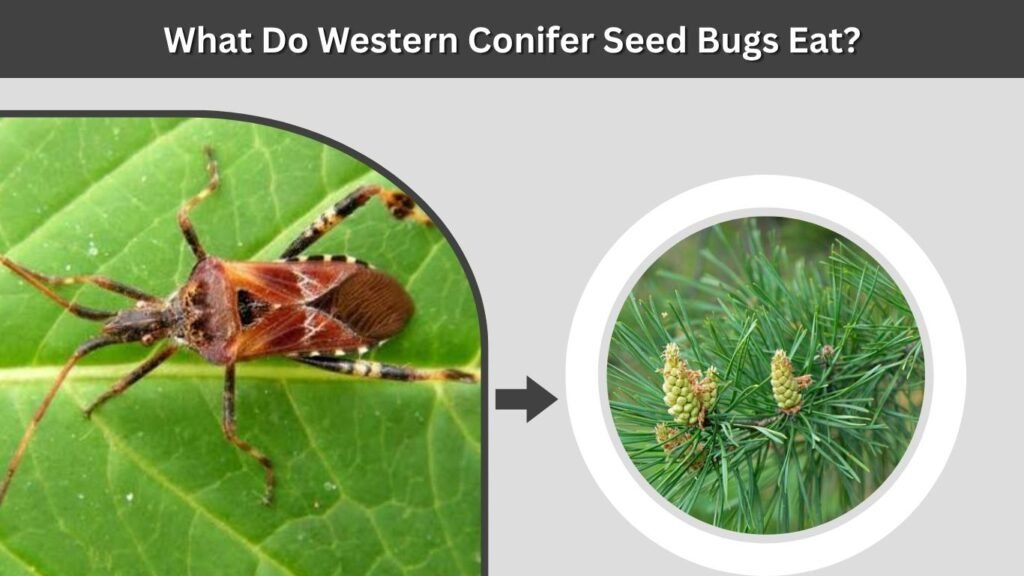
Western conifer seed bugs feed primarily on the contents of developing conifer seeds. They insert their mouthparts through cone scales and draw nutrients from the seeds inside.
Young nymphs may feed on needles and tender cone tissue. Older nymphs and adults concentrate more heavily on seeds.
This feeding generally does not damage the health of a mature landscape tree. However, it can reduce seed viability and germination, making the insect economically important in conifer seed orchards and pine-nut production areas.
Western Conifer Seed Bug Life Cycle
The number and timing of generations can vary with climate. In cooler parts of its range, the western conifer seed bug commonly completes one generation each year.
Eggs and Nymphs
Females lay light-brown eggs in neat chains along conifer needles. The eggs become more reddish as they age and may hatch in approximately 10 days under suitable conditions.
Young nymphs are orange and do not have fully developed wings. They pass through five nymphal stages, gradually becoming darker and developing wing pads before reaching adulthood.
Adult and Overwintering Stage
Adults become especially noticeable during late summer and fall. As temperatures fall, they leave trees and search for protected overwintering locations.
They may shelter beneath bark, inside tree cavities, or within buildings. Adults sometimes become active inside heated homes during mild winter days, making it appear as though they have suddenly reproduced indoors. In reality, they usually entered the building during the previous fall.
Why Are Western Conifer Seed Bugs in the House?
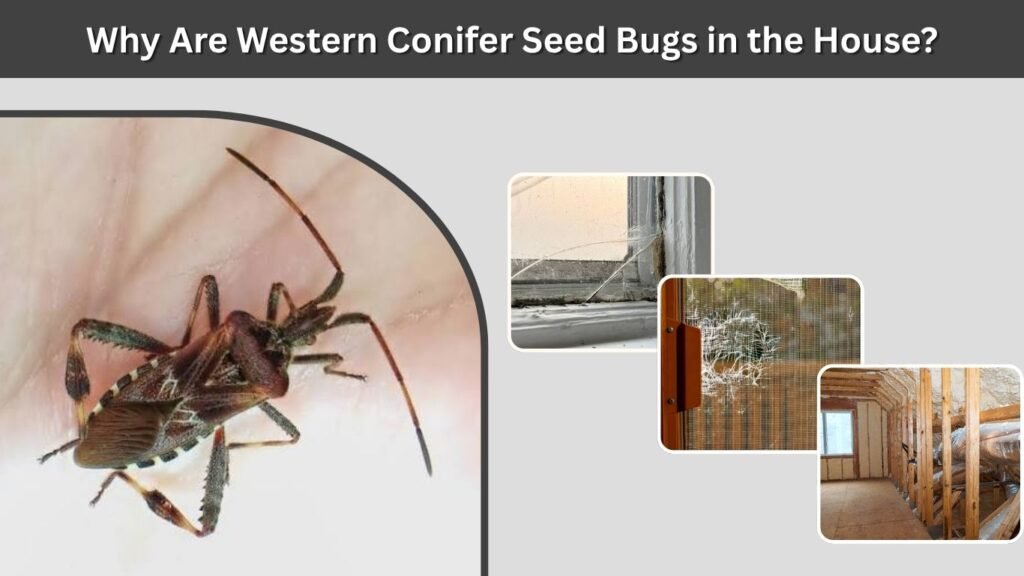
These insects enter houses for warmth and shelter, not because they want food or suitable breeding sites. Sunny south- and west-facing walls often attract adults before they locate gaps leading indoors.
Common entry points include:
- Cracks around window frames
- Gaps beneath doors
- Damaged screens
- Attic and soffit vents
- Spaces around utility pipes
- Openings beneath siding
- Chimneys and roof gaps
- Garage-door edges
They do not eat wood, clothing, furniture, stored food, or household materials. They also cannot complete their normal life cycle without conifer hosts.
Are Western Conifer Seed Bugs Dangerous?
Western conifer seed bugs are not considered dangerous to people or pets. They do not feed on blood, transmit Chagas disease, or damage buildings.
They may fly noisily around windows and release an unpleasant odor when handled, but these behaviors are defensive rather than aggressive.
Do Western Conifer Seed Bugs Bite?
They generally do not bite humans. Their mouthparts are adapted for feeding on plant tissue, especially conifer seeds.
A published report confirms that the species has the physical ability to puncture human skin, but such incidents are exceptionally unusual and may occur when the insect mistakes skin for a feeding surface. It does not routinely seek people as hosts.
A rare puncture could cause temporary pain, redness, or minor irritation. Wash the area with soap and water and apply a cool compress. Seek medical advice if swelling spreads, pain worsens, or signs of an allergic reaction develop.
Why Do Western Conifer Seed Bugs Smell?
The insect has scent glands that release an odor when it is disturbed, handled, or crushed. The smell is often described as pine-like, musky, or somewhat similar to crushed vegetation.
This defensive odor explains why the insect is frequently confused with a stink bug. Avoid crushing it against walls, curtains, or furniture because the smell may linger and body fluids may leave a stain.
Western Conifer Seed Bug vs. Stink Bug
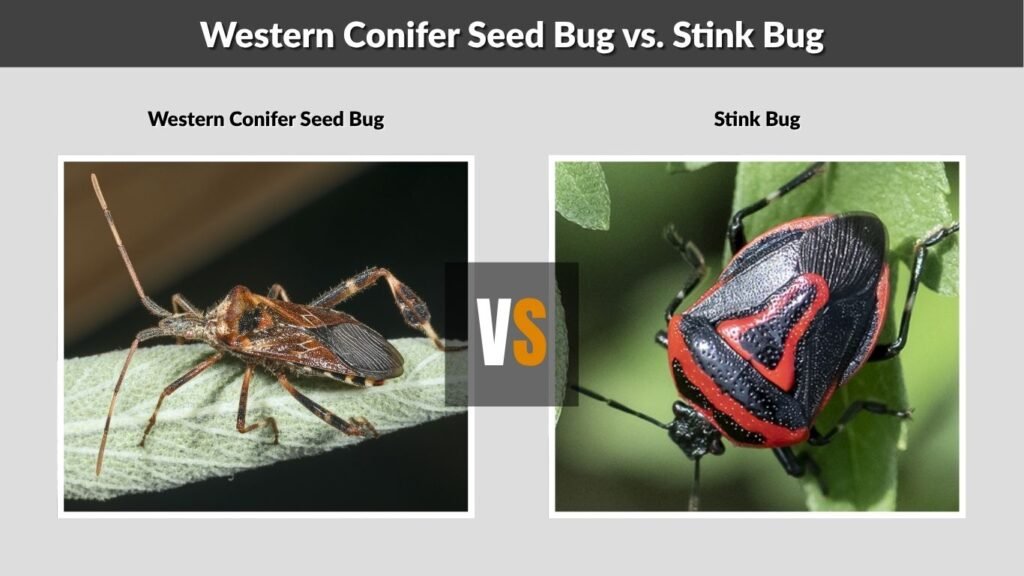
Although both insects can release defensive odors and enter houses during fall, they are easy to separate by shape.
| Feature | Western Conifer Seed Bug | Brown Marmorated Stink Bug |
| Body shape | Long and narrow | Broad and shield-shaped |
| Hind legs | Leaf-like expansions | No leaf-shaped expansions |
| Wing marking | White zigzag line | Mottled brown pattern |
| Main diet | Conifer seeds | Many fruits and crops |
| Indoor role | Overwintering nuisance | Overwintering nuisance |
A western conifer seed bug is not technically a stink bug. It belongs to the Coreidae family, while true stink bugs belong to Pentatomidae.
Western Conifer Seed Bug vs. Kissing Bug
The western conifer seed bug is also mistaken for a kissing bug, but the two insects have different diets and health importance.
Kissing bugs have thinner legs without leaf-shaped expansions and a wider abdomen with contrasting bands along its edges. They feed on vertebrate blood, and some species can carry the parasite associated with Chagas disease.
Western conifer seed bugs feed on plants and have the characteristic flattened hind legs. Correct identification prevents unnecessary alarm.
How to Get Rid of Western Conifer Seed Bugs
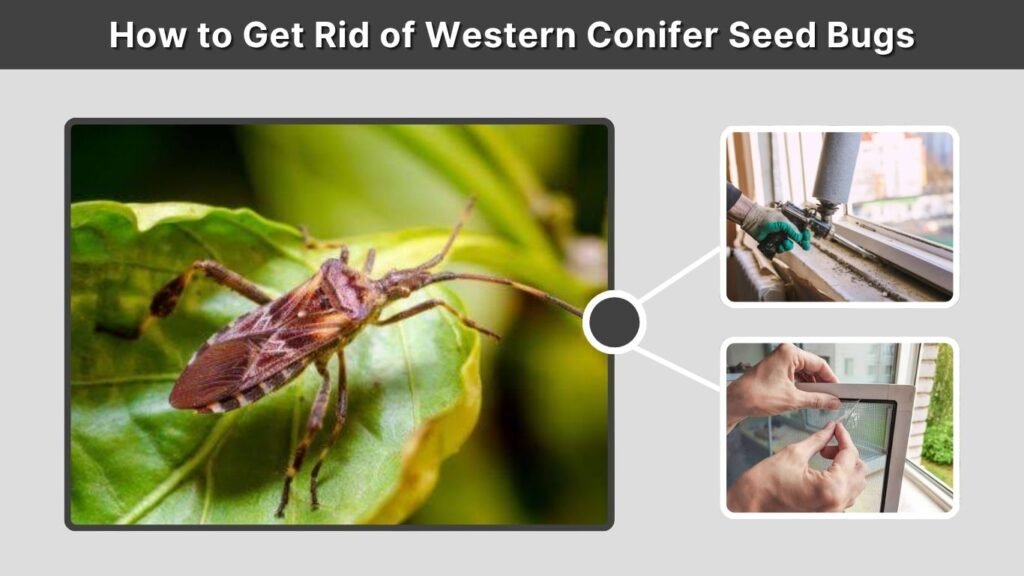
The most effective strategy is to block entry before adults begin searching for winter shelter.
Remove Bugs Already Inside
Use a vacuum to collect individual bugs, then empty the vacuum outdoors. Alternatively, place a container over the insect, slide paper underneath, and release it outside.
Do not crush the bug because doing so may release its defensive odor. Indoor insecticide spraying is usually unnecessary for occasional invaders.
Prevent Future Entry
- Seal cracks around windows, doors, siding, and foundations.
- Repair damaged window and vent screens.
- Install weatherstripping and door sweeps.
- Seal openings around cables, pipes, and utility lines.
- Check attic, chimney, soffit, and roof vents.
- Inspect south- and west-facing walls during early fall.
- Keep doors and unscreened windows closed during migration periods.
Exterior insecticide treatment may sometimes be considered when large numbers gather on buildings, but exclusion is usually safer and more effective. Any pesticide must be applied strictly according to its label.
FAQs
Can western conifer seed bugs fly?
Yes. Adults are strong fliers and may produce a noticeable buzzing sound. Their wings reveal orange and black abdominal markings during flight.
Are western conifer seed bugs poisonous?
No. They are not poisonous and are not medically dangerous. They can release a defensive odor, but the smell is mainly unpleasant rather than toxic.
Do western conifer seed bugs reproduce indoors?
No. They enter houses to overwinter and cannot establish normal indoor breeding populations. Individuals appearing in winter usually entered during fall.
Are western conifer seed bugs harmful to trees?
They generally do not harm the overall health of mature landscape trees. However, their feeding can reduce the viability of conifer seeds and cause economic damage in seed orchards.
Should I kill a western conifer seed bug?
Killing it is unnecessary. Vacuum it or move it outdoors with a container. Sealing exterior openings provides better long-term control than repeatedly killing bugs that enter.
