
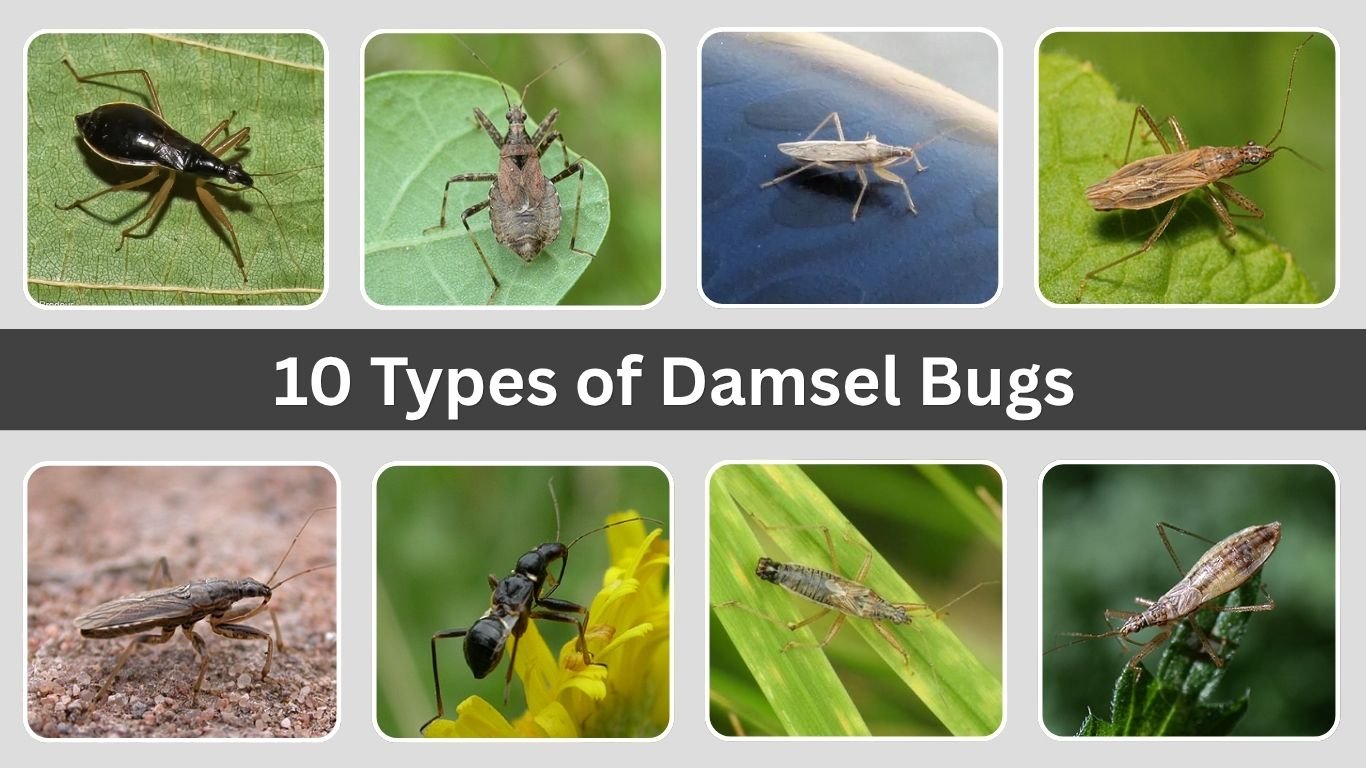
Damsel bugs are slender predatory insects known for hunting many common garden and crop pests. Belonging to the family Nabidae, these beneficial bugs use their strong front legs and piercing mouthparts to capture aphids, mites, leafhoppers, insect eggs, and small caterpillars. Different species live in grasslands, wetlands, woodlands, gardens, and agricultural fields, where their muted colors help them blend into surrounding vegetation. This guide introduces 10 types of damsel bugs, including common, pale, western, black, field, tree, ant, grey, broad, and marsh species. Each profile covers identification, habitat, diet, behavior, and life cycle information in clear detail for interested readers.
1. Common Damsel Bug
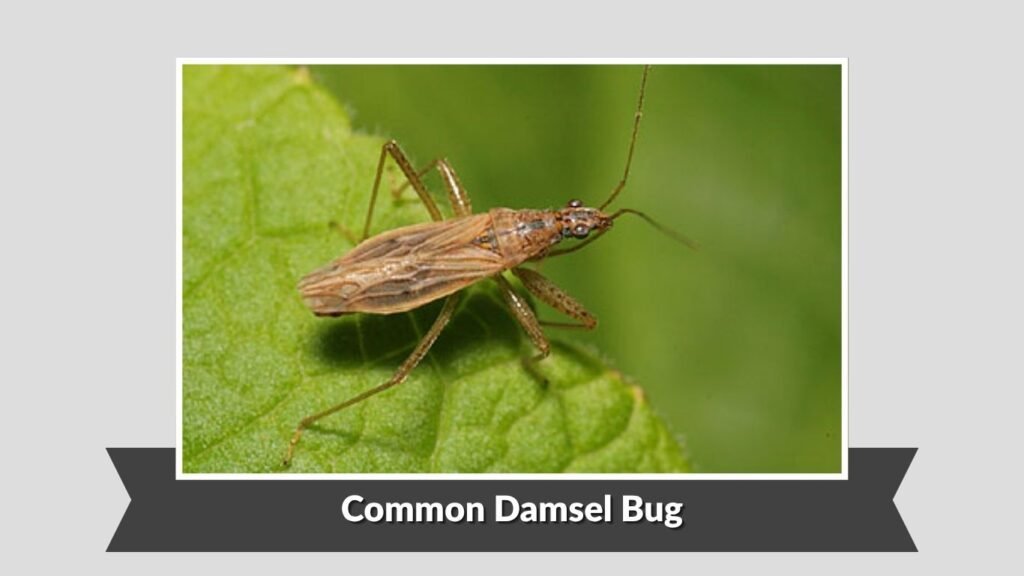
The common damsel bug (Nabis americoferus) is a slender predatory insect in the family Nabidae. It is widely found across North America and is particularly common in gardens, agricultural fields, grasslands, and low-growing vegetation. Rather than damaging plants, it helps control many small crop and garden pests.
Identification
- Size: Approximately 9–10 mm long
- Color: Usually tan, grayish-brown, or light brown
- Body: Narrow, elongated, and slightly tapered toward the head
- Head: Small and pointed with long antennae
- Legs: Long legs with thickened, spiny front legs for holding prey
- Mouthparts: A curved, piercing beak folded beneath the body
- Wings: Adults have fully developed wings, while nymphs are wingless
Its muted coloring provides effective camouflage among dry grass, stems, and foliage. Common damsel bugs may resemble assassin bugs, but they generally have slimmer bodies and a more delicate appearance.
Habitat and Distribution
Common damsel bugs live in open habitats containing dense, low vegetation. They are frequently found in home gardens, meadows, ground covers, orchards, and fields planted with crops such as soybeans and alfalfa. Adults may shelter in grass, leaf litter, or plant debris during colder months.
Diet and Hunting Behavior
This species actively hunts aphids, mites, leafhoppers, insect eggs, beetle larvae, and small caterpillars. It catches prey with its enlarged front legs, pierces the victim with its beak, and consumes the internal fluids. Both adults and nymphs are predators, making them useful natural pest-control insects.
Life Cycle and Reproduction
Females insert their tiny eggs into stems or other plant tissues. After hatching, the young pass through five nymphal stages before becoming winged adults. Common damsel bugs generally produce one or two generations annually in cooler regions, although development varies with climate and food availability. Adults usually survive winter in protected vegetation or ground debris.
2. Pale Damsel Bug
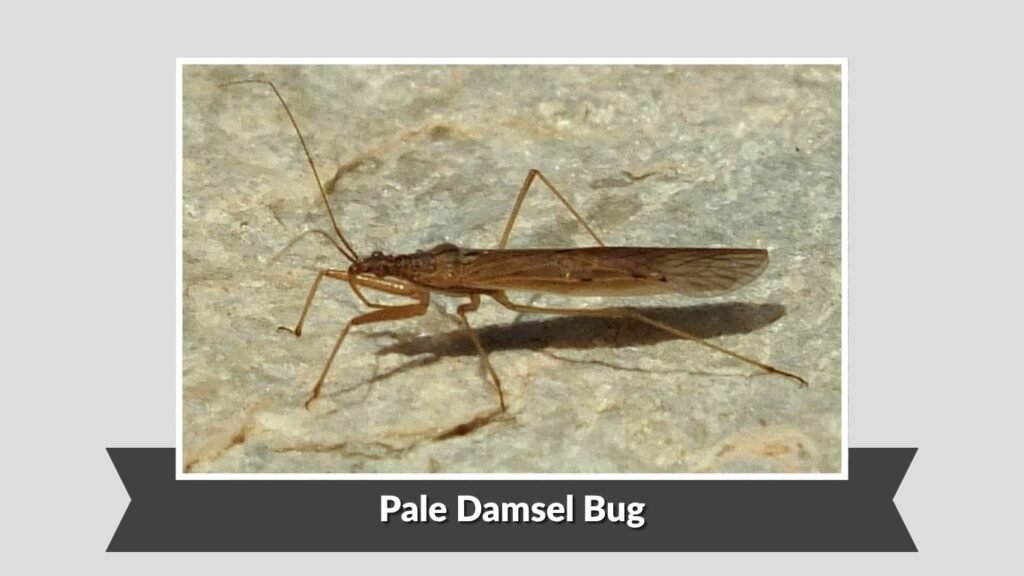
The pale damsel bug (Nabis capsiformis) is a slender, light-colored predator found in warm regions around the world. It is especially common in open habitats and agricultural fields, where it helps suppress aphids, caterpillar eggs, mites, and other small pests. Its long wings also allow it to disperse efficiently between habitats.
Identification
- Size: Usually around 8–10 mm long
- Color: Pale tan, yellowish-brown, or light brown
- Body: Long, narrow, and covered with fine pale hairs
- Head: Slender, with a darker brown area between the eyes
- Antennae: Long, thin, and lightly haired
- Legs: Long, with enlarged and spiny front legs
- Mouthparts: Needle-like beak folded beneath the body
- Wings: Adults always have long, fully developed wings
The pale coloring and narrow body distinguish this species from darker, more compact damsel bugs.
Habitat and Distribution
Pale damsel bugs inhabit open, sunny areas, including grasslands, coastal habitats, gardens, orchards, and crop fields. In North America, they are particularly associated with the southeastern United States, although their overall distribution is nearly circumtropical. They are regularly found on cotton, soybean, alfalfa, potatoes, strawberries, and other low-growing plants.
Diet and Hunting Behavior
Both adults and nymphs actively hunt aphids, moth eggs, small caterpillars, mites, and other soft-bodied arthropods. They grab prey with their thickened front legs before inserting their piercing mouthparts. Older nymphs and adults may consume numerous small insects or eggs in one day, making this species an important natural predator in crop systems.
Life Cycle and Reproduction
Females insert elongated eggs into the stems of low-growing plants. The eggs hatch into wingless nymphs that pass through five growth stages before becoming adults. Development usually takes several weeks, depending on temperature. Multiple generations may occur annually in warm climates, while adults or late-stage nymphs can overwinter among weeds, ground cover, and winter crops.
3. Western Damsel Bug
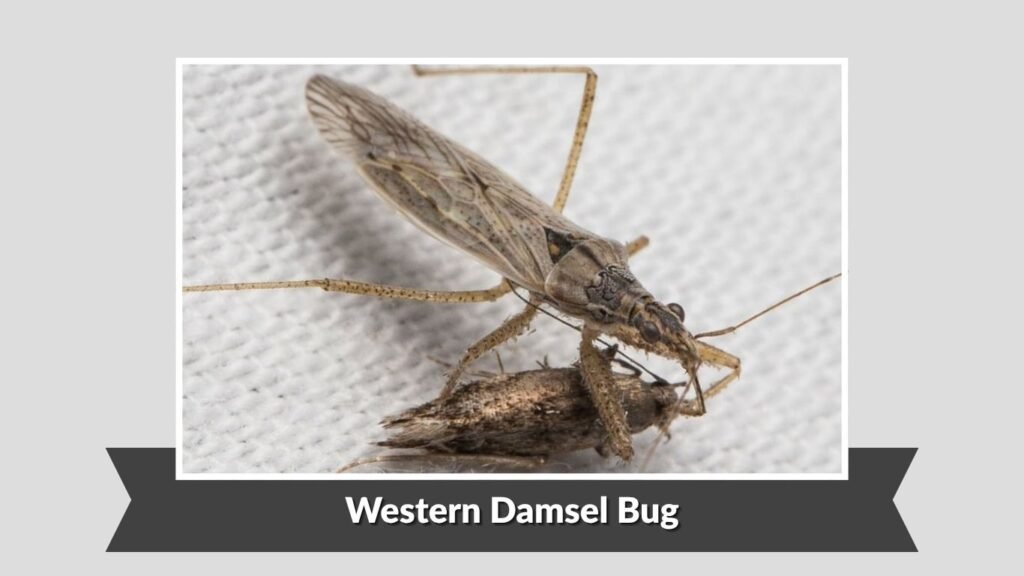
The western damsel bug (Nabis alternatus) is a beneficial predatory true bug associated with fields, grasslands, and agricultural habitats in western North America. It is especially valuable in alfalfa and other crops because it attacks insect eggs, aphids, plant bugs, and small caterpillars.
Identification
- Size: Commonly about 7–10 mm long
- Color: Grayish-brown, tan, or light brown
- Body: Narrow, elongated, and slightly flattened
- Head: Tapered, with prominent rounded eyes
- Antennae: Long and divided into four segments
- Legs: Slender, with stronger front legs for grasping prey
- Wings: Usually fully developed in adults
- Markings: Often has a dark central area and pale spots near the scutellum
Its coloring provides excellent camouflage among dry grasses, crop stems, and weeds.
Habitat and Distribution
This species is mainly associated with western parts of North America. It lives in alfalfa fields, crop margins, pastures, weedy vegetation, gardens, and other early-stage plant communities. Adults move readily between crops and surrounding vegetation as prey availability changes.
Diet and Hunting Behavior
Western damsel bugs prey on aphids, lygus bugs, leafhoppers, mites, moth eggs, and small caterpillars. They search through vegetation and grasp prey with their front legs before piercing it with the rostrum. Because they feed on several agricultural pests, they can reduce crop damage without harming the plants themselves.
Life Cycle and Reproduction
Females place eggs inside plant tissue, where they remain protected from drying and many predators. The young emerge as wingless nymphs and generally pass through five stages. Adults may enter reproductive dormancy during late fall and survive winter in sheltered vegetation. In particularly warm areas, such as parts of Arizona, several generations can develop in one year.
4. Black Damsel Bug
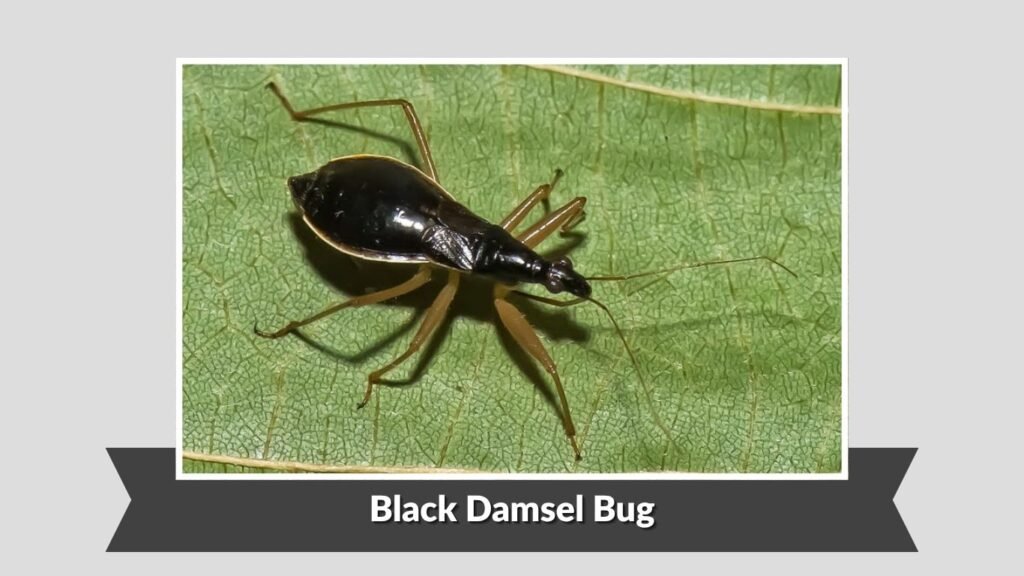
The black damsel bug (Nabis subcoleoptratus) is a small, dark species with an ant-like appearance. Unlike many tan damsel bugs, it has a shiny black or deep brown body and often possesses very short wings. It is a northern North American species commonly encountered in damp meadows and low vegetation.
Identification
- Size: Usually around 7 mm long
- Color: Glossy black or very dark brown
- Body: Narrow at the front with a broader oval abdomen
- Legs: Brown, reddish, or yellowish-brown
- Antennae: Long, thin, and dark-colored
- Front legs: Slightly enlarged for catching prey
- Wings: Usually very short and unable to support flight
- Appearance: May resemble a dark ant at first glance
Large-winged individuals occasionally occur, but the short-winged form is much more typical.
Habitat and Distribution
Black damsel bugs have a northern transcontinental distribution across North America. They are often found in moist grasslands, damp meadows, wetlands, and vegetation growing near woodland edges. Individuals may rest or hunt on goldenrod, grasses, low shrubs, and broad-leaved plants.
Diet and Hunting Behavior
This species hunts aphids, mites, small caterpillars, insect eggs, and other soft-bodied prey. Its limited wings encourage it to hunt mainly by crawling through vegetation. Once prey is captured, the bug inserts its rostrum and consumes the fluids. It is therefore beneficial despite its dark and somewhat intimidating appearance.
Life Cycle and Reproduction
Females insert eggs into soft plant tissue. The emerging nymphs resemble small, wingless adults but may have different body proportions and lighter markings. They pass through several nymphal stages before reaching adulthood. In cold northern climates, development is closely linked to the short growing season, and protected vegetation provides shelter during unfavorable weather.
5. Field Damsel Bug
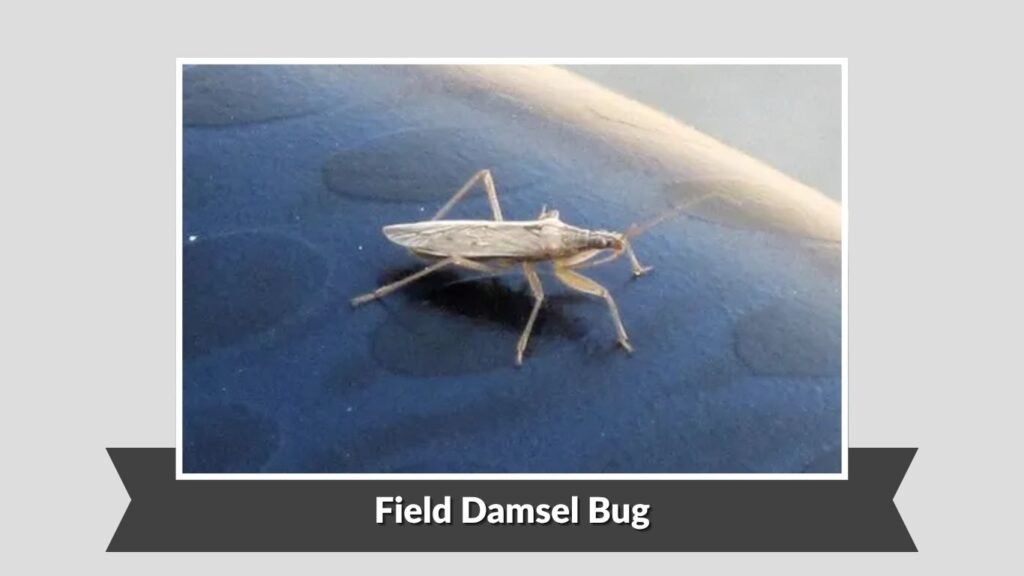
The field damsel bug (Nabis ferus) is a widespread European species commonly seen in dry grasslands, meadows, fields, and other open habitats. Its muted brown coloring helps it remain hidden while hunting small insects among grasses and low plants.
Identification
- Size: Approximately 8–8.5 mm long
- Color: Beige, pale brown, or grayish-brown
- Body: Slender and gradually tapering toward the head
- Wings: Long-winged adults have wings extending over the abdomen
- Forewings: Densely covered with short hairs
- Pronotum: Broad and often marked with darker shading
- Legs: Long, delicate, and adapted for moving through grass
- Mouthparts: Curved piercing beak held beneath the body
It can be difficult to separate from closely related Nabis species without examining fine structural features.
Habitat and Distribution
Field damsel bugs prefer dry grassy habitats, including meadows, rough grassland, field margins, heathland, and agricultural areas. They are widespread in Britain and occur through much of Europe. Adults usually remain low in the vegetation, where their pale brown color blends with grass stems and dry leaves.
Diet and Hunting Behavior
This species hunts aphids, leafhoppers, small flies, caterpillar larvae, insect eggs, and other small invertebrates. It moves slowly through vegetation until it detects prey, then holds the victim with its front legs and uses its piercing mouthparts to feed. Both adults and nymphs contribute to natural pest control.
Life Cycle and Reproduction
Adult field damsel bugs survive through winter and become active again during spring. Mating and egg-laying occur as temperatures rise. The nymphs develop through the summer, and the new adult generation generally begins appearing from August onward. These adults later seek sheltered locations where they can overwinter.
6. Tree Damsel Bug
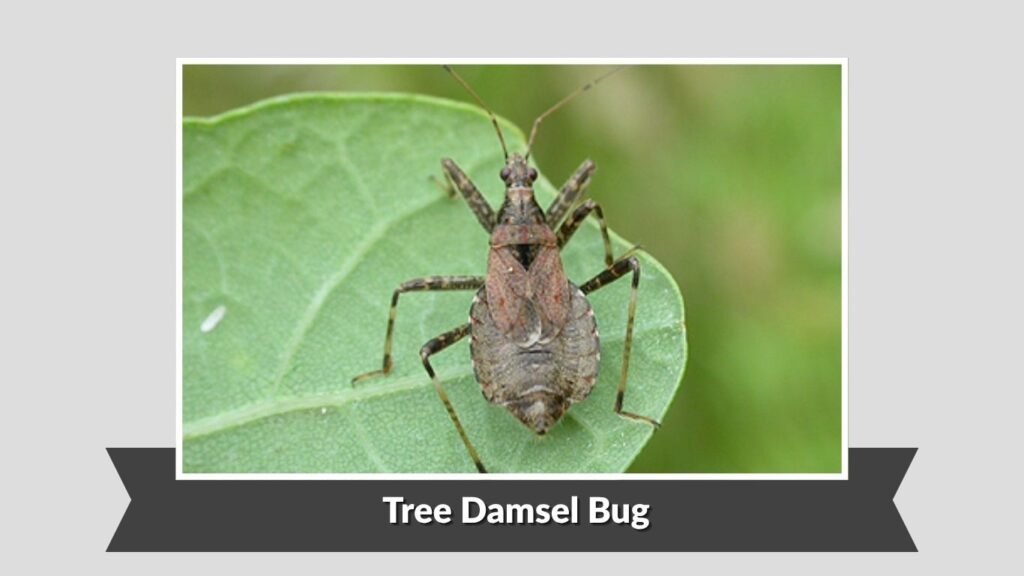
The tree damsel bug (Himacerus apterus) is unusual because it spends much of its life on trees rather than in grass or low vegetation. This reddish-brown predator searches branches and leaves for mites, aphids, and other small insects. It is widespread across much of England and Wales but becomes less common farther north.
Identification
- Size: Approximately 8–11 mm long
- Color: Reddish-brown with darker markings
- Body: Elongated with a broad abdomen
- Abdominal edges: Black with orange-red spots
- Wings: Usually short, reaching only the third or fourth abdominal segment
- Antennae: Extremely long, often equaling or exceeding the combined thorax and abdomen
- Legs: Long, with noticeable hairs on the hind tibiae
- Mouthparts: Long piercing beak held beneath the body
Its long antennae and short wings help separate it from the smaller ant damsel bug.
Habitat and Distribution
Tree damsel bugs primarily inhabit deciduous trees and taller shrubs. They may occur on oak, birch, hawthorn, willow, and other broadleaf plants, although they are occasionally found on conifers.
Rather than remaining on the ground, they walk across bark, leaves, and branches while searching for prey. In Britain, the species is common throughout much of England and Wales but becomes scarcer toward northern areas.
Diet and Hunting Behavior
This species feeds on mites, aphids, and other small insects living on trees. It uses its enlarged front legs to hold prey before inserting its piercing mouthparts and consuming the body fluids.
Both adults and nymphs are predators. Their feeding can reduce populations of plant-damaging insects without harming the tree itself, making them beneficial inhabitants of woodland edges, gardens, and hedgerows.
Life Cycle and Reproduction
Adults lay eggs during late summer. The eggs remain protected through winter and hatch the following spring. Nymphs can usually be found from May through August, while the new adult generation begins appearing in July.
Adults are mainly visible between July and October. Unlike species that overwinter as adults, tree damsel bugs generally pass winter in the egg stage.
7. Ant Damsel Bug
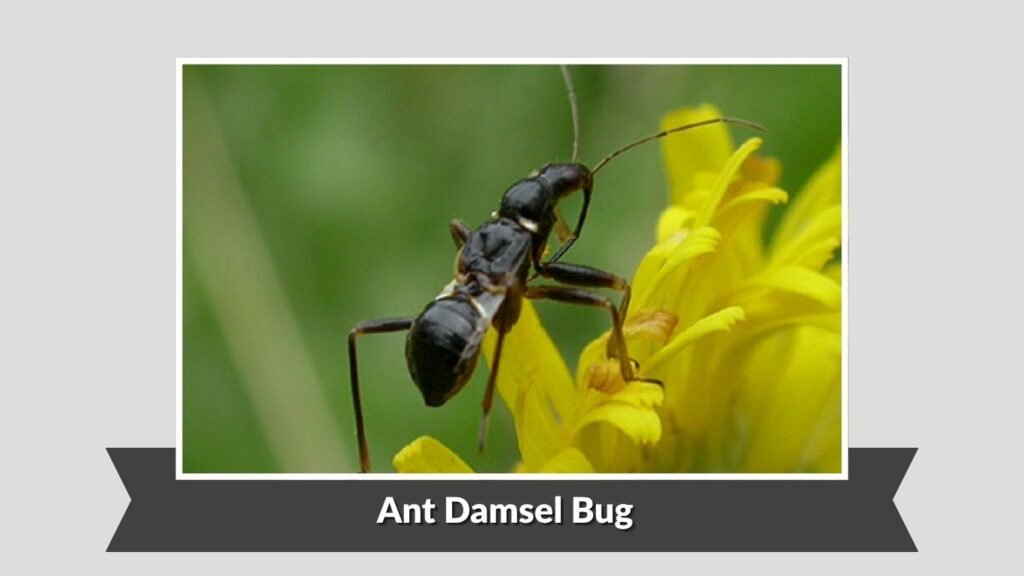
The ant damsel bug (Himacerus mirmicoides) is named for its remarkably ant-like young. Early nymphs possess body projections and contrasting markings that create the illusion of a narrow waist. Adults look more like typical damsel bugs and inhabit dry, open areas containing grass, weeds, and other low-growing plants.
Identification
- Size: Approximately 7–8 mm long
- Color: Brown or reddish-brown
- Abdominal edges: Black with orange-red spots
- Wings: Usually partly developed, although fully winged adults occasionally occur
- Antennae: Shorter than those of the tree damsel bug
- Legs: Long and adapted for running through vegetation
- Nymphs: Black, white, and strongly ant-like during early stages
- Mouthparts: Curved piercing beak beneath the head
Early nymphs have white abdominal margins and projections on the thorax that visually produce an ant-like waist. These projections disappear as the insects mature.
Habitat and Distribution
Ant damsel bugs are normally found on the ground or among short grasses and other low vegetation. They prefer dry, open environments such as grasslands, field margins, sunny banks, heathland, gardens, and disturbed ground.
The species is common in southern Britain. Adults may remain active during mild winter weather because they overwinter rather than dying at the end of autumn.
Diet and Hunting Behavior
The ant damsel bug hunts insect eggs, aphids, small caterpillars, and other soft-bodied invertebrates. Its ant-like nymphs may gain some protection because predators can mistake them for ants.
Like other damsel bugs, it captures prey with its front legs and punctures it using a long beak. It then consumes the prey’s internal fluids, helping limit populations of small plant-feeding insects.
Life Cycle and Reproduction
Adults survive winter in protected vegetation and become reproductively active during spring. Females then place their eggs in plant tissue.
The developing nymphs appear during the warmer months and gradually lose their strongly ant-like features as they grow. The new generation normally becomes adult by August, although adults may be seen throughout the year under suitable conditions.
8. Grey Damsel Bug
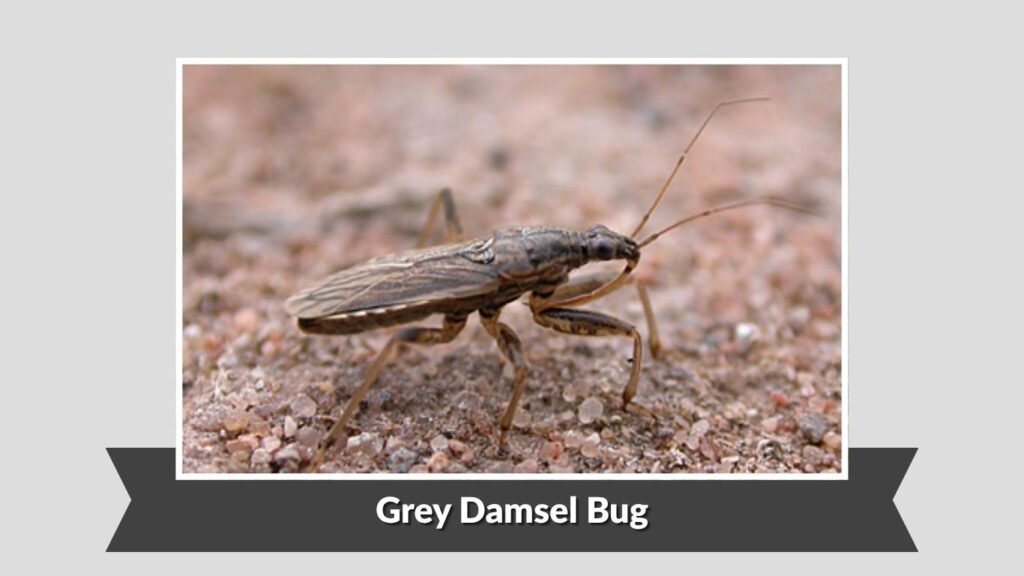
The grey damsel bug (Himacerus major) is a fully winged species found in grassy coastal and inland habitats. Its long wings and pale abdominal margins make it resemble members of the genus Nabis more closely than other Himacerus species. It is widespread across Britain and can be locally numerous in suitable grasslands.
Identification
- Size: Approximately 7.5–9 mm long
- Color: Grayish-brown, tan, or muted brown
- Body: Slender and slightly flattened
- Wings: Always fully developed and covering the abdomen
- Abdominal edges: Pale and clearly visible
- Hind femora: Wide black band near the tip with dark spots below
- Antennae: Long and slender
- Front legs: Slightly enlarged for grasping prey
The black band and dark spots on the hind femora are among the most useful identification features.
Habitat and Distribution
Grey damsel bugs occupy open grassy environments. They are frequently associated with grasslands, coastal dunes, saltmarshes, rough fields, and other habitats containing dense herbaceous vegetation.
The species is widespread and fairly frequent across Britain. Its fully developed wings allow adults to move between suitable patches of vegetation as prey and environmental conditions change.
Diet and Hunting Behavior
Grey damsel bugs are active predators of small insects and mites found among grasses. Their potential prey includes aphids, leafhoppers, thrips, insect eggs, and small caterpillars.
The bug walks through vegetation until it locates prey, grasps it with the front legs, and inserts its needle-like mouthparts. Both adults and nymphs contribute to natural pest control in grassland habitats.
Life Cycle and Reproduction
Females lay eggs during autumn. These eggs remain dormant through winter and hatch during the following spring.
Nymphs develop quickly as temperatures rise, and the new adult generation begins appearing from June onward. Adults are most often recorded between June and November, giving the species a relatively long visible season.
9. Broad Damsel Bug
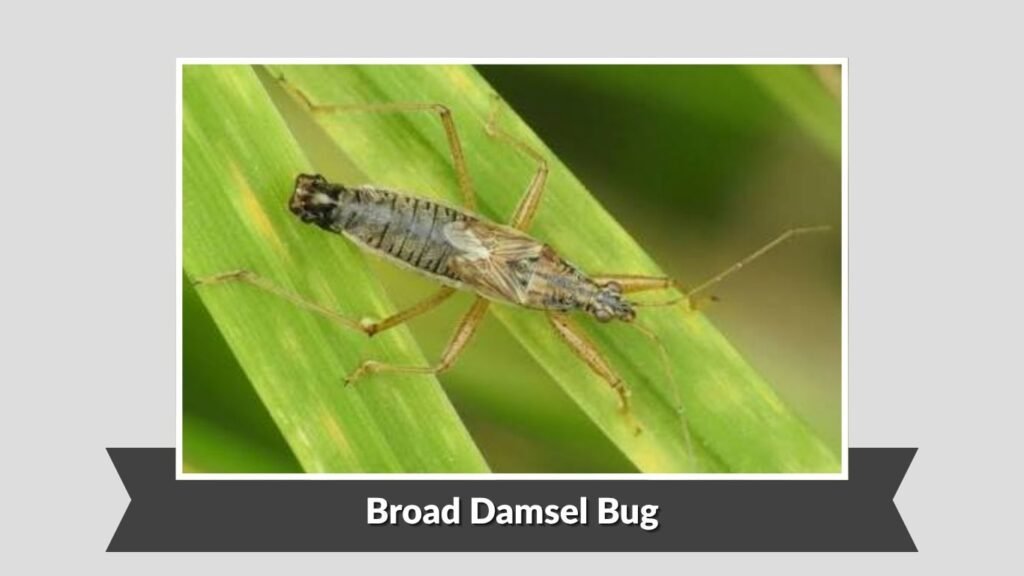
The broad damsel bug (Nabis flavomarginatus) is a wide-bodied species associated mainly with damp grasslands. Its abdomen is covered with short golden hairs, and its partly developed wings reach only about halfway along the body. It is widespread in Britain and is particularly characteristic of moist, grassy environments.
Identification
- Size: Approximately 7–9 mm long
- Color: Pale brown, gray-brown, or yellowish-brown
- Body: Broad compared with most other damsel bugs
- Abdomen: Covered with dense, short golden hairs
- Wings: Short, reaching approximately halfway along the abdomen
- Head: Narrow with prominent rounded eyes
- Legs: Long, with stronger front legs for catching prey
- Antennae: Thin and four-segmented
Its broad abdomen and short wings distinguish it from the slimmer, fully winged field and grey damsel bugs.
Habitat and Distribution
Broad damsel bugs live in grasslands, particularly those with damp soil and dense plant growth. They may occur in wet meadows, field margins, marshy grassland, pond edges, and other moisture-retaining habitats.
The species is widespread and common in Britain. Because most adults have shortened wings, they usually move through their habitat by crawling and running rather than making frequent long flights.
Diet and Hunting Behavior
Adults and nymphs prey on aphids, mites, leafhoppers, thrips, small caterpillars, insect eggs, and other soft-bodied arthropods. They hunt among grass stems and low foliage rather than waiting inside a web or permanent shelter.
The front legs hold the captured prey while the long beak punctures its body. This feeding behavior makes broad damsel bugs beneficial predators in meadows and other grassy landscapes.
Life Cycle and Reproduction
Adults lay eggs during summer, but the eggs generally do not hatch until the following spring. Nymphs may be observed from May through September.
The new generation of adults begins appearing in June, and adults remain visible until approximately October. This species therefore spends winter primarily in the egg stage.
10. Marsh Damsel Bug
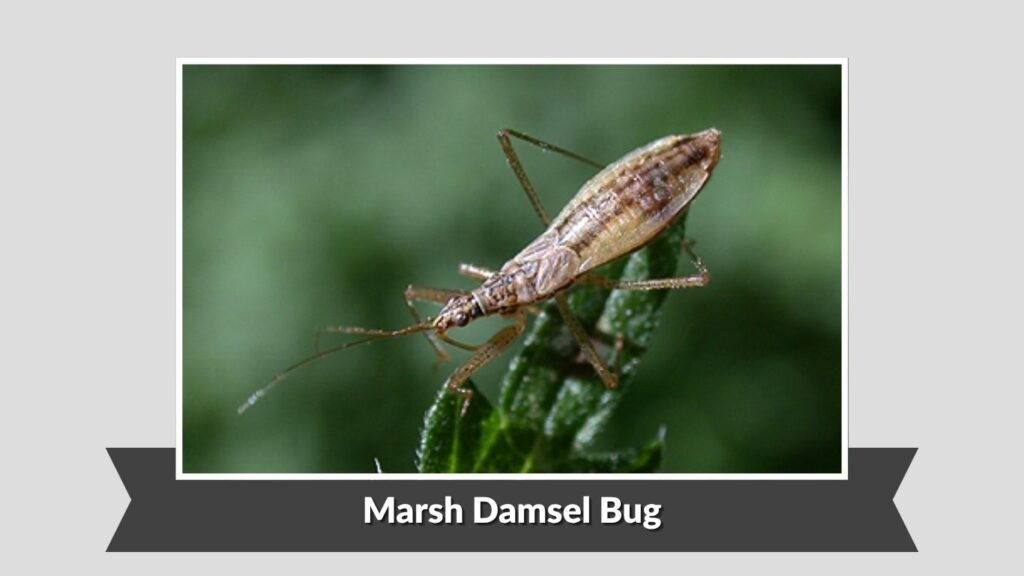
The marsh damsel bug (Nabis limbatus) is a broad, short-winged predator found in wet meadows and marshy grasslands. It resembles the broad damsel bug but has even shorter wings. Its moisture-loving habits and reduced wings make it particularly well suited to dense vegetation in wetlands and damp fields.
Identification
- Size: Approximately 7.5–9 mm long
- Color: Pale brown, gray-brown, or tan
- Body: Broad, especially in females
- Wings: Extremely short and unable to support normal flight
- Forewings: Cover only the second and part of the third abdominal segments
- Legs: Long and often visibly spotted
- Antennae: Long and slender
- Head: Narrow with prominent eyes
It differs from the broad damsel bug because its wings are noticeably shorter. The similar reed damsel bug is generally larger and more elongated.
Habitat and Distribution
Marsh damsel bugs inhabit damp grasslands, marshes, wet meadows, bog margins, and other areas containing moisture-loving vegetation. They remain low among grasses, sedges, and herbaceous plants.
The species is widespread and common throughout the United Kingdom. Its very short wings mean that most adults rely primarily on walking through vegetation rather than flying between habitats.
Diet and Hunting Behavior
This species hunts small insects and mites living in wet grassland vegetation. Likely prey includes aphids, leafhoppers, thrips, insect eggs, and young caterpillars.
It uses its enlarged front legs to grasp prey and its long, piercing beak to consume the body fluids. Both adults and nymphs are predators and may help regulate small insect populations in wetland environments.
Life Cycle and Reproduction
Adults lay eggs during summer, inserting them into suitable plant tissue. The eggs remain through winter and hatch during the following spring.
Nymphs develop among wetland vegetation before becoming adults. Adults are most commonly seen from June through October, although their exact appearance period varies with temperature and local climate.
FAQs
Are damsel bugs harmful to humans?
Damsel bugs are not considered dangerous to humans. They are nonaggressive insects that normally hunt small arthropods on plants. A damsel bug may occasionally probe or bite if handled roughly, but any resulting discomfort is usually mild and temporary.
Are damsel bugs beneficial to gardens?
Yes. Damsel bugs are beneficial predators that feed on aphids, mites, leafhoppers, insect eggs, and small caterpillars. Both adults and nymphs help reduce populations of plant-damaging pests without feeding on healthy garden plants.
Where do damsel bugs usually live?
Damsel bugs live in grasslands, gardens, crop fields, woodlands, wetlands, and low vegetation. The preferred habitat depends on the species. Tree damsel bugs hunt on branches, while marsh and broad damsel bugs favor damp grassy environments.
What do damsel bug nymphs look like?
Damsel bug nymphs resemble smaller, wingless adults. They usually have slender bodies, long legs, and piercing mouthparts. Their colors may range from pale brown to reddish or black. Ant damsel bug nymphs are especially distinctive because they closely resemble ants.
Should I remove damsel bugs from my plants?
Removal is generally unnecessary because damsel bugs help control common garden pests. Avoid using broad-spectrum insecticides against them, as these products can kill beneficial predators. An individual found indoors can simply be captured and released outside.
