
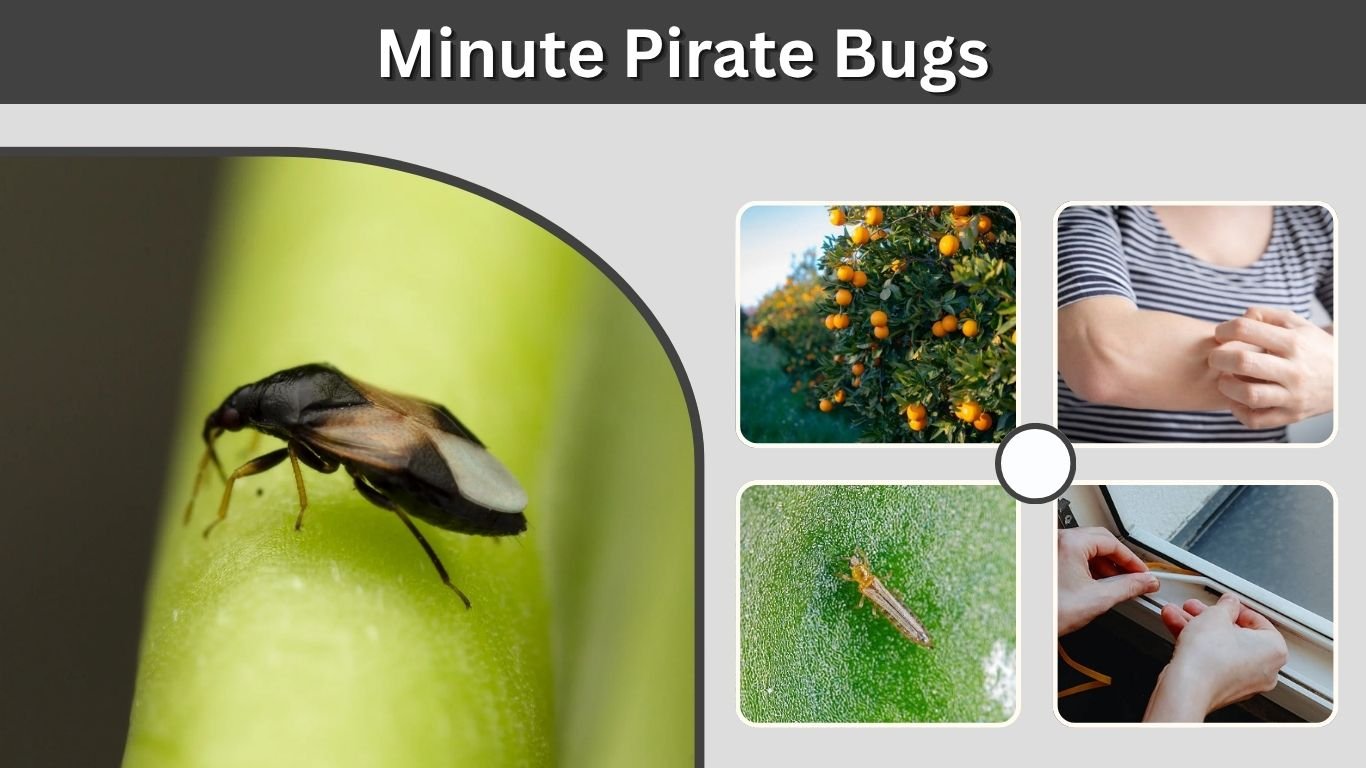
Minute pirate bugs are tiny black-and-white insects commonly found on flowers, crops, shrubs, and garden plants. They are beneficial predators that feed on thrips, aphids, mites, and insect eggs. However, they occasionally land on people and deliver surprisingly painful bites, especially during warm autumn weather.
Despite the discomfort, minute pirate bugs do not feed on human blood, infest beds, or spread known diseases. Most encounters require no control beyond protective clothing and preventing accidental entry into the house.
What Are Minute Pirate Bugs?
Minute pirate bugs are predatory true bugs in the family Anthocoridae. Many commonly encountered species belong to the genus Orius. The insidious flower bug, Orius insidiosus, is one of the best-known North American species.
Both adults and nymphs hunt small insects. Their beneficial role is so important that some Orius species are raised commercially for biological pest control in greenhouses and crop-production systems.
| Feature | Description |
| Common name | Minute pirate bug |
| Common scientific name | Orius insidiosus |
| Family | Anthocoridae |
| Size | Usually less than 1/5 inch |
| Color | Black or dark brown with pale wing markings |
| Diet | Thrips, aphids, mites, eggs, and small larvae |
| Habitat | Flowers, crops, gardens, and shrubs |
| Human risk | Painful but usually minor bite |
What Does a Minute Pirate Bug Look Like?
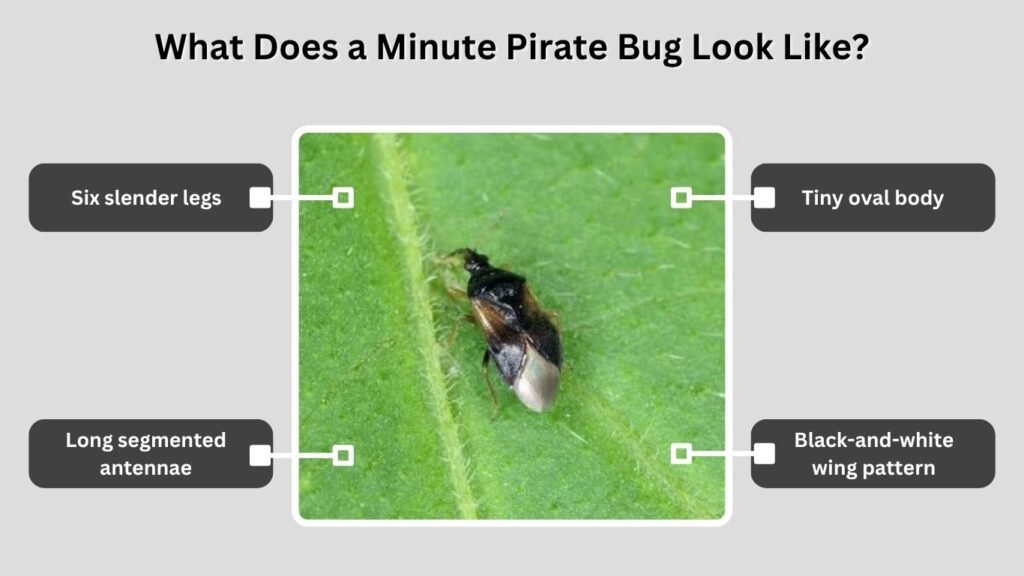
Adult minute pirate bugs have small, oval, somewhat flattened bodies. They are usually shiny black or dark brown with white, cream, or translucent sections on their folded wings.
Identification Features
- Tiny oval body
- Black-and-white wing pattern
- Six slender legs
- Long segmented antennae
- Piercing, beak-like mouthpart
- Wings folded flat across the back
- Quick crawling and flying movements
- Frequent presence on flowers
Most are smaller than 1/5 inch, while some are less than 1/8 inch long. Their markings can create a rough diamond-shaped pattern when the wings are folded.
Minute Pirate Bug Nymph
Nymphs are smaller and lack fully developed wings. They may appear yellow, orange, tan, or reddish-brown, with visible wing pads developing as they mature.
Nymphs can resemble aphids or other tiny plant insects, but they move actively and hunt prey. Both nymphs and adults use piercing mouthparts to feed.
Where Do Minute Pirate Bugs Live?
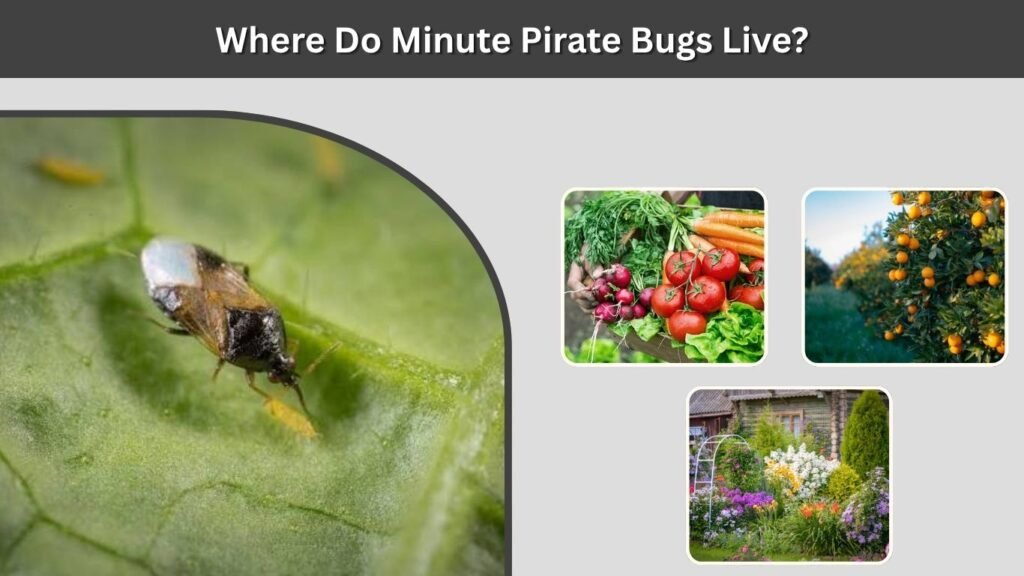
Minute pirate bugs live wherever they can find small insect prey, flowers, or pollen. They are common in gardens, agricultural fields, orchards, greenhouses, meadows, woodland edges, and landscaped areas.
They are frequently found on:
- Corn and soybean plants
- Vegetable crops
- Fruit trees
- Flowering shrubs
- Garden flowers
- Weeds and native plants
- Plants infested with thrips or aphids
Minute pirate bugs occur widely across North America, including California, Iowa, Illinois, Indiana, Kansas, Michigan, Missouri, Nebraska, Ohio, Minnesota, and surrounding regions. Their numbers often become more noticeable during late summer and fall.
Adults can fly between plants while searching for prey. In cold climates, they survive winter in protected outdoor locations such as leaf litter, bark, plant debris, and sheltered cracks.
What Do Minute Pirate Bugs Eat?
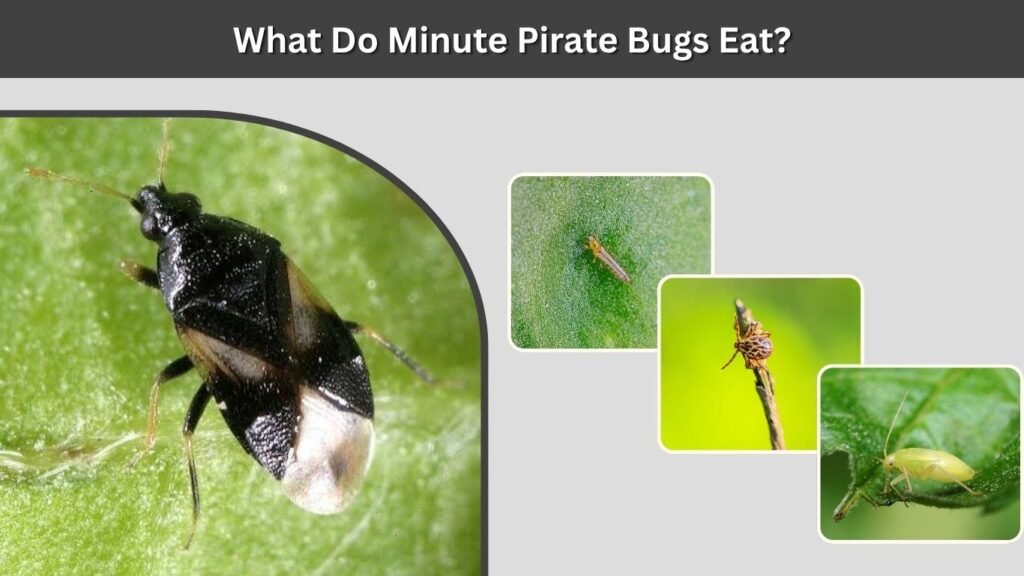
Minute pirate bugs are generalist predators that attack many small plant pests. They insert their sharp beaks into prey and consume the internal fluids.
Their diet includes:
- Thrips
- Aphids
- Spider mites
- Whitefly nymphs
- Psyllids
- Small caterpillars
- Moth and beetle eggs
- Other soft-bodied insects
They may also consume pollen and plant fluids when animal prey is limited. Their ability to eat thrips, mites, aphids, and pest eggs makes them valuable in gardens and crop fields.
Minute Pirate Bug Life Cycle
The life cycle has three main stages: egg, nymph, and adult. Females insert tiny eggs into soft plant tissue, making the eggs difficult to see.
After hatching, the young bugs pass through several nymphal stages before becoming winged adults. Development speed depends on temperature, food availability, and species. Several generations may develop during warm seasons.
Nymphs begin hunting soon after hatching. This means both immature and adult pirate bugs help control pests.
Do Minute Pirate Bugs Bite?
Yes. Minute pirate bugs sometimes bite humans, especially on warm, sunny days in late summer and fall. The bite can feel much more painful than expected from such a tiny insect.
They do not bite to obtain blood. Instead, a bug landing on exposed skin may probe the surface with its feeding beak. University extension sources describe this as probing rather than blood feeding, and the bugs are not known to inject saliva during these encounters.
Why Do Minute Pirate Bugs Bite Humans?
Biting tends to become more noticeable as flowers decline and their usual prey becomes less abundant. The bugs move around more frequently while searching for food and protected overwintering sites.
Human skin is not a normal food source. A bite appears to result from exploratory probing rather than an intentional attempt to parasitize a person.
What Does a Minute Pirate Bug Bite Look Like?
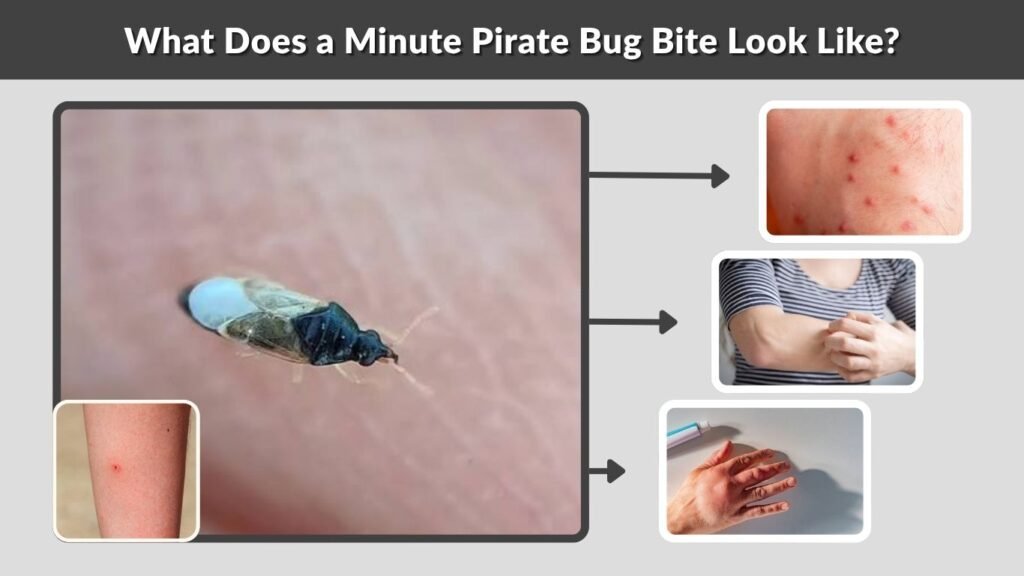
Reactions vary between individuals. Some people feel sharp pain without developing a visible mark. Others develop a red spot or swollen bump resembling a mosquito bite.
Possible symptoms include:
- Sudden pinching or stabbing pain
- A small red mark
- Localized swelling
- Itching or burning
- Mild tenderness
- A raised bump
Some bites swell noticeably, while others produce little or no skin reaction. Minute pirate bug bites can be irritating, but they are not associated with long-term effects in most people.
How to Treat a Minute Pirate Bug Bite
Wash the area gently with soap and water. Apply a cold pack wrapped in cloth for 10–20 minutes to help reduce pain, swelling, or itching.
Avoid scratching the bite because damaged skin may become infected. General insect-bite symptoms can include pain, redness, swelling, itching, and a localized bump.
Seek urgent medical assistance for difficulty breathing, tightness in the chest, swelling of the face or mouth, dizziness, widespread hives, or another body-wide reaction. These symptoms may indicate a serious allergy rather than an ordinary local response.
Are Minute Pirate Bugs Dangerous?
Minute pirate bugs are not considered dangerous to people, dogs, or other household pets. They do not live on animals, feed continuously, or reproduce in bedding.
A pet may experience brief irritation if a bug probes exposed skin, but pirate bugs are not typical pet parasites. Contact a veterinarian if a pet develops severe swelling, breathing trouble, or continued discomfort after any suspected insect bite.
Minute Pirate Bugs in the House or Bed
A minute pirate bug may accidentally fly indoors through an open window, damaged screen, or doorway. It may also be carried inside on flowers or plants.
Finding one in a bed does not indicate an infestation. Unlike bed bugs, minute pirate bugs do not feed on sleeping humans or establish colonies in mattresses. Bed bugs are blood-feeding insects adapted to living near human sleeping areas; minute pirate bugs are outdoor predators.
Remove indoor bugs with a vacuum or capture them in a container. Seal window gaps, repair screens, and inspect flowers before bringing them inside.
Minute Pirate Bugs vs. No-See-Ums
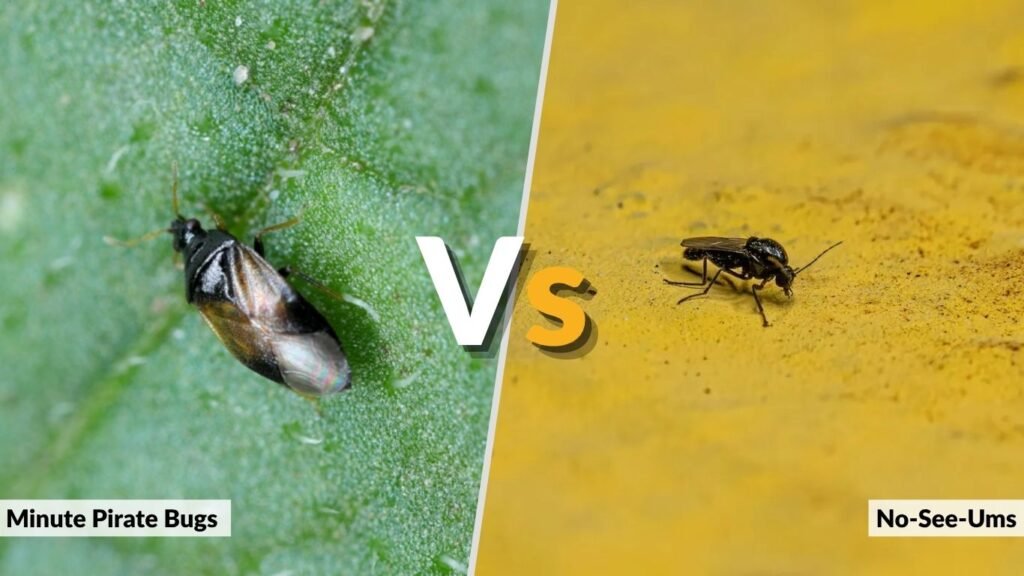
Minute pirate bugs are often confused with no-see-ums because both are extremely small and can bite.
| Feature | Minute pirate bug | No-see-um |
| Type | Predatory true bug | Biting midge |
| Body | Oval and black-and-white | Delicate and fly-like |
| Normal food | Small insects and pollen | Females of biting species consume blood |
| Habitat | Flowers, crops, and gardens | Moist areas near aquatic habitats |
| Indoor infestation | Uncommon | May enter through fine screens |
| Bite purpose | Exploratory probing | Blood feeding |
No-see-ums are tiny flies, often less than 1/8 inch, and some can pass through ordinary porch screens.
How to Get Rid of Minute Pirate Bugs
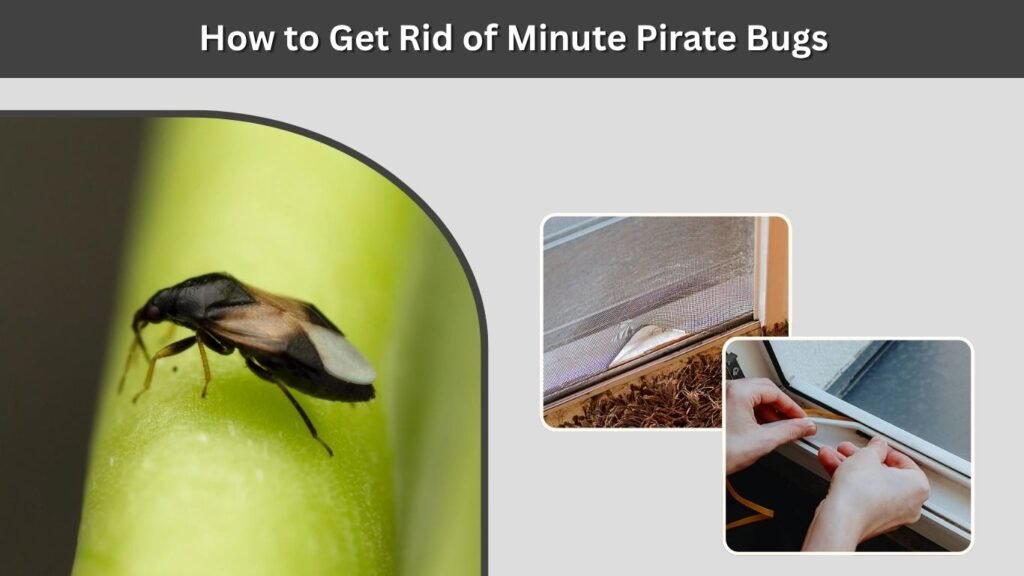
Complete outdoor elimination is neither practical nor desirable. These bugs are beneficial predators and can fly into treated areas from surrounding vegetation.
To reduce indoor encounters:
- Repair damaged screens.
- Seal spaces around windows and doors.
- Keep unscreened windows closed during peak activity.
- Vacuum bugs found indoors.
- Inspect cut flowers and plants before bringing them inside.
- Remove excessive plant debris touching the foundation.
Avoid applying broad-spectrum pesticides throughout the garden simply to kill minute pirate bugs. Such treatments may also destroy lady beetles, lacewings, pollinators, and other helpful insects.
How to Repel Minute Pirate Bugs and Prevent Bites
Common insect repellents do not always provide dependable protection from pirate bugs. Physical barriers are often more useful.
Wear long sleeves, long pants, gloves, and closed shoes while gardening. Pirate bugs may be more attracted to light-colored surfaces, so darker clothing may reduce the number landing on you.
Brush a bug away when it lands rather than pressing it against your skin. Outdoor activity may also be lower during cool, cloudy, or windy conditions than on warm, calm autumn afternoons. Iowa State University notes that conventional repellents may not reliably prevent their bites.
FAQs
How big are minute pirate bugs?
Adults are generally under 1/5 inch long, and some species measure less than 1/8 inch. Their tiny size makes them difficult to notice until they land or bite.
How long do minute pirate bug bites last?
The sharp pain is usually brief. Redness, itching, or swelling may last longer depending on individual sensitivity. Seek medical advice when symptoms are severe, spreading, or persistent.
Do minute pirate bugs fly?
Yes. Adults have functional wings and fly between flowers, crops, gardens, and buildings. Nymphs lack developed wings and move by crawling.
What attracts minute pirate bugs?
They are attracted to plants containing thrips, aphids, mites, insect eggs, flowers, and pollen. They may also land on people while moving between plants.
Are minute pirate bugs beneficial?
Yes. They are valuable natural predators that help control several agricultural and garden pests, particularly thrips, mites, aphids, and insect eggs.
