
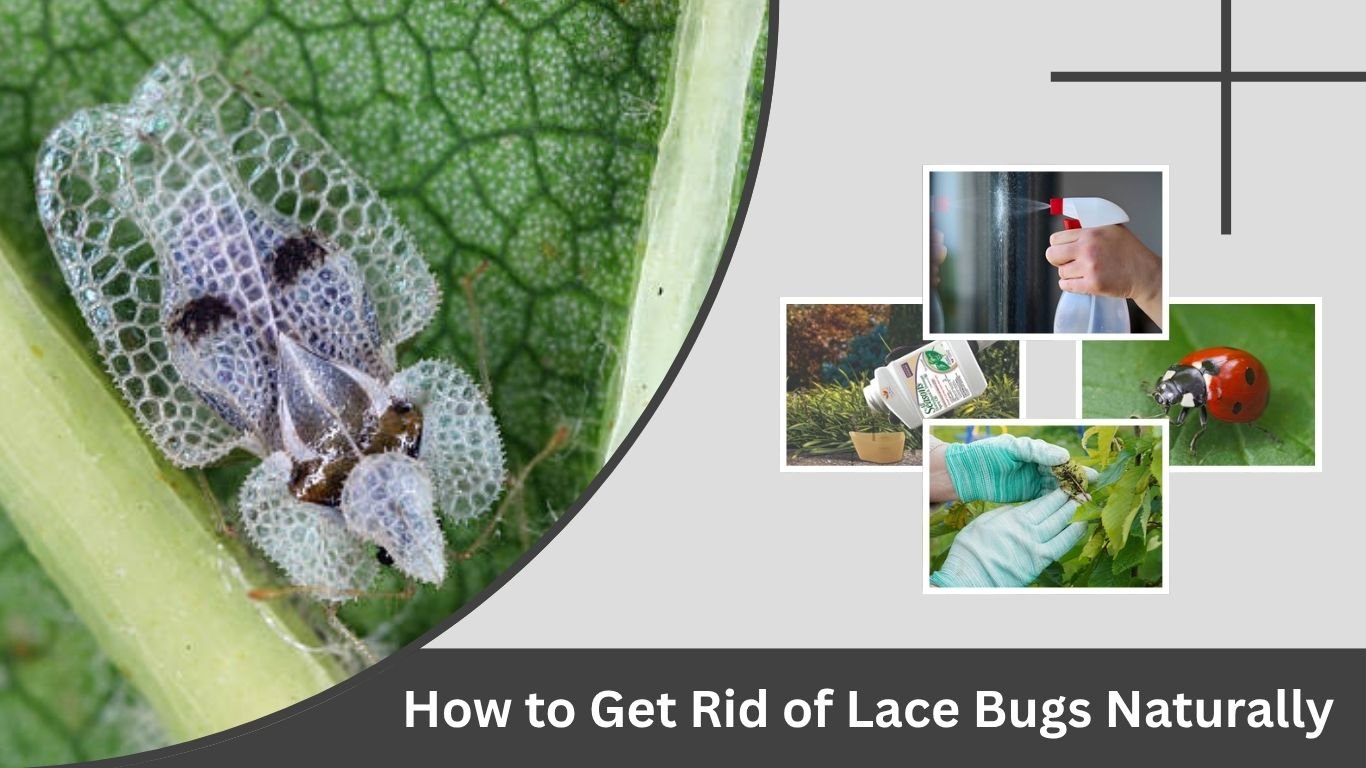
Lace bugs are small, sap-feeding insects that attack the undersides of leaves. They commonly damage azaleas, rhododendrons, lantanas, sycamores, hawthorns, avocado trees, and other ornamental or edible plants. Their feeding leaves pale dots across the foliage and may eventually cause leaves to turn yellow, brown, or dry.
Natural lace bug control works best when treatment begins early. Instead of relying on harsh pesticides, you can wash the insects away, remove badly damaged foliage, improve plant health, and apply low-impact treatments directly beneath the leaves.
How to Identify Lace Bugs
Adult lace bugs are tiny, usually around 1/8 to 1/4 inch long. Their transparent, patterned wings resemble delicate lace, which gives the insects their common name.
They normally remain on the undersides of leaves, where both adults and immature nymphs suck sap from plant tissue.
Common Signs of Lace Bug Damage
- Numerous white or yellow dots on upper leaf surfaces
- Pale, gray, or bleached-looking foliage
- Black, varnish-like droppings beneath leaves
- Tiny dark nymphs with spiny bodies
- Transparent-winged adults under the foliage
- Premature leaf drop during severe infestations
- Weak flowering or reduced plant growth
The upper surface of an affected leaf may look dusty or faded. Turn the leaf over to confirm the problem. Lace bugs, shed skins, eggs, and dark waste spots are usually visible underneath.
Lace bug damage can resemble spider mite feeding. However, spider mites may produce fine webbing, while lace bugs leave distinctive black droppings and have transparent wings as adults.
1. Spray Lace Bugs Off With Water
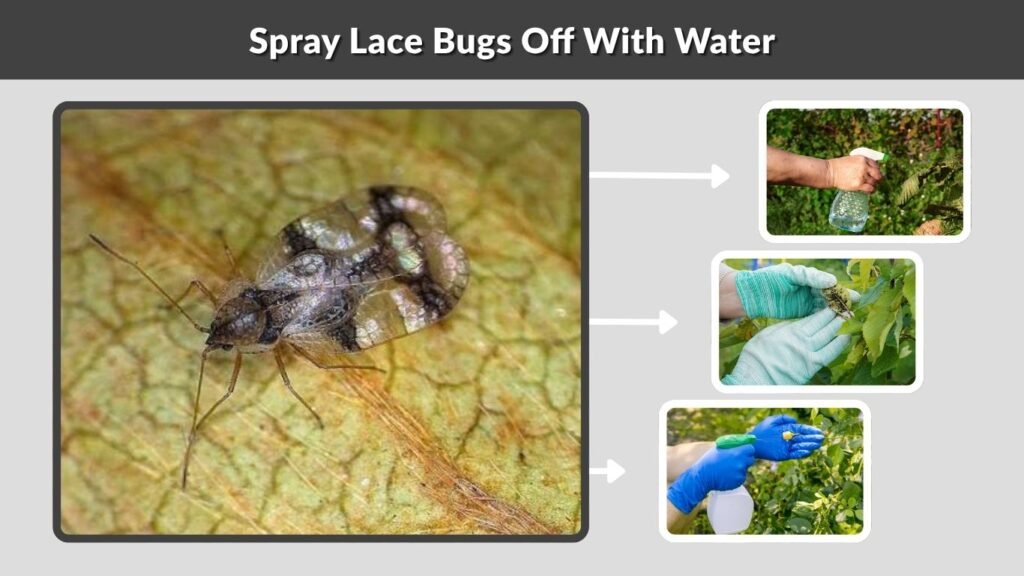
A strong stream of water is one of the easiest natural ways to control a small lace bug infestation. The water knocks adults and nymphs from the leaves and may remove eggs, shed skins, and droppings.
How to Wash the Plant
Use a garden hose with a spray nozzle. Direct the water toward the undersides of affected leaves, where the insects are concentrated.
Hold delicate branches with one hand to prevent breakage. Spray the entire plant, including inner leaves that are easy to overlook.
Repeat the treatment every three to five days for approximately two weeks. A single spraying may not remove insects that hatch later.
Morning is usually the best time to wash plants. The leaves can dry during the day, reducing the risk of prolonged moisture encouraging fungal problems.
Avoid using extremely high pressure on seedlings, flowers, or fragile new growth.
2. Remove Heavily Infested Leaves
Removing badly affected foliage can reduce the number of lace bugs and eggs on a plant. This method is most useful when the infestation is limited to a few leaves or branches.
How to Prune Affected Growth
Cut off leaves that are heavily discolored, covered with insects, or unlikely to recover. Use clean, sharp pruning shears to avoid tearing the plant.
Place the removed material in a sealed bag and discard it in the trash. Do not leave infested leaves beneath the plant, as surviving insects may return to healthy foliage.
Avoid removing too much growth at one time. Severe pruning can stress the plant and make it more vulnerable to heat, drought, and additional pests.
After pruning, wash the remaining foliage and monitor the undersides of new leaves.
3. Apply Insecticidal Soap
Insecticidal soap is a low-impact treatment that controls lace bug nymphs and adults through direct contact. It works best on younger insects and must thoroughly cover their bodies.
Choose a commercial insecticidal soap labeled for the affected plant and lace bugs or similar soft-bodied pests.
How to Use Insecticidal Soap
Spray the upper and lower surfaces of the leaves, paying particular attention to the undersides. Lace bugs that are not contacted may survive.
Apply the treatment during the early morning or evening when temperatures are cooler. Avoid spraying plants under strong sunlight or during very hot weather because leaf damage may occur.
Repeat the application according to the product label. Lace bug eggs may survive the first treatment and hatch several days later.
Test the spray on a small section of the plant before treating the entire canopy. Some sensitive plants may develop spotting or leaf burn.
Do not make strong homemade soap mixtures using laundry detergent or concentrated dishwashing liquid. Household cleaning products may damage the protective coating of leaves.
4. Use Horticultural Oil
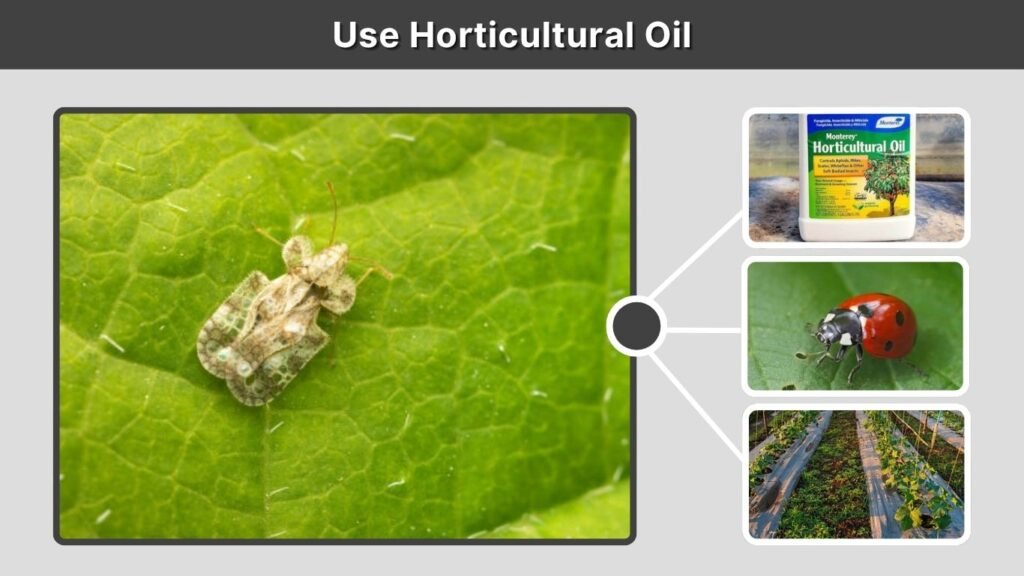
Horticultural oil controls lace bugs by coating and suffocating exposed insects and eggs. It can be especially useful when eggs are attached to the undersides of leaves.
Neem oil is one type of plant-based horticultural product, but products vary significantly. Select one labeled for use on the plant you are treating.
How to Apply the Oil
Mix the product exactly as directed on its label. Spray both sides of the foliage until the leaves are evenly covered but not excessively dripping.
Avoid applying oil:
- During very hot weather
- To drought-stressed plants
- Immediately before heavy rain
- When leaves are wet
- To plants known to be sensitive to oils
- Close to another sulfur-based treatment
Apply the oil in the early morning or evening. Repeated treatment may be required because new lace bugs can hatch after the first application.
Horticultural oil has little residual effect once it dries, making complete coverage essential.
5. Encourage Natural Predators
Lace bugs have several natural enemies that help limit their populations. Broad-spectrum insecticides may kill these beneficial predators and allow lace bugs to return in larger numbers.
Helpful garden predators include:
- Lady beetles
- Lacewing larvae
- Minute pirate bugs
- Assassin bugs
- Predatory mites
- Jumping spiders
- Parasitic wasps
Create a more supportive habitat by growing a variety of flowering plants that provide pollen and nectar. Small flowers such as alyssum, dill, fennel, yarrow, and native flowering species can attract beneficial insects.
Avoid spraying the entire garden when only one plant is affected. Spot treatments preserve more predators and pollinators.
Even natural sprays should be used carefully. Insecticidal soap and horticultural oil can harm beneficial insects if they are sprayed directly.
6. Improve the Plant’s Growing Conditions
Healthy plants tolerate lace bug feeding better than plants weakened by drought, poor soil, excessive heat, or unsuitable light.
Some lace bugs become especially problematic when shade-loving plants are grown in intense sun. Azaleas and rhododendrons exposed to hot afternoon sunlight may experience greater stress and more visible damage.
Support Plant Recovery
Provide the correct amount of light for the plant species. Apply water deeply when needed, but avoid keeping the soil constantly saturated.
Add an appropriate layer of organic mulch around the root zone to conserve moisture and regulate soil temperature. Keep the mulch away from the trunk or main stems.
Avoid excessive nitrogen fertilizer. Rapid, tender growth may be more attractive to sap-feeding pests. Use fertilizer only when the plant needs it and follow the recommended application rate.
Damaged leaves will not become green again. However, proper care encourages healthier new growth and helps prevent further decline.
7. Treat Lace Bugs Early in the Season
Early treatment is more effective than waiting until leaves are heavily damaged. Check susceptible plants regularly during warm weather, especially after new growth appears.
Inspect at least several leaves from different parts of the plant. Concentrate on lower and inner foliage as well as exposed branch tips.
Young lace bug nymphs are easier to control than fully developed adults. Eggs may be inserted into leaf tissue or protected by dark material, making repeated monitoring necessary.
A useful natural-control schedule may include:
- Inspecting the plant once a week.
- Washing away visible insects.
- Removing badly infested leaves.
- Applying insecticidal soap or horticultural oil when necessary.
- Rechecking the plant after five to seven days.
- Repeating treatment according to the product label.
Continue monitoring even after adult insects disappear because eggs may remain on the foliage.
Best Natural Spray for Lace Bugs
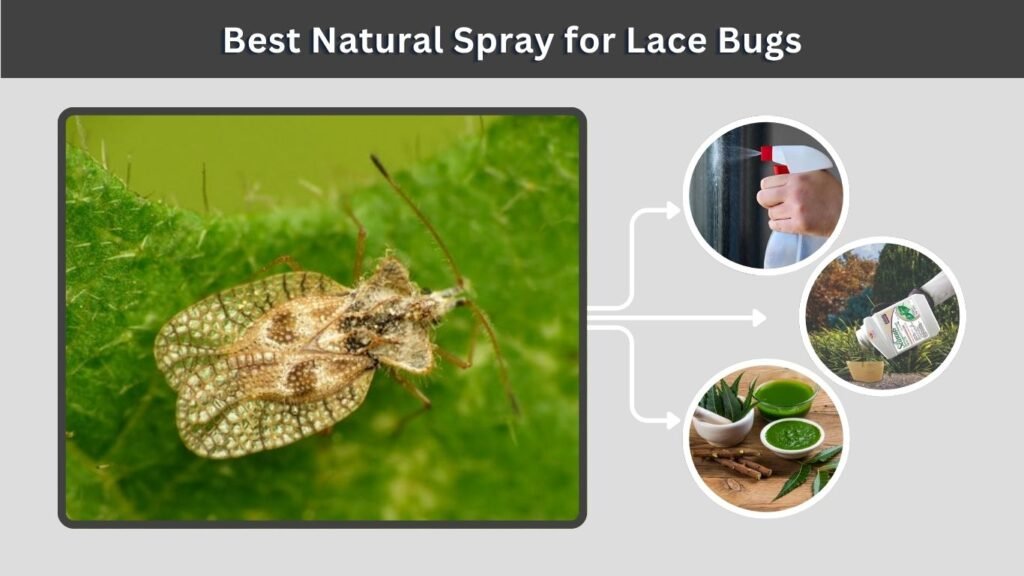
Both insecticidal soap and horticultural oil can work effectively when used correctly. The better choice depends on the plant, infestation level, and lace bug life stage.
| Treatment | Best use | Important limitation |
| Water spray | Light, early infestations | Must be repeated |
| Insecticidal soap | Exposed nymphs and adults | Only kills insects it contacts |
| Horticultural oil | Adults, nymphs, and exposed eggs | May burn sensitive or stressed plants |
| Neem-based product | Small to moderate infestations | Results vary by formulation |
| Pruning | Localized infestations | Excessive removal can stress plants |
Combining methods is generally more effective than depending on one spray. Start by washing and pruning, then use a labeled soap or oil when insects remain.
How to Get Rid of Lace Bugs on Azaleas
Azaleas are among the plants most frequently affected by lace bugs. Examine the undersides of pale or speckled leaves for adults, nymphs, and dark droppings.
Wash the leaves thoroughly, particularly during spring when young nymphs begin feeding. Treat persistent populations with insecticidal soap or horticultural oil.
Reduce unnecessary plant stress by maintaining adequate soil moisture and adding mulch. When possible, protect azaleas from intense afternoon sunlight. Plants grown in suitable partial shade often tolerate pest activity better than heat-stressed specimens.
Do not expect spotted leaves to recover. Judge treatment success by checking whether the new growth remains healthy.
How to Get Rid of Lace Bugs on Trees
Treating a small shrub is easier than treating a mature tree because the spray must reach the undersides of affected leaves.
For young trees, use a hose attachment or sprayer that provides adequate coverage. Remove accessible, heavily damaged branches when pruning will not harm the tree’s form.
Large sycamores, hawthorns, or other tall trees may be difficult to treat safely without specialized equipment. Mild cosmetic damage often does not threaten a mature, otherwise healthy tree.
Seek professional help when the tree is losing large amounts of foliage, showing branch decline, or is too tall to inspect and treat from the ground. Avoid climbing or using an unstable ladder while spraying.
Homemade Treatments to Avoid
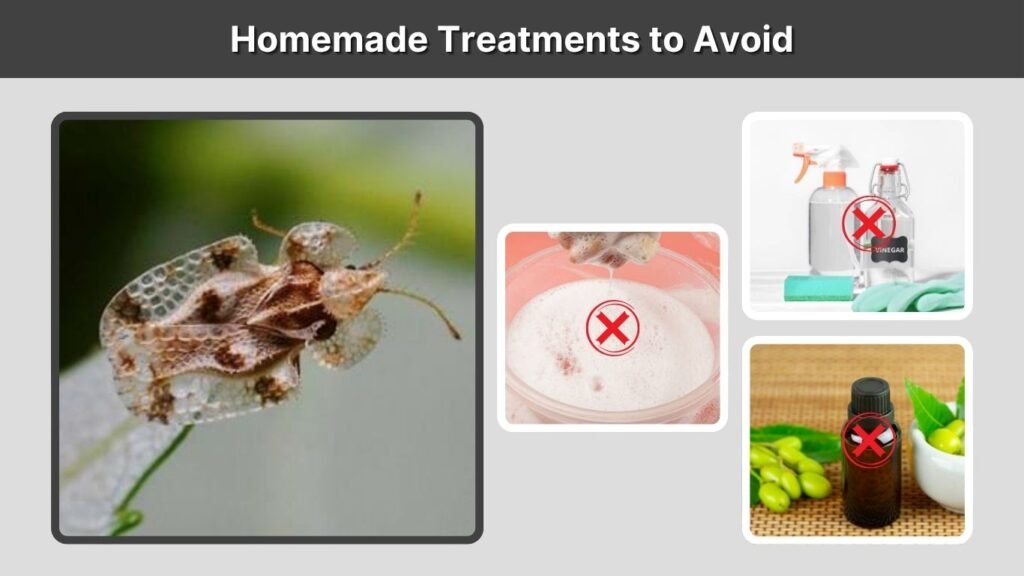
Some homemade remedies can injure plants or fail to control the insects effectively.
Strong Dish-Soap Mixtures
Concentrated detergent may strip protective oils from leaves and cause burning. A properly formulated insecticidal soap is a safer and more predictable choice.
Vinegar Sprays
Vinegar can damage plant tissue and alter soil conditions. It is not an appropriate lace bug treatment for living foliage.
Undiluted Neem Oil
Applying concentrated oil can burn leaves. Neem-based products must be diluted and applied according to their labels.
Garlic and Pepper Sprays
These mixtures may temporarily repel some insects, but they usually do not provide dependable control of established lace bug populations. They may also irritate skin and eyes during preparation or application.
How Long Does It Take to Control Lace Bugs?
Visible lace bug numbers may decline after the first thorough water, soap, or oil treatment. Complete control may take two to four weeks because eggs can hatch after the initial application.
Inspect the plant every few days during treatment. New pale spots indicate continued feeding, while old damaged areas remain visible even after the insects are gone.
Focus on the condition of new leaves rather than expecting existing damaged foliage to recover.
How to Prevent Lace Bugs From Returning
Inspect susceptible plants during spring and summer before heavy damage develops. Wash small populations away as soon as they appear.
Provide each plant with suitable light, water, soil, and spacing. Remove fallen leaves and unnecessary garden debris that may shelter pests.
Avoid repeated use of broad-spectrum insecticides, which can eliminate lace bug predators. When treatment is needed, apply it only to affected plants and target the undersides of the foliage.
FAQs
What naturally kills lace bugs?
A strong stream of water can knock lace bugs off plants. Insecticidal soap and horticultural oil also kill exposed adults and nymphs through direct contact. Repeated applications may be necessary because eggs can survive an initial treatment.
Does neem oil get rid of lace bugs?
A properly labeled neem-based horticultural product may control lace bugs when it directly covers them. It should be diluted and applied according to the label. Avoid treating heat-stressed plants or spraying during intense sunlight.
Will dish soap kill lace bugs?
Soap can damage soft-bodied insects, but ordinary dish detergent may also burn plant leaves. Commercial insecticidal soap is formulated for plants and provides a more reliable option when used as directed.
Can plants recover from lace bug damage?
Plants can produce healthy new leaves after the infestation is controlled, but pale or stippled leaves usually remain damaged. Proper watering, suitable light, and moderate fertilization support recovery.
Are lace bugs harmful to people?
Lace bugs feed on plant sap and do not normally bite or harm people or pets. Their main impact is cosmetic and physiological damage to leaves, particularly when large populations remain untreated.
