
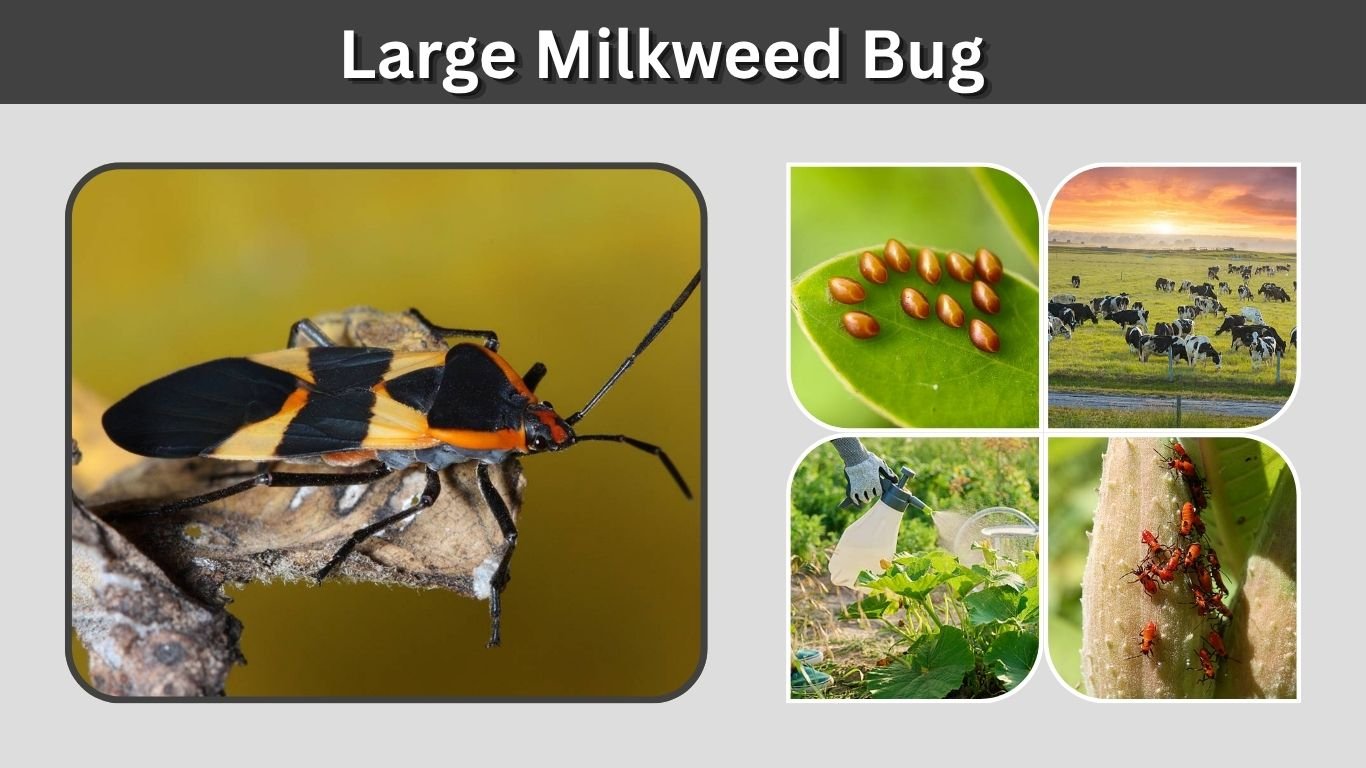
The large milkweed bug is a striking orange-and-black insect commonly found on milkweed plants during summer and fall. Scientifically known as Oncopeltus fasciatus, it primarily feeds on milkweed seeds and developing seedpods.
Although large groups may look alarming, these bugs usually cause little harm to established milkweed plants. They do not normally threaten monarch caterpillars, bite people, or damage homes. Control is mainly needed when preserving milkweed seeds or protecting small, stressed plants.
Large Milkweed Bug Quick Facts
| Feature | Description |
| Scientific name | Oncopeltus fasciatus |
| Order | Hemiptera |
| Family | Lygaeidae |
| Adult size | About ½–¾ inch |
| Color | Orange-red and black |
| Primary food | Milkweed seeds |
| Life cycle | Egg, five nymphal stages, adult |
| Nymph development | Around 30 days in favorable weather |
| Adult lifespan | Approximately one month in summer |
| Danger to people | Generally harmless |
Large milkweed bugs are true bugs in the seed bug family. Adults possess piercing-sucking mouthparts rather than the chewing jaws found in beetles.
What Does a Large Milkweed Bug Look Like?
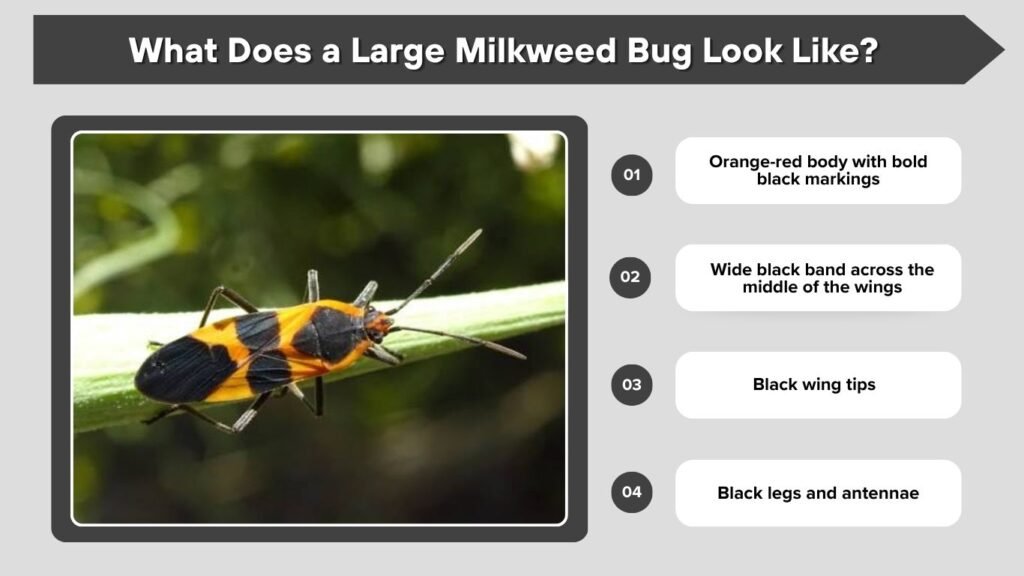
Adult large milkweed bugs have elongated, somewhat oval bodies marked with bright orange-red and black. Their bold coloration makes them highly visible against green milkweed leaves and brown seedpods.
Adult Identification
The adult normally measures approximately ½–¾ inch long. Three major black areas cross the forewings, leaving orange markings that resemble an X or two opposing triangles.
Identification features include:
- Orange-red body with bold black markings
- Wide black band across the middle of the wings
- Black wing tips
- Black legs and antennae
- Long piercing mouthpart folded under the body
- Fully developed wings covering the abdomen
- No prominent white spots on the wings
The absence of white wing markings helps distinguish it from the small milkweed bug.
Large Milkweed Bug Nymph
Nymphs are smaller, wingless versions of the adults. Newly hatched nymphs are bright red or orange with dark legs and antennae. As they develop, black spots and wing pads become more noticeable.
Large milkweed bug nymphs frequently gather in groups around developing seedpods. Their bright color is natural and does not indicate that the insects are beetles or newly hatched ladybugs.
Large vs. Small Milkweed Bug
Large and small milkweed bugs belong to different species, although both commonly inhabit milkweed patches.
| Feature | Large milkweed bug | Small milkweed bug |
| Scientific name | Oncopeltus fasciatus | Lygaeus kalmii |
| Typical size | ½–¾ inch | Usually no more than about ½ inch |
| Wing pattern | Thick black band and orange triangles | Orange-red X with additional markings |
| White wing spots | Usually absent | Often present |
| Main diet | Primarily milkweed seeds | Seeds, nectar and sometimes insects |
| Relationship with monarchs | Generally harmless | May occasionally scavenge or prey on insects |
The large species has a broader black middle band and lacks the distinctive white markings often visible near the rear of the small milkweed bug’s wings.
Where Do Large Milkweed Bugs Live?
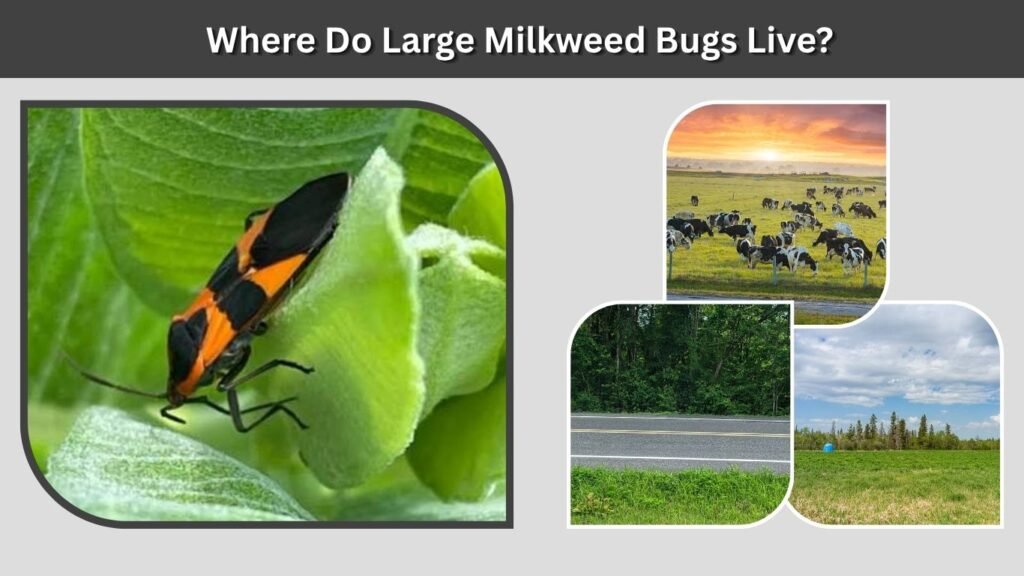
Large milkweed bugs occur across much of North America and are associated with places where milkweed grows. Typical habitats include prairies, pastures, roadsides, open woodlands, old fields and native wildflower gardens.
They are often abundant in warm regions. Northern populations may migrate south as cold weather approaches because they cannot survive severe winters. Warmer populations may remain active locally or overwinter as adults in sheltered locations.
Why Is One on Goldenrod?
A large milkweed bug found on goldenrod may simply be resting, dispersing or searching for food near a milkweed patch. Adults can fly and occasionally visit plants other than milkweed.
Their successful growth and reproduction are closely connected to milkweed seeds, but adults can feed on some other plant seeds when necessary. Finding one on goldenrod does not mean goldenrod is its principal host plant.
Can Large Milkweed Bugs Enter Houses?
Adults may occasionally gather near buildings or enter through small gaps while looking for shelter. They do not reproduce indoors, eat wood, damage clothing or infest stored food.
A bug found inside can be captured in a container and released outdoors. Sealing damaged screens and gaps around windows can prevent additional insects from entering.
What Do Large Milkweed Bugs Eat?
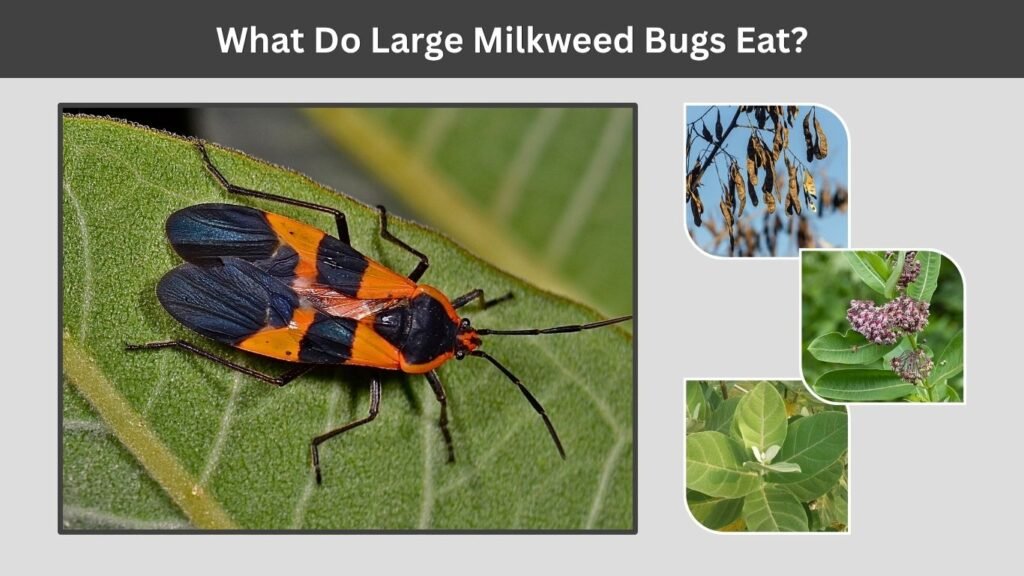
Milkweed seeds are their most important food. Both adults and nymphs insert their long mouthparts through seedpods or into exposed seeds and remove the nutrient-rich contents.
They may also feed on:
- Developing milkweed seedpods
- Exposed milkweed seeds
- Milkweed buds and flowers
- Milkweed leaves and stems
- Dogbane plants
- Certain other seeds when preferred food is unavailable
Research has shown that milkweed seeds provide the nutrition needed for strong growth and reproduction. Young nymphs may struggle to reach seeds inside thick, unopened pods because their mouthparts are still short.
Large Milkweed Bug Life Cycle
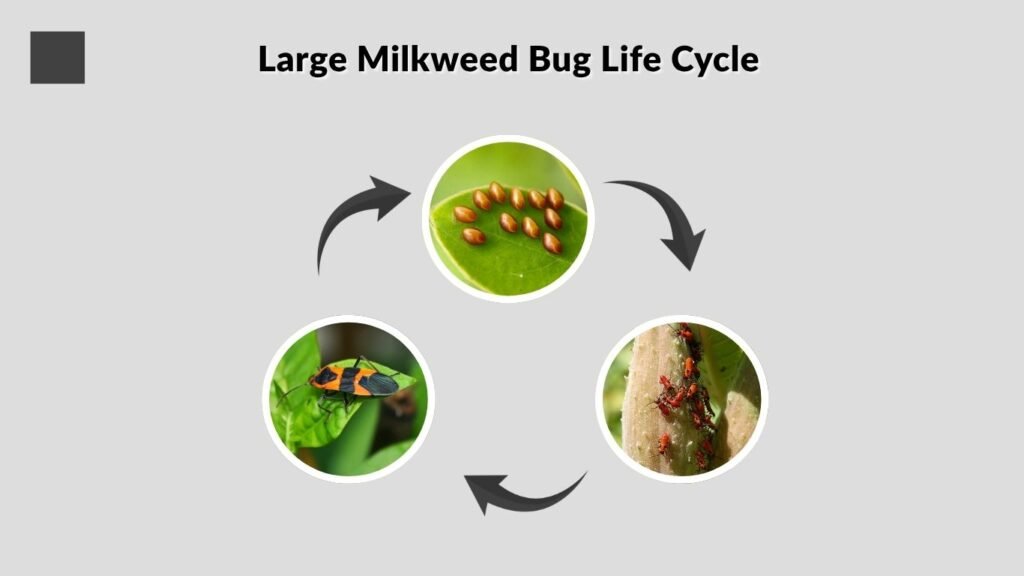
Large milkweed bugs undergo incomplete metamorphosis. They have no caterpillar, grub or pupal stage. Instead, the young resemble small wingless adults.
Egg Stage
Females place eggs in sheltered locations around milkweed seedpods, stems or plant debris. The eggs are pale yellow when first laid but gradually become orange or reddish before hatching.
A cluster commonly contains approximately 30–50 eggs. Under warm conditions, eggs may hatch in about five days, although development can take longer in cooler weather.
Five Nymphal Stages
After hatching, the insects pass through five nymphal stages, known as instars. They shed their outer skin between each stage.
During development, nymphs:
- Begin as tiny red-orange insects.
- Become rounder and larger.
- Develop more black markings.
- Form visible black wing pads.
- Molt into fully winged adults.
Nymphal development typically takes around 30 days under suitable conditions, but weather and food availability can change the timing.
Adult Stage and Reproduction
New adults can begin mating roughly one week after their final molt. Females then deposit numerous egg clusters when sufficient milkweed seeds are available.
An adult may live for approximately one month during summer. Northern adults often migrate toward warmer areas as fall approaches, while populations in tropical environments may reproduce during much of the year.
Are Large Milkweed Bugs Harmful?
Large milkweed bugs are generally more of a visual nuisance than a serious plant pest. Small and moderate populations normally cause little damage to healthy, established milkweed.
Their feeding can reduce the number of viable seeds inside affected pods. This matters when someone is growing milkweed specifically to collect and distribute seeds. However, losing some seeds does not usually threaten an established milkweed patch.
Do They Harm Monarch Caterpillars?
Large milkweed bugs are herbivorous and are not considered a significant threat to monarch eggs, caterpillars or pupae. They feed on milkweed tissues and seeds rather than hunting monarchs.
Both insects can live on the same plant because they use different resources: monarch caterpillars mainly eat leaves, while large milkweed bugs prefer seeds and seedpods.
Do Large Milkweed Bugs Bite?
Large milkweed bugs do not normally bite people. Their mouthparts are designed to pierce seeds and plant tissue, and the insects are not aggressive.
They also do not sting or inject venom. Avoid squeezing or roughly handling any true bug, however, because a trapped insect might defensively probe the skin.
Are They Poisonous?
Large milkweed bugs absorb cardiac glycosides from milkweed and store these defensive chemicals in their bodies. This makes them unpleasant or potentially sickening to many predators.
Their bright orange-and-black pattern is warning coloration that advertises their chemical defense. The bugs are not dangerous to observe or have in the garden.
Predators of Large Milkweed Bugs
Milkweed-derived chemicals protect these insects from many birds and other predators, but the defense is not perfect. Some spiders, predatory insects and other animals may still eat them.
Young or inexperienced birds may attack a milkweed bug but learn to avoid similarly colored insects after an unpleasant experience. The shared orange-and-black coloration of milkweed bugs, monarchs and several milkweed beetles strengthens this warning system.
How to Get Rid of Large Milkweed Bugs
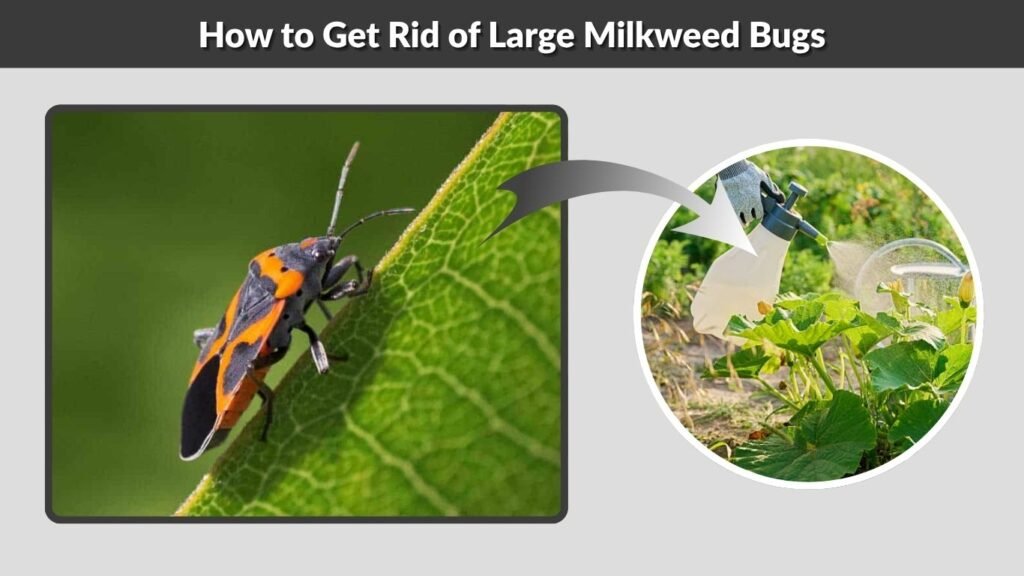
Control is unnecessary unless the population is overwhelming small plants or destroying seedpods you intend to collect.
Remove Them by Hand
Brush adults and nymphs into a container of soapy water. Wear gloves and inspect seedpods carefully, where groups are most likely to gather.
Heavily infested pods can also be removed when seed production is not required.
Avoid Broad-Spectrum Insecticides
Do not spray insecticides on milkweed that contains monarch eggs or caterpillars. Products that kill milkweed bugs may also kill monarch larvae, pollinators and other harmless insects.
Hand removal is considered the safest option in monarch gardens. Removing dead stalks and excessive plant litter after the season can also reduce sheltered overwintering sites.
FAQs
Are large milkweed bugs good or bad?
They are mostly harmless members of the milkweed ecosystem. They may reduce seed production but rarely cause serious damage to healthy plants. Leave moderate populations alone unless you are collecting milkweed seeds.
Do large milkweed bugs fly?
Yes. Adults have fully developed wings and can fly between milkweed patches. Northern populations may travel considerable distances as seasonal temperatures and milkweed availability change.
How long do large milkweed bugs live?
Nymphal development usually takes about 30 days in favorable weather. Summer adults may live for approximately one month, although seasonal migration and overwintering behavior can affect longevity.
Do large milkweed bugs destroy milkweed seeds?
They pierce developing pods and feed on seed contents, potentially leaving some seeds shriveled or unable to germinate. Significant damage is mainly a concern when milkweed is being grown for seed collection.
Should I remove them from a monarch garden?
Removal is usually unnecessary because large milkweed bugs do not normally harm monarchs. Reduce them by hand only when their numbers are exceptionally high or when protecting seedpods. Avoid insecticides around monarch eggs and caterpillars.
