
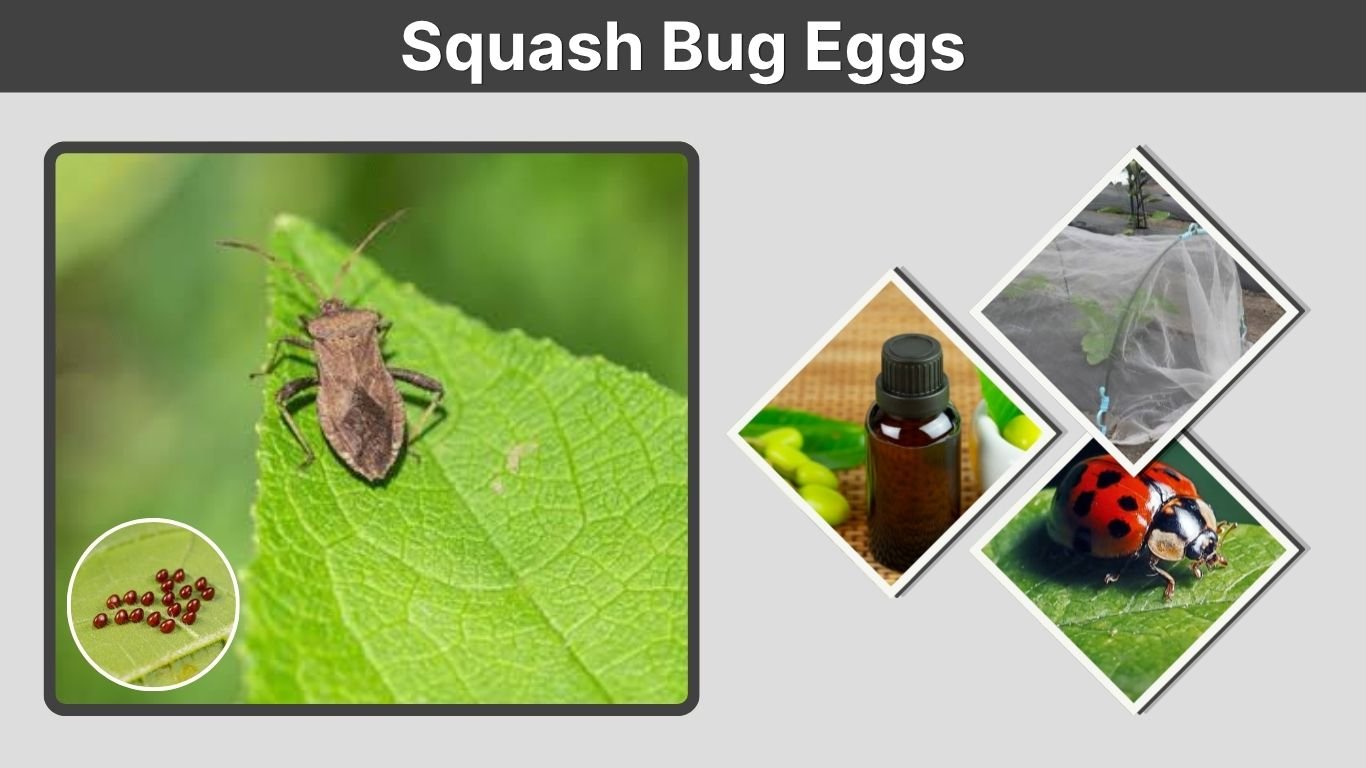
Squash bug eggs are an early warning that damaging nymphs will soon appear on squash, pumpkins or other cucurbit plants. The eggs are small, shiny and usually arranged in orderly clusters on the undersides of leaves. Because mature squash bugs are difficult to control, finding and removing their eggs is one of the most effective ways to prevent an infestation. Regular inspection, correct identification and prompt removal can protect vines before newly hatched nymphs begin feeding.
What Do Squash Bug Eggs Look Like?
Squash bug eggs are produced by the adult female Anasa tristis. Although their copper colour is distinctive, they can be confused with ladybug, stink bug and squash vine borer eggs.
Squash Bug Egg Identification
Look for the following characteristics:
- Approximately 1/16 inch or 1.6 mm long
- Oval, slightly flattened shape
- Shiny yellowish-brown, copper, bronze or brick-red colour
- Arranged in organised groups of 12–20 eggs
- Usually positioned where two leaf veins meet
- Firmly attached to the leaf surface
- Darker colouring as the eggs approach hatching
The eggs may look like tiny metallic seeds or beads. Their orderly arrangement and copper colour are especially useful identification features.
Where Are the Eggs Found?
Female squash bugs usually lay their eggs on the undersides of squash and pumpkin leaves. The junction between two leaf veins forms a protected V-shaped area where egg clusters frequently appear.
Eggs may also be found on:
- Upper leaf surfaces
- Leaf stalks and stems
- Squash vines
- Flowers or flower buds
- Developing fruits
- Nearby garden structures
- Other plants growing beside cucurbits
Squash bugs strongly prefer cucurbit plants, but a female may occasionally deposit eggs on tomatoes, weeds or other nearby surfaces. Eggs on clothing would be unusual and probably belong to another insect.
When Are Squash Bug Eggs Laid?
Overwintered adults emerge during late spring and move to young cucurbit plants. Egg laying commonly begins when the weather becomes consistently warm and may continue through midsummer or longer in warm regions.
A female can lay as many as 250 eggs during her life. Most are deposited over several weeks rather than in one large mass. Regular inspections are therefore necessary even after earlier clusters have been removed.
Squash Bug Eggs vs Other Insect Eggs
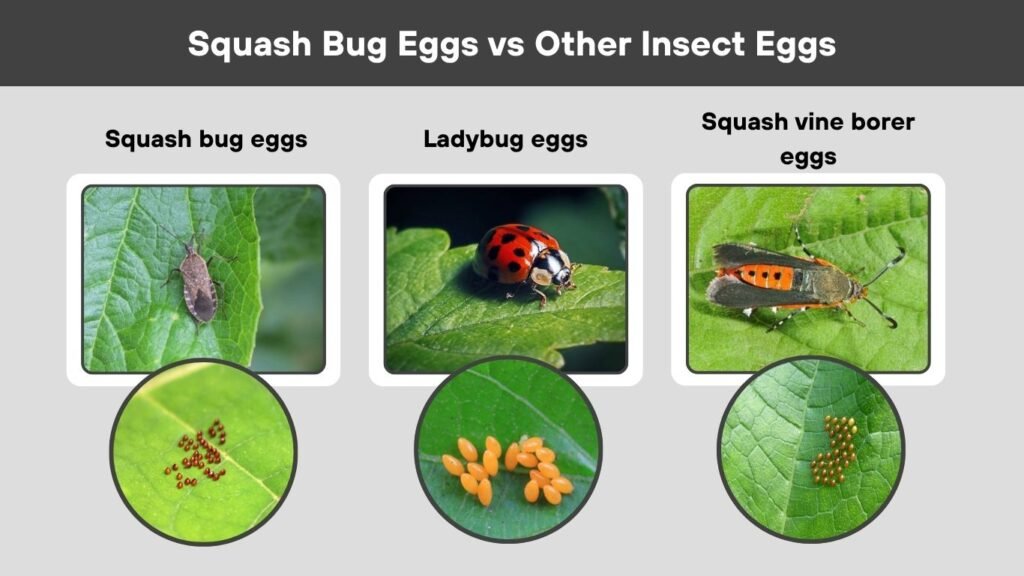
Not every cluster on a squash leaf should be destroyed. Some eggs belong to beneficial insects that consume aphids and other garden pests.
| Feature | Squash bug eggs | Ladybug eggs | Squash vine borer eggs |
| Colour | Bronze, copper or reddish-brown | Yellow or orange | Dull red or brown |
| Shape | Oval and slightly flattened | Elongated and upright | Flattened and disc-like |
| Arrangement | Orderly clusters of 12–20 | Tight upright clusters | Usually laid individually |
| Location | Mainly beneath leaves near veins | Leaves near aphid colonies | Stems, vines and plant bases |
| Size | About 1/16 inch | About 1 mm | About 1 mm |
Squash Bug Eggs vs Ladybug Eggs
Ladybug eggs are normally yellow or orange, elongated and positioned upright. They often resemble tiny grains of rice standing on one end. Females place them close to aphid colonies so their larvae have immediate access to food.
Squash bug eggs are flatter, darker and more metallic. They are commonly arranged in neat rows or patterns rather than an upright bundle.
Squash Bug Eggs vs Squash Vine Borer Eggs
Squash vine borer eggs are generally laid individually on lower stems, vines or near the plant’s base. They are dull red, brown and flattened.
Squash bug eggs appear in conspicuous clusters, usually on leaves. After hatching, squash bug nymphs remain outside and feed on plant fluids. Vine borer larvae enter the stem and produce sawdust-like waste near the entry hole.
Squash Bug Eggs vs Stink Bug Eggs
Stink bug eggs are usually barrel-shaped, pale green, cream or white. They are often placed in tightly packed groups resembling miniature barrels.
Squash bug eggs are flatter, more oval and normally bronze or brick red. However, egg colours vary between species, so the host plant, arrangement and nearby adults should also be examined.
How Long Do Squash Bug Eggs Take to Hatch?
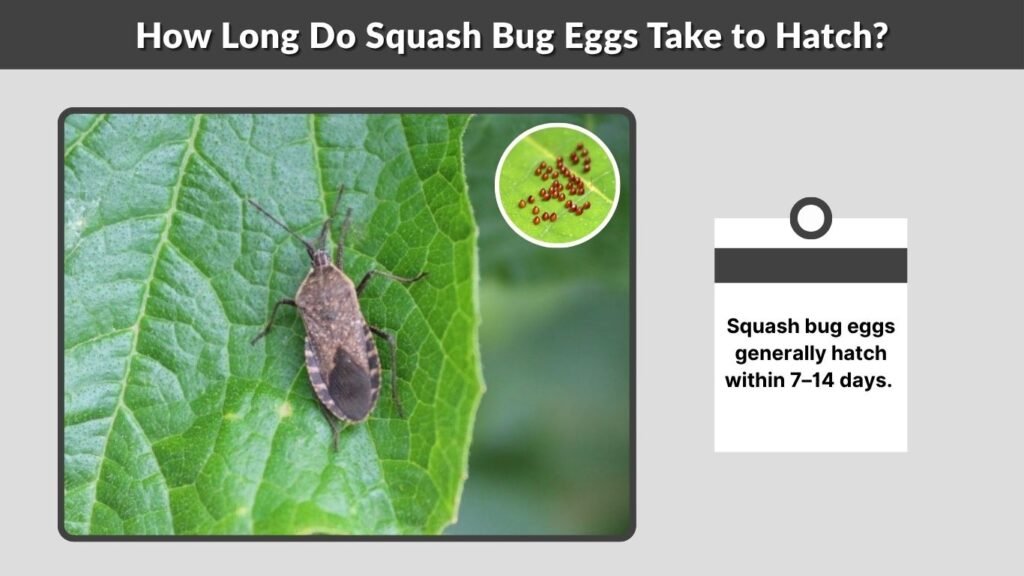
Hatching time depends primarily on temperature. Warm weather accelerates development, while cool conditions can delay it.
Normal Hatching Time
Squash bug eggs generally hatch within 7–14 days. Utah State University reports a typical period of approximately 10–14 days from laying to hatching.
As the embryos develop, the eggs become darker. Newly emerged nymphs usually gather around the empty shells before moving across the plant to feed.
What Happens After Hatching?
New nymphs have pale green or grey bodies with dark or reddish heads, antennae and legs. They pass through five growth stages before becoming adults.
Nymphs begin feeding on squash leaves and stems with piercing mouthparts. Large groups can produce yellow speckling, brown patches, wilted leaves and collapsing vines. Removing egg clusters prevents dozens of nymphs from developing together.
Will Eggs Hatch on the Ground?
An intact egg may remain capable of hatching after falling to the ground, provided it has developed sufficiently and environmental conditions remain suitable. However, newly hatched nymphs require access to a host plant.
Removed eggs should therefore be destroyed or placed in a sealed container rather than dropped beside the plant.
How to Get Rid of Squash Bug Eggs
Physical removal is usually more dependable than spraying. Squash bug eggs have a protective outer shell that makes them difficult to kill with many contact treatments.
Inspect the Plants Regularly
Check cucurbit plants at least twice a week from late spring through summer. Focus on the undersides of leaves, particularly the V-shaped spaces between veins.
Examine squash, zucchini, pumpkin and Hubbard squash carefully. Finding even one cluster is important because each group may produce up to 20 feeding nymphs.
Remove Eggs With Tape
Press a piece of strong adhesive tape gently over the cluster and lift it from the leaf. Fold the tape over the eggs before placing it in a sealed bag or household rubbish.
This method removes eggs without cutting away healthy leaf tissue. Avoid pulling so firmly that the leaf tears unnecessarily.
Scrape or Crush the Eggs
Eggs can be scraped into a container of soapy water using a fingernail, dull knife or old plastic card. They may also be crushed directly against the leaf, although their tough shells can require firm pressure.
The University of Minnesota Extension recommends crushing eggs attached to leaf undersides and stems.
Remove Part of the Leaf
If eggs cannot be detached without damaging the plant, cut away the small section holding the cluster. Do not remove an entire healthy leaf unless necessary.
Seal or crush the removed portion before disposal. Do not place live eggs in an open compost pile, where some may complete development.
Does Neem Oil Kill Squash Bug Eggs?
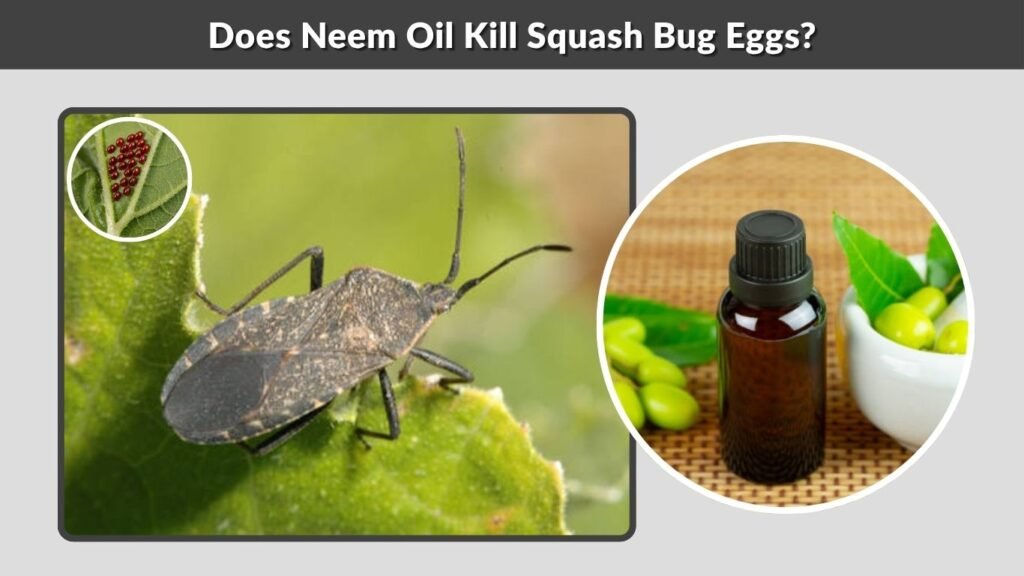
Neem oil is often recommended for garden pests, but it should not replace physical egg removal.
Effectiveness of Neem Oil
Neem-based sprays may interfere with feeding and development when young nymphs contact or consume treated plant material. Direct coverage may affect some eggs, but established egg clusters are relatively resistant and results can be inconsistent.
Remove every accessible cluster by hand. If neem is used, target newly hatched nymphs and follow the product label.
Does Insecticidal Soap Kill the Eggs?
Insecticidal soap works through direct contact and is generally more effective against soft-bodied nymphs than protected eggs. Ordinary dish soap is not formulated for plants and may burn or discolour squash leaves.
A container of soapy water is useful for disposing of removed eggs, nymphs and adults. Spraying egg clusters with homemade soap is much less dependable than scraping them off.
Do Insecticides Kill Squash Bug Eggs?
Many squash bug insecticides work poorly against eggs. The University of Maryland Extension advises directing treatments at young nymphs after hatching because the egg stage is difficult for pesticides to penetrate.
If treatment is necessary, select a product specifically labelled for squash bugs on edible cucurbits. Follow its application rate, harvest interval and pollinator precautions.
How to Prevent Squash Bug Eggs
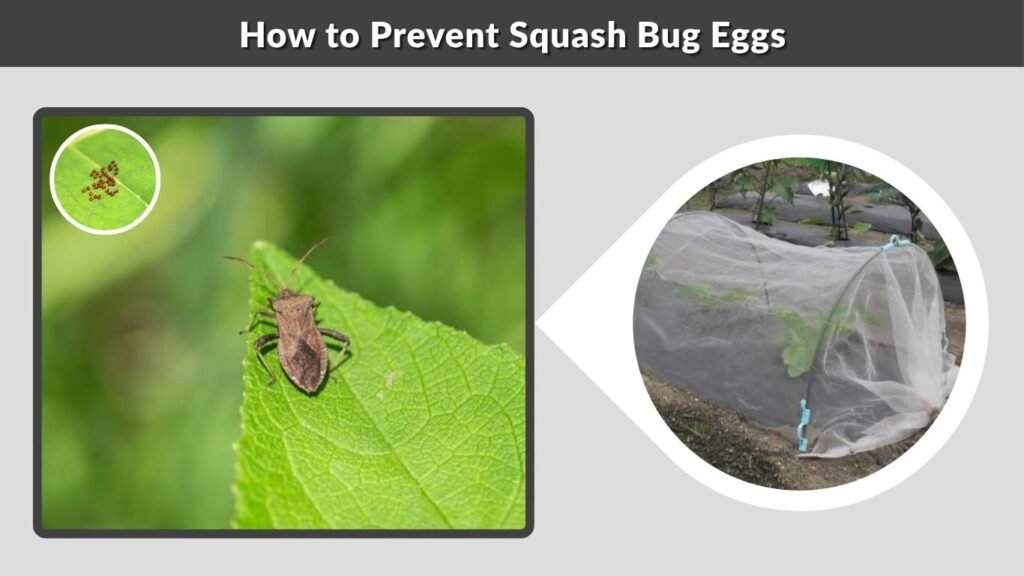
Prevention focuses on keeping overwintered adults away from young plants and reducing the number of protected places where they can survive.
Use Row Covers
Cover seedlings with lightweight insect netting or floating row cover immediately after planting. Secure the edges against the soil so adult bugs cannot crawl underneath.
Remove the cover when flowers open to allow pollination, unless flowers are being pollinated manually. Inspect beneath the cover because trapping an adult inside can increase egg laying.
Remove Overwintering Sites
At the end of the growing season, remove old vines, dead leaves, boards and other garden debris. Adult squash bugs spend winter beneath protected materials and return to cucurbit plants in spring.
Crop rotation also helps when the new squash bed is placed well away from the previous season’s infested area.
Monitor for Adults and Nymphs
Place boards near susceptible plants overnight. Adult squash bugs may gather beneath them, allowing collection the following morning.
Drop collected adults and nymphs into soapy water. Removing females before they deposit up to 250 eggs can greatly reduce the season’s population.
FAQs
What is the best way to kill squash bug eggs?
The most reliable method is physically removing the eggs with adhesive tape, a plastic card or a fingernail. Crush them or place them in soapy water before disposal. Sprays are generally less dependable because the eggs have a protective outer shell.
When do squash bugs stop laying eggs?
Egg laying usually declines by midsummer in cooler areas, but it may continue into late summer or early autumn where the growing season is long. Continue examining leaves while adult squash bugs remain active and cucurbit plants are still producing fresh growth.
Does soapy water kill squash bug eggs?
Soapy water is effective for disposing of eggs after they have been removed from the plant. However, spraying attached eggs with dish-soap mixtures may not prevent hatching and can damage leaves. Physical removal followed by crushing or submersion is more dependable.
Do ladybugs eat squash bug eggs?
Ladybugs mainly consume aphids, scale insects and other soft-bodied prey. They may occasionally investigate or consume damaged insect eggs, but they are not considered dependable squash bug egg predators. Protect ladybugs while continuing to inspect and remove squash bug clusters manually.
Why are some squash bug eggs black?
Squash bug eggs naturally darken as they mature, changing from yellowish-brown or copper to deeper reddish-brown. Eggs that look completely black may be dead, parasitised or from another insect. Observe their shape, arrangement and location before identifying or removing them.
