
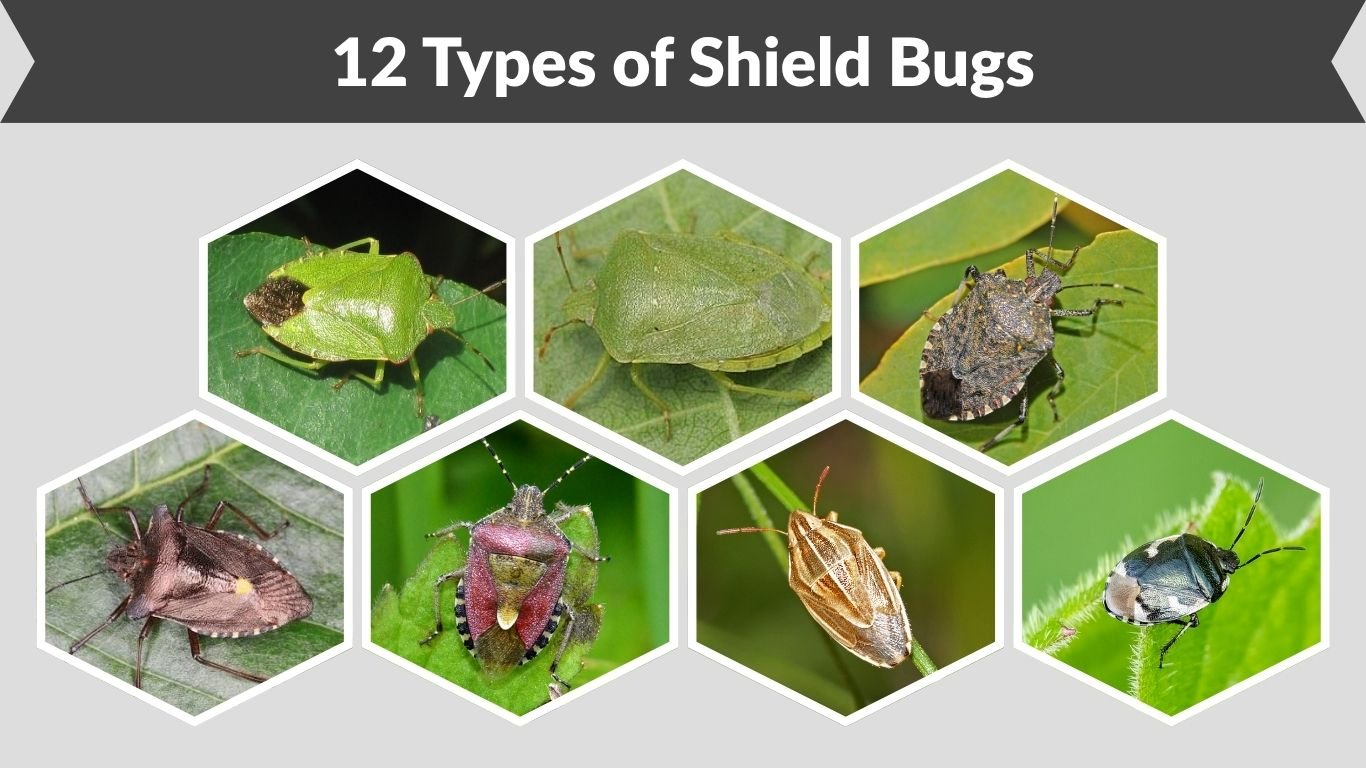
Shield bugs are recognised by their broad, shield-shaped bodies and ability to release a strong defensive odour when threatened. These insects inhabit gardens, forests, grasslands, farmland, and urban landscapes, where most feed on plant sap, fruits, or seeds. While many species cause little noticeable damage, some can become agricultural pests. The following 12 shield bugs display distinctive colours, markings, feeding habits, and seasonal behaviours that make each species unique.
1. Green Shield Bug
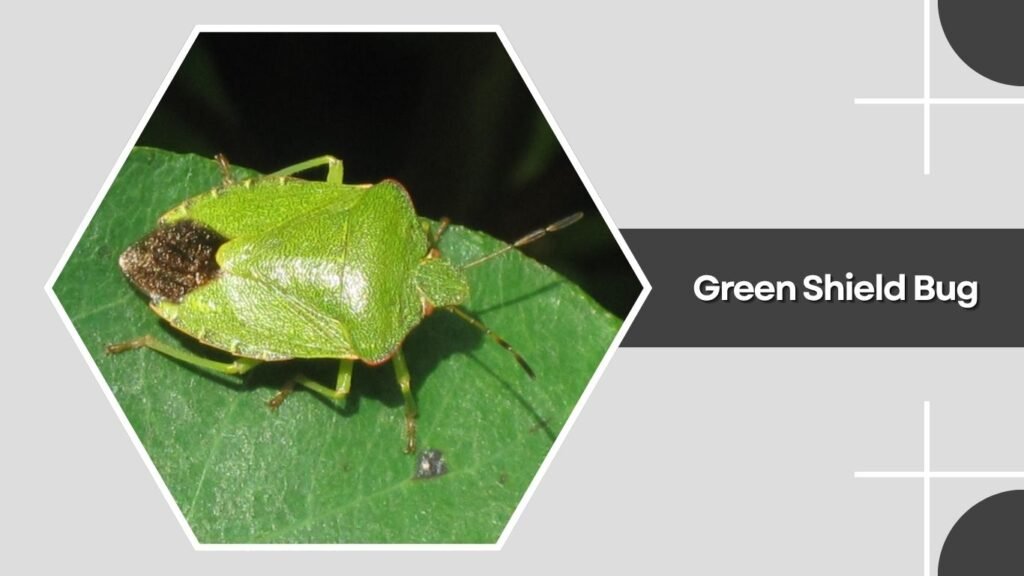
The green shield bug (Palomena prasina) is a broad, flattened insect named for its shield-shaped body and bright green colouring. It commonly lives among trees, shrubs, and garden plants, where its appearance provides excellent camouflage. Although it occasionally feeds on cultivated plants, it rarely causes serious garden damage.
Identification
- Body length of approximately 12–14 mm
- Broad, shield-shaped body
- Bright green colouring during warmer months
- Brown or bronze colouring before winter
- Small dark punctures across the upper body
- Membranous brown wing tips
- Alternating pale and dark markings along the abdomen
- Long, segmented antennae
- Piercing and sucking mouthparts
Habitat and Distribution
Green shield bugs are widely distributed throughout Europe, including the United Kingdom. They occupy gardens, hedgerows, woodland edges, parks, meadows, and areas containing dense shrubs. Their green bodies help them remain concealed among leaves throughout spring and summer.
Diet and Feeding Behavior
This shield bug feeds by inserting its needle-like mouthparts into plants and drawing out fluids. Its diet includes leaves, developing fruits, seeds, and sap from various trees and shrubs. Unlike some agricultural stink bugs, it usually occurs in numbers too low to cause significant plant damage.
Life Cycle and Seasonal Changes
Adults emerge from overwintering shelters during spring and lay clusters of barrel-shaped eggs beneath leaves. Newly hatched nymphs pass through several developmental stages before becoming winged adults. As temperatures fall, adults change from green to brown and seek protected places beneath leaf litter, bark, or vegetation for winter.
2. Southern Green Shield Bug
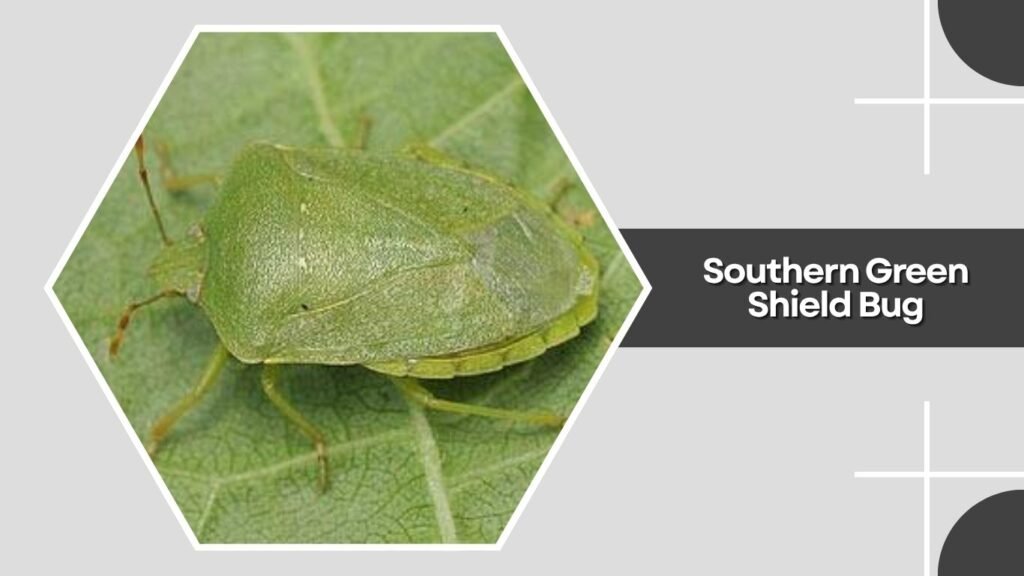
The southern green shield bug (Nezara viridula) is a widespread plant-feeding insect found in warm temperate, subtropical, and tropical regions. It resembles the common green shield bug but can become a significant agricultural pest because it feeds on numerous vegetables, fruits, grains, and ornamental plants.
Identification
- Body length of approximately 12–16 mm
- Broad, shield-shaped body
- Mostly bright green colouring
- Three to five pale spots along the front of the scutellum
- Two small dark marks near the pale spots
- Transparent brownish wing tips
- Long, segmented antennae
- Young nymphs with colourful black, white, red, or green patterns
Habitat and Distribution
Southern green shield bugs occur across many warm regions worldwide. They inhabit agricultural fields, vegetable gardens, orchards, grasslands, and ornamental landscapes. During colder weather, adults may enter buildings, sheds, and other sheltered spaces to survive.
Diet and Plant Damage
This species feeds by inserting its piercing mouthparts into plant tissue. Important host plants include beans, tomatoes, peppers, soybeans, corn, cotton, and various fruits. Feeding may cause spots, deformities, premature fruit drop, or poorly developed seeds.
Life Cycle and Reproduction
Females deposit clusters of pale, barrel-shaped eggs on the undersides of leaves. Newly hatched nymphs remain close to the egg mass before dispersing. They pass through five nymphal stages and become winged adults. Several generations may develop annually in consistently warm climates.
3. Brown Marmorated Shield Bug
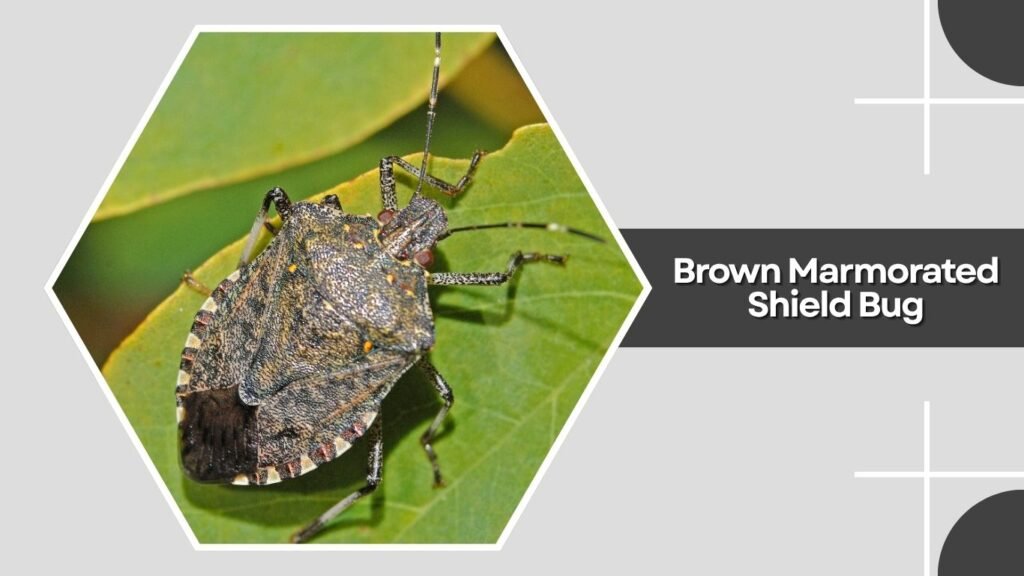
The brown marmorated shield bug (Halyomorpha halys), commonly called the brown marmorated stink bug, is an invasive species native to East Asia. It feeds on many agricultural and ornamental plants and frequently enters buildings in large numbers while searching for protected overwintering locations.
Identification
- Body length of approximately 12–17 mm
- Mottled brown, grey, and cream colouring
- Broad, shield-shaped body
- Alternating pale and dark abdominal markings
- Distinct white bands on the antennae
- Pale bands on the legs
- Rounded shoulders
- Dark wing membranes with faint lines
- Strong defensive odour when disturbed
Habitat and Distribution
This shield bug now occurs in North America, Europe, and other regions outside its native range. It inhabits orchards, farms, gardens, woodlands, and urban landscapes. Adults commonly gather on sun-warmed buildings during autumn before entering through cracks and gaps.
Diet and Agricultural Damage
Brown marmorated shield bugs feed on apples, peaches, pears, grapes, vegetables, soybeans, corn, and ornamental plants. Their mouthparts puncture fruits and seeds, causing discolouration, sunken spots, internal corking, deformation, and reduced crop quality.
Seasonal Behavior
Adults emerge from winter shelters during spring and begin feeding before mating. Females attach clusters of eggs beneath leaves. Nymphs develop through five stages. In autumn, adults stop reproducing and search for buildings, tree bark, and other dry shelters where they can overwinter.
4. Forest Shield Bug
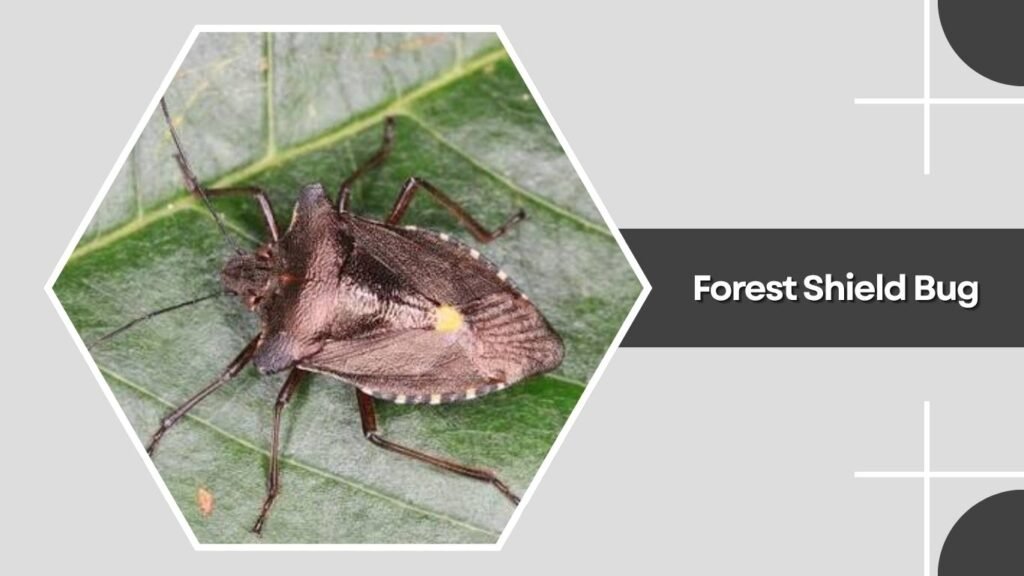
The forest shield bug (Pentatoma rufipes) is a large, dark-coloured species commonly associated with deciduous trees. It is also known as the red-legged shield bug because its legs are usually reddish-brown or orange. Unlike many shield bugs, it may consume both plant material and small insects.
Identification
- Body length of approximately 11–15 mm
- Dark brown or bronze body
- Orange or reddish-brown legs
- Broad, angular shoulders
- Pale or orange tip on the scutellum
- Alternating markings along the abdomen
- Reddish sections on the antennae
- Fine punctures across the upper body
- Strong shield-shaped outline
Habitat and Distribution
Forest shield bugs are widespread across Europe and parts of Asia. They primarily inhabit deciduous woodlands, parks, orchards, hedgerows, and mature gardens. Adults and nymphs are frequently found on oak, alder, hazel, and other broad-leaved trees.
Diet and Feeding Habits
The species feeds on tree sap, developing fruits, seeds, and plant tissue. It may also pierce caterpillars, beetle larvae, and other small insects. This mixed diet means the forest shield bug can sometimes be beneficial, although it may occasionally damage orchard fruit.
Life Cycle and Activity
Forest shield bugs generally overwinter as immature nymphs rather than adults. The nymphs resume feeding during spring and mature in early summer. Adults mate and lay eggs on host trees. The new generation develops through summer before entering sheltered locations for winter.
5. Hairy Shield Bug
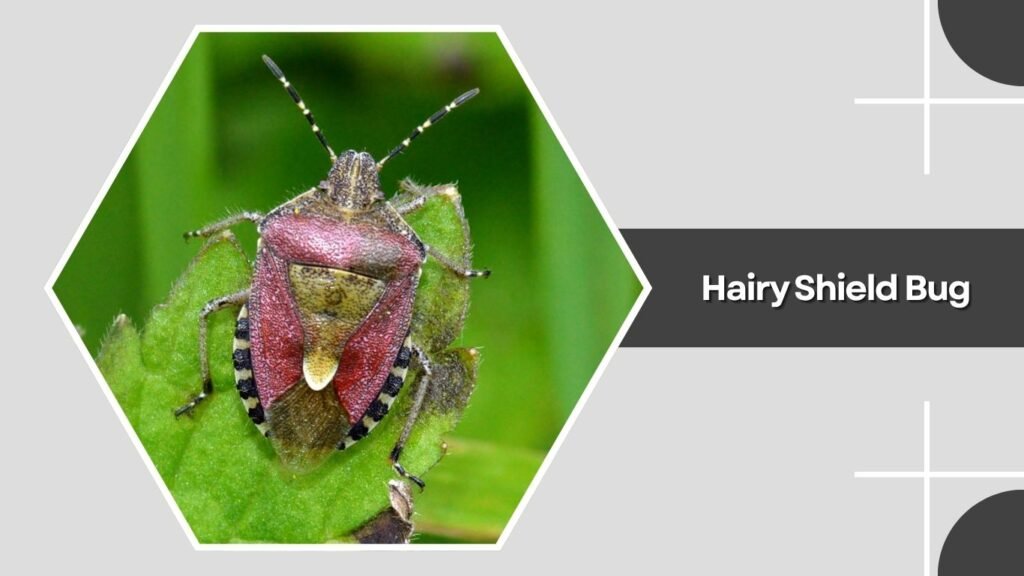
The hairy shield bug (Dolycoris baccarum) is named for the fine hairs covering its body. It is also called the sloe bug because it may feed on blackthorn and its fruits. Its combination of purple-brown colouring, striped antennae, and a pale scutellum tip makes it distinctive.
Identification
- Body length of approximately 10–12 mm
- Purple-brown, reddish, or grey colouring
- Fine hairs covering the body
- Black-and-white bands on the antennae
- Alternating pale and dark abdominal edges
- Pale or cream tip on the scutellum
- Dark punctures across the upper surface
- Broad, shield-shaped body
- Brown membranous wing tips
Habitat and Distribution
Hairy shield bugs occur throughout much of Europe, North Africa, and Asia. They live in grasslands, hedgerows, gardens, farmland, woodland edges, and areas containing flowering plants. Adults are often seen resting or feeding in sunny vegetation.
Diet and Host Plants
This species feeds on many plants, including grasses, cereals, shrubs, and flowering herbs. It also visits blackthorn, raspberries, and other fruiting plants. Large populations may affect seeds or developing fruit, but isolated individuals rarely cause serious garden damage.
Reproduction and Overwintering
Females lay groups of barrel-shaped eggs on leaves during spring or early summer. The colourful nymphs pass through five growth stages while feeding on plant fluids. Adults become more noticeable later in summer and overwinter beneath leaf litter, bark, and dense vegetation.
6. Bishop’s Mitre Shield Bug
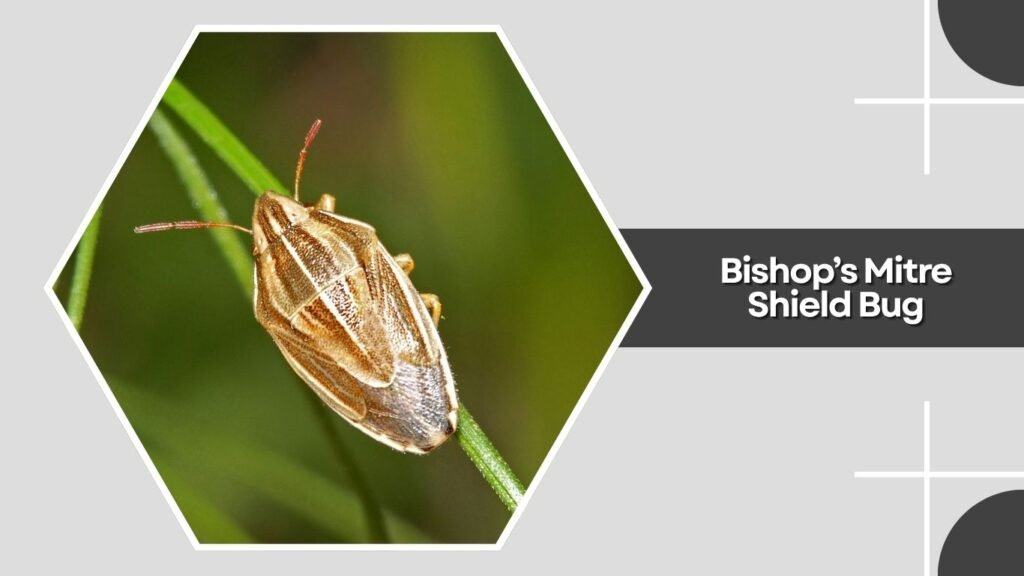
The bishop’s mitre shield bug (Aelia acuminata) has a long, narrow body and pointed head that resemble a traditional bishop’s ceremonial hat. Unlike broader shield bugs, it has an elongated shape adapted to moving and feeding among grasses and cereal plants.
Identification
- Body length of approximately 8–10 mm
- Long, narrow body
- Distinctively pointed head
- Straw-brown or yellowish colouring
- Dark longitudinal stripes
- Small dark punctures across the body
- Slender, segmented antennae
- Relatively short legs
- Mitre-shaped overall appearance
Habitat and Distribution
This species is widespread across Europe, North Africa, and parts of Asia. It prefers dry grasslands, meadows, field margins, coastal areas, and agricultural land. Its striped brown colouring provides camouflage among dry grass stems and seed heads.
Diet and Feeding Behavior
Bishop’s mitre shield bugs primarily feed on grasses and cereal crops. They use their mouthparts to extract fluids from developing seeds and stems. High populations may reduce grain quality, but the species usually causes limited damage in ordinary gardens.
Life Cycle and Seasonal Activity
Adults overwinter in dry grass, leaf litter, and sheltered vegetation before becoming active in spring. Females lay rows or small groups of eggs on grasses. Nymphs feed on the same host plants and pass through several stages before reaching adulthood during summer.
7. Pied Shield Bug
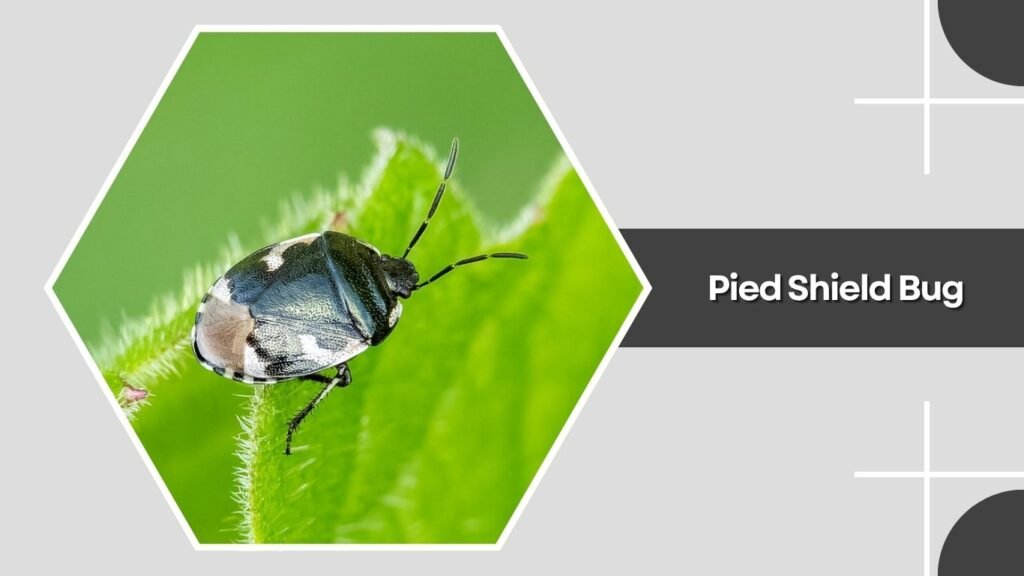
The pied shield bug (Tritomegas bicolor) is a small black-and-white species commonly found around white dead-nettle and related plants. Its contrasting colour pattern makes it easy to recognise, while its habit of hiding near the ground means it may be overlooked outside its active season.
Identification
- Body length of approximately 5–7 mm
- Glossy black upper body
- White or cream markings around the edges
- Pale patches on the pronotum
- White border along part of the abdomen
- Broad, rounded body
- Dark segmented antennae
- Short, strong legs
- Black-and-white pied appearance
Habitat and Distribution
Pied shield bugs are widely distributed across Europe and parts of western Asia. They inhabit gardens, roadsides, woodland edges, hedgerows, grasslands, and disturbed ground. Individuals usually remain close to low-growing host plants and may hide beneath stones or leaf litter.
Diet and Host Plants
This species primarily feeds on white dead-nettle and black horehound. It uses its piercing mouthparts to extract fluids from stems, leaves, flowers, and developing seeds. Feeding damage is normally minor and rarely requires treatment in gardens.
Life Cycle and Behavior
Adults emerge from overwintering sites during spring and lay eggs near suitable plants. Nymphs feed close to the ground and pass through five developmental stages. Adults may dig into loose soil or shelter beneath vegetation when disturbed or preparing for winter.
8. Hawthorn Shield Bug
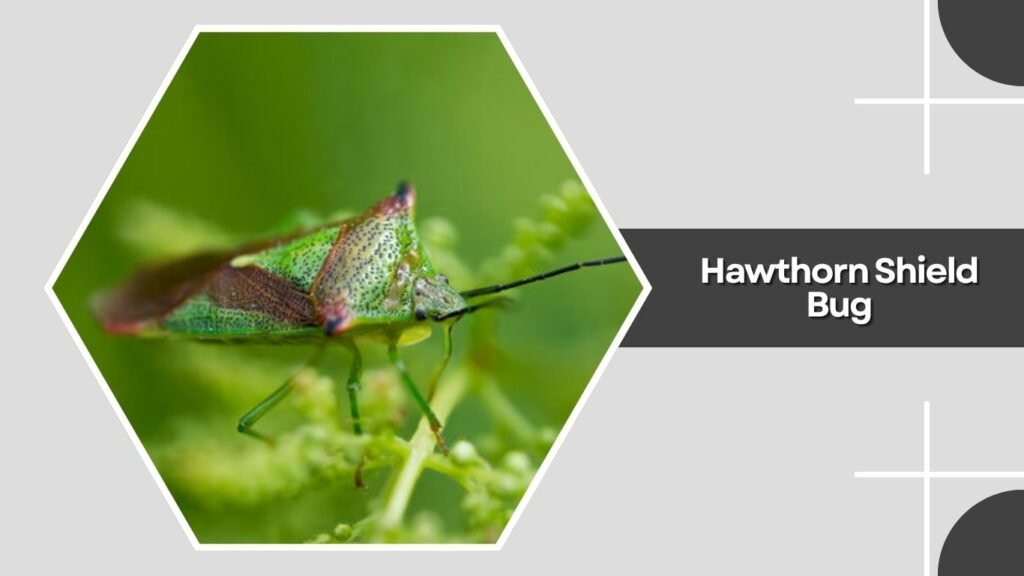
The hawthorn shield bug (Acanthosoma haemorrhoidale) is one of the larger and more colourful European shield bugs. Its green body, reddish-brown wings, and extended abdominal edges create a distinctive appearance. It is commonly associated with hawthorn trees but uses several other woody plants.
Identification
- Body length of approximately 13–17 mm
- Bright green head and pronotum
- Reddish-brown wing covers
- Red or orange abdominal edges
- Long, slightly pointed body
- Green triangular scutellum
- Dark-tipped antennae
- Prominent abdominal extension
- Shield-shaped upper body
Habitat and Distribution
Hawthorn shield bugs occur throughout much of Europe, including the United Kingdom. They inhabit hedgerows, gardens, woodland edges, parks, orchards, and other places containing deciduous trees. Adults may occasionally enter buildings while seeking winter shelter.
Diet and Host Plants
Hawthorn is an important host, but this shield bug also feeds on rowan, whitebeam, birch, oak, hazel, and other trees. It draws fluids from leaves, fruits, and developing seeds. Its feeding rarely causes significant damage to healthy garden plants.
Life Cycle and Overwintering
Adults become active during spring after leaving their winter shelters. Females lay eggs on the leaves of suitable host trees. Nymphs feed throughout summer and gradually develop adult colouring. The new adults seek protected locations beneath bark, leaf litter, or dense vegetation during autumn.
9. Birch Shield Bug
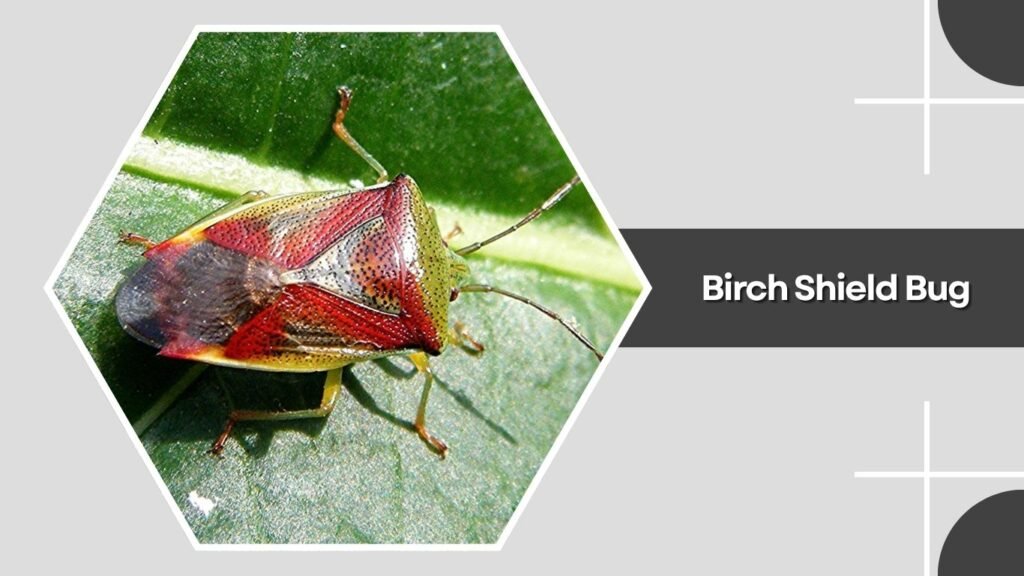
The birch shield bug (Elasmostethus interstinctus) is a small green and reddish-brown species primarily associated with birch trees. Its compact body and leaf-like colours provide effective camouflage among foliage, making it difficult to notice until it moves across a leaf or branch.
Identification
- Body length of approximately 8–11 mm
- Green head and pronotum
- Reddish-brown wing markings
- Green triangular scutellum
- Pale green abdominal edges
- Dark punctures on the upper body
- Slightly elongated shield shape
- Long, segmented antennae
- Brown membranous wing tips
Habitat and Distribution
Birch shield bugs are widespread across Europe and northern Asia. They inhabit woodlands, parks, gardens, heathlands, and wetlands containing birch or alder trees. Adults and nymphs usually remain in the canopy or on low branches of their host plants.
Diet and Feeding Habits
The species mainly extracts sap from birch leaves, catkins, and developing seeds. Alder and other related trees may also serve as hosts. Feeding usually causes little visible damage and does not threaten established trees under normal conditions.
Reproduction and Seasonal Activity
Adults emerge from overwintering shelters in spring and mate on host trees. Females deposit eggs on leaves and stems. The nymphs develop through summer, becoming mature adults by late summer or autumn. Adults then shelter beneath bark, leaves, or ground vegetation for winter.
10. Juniper Shield Bug
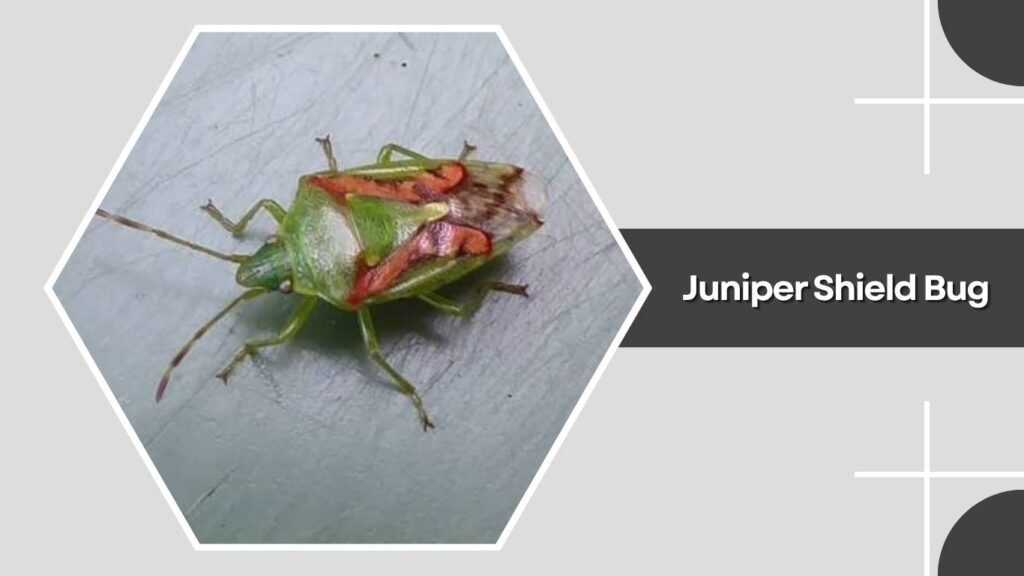
The juniper shield bug (Cyphostethus tristriatus) is a small green species decorated with curved reddish-brown markings. It was historically associated with native juniper, but its use of ornamental cypress trees has allowed it to become common in gardens and urban landscapes.
Identification
- Body length of approximately 9–11 mm
- Bright green shield-shaped body
- Curved red, pink, or brown wing markings
- Pale green scutellum
- Dark punctures across the upper surface
- Alternating marks along the abdomen
- Long, dark-tipped antennae
- Brown membranous wing tips
- Compact and slightly rounded shape
Habitat and Distribution
Juniper shield bugs occur across much of Europe. They inhabit heathlands, woodland edges, gardens, parks, cemeteries, and landscaped areas. Planting ornamental Lawson cypress, Leyland cypress, and other conifers has helped the species expand beyond natural juniper habitats.
Diet and Host Plants
The species feeds on developing cones, seeds, and foliage from juniper and related conifers. Common garden hosts include Lawson cypress and Leyland cypress. Feeding rarely causes noticeable harm, although large groups may affect developing seeds or young cones.
Life Cycle and Seasonal Changes
Adults overwinter within dense conifer foliage or nearby vegetation. They become active during spring and lay eggs on host plants. Nymphs feed during summer before becoming adults. Their green colour and curved markings allow both stages to blend into conifer foliage.
11. Gorse Shield Bug
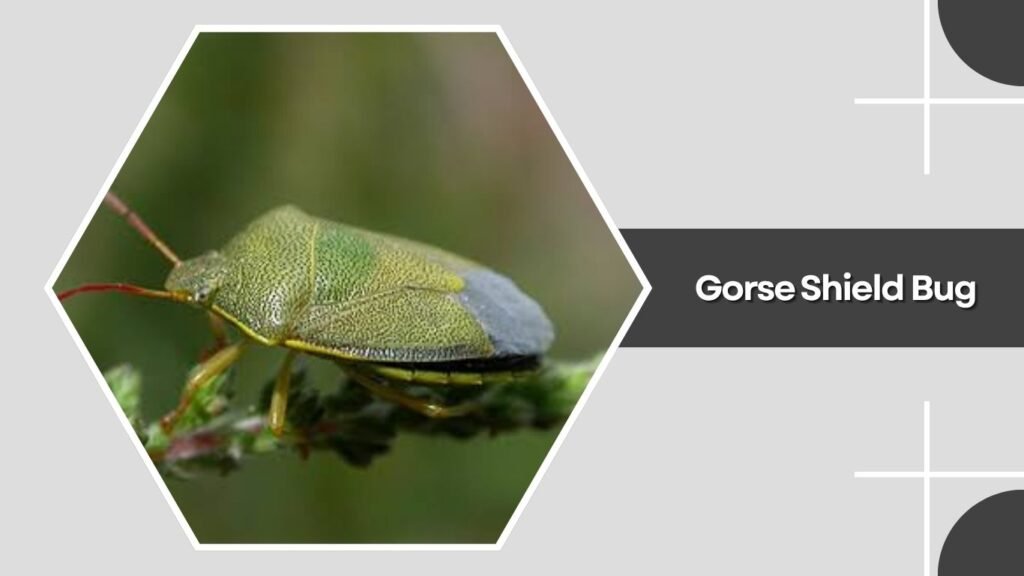
The gorse shield bug (Piezodorus lituratus) is a colourful plant-feeding species usually found on gorse, broom, and other members of the pea family. Its colour changes seasonally, with spring adults often displaying brighter green and reddish-purple markings than overwintering individuals.
Identification
- Body length of approximately 10–13 mm
- Green shield-shaped body
- Reddish-purple band across the pronotum
- Red or purple markings on the wings
- Pale green scutellum
- Red sections on the antennae
- Fine dark punctures across the upper body
- Brownish winter colouring
- Pale membranous wing tips
Habitat and Distribution
Gorse shield bugs are distributed across Europe, North Africa, and parts of Asia. They prefer heathlands, coastal scrub, sunny woodland edges, grasslands, gardens, and roadsides where gorse or broom grows abundantly.
Diet and Feeding Behavior
The species mainly feeds on gorse and broom, extracting fluids from stems, flowers, pods, and developing seeds. It may also use peas, beans, and other legumes. Significant crop damage is uncommon, although local populations may gather on suitable plants.
Life Cycle and Colour Changes
Adults emerge from overwintering sites in spring and develop brighter green and red colouring. Females lay eggs on host plants, and the nymphs feed through summer. New adults become darker or browner as temperatures fall before sheltering for winter.
12. Parent Shield Bug
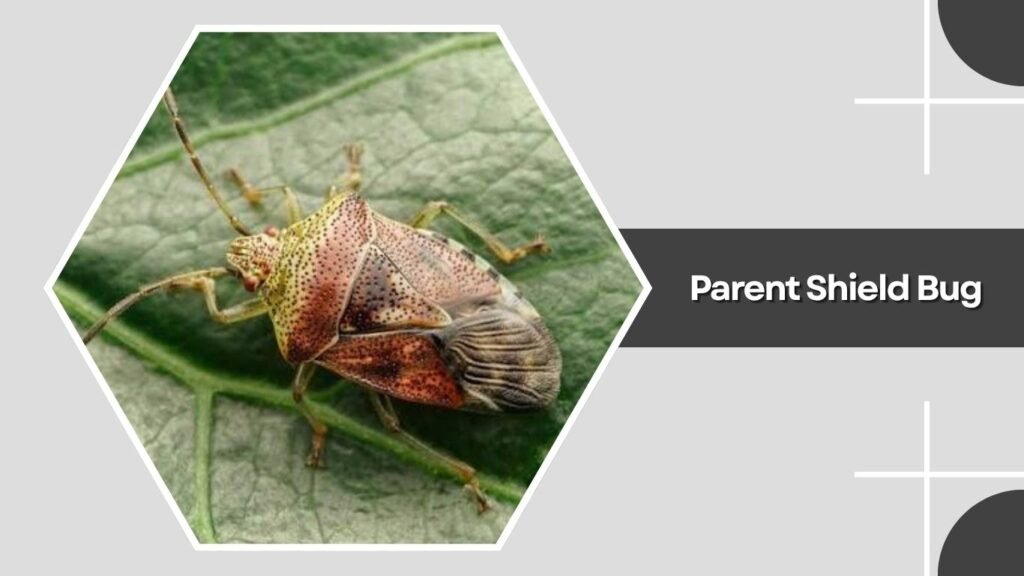
The parent shield bug (Elasmucha grisea) is best known for its unusual maternal care. Females remain with their eggs and young nymphs, protecting them from predators. This behaviour is uncommon among insects and gives the species its memorable common name.
Identification
- Body length of approximately 7–9 mm
- Mottled brown or grey-brown body
- Dark punctures across the upper surface
- Pale and dark abdominal markings
- Broad, rounded shield shape
- Slightly projecting shoulders
- Dark segmented antennae
- Brown membranous wing tips
- Variable reddish or greenish tones
Habitat and Distribution
Parent shield bugs are widespread across Europe and northern Asia. They inhabit birch woodlands, parks, gardens, heathlands, and woodland edges. They are most frequently found on birch but may also occur on alder and related trees.
Diet and Host Plants
Adults and nymphs feed on sap from birch leaves, catkins, and developing seeds. Their feeding causes little serious damage to mature trees. Family groups may remain together on the same leaf or branch while the young nymphs develop.
Maternal Care and Life Cycle
The female lays a cluster of eggs beneath a leaf and stands over them to deter predators and parasites. After hatching, she continues guarding the young nymphs and may lead them between feeding locations. The nymphs eventually disperse and complete their development independently.
FAQs
Are shield bugs harmful to humans?
Shield bugs are not considered dangerous to humans. They do not normally bite or sting, and their defensive odour is unpleasant but not harmful. Some species may enter buildings during cold weather, but they do not reproduce indoors or damage furniture.
Why do shield bugs produce a bad smell?
Shield bugs release defensive chemicals from specialised scent glands when threatened, handled, or crushed. The strong smell discourages birds and other predators. It can remain on skin, clothing, or household surfaces temporarily, so shield bugs should be moved without squeezing them.
Are shield bugs harmful to garden plants?
Most shield bugs cause little noticeable garden damage when present in small numbers. However, plant-feeding species may puncture leaves, fruits, seeds, and stems. Large populations of southern green or brown marmorated shield bugs can damage vegetables, orchard fruits, and agricultural crops.
How can I remove shield bugs from my house?
Capture an individual with a container and release it outdoors, or remove larger numbers using a vacuum cleaner. Seal gaps around doors, windows, pipes, vents, and rooflines to prevent entry. Avoid crushing them because they may release a persistent defensive smell.
What is the difference between shield bugs and stink bugs?
“Shield bug” describes insects with broad, shield-shaped bodies, while “stink bug” refers to their ability to release defensive odours. The names often describe the same insects, particularly members of the family Pentatomidae, although several related families are also commonly called shield bugs.
