
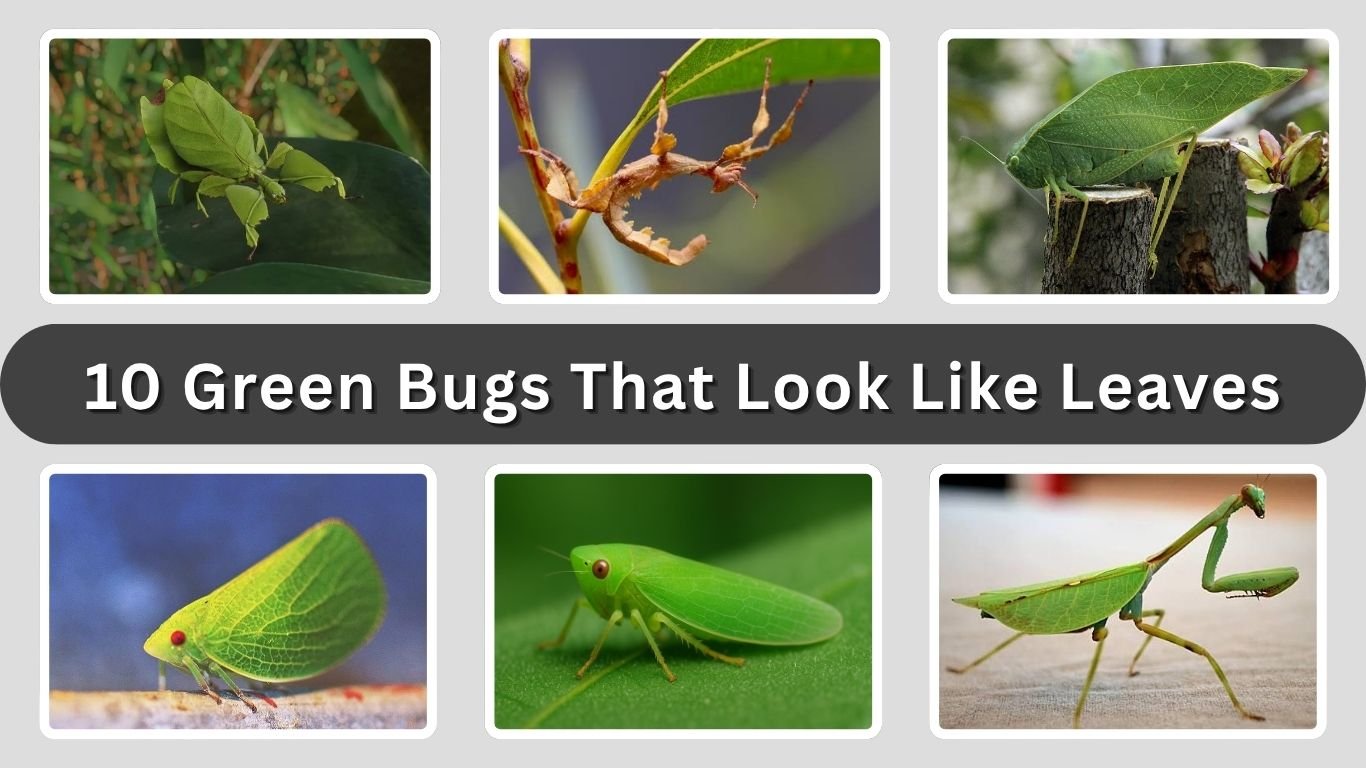
Green insects that resemble leaves use remarkable camouflage to hide from predators and approach food unnoticed. Katydids, leaf insects, planthoppers, shield bugs, and leaf-mimicking mantises can all blend naturally into trees, shrubs, and garden plants. Some are large and broad like living leaves, while others are tiny, flat, or shaped like narrow foliage. This guide introduces 10 green bugs that look like leaves, explaining their identification, size, habitat, diet, and behavior. It can also help you determine whether a leaf-like insect is harmless, beneficial, or potentially damaging to plants.
1. Greater Angle-Wing Katydid
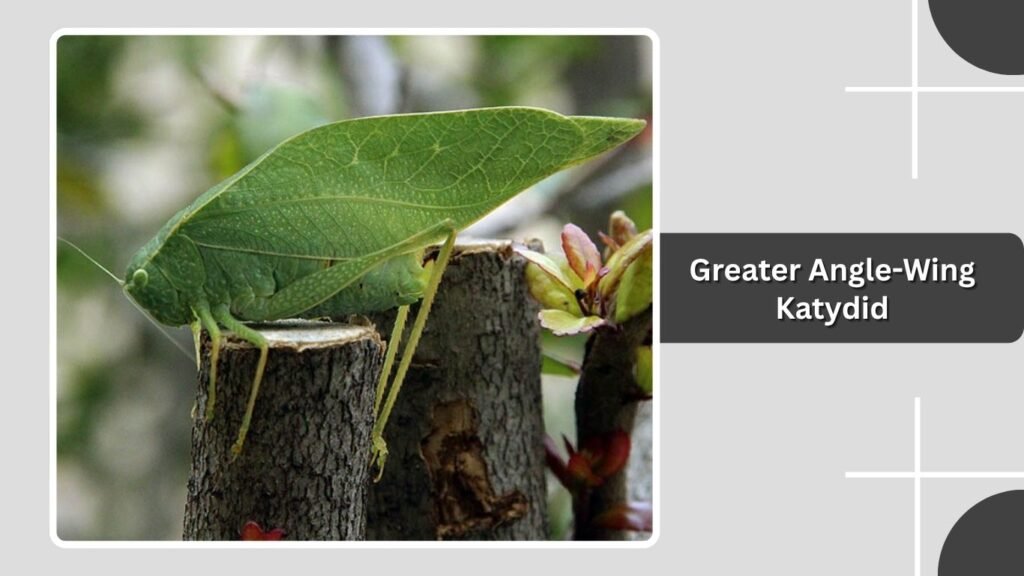
The Greater Angle-Wing Katydid (Microcentrum rhombifolium) is a large green insect whose broad, veined wings closely resemble a living leaf. This natural camouflage allows it to remain almost invisible among trees and shrubs. It is also known as the broad-winged katydid and is mainly active at night.
Identification
- Bright green body with a leaf-like appearance
- Broad, angular wings covered with vein-like markings
- Extremely long, threadlike antennae
- Powerful hind legs adapted for jumping
- Body length of approximately 1.7–2.5 inches
- Wings form a pointed, angled shape when folded
- Females have a curved, blade-like egg-laying structure
Its leaf-shaped wings distinguish it from ordinary grasshoppers, while its long antennae separate it from short-horned grasshopper species.
Size and Appearance
The Greater Angle-Wing Katydid is one of the larger leaf-mimicking katydids. Its flattened green wings cover most of the body and display patterns resembling the veins of a leaf. Some individuals develop small brown marks that look like damaged or aging foliage, making their camouflage even more convincing.
Habitat and Distribution
This katydid commonly lives in deciduous trees, woodland edges, gardens, parks, and areas containing dense shrubs. It occurs across much of eastern and central North America, where adults are most noticeable during summer and early autumn.
Diet and Behavior
Greater Angle-Wing Katydids mainly feed on leaves, flowers, and other plant material. They rest quietly during daylight and become active after dark. Males produce short, loud calls by rubbing parts of their wings together to attract females. Despite their size, these insects are not dangerous to people and rarely cause significant plant damage.
2. Common True Katydid
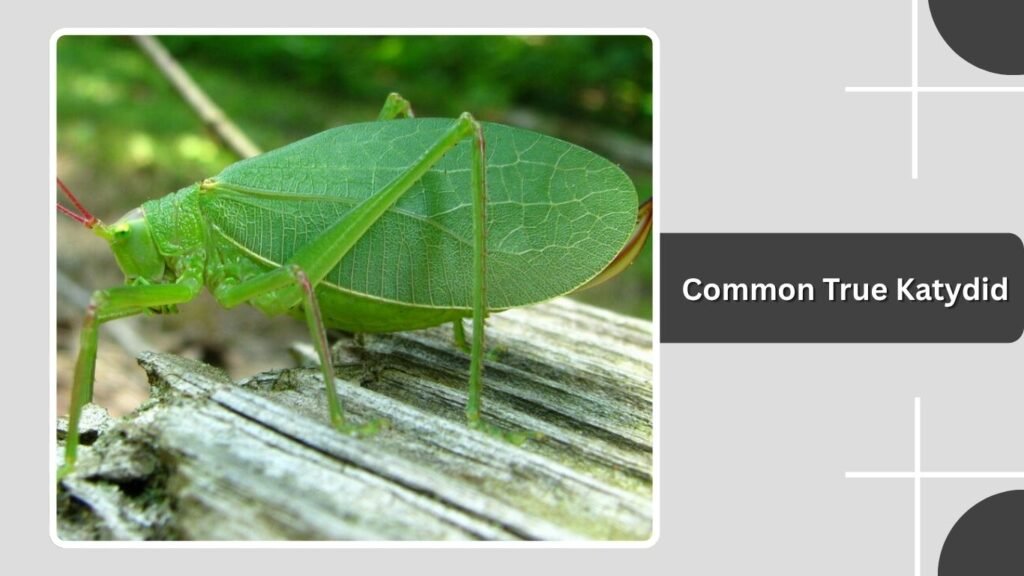
The Common True Katydid (Pterophylla camellifolia) is a large, green insect with curved wings that closely resemble tree leaves. It usually remains high in deciduous trees, where its color and wing veins provide excellent camouflage. The species is also famous for its loud nighttime call, which sounds similar to the words “katy-did, katy-didn’t.”
Identification
- Bright green body and wings
- Broad, oval wings with visible leaf-like veins
- Wings form a raised cup over the abdomen
- Long, threadlike antennae
- Large hind legs for climbing and jumping
- Adult length of approximately 45–55 mm
- Blade-shaped egg-laying organ on females
The broad, outward-curving wings help distinguish this species from katydids with narrower or flatter wings.
Size and Appearance
Adults are approximately 1.8–2.2 inches long. Their wings are wider and more rounded than those of many other katydids. Numerous raised veins cross the wing surface, making each wing look like a natural green leaf.
Habitat and Distribution
Common True Katydids occur across much of the eastern United States. They mainly inhabit deciduous forests and spend much of their time in the crowns of trees. Their green coloring makes them difficult to locate, even when their calls are clearly audible.
Diet and Behavior
These katydids feed mainly on the foliage of deciduous trees and shrubs. Males begin calling around dusk and may continue through the night. Groups sometimes coordinate their calls, creating alternating choruses between nearby trees. They are harmless to people and rarely cause serious plant damage.
3. Oblong-Winged Katydid
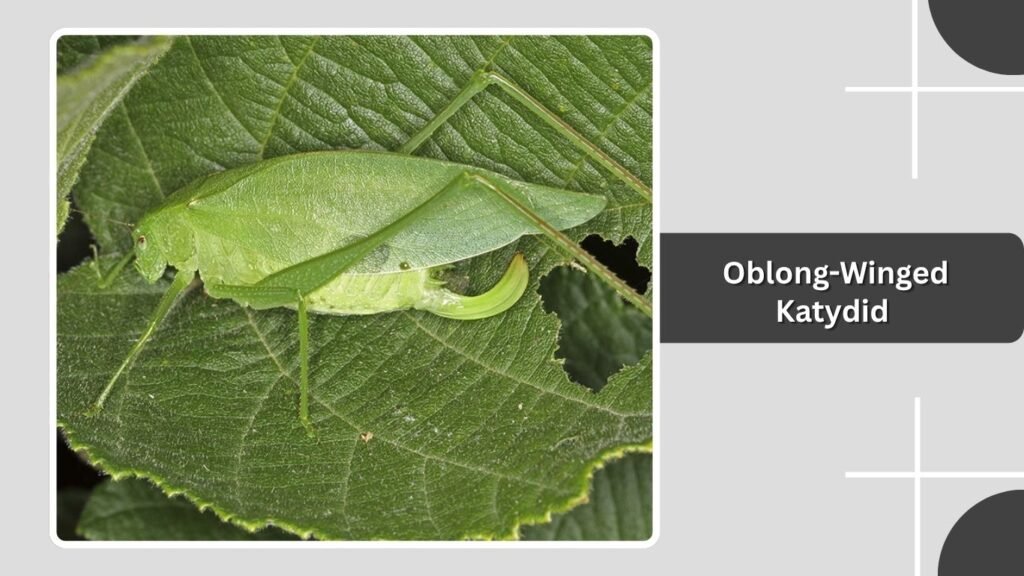
The Oblong-Winged Katydid (Amblycorypha oblongifolia) has smooth, elongated wings resembling narrow green leaves. Although most individuals are green, rare katydids may be pink, orange, yellow, brown, or tan because of an inherited color variation. It is a quiet, well-camouflaged insect commonly found among shrubs and tall vegetation.
Identification
- Usually bright green, although other colors are possible
- Long, oval-shaped forewings
- Hind wings extend beyond the forewings
- Rounded head
- Long antennae and slender legs
- Adult length of approximately 42–52 mm
- Powerful rear legs adapted for jumping
Its elongated wings lack the sharply angled shape seen in the Greater Angle-Wing Katydid.
Size and Appearance
Adults usually measure around 1.6–2 inches long. Their narrow, oblong wings lie along the back, while the legs often extend well above or beyond them. The leaf-like green coloring allows the insect to disappear against foliage.
Habitat and Distribution
This species occurs throughout much of the eastern United States and parts of southeastern Canada. It commonly lives in damp woodland understories, shrubs, tall weeds, goldenrod patches, fence lines, and the edges of thickets.
Diet and Behavior
Oblong-Winged Katydids feed on leaves, flowers, and other soft plant material. They become most active during warm summer evenings. Males create a short call by rubbing specialized parts of their wings together. Despite feeding on vegetation, they are not considered important agricultural pests and normally require no control.
4. Malaysian Giant Leaf Insect
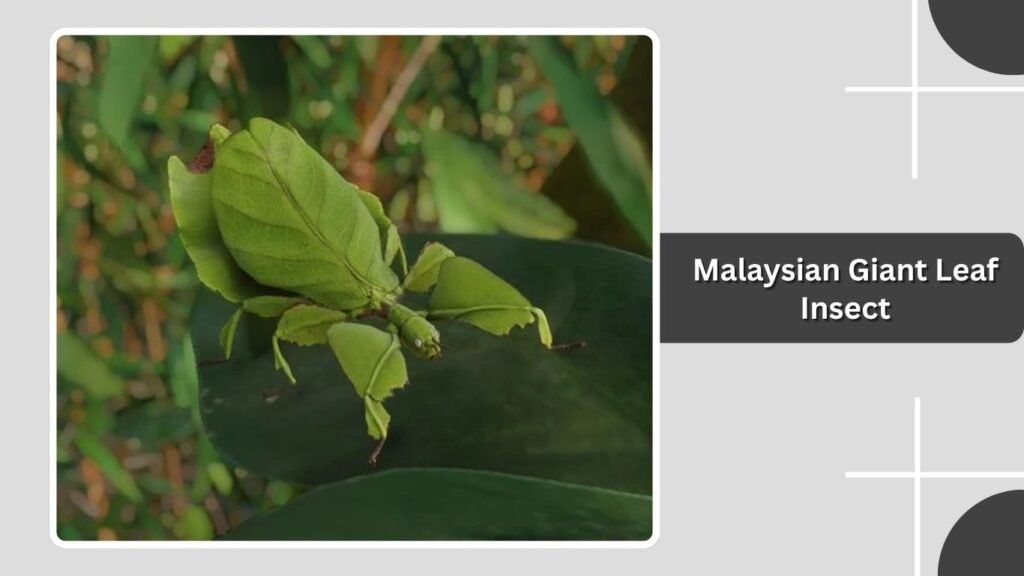
The Malaysian Giant Leaf Insect (Pulchriphyllium giganteum) is one of the most convincing leaf-mimicking insects. Its broad, flattened body displays vein-like markings, uneven edges, and brown patches resembling damage on a living leaf. This tropical insect relies almost entirely on camouflage to avoid birds and other predators.
Identification
- Wide, flat, leaf-shaped body
- Green, yellow-green, or slightly brown coloring
- Detailed vein-like markings
- Leaf-shaped lobes on the legs
- Irregular body edges resembling damaged foliage
- Large wings covering much of the abdomen
- Females considerably larger than males
It can be distinguished from katydids by its flattened abdomen and lack of enlarged jumping legs.
Size and Appearance
Adult females may grow to approximately 4–5 inches long, making this one of the larger leaf insects kept in captivity. Their broad bodies resemble mature leaves, while their legs have flattened extensions that continue the leaf-like outline.
Habitat and Distribution
This species is associated with the tropical forests of Malaysia. It spends most of its life among leafy vegetation, where its body shape and coloring help it remain nearly invisible. Leaf insects are herbivorous phasmids that are generally active during the night.
Diet and Behavior
Malaysian Giant Leaf Insects feed on foliage. In captivity, they are commonly offered bramble, oak, rose, and similar leaves. They often remain motionless during daylight and may gently sway while walking, imitating a leaf moving in the wind. Females are poor fliers or flightless, while males are generally slimmer and more capable of flight.
5. Indian Leaf Insect
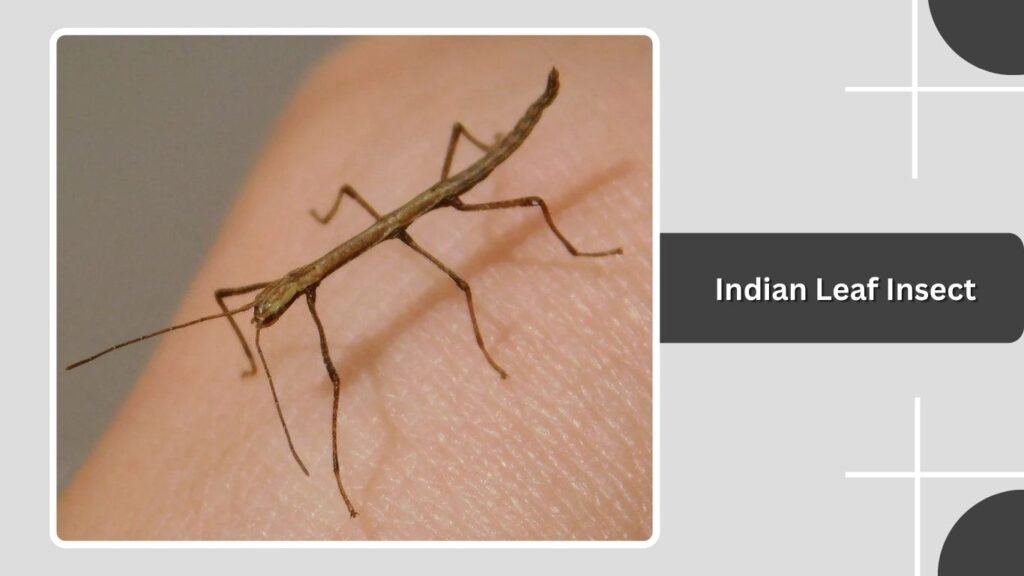
The Indian Leaf Insect, commonly associated with Pulchriphyllium bioculatum, is a tropical phasmid with a flattened green body shaped almost exactly like a leaf. It is also known as Gray’s Leaf Insect or the Javanese Leaf Insect. Its unusual appearance helps it hide among foliage while feeding and resting.
Identification
- Broad, flattened green body
- Leaf-like veins across the wings and abdomen
- Lobed legs that resemble small leaves
- Irregular brown or yellow markings
- Females larger and broader than males
- Shorter antennae on adult females
- Long antennae and narrower bodies on males
The insect may look like a leaf with small bite marks, dry edges, or patches of discoloration.
Size and Appearance
Females commonly reach approximately 3–4 inches long and have wide abdomens and large leaf-like wings. Males are smaller and narrower, with longer antennae and functional hind wings. Young nymphs may initially be brown or reddish before becoming green after feeding.
Habitat and Distribution
This leaf insect is associated with tropical parts of South and Southeast Asia. It lives among trees and shrubs in warm, humid environments. Its camouflage works best when it remains still against broad leaves and dense vegetation.
Diet and Behavior
Indian Leaf Insects are herbivores that consume fresh foliage. They are generally slow-moving and active after dark. When disturbed, they may freeze, sway gently, or drop into lower vegetation. They do not sting or bite people and depend on camouflage rather than aggression for protection.
6. Australian Spiny Leaf Insect
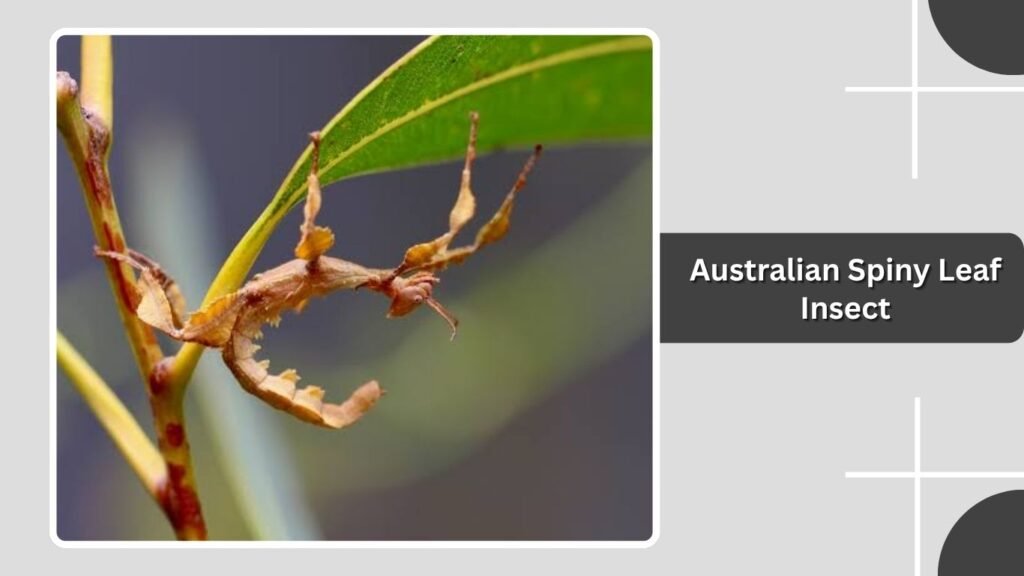
The Australian Spiny Leaf Insect (Extatosoma tiaratum) is also called Macleay’s Spectre Stick Insect. Unlike the smooth bodies of true leaf insects, this species has curled body segments, spines, and irregular projections that resemble dried, damaged, or crumpled foliage. It is one of Australia’s best-known phasmids.
Identification
- Green, brown, tan, or mottled body
- Curved abdomen resembling a scorpion’s tail
- Spines and leaf-like projections
- Irregular, crumpled-leaf appearance
- Large females with small wings
- Slender, winged adult males
- Young nymphs resembling ants
Females are heavy-bodied and highly textured, while males have straighter bodies and well-developed wings.
Size and Appearance
Adult females can grow to approximately 5–8 inches long. Their thick bodies, curled abdomens, and numerous spines make them look like dried leaves or thorny twigs. Males are much slimmer and usually have functional wings.
Habitat and Distribution
Australian Spiny Leaf Insects occur naturally in parts of northeastern and eastern Australia. They inhabit forests and woodlands, where they rest on eucalyptus and other food plants. Their coloring can vary according to age, sex, and surrounding conditions.
Diet and Behavior
These insects feed on eucalyptus and other leaves. They are primarily nocturnal and remain still during the day. Females drop their eggs onto the ground, where ants may carry them into their nests because the eggs have an attractive knob called a capitulum. The protected eggs later hatch, and the young nymphs emerge from the ant nest.
7. Green Leafhopper
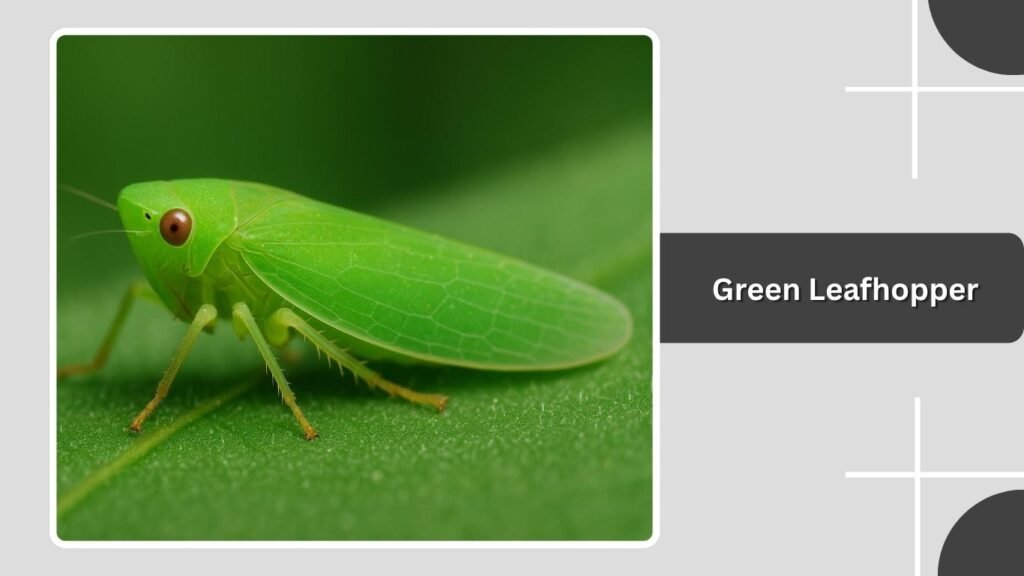
The Green Leafhopper (Cicadella viridis) is a small sap-feeding insect with pale green or blue-green wings. Its narrow body and folded wings can resemble a tiny fresh leaf resting on grass. Although much smaller than a katydid or true leaf insect, its coloring provides effective camouflage among low vegetation.
Identification
- Pale green, turquoise, or blue-green wings
- Slender, wedge-shaped body
- Yellowish head with dark markings
- Wings held roof-like over the abdomen
- Powerful rear legs designed for jumping
- Adults usually less than half an inch long
- Females often greener than males
Size and Appearance
Green Leafhoppers are usually around 6–9 millimeters long. Their elongated wings cover most of the abdomen and may appear slightly transparent. The combination of a pointed rear end, green coloring, and visible wing veins gives the insect a small leaf-like appearance.
Habitat and Distribution
This species occurs across Europe and parts of Asia. It prefers moist grasslands, meadows, marshy areas, field edges, and other places containing tall grasses and soft vegetation. Adults and nymphs are usually found close to the plants on which they feed.
Diet and Behavior
Green Leafhoppers use piercing mouthparts to drink plant sap. When disturbed, they jump quickly and may fly a short distance before landing on another stem. They do not bite or sting people, although large populations can affect certain plants by feeding on their tissues.
8. Green Planthopper
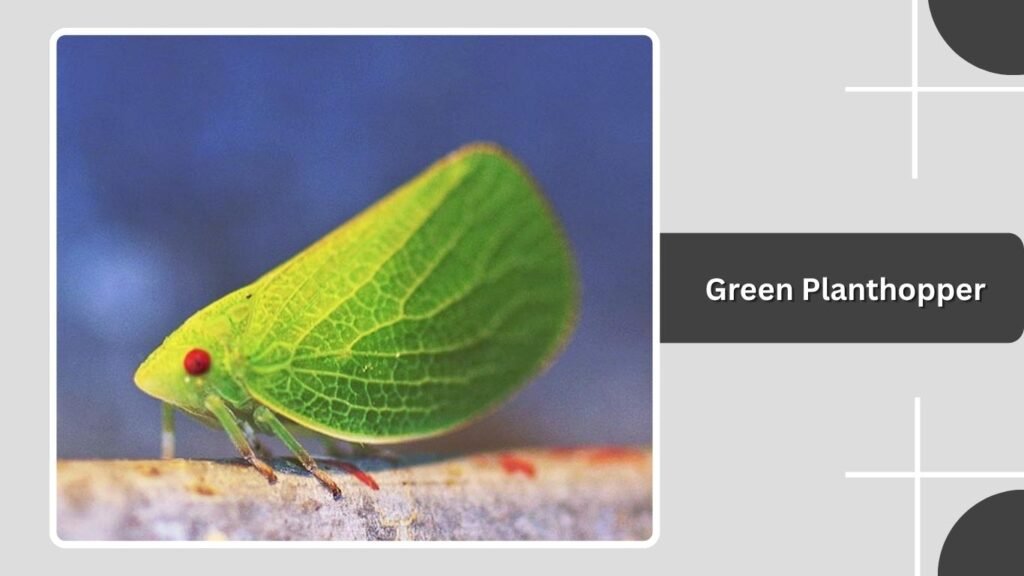
The Green Planthopper (Siphanta acuta) is a small, triangular insect whose folded wings resemble a pointed green leaf. It is native to Australia but has been introduced to several other regions. Its flat shape and leaf-green coloring help it blend into shrubs, fruit trees, and garden plants.
Identification
- Bright green or yellow-green body
- Broad, triangular wings
- Wings held together like a tent
- Pointed head and rear end
- Fine wing veins resembling leaf veins
- Strong jumping legs
- Adults approximately 8–12 millimeters long
Size and Appearance
Adult Green Planthoppers are generally less than half an inch long. When viewed from above, their wide wings form a triangular or wedge-shaped outline. A thin reddish or brownish border may sometimes be visible around the edges of the wings.
Habitat and Distribution
Green Planthoppers occur on shrubs, ornamental plants, citrus trees, and other broad-leaved vegetation. The species is well known in Australia and has also become established in New Zealand and other areas. Individuals may occasionally enter houses after being attracted to lights.
Diet and Behavior
Both adults and nymphs feed by extracting sap from plants. They usually remain motionless when undisturbed, relying on camouflage for protection. When approached, they can jump suddenly or fly away. A few individuals cause little concern, but heavy feeding may weaken young or stressed plants.
9. Green Shield Bug
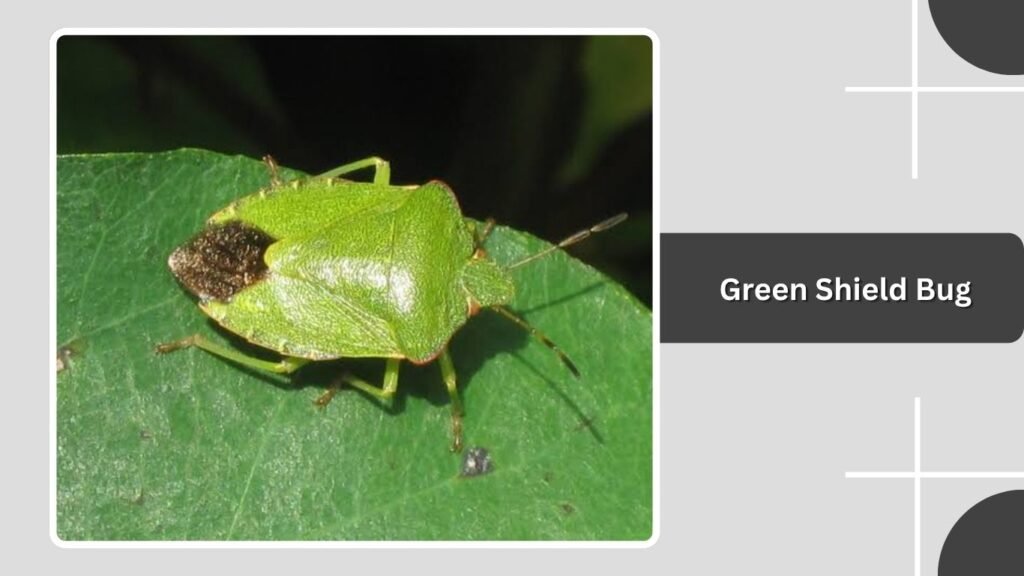
The Green Shield Bug (Palomena prasina) is a broad, flattened true bug with a shape resembling a small green leaf or shield. It is commonly seen in gardens, hedgerows, woodlands, and parks. During autumn, adults often become brown before spending the winter in sheltered locations.
Identification
- Broad, shield-shaped body
- Bright green summer coloring
- Fine dark dots across the upper surface
- Dark wing membrane near the rear
- Five-sided or leaf-like outline
- Adults approximately 12–14 millimeters long
- Brown coloring during autumn and winter
Size and Appearance
Green Shield Bugs are normally about half an inch long. Their backs are flat and wide, while their wings form a neat shield-shaped surface. The dark area at the rear of the folded wings helps distinguish this species from some other green shield bugs.
Habitat and Distribution
This insect is widespread across much of Europe and occurs in gardens, woodland edges, hedges, fields, parks, and waste ground. It may rest on many different trees, shrubs, and herbaceous plants. Adults sometimes enter buildings while looking for protected winter shelter.
Diet and Behavior
Green Shield Bugs feed on plant sap, fruits, and developing seeds. They do not normally bite people. When disturbed or crushed, they can release a strong defensive odor, which is why shield bugs are often called stink bugs.
10. Leaf-Mimicking Praying Mantis
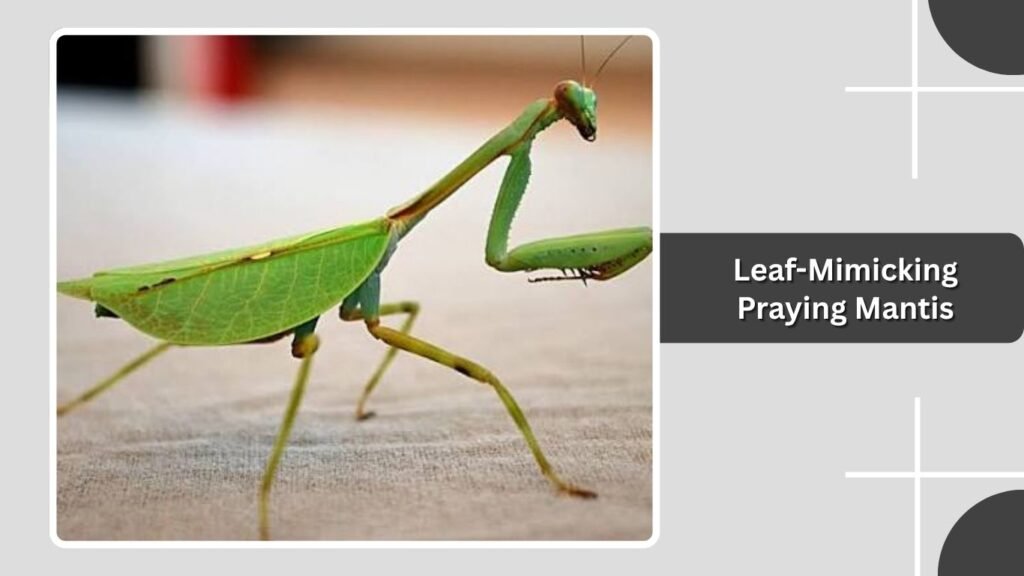
The Leaf-Mimicking Praying Mantis, represented here by the Peruvian Shield Mantis (Choeradodis rhombicollis), is a large green predator with an expanded, leaf-shaped body covering. Its unusual shape helps it disappear among tropical foliage while waiting for other insects to approach.
Identification
- Bright green or yellow-green body
- Very wide, leaf-shaped pronotum
- Triangular, movable head
- Large compound eyes
- Folded grasping front legs
- Broad green wings
- Flattened outline resembling a leaf
Size and Appearance
This mantis has a broad, hood-like pronotum extending outward on both sides of its body. The expanded structure resembles a rounded leaf and partially hides the head and legs when viewed from above. Its green wings continue the leaf-like shape along the abdomen.
Habitat and Distribution
The Peruvian Shield Mantis occurs in tropical parts of Central and South America. It lives among dense vegetation, where broad leaves provide ideal camouflage. Records include southern Mexico and other areas of the Neotropics.
Diet and Behavior
Unlike the other green leaf mimics in this list, the mantis is a predator. It remains still and captures flies, moths, grasshoppers, and other insects with its spiny front legs. It is not dangerous to humans, although a large individual may pinch defensively if handled roughly.
FAQs
What is the most common green bug that looks like a leaf?
The most common large green bug with a leaf-like appearance is usually a katydid. Katydids have broad green wings with visible veins, very long antennae, and powerful hind legs. Their camouflage helps them remain hidden among trees, shrubs, and garden plants.
Are green leaf-looking bugs dangerous?
Most green bugs that resemble leaves are harmless to people. Katydids, leaf insects, leafhoppers, and shield bugs do not normally attack humans. A large katydid or praying mantis may pinch defensively if handled roughly, but these insects are not considered medically dangerous.
Can green bugs that look like leaves fly?
Many leaf-looking green insects can fly. Katydids, planthoppers, leafhoppers, shield bugs, and adult praying mantises usually have functional wings. Some female leaf insects have limited flight ability, while males are generally slimmer and better able to fly.
Why is there a green leaf-like bug in my house?
A green leaf-like insect probably entered accidentally through an open door, window, damaged screen, or another small gap. It may have been attracted to indoor lights or nearby plants. Most leaf-mimicking insects cannot establish a household infestation and can be released outdoors.
Do green leaf bugs damage plants?
Some species feed on leaves or plant sap, but a single insect rarely causes serious harm. Katydids and leaf insects chew foliage, while leafhoppers, planthoppers, and shield bugs drink plant fluids. Noticeable damage is more likely when many insects gather on the same plant.
