
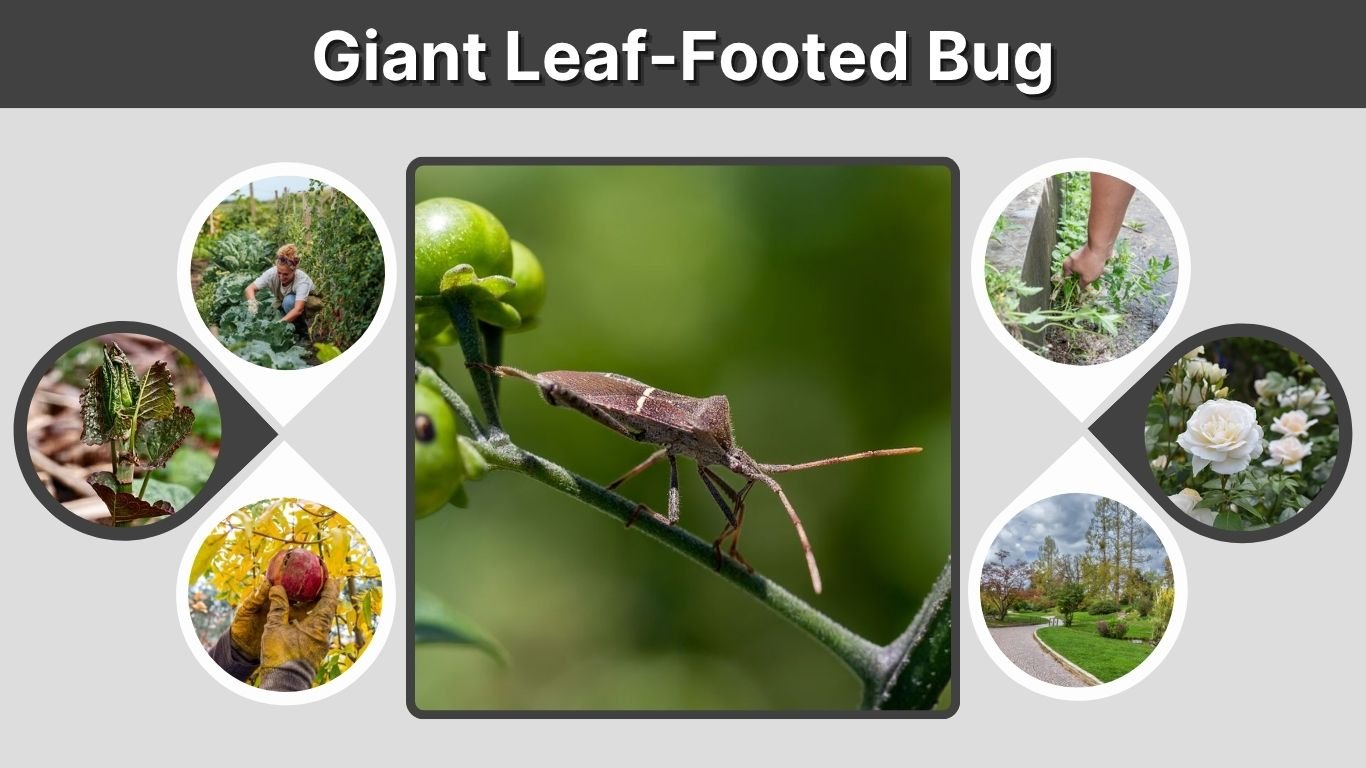
The giant leaf-footed bug is a large, unusual-looking true bug recognized by its expanded hind legs, broad shoulders and long antennae. The name usually refers to Acanthocephala declivis, one of the largest leaf-footed bugs found in the United States. Although its size can appear intimidating, it is not poisonous, does not spread disease and rarely bothers people. It mainly uses piercing mouthparts to drink fluids from plants. Learning its appearance, behavior and life stages can help you distinguish it from stink bugs and beneficial assassin bugs.
What Is a Giant Leaf-Footed Bug?
The giant leaf-footed bug belongs to the family Coreidae, a group of plant-feeding insects known for the flattened, leaf-like expansions found on the hind legs of many species.
Acanthocephala declivis is especially noticeable because it has a broad, raised pronotum—the shield-like section directly behind its head. Its scientific genus name should not be confused with Acanthocephala, the unrelated group of parasitic worms.
| Quick fact | Description |
| Scientific name | Acanthocephala declivis |
| Insect family | Coreidae |
| Body length | Approximately 28–34 mm |
| Color | Grayish-brown to dark brown |
| Diet | Fluids from plants, fruits and seeds |
| Main range | Southern and southeastern United States |
| Danger to humans | Very low |
| Life cycle | Egg, nymph and adult |
Adults generally measure around 1.1 to 1.3 inches long, excluding the antennae. This makes the species considerably larger than many common garden bugs.
Identification Features
A giant leaf-footed bug can be identified by:
- A large, elongated brown body
- Broad, pointed shoulders
- Long reddish-brown or dark antennae
- Wide, flattened expansions on the hind legs
- Thick, sometimes spiny hind thighs
- Overlapping wings forming an elongated shield
- A narrow head with a piercing mouthpart underneath
The broad shoulders extend noticeably beyond the sides of the abdomen. Its hind-leg expansions are also broad and squared near the lower end, helping distinguish it from related species.
Giant Leaf-Footed Bug Habitat and Range
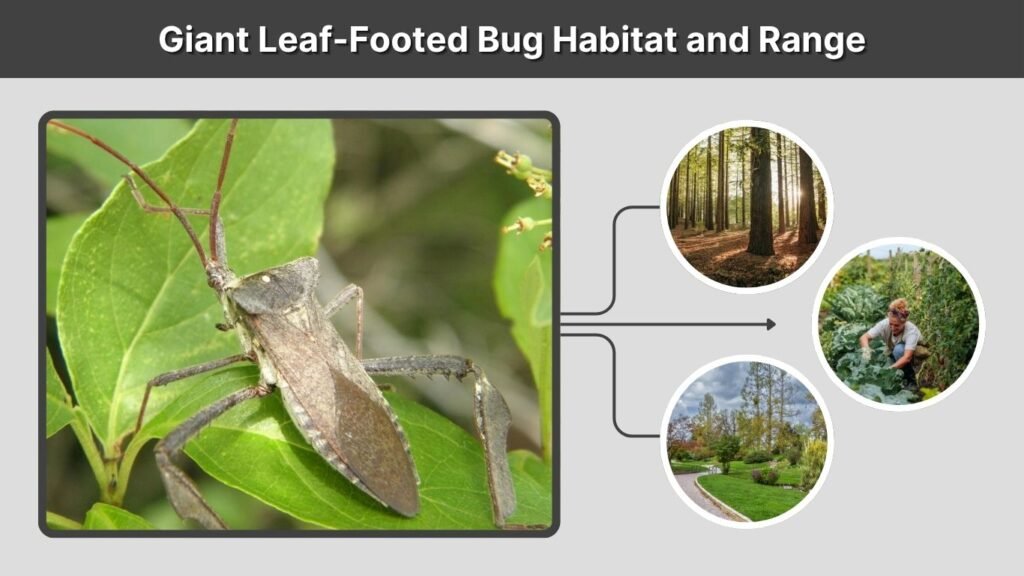
Giant leaf-footed bugs inhabit warm areas with abundant vegetation. They may be found in woodlands, gardens, forest edges, parks, fields and areas with shrubs or fruiting plants.
Adults often rest on leaves, tree trunks, fences and exterior walls. Their mottled brown color provides camouflage against bark, dead vegetation and weathered wood.
Giant Leaf-Footed Bugs in Texas
The species occurs in Texas and other southern states. Texas records include both photographed specimens and entries in the Texas A&M field guide to common insects. It is most likely to be noticed during warm weather when adults are active on vegetation.
Its broader range includes much of the southeastern United States. Reports are common around the Gulf Coast, although individuals may occasionally be recorded farther north.
Why Do They Enter Houses?
A giant leaf-footed bug may accidentally enter a home through an open door, window or gap around the roofline. Adults can also approach buildings while searching for protected places during cooler weather.
They do not normally reproduce indoors, eat furniture or damage the building. A bug found inside can be captured with a container and released outdoors away from frequently used entrances.
What Do Giant Leaf-Footed Bugs Eat?
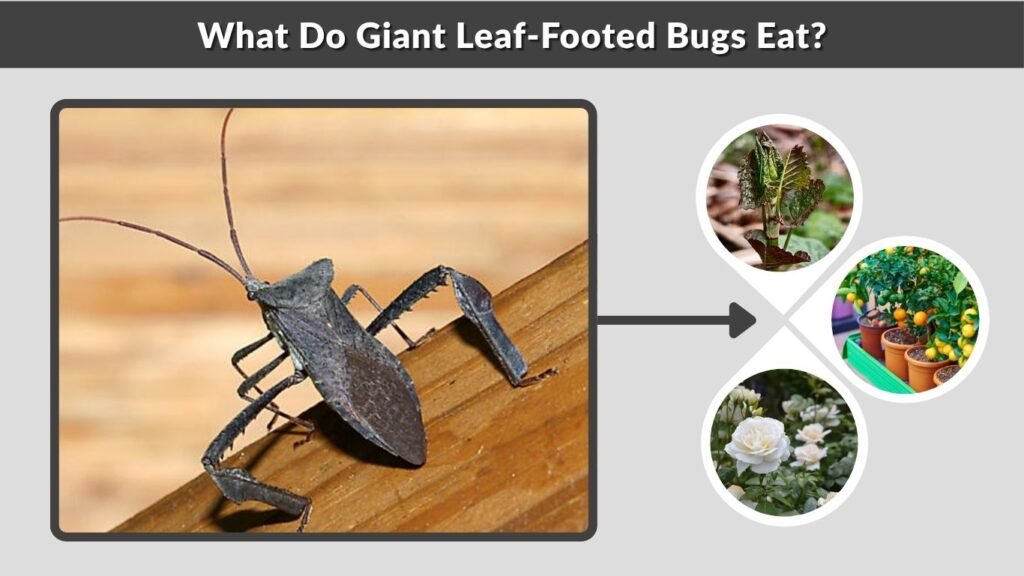
Giant leaf-footed bugs are primarily herbivores. They have needle-like mouthparts that penetrate plant tissue and remove fluids.
They may feed on:
- Tender stems and shoots
- Developing fruits
- Seeds and seedpods
- Flowers
- Shrubs and vines
- Weeds
- Garden and ornamental plants
The exact host plants associated with Acanthocephala declivis are not as thoroughly documented as those of major crop pests such as Leptoglossus species. Therefore, finding one resting on a plant does not necessarily mean it is seriously damaging that plant.
Leaf-footed bugs as a group feed on vegetables, fruits, nuts and ornamentals. Their punctures can produce discoloration, sunken spots or malformed developing fruit when populations are high.
Are They Serious Garden Pests?
An occasional giant leaf-footed bug is unlikely to cause major damage to a healthy plant. Problems are more likely when numerous adults and nymphs repeatedly feed on developing fruits or seeds.
Before applying a pesticide, inspect the plant for feeding punctures, misshapen fruit and groups of nymphs. A single adult resting on a leaf may not require any treatment.
Giant Leaf-Footed Bug Nymph
Young giant leaf-footed bugs look quite different from adults. They are wingless and usually have brighter coloration.
Nymph Identification
A giant leaf-footed bug nymph may have:
- An orange, red or reddish-brown body
- Long black or dark legs
- Long antennae
- A narrow abdomen
- Small developing wing pads in later stages
- Hind legs that gradually become broader
- A tendency to remain near other young nymphs
The youngest nymphs do not yet have the fully developed leaf-like hind legs seen in adults. This can make them difficult to distinguish from assassin bug nymphs. Leaf-footed bug nymphs are frequently found together, whereas assassin bugs are more often solitary predators.
Life Cycle
The giant leaf-footed bug undergoes incomplete metamorphosis:
- A female deposits eggs on suitable vegetation.
- Wingless nymphs hatch from the eggs.
- The nymphs feed and molt through several growth stages.
- Wing pads and expanded hind legs gradually develop.
- The final molt produces a fully winged adult.
There is no caterpillar, larval or pupal stage. Like other true bugs, the nymph resembles a smaller, wingless version of the adult.
Giant Leaf-Footed Bug Male vs. Female
Male and female giant leaf-footed bugs have similar coloration and body shapes. The most noticeable differences involve the hind legs.
Males generally have more enlarged hind thighs and may use them while competing with other males. Females also possess expanded hind legs, but their thighs are often less massive. Research on a closely related subspecies found that these modified legs are sexually dimorphic and perform different roles during interactions between individuals.
Identifying the sex from a single photograph can still be difficult because body size, viewing angle and individual variation affect the appearance of the legs.
Do Giant Leaf-Footed Bugs Bite?
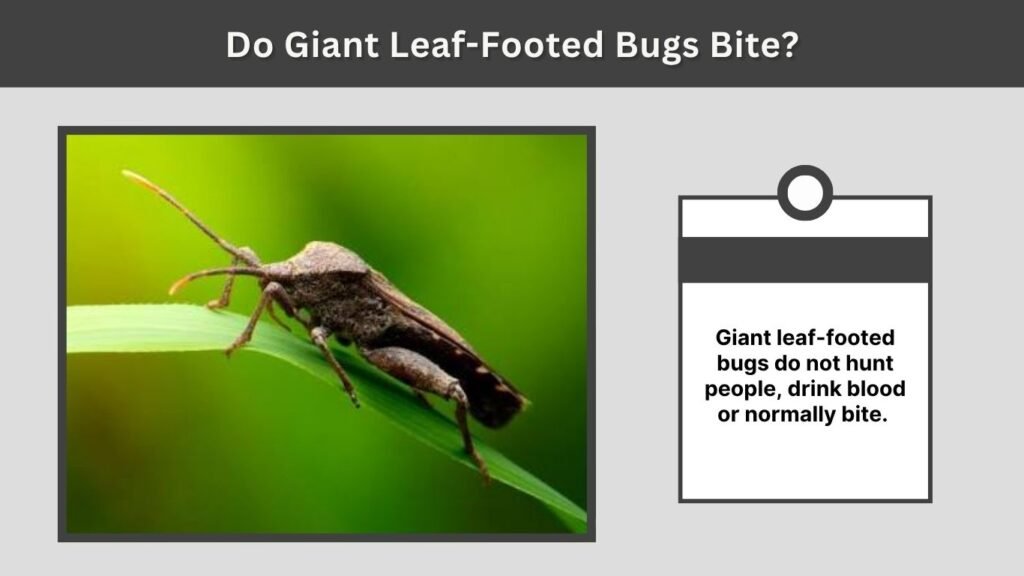
Giant leaf-footed bugs do not hunt people, drink blood or normally bite. Their mouthparts are designed to penetrate plant tissue rather than attack humans.
However, a frightened insect may defensively jab someone who squeezes it or traps it against the skin. Such an incident could feel like a sharp pinprick, but it is uncommon.
Are Giant Leaf-Footed Bugs Poisonous?
They are neither poisonous nor venomous. They are also not known to transmit diseases to people or pets.
Their main defensive abilities include:
- Releasing an unpleasant odor
- Flying away
- Moving behind leaves or branches
- Using their legs to resist handling
- Occasionally jabbing when restrained
The safest approach is to avoid grabbing the insect with bare fingers.
Giant Leaf-Footed Bug vs. Stink Bug
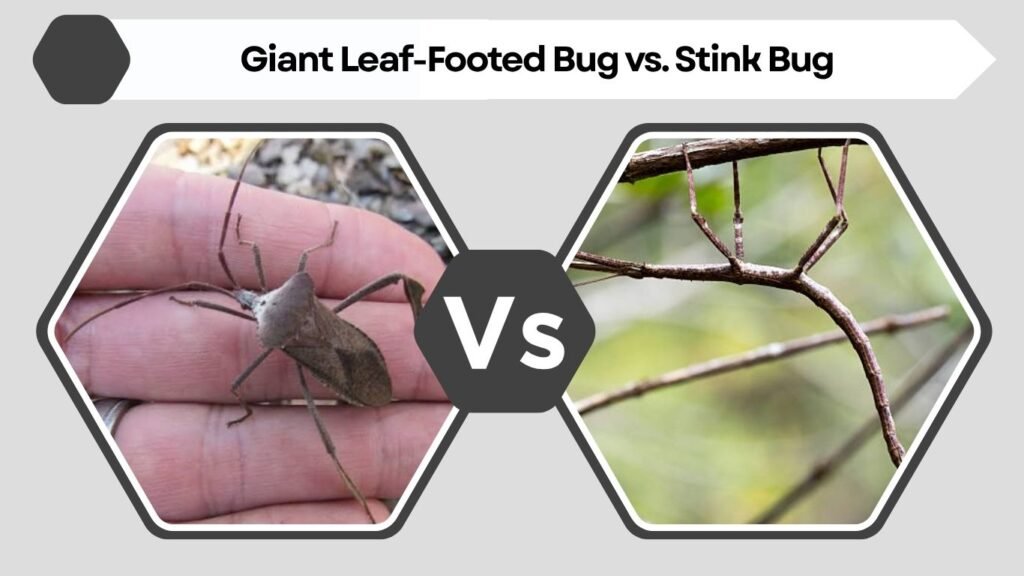
These insects are related to true bugs, but they belong to different families.
| Feature | Giant leaf-footed bug | Stink bug |
| Family | Coreidae | Pentatomidae |
| Body shape | Long and narrow | Broad and shield-shaped |
| Hind legs | Flattened leaf-like expansions | No leaf-shaped expansions |
| Shoulders | Large and strongly raised | Usually flatter |
| Typical size | Up to around 34 mm | Usually smaller |
| Odor | Can release an odor | Well known for strong odor |
Stink bugs generally appear more compact and shield-shaped. The giant leaf-footed bug has an elongated body and extremely noticeable hind legs.
Giant Leaf-Footed Bug vs. Assassin Bug
Assassin bugs are predators, while giant leaf-footed bugs feed mainly on plants. This difference is important because assassin bugs help control other insects.
An assassin bug usually has a shorter, thicker and strongly curved beak designed for piercing prey. A leaf-footed bug has a more slender plant-feeding mouthpart. At a technical level, leaf-footed bugs have a four-segmented beak, while assassin bugs have a three-segmented beak.
Observe the insect’s behavior before removing it. An insect feeding on a caterpillar, fly or another bug is likely an assassin bug.
How to Control Giant Leaf-Footed Bugs
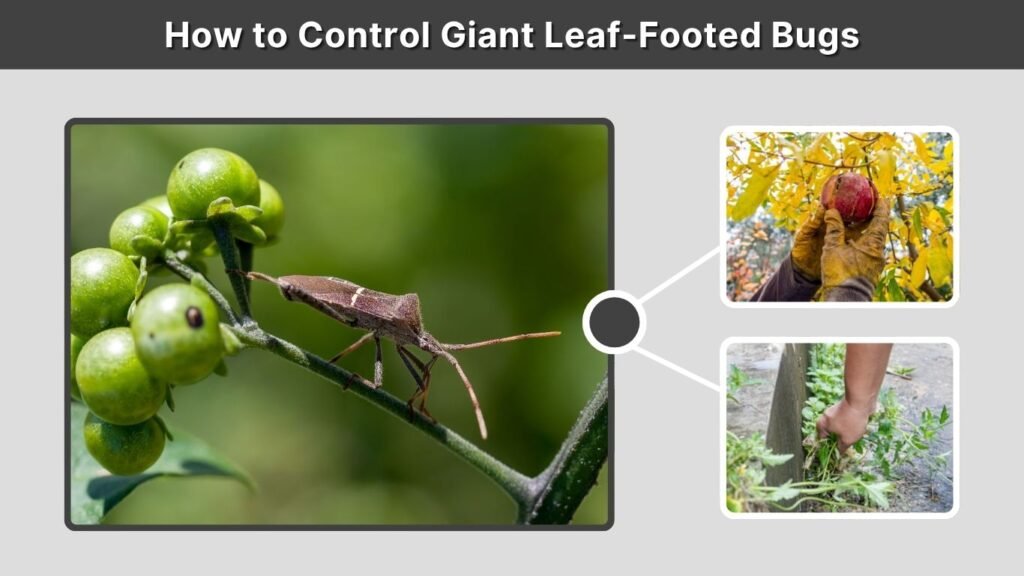
Control is usually unnecessary when only one or two adults are present. For larger populations:
- Hand-pick adults while wearing gloves.
- Knock nymphs into a container of soapy water.
- Inspect stems and leaves for egg rows.
- Remove heavily damaged fruit.
- Clear unnecessary weeds and fallen produce.
- Protect young crops with insect netting.
- Encourage birds, spiders and predatory insects.
Insecticidal soap may kill young nymphs when applied directly, but it is less effective against large adults. Broad-spectrum pesticides should be reserved for serious infestations because they can also kill pollinators and beneficial predators.
Spiritual Meaning of a Giant Leaf-Footed Bug
There is no scientifically established spiritual meaning associated with this insect. Some people personally interpret its leaf-shaped legs and camouflage as symbols of adaptation, patience, protection or blending into changing surroundings. These meanings are cultural or personal interpretations rather than biological characteristics.
FAQs
Are giant leaf-footed bugs harmful to humans?
They are generally harmless to humans. They are not venomous, poisonous or known to transmit disease. A defensive jab is possible if one is squeezed or handled roughly, but this behavior is uncommon.
Can a giant leaf-footed bug fly?
Yes. Adults have fully developed wings and can fly between plants or toward lights and buildings. Their flight may appear noisy because of their large bodies.
Why is it called a giant leaf-footed bug?
It is called “giant” because Acanthocephala declivis can exceed one inch in body length. “Leaf-footed” refers to the broad, flattened sections on its hind legs.
Should I kill a giant leaf-footed bug?
Killing one is usually unnecessary. A single bug rarely causes serious plant damage. Remove it manually when it is feeding on valuable fruit or when numerous individuals are present.
Do giant leaf-footed bugs smell?
They can release a defensive odor when disturbed or crushed. The smell is intended to discourage predators but is usually less noticeable than the odor released by many stink bugs.
