
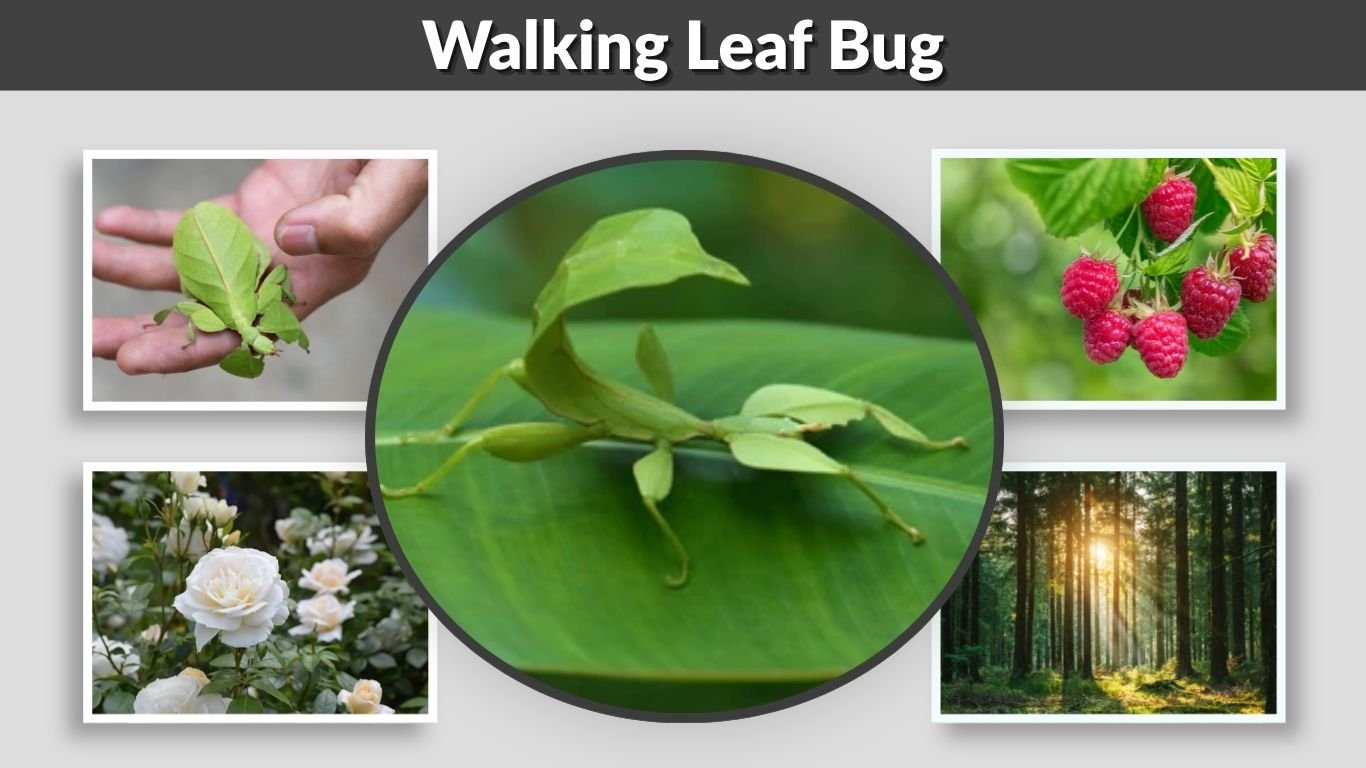
The walking leaf bug, more accurately called a leaf insect or walking leaf, is one of nature’s most convincing leaf mimics. Its flattened green body, leaf-like legs and vein-shaped markings allow it to disappear among foliage. Walking leaves are peaceful plant-eating insects related to walking sticks. Although they are sometimes called “bugs,” they are not true bugs such as stink bugs or leaf-footed bugs.
What Is a Walking Leaf Bug?
Walking leaf bugs belong to the insect family Phylliidae within the order Phasmatodea. This order also contains stick insects and walking sticks. True leaf insects have broad, flattened abdomens and expanded sections on their legs that resemble leaf blades.
Their camouflage is so effective that identifying one in dense vegetation can be difficult. Some species have brown edges, vein-like lines or irregular markings that resemble damaged or partially eaten leaves.
Walking Leaf Bug Identification
A true walking leaf insect usually has:
- A broad, flattened, leaf-shaped abdomen
- Green, yellowish-green or brown coloration
- Vein-like lines across the wings and abdomen
- Flattened lobes on its legs
- Six legs and two antennae
- Chewing mouthparts used for eating leaves
- A slow, swaying walking motion
- An appearance resembling a fresh or drying leaf
Females are generally broader and more leaf-like, while males usually have narrower bodies. Leaf insects also show pronounced differences between males and females, which can make the sexes appear to be separate species.
Why Does It Sway While Walking?
A walking leaf often moves from side to side as it travels. This rocking movement resembles a leaf being moved by a breeze. Remaining still during the day and moving carefully among foliage make the insect less noticeable to birds and other visual predators.
Walking Leaf Bug vs. Similar Insects
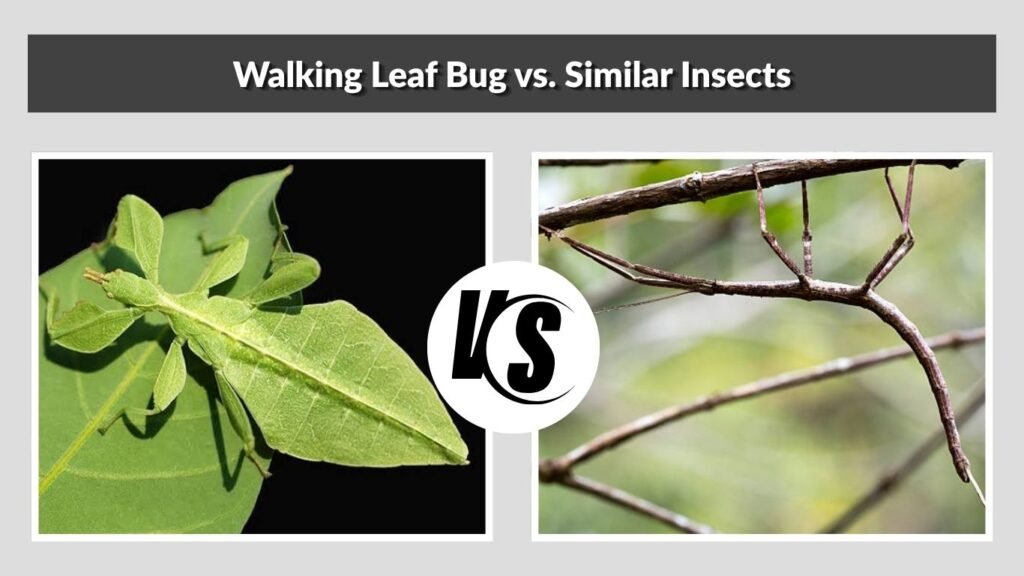
Several unrelated insects resemble leaves. The name “leaf bug” can therefore cause confusion, especially when distinguishing walking leaves from leaf-footed bugs.
| Feature | Walking Leaf Insect | Walking Stick | Leaf-Footed Bug |
| Scientific group | Phylliidae | Phasmatodea | Coreidae |
| Body shape | Broad and leaf-like | Long and twig-like | Narrow or oval |
| Mouthparts | Chewing | Chewing | Piercing and sucking |
| Main food | Leaves | Leaves | Plant juices, fruits and seeds |
| Camouflage | Resembles a leaf | Resembles a twig | Usually resembles bark or foliage |
| Hind legs | Broad leaf-like lobes | Usually slender | Some have expanded hind legs |
Walking leaves and walking sticks are closely related plant-eating phasmids. Leaf-footed bugs are true bugs that insert their long mouthparts into fruits, shoots and seeds to remove plant fluids.
What Other Bugs Look Like Walking Leaves?
A leaf-shaped insect is not automatically a true walking leaf. Other possibilities include katydids, planthoppers, leafhoppers, dead-leaf mantises and certain moths. Check the body structure carefully: true leaf insects have strongly flattened bodies, leaf-like leg expansions and chewing mouthparts.
Walking Leaf Bug Habitat and Distribution
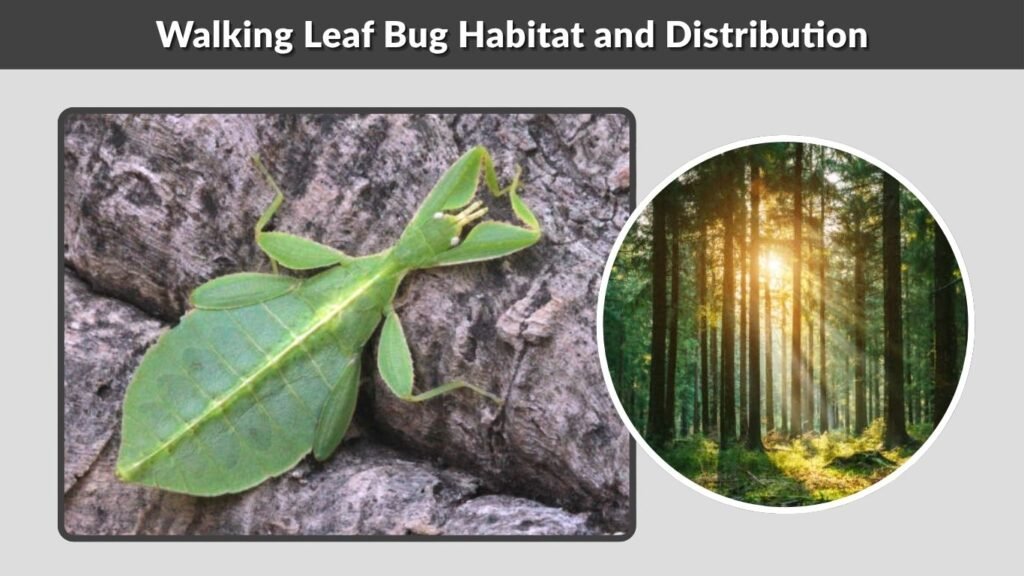
True leaf insects inhabit warm, densely vegetated environments where their camouflage is most effective. Taxonomic records place them across tropical Asia, beginning around India and China and extending through Southeast Asia to Australia, New Caledonia and Fiji. They are often associated with forest vegetation and jungle habitats.
Their bodies closely match the host plants on which they rest and feed. During daylight, they may remain motionless beneath or among leaves. This behavior makes wild populations difficult to locate and explains why some species are known from only a limited number of specimens.
Walking Leaf Bugs in Australia
Australia has genuine leaf insects, including Monteith’s leaf insect, Walaphyllium monteithi. It has been recorded in Queensland, including lowland vine-forest habitat. The species was formally recognized as an Australian endemic after previously being confused with leaf insects from other regions.
Australia also has many stick insects that are mistakenly called walking leaves. For example, the spiny leaf insect has a curled, spiny body rather than the broad, smooth appearance of a true Phylliidae leaf insect.
Are Walking Leaf Bugs Found in the USA?
The documented natural distribution of true Phylliidae does not include the United States or the rest of North America. Therefore, a wild leaf-shaped insect discovered in the USA is more likely to be a katydid, planthopper, moth or another native leaf mimic. This identification is an inference based on the accepted natural range of the family.
Live exotic leaf insects are also regulated because they consume plants. USDA APHIS states that permits are required for importing or moving most plant-feeding insects between states, and exotic insects may require approved containment. Anyone considering one as a pet in the USA should verify federal and state rules before purchasing eggs or live insects.
What Do Walking Leaf Bugs Eat?
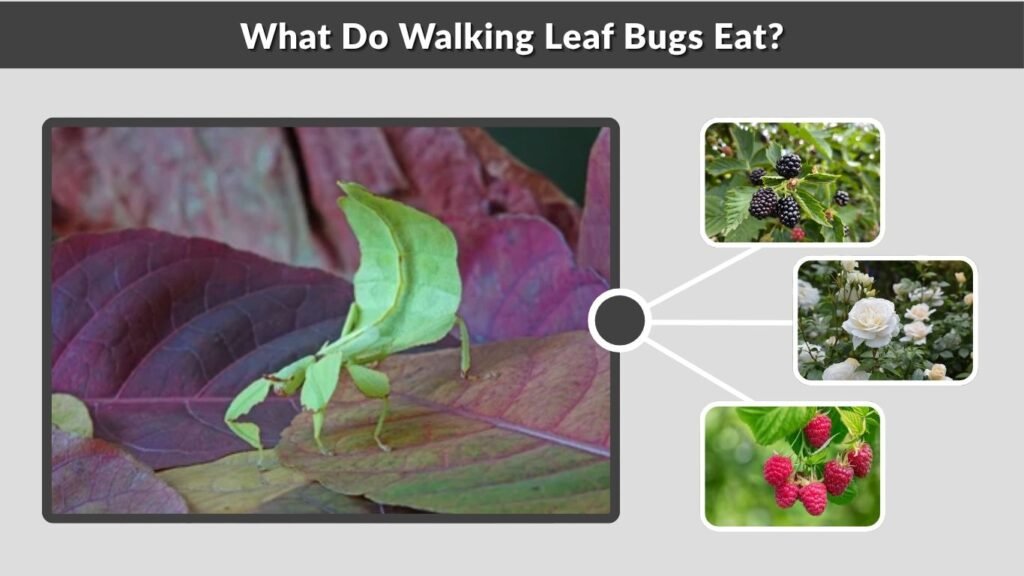
Walking leaf insects are herbivores that chew the edges and surfaces of leaves. Their exact diet depends on the species and the plants available in its natural habitat.
In captivity, different species may accept plants such as:
- Bramble or blackberry
- Rose
- Oak
- Guava
- Eucalyptus
- Raspberry
- Other approved host plants
Fresh leaves must be free from pesticides, road pollution and other chemicals. A plant accepted by one leaf insect species may not be suitable for another, so food should be selected according to the exact species rather than appearance alone. The Australian Museum notes that phasmids are leaf-eating insects and require fresh plant material when kept in captivity.
Walking Leaf Bug Life Cycle
Walking leaf insects undergo incomplete metamorphosis. Their development includes three main stages:
- Egg
- Nymph
- Adult
There is no caterpillar or pupal stage. Young nymphs resemble miniature adults but have smaller bodies and no fully developed wings. They grow by shedding their outer skin several times.
Eggs and Young Nymphs
Phasmid eggs often resemble small seeds, helping them blend into soil and plant debris. After hatching, the nymph climbs into vegetation and begins feeding. Its leaf-like shape becomes more pronounced after successive molts.
Successful molting requires enough vertical space because the insect hangs downward while pulling itself from its old exoskeleton. Falling during this process can cause malformed legs, wings or body parts.
Can Walking Leaf Bugs Be Kept as Pets?
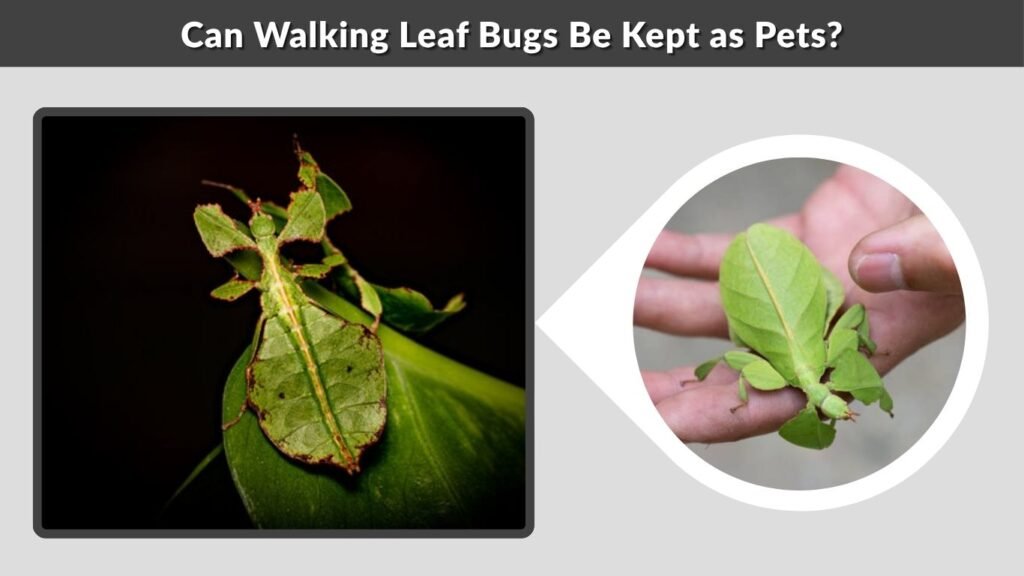
Leaf insects can be fascinating display animals, but they are fragile and should not be treated like frequently handled pets. Their enclosure should provide height for molting, climbing branches, ventilation and a constant supply of suitable fresh leaves.
Important care requirements include:
- Identify the species before choosing food.
- Provide enough vertical molting space.
- Keep food plants fresh and pesticide-free.
- Maintain appropriate ventilation and humidity.
- Avoid pulling an insect from a branch.
- Never release captive insects or eggs outdoors.
Phasmids are most comfortable hanging from branches and foliage. Frequent handling can damage their delicate legs, especially in young nymphs.
Walking Leaf Bug in Bluey
The walking leaf insect became especially recognizable to younger audiences through Bluey. In the Season 1 episode “The Weekend,” Bingo discovers a walking leaf insect and tries to show it to her father. The scene focuses on Bingo’s fascination with the small insect and her disappointment when her discovery is overlooked.
Walking Leaf in Animal Crossing: New Horizons
The walking leaf also appears as a collectible insect in Animal Crossing: New Horizons. In the game, it disguises itself as a furniture leaf beneath trees. It is available during July through September in the Northern Hemisphere and January through March in the Southern Hemisphere, appears throughout the day and sells for 600 Bells at Nook’s Cranny.
FAQs
Is a walking leaf bug a real insect?
Yes. Walking leaves are real insects belonging to the family Phylliidae. Their bodies, legs and wings have evolved flattened shapes and markings that closely resemble plant leaves.
Is a walking leaf the same as a walking stick?
No. Both belong to Phasmatodea, but walking leaves have broad, flattened bodies, while walking sticks have long, narrow bodies resembling twigs.
Do walking leaf bugs damage gardens?
They eat leaves, but true walking leaf insects are not established garden pests in most countries outside their native range. Captive insects must never be released because they could feed on local plants.
Can walking leaf bugs fly?
Flight ability varies by species and sex. Males are generally slimmer and more capable of flight, while broad-bodied females often fly poorly or may be unable to fly.
Why are walking leaf bugs difficult to find?
Their color, body shape, markings, still posture and swaying movements allow them to blend into foliage. Even experienced observers can overlook one resting directly in front of them.
