
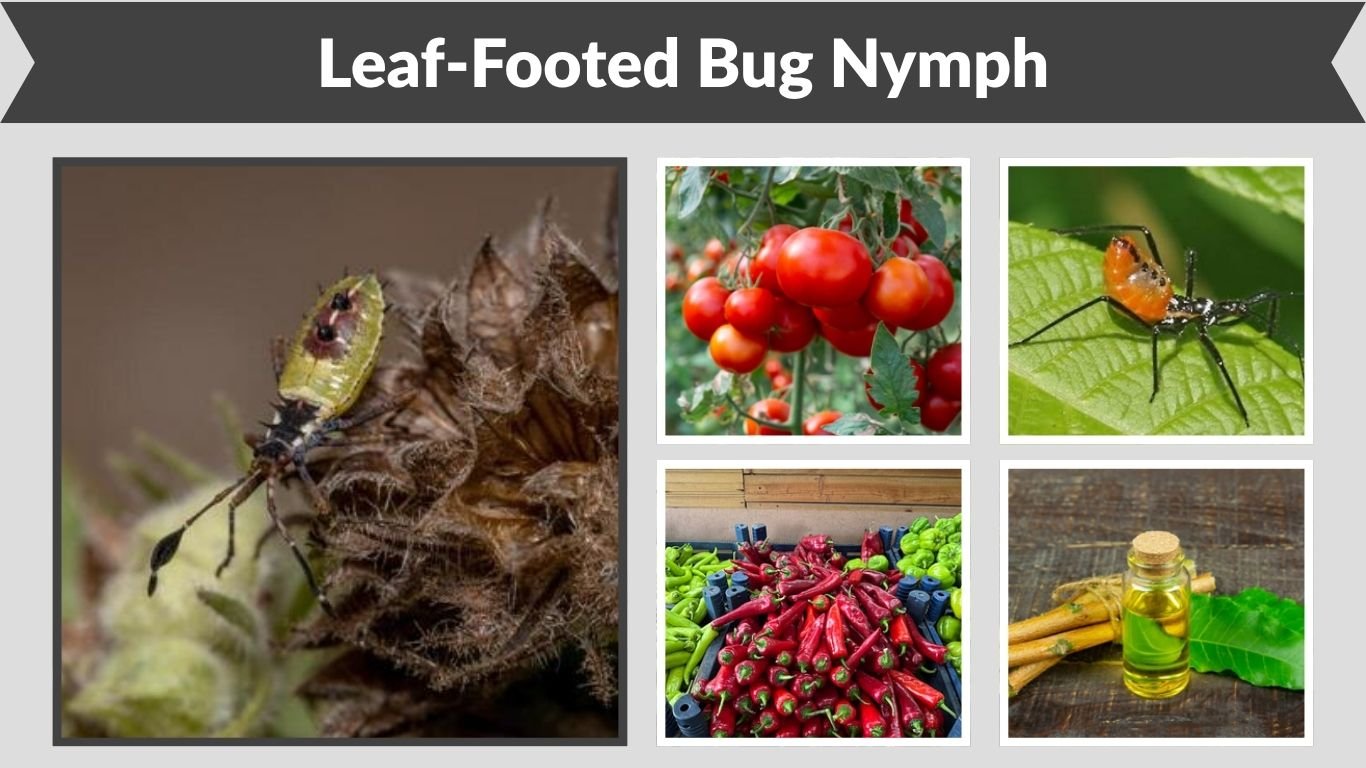
A leaf-footed bug nymph is the immature, wingless stage of a leaf-footed bug. These insects often appear in gardens as groups of bright red, orange, brown, or black-legged bugs feeding on tomatoes, peppers, cucumbers, squash, and developing fruits. Young nymphs can be difficult to identify because they resemble beneficial assassin bug nymphs. However, their clustering behavior, dark legs, plant-feeding habits, and developing hind-leg shape provide useful identification clues.
What Does a Leaf-Footed Bug Nymph Look Like?
Leaf-footed bug nymphs belong to the family Coreidae. They hatch from eggs laid on plant stems, leaves, or leaf veins and gradually develop into the larger brown bugs commonly seen during summer. Their appearance changes noticeably as they mature.
Identification Features
Young leaf-footed bug nymphs commonly have:
- Bright orange, red, reddish-brown, or dark bodies
- Black or dark-colored legs and antennae
- Long, slender legs
- A narrow, soft-looking abdomen
- No fully developed wings
- A long piercing-sucking mouthpart beneath the body
- A tendency to gather in groups after hatching
Older nymphs become darker and develop visible wing pads. In species with expanded hind legs, the flattened, leaf-like area becomes more noticeable as the insect approaches adulthood. However, not every leaf-footed bug species develops strongly widened hind legs.
Red, Green and Blue Leaf-Footed Bug Nymphs
Red and orange are common colors among newly hatched nymphs. Older individuals may become brown, gray, black, greenish, or patterned as their exoskeleton develops.
A photographed nymph may sometimes appear blue or purple because of lighting, reflections, its developmental stage, or the particular species involved. Color alone is therefore not a dependable identification feature. Body structure, dark appendages, feeding behavior, and nearby egg rows are more useful.
Do Nymphs Have Leaf-Shaped Legs?
The youngest nymphs normally have thin hind legs without obvious leaf-like expansions. The widening develops later in many Leptoglossus species. Consequently, a small nymph can still be a leaf-footed bug even when its legs do not yet look like leaves.
Leaf-Footed Bug Nymph vs. Assassin Bug Nymph
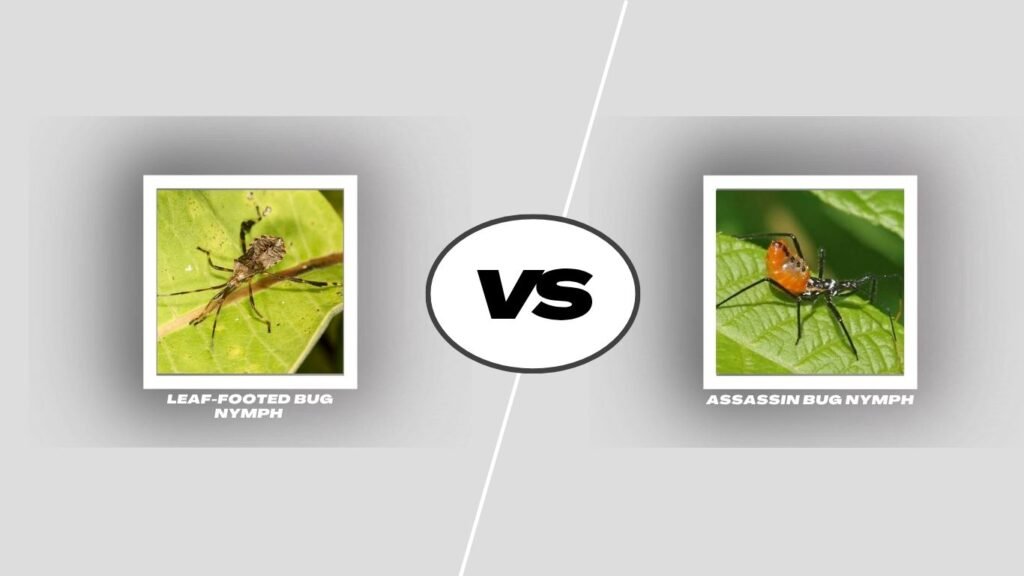
This is an important comparison because leaf-footed bugs damage plants, while most garden assassin bugs hunt other insects. Killing an assassin bug by mistake can remove a useful predator from the garden.
| Feature | Leaf-Footed Bug Nymph | Assassin Bug Nymph |
| Diet | Plant juices, fruit and seeds | Other insects |
| Legs and antennae | Often dark-colored | Often paler in Zelus species |
| Behavior | Frequently found in groups | More commonly found alone |
| Hind legs | May develop flat expansions | Do not develop leaf-like paddles |
| Feeding activity | Inserts mouthpart into plants | Captures and pierces prey |
| Garden role | Potential plant pest | Predatory insect |
The light-versus-dark leg distinction is most useful when comparing Leptoglossus nymphs with Zelus assassin bugs. Color varies among other assassin bug species, so gardeners should also observe what the insect is eating. An insect holding and feeding on another insect is likely an assassin bug.
Eggs and Nymph Development Stages
Leaf-footed bugs undergo incomplete metamorphosis. Their life cycle consists of egg, nymph and adult stages, with no caterpillar-like larva or pupal stage.
What Do the Eggs Look Like?
Eggs are usually golden-brown or dark brown, cylindrical and arranged end-to-end. They often resemble a tiny chain attached along a stem, leaf vein or leaf midrib. A typical strand may contain approximately 10 to 20 eggs, although larger groups are possible.
How Many Nymph Stages Are There?
Leaf-footed bugs generally pass through five nymph stages called instars. The insect sheds its exoskeleton between each stage, becoming larger and increasingly similar to the adult.
The development sequence is:
- Eggs hatch into small, brightly colored nymphs.
- Young nymphs remain close together and begin feeding.
- Their bodies enlarge and become darker.
- Wing pads begin appearing.
- Older nymphs develop adult-like legs and body markings.
- The final molt produces a winged adult.
Development time varies with species, temperature and food availability. Some common leaf-footed bugs can develop from newly hatched nymphs to adults in approximately five to eight weeks during warm conditions.
What Do Leaf-Footed Bug Nymphs Eat?
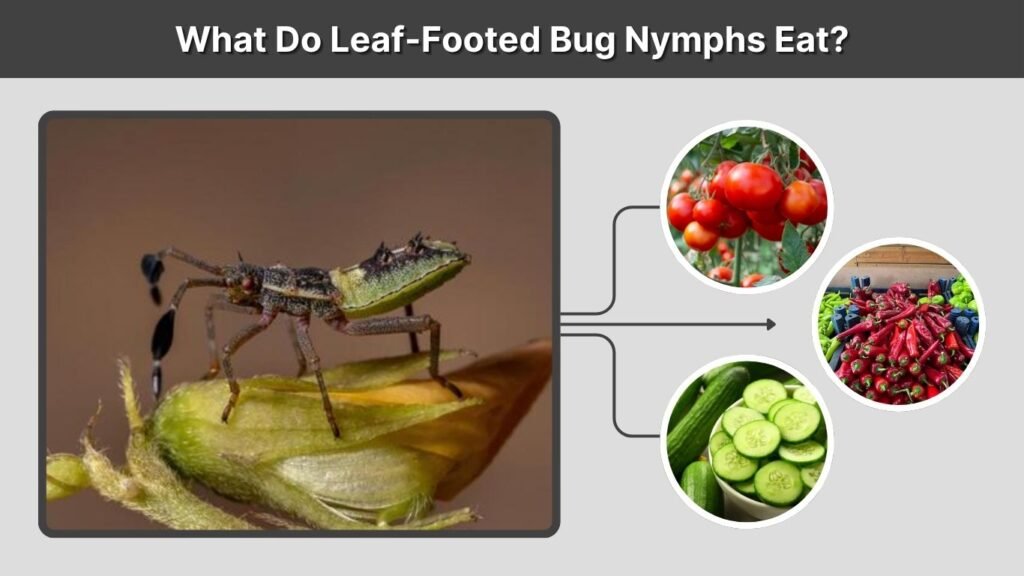
Leaf-footed bug nymphs use piercing-sucking mouthparts to remove fluids from plants. Small nymphs generally feed more shallowly than adults, but clusters of nymphs can still damage tender growth and developing produce.
Common Host Plants
They may feed on:
- Tomatoes
- Peppers
- Cucumbers
- Zucchini and squash
- Watermelons
- Eggplants
- Okra
- Beans and cowpeas
- Sunflowers
- Pomegranates
- Citrus fruits
- Peaches, pears and plums
- Pecans and other developing nuts
Different species have different host preferences, and weeds such as thistle can support populations before they move into vegetable gardens.
Damage to Tomatoes and Vegetables
Feeding punctures may produce yellow spots, pale discoloration, sunken areas or soft patches on fruit. Small fruit can stop developing or drop from the plant. Damage to larger tomatoes may appear as depressions beneath the skin or firm, discolored tissue inside the fruit.
The puncture can also create an opening through which microorganisms enter, increasing the possibility of decay. Minor superficial marks usually do not destroy the entire harvest, but large groups can make fruit unattractive or unusable.
How to Get Rid of Leaf-Footed Bug Nymphs
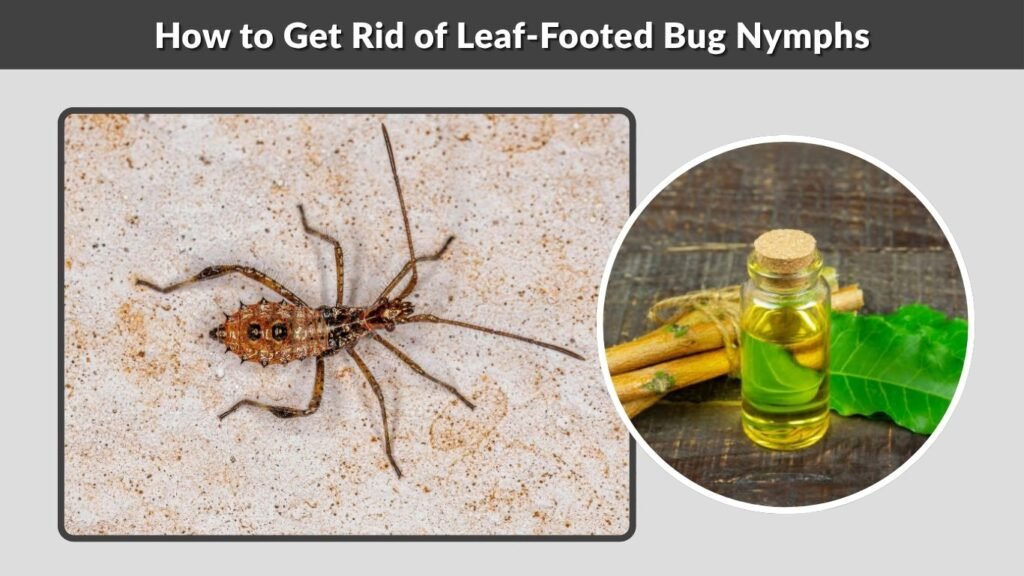
Control is easiest while the insects are young and gathered in clusters. Adults fly readily and are more difficult to eliminate, so inspect plants regularly for eggs and newly hatched nymphs.
Remove Eggs and Nymphs by Hand
Check stems, leaf veins, fruit clusters and the undersides of leaves. Crush or scrape away egg rows before they hatch. Knock nymphs into a container of soapy water or remove them with a handheld vacuum reserved for garden use.
Wear gloves because leaf-footed bugs can release an unpleasant defensive odor when disturbed. Early morning is a good time for removal because the insects are usually less active.
Use Water and Row Covers
A strong stream of water can knock groups of nymphs from sturdy plants. Repeat the treatment because eggs may remain attached and produce another group.
Lightweight row covers can prevent adults from reaching young plants and laying eggs. Install covers before the bugs arrive. Remember that covers may also block pollinators and beneficial insects, so they must be managed carefully on flowering crops.
Keep the Garden Clean
Remove heavily infested fallen fruit, crop debris and unnecessary weeds near the growing area. Leaf-footed bugs may feed on weeds before moving to fruiting plants. Woodpiles, loose bark, dense plant debris and outbuildings can also provide protected overwintering locations for adults.
Neem Oil and Insecticidal Soap
Insecticidal soap, neem-based products and botanical pyrethrins may suppress young nymphs when the spray contacts them directly. Coverage is important because these products normally have limited residual action.
Avoid unnecessary broad-spectrum insecticides because they can kill bees, parasitic wasps, spiders and assassin bugs. Any pesticide used on vegetables must be labeled for the crop and pest, and its application and harvest instructions must be followed exactly.
FAQs
Do leaf-footed bug nymphs bite humans?
Leaf-footed bugs are primarily plant feeders and do not seek humans or feed on blood. Avoid handling them with bare hands because an insect may defensively jab with its mouthpart when trapped or roughly handled.
Are leaf-footed bug nymphs the same as stink bug nymphs?
No. Leaf-footed bugs belong to the family Coreidae, while true stink bugs belong to Pentatomidae. Both are piercing-sucking true bugs and can release odors, which explains why the names are sometimes confused.
Why are the nymphs clustered together?
The eggs are laid close together in rows, and the newly hatched insects initially remain near the egg strand. These concentrated groups make early infestations easier to find and remove.
Will leaf-footed bug nymphs kill a tomato plant?
A small population normally causes fruit blemishes rather than killing a healthy mature plant. Heavy feeding on young growth or developing fruit can reduce fruit quality, cause deformation and contribute to premature fruit loss.
What kills leaf-footed bug nymphs naturally?
Assassin bugs, spiders, birds, parasitic wasps and certain flies help reduce populations. Protecting these natural enemies and removing egg strands manually can decrease the need for chemical treatment.
